
Reviewed · CHERRY BLOSSOM & AUTUMN FOLIAGE TOURS
Small Group Tour East Jeju Cherry Blossom & Woman Diver Show
Jeju’s spring show is at its best when pink King Cherry Blossoms meet yellow canola fields, and this nine-hour east Jeju tour gives you both in one long day. You’ll also see Seongsan Ilchulbong, Seopjikoji, Seongeup Folk Village, and a traditional women diver performance.
I like the small group size, capped at 15 people, and the fact that a minivan or small minibus can reach places a large coach may skip. I also like the mix of scenery and culture: this is not only a flower photo trip, but a day that connects Jeju’s natural sights with its old villages and UNESCO-listed women diver tradition.
The main drawback is the pace. Nine stops plus several hours on the road leave limited time at some locations, and the Seongsan Ilchulbong walk requires a 1.2-kilometer hike. The women diver show is also weather-dependent, and lunch costs extra.
Key points to know before booking
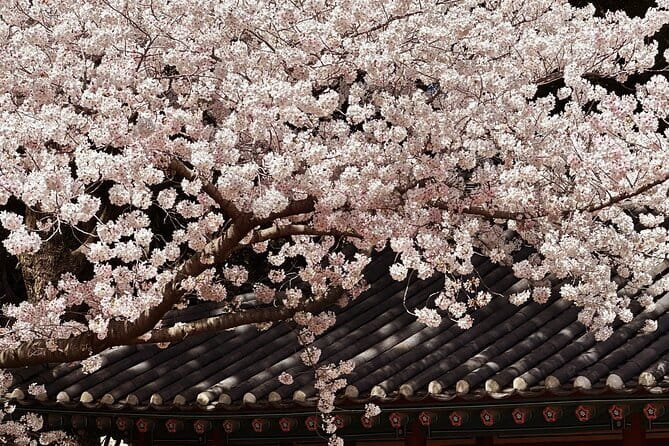
- King Cherry Blossoms in season: The best time is generally late March to early April, when Jeju’s large-petaled blossoms are open.
- A full east Jeju circuit: You visit Jeonnonglo Road, Samsunghyeol, Noksan-ro, Seongsan Ilchulbong, Seopjikoji, and Seongeup Folk Village in one day.
- Small-group transport: The group has no more than 15 people, with a minivan for smaller parties or a minibus for larger ones.
- Culture beyond the flowers: The outdoor women diver show and Seongeup’s traditional houses add local context to the scenery.
- Lunch is separate: Plan on about $10 for a local meal, with vegetarian choices suggested.
- Pickup is limited: Hotel pickup and drop-off are included within downtown Jeju City near Jeju International Airport.
Why the King Cherry Blossoms are the star
Jeju’s King Cherry Blossom is known for its unusually large petals. The season is short, usually running from late March into early April, so timing matters more here than on an ordinary sightseeing day.
This tour makes the flowers part of a wider spring circuit. You are not tied to one park or one street. Instead, the day moves from city lanes to country roads, from canola fields to the coast, then inland to a historic village.
That variety is the strongest reason to choose this trip. If the flowers are your only goal, a shorter local outing may be enough. If you want to use one day for several of east Jeju’s best-known sights, the broad route makes sense.
More trips built around the season in Jeju:
- Jeju: 2026 Autumn Tour with Pink Muhly Festival Hotel Pickup
★ 4.9 · 21 reviews - Jeju East: Cherry Blossom Early Bird Tour with Hotel Pickup
★ 4.8 · 21 reviews - Small Group Tour for Jeju Fall Pink Muhly, Tangerines & Mt. Halla
★ 5.0 · 14 reviews
Jeonnonglo Road and the old tree at Samsunghyeol
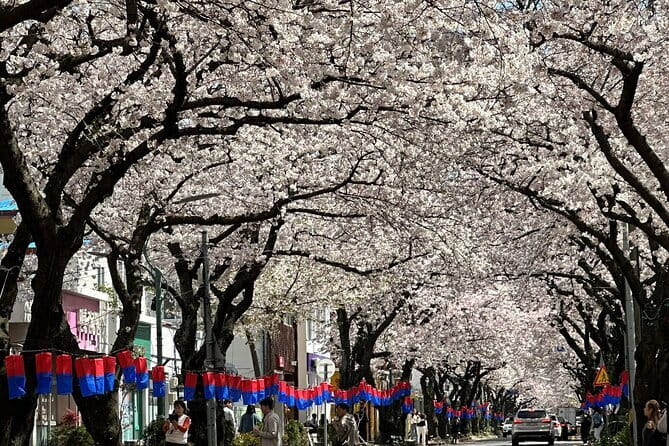
The first flower stop is Jeonnonglo Road, where old cherry trees line the street used for the annual King Cherry Blossom Festival. During the festival, the road becomes car-free, with blue lanterns and tulips adding color beneath the branches.
The scheduled stop is only 15 minutes, so think of it as a quick walk and photo stop rather than a long festival visit. The short timing may feel tight if the road is especially attractive or if you want many photographs. Still, starting here gets the day moving early and places you among some of the city’s most recognizable spring trees.
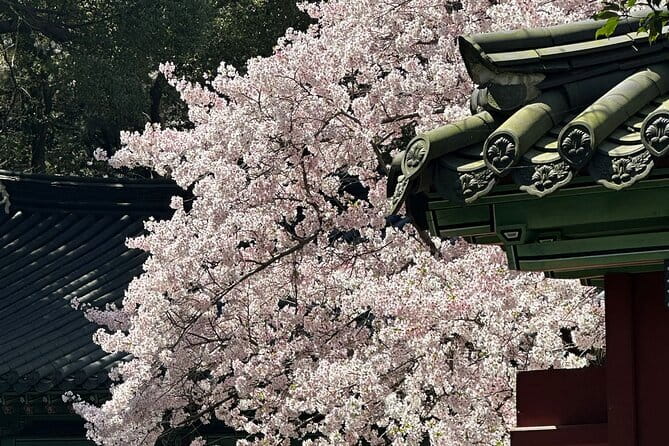
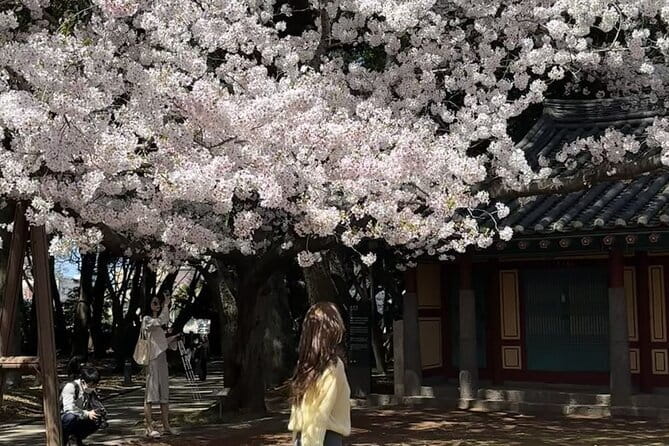
At Samsunghyeol, you have more time, about 50 minutes. The site is linked to the origin story of Jeju, and a 200-year-old cherry tree provides the main spring photograph. The mood changes here. Instead of a decorated city street, you get a quiet, solemn setting where the old tree and the sacred grounds share attention.
This is one of the better-balanced stops because it gives you both a specific cultural story and a strong seasonal view. Your guide can help connect the place to Jeju’s past, something that is easy to miss if you only stop for a photograph.
Noksan-ro, where yellow and pink meet
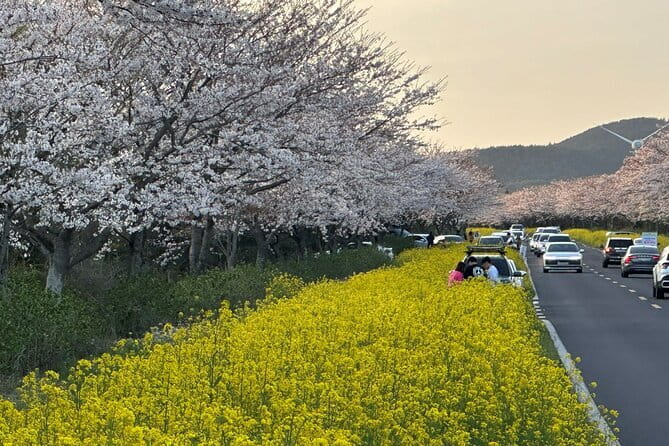
Noksan-ro is one of the day’s most photogenic roads. For roughly 10 kilometers, canola flowers and cherry trees appear together, creating the classic Jeju spring combination of yellow fields and pale blossoms.
The scheduled stop is 20 minutes. That does not mean you will walk the entire road. It is better to expect a focused roadside photo stop, with your guide choosing a suitable section for the group.
This is also where weather and bloom conditions matter most. Flowers do not follow a perfect calendar, and late March to early April is a general window, not a guarantee for peak color on your exact date. If you are booking specifically for blossoms, keep your plans flexible and remember that poor weather can lead to a changed date or a full refund.
Lunch in Seogwipo, with local food on your own budget
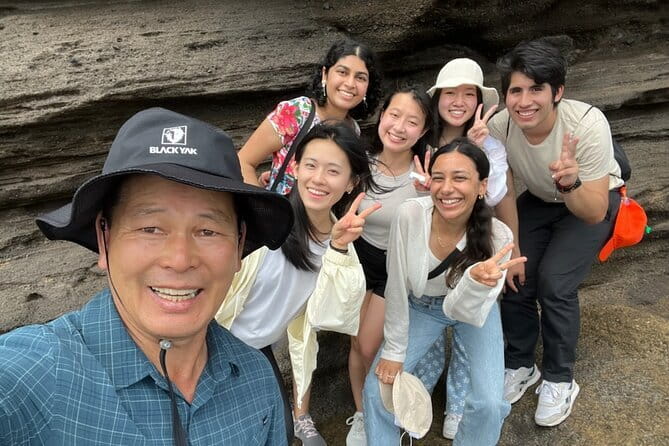
The lunch stop lasts about an hour in Seogwipo. Food is not included, but the suggested cost is around $10, and vegetarian dishes can be recommended.
I see this as a practical part of the tour rather than a drawback. A fixed restaurant meal can waste time or leave you with food you do not want. Here, you can choose from a local restaurant selected for the group, while keeping lunch costs separate from the tour price.
The tradeoff is that the exact restaurant and menu are not specified in advance. If you have strict dietary needs, raise them when booking or with June before the day begins. Vegetarian options are available to suggest, but the information does not promise a wider range of special-diet menus.
A few more things to do in Jeju worth a look
- Jeju: Eastern UNESCO Sites Tour with Haenyeo Show
★ 4.8 · 217 reviews - Small Group Tour in East Jeju Healing Island w/Woman Divers Show
★ 5.0 · 42 reviews - Jeju East: Small Group Healing Tour w/Woman Divers Show
★ 5.0 · 13 reviews - Seoul: The Painters Live Art K-pop Dance Show Ticket
★ 4.8 · 708 reviews
Climbing Seongsan Ilchulbong
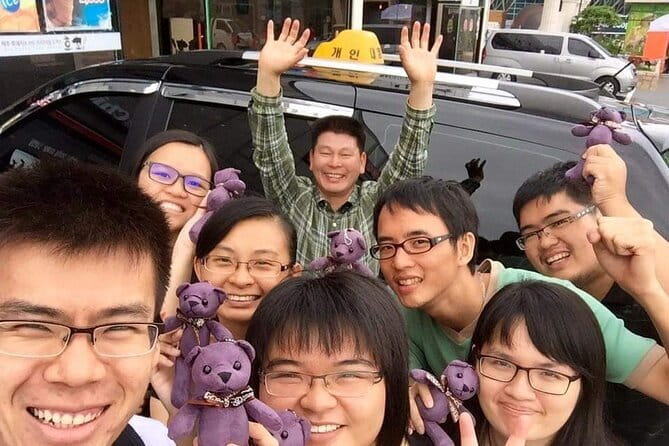
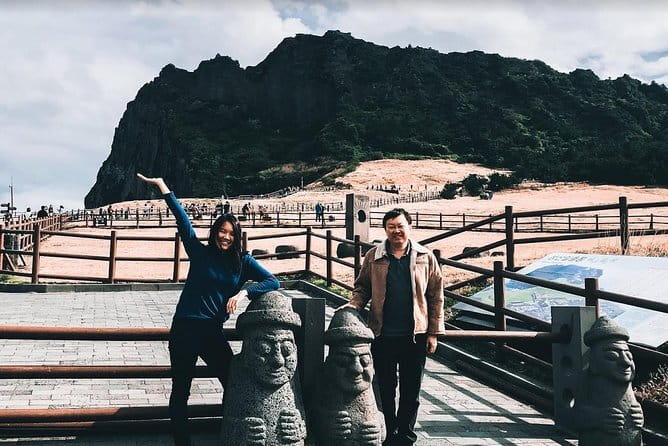
Seongsan Ilchulbong is the day’s major natural attraction. The volcanic peak rises 180 meters above the sea and has a distinctive bowl-shaped summit. The marked hike is 1.2 kilometers and takes about 60 minutes.
You should treat this as a real walk, not a quick viewpoint stop. The reward is a broad view over the coast and the crater area, but the climb may feel demanding after an early start and several previous stops. Comfortable shoes are a sensible choice.
The tour includes admission, which makes the stop easier to budget. The one-hour allocation is useful, though it leaves little spare time for a slow climb, extended photography, or a long rest. If you have limited mobility, ask before booking, since the tour information says most people can participate but does not provide detailed accessibility guidance.
Seongsan is an important part of the route because it gives the day scale. The cherry trees and village lanes are intimate. This peak opens the view and shows why east Jeju is more than a spring flower destination.
The women diver show at Umutgae Coast
At Umutgae Coast, women divers from Seongsan Village put on an outdoor show when conditions allow. You can hear labor songs and watch them enter the water and return with their catch.
The performance lasts about 20 minutes within a 30-minute stop. It is a short presentation, but its value comes from the connection to a living Jeju tradition. The women divers’ culture is recognized as UNESCO cultural heritage, and the show gives you a direct way to see and hear part of that tradition rather than only reading about it.
Weather can cancel this part of the day. That is worth taking seriously, especially if the show is your main reason for booking. A poor-weather cancellation may result in a different date or a full refund under the stated policy, but you should not count on the performance taking place in every condition.
The coast stop also follows the hike, so the schedule can feel active. I would avoid treating the show as a casual add-on. It is one of the tour’s most distinctive cultural moments.
Seopjikoji’s lighthouse, horses, and coastal views
Seopjikoji offers a different kind of Jeju scenery. Yellow canola flowers, a white lighthouse, open coastal views, and grazing Jeju horses create a simple, spacious scene. Seongsan Ilchulbong can also be seen from here, giving you another angle on the peak you visited earlier.
The stop lasts about 50 minutes, which is generous compared with the shorter flower-road visits. You can walk, take photographs, and enjoy a slower stretch after the climb and performance.
The appeal depends on the season and weather. Canola fields are a major part of the spring view, but the coast remains worthwhile for its open setting and lighthouse even if the flowers are past their best. This is a good place to let the day breathe.
Seongeup Folk Village and Jeju’s older way of life
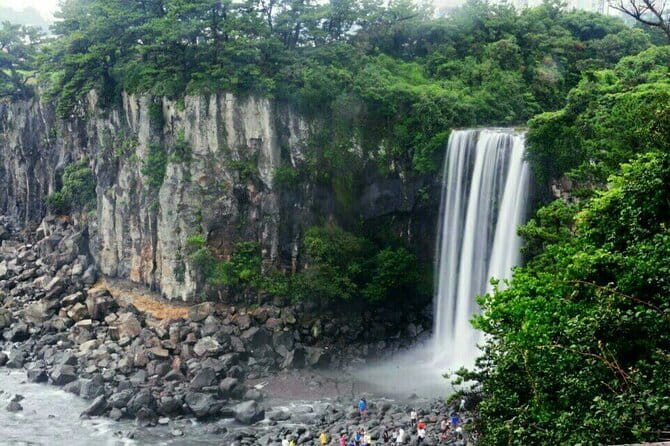
The final cultural stop is Seongeup Folk Village, a living community that served as a county office for 500 years. Its traditional stone houses, old zelkova trees, and village setting offer a look at Jeju life that modern resort areas cannot provide.
The stop lasts 30 minutes, so you should expect an introduction rather than a full historical visit. You will have time to walk through part of the community and see the traditional structures, but not to explore every corner at a slow pace.
That short visit works because the village comes after a day of natural sights. It gives the route a human scale and a useful sense of how Jeju communities were organized. The old trees and stone walls also make a pleasant final photo stop before the ride back.
What the $120 price includes
At $120 per person, this is not the cheapest way to see a few cherry trees. The value comes from the amount of ground covered and the costs folded into the price.
You receive hotel pickup and drop-off in downtown Jeju City near the international airport, transport, a driver or certified professional guide, and admissions. A group of up to 15 is small enough to be more personal than a large coach, while still keeping the cost below what a private car and guide might require.
Lunch, personal spending, and tips are separate. Tips are recommended but not compulsory. The extra lunch cost is modest, but remember that you are paying for a long day with several paid attractions already covered.
The route includes roughly three hours and 45 minutes of travel time from pickup through drop-off. That is a serious portion of the day. Jeju is larger than it may look on a map, and the distance between the city, Seongsan, the coast, and Seongeup explains the long schedule.
Guide style and group size
June Goh is the named guide associated with this experience. The supplied feedback repeatedly highlights her punctuality, clear English, cheerful manner, quick replies, and ability to explain Jeju customs and culture while driving.
Those details matter on a day with many transfers. A good guide can make road time useful instead of leaving you to guess where you are going. June is also described as attentive to preferences and willing to handle last-minute arrangements, though you should not rely on last-minute space being available.
One piece of feedback also thanks Lina Unnie for making a final day in Jeju memorable. Since the tour may be operated with more than one staff member, confirm who will guide your departure if having a particular person is important.
The small-group limit is a practical advantage. A minivan is listed for groups of one to seven, with a minibus for groups of eight to 15. That means less time organizing a large crowd, though the day still follows a set schedule and cannot give every stop unlimited time.
Who should book this day?
I would choose this tour if you are visiting Jeju in the King Cherry Blossom season and want one organized day covering the east. It suits you especially well if you want flowers, a major volcanic sight, coastal scenery, a traditional village, and a cultural show without arranging separate transport.
It is also a good fit if you value explanations from an English-speaking guide. The route has enough cultural material to reward questions, from Samsunghyeol’s origin story to Seongeup’s former county role and the women divers’ heritage.
You may want another plan if you prefer slow travel. The day has fixed stops, a substantial amount of driving, and a one-hour hill walk. It is also less suitable if the women diver show must happen for the day to feel worthwhile, since weather can prevent it.
Pickup begins at 8:30 a.m. and is limited to downtown Jeju City near Jeju International Airport. Confirm that your hotel falls within that area before booking. The tour requires no special ticket collection because mobile tickets are offered and admissions are included.
Free cancellation is available up to 24 hours before the start time. Changes or cancellations inside that window are not refundable, and bad weather may lead to a new date or full refund.
Should you book this Jeju spring tour?
Book it if you want a full, carefully packed day rather than a single attraction. The combination of King Cherry Blossoms, Noksan-ro’s canola fields, Seongsan Ilchulbong, the women diver show, Seopjikoji, and Seongeup is strong for $120, especially with transport, admissions, and hotel pickup included.
Before you commit, check three things: your dates fall near the blossom season, you can manage the Seongsan walk, and your hotel is within the pickup zone. If those details work, this is a useful way to see east Jeju without renting a car or piecing together several separate trips.
FAQ
When does the tour usually run?
The tour is designed for the King Cherry Blossom season, generally from late March to early April.
How long does the experience last?
The tour lasts approximately nine hours. Pickup starts at 8:30 a.m., and the remaining time includes travel between stops and the return to Jeju.
What is the maximum group size?
The maximum is 15 people.
Is hotel pickup included?
Yes. Pickup and drop-off are included for hotels in the downtown Jeju City area near Jeju International Airport.
What kind of transport is used?
Groups of one to seven use a minivan. Groups of eight to 15 use a minibus.
Is lunch included?
No. Lunch is purchased separately, and the suggested cost is about $10. Vegetarian menus can be suggested.
Is admission to Seongsan Ilchulbong included?
Yes. Admissions for the included attractions are covered in the tour price.
How long is the Seongsan Ilchulbong walk?
The hiking trail is 1.2 kilometers and takes about 60 minutes.
Is the women diver show guaranteed?
No. The outdoor show is subject to weather conditions.
What is the cancellation policy?
You can cancel at least 24 hours before the start time for a full refund. Cancellations or changes made less than 24 hours before the start time are not accepted for a refund. If poor weather cancels the experience, you will be offered another date or a full refund.
Just added in Jeju
- Jeju UNESCO Natural Heritage Private Tour by Certified Guide★ 5.0 · 5 reviews
- Jeju Unesco Eest course Package Private Van Guided Tour★ 5.0 · 17 reviews
- Jeju island: Van tour with a guide who the most loves JEJU★ 5.0 · 7 reviews
- Full Day Essential Jeju Island Private tour for West Course★ 5.0 · 15 reviews
- Full Day Jeju Private Customizable highlight Tour★ 5.0 · 5 reviews
- Customized private tour in Jeju island★ 5.0 · 19 reviews
- Full-day Customizable Private Jeju Island Tour★ 5.0 · 8 reviews
- jeju island Jumbo taxi Private tour with Mr.Hong East of jeju★ 5.0 · 19 reviews
Cherry Blossom & Autumn Foliage Tours, compared.
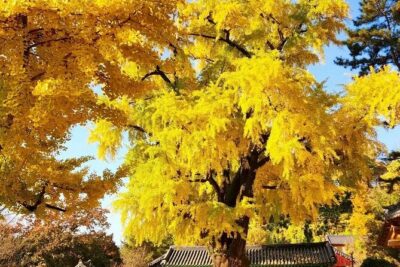
Jeonju Hanok Village Full-Day Tour:Jangtaesan Autumn Foliage
Read our review →
2026 Autumn Tour with Pink Muhly Festival Hotel Pickup
Read our review →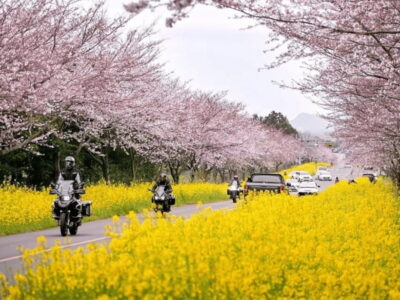
Jeju East: Cherry Blossom Early Bird Tour with Hotel Pickup
Read our review →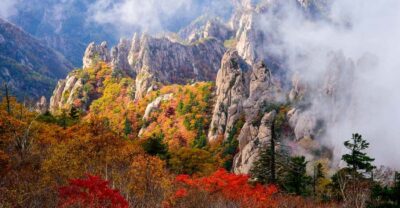
Mt. Seoraksan National Park Autumn Foliage Day Tour
Read our review →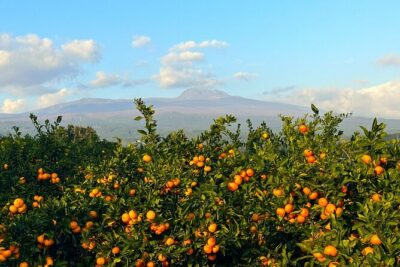
Small Group Tour for Jeju Fall Pink Muhly, Tangerines & Mt. Halla
Read our review →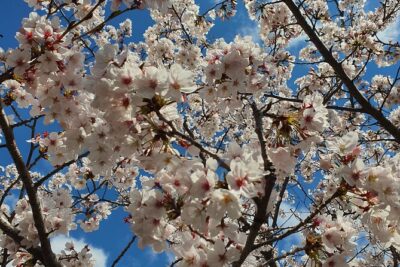
Jinhae Cherry Blossom Day trip from Busan – A Spring Adventure!
Read our review →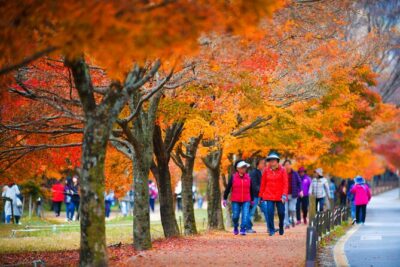
Naejangsan National Park Autumn Foliage One Day Tour from Busan
Read our review →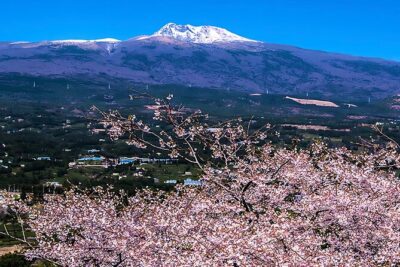
2026 JEJU Cherry Blossom West&South Full Day Tour with UNESCO
Read our review →Browse the lists this tour appears in