
Reviewed · GAMCHEON CULTURE VILLAGE & BUSAN LANDMARKS
Busan: Haeundae 100-Minute Walking Tour
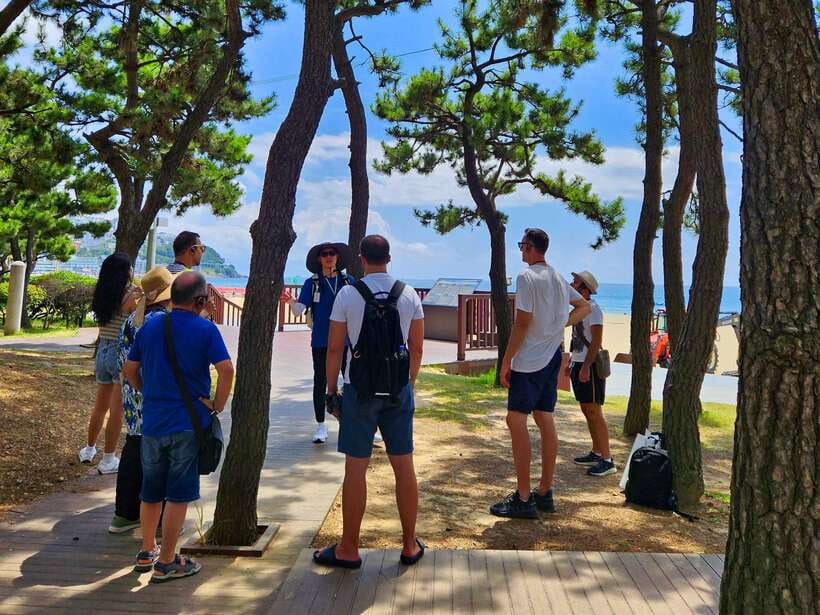
Haeundae looks like a beach resort, but its best stories sit behind the towers and cafés. This walk connects the former railway station, a seaside hot spring, the beach, and Dongbaek Island into one clear account of how a small coastal settlement became one of South Korea’s best-known districts. Guide Kim Ingyu leads in English and brings Busan’s past into the present with a friendly, conversational style.
I like the way the tour links ordinary places to larger events, especially the railway’s role during the Japanese colonial period and the beach’s later connection to the Korean War. I also like that you finish at Dongbaek Island, where the pace slows and the coastal views give you time to take it all in.
The main consideration is the distance and heat. You’ll walk about 2 kilometers and climb a hill roughly 50 meters high, so comfortable shoes and water matter. The activity is described as both 90 minutes and 100 minutes, so allow about an hour and a half to one hour and forty minutes.
Key points to know before you book

- Start at the former Haeundae Station: The old station and the Donghae-Nambu railway explain why Haeundae became a major destination.
- Follow Gunam-ro’s hot-spring story: The street grew around Gunam Oncheon, described as Korea’s only seaside hot spring.
- See Haeundae Beach in historical context: The beach was more than a leisure stop, including a period when it became a U.S. military base after the Korean War.
- Meet Busan through one district: The tour uses Haeundae to explain the city’s growth from a fishing village to South Korea’s second-largest city.
- Finish on Dongbaek Island: Coastal views and the story of scholar Choi Chi-Won provide a quieter ending.
- Expect a personal guiding style: Ingyu is described as fluent in English, funny, patient, and happy to answer questions.
Haeundae is more than a famous beach
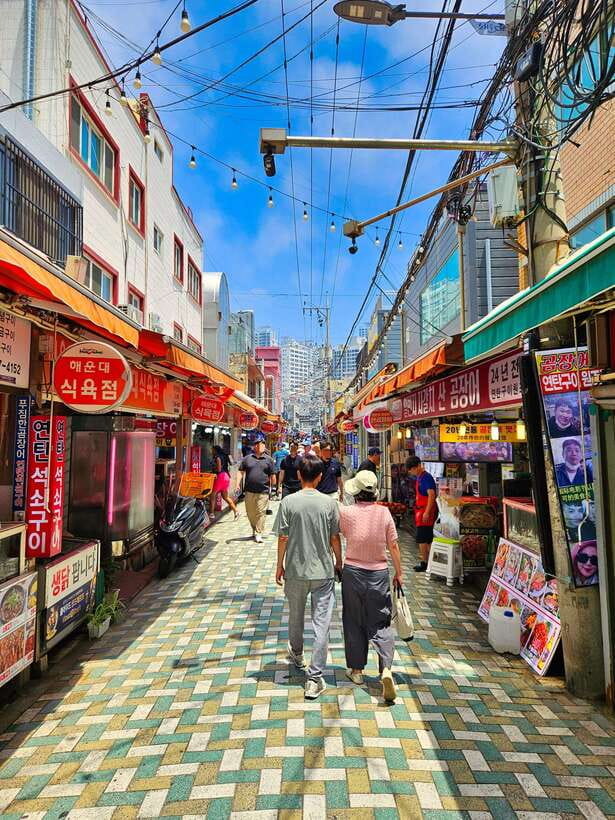
Haeundae receives around 10 million visitors a year, and most people arrive for the sand, sea, hotels, and restaurants. This tour asks you to pause before treating it as just a sunny stop on a Busan itinerary.
The useful idea here is transformation. Haeundae began as a quiet fishing area. Rail connections, hot springs, tourism, wartime events, and rapid development changed it into a district filled with tall buildings and international attention. You do not study that change in a museum. You walk through the places where it happened.
That gives the tour a practical advantage early in your visit. After 90 to 100 minutes, you should have a better sense of how Haeundae fits into Busan and why the district matters to Korean history. You also get useful orientation for exploring on your own afterward.
The tour is not designed as a long list of photo stops. Its value comes from the links between them. The station helps explain movement and development. Gunam-ro explains the hot-spring culture that drew people here. The beach opens the subject of war and international influence. Dongbaek Island brings the story back to an earlier literary and cultural figure.
Other landmark stops around Busan:
- Busan’s Cultural Wonders with Beach Train & Gamcheon Village etc
★ 4.5 · 663 reviews - Busan: Gamcheon Village and Haeundae Blueline Park Tour
★ 4.8 · 374 reviews - Busan Coastal Charm & Culture: Gamcheon Village & opt Sky Capsule
★ 5.0 · 255 reviews
Starting at the old station
Meet at the plaza by Exit 4 of Haeundae Station on Busan Metro Line 2. The official meeting location is Haeundae Atelier Chik Chik Pok Pok, the former Haeundae Station, at 621 Haeundae-daero.
Exit 4 is straightforward. When you come out, look for the public square on the right and find the guide holding a flag. Give yourself enough time to get out of the station and locate the plaza, especially if you are carrying luggage or arriving during a busy period.
Beginning at the old station is a smart choice. It puts transport at the center of the story instead of treating Haeundae as a place that simply became popular on its own. You learn how the Donghae-Nambu Line helped reshape the area during the Japanese colonial period and encouraged Haeundae’s growth as a destination.
The old railway has since been repurposed for attractions such as Blue Line Park. That contrast gives you something concrete to think about: old infrastructure can disappear from daily use while still shaping the places you see today.
The station segment is scheduled for about 20 minutes. It is one of the more useful parts of the walk if you want context rather than only scenery. The drawback is that visitors looking for an immediate beach stroll may find the opening more historical than scenic.
Haeundae Beach and the Korean War
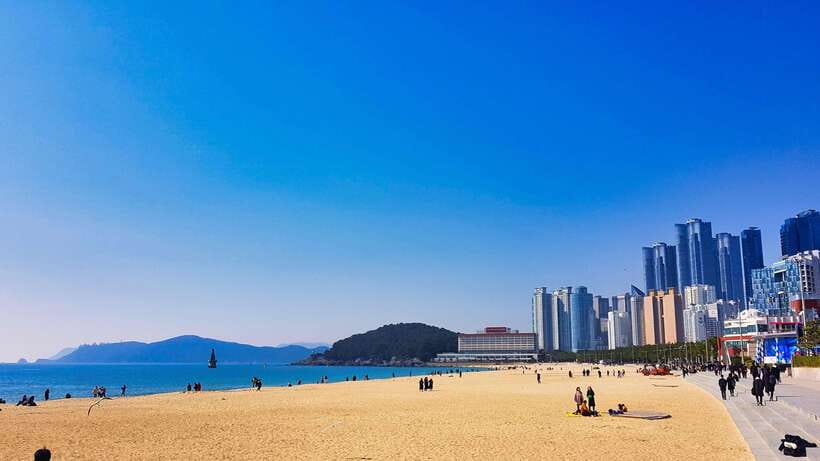
From the station area, the group heads toward Haeundae Beach for about 20 minutes of guided discussion. This is the familiar postcard setting, but the guide uses it to show how the beach’s role changed over time.
The beach became a U.S. military base after the Korean War. That detail shifts the focus from recreation to geopolitics. The tour also addresses how the relationship between North and South Korea has affected Haeundae and Busan’s development.
You will not get a broad political lecture detached from the place. The point is to understand why Busan grew in importance and how international events left their mark on a coastal district. For visitors who know little about the Korean War, this part can help connect the modern city to the peninsula’s divided past.
Allow for sun here. Haeundae Beach is open and exposed, so a sun umbrella is recommended in bright weather. Bring your own water, since it is not included. The beach stop is also one reason comfortable footwear matters less for the sand itself than for the full route that follows.
Gunam-ro and the seaside hot spring
A short five-minute walk leads to Gunam-ro, where the guided portion lasts about eight minutes. This section is brief, but it explains why Haeundae attracted people before modern beach tourism and high-rise hotels.
Gunam-ro grew around Gunam Oncheon, presented as Korea’s only seaside hot spring. The hot spring was once enjoyed by Korean royalty, and its appeal helped shape Haeundae’s social and cultural life.
That is a useful correction to the usual image of the district. Haeundae was not created only by recent development. Its appeal has long included health, leisure, status, and access to the coast. The hot spring story gives you a better sense of why people came here before the modern resort economy took over.
This stop may feel quick compared with the station and beach. That is not necessarily a problem, because Gunam-ro works as a connecting chapter rather than the tour’s main destination. Look closely at how the street functions today, then listen for the older story beneath the commercial activity.
A few more things to do in Busan worth a look
- Busan: Jagalchi Market & Gamcheon village Walking Tour
★ 5.0 · 7 reviews - Seoul moonlight walking tour with local historian
★ 5.0 · 940 reviews - Seoul: Nighttime Hidden Gems Walking Tour
★ 5.0 · 775 reviews - Seoul: Evening Dark History, Folklore & Ghost Story Walking Tour
★ 5.0 · 593 reviews
Walking back to the former station area
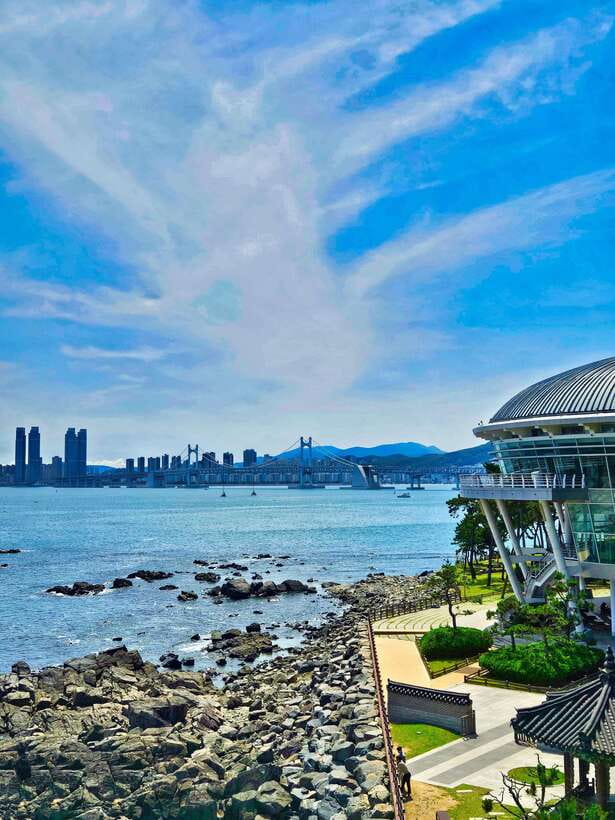
The route includes a longer walk of about 12 minutes before reaching Haeundae Atelier Chik Chik Pok Pok, the former Haeundae Station. A further walking section of about 18 minutes follows later on the way to Dongbaek Island.
The timing shows that this is a moving history lesson, not a series of indoor presentations. The wireless transmitter and receiver help you hear the guide while walking, and complimentary earphones are supplied. Personal wired earphones with a 3.5-millimeter connection are recommended for hygiene.
The old station area receives another guided segment of around 20 minutes. This gives the railway story enough room to make sense, including the line’s role in Haeundae’s development and the way the old rail corridor has found new use.
The route covers roughly 2 kilometers. Most of the walking is described as easy and suitable for all fitness levels, but the stated 50-meter hill is worth taking seriously. The activity is also listed as wheelchair accessible, yet the hill and outdoor route mean you should confirm that the terrain suits your own mobility needs before booking.
Dongbaek Island and Choi Chi-Won
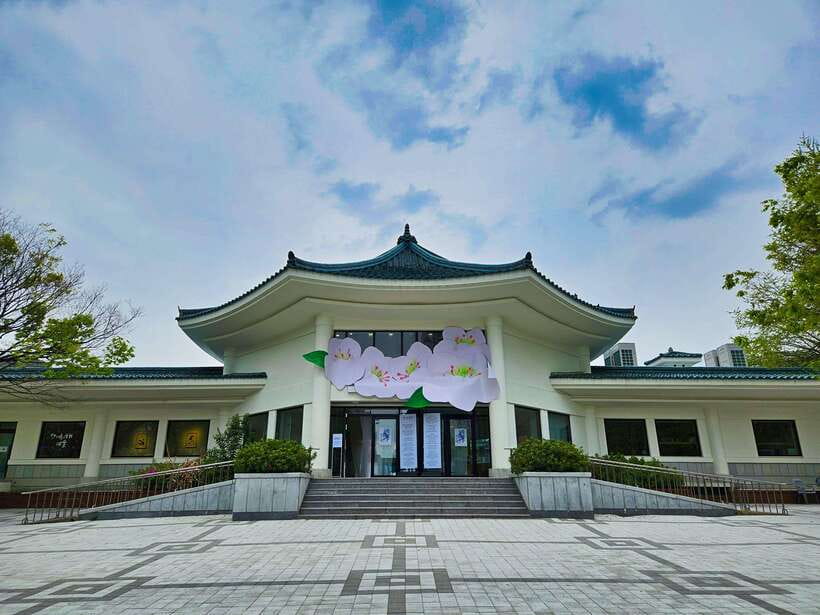
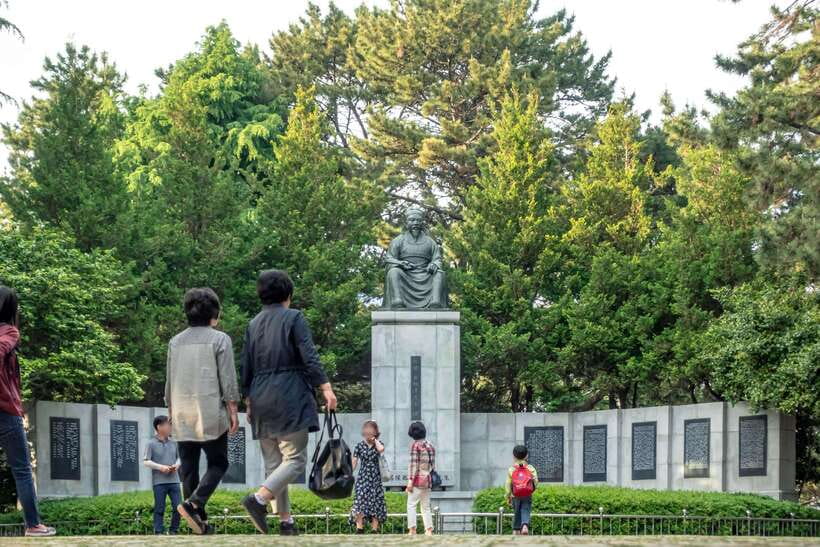
The final stop is Dongbaek Island, with about 15 minutes of guided time. Compared with the station and beach, this part offers a calmer setting and a stronger sense of place.
Here you hear about Choi Chi-Won, the scholar connected with the naming of Haeundae. His story adds an older literary and cultural layer to a district that can otherwise seem defined by modern hotels and towers.
The island is also a good ending because it gives you coastal views and a chance to reflect on the earlier stops. You have moved from railway development to hot-spring culture, then to war and national division. Dongbaek Island closes the route with a person associated with Haeundae’s name and identity.
Bring your camera, but expect the guide’s explanation to matter more than a long list of viewpoints. This is a short history walk, not a full island hike. If you want extended time for photos, plan to remain afterward and explore at your own pace.
Kim Ingyu’s guiding style
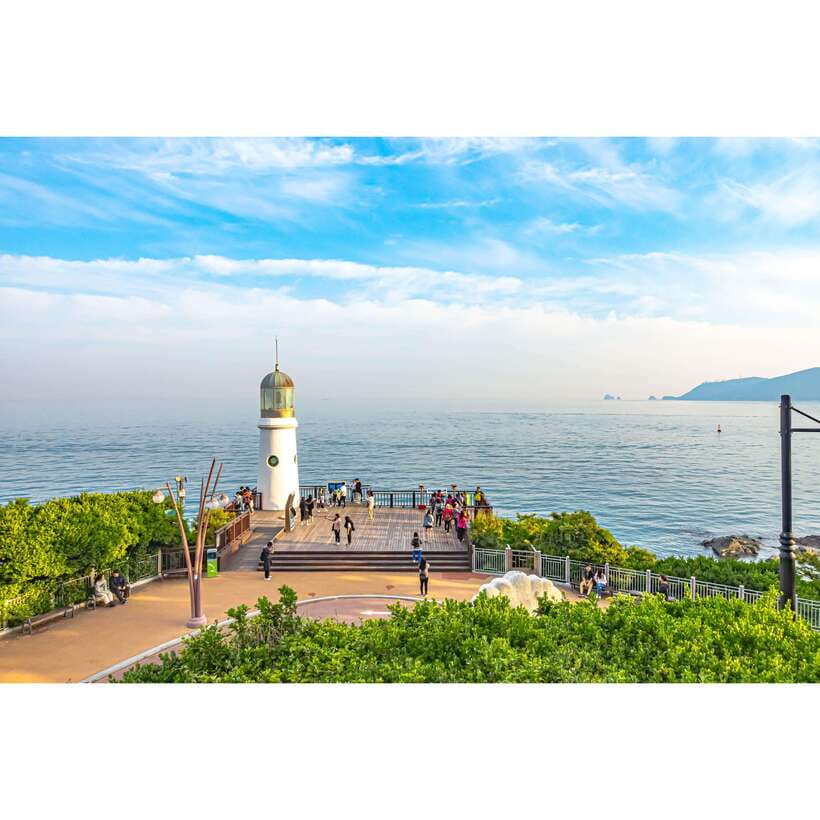
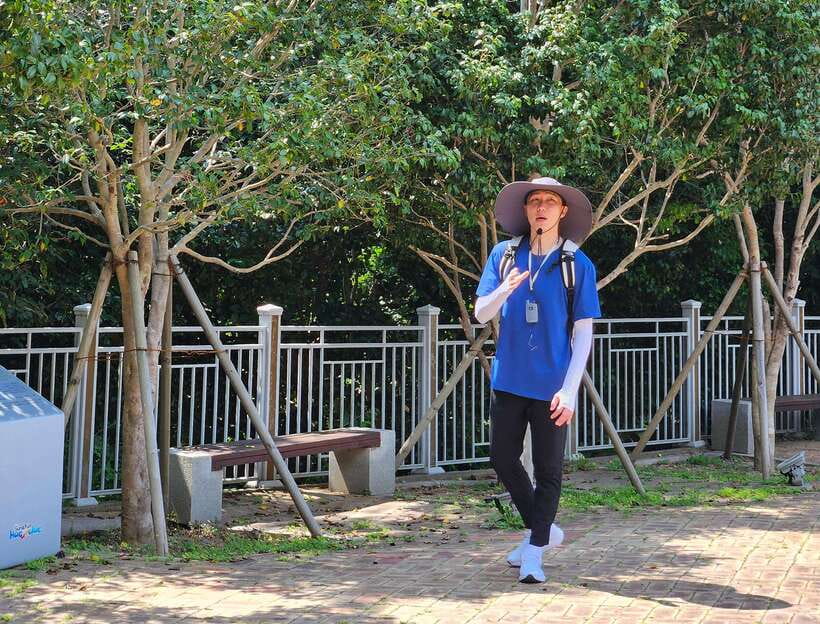
The guide most often identified with this experience is Kim Ingyu, also called Ingyu. His background as a Busan author is part of the appeal, and he has been praised for explaining local history in clear English without making the walk feel stiff.
The strongest pattern in the feedback is his delivery. He is described as friendly, funny, patient, and easy to talk with. Several visitors appreciated being able to ask many questions rather than simply listen to a fixed script. One person even continued on to lunch with him after a rainy tour, which suggests a relaxed, personal approach.
That style matters on a short tour. Haeundae has many dates, names, and political events that could become hard to follow. A guide who can explain them in plain language helps you remember the connections instead of collecting disconnected facts.
Group size may vary. Some departures have been private or nearly private because only one booking was made, while other dates may include more people. You should not book on the assumption of a private tour, but a small group can make it easier to ask questions.
The guide has also offered restaurant and further-sightseeing suggestions. Treat those as useful local pointers, not a formal food tour. The focus remains Haeundae’s past and Busan’s development.
How much value does the $29 price offer?
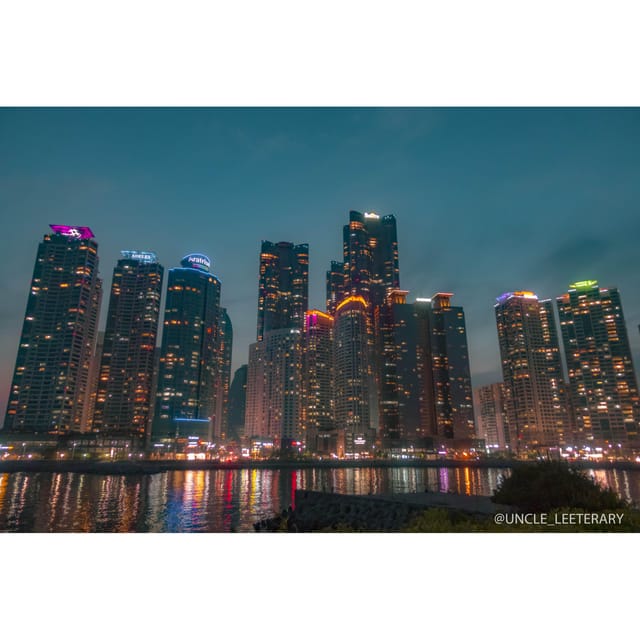
At $29 per person, this is reasonably priced if you want historical context and a guide who can answer questions in person. You are paying for an English-speaking guide, wireless audio equipment, and a carefully connected route rather than for admission to a major attraction.
The value is strongest for a first visit to Busan. If you already know Haeundae well, or mainly want time at the beach, you may prefer to explore independently. The tour does not replace a full day of sightseeing, and it does not include insurance, food, or drinks.
The route can also save you time. Instead of researching the old station, Gunam Oncheon, the beach’s wartime use, and Choi Chi-Won separately, you get the material in one walk. That makes the price easier to justify for visitors who want to understand what they are seeing.
Free cancellation up to 24 hours before the start and the option to reserve now and pay later add flexibility. Still, the practical costs are your own water, suitable shoes, and protection from strong sun.
Who should take this walk?
I would choose this tour if you like learning the story behind ordinary streets and landmarks. It suits first-time Busan visitors, history-minded adults, and anyone staying in or near Haeundae who wants more than a beach photograph.
It is also a good fit if you want a compact introduction before lunch or before spending the rest of the day around the coast. The guide’s conversational approach should appeal to people who prefer questions and discussion to a formal lecture.
Think carefully if you have limited walking ability, dislike hills, or want a tour aimed mainly at food and shopping. Children under 10 and people over 70 are listed as unsuitable, and the outdoor route can be tiring in hot or sunny weather.
The tour is offered in English and is wheelchair accessible, but the stated hill and roughly 2-kilometer route remain important practical details. Bring water and comfortable shoes, and consider a sun umbrella in clear weather.
FAQ
How long does the Haeundae walking tour last?
The activity is described as lasting 90 minutes, while the tour description also calls it a 100-minute walk or one hour and 40 minutes. Allow roughly 90 to 100 minutes.
Where do I meet the guide?
Meet at Haeundae Atelier Chik Chik Pok Pok, the former Haeundae Station, at 621 Haeundae-daero. From Haeundae Station on Metro Line 2, use Exit 4, walk to the public square on the right, and look for the guide holding a flag.
What places are included?
The route includes Haeundae Beach, Gunam-ro, the former Haeundae Station area, and Dongbaek Island. The guide discusses the railway, Gunam Oncheon, the Korean War, the relationship between North and South Korea, and Choi Chi-Won.
Is the walk difficult?
It is described as easy, but you will walk about 2 kilometers and climb a hill roughly 50 meters high. Comfortable shoes are recommended, along with your own drinking water.
Is the tour available in English?
Yes. The tour includes a live English-speaking guide and wireless audio equipment. Complimentary earphones are provided, and personal wired 3.5-millimeter earphones are recommended for hygiene.
Can I cancel or pay later?
You can cancel up to 24 hours in advance for a full refund. The reserve-now, pay-later option lets you book without paying immediately.
Should you book it?
Book this walk if you want Haeundae to make sense, not just look attractive. The route connects the old railway, seaside hot spring, wartime beach, and Dongbaek Island in a compact package, and Kim Ingyu’s friendly storytelling appears to be the main reason the experience feels personal rather than textbook-like.
Skip it if you only want beach time or find a 2-kilometer route with a hill uncomfortable. For most visitors who have a spare 90 to 100 minutes and an interest in Busan’s past, $29 is a fair price for a thoughtful introduction to the district.
Just added in Busan
- From Busan: Gyeongju Historical Day Tour with Sky Capsule★ 4.7 · 17 reviews
- From Busan: Gyeongju Full-Day Historical Tour★ 4.1 · 6 reviews
- Busan: Winter Healing Park and (Gyeongju/Daegu) One Day Tour★ 5.0 · 5 reviews
- Busan: Private Chartered Car Tour★ 4.1 · 7 reviews
- Busan’s Best: Sea Temples, Yacht Tour & Sky Capsule Day Tour★ 4.8 · 24 reviews
- Busan: Sky Capsule+ Huinnyeoul+ Gamcheon+ Songdo+ Night View★ 4.9 · 10 reviews
- Busan: Naejangsan National Park Autumn Foliage One Day Tour★ 4.8 · 4 reviews
- Busan: Jagalchi Market & Gamcheon village Walking Tour★ 5.0 · 7 reviews
Gamcheon Culture Village & Busan Landmarks, compared.
Busan’s Cultural Wonders with Beach Train & Gamcheon Village etc
Read our review →
Gamcheon Village and Haeundae Blueline Park Tour
Read our review →
Busan Coastal Charm & Culture: Gamcheon Village & opt Sky Capsule
Read our review →
Busan Tour: Gamcheon Village & Haedong Yonggungsa Temple + Lunch
Read our review →
Gamcheon Culture Village, Jagalchi fish market story telling Tour
Read our review →
Private Busan tour with gamcheon culture village and the temple (Customizable)
Read our review →
Small Group With Hotel Pickup, Sky Capsule, Local Guide
Read our review →Browse the lists this tour appears in