
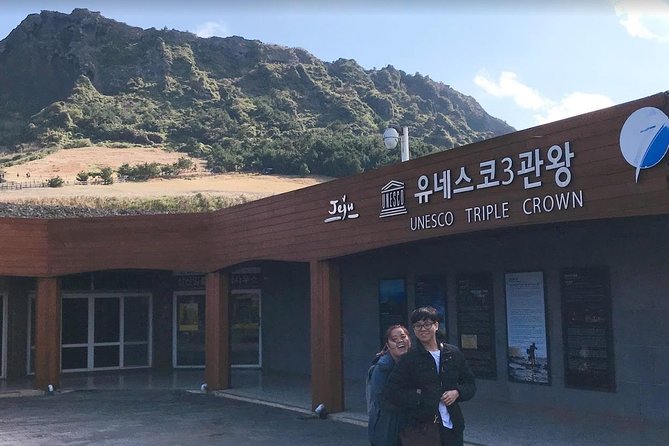
Reviewed · UNESCO WORLD HERITAGE TOURS
UNESCO Jeju Full Day Tour Package By Taxi
Jeju’s volcanic character comes into sharp focus on this full-day taxi tour: you walk through a lava tube, look across a shallow-sea volcanic cone, and finish beside beaches shaped by black rock and surf. Manjanggul Cave and Seongsan Ilchulbong are the main prizes, with a traditional Korean lunch and admission fees covered.
I like the small maximum of 10 people, which gives you a better chance to ask questions than on a large coach. I also like the practical hotel pickup from central Jeju City and the strong guide feedback tied to Lucas, who is praised for an outstanding tour experience. The main consideration is the pace: eight and a half hours with several stops and moderate walking can feel full, especially around Seongsan Ilchulbong.
Key points to know before booking
- Manjanggul Cave is the geological highlight, with the Jeju Haenyeo Museum used as the alternative on the first Wednesday of each month.
- Seongsan Ilchulbong includes the Women Diver Show, plus time at one of Jeju’s best-known volcanic formations.
- The vehicle depends on group size: a regular taxi carries 3 to 4 people, while a jumbo taxi or minivan taxi serves groups of 5 to 10.
- October and November bring a seasonal change: Sangumburi Crater replaces Seopjikoji during those months.
- The price includes more than transport, covering lunch, entrance fees, fuel, parking, and pickup from designated downtown Jeju hotels.
Why this eastern Jeju route works well
Jeju is South Korea’s largest island, and its most famous sights are spread across the coast and countryside. Public transport can make a day of sightseeing slow and awkward, especially when you want to connect a lava tube, beaches, a volcanic peak, and a crater.
This tour solves that problem with a taxi and driver who keeps the day moving. You start at 9:00 a.m. and spend about 8 hours and 30 minutes visiting eastern Jeju’s main sights. It is not a private tour, but the group is limited to 10 people, so the ride should feel more personal than a full-size bus outing.
The route has a useful mix. Manjanggul gives you geology underground. Woljeongri gives you a short seaside pause. Seongsan Ilchulbong supplies the big natural landmark and the Women Diver Show. Seopjikoji adds open coastal scenery, while Gwangchigi Beach offers a final view linked to the Jeju Olle Trail.
I see this as a strong first-day choice if you want a clear introduction to Jeju without arranging separate taxis, admission tickets, restaurants, and parking. You will not see every corner of the island, but you will cover a focused eastern route with plenty of variety.
Other listed sites within reach of Jeju:
- Jeju: Eastern Jeju UNESCO Spots Day Tour
★ 4.9 · 1,148 reviews - East Jeju Essentials – Seongsan Ilchulbong (UNESCO) & Haenyeo
★ 5.0 · 939 reviews - Jeju: Southern Top UNESCO Spots Bus Tour
★ 4.9 · 648 reviews
Walking through Manjanggul Cave
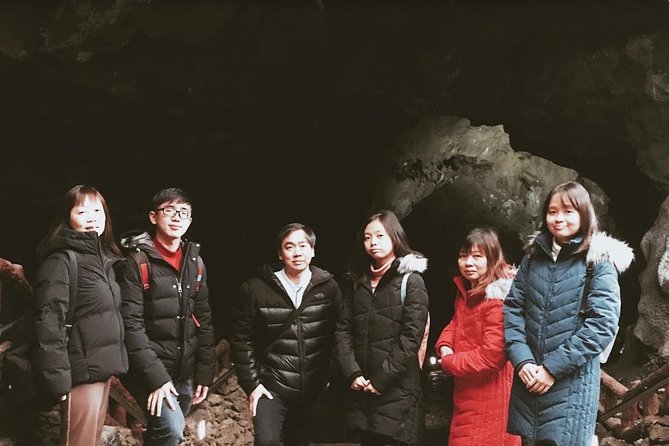
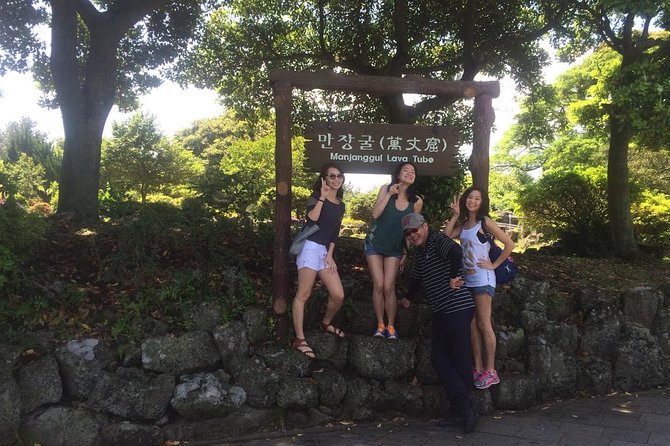
Your first major stop is Manjanggul Cave, a UNESCO World Heritage site and one of the best places on Jeju to understand how volcanic eruptions shaped the island. This is a lava tube, a natural tunnel formed when the outer layer of flowing lava cooled while hotter material continued moving beneath it.
You have about 1 hour and 10 minutes here, with admission included. That time allows you to experience the cave without adding another ticket or figuring out local transport. The attraction is less about decoration and more about seeing the structure left behind by volcanic activity. The dark rock, tunnel shape, and underground scale make the stop feel very different from the beaches later in the day.
Wear comfortable shoes. The tour information specifically warns that a moderate amount of walking is involved, and a cave visit is not the place for flimsy footwear. You should also be ready for a change in conditions from the coast, since underground spaces can feel cooler and less bright.
There is one important scheduling detail. Manjanggul Cave closes on the first Wednesday of every month. On those dates, the route uses the Jeju Haenyeo Museum instead. That alternative changes the focus from volcanic geology to Jeju’s famous women divers, so check the date if Manjanggul is the reason you are booking.
The cave was a clear favorite in the available tour feedback. One person described the lava tube as really cool and praised the choice of Jeju sights as a whole. That matches my view of the route: starting underground gives the day a real sense of place rather than opening with a quick photo stop.
A short break at Woljeongri Beach
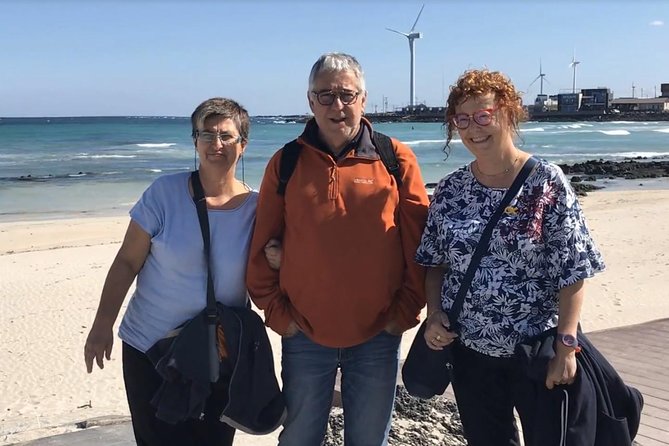
Woljeongri Beach is scheduled for about 30 minutes. That is enough for a shoreline walk, photographs, and a look at the emerald-colored water, but not enough for a long beach visit or a slow café morning.
The beach is known for white sand, calm scenery, and cafés along the nearby streets. You will have to choose how to use the short stop. If the weather is pleasant, I would spend most of the time outside, taking in the coast rather than settling in for a drink. Drinks are not included, and the stop is brief.
This is a useful pause after the cave. The day shifts from dark volcanic rock to open sea and pale sand, showing how quickly Jeju’s scenery can change. It also gives you a less strenuous moment before the longer visit at Seongsan Ilchulbong.
Do not expect Woljeongri to be a full beach day. It is a scenic interlude within a packed sightseeing schedule. If you want a quiet café experience or time on the sand, you would need a separate visit.
Seongsan Ilchulbong and the Women Diver Show
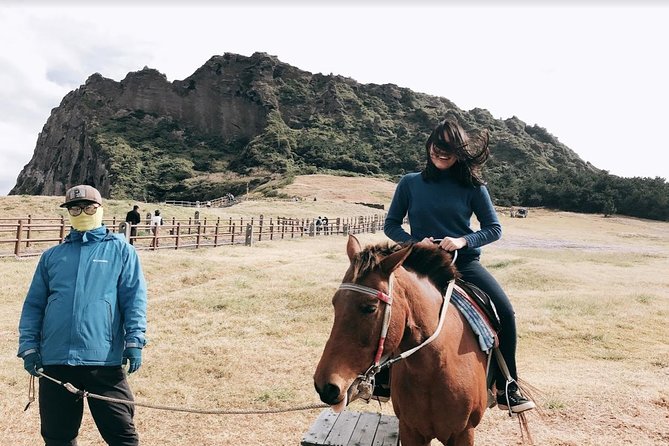
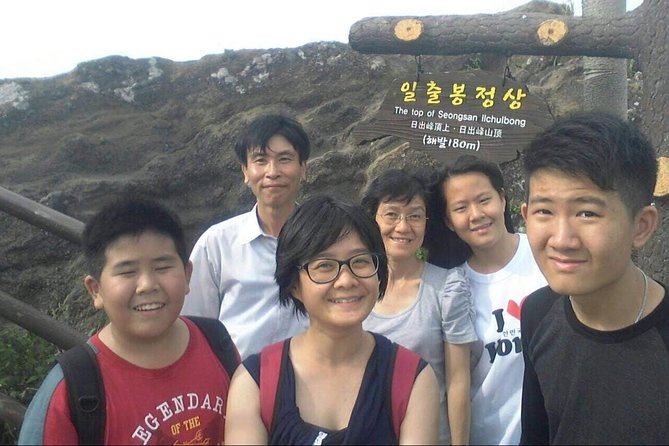
Seongsan Ilchulbong, also called Sunrise Peak, is the centerpiece of the day. You have about 1 hour and 30 minutes here, and the entrance fee is included.
The peak is a tuff cone created by hydrovolcanic eruptions in shallow water about 5,000 years ago. It rises 182 meters and has a preserved bowl-shaped crater. Its position on Jeju’s eastern coast makes the formation especially striking, with cliffs and sea adding to the view.
You do not need to be a geology fan to appreciate Seongsan. The shape is easy to understand once you see it: this is a volcanic cone with a broad crater and a strong coastal setting. The guide can connect what you saw at Manjanggul with what you see here, showing two different results of Jeju’s eruptions.
The schedule also includes a Women Diver Show. Jeju’s haenyeo, or women divers, are an important part of the island’s cultural identity, and this stop adds a human story to the day’s natural sights. The show is included in the Seongsan portion of the itinerary, so you are not choosing between it and another paid activity.
The drawback is time. An hour and a half may require you to keep moving, particularly if you want to walk up toward the peak and watch the show. The tour notes moderate walking, so bring shoes you can use on an inclined or uneven route. The itinerary does not promise a full hike to every viewpoint, so ask the driver how the timing will work on your date.
If you want to see Jeju’s most recognizable volcanic formation, this is the stop that justifies the eastern route. It also gives the day its clearest connection between natural history and local culture.
A few more things to do in Jeju worth a look
- Jeju Southern UNESCO Full Day Tour with Mt.Halla
★ 5.0 · 400 reviews - Jeju: West & South Full-Day Authentic Tour
★ 5.0 · 359 reviews - Jeju island Eastern UNESCO site Full Day Guided Tour
★ 5.0 · 170 reviews - Full Day 12 hours whole Jeju Island private flexible tour
★ 5.0 · 25 reviews
Seopjikoji, sea cliffs, and seasonal scenery
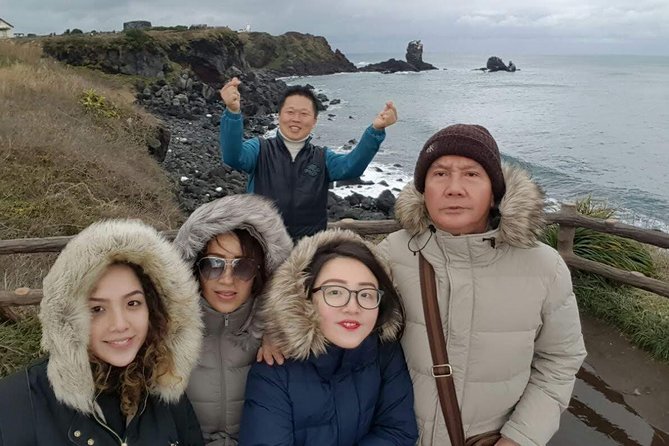
Seopjikoji sits at the end of Jeju’s eastern shore. The name is local: Seopji is the old name for the area, and koji is a Jeju dialect word for a sudden bump in the land.
You have about an hour here, with no admission charge. The appeal is open coastal scenery rather than a single indoor attraction. In April, yellow canola flowers add color to the area, making this a particularly attractive seasonal stop.
The coastal setting also gives you breathing room after Seongsan. You can look out over the shore, walk a little, and enjoy the broad views without paying another entrance fee. It is a good place for photographs, though the experience depends on weather and the season.
In October and November, Seopjikoji is replaced by Sangumburi Crater. That is not a minor timing note. If you are visiting in those months, the day shifts from an eastern coastal headland to another volcanic feature. Sangumburi has a one-hour visit with admission included, making it a fitting seasonal alternative for anyone interested in Jeju’s geology.
The route description also lists Gwangchigi Beach after the main sights, so the day still includes a coastal finish. Since exact timing can vary with the group and conditions, it is sensible to confirm the order with the driver at the start.
Gwangchigi Beach and the Jeju Olle Trail
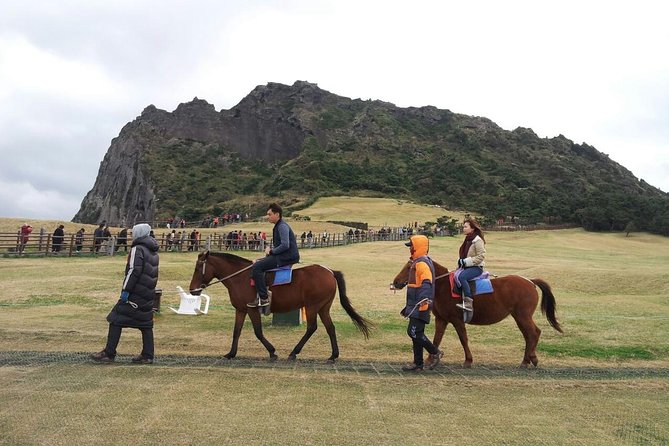
Gwangchigi Beach is scheduled for about 20 minutes. It is the last part of the first course of the Jeju Olle Trail, where the second course begins.
That makes the stop more than another beach photo. It connects your sightseeing day with Jeju’s wider walking route, a network known for following the island’s coast and rural paths. You will not have time for a long section of trail, but you can see the starting point and enjoy a final view of the shore.
Twenty minutes is short, so think of this as a closing snapshot rather than a major attraction. I like the way it ends the route outdoors, after the cave, peak, and seasonal crater or headland. If your energy is fading, it is also an easy final stop because you are not expected to complete a long walk.
What the $184.48 price covers
At $184.48 per person, this is not the cheapest way to see Jeju’s east coast. Its value depends on how many inclusions you would otherwise pay for or arrange yourself.
The price includes:
- Pickup and drop-off at designated hotels in downtown Jeju City
- Transport by regular taxi for groups of 3 to 4
- Jumbo taxi or minivan taxi for groups of 5 to 10
- An advanced English or Chinese-speaking driver
- Fuel and parking fees
- Entrance fees
- A traditional Korean lunch
That package removes several small costs that can add up. You are not paying separately for the cave, Seongsan, the seasonal crater when used, parking, or fuel. Lunch is also covered, though drinks and personal expenses are not.
The group size matters just as much as the inclusions. A regular taxi may be used for a smaller group of 2 to 4 people, while larger groups use a jumbo taxi or minivan taxi. Since the tour is shared rather than private, you should be comfortable keeping to a common schedule.
The strongest guide feedback is linked to Lucas. The available comments describe him as professional and outstanding, with one person saying they would choose him again for another tour. That is useful context because the driver is central to a taxi-based day. A good guide can make the transfers feel purposeful rather than simply filling time between stops.
Pickup limits, walking, and cancellation rules
Pickup and drop-off are included only for designated hotels in downtown Jeju City. If your accommodation is outside that area, an extra charge of 40,000 to 120,000 Korean won applies. Confirm your hotel location before booking, since that fee can change the total value.
The tour requires booking at least 24 hours ahead, and confirmation is subject to availability. The maximum is 10 people per booking, and most people can participate, though you should be prepared for a moderate amount of walking.
Comfortable walking shoes are the practical choice. You will move through a cave, visit a volcanic peak, walk by beaches, and possibly explore a crater or coastal headland. This is not a bus-only sightseeing ride.
Cancellation is free up to 24 hours before the start time for a full refund. Changes or cancellations made less than 24 hours ahead are not accepted for a refund. The tour also requires a minimum number of people, so if it is canceled for that reason, you are offered another date or experience, or a full refund.
Who should book this Jeju taxi tour?
I would recommend it to a first-time Jeju visitor who wants to cover the island’s eastern highlights in one organized day. It suits you especially well if you are staying in central Jeju City, prefer not to drive, and want a guide to handle parking, admissions, and the route.
It is also a good fit if your interests are split between nature and culture. Manjanggul and Seongsan explain Jeju’s volcanic origins, while the Women Diver Show and lunch add local character. Woljeongri, Seopjikoji or Sangumburi, and Gwangchigi keep the day from feeling like a single-theme geology lesson.
I would think twice if you want a slow beach day, a private itinerary, or a long hike at Seongsan. The schedule is efficient and fairly full. You will see a lot, but you will not linger everywhere.
Final verdict: a practical first look at eastern Jeju
Book this tour if you want a well-rounded day with the island’s most important eastern sights, especially Manjanggul Cave and Seongsan Ilchulbong. The included lunch, tickets, parking, fuel, and downtown hotel transfers make the price easier to justify, while the small group keeps the taxi format personal.
Before paying, check three things: your hotel’s pickup zone, the date of the Manjanggul closure, and the October-November substitution of Sangumburi Crater for Seopjikoji. If those details fit your plans, this is a sensible way to get your Jeju bearings fast without renting a car.
FAQ
What is included in the Jeju taxi tour?
The tour includes downtown Jeju City hotel pickup and drop-off, taxi transportation, an English or Chinese-speaking driver, fuel, parking, entrance fees, and a traditional Korean lunch.
How long does the tour last?
The experience lasts approximately 8 hours and 30 minutes.
What time does the tour start?
The scheduled start time is 9:00 a.m.
Is this a private tour?
No. This is a shared tour with other customers, with a maximum of 10 people.
What vehicle is used?
A regular taxi may be used for groups of 2 to 4 people. Groups of 5 to 10 use a jumbo taxi or minivan taxi.
Is hotel pickup included?
Pickup and drop-off are included for designated hotels in downtown Jeju City. Hotels outside that area require an additional fee of 40,000 to 120,000 Korean won.
What happens if Manjanggul Cave is closed?
Manjanggul Cave closes on the first Wednesday of every month. On those dates, the Jeju Haenyeo Museum is used as the alternative stop.
What replaces Seopjikoji in October and November?
Sangumburi Crater replaces Seopjikoji in October and November.
Is lunch included?
Yes. A traditional Korean lunch is included. Drinks, infant meals, and personal expenses are not included.
Can I cancel for a refund?
Yes. You can cancel at least 24 hours before the start time for a full refund. Cancellations or changes made less than 24 hours before the start time are not refunded or accepted.
Just added in Jeju
- Jeju UNESCO Natural Heritage Private Tour by Certified Guide★ 5.0 · 5 reviews
- Jeju Unesco Eest course Package Private Van Guided Tour★ 5.0 · 17 reviews
- Jeju island: Van tour with a guide who the most loves JEJU★ 5.0 · 7 reviews
- Full Day Essential Jeju Island Private tour for West Course★ 5.0 · 15 reviews
- Full Day Jeju Private Customizable highlight Tour★ 5.0 · 5 reviews
- Customized private tour in Jeju island★ 5.0 · 19 reviews
- Full-day Customizable Private Jeju Island Tour★ 5.0 · 8 reviews
- jeju island Jumbo taxi Private tour with Mr.Hong East of jeju★ 5.0 · 19 reviews
UNESCO World Heritage Tours, compared.
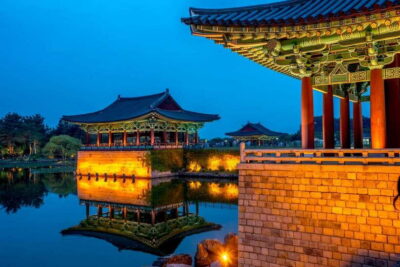
Gyeongju UNESCO World Heritage Guided Day Tour
Read our review →
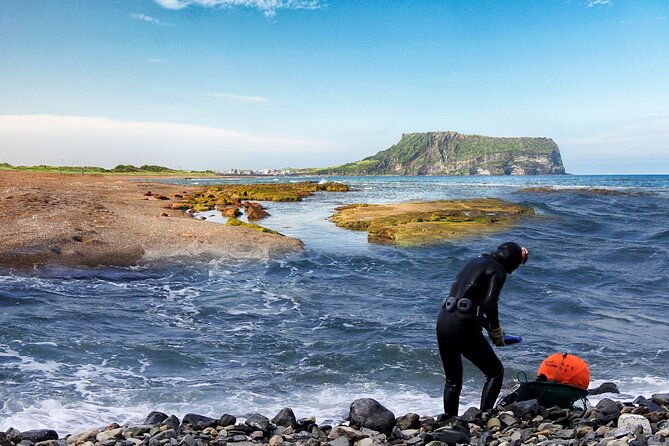
East Jeju Essentials – Seongsan Ilchulbong (UNESCO) & Haenyeo
Read our review →
Jeju Southern UNESCO Full Day Tour with Mt.Halla
Read our review →
Gyeongju UNESCO sites Private tour with licensed tour guide
Read our review →
Private Gyeongju Tour – Explore Gyeongju UNESCO Sites
Read our review →
Browse the lists this tour appears in