
Reviewed · UNESCO WORLD HERITAGE TOURS
Private Gyeongju Tour – Explore Gyeongju UNESCO Sites
Gyeongju is South Korea’s ancient capital, and this private day tour brings its biggest sights into one well-planned loop. You move from Bulguksa Temple and Seokguram to royal tombs, an old observatory, a palace pond, and the Gyeongju National Museum, with a guide to connect the pieces.
I like the private vehicle and flexible pacing, especially for families or groups with mixed interests. I also like the chance to eat at Hongsi Hanjeongsik, a traditional Korean restaurant, though the meal is paid separately. Guides such as Jason, Lily, Joy, Finn, and Cynthia are often praised for clear English, local knowledge, and help with family photos.
The main consideration is time in the car. Depending on traffic and your pickup point, the driving can take three to four hours of the day. The schedule is full, too, and the two paid sites cost an extra ₩6,000 per person in total.
Key points to know before booking
- Seven major stops in 8 to 9 hours: You see temples, tombs, palace remains, scientific heritage, and museum collections in one day.
- A truly private outing: Your group alone participates, with options for one to seven people or a larger private group of eight to fifteen.
- Strong guide element: Jason, Lily, Joy, Finn, Cynthia, Arthur, Mimi, and other guides are noted for history, cultural explanations, flexibility, and family-friendly care.
- Lunch is arranged, not included: Hongsi Hanjeongsik offers a traditional meal, but you should budget separately for food.
- Two admission fees are extra: Daereungwon costs ₩3,000 per person and Donggung Palace and Wolji Pond costs ₩3,000.
- Good for a long day outside Busan: Pickup, fuel, parking, tolls, and an air-conditioned vehicle are included.
Why this private Gyeongju day works
Gyeongju can feel scattered if you try to cover it by public transportation in one day. Bulguksa and Seokguram sit southeast of the central historic district, while the royal tombs, observatory, palace pond, and museum lie in and around the city center.
I like the way this tour handles that geography. You do not spend the day figuring out bus connections or searching for a taxi between widely separated sites. Instead, the vehicle links the sights while the guide fills in the story.
The day lasts about eight to nine hours. That is long enough to cover the major highlights, but it is not a slow, lingering visit to every site. If you like seeing a lot in one day, the pace makes sense. If you prefer long museum visits, quiet temple time, or unhurried photography, you may want to ask the guide to reduce the number of stops.
The private format matters here. A guide can adjust the pace for children, older relatives, weather, traffic, or your interests. One family group with children and grandparents found this flexibility especially useful, while another group appreciated changes made during a busy Chuseok holiday. That does not guarantee every day will run perfectly, but it shows why a private booking can be more useful than a fixed group excursion.
More Silla-era sites from South Korea:
- Busan: Gyeongju Guided Day Trip to Three Kingdoms Capital
★ 4.8 · 1,925 reviews - From Busan: Gyeongju UNESCO World Heritage Guided Day Tour
★ 4.8 · 1,250 reviews - Gyeongju UNESCO World Heritage Guided Day Tour from Busan
★ 5.0 · 660 reviews
Bulguksa Temple and the Silla Buddhist world
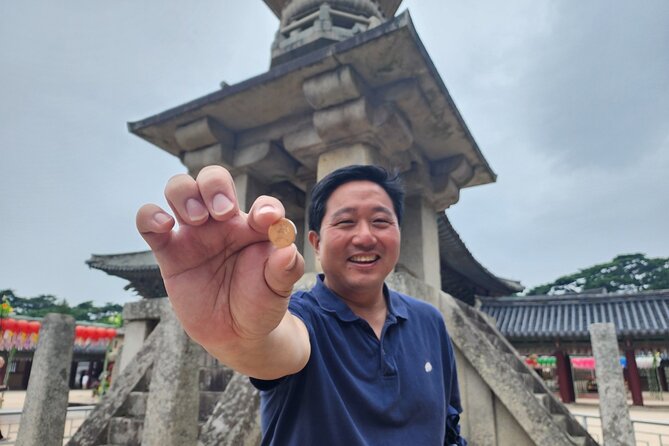
Bulguksa is the emotional center of the morning. Built during the Silla period, the temple expresses Buddhist ideas through stone terraces, stairways, gates, pagodas, and carefully ordered courtyards.
You get about an hour here. That is enough to see the principal structures and hear how the temple fits into Silla Buddhism, but it is not enough to inspect every architectural detail at leisure. A guide earns the fee at this stop by pointing out what you would otherwise walk past: the symbolism of the approach, the meaning of the stonework, and the way the complex was designed as a sacred space rather than simply a collection of buildings.
I would pay close attention to the contrast between the refined wooden buildings and the older stone elements. Bulguksa is not only a pretty temple stop. It gives you a clear introduction to the religious and artistic ideals that shaped much of Gyeongju.
Admission is listed as free. Wear shoes you can walk in comfortably, since the temple visit involves moving around an expansive complex rather than standing in one small viewing area.
Several guides receive particularly warm praise for this part of the day. Eunhee, also called Daisy, is noted for explaining Silla and Buddhist traditions with care. Kim is described as calm and thoughtful when discussing Buddhism and Korean history. A guide like this can make Bulguksa much more meaningful than a quick photo stop.
Seokguram Grotto and the mountain road
From Bulguksa, the tour continues to Seokguram, a Buddhist grotto built into the mountainside. The site is known for its central Buddha and its unusual setting inside a purpose-built stone chamber.
The visit lasts about an hour, including the approach to the grotto. Seokguram is a different experience from Bulguksa. Bulguksa spreads across open courtyards, while Seokguram focuses your attention on one carefully planned sacred interior.
The grotto is protected, so the experience is more controlled and less flexible than wandering through a temple complex. You may not linger exactly where you wish, but the setting and craftsmanship make the stop worthwhile. Your guide can explain how the grotto relates to Silla Buddhist thought and why it is paired with Bulguksa as a UNESCO World Heritage site.
This is one of the places where timing matters. The day includes several major sites, so you should tell your guide early if Seokguram is a top priority. A private guide can usually help you spend your available time where it matters most, although the total route still depends on traffic and site conditions.
Hongsi Hanjeongsik for a traditional Korean lunch
The lunch stop at Hongsi Hanjeongsik adds a welcome change of pace. Hanjeongsik is a traditional Korean meal served with multiple dishes, so this is less about grabbing something quickly and more about experiencing a broad Korean table.
The restaurant is described as a well-regarded local choice in the Gyeongju area. Guides may explain the dishes, suggest what to try, and help you understand how the meal fits into Korean dining customs. Cynthia, for example, is praised for taking a group to a local restaurant they would not have found alone and for helping them learn a few Korean words. Finn is also praised for explaining the food and recommending a traditional restaurant.
There is one important pricing point. The general description presents local lunch as part of the day, but the detailed cost information says meals are not included. Treat lunch as an arranged stop rather than a prepaid feature. Ask your guide about the expected cost if you want to plan your budget accurately.
Lunch also gives you a chance to tell the guide what you want from the afternoon. If your group includes children, older adults, or anyone who needs a slower pace, this is a good moment to reset the schedule.
Other listed sites within reach of South Korea:
- Jeju: Eastern Jeju UNESCO Spots Day Tour
★ 4.9 · 1,148 reviews - Jeju: Southern Top UNESCO Spots Bus Tour
★ 4.9 · 648 reviews - Jeju Southern UNESCO Full Day Tour with Mt.Halla
★ 5.0 · 400 reviews - Jeju: Eastern UNESCO Sites Tour with Haenyeo Show
★ 4.8 · 217 reviews
Daereungwon Tomb Complex and the Silla royal burial mounds
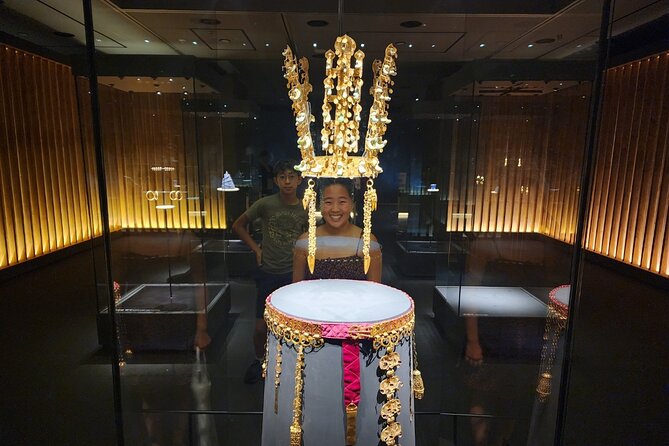
Daereungwon brings you into the middle of Gyeongju’s ancient royal district. Large grassy burial mounds rise from the city, giving the area a striking appearance and a strong sense of the scale of the Silla kingdom.
You have about an hour here. The tombs are not castles or temples, so the visit depends heavily on explanation. Without context, you may see green mounds and move on. With a guide, you can learn how royal and noble burials were built, what the size and placement of the mounds suggest, and why Gyeongju has such an unusual historic core.
The complex is also a good photography stop. The broad open spaces provide a visual contrast to Bulguksa’s courtyards and Seokguram’s enclosed chamber.
Admission costs ₩3,000 per person and is not included. That is a small extra charge, but it is worth knowing in advance since the tour price does not cover every entrance fee.
If you are traveling with a 90-year-old relative or a young child, discuss walking distances before the day begins. One poor experience involved a group with a five-year-old and a 90-year-old who felt the pacing and bathroom breaks were not handled well. The operator disputed parts of that account, but the practical lesson is sound: state mobility needs, rest needs, and preferred parking arrangements clearly before departure.
Cheomseongdae and the science of ancient Korea
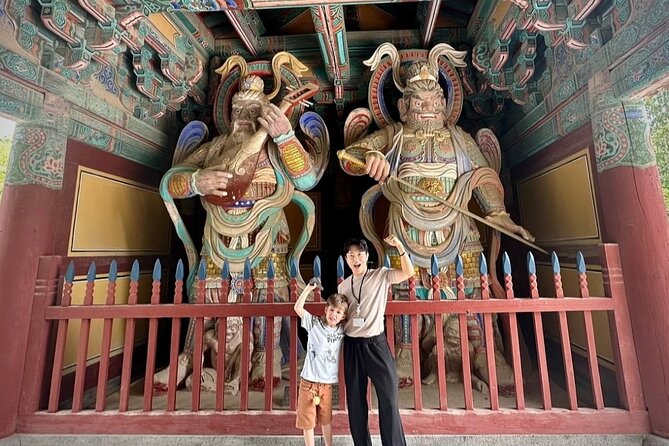
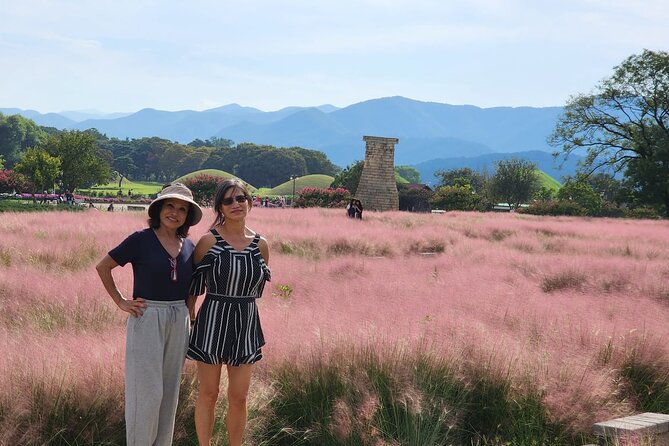
Cheomseongdae is a compact stop with a big idea behind it. This stone structure is described as the world’s oldest surviving astronomical observatory and is linked to Silla’s interest in studying the sky and measuring time.
The visit lasts about an hour, though the structure itself does not require that long to view. The value comes from the explanation. Your guide can help you understand why the observatory mattered and how its design reflects the scientific ambitions of its period.
The listed description notes that the structure uses 362 stones, symbolizing the days of the year. Details like this give the stop more weight than its modest size might suggest.
Cheomseongdae sits in the historic center, near other ancient sites. The area can be busy during holidays or special events, and traffic may affect the order of the day. Guides such as Arthur and Lily are praised for changing routes and timing when crowds made the original plan less practical.
Donggung Palace and Wolji Pond
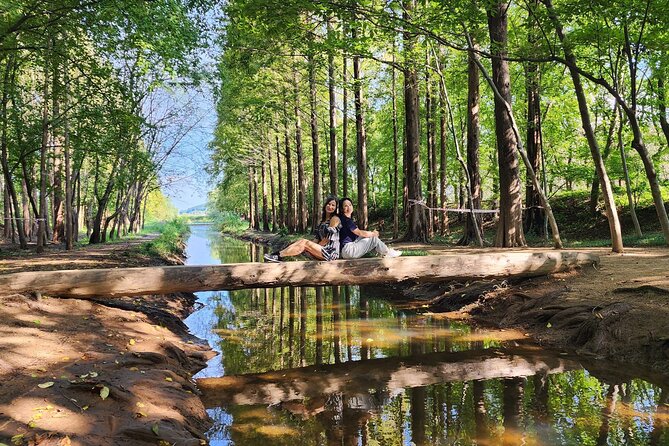
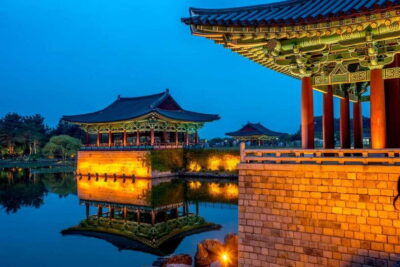
Donggung Palace and Wolji Pond is often the most atmospheric stop on the route. The pond was created in 674 during the reign of King Munmu of Silla, and the palace complex served as a royal place for banquets and important occasions.
You have about an hour here. The combination of reconstructed palace buildings, water, and open views makes it visually different from the tombs and temples. It also helps you picture royal life in a way that a single stone monument cannot.
If your schedule allows, ask whether an evening visit is possible. One guide, Lily, is specifically praised for taking a group to see the palace lit at night. The lighting can give the pond a different mood, but an evening arrangement depends on your start time, season, traffic, and the guide’s route.
Admission is ₩3,000 per person, separate from the tour price. The site is well worth the modest fee, but keep the extra charge in mind when comparing the total cost of private tours.
Gyeongju National Museum for the objects themselves
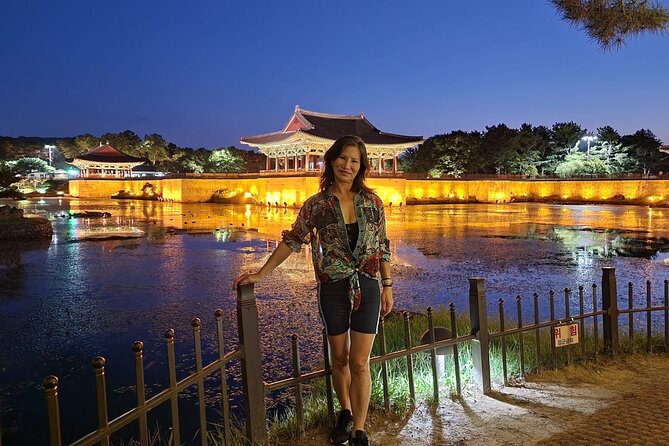
The Gyeongju National Museum gives the day a useful final chapter. After seeing temples, burial mounds, and palace remains in place, you can view objects unearthed in and around Gyeongju.
The museum holds artifacts connected with the Silla kingdom and helps explain the materials, craftsmanship, and beliefs behind the monuments. I like having the museum near the end because it gives you a chance to connect physical objects with the places you saw earlier.
The visit is listed as about an hour, with free admission. That is enough for a focused introduction, though serious museum fans may want more time. If the museum is a major reason for your trip, tell the guide before the day starts so the schedule can reflect that interest.
The museum also offers a break from the heat, rain, or cold. Mimi is praised for adjusting the plan during chilly, wet weather, and other guides have adapted schedules during hot days and holiday crowds. That sort of flexibility is one of the clearest reasons to choose a private day.
The guide makes or breaks the value
The price is $186.50 per person, which is not a bargain if you are traveling alone. It becomes more reasonable as the group grows because you are paying for the vehicle, driver-guide service, fuel, parking, tolls, and private attention rather than simply buying individual entry tickets.
For one to seven people, the tour is private to your group. A separate option is available for groups of eight to fifteen. The group size affects the value, comfort, and ease of moving between sites, so compare the per-person price with what separate transportation and a private English-speaking guide would cost.
Guide quality is central. Jason is praised for punctual pickups, clear English, detailed explanations, route flexibility, and taking family photos. Lily is praised for warmth and for handling holiday crowds. Joy is described in many accounts as pleasant, culturally informed, and fluent in English, although one account raises concerns about pace, breaks, and communication. Finn receives praise for working well with a mixed-age family, while Cynthia is noted for interactive questions and a personal touch.
I would send a short message before booking or shortly after confirmation. Explain your group’s ages, walking limits, lunch preferences, interest in photography, and whether you prefer the guide to walk with you at each site or give you free time. One piece of practical advice from the supplied information is especially useful: make clear at the start whether you want the guide to accompany you inside each place or let you explore independently after arrival.
What the day includes, and what it does not
Pickup and drop-off are offered at select locations. The vehicle is air-conditioned, and fuel, parking, and toll fees are included. That matters in Gyeongju, where the route covers a wide area and traffic can change the day’s timing.
Entrance is free at Bulguksa, Seokguram, Cheomseongdae, and the National Museum according to the supplied details. Daereungwon and Donggung Palace and Wolji Pond each cost ₩3,000 per person. Meals are not included, despite the planned traditional lunch stop.
Most people can participate, and the tour is near public transportation. Still, this is a full day with walking, steps, changing weather, and several hours in a vehicle. Comfortable shoes, water, and a weather check are sensible preparations.
Free cancellation is available if you cancel at least 24 hours before the local start time. Within 24 hours, refunds are not provided and changes are not accepted.
Who should book this Gyeongju tour
I would choose this tour if you have only one day for Gyeongju and want the major sights without managing the transport yourself. It is particularly useful for families, small groups, older relatives, and visitors staying in Busan who want a private day trip with an English-speaking guide.
It also suits history-minded people who want more than photographs. Bulguksa, Seokguram, the tombs, Cheomseongdae, the palace pond, and the museum cover religion, royal power, science, architecture, and daily cultural context.
I would hesitate if you are on a tight budget, dislike long driving days, or want to spend half a day at one site. In that case, a shorter custom tour may suit you better. I would also confirm the lunch cost and walking plan before departure.
Should you book it?
Book it if you value efficient transport, a private guide, and a full sweep of Gyeongju’s main historic sights. The strongest part of the experience is not a single ticketed attraction. It is having someone like Jason, Lily, Finn, Cynthia, Joy, or another assigned guide explain what you are seeing and adjust the route when weather, crowds, or family needs get in the way.
Skip it if you want a slow, independent visit or if the per-person price is too high for your group size. For everyone else, this is a practical way to make one long day in Gyeongju count.
FAQ
How long does the private Gyeongju tour last?
The tour lasts approximately 8 to 9 hours.
How many people can join the private tour?
The small private option is for one to seven people. A mid-sized private option is available for one group of eight to fifteen people.
Is hotel pickup and drop-off included?
Pickup and drop-off are included at select locations. Confirm that your accommodation is within the available pickup area when booking.
Is lunch included in the price?
Meals are not included. The route includes a stop at Hongsi Hanjeongsik, a traditional Korean restaurant, but you pay for the meal separately.
Which entrance fees are extra?
Daereungwon Tomb Complex costs ₩3,000 per person, and Donggung Palace and Wolji Pond costs ₩3,000 per person. The other listed stops have free admission according to the supplied tour details.
Is the tour conducted in English?
Yes. The experience includes an English-speaking, professionally qualified guide.
What happens if I need to cancel?
You receive a full refund if you cancel at least 24 hours before the experience start time. Cancellations or changes made within 24 hours are not accepted for a refund.
Just added in South Korea
- Seoul: Winter Day Tour in Pocheon (+Strawberry Picking)★ 4.1 · 5 reviews
- Suwon: Baseball Game with Fortress and Local Food Tour★ 5.0 · 3 reviews
- Seoul: War Memorial of Korea Private Guided Museum Tour★ 4.9 · 29 reviews
- Seoul: Private Tour to Nami Island, Garden, Petite France★ 5.0 · 4 reviews
- Seoul: Wine & Korean BBQ, Perfect Pairing Dinner in Sinchon★ 5.0 · 6 reviews
- Seoul : Your Personal Photographer in Gyeongbokung★ 5.0 · 7 reviews
- Seoul : Efoil Experience in Han River★ 5.0 · 5 reviews
- Seoul: Suwon Hwaseong & Waujeongsa & Starfield Heritage Tour★ 4.8 · 27 reviews
UNESCO World Heritage Tours, compared.
Gyeongju UNESCO World Heritage Guided Day Tour
Read our review →
Jeju Southern UNESCO Full Day Tour with Mt.Halla
Read our review →
Jeju island Southern UNESCO Day Tour With Hallasan MT
Read our review →
Gyeongju UNESCO Legacy Tour with National Museum
Read our review →
Jeju island Eastern UNESCO site Full Day Guided Tour
Read our review →Browse the lists this tour appears in