
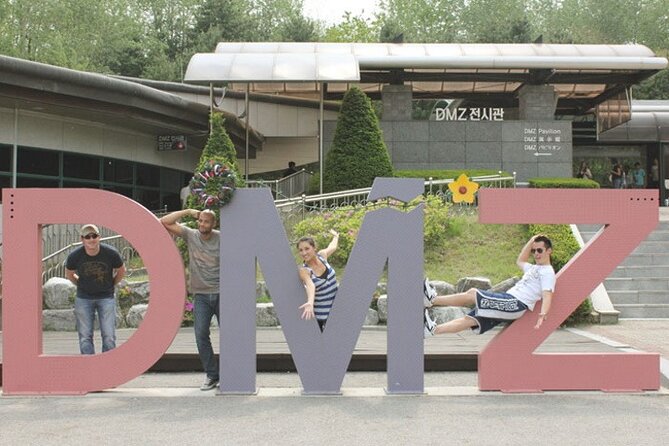
Reviewed · DMZ & JSA TOURS
365-day DMZ Special Tour including Monday & Public Holiday
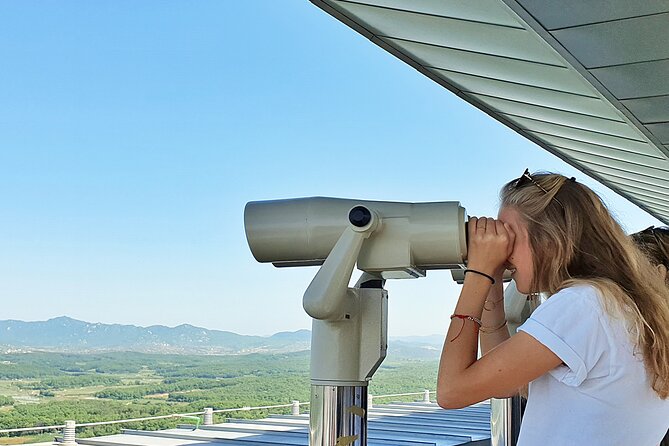
The most striking part of this day trip is the contrast: Seoul’s subway is behind you, but within about an hour you are looking toward North Korea from a guarded border zone. At Imjingak, memorials and the Freedom Bridge show the human cost of division. At Dora Observatory, weather permitting, you can look across the fields toward North Korean territory and military posts.
I like the English-speaking guide format, especially because guides such as Sookhee, Young, Roy, and Chloe bring humor and useful context to a difficult subject. I also like the choice of Monday routes, which replace the closed 3rd Tunnel with the Peace Gondola, Gloster Hill Memorial Park, and Heroes Suspension Bridge.
The main catch is that this is a long, tightly timed day. You may walk quickly between stops, and the 3rd Tunnel and suspension bridge route require a fair level of fitness. Monday also offers a different experience rather than the classic tunnel-and-observatory itinerary, so check your travel date before booking.
Key points
- Two different itineraries: Tuesday through Sunday focuses on the 3rd Tunnel, Dora Observatory, and Unification Village. Mondays and national holidays use alternative sites.
- A serious subject with strong guiding: The tour explains the Korean War, the division of Korea, and the continuing military importance of the DMZ.
- Multiple Seoul pickup points: Pickup is available at selected subway stations, with exact meeting points and times depending on the option you book.
- A physically active morning: The 3rd Tunnel includes a steep route, while the Heroes Suspension Bridge visit involves walking and outdoor terrain.
- Lunch is not included: Bring food or plan carefully, since the available stops can be limited, especially on the Monday route.
- Good value at $59: Transport, guiding, and several admission fees are included, making this a practical choice if you do not have a car.
Why the DMZ makes a worthwhile day from Seoul
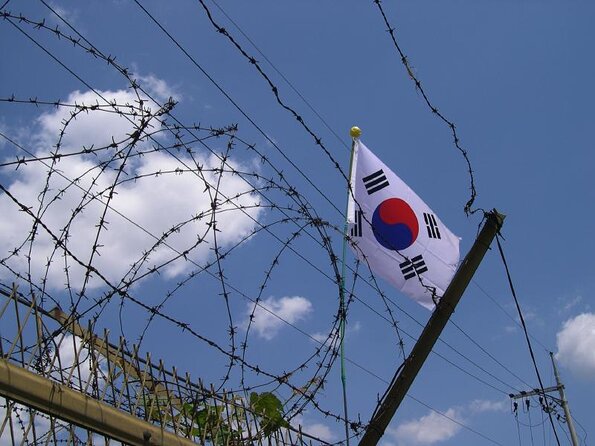
The Korean Demilitarized Zone is close to Seoul in distance but far removed in feeling. You leave the capital’s dense streets and head toward a border shaped by war, negotiation, fear, and hope. The DMZ is not simply a sightseeing stop. It is an active military area, and access can change with weather, inspections, or military schedules.
That uncertainty is part of the experience. You are not visiting a museum exhibit built for tourists. You are entering an area where routes and openings can change without warning. The operator may replace a closed site with a similar stop, and no refund is provided for a last-minute military closure.
This tour works well if you want the practical ease of organized transport but still want enough time to understand what you are seeing. A guide gives you the basic military and political context, then points out why a bridge, memorial, tunnel, or viewing platform matters.
Other trips up to the border from Seoul:
- Best DMZ Tour Korea from Seoul (Red Suspension Bridge Optional)
★ 5.0 · 41,422 reviews - DMZ Tour: 3rd Tunnel, Option(Suspension Bridge, Boat) from Seoul
★ 5.0 · 21,373 reviews - DMZ tour south Korea from Seoul (NK experience hall, defector)
★ 5.0 · 20,599 reviews
Early pickup and the ride north
The day begins early at a designated Seoul subway station. Pickup times vary by season, with departures roughly between 6:00 and 7:50 in the morning. Be at your meeting point at least 10 minutes early. The vehicle will not wait for late arrivals, and the tour departs on schedule at each pickup location.
The tour finishes around 3:30 p.m. at City Hall Station, although large events or traffic can force the final drop-off to Hongik University Station in Hongdae. That is worth noting if you have an afternoon reservation or train connection.
Transport is one of the strongest reasons to choose this tour. Reaching the DMZ independently is not simple, and a private car is unnecessary for most visitors. The group can include up to 40 people, so this is not an intimate custom tour, but the guide remains with the group and explains the sites along the way.
Imjingak Peace Nuri Park and the Freedom Bridge
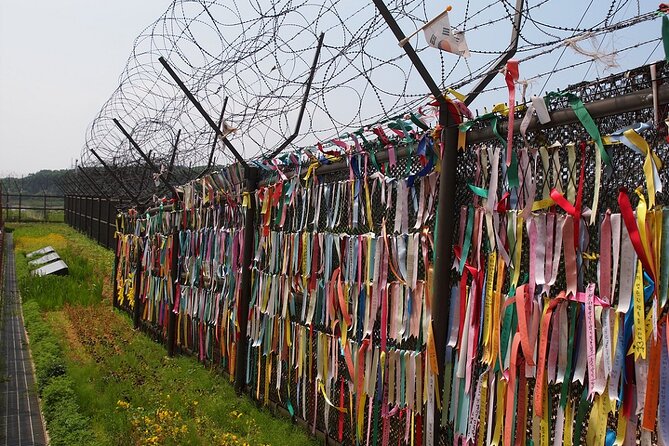
Imjingak is the emotional starting point. The park was created as a place of comfort for people who fled North Korea during the Korean War. Its monuments, memorials, and border-related displays introduce the division of the Korean Peninsula in a direct and visible way.
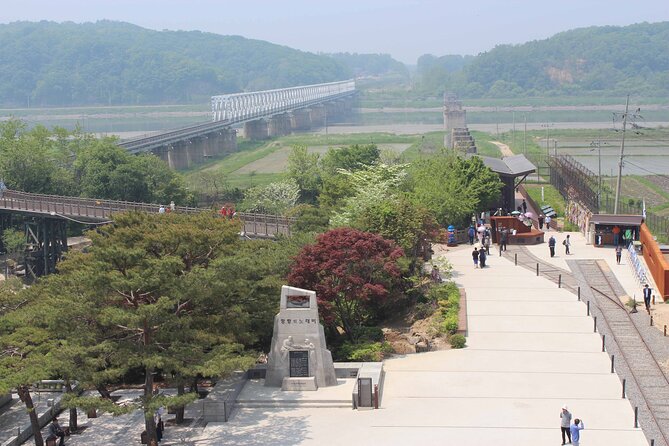
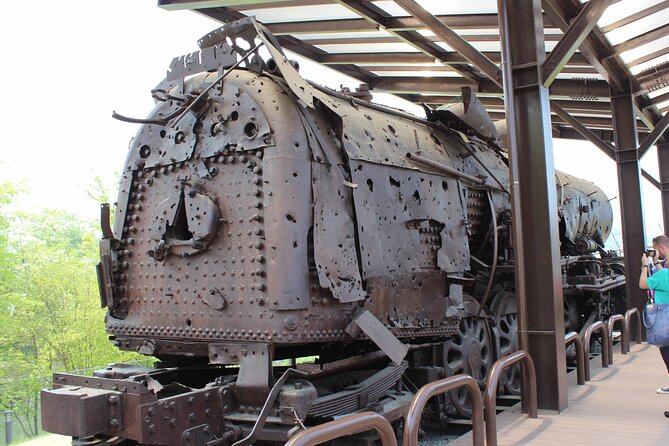
The Freedom Bridge is the best-known feature. Prisoners of war and other people returning from North Korea crossed here after the conflict. The bridge is no longer a normal route between two countries, which gives the site its weight. It represents both return and separation.
Allow yourself time to look beyond the obvious photo stops. The Soldiers’ Memorial and other markers make the park feel less like a single attraction and more like a public place of remembrance. You will have about an hour here, enough to see the main points without feeling rushed.
This is also a useful place to ask your guide questions. The tour is more rewarding when you understand the difference between the armistice that stopped active fighting and a formal peace agreement. The war has not technically ended, and that fact helps explain the security around every later stop.
North Korea Experience Hall and the Monday route
The North Korea Experience Hall offers a more educational look at life and politics north of the border. It is useful if you want additional explanation rather than only a distant view across the DMZ. The visit lasts about 30 minutes, so expect a short introduction rather than a full museum visit.
The itinerary changes on Mondays, national holidays, and certain closure days. The 3rd Tunnel, Dora Observatory, and several nearby sites are generally unavailable then. Instead, the tour uses the DMZ Peace Gondola, Jangsan Natural Observatory or Odusan Unification Observatory, Gloster Hill Memorial Park, and the Heroes Suspension Bridge.
This alternate route is not a lesser version of the day. It shifts the focus from military infrastructure to memorials, scenery, and the Korean War battle sites around Paju. If Monday is your only free day, this tour gives you a sensible way to see the border area without pretending that all attractions operate every day.
The tradeoff is clear: book Tuesday through Sunday if the 3rd Tunnel and Dora Observatory are your priorities. Choose Monday if you value a broader route and want to visit the Gloster Hill and bridge sites.
Same base, a different kind of day out:
- Seoul: DMZ Tour with Optional Suspension Bridge
★ 4.8 · 5,277 reviews - Signature DMZ Tour: Exclusive Defector Talk & Suspension Bridge
★ 5.0 · 4,459 reviews - Thrilling Korean DMZ 3rd Tunnel Tour from Seoul + Red Bridge Rush
★ 5.0 · 3,097 reviews - DMZ Past and Present: Korean Demilitarized Zone Tour from Seoul
★ 5.0 · 2,481 reviews
The 3rd Infiltration Tunnel
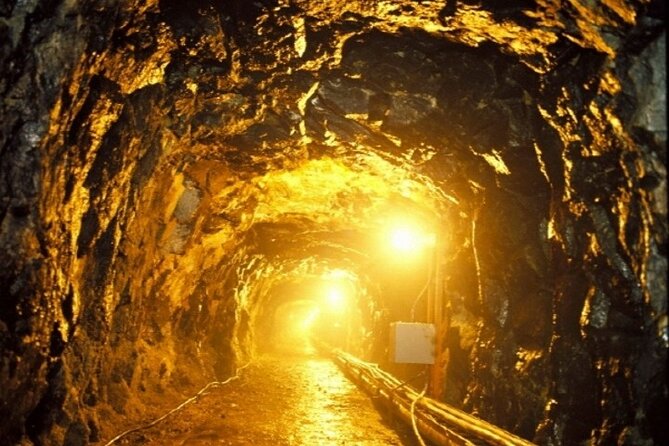
From Tuesday through Sunday, the 3rd Tunnel is the most physically demanding stop. Discovered in 1978, it was built to support an invasion of South Korea. The tunnel extends about 1,635 meters, although the visitor route is only part of that distance.
Expect a steep walk. The route can be tiring, and the operator specifically advises against this portion for people with heart conditions, other serious medical issues, or pregnancy. You need moderate physical fitness, and comfortable shoes are a sensible choice.
The tunnel is valuable because it turns an abstract military threat into something physical. You are walking through a passage cut through rock for a hostile purpose, close to one of the most heavily guarded borders in the world. It is not polished or relaxing, and that is precisely why it leaves an impression.
You have about 30 minutes at the site, so listen carefully to the guide and keep moving with the group. The schedule does not allow a slow, independent exploration.
Dorasan Peace Park and the border story
Dorasan Peace Park adds historical and educational context. The theater and exhibition hall include an eight-minute film about the Korean conflict, presented from the South Korean perspective. The short film helps place the tunnel and border views into a wider story.
The park is also a reminder that the DMZ is tied to reunification hopes as well as military division. That theme appears throughout the day, but here it is presented in a more organized way. You can expect around 30 minutes, including the film or exhibition visit.
The presentation is not a complete account of every political viewpoint. It is a South Korean interpretation, and you should keep that in mind. A good guide can help explain the background and distinguish historical facts from national memory.
Dora Observatory and Unification Village
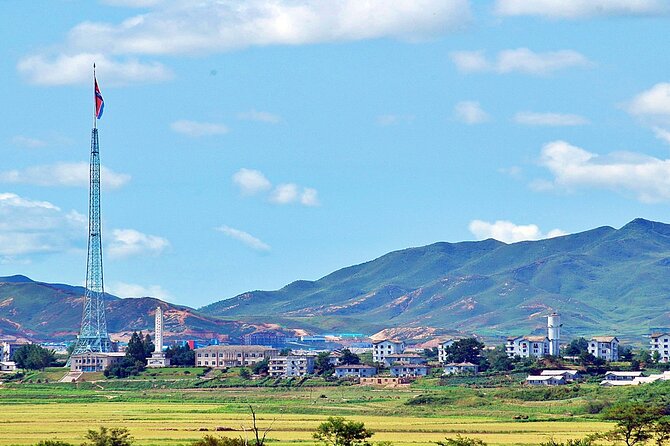
Dora Observatory sits on Dorasan Mountain and offers a view toward North Korea. On a clear day, you may see fields, settlements, military positions, and the general shape of the northern side. Fog, haze, or rain can reduce the view to very little, so keep your expectations flexible.
Even on a poor-weather day, the stop can still work because the area provides visual material and explanations. The importance is not only how far you can see. It is the act of standing at a controlled lookout where the border is close but remains inaccessible.
The tour also visits Tongilchon Village, often called Unification Village. It lies inside the Civilian Control Zone and is not shown on many ordinary maps. The village is associated with Jangdan soybeans and life in a restricted border area. You have about 20 minutes here, so this is a brief look rather than a full village visit.
The short schedule is a recurring feature of the tour. You see many significant sites, but you do not get long stretches of quiet time at each one.
Monday’s Gloster Hill and Heroes Suspension Bridge
The Monday route brings a different kind of wartime story. Gloster Hill Memorial Park honors soldiers of the British Army’s Gloucestershire Regiment who fought at the Seolmari battle site during the Korean War. The memorial adds an international angle to a conflict often presented mainly through Korean and American history.
The Heroes Suspension Bridge, also known as Gamaksan Heroes Bridge in the tour information, crosses an area tied to fierce fighting. At the time of its construction, it was Korea’s longest suspension bridge. The walk gives you outdoor views and a stronger sense of the terrain around the battle sites.
This part of the tour may appeal to you if you prefer memorials and open-air stops to a confined tunnel. It can also be more scenic. Still, the bridge route is physically active, and closures are possible in heavy rain, snow, or because of security restrictions.
If the bridge or Gloster Hill is closed, the tour may visit Odusan Unification Observatory or the War Memorial of Korea instead. Those substitutions are practical, but the exact day’s route is not guaranteed.
Guides, group rhythm, and the overall pace
The guide can make or break a history-heavy day. Sookhee is repeatedly identified in the tour feedback as warm, organized, attentive, and good at keeping the schedule moving. Young is described as friendly, funny, and strong on historical explanation. Roy and Chloe also receive praise for energy and clear commentary.
You should expect a guide who talks during transfers and at each stop, not a silent driver who simply drops you off. The best part of the tour is often the explanation of why a place matters, especially when the site itself consists of a marker, road, or distant view.
The pace is brisk. One assessment specifically points out that the time at each stop and between stops is limited. You should be ready to walk, listen, take a few photos, and rejoin the group promptly.
That rhythm suits people who want a full introduction in one day. It is less suitable if you prefer lingering at one memorial, taking long photographs, or wandering alone.
What the $59 price really includes
At $59 per person, the tour offers solid practical value. You receive round-trip transport from a Seoul pickup point, an English-speaking guide, and access to included attractions such as the 3rd Tunnel. You also avoid arranging separate transport into a controlled military area.
Lunch, drinks, and individual hotel pickup are not included. The price is therefore best understood as transport plus guiding and admissions, not as an all-inclusive day. Bring snacks, especially for a Monday departure. Food options may be limited, and one Monday schedule offered little beyond a Dunkin’ Donuts stop.
The group size can reach 40 people. That keeps the price reasonable, but it also means you need to stay alert for instructions. If you want a private conversation with a guide or a completely flexible schedule, this is not the right format.
Practical details before you book
The tour runs for about nine hours, though the published end time is around 3:30 p.m. The duration includes the early pickup, highway transfers, security-related movement, and the return to central Seoul.
The experience requires moderate physical fitness. The 3rd Tunnel and Heroes Suspension Bridge are the clearest concerns. If you have a heart condition, another serious medical issue, or are pregnant, the operator does not recommend these sections.
The DMZ can close suddenly for security reasons. Weather may also affect the outdoor Monday route and the views from observatories. The operator can change the schedule without advance notice, so do not book this on a day when missing one specific stop would ruin your plans.
You can cancel for a full refund up to 24 hours before the start time. The same 24-hour cutoff applies to changes. The tour also requires at least five participants, and if that minimum is not met, you may be offered another date, another experience, or a refund.
Should you book this DMZ tour?
Book it if you want an efficient first visit to the DMZ, need transport from Seoul, and value a guide who can explain the war and its continuing effect. It is especially useful for visitors staying in Seoul without a car, and for anyone who wants a full day that ends early enough to leave part of the afternoon free.
Choose Tuesday through Sunday if the 3rd Tunnel, Dora Observatory, and Unification Village are essential. Choose Monday or a national holiday if you are happy with the Peace Gondola, Gloster Hill, and Heroes Suspension Bridge route.
I would skip it only if you need a slow pace, dislike group schedules, or cannot manage steep walking. For everyone else, $59 is a fair price for the transport, access, and historical guidance. Pack snacks, wear comfortable shoes, arrive early, and treat the DMZ as a serious border zone rather than a standard sightseeing stop.
FAQ
How long does the DMZ tour last?
The experience lasts about nine hours and generally ends around 3:30 p.m.
Where does the tour start and end?
The main meeting point is City Hall Station in Seoul. Pickup locations can vary by selected option, and the tour normally ends at City Hall Station. If traffic or a major event makes City Hall difficult to reach, the final stop may be Hongik University Station in Hongdae.
Is hotel pickup included?
No. Individual hotel pickup and drop-off are not included. Pickup is available at selected Seoul subway stations.
Which days include the 3rd Tunnel?
The 3rd Tunnel is visited Tuesday through Sunday, when it is open. It is replaced on Mondays, national holidays, and certain closure days.
What is included in the price?
The price includes an English-speaking professional guide, pickup at designated locations, and admission to included attractions such as the 3rd Tunnel.
Is lunch included?
No. Lunch, food, and drinks are not included. Bringing snacks is particularly useful on the Monday route.
Is the tour physically demanding?
You need moderate physical fitness. The 3rd Tunnel and Heroes Suspension Bridge involve physical activity, and the operator does not recommend those sections for people with heart conditions, other serious medical issues, or pregnancy.
Can the itinerary change?
Yes. The itinerary may change because of weather, traffic, military schedules, safety inspections, or sudden DMZ closures. If a site closes, a similar attraction may be substituted.
Can I cancel for a refund?
You can cancel for a full refund up to 24 hours before the experience begins. Cancellations or changes made less than 24 hours before the start time are not accepted for a refund.
Just added in Seoul
- Suwon: Baseball Game with Fortress and Local Food Tour★ 5.0 · 3 reviews
- Seoul: War Memorial of Korea Private Guided Museum Tour★ 4.9 · 29 reviews
- Seoul: Wine & Korean BBQ, Perfect Pairing Dinner in Sinchon★ 5.0 · 6 reviews
- Seoul : Your Personal Photographer in Gyeongbokung★ 5.0 · 7 reviews
- Seoul : Efoil Experience in Han River★ 5.0 · 5 reviews
- Seoul: Vivaldi Park Winter Ski with Eobi Ice Valley Day Tour★ 4.6 · 16 reviews
- Seoul: Vivaldi Park Winter Ski with Nami Island Day Tour★ 5.0 · 4 reviews
- Seoul: SnowyLand in Vivaldi Park with Nami or Alpaca★ 4.8 · 11 reviews
DMZ & JSA Tours, compared.
Best DMZ Tour Korea from Seoul (Red Suspension Bridge Optional)
Read our review →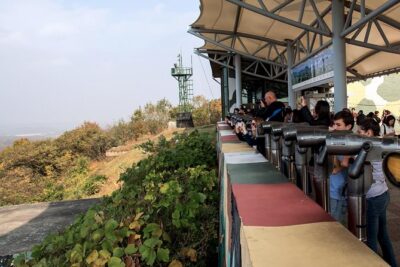
DMZ Tour: 3rd Tunnel, Option(Suspension Bridge, Boat) from Seoul
Read our review →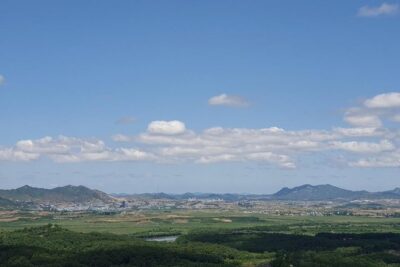
DMZ tour south Korea from Seoul (NK experience hall, defector)
Read our review →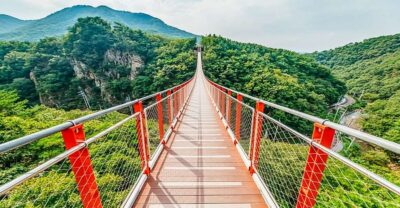
DMZ Insider Tour: 3rd Tunnel, NK Defector Meet & Red Bridge
Read our review →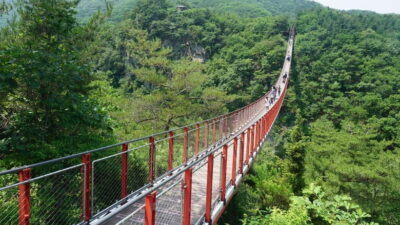
Signature DMZ Tour: Exclusive Defector Talk & Suspension Bridge
Read our review →
Thrilling Korean DMZ 3rd Tunnel Tour from Seoul + Red Bridge Rush
Read our review →
DMZ Past and Present: Korean Demilitarized Zone Tour from Seoul
Read our review →Browse the lists this tour appears in