
Reviewed · DMZ & JSA TOURS
Seoul: DMZ Tour with Optional Suspension Bridge
The Korean DMZ is not a theme park border crossing. It is a quiet, tightly controlled strip of land where the Korean War still shapes daily life. This tour takes you to Freedom Bridge, the Third Infiltration Tunnel, and Dora Observatory, where you may see North Korea across the 4-kilometer buffer zone.
I like the clear historical storytelling and the chance to see places that are difficult to reach independently. Guides such as Winnie, Kenny, Sophie, and Henry are praised for making the complicated story understandable, often adding personal or family memories. The main drawback is physical: the tunnel has a steep slope, and the optional Gamaksan Bridge involves about 40 minutes of hiking.
Key points at a glance
- See North Korea from Dora Observatory: On a clear day, you can look across the DMZ toward North Korean territory and border villages.
- Walk the Third Infiltration Tunnel: This underground passage is the most physical part of the standard tour, with a steep route and a 30 to 40 minute round trip.
- Hear the human story at Freedom Bridge: The bridge represents separated families and the continuing hope for reunification.
- Choose your extra stop carefully: Gamaksan Suspension Bridge adds scenery and exercise, while Aegibong Observatory offers a different view tied to displaced families.
- Expect a full day outside Seoul: The tour usually lasts 7 to 9 hours, with about an hour of travel each way and possible delays from traffic or military controls.
- Bring your passport and sensible shoes: Flip-flops, slippers, and heels are poor choices for this trip.
Why the DMZ is worth a day from Seoul
You do not visit the DMZ for polished sightseeing. You go to understand how the Korean Peninsula remains divided more than 70 years after the 1953 armistice. The area is both a military frontier and a place loaded with family memories, political tension, and hopes for peace.
The tour gives you several ways to approach that story. At Imjingak Park, the focus is emotional and historical. At the Third Tunnel, it becomes physical. At Dora Observatory, the subject turns visual as you look toward North Korea. At Unification Village, you see how people live and work close to one of the world’s most watched borders.
That variety helps. A bus lecture alone would feel abstract, but the stops put scale and place around the history. You can stand at a bridge associated with divided families, walk through a tunnel built for military infiltration, and then look across an open strip of land that has separated two countries since the armistice.
The tour is also a practical choice if you have only a few days in Seoul. For about $45 per person, the price includes entrance fees, round-trip shared transport, an English-speaking guide, and an air-conditioned bus or minivan. You still pay for your own food and drinks, but the cost is reasonable for a 7 to 9 hour excursion with several border-area stops.
Other trips up to the border from Seoul:
- Best DMZ Tour Korea from Seoul (Red Suspension Bridge Optional)
★ 5.0 · 41,422 reviews - DMZ Tour: 3rd Tunnel, Option(Suspension Bridge, Boat) from Seoul
★ 5.0 · 21,373 reviews - DMZ tour south Korea from Seoul (NK experience hall, defector)
★ 5.0 · 20,599 reviews
Imjingak Park and the meaning of Freedom Bridge
The day generally begins with a bus ride of about an hour from Seoul, though traffic can change that. Depending on your booking, pickup may be available from a central hotel in Gangnam, Myeongdong, Gwanghwamun, Itaewon, or Dongdaemun. If your accommodation is outside the pickup area, you may be asked to meet at a central hotel or subway station.
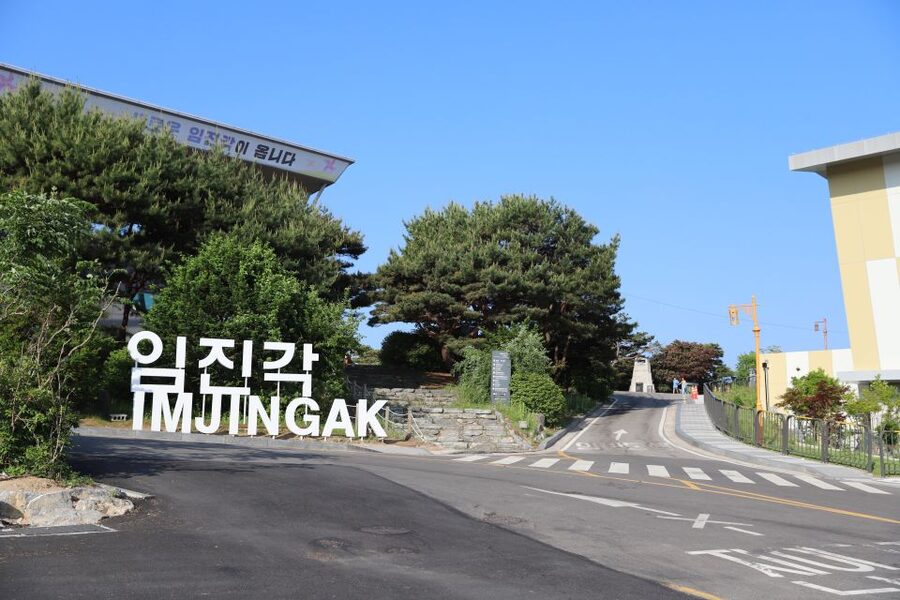
Imjingak Park is the first major stop. It is designed as a place of remembrance and reflection, not simply as a viewing point. Your guide sets the scene for the Korean War, the division of the peninsula, and the families who were separated by the border.
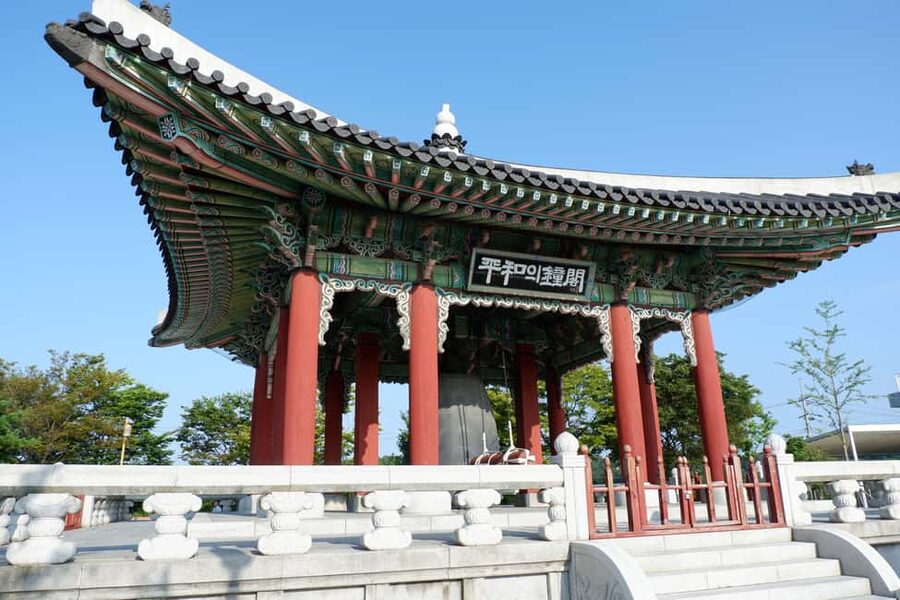
Freedom Bridge is the emotional center of this part of the visit. Its name comes from its connection with prisoners of war and the hope of returning home. Today, it also represents the wish of divided families to meet again.
Give yourself time to look beyond the photo opportunity. The power of the bridge comes from what it represents, especially when your guide explains the human cost of the division. Guides such as Sophie and Kenny have been praised for adding personal stories and family context, while Winnie is known for giving clear instructions and helping people take photos.
The stop is accessible compared with the tunnel, but the overall day becomes much more active later. If you have limited mobility, ask about the walking requirements before booking.
The Third Infiltration Tunnel is the day’s workout
The Third Infiltration Tunnel is usually the most memorable stop for people who want a physical sense of the DMZ. North Korea dug the tunnel as a possible route for troops moving south. It is now open to the public for a guided visit.
The route slopes sharply downward. You walk into the tunnel and then climb back out, with the full round trip taking about 30 to 40 minutes. The return climb is the part that catches people off guard. Children, older adults, and anyone with heart problems may find it difficult.
You can wait near the entrance instead of going through the tunnel. That makes the stop more flexible, but you should still wear comfortable walking shoes because the wider tour includes several outdoor areas and steps.
Do not wear flip-flops, slippers, or heels. They are unsafe on the slope and uncomfortable for a full day of walking. The tunnel is not a gentle museum corridor. It is tight, steep, and intentionally plain, which is part of its impact.
Before or after the tunnel, the tour includes a short presentation at the DMZ Theater and a visit to the DMZ Exhibition Hall. These stops provide basic background on the Korean conflict and the tunnels. They matter because the underground passage can otherwise feel like a stand-alone attraction rather than part of a larger military story.
The guides are a major part of this section. Winnie has used images and videos on the bus to make the subject easier to follow, while Kenny is often praised for mixing facts with humor and keeping people together at security points. That combination is useful on a long day with frequent meeting times.
Dora Observatory and the view into North Korea
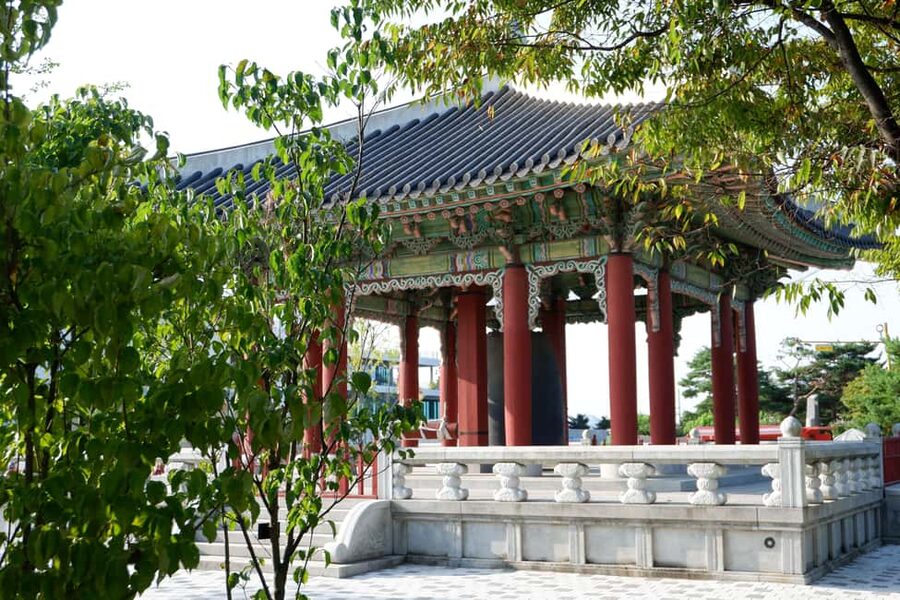
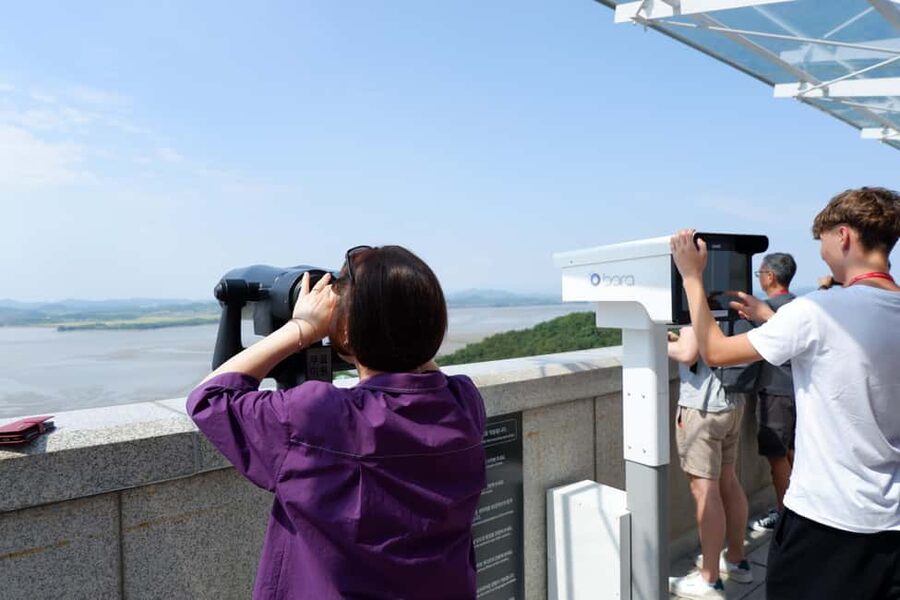
At Dora Observatory, you look across the DMZ toward North Korea. The view depends heavily on weather. Clear conditions may reveal North Korean territory, border villages, and the broad buffer zone. Fog, haze, or low cloud can reduce the view to a vague outline.
This is one of the few places where the border becomes visually understandable. From a map, a 4-kilometer strip sounds like a line. From the observatory, you see open land separating military positions and communities on opposite sides.
Your guide explains what you are looking at and helps you use the viewing area efficiently. Keep realistic expectations. You are not guaranteed a dramatic view of North Korea, and photography may be controlled in parts of the border area. Weather is one of the tour’s unavoidable variables.
The observatory also adds a quiet pause after the tunnel. You have completed the most strenuous part, and the focus shifts from walking to watching. If this is your main reason for booking, choose a day with good visibility if your schedule allows, but remember that military rules can change the itinerary with little notice.
Other walks with a drop below them near Seoul:
- Signature DMZ Tour: Exclusive Defector Talk & Suspension Bridge
★ 5.0 · 4,459 reviews - Ultimate Korea DMZ Tour from Seoul (Gondola & Suspension Bridge)
★ 5.0 · 2,396 reviews - DMZ; NK Defector, 3rd Tunnel, Suspension Bridge,Hotel pickup
★ 4.9 · 2,055 reviews - DMZ Tour from Seoul – Optional Suspension Bridge Experience
★ 5.0 · 1,918 reviews
Unification Village and the everyday border
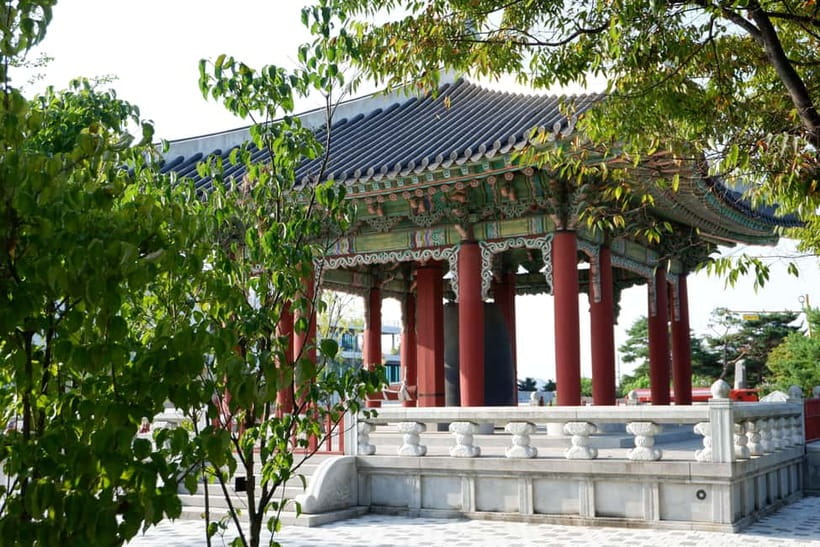
The visit to Unification Village adds an everyday human angle. This is a farming community close to the border, and you may have time to shop for local products, symbolic souvenirs, and sometimes goods associated with North Korea.
The stop is brief, usually around 30 minutes, so do not expect a long market visit. Its value is in the contrast. After hearing about soldiers, tunnels, and military restrictions, you see a community carrying on with farming and commerce near the frontier.
This is also where the tour’s theme of reunification becomes less abstract. The DMZ is not only a place of armed separation. It affects families, local residents, businesses, and the way people think about national identity.
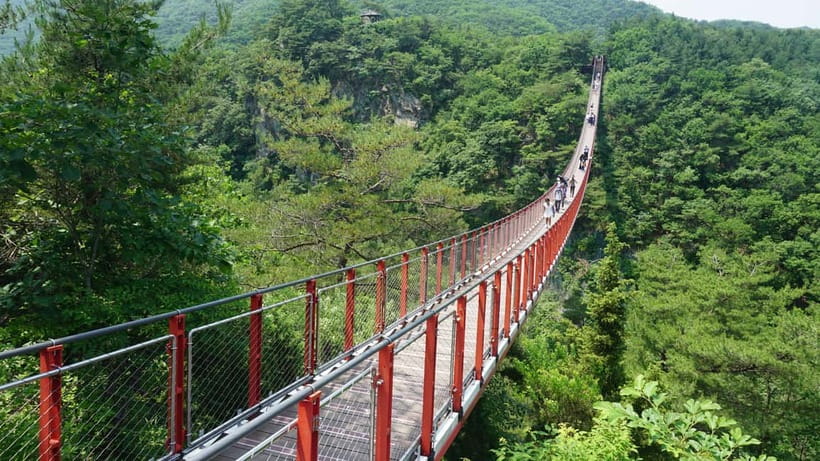
Gamaksan Suspension Bridge: worth the extra effort?
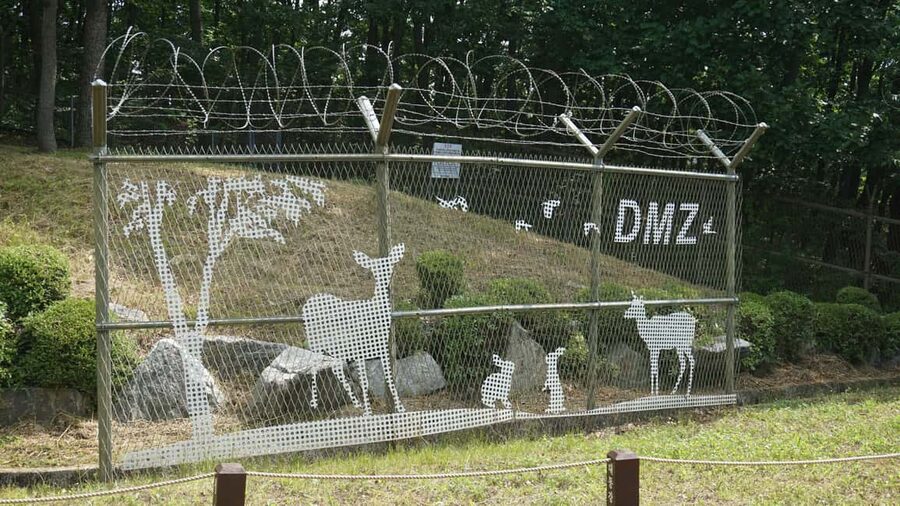
The Gamaksan option adds the suspension bridge after the standard DMZ stops. The site is linked to a Korean War battle involving British troops, so it continues the historical theme rather than acting as a random scenic add-on.
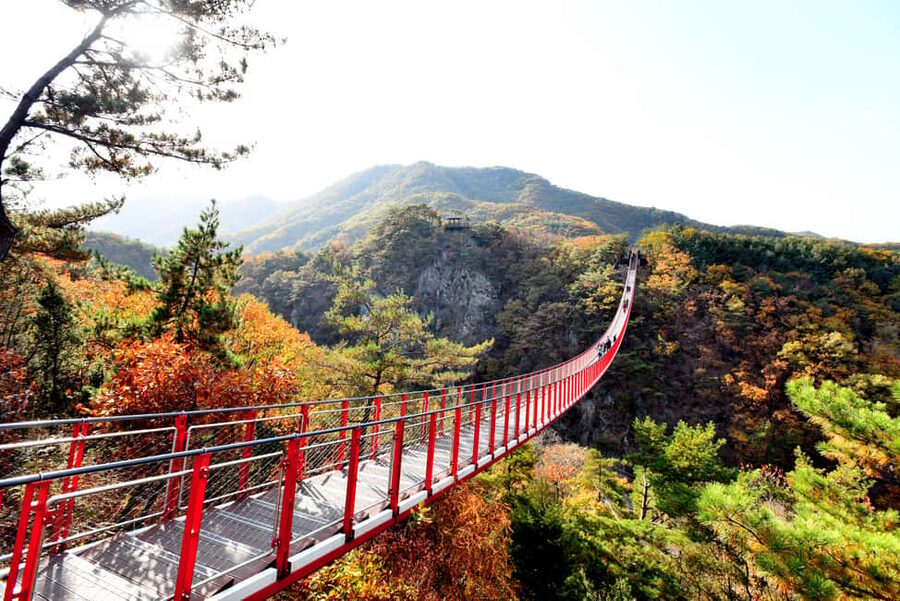
The bridge itself offers a change of pace, with views and photo opportunities. The catch is the walk. Reaching it involves about 40 minutes of hiking, so this option is best if you want an active day and are comfortable with uneven or uphill walking.
The itinerary also lists Ungye Falls as a short photo stop. This is not a major sightseeing visit, but it gives you another natural setting after the military sites. In practical terms, the bridge option turns an already full day into a more strenuous one.
I would choose Gamaksan if you enjoy walking, want more outdoor scenery, and are happy to return to Seoul tired. I would skip it if the Third Tunnel already sounds like enough exercise or if your priority is a focused history tour.
Aegibong Observatory and Starbucks option
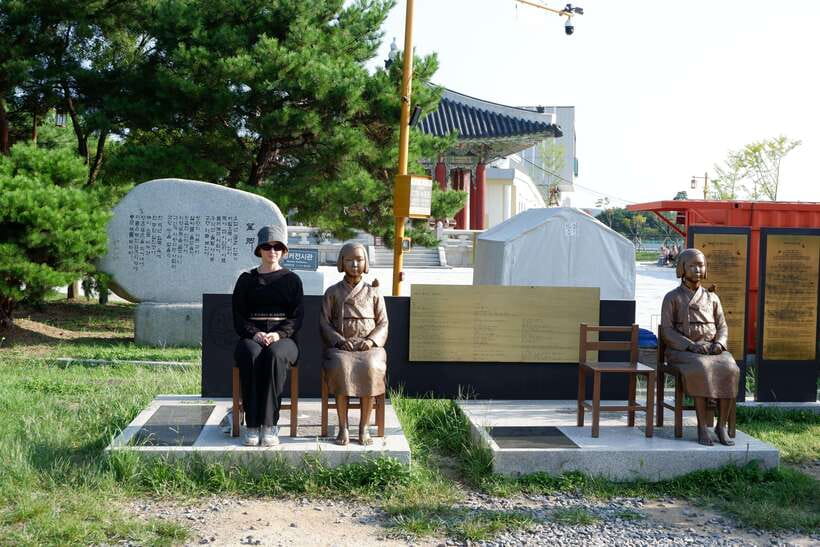
The Aegibong option operates Monday through Sunday and follows a different plan from the Tuesday to Sunday DMZ route. Aegibong is connected with displaced people who came to look toward their former homes after the Korean War.
That gives the stop a strong family and memory-based focus. The observatory is also known for its Starbucks, an unusual modern detail beside a place associated with separation and longing.
This option may suit you if the personal story of displacement interests you more than the standard tunnel route. Check the exact option carefully when booking, since Aegibong is not simply an extra stop added to the regular DMZ itinerary.
Guides, transport, and the rhythm of the day
The tour uses an air-conditioned bus or minivan, with private or small-group arrangements available. Some departures require a transfer to a DMZ shuttle bus if fewer than 30 people are in the vehicle, following government policy.
The transport matters because this is a long day. The drive from Seoul can take about an hour each way, and traffic may push your return later than planned. Keep your evening schedule loose, especially if you have a show, restaurant reservation, or airport transfer.
The guides are repeatedly described as the strongest part of the experience. Winnie is praised for her energy, patience, photo help, and use of visual material. Kenny is known for humor, detailed explanations, and careful attention to group safety. Sophie has added family stories to the history, while Henry has been praised for strong English and clear explanations.
There was at least one report of a group mix-up that left people waiting before the problem was fixed. That is a reminder to listen carefully to meeting instructions and stay near your guide at each stop. The tour includes military checkpoints and fixed departure times, so wandering off is a bad plan.
Many departures receive very high transport marks, and the bus has been described as comfortable, warm, and equipped with charging ports. Still, the day involves more than sitting on a coach. Plan for regular walking, stairways, outdoor waits, and security procedures.
What to bring and who should book
Bring your passport. You need it for the controlled border area, and forgetting it could prevent you from joining the tour.
Wear sturdy, comfortable shoes and dress for changing weather. The observatory and outdoor stops can feel different from Seoul, while the tunnel requires secure footing. Pack water and food if you prefer to avoid relying on purchases along the way, since meals are not included.
This tour suits you if you:
- Want a structured introduction to the Korean War and the division of Korea
- Have one full day available from Seoul
- Are comfortable with military checkpoints and possible schedule changes
- Can manage the tunnel’s steep slope, or are willing to wait outside it
- Prefer an English-speaking guide rather than independent transport planning
It is less suitable if you use a wheelchair, have heart problems, or need a fully accessible itinerary. Unaccompanied minors are not allowed, and infants under 24 months ride free but do not receive their own seat.
The DMZ is controlled by the military, so cancellation or route changes can happen without prior notice. Weather, government rules, and military conditions may replace the planned route with sites such as Imjingak, Art Space BEAT 131, Odusan Unification Observatory, or the War Memorial of Korea. The supplied conditions state that a refund will not be offered in that situation, so read that policy before you pay.
Is the $45 price good value?
At about $45, the tour offers solid value if you want the standard DMZ sights without arranging transport and access yourself. Entrance fees, shared transfers, the guide, and the vehicle are included. Food, drinks, travel insurance, and the JSA or Panmunjom visit are not included.
The price is especially fair for a first visit because the DMZ is not a place where casual independent wandering is practical. The guide gives you the historical frame, handles the route, and keeps you moving through military-controlled areas.
Do not book it expecting a luxury day or a relaxed countryside outing. The schedule is long, the tunnel is strenuous, and delays are possible. The value comes from access, context, and organization rather than comfort at every stop.
Should you book this DMZ tour?
Book it if you want the most direct first look at the Korean border: Freedom Bridge, the Third Infiltration Tunnel, Dora Observatory, and Unification Village. The English commentary, central Seoul pickup options, and reasonable price make it a practical choice for most people with a free day.
Choose the Gamaksan version if you want extra hiking and a suspension bridge. Choose Aegibong if displaced-family stories and the unusual observatory Starbucks appeal to you more. Skip the optional walking if your main goal is history and the tunnel already sounds demanding.
The key is to arrive prepared. Bring your passport, wear real walking shoes, leave your evening open, and accept that weather or military rules can change the route. If you do that, this tour offers a serious, memorable look at one of the world’s most important borders.
FAQ
How long does the DMZ tour take?
The experience lasts about 7 to 9 hours, including transportation from Seoul, sightseeing, and the return journey.
What is included in the price?
The price includes entrance fees, round-trip shared transportation, an English-speaking professional guide, and transport in an air-conditioned bus or minivan.
Is hotel pickup available?
Pickup is available if you select that option and stay at a centrally located Seoul hotel. Listed areas include Gangnam, Myeongdong, Gwanghwamun, Itaewon, and Dongdaemun. Other accommodations may require meeting at a central hotel or subway station.
Do I need my passport?
Yes. You should bring your passport for the DMZ visit.
Can I visit the JSA or Panmunjom?
No. The tour does not include a visit to the JSA or Panmunjom.
Is the Third Infiltration Tunnel difficult?
The tunnel has a steep slope and takes about 30 to 40 minutes for a round trip on foot. Children and older adults may find it challenging, but you can wait at the entrance instead.
How much walking is required for Gamaksan Suspension Bridge?
The suspension bridge involves about a 40-minute hike. Comfortable walking shoes are strongly recommended.
Does the tour operate every day?
The standard DMZ tour and the Gamaksan Suspension Bridge option operate Tuesday through Sunday. The Aegibong Observatory and Starbucks option operates Monday through Sunday.
Can the itinerary change?
Yes. The DMZ is controlled by the military, and weather, government regulations, or military conditions can change or cancel the planned route without prior notice.
Is the tour suitable for wheelchair users?
No. The experience is not suitable for wheelchair users. It is also not recommended for people with heart problems.
Just added in Seoul
- Suwon: Baseball Game with Fortress and Local Food Tour★ 5.0 · 3 reviews
- Seoul: War Memorial of Korea Private Guided Museum Tour★ 4.9 · 29 reviews
- Seoul : Your Personal Photographer in Gyeongbokung★ 5.0 · 7 reviews
- Seoul : Efoil Experience in Han River★ 5.0 · 5 reviews
- Seoul: Wine & Korean BBQ, Perfect Pairing Dinner in Sinchon★ 5.0 · 6 reviews
- Seoul: Vivaldi Park Winter Ski with Eobi Ice Valley Day Tour★ 4.6 · 16 reviews
- Seoul: Vivaldi Park Winter Ski with Nami Island Day Tour★ 5.0 · 4 reviews
- Seoul: SnowyLand in Vivaldi Park with Nami or Alpaca★ 4.8 · 11 reviews
DMZ & JSA Tours, compared.
Best DMZ Tour Korea from Seoul (Red Suspension Bridge Optional)
Read our review →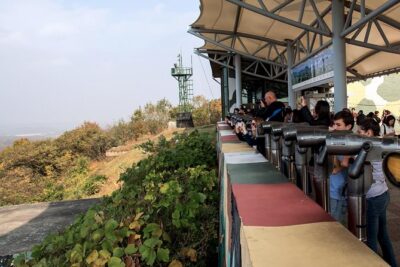
DMZ Tour: 3rd Tunnel, Option(Suspension Bridge, Boat) from Seoul
Read our review →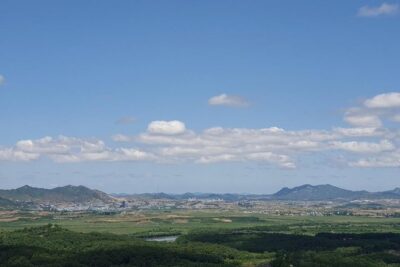
DMZ tour south Korea from Seoul (NK experience hall, defector)
Read our review →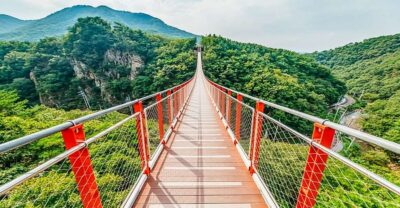
DMZ Insider Tour: 3rd Tunnel, NK Defector Meet & Red Bridge
Read our review →
Signature DMZ Tour: Exclusive Defector Talk & Suspension Bridge
Read our review →
Thrilling Korean DMZ 3rd Tunnel Tour from Seoul + Red Bridge Rush
Read our review →
DMZ Past and Present: Korean Demilitarized Zone Tour from Seoul
Read our review →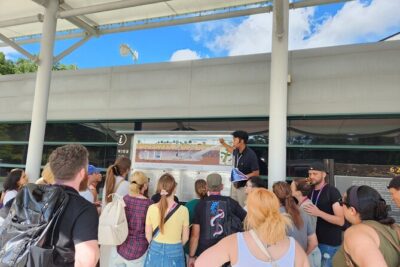
Ultimate Korea DMZ Tour from Seoul (Gondola & Suspension Bridge)
Read our review →Browse the lists this tour appears in