
Reviewed · CHERRY BLOSSOM & AUTUMN FOLIAGE TOURS
Jinhae Cherry Blossom + Busan Sunrise from Seoul
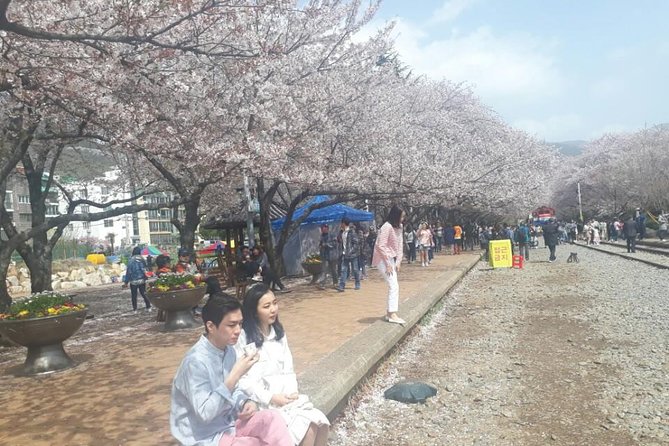
Jinhae’s cherry blossom festival is the main event here, but the clever twist is adding Busan at sunrise. You leave Seoul at night, pause at Haeundae Beach, visit Haedong Yonggungsa Temple, and then reach Jinhae for its famous pink-lined roads and stream. I like the way this packs three popular sights into one trip, and I like that the round-trip ride removes the need to arrange a long-distance train, local bus, and festival transfers yourself.
The catch is simple: you will not sleep much, if at all. The full outing lasts about 19 to 20 hours, and the ride back to Seoul can be affected by traffic and weather. The blossom timing also matters. A visit after peak bloom can still be pleasant, but it will not deliver the full pink effect.
Key points to know before booking
- Jinhae gets about four hours of viewing time: You visit Yeojwacheon Stream and Gyeonghwa Station, with the time shared between both places rather than two full hours at each.
- The tour runs overnight: You leave Seoul at night, see Busan in the early morning, and return to Seoul the next day.
- Haedong Yonggungsa is the sunrise stop: The seaside temple gives the Busan portion a strong visual moment before the cherry blossom visits.
- The $108.49 price covers the basic transport package: Admission, English-speaking staff, and round-trip transfers are included, but meals and drinks are not.
- Your bloom date matters: The supplier may reschedule or cancel if the cherry blossoms are not fully bloomed, while a rainy day alone is not listed as a reason for a refund.
- The return is limited to two Seoul stops: You get off at Dongdaemun History & Culture Park or Myeongdong Station, not Hongik University Station.
Why this overnight route works
South Korea’s cherry blossom season is short, and Jinhae is one of the country’s best-known places to see it. From Seoul, reaching the festival independently means working out a long journey, finding the right local stops, and dealing with seasonal crowds and traffic. This tour gives you a direct ride and a set plan.
I like the combination of sights. Jinhae supplies the flowers, while Busan adds coast and temple views. Haeundae Beach is not treated as a long sightseeing stop, but it gives you a chance to stretch your legs and find breakfast before the temple visit. That matters after a long overnight ride.
The schedule also makes good use of the hours when you would otherwise be asleep. You depart Seoul at night, ride south for about five hours and twenty minutes, spend time around Haeundae, then continue to Haedong Yonggungsa. After Busan, you travel to Jinhae for the main festival visit before beginning the five-hour trip north.
This is an efficient route, not a relaxed one. You should expect a long day with plenty of sitting, short stops, and limited personal control over the pace. I would choose it for access and coverage, not for comfort or a slow look at each place.
More trips built around the season in Seoul:
- Seoul: Mt. Seoraksan National Park Autumn Foliage Day Tour
★ 4.3 · 15 reviews - Autumn Foliage-Mt. Seorak, Sokcho Fish Market, Sokcho Beach
★ 5.0 · 10 reviews - Naejangsan National Park Autumn Foliage One Day Tour from Seoul
★ 4.5 · 9 reviews
Haeundae Beach gives you a useful early break
The first sightseeing stop is Haeundae Beach, after the overnight ride from Seoul. The scheduled stay is about one hour and twenty minutes, and breakfast is free time rather than part of the package.
That distinction is important. You need to budget for your own meal and drink, and you should not expect a planned breakfast table or a food voucher. The beach stop gives you room to get food, take a short walk, and wake up before the temple visit.
Haeundae is also a practical pause in the schedule. After more than five hours in a vehicle, even a modest amount of open space helps. I would not book this tour expecting a full Busan beach experience, though. The stop is short, and the main purpose is to break up the journey before Haedong Yonggungsa.
Sunrise at Haedong Yonggungsa
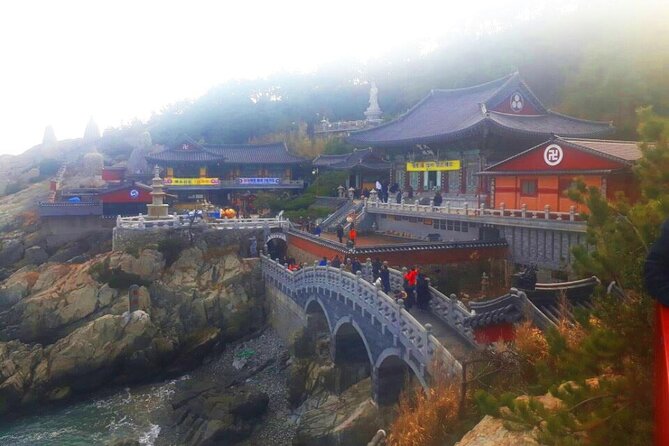
About thirty minutes of travel takes you from Haeundae to Haedong Yonggungsa Temple. The visit lasts around one hour and twenty minutes, with sunrise as the focus.
The temple’s seaside setting makes this a strong contrast to the inland cherry blossom sites later in the day. You get an early coastal view, temple buildings, and the changing morning light before heading toward Jinhae. If you enjoy scenic places that combine architecture and nature, this is likely to be one of the most rewarding parts of the route.
The timing is the key point. This is an overnight tour, and the schedule is built around an early morning visit. You may be tired by the time you arrive. Still, the sunrise setting gives the Busan section a clear purpose rather than making it feel like an unrelated detour.
The published route places Haeundae before Haedong Yonggungsa, then sends you onward to Jinhae. Exact timing can shift with traffic and the season, so treat the schedule as a working plan rather than a promise of a precise sunrise minute.
Jinhae’s festival area and the four-hour blossom window
From Busan, the ride to Jinhae takes about two hours and twenty minutes. This is the point when the tour reaches its central attraction, the Jinhae Gunhangje Festival.
You get about four hours for Yeojwacheon Stream and Gyeonghwa Station together. The time is shared between the two places, so you should not assume that each stop receives a full two hours. That is still a useful amount of time for a first visit, especially since the transport between the festival sites is handled for you.
The festival is seasonal and crowded by nature. The appeal comes from seeing the trees in bloom across public streets, along the stream, and around the railway setting. This is less about entering one formal attraction and more about moving through several well-known viewing areas with your camera ready.
The four-hour block gives you enough room to see both named sites, but you will need to watch the meeting time. If you stop often for photos, your time can disappear quickly. I would decide in advance which place matters most to you, then make sure you do not spend the entire window at the first stop.
Same base, a different kind of day out:
- Best DMZ Tour Korea from Seoul (Red Suspension Bridge Optional)
★ 5.0 · 41,422 reviews - DMZ Tour: 3rd Tunnel, Option(Suspension Bridge, Boat) from Seoul
★ 5.0 · 21,373 reviews - DMZ tour south Korea from Seoul (NK experience hall, defector)
★ 5.0 · 20,599 reviews - Seoul: DMZ Tour with Optional Suspension Bridge
★ 4.8 · 5,277 reviews
Yeojwacheon Stream: flowers beside the water
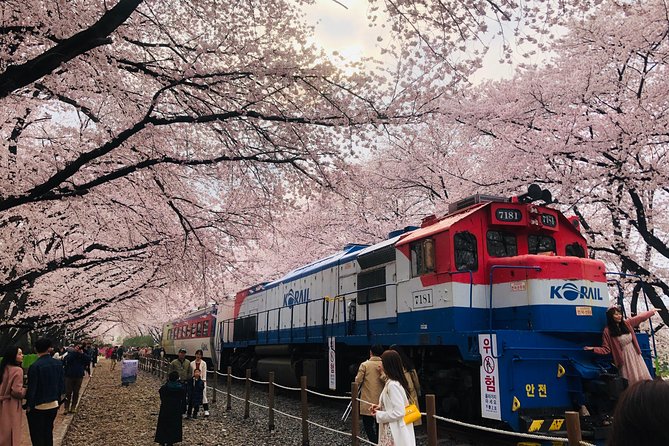
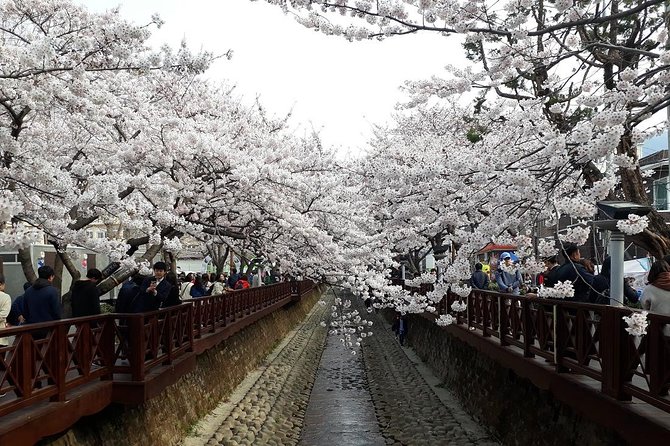
Yeojwacheon Stream is the first cherry blossom location on the route. The trees and water create a more open viewing area than a single street, and the stream gives your photographs a clear foreground.
This stop should appeal to you if you want classic cherry blossom scenes rather than only a roadside view. The water, paths, and flowering trees provide several angles, although the amount of open space and the exact condition of the flowers will depend on the day.
The main risk is timing. Peak blossom dates are not fixed, and the supplied experience information notes that the tour can be rescheduled or canceled if the flowers are not fully bloomed. That safeguard helps, but it does not remove the uncertainty of a short natural season.
One past visit on April 8 found the location beautiful but noted that the cherry blossom was almost over. That is useful advice: a date that sounds right on the calendar may still fall after the best display. If the supplier contacts you about a change, pay attention to the alternative date rather than assuming every April departure will look the same.
Gyeonghwa Station and the famous blossom road
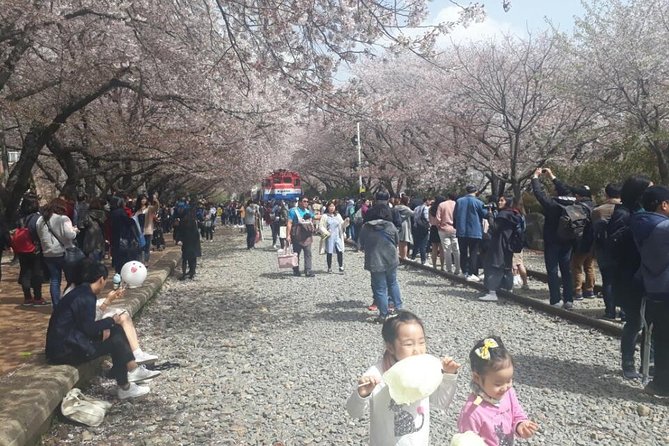
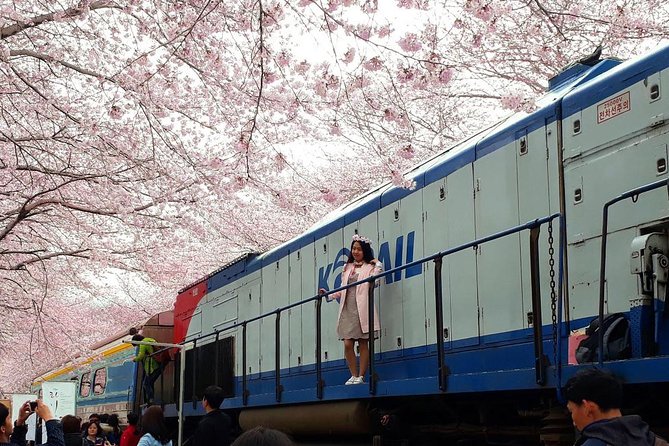
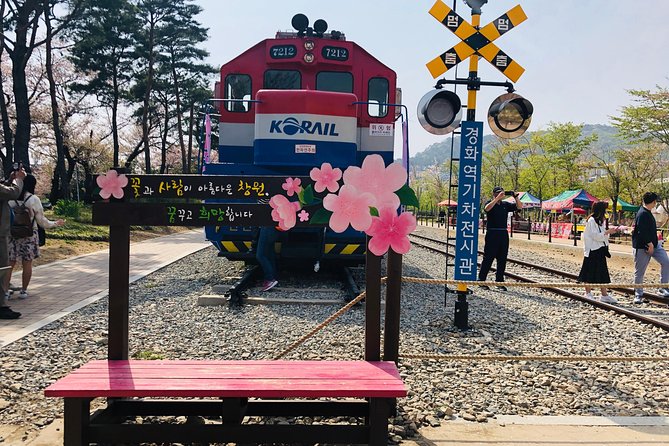
Gyeonghwa Station is the second main flower stop. Here, the railway setting adds a different frame to the trees and gives the festival visit a recognizable Jinhae image.
The station area is useful because it does not simply repeat Yeojwacheon Stream. One stop is tied to water and paths, while the other is known for its cherry tree-lined road and railway atmosphere. Together, they give you more variety than visiting one blossom street and turning straight back.
The route information also highlights Mt. Jaehwangsan as a strong viewing area, with wide views over the flowering trees. The exact amount of time available there is not separately stated in the schedule, so you should not assume it is an additional long stop beyond the Jinhae program. Ask the English-speaking staff how the day is being arranged if this viewpoint is important to you.
As with Yeojwacheon, the best experience depends on bloom conditions and crowd levels. You may find the station area especially photogenic, but the tour cannot control how many other people arrive on the same festival day.
What the $108.49 price really buys you
At $108.49 per person, the main value is transport. You are paying for a long-distance round trip from central Seoul, the Busan portion, the ride between Haeundae, Haedong Yonggungsa, and Jinhae, plus transfers between the two major blossom sites.
Admission to the attractions is included, as is English-speaking staff. Meals and beverages are not included, and hotel pickup and drop-off are also excluded. You need to reach the central Seoul meeting point yourself and arrange your own food.
That is a fair setup if your priority is seeing several places in one difficult day. Independent transport could require several separate bookings and local connections, while this option keeps the route together. The value is weaker if you dislike overnight travel, want a quiet temple visit, or prefer to spend a whole day in Jinhae alone.
The vehicle type can change with the number of people. The maximum group size is listed as 100, so you should not assume a small private van for every departure. An air-conditioned vehicle is promised, but the exact size and seating feel can vary.
The hard part is the 19 to 20-hour schedule
You should treat this as a stamina test. The tour starts at night and returns to Seoul the next day without sleep. The five-hour ride back comes after the early morning and festival visits, so fatigue will likely be the biggest practical drawback.
I would bring water, snacks, a phone charger, and something comfortable for resting in the vehicle. Food is your responsibility, and the only stated meal opportunity is free breakfast time at Haeundae. You also need to arrive at the meeting point ten minutes before departure. Latecomers and no-shows are not refundable.
Traffic can affect the return time. The stated five-hour drive back to Seoul is an estimate, not a guaranteed arrival time. Avoid booking a fixed evening plan, timed performance, or nonrefundable connection soon after the tour.
The drop-off choice is useful but limited. You return to either Dongdaemun History & Culture Park or Myeongdong Station. If you need Hongik University Station, the stated advice is to continue by Seoul Subway Line 2 from Dongdaemun History & Culture Park. There is no return to Hongik University Station by the tour vehicle.
Who will get the most from this trip
I would recommend this tour to you if you have limited time in Seoul, want to see Jinhae during blossom season, and prefer one organized route instead of several transport decisions. It also suits photographers who want two different Jinhae settings and a sunrise temple stop in the same outing.
It is a good match for people who value coverage over sleep. The English-speaking staff and included transfers reduce the pressure of navigating between distant places, while the mobile ticket keeps the booking simple.
I would be more cautious if you need regular sleep, have trouble with long vehicle rides, or want to linger at each site. The schedule is tightly packed, and the group size may be large. It is also not the right choice if your main goal is a leisurely Busan day, since Haeundae and Haedong Yonggungsa each receive only a limited stop within a much longer route.
The blossom guarantee needs careful reading. A reschedule or cancellation may happen if the flowers are not fully bloomed, but rain alone is not listed as a reason for a refund. The supplier refers to political conditions, extreme weather, or other unexpected destination events for certain changes, not a participant’s sudden sickness or an ordinary rainy day.
Should you book the Jinhae and Busan overnight tour?
Book it if you want maximum sightseeing for one fee and can accept a sleepless night. The combination of Haeundae Beach, sunrise at Haedong Yonggungsa, Yeojwacheon Stream, and Gyeonghwa Station gives you a broad taste of southern South Korea in about 20 hours.
Skip it if you want comfort, flexible timing, or a full day devoted only to Jinhae. Check the blossom forecast as closely as possible, keep your schedule after the return open, and remember to pay for your own breakfast and drinks. Cancellation is free up to 24 hours before the start time, but changes made later are not accepted.
FAQ
How long does the tour last?
The experience lasts approximately 19 to 20 hours, beginning in Seoul at night and returning to Seoul the following day.
Where does the tour return in Seoul?
The return drop-off points are Dongdaemun History & Culture Park and Myeongdong Station.
Does the tour return to Hongik University Station?
No. You can use Seoul Subway Line 2 from Dongdaemun History & Culture Park to reach Hongik University Station.
Is breakfast included?
No. You have free breakfast time at Haeundae Beach, but breakfast and other meals are not included.
What cherry blossom sites are included?
The route includes Yeojwacheon Stream and Gyeonghwa Station Cherry Blossom Road in Jinhae.
Is Haedong Yonggungsa Temple included?
Yes. The tour includes a visit to Haedong Yonggungsa Temple, planned around sunrise.
Is transportation included?
Yes. Round-trip transfers are included, with travel by an air-conditioned vehicle. The vehicle type may change depending on the number of participants.
Is an English-speaking guide or staff member included?
Yes. English-speaking staff are included.
What happens if the cherry blossoms are not fully bloomed?
The tour may be rescheduled or canceled if the cherry blossoms are not fully bloomed. The supplier will contact you in advance in that situation.
Can I cancel for a full refund?
Yes, if you cancel at least 24 hours before the experience start time. Cancellations or changes made less than 24 hours before the start time are not refunded or accepted.
Just added in Seoul
- Your Personal Seoul Photographer!★ 4.1 · 15 reviews
- You’re Invited to Our Home in Seoul: The Only Cooking Class!★ 5.0 · 8 reviews
- From Seoul: Yongpyong Ski Day Tour with Transportation★ 4.9 · 40 reviews
- Seoul: Korean & English Language Exchange Global Party★ 5.0 · 28 reviews
- From Seoul: Hwacheon Ice Fishing and Lighting Festival Tour★ 4.5 · 4 reviews
- Unique Native Experience : Han River Picnic, Board game, BBQ★ 5.0 · 3 reviews
- Seoul: Gangneung BTS K-Pop & K-Drama Filming Locations Tour★ 4.6 · 14 reviews
- K-Pop Making Class with a Producer!★ 5.0 · 3 reviews
Cherry Blossom & Autumn Foliage Tours, compared.
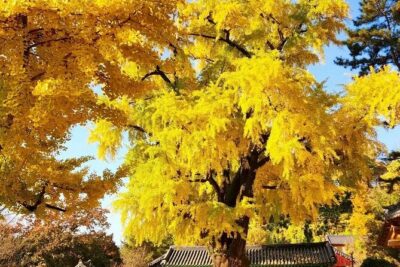
Jeonju Hanok Village Full-Day Tour:Jangtaesan Autumn Foliage
Read our review →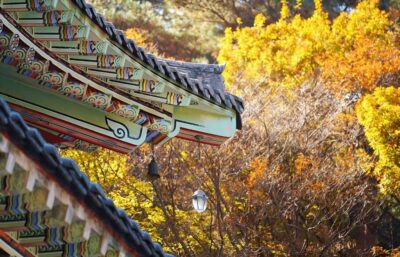
2026 Autumn Tour with Pink Muhly Festival Hotel Pickup
Read our review →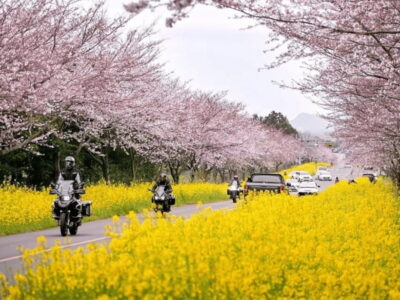
Jeju East: Cherry Blossom Early Bird Tour with Hotel Pickup
Read our review →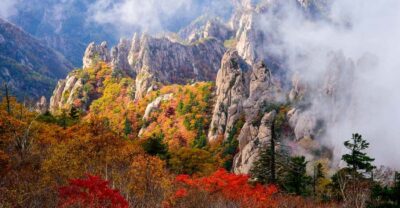
Mt. Seoraksan National Park Autumn Foliage Day Tour
Read our review →
Small Group Tour for Jeju Fall Pink Muhly, Tangerines & Mt. Halla
Read our review →
Jinhae Cherry Blossom Day trip from Busan – A Spring Adventure!
Read our review →
Naejangsan National Park Autumn Foliage One Day Tour from Busan
Read our review →
2026 JEJU Cherry Blossom West&South Full Day Tour with UNESCO
Read our review →Browse the lists this tour appears in