
Reviewed · PALACE & GYEONGBOKGUNG TOURS
Korean Heritage Tour: Palaces and Villages of Seoul Including Gyeongbokgung Palace
Gyeongbokgung Palace and the Korean Folk Village give you two very different views of Korea: one royal and grand, the other focused on village life and traditional crafts. Add a Korean lunch, Jogyesa Temple, and hotel transport, and you get a useful one-day introduction to Seoul’s past.
I like the small maximum group of 10, which can make palace explanations and questions easier. I also like the mix of outdoor sights and indoor exhibits, especially the National Folk Museum, which helps put the buildings and customs into context.
The main drawback is the ginseng center stop, which can feel like a sales visit rather than part of a heritage tour. Some departures have also included an amethyst presentation, so ask about commercial stops before booking if you want every minute devoted to cultural sights.
Key points at a glance
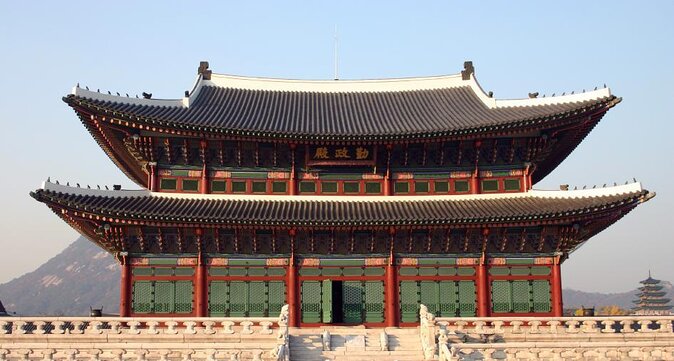
- Gyeongbokgung is the star of the morning: Walk through the largest of Seoul’s Five Grand Palaces, with admission included.
- The Korean Folk Village adds hands-on context: See traditional crafts such as pottery, basket weaving, embroidery, and woodworking.
- Lunch is part of the price: A traditional Korean meal is served at a local restaurant, with dietary needs requested in advance.
- Hotel pickup saves time: Round-trip transport by air-conditioned coach is included, starting at about 8:30 a.m.
- The schedule is full but not rushed everywhere: Some visitors found the palace portion hurried, while the afternoon village visit felt more relaxed.
- Tuesday changes the plan: Gyeongbokgung is closed then, so the tour visits Deoksugung Palace and the Seoul Museum of History instead.
A useful first day in Seoul
At $140 per person, this is not the cheapest way to see Seoul. It is a full-day outing of about eight and a half hours, though, and the price includes hotel pickup and drop-off, a guide, transport, lunch, and admission to Gyeongbokgung Palace and the Korean Folk Village.
I see the value mainly in the logistics. Seoul is large, and combining a palace, museum, temple, restaurant, and folk village on your own would take planning and several transport connections. The coach gives you a fixed route and a place to rest between stops.
You should also know what this tour is not. It is not a slow, specialist study of Joseon architecture, Buddhism, or Korean food. It is a broad introduction. You see several important places in one day, but the time at each site is limited.
The group size is capped at 10, and the tour requires at least four people to operate. That is a pleasant middle ground between a private tour and a large coach group. Guide quality can vary, as it does on any multilingual departure. Past guides named Sunny, Winnie, Dora, David, and Michelle have been praised for clear English, humor, and useful cultural explanations, while some departures had softer or less engaging commentary.
More palace and old-quarter walks in Seoul:
- Seoul: Gyeongbok Palace, Bukchon Village, and Gwangjang Tour
★ 4.9 · 2,321 reviews - Best Seoul City Tour (Gyeongbokgung Palace,Insadong,Namsan Tower)
★ 5.0 · 1,647 reviews - Small-Group Royal Palace and Seoul City Tour (hotel pick-up)
★ 5.0 · 1,474 reviews
Gyeongbokgung Palace: Seoul’s grand royal opening
The day begins with pickup from your Seoul hotel, usually around 8:30 a.m. As the coach moves through the city, your guide points out the Blue House, the former executive office and official residence of South Korea’s head of state.
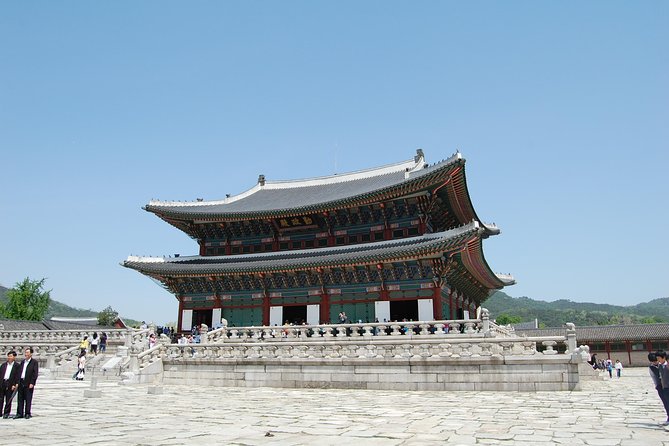
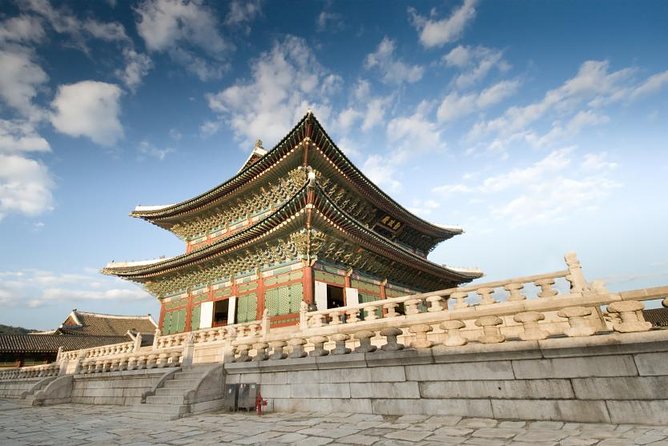
The first major stop is Gyeongbokgung Palace, built in 1395 by the Joseon Dynasty. It was the first royal palace of that dynasty and the largest of Seoul’s Five Grand Palaces. Its broad courtyards, gates, pavilions, and royal halls give you an immediate sense of the scale of court life.
Much of the palace was destroyed during the Japanese occupation, so what you see today includes a major restoration effort. That detail matters. The grounds are not simply an untouched medieval complex, but the restoration helps you understand the original plan and the importance of the site.
You spend about an hour here with the guide. That is enough to see the principal areas and hear the basic story, but it may feel short if you want careful photographs or architectural details. Several departures have been described as moving quickly through the morning sights, so keep your walking shoes comfortable and stay aware of the meeting time.
If the timing works, you may see the changing of the guard. This was singled out as a highlight by people who caught it, and it adds ceremony and movement to the palace visit. The schedule can affect exactly what you see, so do not treat it as guaranteed unless the operator confirms it.
The palace is the strongest part of the morning for many people. You get a clear visual introduction to royal Seoul without spending the entire day inside one complex.
The National Folk Museum in 20 minutes
Inside the palace grounds, the National Folk Museum of Korea uses artifacts, models, and reconstructed scenes to explain everyday Korean life from ancient times through the 20th century. Its collection includes more than 90,000 objects.
This is an important stop because palace courtyards alone can leave you with a picture of kings, officials, and ceremonies. The museum shifts attention to ordinary homes, work, customs, and household objects. It helps explain the social world behind the architecture.
The planned visit is about 20 minutes, which is brief. You can get a taste of the exhibits, but you will not have time to read every panel or study the displays in detail. If museums are your priority, you may wish this portion lasted longer. If you prefer active sightseeing, the short visit keeps the day moving.
Jogyesa Temple and a change of pace
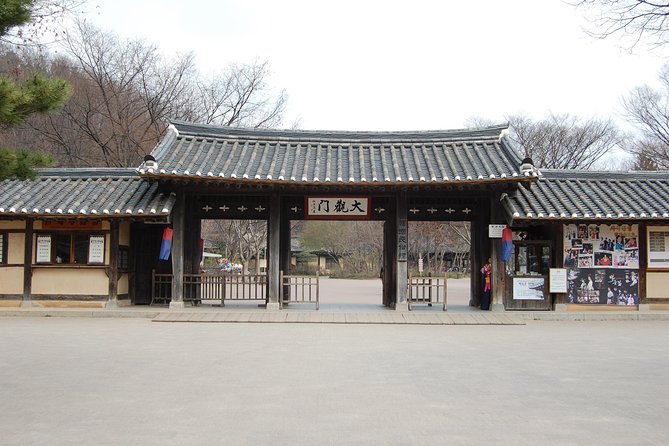
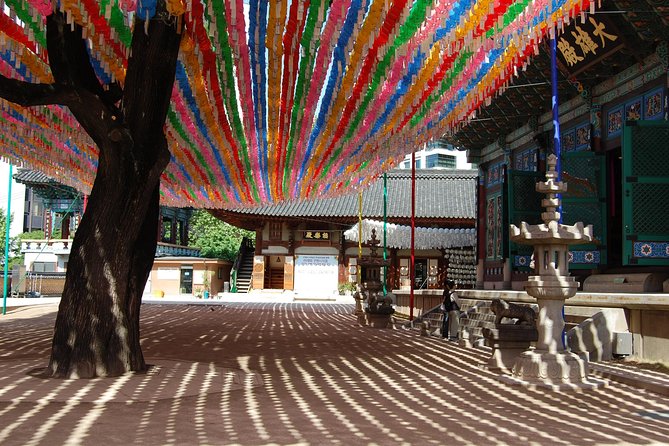
The coach then takes you to Jogyesa Temple, the main temple of the Jogye Order of Korean Buddhism. The entrance is lined with locust and baeksong trees, and the Daeungjeon is the central temple building.
The scheduled stop is very short, listed at about two minutes. That means you should think of Jogyesa as a quick visual and cultural pause, not a full temple visit. You may see the main hall and hear a short explanation of the Buddhist tradition, but do not expect a long period for quiet observation.
This is one of the tour’s weaker points if you want time for reflection or detailed photography. It is still worthwhile as a contrast to Gyeongbokgung. The palace represents royal power and court order; Jogyesa introduces a living religious tradition in the middle of modern Seoul.
A few more things to do in Seoul worth a look
- Seoul: Evening Dark History, Folklore & Ghost Story Walking Tour
★ 5.0 · 593 reviews - Hanbok Photoshoot and History Tour at Gyeongbokgung Palace
★ 5.0 · 276 reviews - From Seoul: Dae Jang Geum Park Historic K-Drama Set Tour
★ 4.9 · 143 reviews - Seoul: City Highlights and Historical Experience No Shopping
★ 5.0 · 74 reviews
Korean lunch and the ginseng center
Around midday, the group stops at a traditional Korean restaurant for lunch. The meal is included, and the food has been praised as both enjoyable and a good introduction to Korean dining.
The setting can be part of the appeal. One departure included a picturesque restaurant, and the lunch provides a welcome pause after walking around the palace. Tell the operator about dietary requirements when you book. The supplied information does not specify a fixed menu, so do not assume every dietary preference can be handled without advance notice.
Before lunch, or around the same part of the day, the coach visits a Korean Ginseng Center for about 30 minutes. You learn about ginseng cultivation, uses, and Korea’s major ginseng industry. You also have the chance to buy products.
Here is where the tour becomes less focused. Some people enjoy learning about a famous Korean product and shopping for a practical souvenir. Others find the stop unrelated to the main cultural theme and feel pressure to purchase. The same concern applies to reports of an amethyst presentation on some past departures, although that stop is not part of the stated schedule.
If you dislike sales visits, ask clearly whether your departure includes any additional commercial stop. It is a fair question, especially because 30 to 45 minutes matters on a tightly timed day.
Korean Folk Village: crafts, buildings, and staged tradition
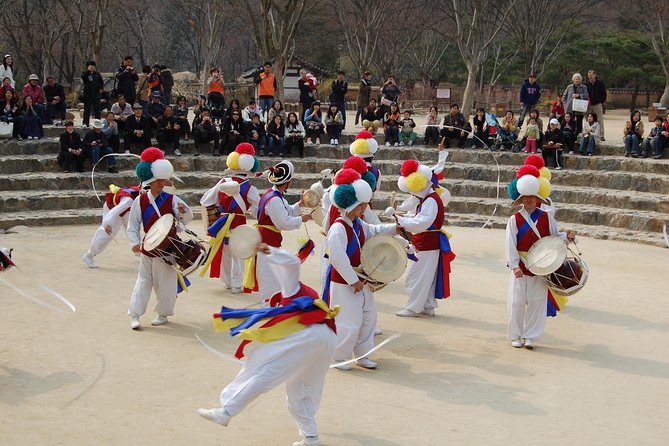
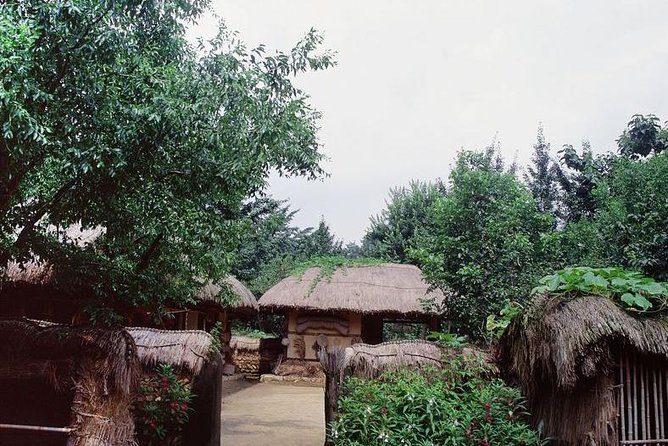
The afternoon is devoted to the Korean Folk Village, a living museum outside central Seoul. The site presents traditional Korean life and folk culture through old-style buildings, demonstrations, and craft work.
You may watch pottery making, basket weaving, embroidery, and the hand-making of winnows. Demonstrations also cover musical instruments and objects made from bamboo, wood, and brass. These details give the visit more life than a simple walk past preserved houses.
The planned visit lasts about one hour and 20 minutes. That is longer than the museum or temple stops and gives you room to explore at a more comfortable pace. Several accounts found the village more enjoyable than the hurried first half, especially when the afternoon group was small.
Set your expectations carefully. The Korean Folk Village is a constructed living museum, not an untouched historic village where ordinary life continues exactly as it did centuries ago. It presents traditional culture for visitors, with demonstrations and displays designed to teach. Some people find that engaging and accessible. Others may feel it has the character of a cultural park rather than a purely historic site.
I think it works best if you treat it as an introduction to traditional skills. The craft demonstrations make abstract ideas concrete, and the setting gives you a chance to walk around after the more structured palace tour.
The pace, guiding, and group experience
The tour covers a lot of ground. You walk through palace courtyards, move between coach stops, tour museum displays, and explore the folk village. Comfortable shoes are essential, especially if the weather is warm or wet.
The morning can feel compressed. The palace and museum are the places where you may want extra time, yet the schedule keeps you moving. The afternoon often feels easier because the folk village allows more wandering and the group may become smaller.
A particularly good feature is the chance to hear useful commentary while riding between sites. The guide can explain the Blue House, Joseon royal life, Korean customs, Buddhism, and traditional crafts without using up all your sightseeing time.
Guide quality is important here. English-speaking guides such as Sunny and Winnie have been praised for clear explanations, while Dora, David, and Michelle have also received warm praise for being helpful and engaging. At the same time, some departures have had quiet delivery or explanations that were hard to follow. A small group helps, but it cannot guarantee the same guide or style every day.
Some morning and afternoon segments may be handled by different guides. That can be a disadvantage if you prefer one continuous narrative, but it can also mean a fresh guide with a different specialty for the folk village.
Tuesday plans and practical details
Gyeongbokgung is closed on Tuesdays. On that day, the tour substitutes Deoksugung Palace, a walled palace compound, and the Seoul Museum of History.
This is a reasonable replacement, but it is not the same experience. If Gyeongbokgung is a personal priority, avoid Tuesday. If your main aim is to understand Seoul’s royal and civic past, the alternative still gives you a useful heritage day.
Hotel pickup and drop-off are included, though you should confirm the exact pickup details after booking. The tour begins around 8:30 a.m. and returns after the afternoon visit. The air-conditioned coach is especially useful between central Seoul and the Korean Folk Village.
Most people can participate, but the operator notes a moderate amount of walking. The tour requires a minimum of four participants and accepts a maximum of 10. Free cancellation is available up to 24 hours before the start time, while later cancellations and changes are not accepted.
Who should book this tour?
I would choose this tour if you have one full day in Seoul and want a structured introduction to Korean royal buildings, religion, museums, food, and traditional crafts. It is also a good fit if hotel transport matters more to you than designing your own route.
Families and first-time visitors may appreciate the variety. You are not asked to spend eight hours in museums, and the coach breaks up the walking. The small group can make it easier to ask questions and keep track of the schedule.
I would be more cautious if you want slow photography, long museum visits, or an entirely noncommercial cultural program. Independent visitors can spend more time at Gyeongbokgung and choose their own restaurant. You should also ask about sales stops if that would bother you.
Should you book it?
Book this tour if you value convenience and want to cover several major heritage sights in one day. The palace, Korean lunch, and Folk Village are the core strengths, while the included transport and small group make the $140 price easier to justify.
Skip it if your priority is depth, silence, or complete control over the schedule. The short Jogyesa visit, limited museum time, and possible ginseng stop reduce the cultural time available. For a broad first look at Seoul, though, this is a practical choice, especially when your stay is short.
FAQ
How long does the Korean Heritage Tour last?
The tour lasts approximately 8 hours and 30 minutes, beginning at about 8:30 a.m.
Is hotel transportation included?
Yes. Pickup and drop-off at your Seoul hotel are included, with transport provided by an air-conditioned coach.
Is lunch included in the price?
Yes. A Korean lunch at a local restaurant is included. You should provide any dietary requirements when booking.
What happens if I take the tour on Tuesday?
Gyeongbokgung Palace is closed on Tuesdays. The tour visits Deoksugung Palace and the Seoul Museum of History instead.
How much walking is involved?
A moderate amount of walking is required, including time at the palace and Korean Folk Village. Comfortable walking shoes are recommended.
What is the group size?
The tour requires at least four participants and has a maximum of 10 travelers.
Just added in Seoul
- Your Personal Seoul Photographer!★ 4.1 · 15 reviews
- You’re Invited to Our Home in Seoul: The Only Cooking Class!★ 5.0 · 8 reviews
- From Seoul: Yongpyong Ski Day Tour with Transportation★ 4.9 · 40 reviews
- Seoul: Korean & English Language Exchange Global Party★ 5.0 · 28 reviews
- From Seoul: Hwacheon Ice Fishing and Lighting Festival Tour★ 4.5 · 4 reviews
- Unique Native Experience : Han River Picnic, Board game, BBQ★ 5.0 · 3 reviews
- Seoul: Gangneung BTS K-Pop & K-Drama Filming Locations Tour★ 4.6 · 14 reviews
- K-Pop Making Class with a Producer!★ 5.0 · 3 reviews
Palace & Gyeongbokgung Tours, compared.
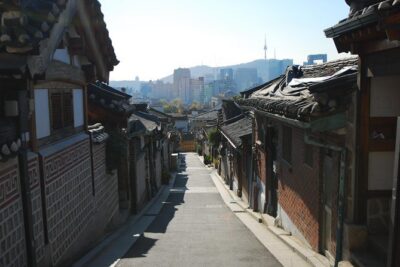
Gyeongbok Palace, Bukchon Village, and Gwangjang Tour
Read our review →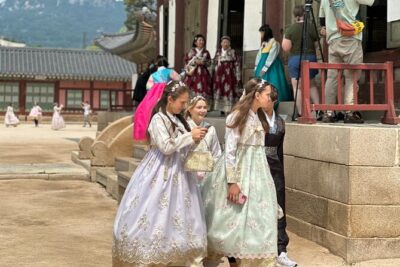
Best Seoul City Tour (Gyeongbokgung Palace,Insadong,Namsan Tower)
Read our review →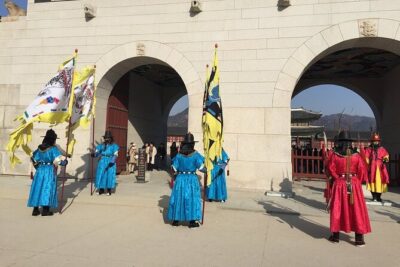
Small-Group Royal Palace and Seoul City Tour (hotel pick-up)
Read our review →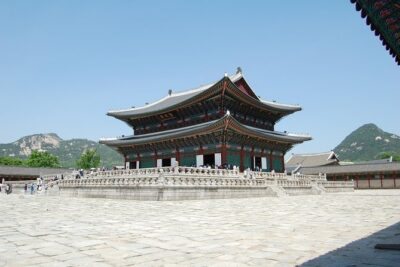
Seoul City Sightseeing Tour Including Gyeongbokgung Palace, N Seoul Tower, and Namsangol Hanok Village
Read our review →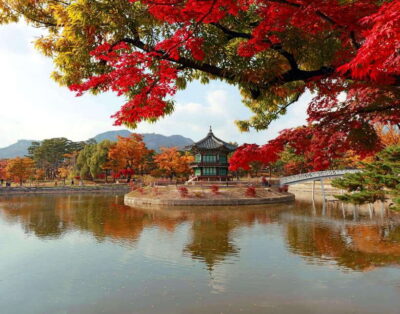
Seoul Highlights: Gyeongbok Palace, Insadong & N Seoul Tower
Read our review →
Seoul City Half Day Tour-Gyeongbok Palace Guard Changing Ceremony
Read our review →
Browse the lists this tour appears in