
Reviewed · TOURS IN BUSAN
Busan Beomeosa Temple & Hongbeopsa Temple with temple lunch
The best part of this Busan outing is the contrast between Beomeosa Temple’s thousand-year story and Hongbeopsa’s unusual modern character. You begin among major temple halls and lesser-known hermitages, then finish at a privately built Buddhist complex with a giant Amitabha Buddha and an observatory.
I like the included temple bibimbap lunch, which gives the visit a real connection to daily Buddhist practice. I also like that public transportation is part of the plan, so you see how these temples fit into Busan rather than spending the whole tour behind a vehicle window.
The main consideration is the walking. Beomeosa involves a short uphill route, and the schedule is fairly tight at three and a half hours. The tour is best for you if you can manage moderate physical activity and enjoy a focused cultural outing rather than a slow, all-day visit.
Key points to know before booking
- Two very different temples: Beomeosa is an old mountain temple complex, while Hongbeopsa was built on privately donated land in a notably different style.
- Temple lunch included: You receive bibimbap prepared by the temple, not just a restaurant meal added to the schedule.
- A less-seen side of Beomeosa: The route includes subsidiary buildings and at least one quieter hermitage, including Naewonam Hermitage.
- Public transportation is covered: The tour starts at Beomeosa Station and finishes at Nopo Station on Busan Subway Line 1.
- Small group format: The maximum group size is 15 people, allowing room for questions and personal help.
- A flower-market stop may be part of the experience: The tour description includes a visit to one of Busan’s largest flower markets, with local snacks and drinks mentioned by the guide.
Why this temple pairing works
Many Busan temple visits focus only on Beomeosa, the city’s best-known Buddhist site. This tour adds Hongbeopsa, giving you two very different ways to understand Korean Buddhist architecture and religious life.
Beomeosa offers age, atmosphere, and a traditional setting. Its buildings and hermitages sit within a mountain area, and the route includes the main halls as well as subsidiary sites that many quick visits skip. Hongbeopsa feels more personal and unconventional. It was built by a devout Buddhist who donated her land and money, and its buildings do not follow the usual temple style as closely.
That contrast gives the tour a useful shape. At Beomeosa, you learn how an old temple complex developed over time. At Hongbeopsa, you see what a newer, privately funded religious project can look like. You are not simply checking off two similar sights.
The tour also connects the temples to ordinary Busan life. You use public transportation, eat a simple temple meal, and may visit a flower market where local snacks and drinks are available. These details make the outing feel less like a quick photo stop and more like a guided introduction to the city’s Buddhist culture.
A few more things to do in Busan worth a look
- Busan Tour: Gamcheon Village & Haedong Yonggungsa Temple + Lunch
★ 5.0 · 119 reviews - UNESCO Tongdosa Temple + Gourmet Eonyang Style Bulgogi Lunch
★ 5.0 · 7 reviews - Seoul City Private Full-Day Tour Including Lunch
★ 5.0 · 469 reviews
Starting at Beomeosa Station
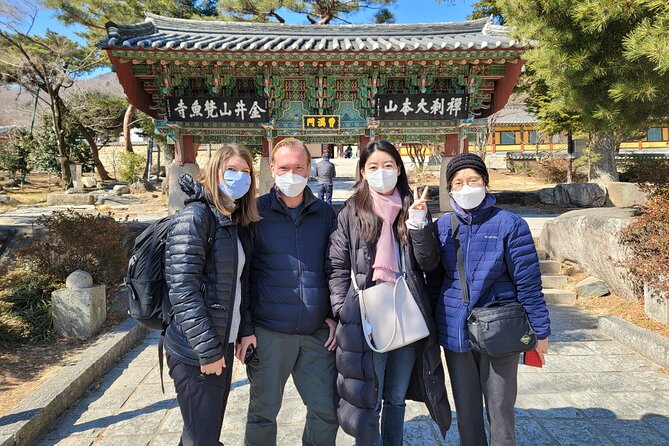
The meeting point is Beomeosa Station in Namsan-dong. That is useful if you are already using Busan’s subway system, and it keeps the start clear and easy to find. The end point is Nopo Station, also on Line 1, so you finish near a major subway connection rather than being left at an unfamiliar side street.
The guide handles the public transportation portion, which matters because the day includes more than simply walking from one temple gate to another. Suyang has been praised for making contact early and helping people meet safely. Chang has also led the route, keeping the pace easy and relaxed.
The exact meeting arrangements should still be checked after booking. Confirmation is sent within 48 hours, subject to availability. Since the tour has a maximum of 15 people, the experience should feel more manageable than a large coach excursion, though group size can still affect the pace.
Bring comfortable shoes and water, even though bottled water is included. The walk up toward Beomeosa is short, but it is uphill enough to notice. The stated fitness requirement is moderate, not strenuous, but this is not a fully step-free sightseeing ride.
Beomeosa Temple and its quieter hermitages
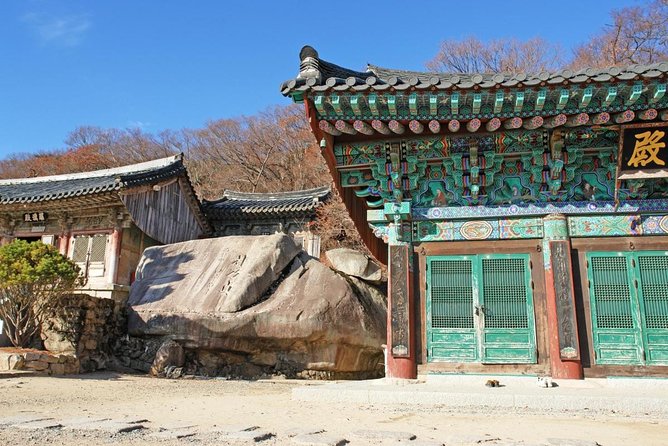
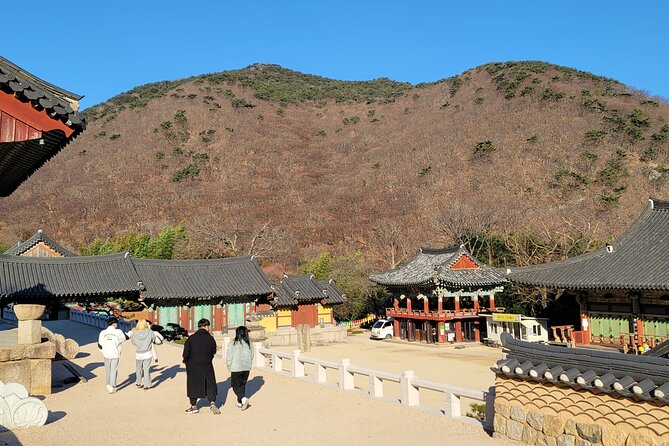
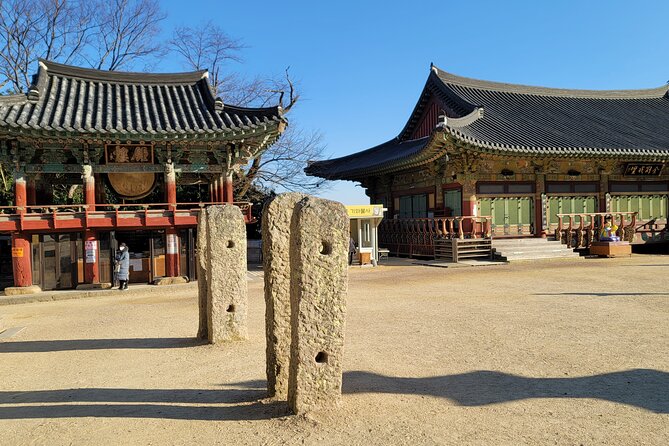
Beomeosa is the main event during the first two hours. The temple has more than a thousand years of history, and the route covers its major buildings along with smaller subsidiary hermitages.
The major halls give you the classic temple experience: timber architecture, Buddhist images, courtyards, and a setting connected to the wooded hills around Busan. The smaller hermitages add something more interesting for repeat visitors or anyone who wants more than the standard entrance area. Naewonam Hermitage is specifically included in the route described by the guide, located behind Beomeosa.
A hermitage is usually more intimate than a main temple compound. It can offer a quieter setting and a clearer sense of how Buddhist practice extends beyond the most photographed halls. You should not expect every part of the visit to feel grand. That is part of the appeal. The less famous buildings may be modest, but they help you understand the temple as a working religious place rather than a collection of monuments.
Your guide is important here. The temples become much more meaningful when someone explains the buildings, the Buddhist setting, and the differences between Korean Buddhism and traditions in other Northeast Asian countries. One guide, Suyang, has also helped visitors who arrived from a cruise stop in Nampo-dong, including arranging the subway journey and making sure they returned safely. That suggests a practical, hands-on guiding style, though the assigned guide can vary.
Allow for a short uphill walk and some standing. The tour is not designed as a long hike, but Beomeosa is not flat from station to temple areas. If you need a slow pace, tell the guide at the start.
Bibimbap at about noon
At roughly 12 o’clock, you eat bibimbap provided by the temple. This is one of the strongest reasons to choose this outing over a basic temple photo visit.
Bibimbap is familiar to many people, but the setting changes the experience. You are eating a simple Korean rice dish as part of a temple visit, rather than stopping at a standard tourist restaurant. The meal helps explain why temple food is included in the tour’s cultural focus.
Do not book this expecting a long restaurant lunch with a broad menu. The included meal is specifically bibimbap, and alcoholic drinks are not included. That limitation is easy to understand in a temple setting. You get a purposeful, modest meal that keeps the schedule moving.
The timing also works well. After around two hours at Beomeosa, lunch gives you a break before the second temple. It is worth arriving with realistic expectations about portion, service, and choice. The value comes from the setting and cultural connection, not from a large meal.
Same base, a different kind of day out:
- Busan: Gyeongju Guided Day Trip to Three Kingdoms Capital
★ 4.8 · 1,925 reviews - Small Group Full Day Busan Tour (Max 6 Pax)
★ 5.0 · 1,464 reviews - From Busan: Gyeongju UNESCO World Heritage Guided Day Tour
★ 4.8 · 1,250 reviews - Busan Private Tour with licensed tour guide + private vehicle
★ 5.0 · 1,143 reviews
Hongbeopsa and the giant Amitabha Buddha
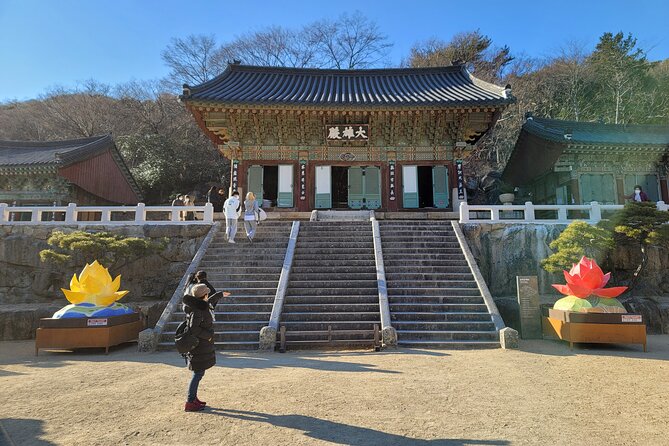
After Beomeosa and lunch, the tour moves to Hongbeopsa for about an hour and a half. This is where the day changes tone.
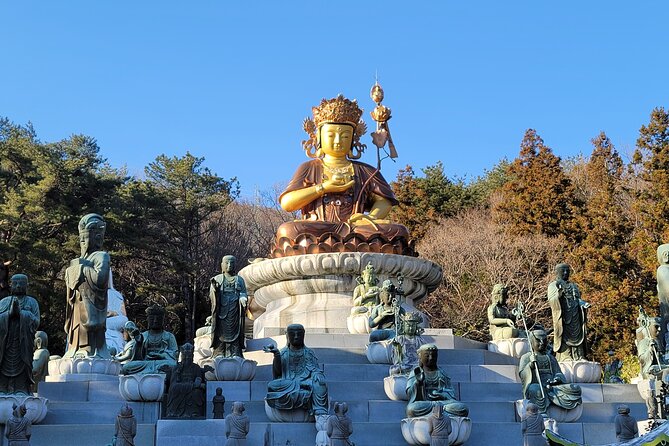
Hongbeopsa was built by a devout Buddhist who donated her land and money. The result is a temple with a personal origin and an architectural style different from ordinary Korean temples. That makes it a useful companion to Beomeosa. You see an established temple complex first, then a more recent project shaped by one person’s religious commitment.
The large Amitabha Buddha is the obvious focal point. It is described as a must-see, and its scale gives the second stop a strong visual finish. You can also visit the temple’s observatory for views across the surrounding area. The experience description does not specify exactly how wide the view is, so think of it as a useful elevated viewpoint rather than a guaranteed panoramic platform.
Hongbeopsa may appeal most to people who enjoy places that do not fit a standard sightseeing formula. It is not presented as another version of Beomeosa. Its privately funded beginnings and unusual buildings give you a different question to consider: how does a Buddhist temple develop when it grows from one person’s donation rather than a long-established institutional setting?
The one-hour-thirty-minute visit should give you time to see the main points without feeling rushed. Still, the tour covers two sites in one morning and early afternoon, so you will not have unlimited time for quiet reflection or independent wandering.
The flower market and local snacks
The tour overview includes a visit to one of Busan’s largest flower markets. The market experience is also tied to local snacks and drinks, including a cold barley drink that one guide specifically highlighted as a favorite part of the route.
This is a welcome change after the temple buildings. A flower market gives you a look at a more ordinary commercial side of Busan, with plants, flowers, and local buying habits. It also keeps the day from becoming too solemn or repetitive.
The available information does not set out a separate timed stop for the market, so you should confirm the exact order with the guide. It may fit around the temple visits rather than function as a full independent shopping visit. Do not book it expecting a long retail excursion. Think of it as a local-color addition that may include tastings and a chance to see flowers sold in a large market setting.
The cold barley drink is a small detail, but it shows the kind of stop this tour can provide. You get more than famous landmarks, yet you should remain flexible because market timing and activity can depend on the day’s route.
What the $63 price includes
At $63 per person, the price is reasonable if you want a guide, transportation, temple lunch, and two temple visits bundled into one short outing. Admission to both temples is listed as free, so the value does not come from expensive entrance tickets.
The cost covers bottled water, bibimbap lunch, and public transportation. It also pays for the guide’s route planning and interpretation. That last part matters most at Beomeosa, where the difference between seeing a few halls and understanding the main complex, hermitages, and Buddhist context can be significant.
A self-guided visit could cost less, especially because admission is free. You would then need to work out the subway connections, identify the less-known hermitage, plan lunch, and decide how to connect Beomeosa with Hongbeopsa. For an independent visitor who enjoys that process, the extra $63 may not be essential.
For you, the tour is better value if your Busan schedule is short, you want cultural context, or you prefer having someone manage the route. The maximum of 15 people also keeps the price below the level of a private day tour while offering more help than going alone.
Pace, fitness, and practical limits
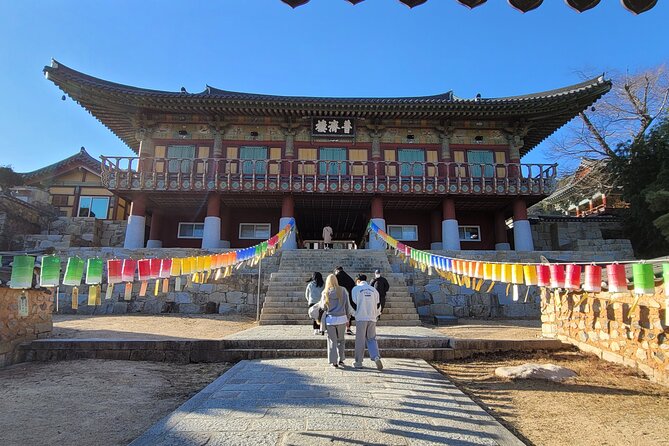
The full experience lasts about three and a half hours. Beomeosa takes around two hours, and Hongbeopsa takes around one hour and thirty minutes. Lunch fits into the Beomeosa portion, so the day moves at a steady pace.
You should be comfortable walking uphill for a short stretch, standing during explanations, and moving between public transport and temple grounds. The tour asks for moderate physical fitness. No special hiking equipment is mentioned, but sensible walking shoes are a good idea.
The small group limit is 15 people. That is large enough for a social outing but small enough for the guide to answer questions and notice if someone needs help. Suyang’s careful assistance with meeting points and transport is especially useful if you are unfamiliar with Busan’s subway system.
The tour requires good weather. If poor weather cancels it, you are offered another date or a full refund. It also requires a minimum number of people, so a cancellation for that reason brings the same choice of another date or experience, or a full refund.
The standard cancellation policy is strict: the experience is non-refundable and cannot be changed for personal reasons. That makes weather protection helpful, but you should still avoid booking until your own schedule is firm.
Who should book this Busan temple tour
I would choose this tour if you want a compact cultural experience with a guide who can explain Korean Buddhism and help with public transportation. It suits first-time visitors who want to see Beomeosa but would not know how to add a lesser-known hermitage and a second temple on their own.
It also fits cruise passengers and anyone staying near Busan’s subway network. The route can begin at Beomeosa Station and finish at Nopo Station, and a guide such as Suyang may help with additional meeting arrangements when discussed in advance.
You might skip it if you want a completely private pace, a long meditation visit, or a full day devoted to one temple. You may also prefer independent travel if you are comfortable navigating public transport and arranging your own meal.
Should you book it?
Book this experience if the combination matters to you: old temple halls, a quieter hermitage, temple bibimbap, public transportation, and an unusual second temple. The two-site format gives you more range than a basic Beomeosa visit, while the three-and-a-half-hour length fits neatly into a busy Busan schedule.
Skip it if the uphill walk, fixed timing, or strict cancellation policy causes concern. For most visitors with moderate fitness and an interest in Korean religious culture, the $63 price is justified by the guide, lunch, transport, and thoughtful pairing of Beomeosa with Hongbeopsa.
FAQ
Where does the tour start?
The tour starts at Beomeosa Station in Namsan-dong, Busan, South Korea.
Where does the tour finish?
The tour finishes at Nopo Subway Station on Busan Subway Line 1.
How long does the experience last?
The tour lasts approximately three hours and 30 minutes. Beomeosa takes about two hours, and Hongbeopsa takes about one hour and 30 minutes.
Is lunch included?
Yes. Bibimbap provided by the temple is included. Alcoholic beverages are not included.
What is included in the price?
The price includes bottled water, temple bibimbap, and public transportation. Admission to the temple sites is free.
How many people can join the tour?
The maximum group size is 15 people. Confirmation is sent within 48 hours of booking, subject to availability.
Just added in Busan
- Visit Busan night market and enjoy the night view of Busan harbor★ 5.0 · 6 reviews
- Real Busan Walking Experience★ 5.0 · 27 reviews
- Full Day Private car tour to UNESCO Gyeongju&Yangdong village★ 5.0 · 5 reviews
- Suncheon and Yeosu Daily Private Tour with Pickup Service★ 5.0 · 3 reviews
- 7 Highlights Gyeongju City One Day Small Group Tour from Busan★ 5.0 · 24 reviews
- Busan Seafood Tour : Oyster village Tour with Oyster cuisines★ 5.0 · 3 reviews
- Suncheon one day tour from Seoul, Busan or Suncheon★ 5.0 · 3 reviews
- 1 Day Private Busan Guided Tour★ 4.5 · 3 reviews
Tours in Busan, compared.
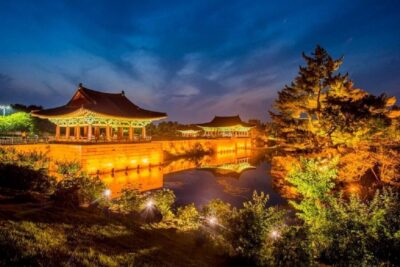
Gyeongju Guided Day Trip to Three Kingdoms Capital
Read our review →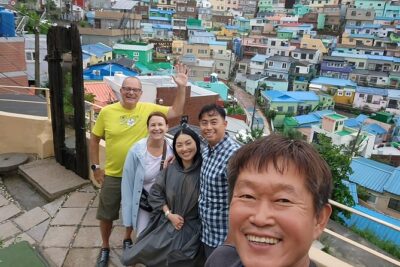
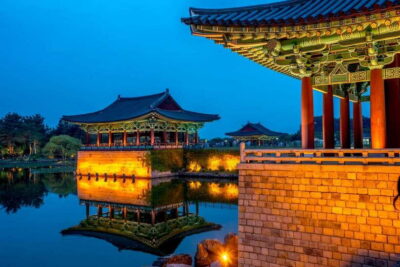
Gyeongju UNESCO World Heritage Guided Day Tour
Read our review →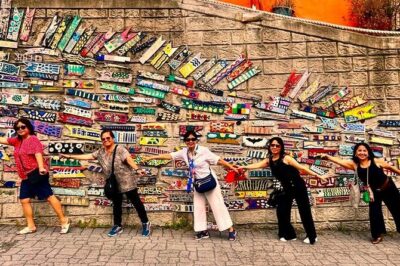
Busan Private Tour with licensed tour guide + private vehicle
Read our review →
Coastal Treasures Beach Train, Culture Village & More
Read our review →
Busan’s Cultural Wonders with Beach Train & Gamcheon Village etc
Read our review →
Private Busan Tour -Explore Cultural Landmarks with a Local Guide
Read our review →
Old Korea Thousand History Tour of Gyeongju from Busan
Read our review →Browse the lists this tour appears in