
Reviewed · DMZ & JSA TOURS
DMZ Tour Seoul to North Korea’s 3rd Tunnel & Majang Lake Crossing
The most striking part of this DMZ tour from Seoul is the abrupt change from city streets to military checkpoints, barbed-wire fences, quiet fields, and a view toward North Korea. You will visit the Third Tunnel, Dora Observatory, Imjingak Park, the Bridge of Freedom, and a village known for Jangdan soybeans, all in one long day.
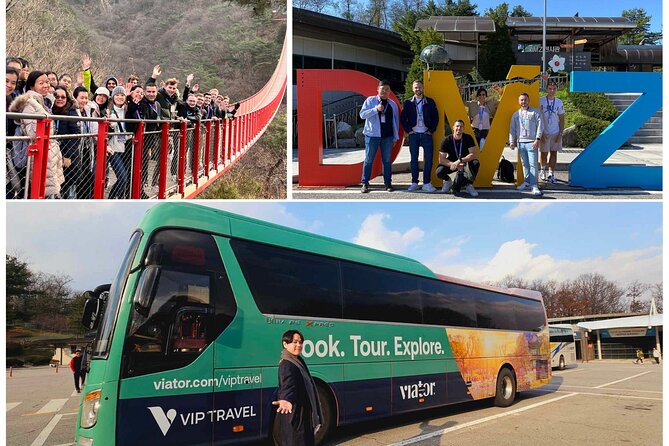
I like the way this tour combines major sights with places many visitors miss, especially the Majang Lake Suspension Bridge and Tongilchon village. I also like the strong guide element. Nancy, Alex, Kelly, Moon, Lina, Crystal, and others are praised for adding personal stories and keeping the history clear rather than dry.
The main drawback is pace. This is an eight-hour group outing with many stops, military schedules, and a possible group of up to 150 people. The Third Tunnel also requires stairs, inclines, and a hard hat, so this is not a gentle sightseeing day.
Key points to know before booking
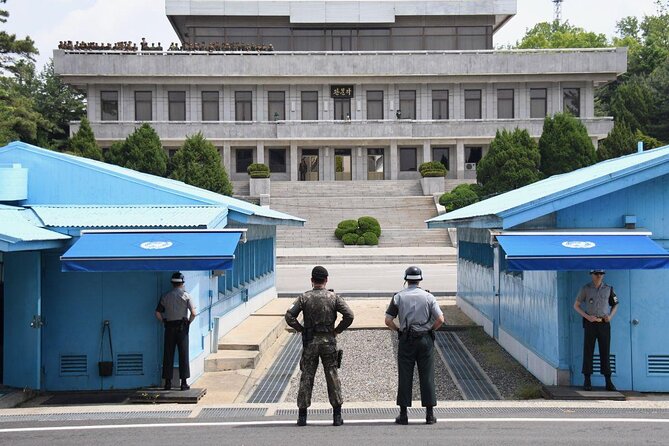
- The Third Tunnel is the physical highlight: Expect a steep walk underground, low ceilings, and a hard hat.
- Dora Observatory gives you a view toward North Korea: Telescopes help you see across the border when weather and access allow.
- The tour is history-led: Guides such as Alex and Nancy are praised for personal stories about the Korean War and its continuing effect on Korean families.
- Majang Lake may be optional: Check your selected package carefully, since the bridge crossing is not included in every version.
- Bring your passport: You need identification for the military checkpoint at Unification Bridge.
- Expect a full day: Pickup or meeting points are in central Seoul, but drop-off is limited to Myeongdong, Hongik University Station, or City Hall.
Why this DMZ trip is worth your day
A visit to the DMZ is not just a quick border photo. It is a day of contrasts. You begin among Seoul’s shops, offices, and subway stations, then head north through open country toward a military zone created after the 1953 armistice.
The Korean Demilitarized Zone is about 4 kilometers wide, though access is tightly controlled and the tour does not take you freely through it. You move through designated sites under military rules, with your passport ready and your time set by the day’s conditions.
That structure matters. The DMZ is not an ordinary attraction, and access can change because of military exercises, early closures, weather, or security checks. A group tour gives you transport, a guide, and the required arrangements in one package. At $35 per person, the value is strong if your priority is seeing the key sites without arranging separate transport.
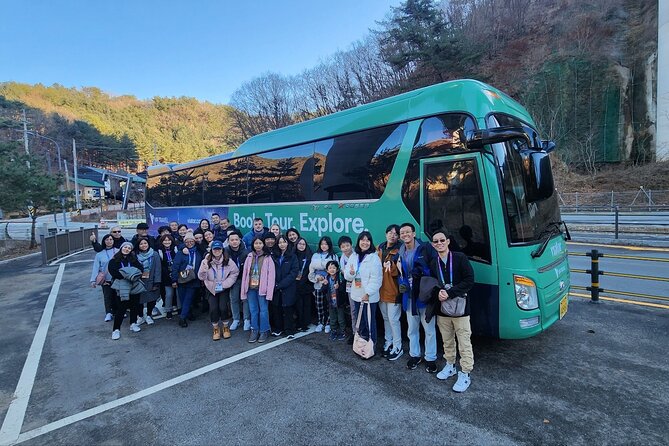
You should not expect a quiet private tour. The maximum group size is listed as 150 people, and several buses may gather at the same meeting point. Still, the schedule is designed to cover a great deal in one day, and the strongest guides keep the bus time useful with explanations of Korean history, politics, family separation, and daily life on both sides of the border.
Other trips up to the border from Seoul:
- Best DMZ Tour Korea from Seoul (Red Suspension Bridge Optional)
★ 5.0 · 41,422 reviews - DMZ Tour: 3rd Tunnel, Option(Suspension Bridge, Boat) from Seoul
★ 5.0 · 21,373 reviews - DMZ tour south Korea from Seoul (NK experience hall, defector)
★ 5.0 · 20,599 reviews
Meeting in Seoul and heading north
The tour uses three central meeting points: Myeongdong Subway Station Exit 9, Seoul City Hall Subway Station Exit 6, and Hongdae Subway Station Exit 3. You should arrive 10 to 15 minutes early, especially at Myeongdong, where several buses may leave for similar day trips.
Hotel pickup is described as pickup from a main subway station near your hotel or from the downtown area. In practice, confirm the exact meeting point in your booking details. Drop-off is not provided at your hotel. At the end of the day, you can get off at Myeongdong, Hongik University Station, or City Hall.
The drive north is useful preparation. Your guide can explain the Korean War, the armistice, the border, and why the area remains politically sensitive. Guides Alex and Nancy receive especially strong praise for adding personal family stories, while Kelly, Moon, Emily, Hana, and others are noted for clear explanations and helpful directions.
The guide can make a major difference here. The sites themselves are often solemn and visually simple. Good commentary gives the bridges, memorials, tunnels, and observation points a human meaning.
Imjingak Park and the Bridge of Freedom
Your first major stop is Imjingak Resort, also known as Imjingak Park. Built as a place of remembrance for people separated by the Korean War, it contains memorials, a bell tower, the Peace Bell, and other reminders of divided families.
This is one of the better places to slow down and understand the emotional side of the border. The DMZ can sometimes feel like a military sightseeing route, but Imjingak brings the focus back to ordinary families. For many Koreans, division is not an old history lesson. It involves parents, grandparents, siblings, and ancestral homes that remain out of reach.
The Bridge of Freedom is nearby. It is linked to the return of 12,773 prisoners of war to South Korea in 1953. The current bridge is modest, but its meaning is large. You can walk across it and look toward the Imjin River, where the border’s quiet appearance hides decades of conflict.
You also visit Mangbaedan, a memorial altar where families pay tribute to relatives in North Korea, especially around traditional holidays. The nearby steam locomotive at Jangdan Station is another powerful reminder. Damaged during the war, the locomotive is preserved as a physical relic of the interrupted Gyeongui railway line.
The Peace Bell, a 21-ton bronze bell cast in 2002, adds another symbolic stop. These places do not require a long visit, but the sequence works well. Memorial altar, ruined train, bridge, and bell give you different ways to think about separation and hopes for reunification.
The Imjin River and the military checkpoint
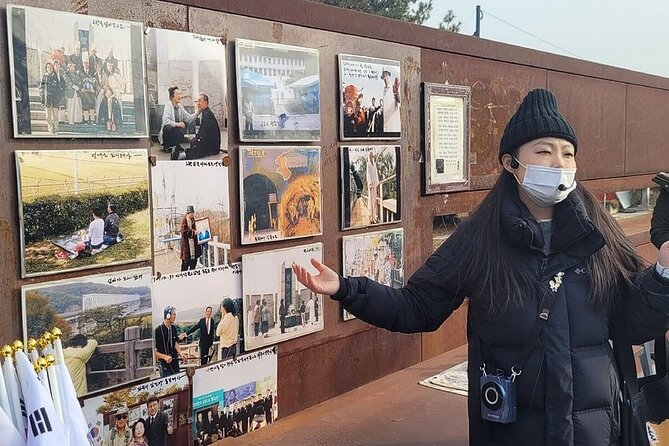
Before entering the controlled area, your bus stops at the Imjingak Tourist Information Center while the guide collects entrance clearance and tickets. Then comes Unification Bridge, where soldiers inspect the bus and check identification.
Bring your passport, military ID card, or South Korea-issued identification as required. Do not leave this until the last minute. One of the simplest ways to spoil this day is to arrive at the checkpoint without the correct document.
The bus crosses the Imjin River, a quiet stretch where birds and other wildlife have had room to flourish since the armistice. The scenery can look peaceful, but the checkpoint reminds you that this is still an active military area, not simply a historic park.
Because military access controls the schedule, your route may change. One group had its timing shortened because of military exercises and early closure, yet still reached the main sites. Another group benefited when the guide reversed the order because fog blocked the observatory early in the morning. That flexibility is useful, but it also means you should not treat every stop time as fixed.
Same base, a different kind of day out:
- Seoul: DMZ Tour with Optional Suspension Bridge
★ 4.8 · 5,277 reviews - Signature DMZ Tour: Exclusive Defector Talk & Suspension Bridge
★ 5.0 · 4,459 reviews - Thrilling Korean DMZ 3rd Tunnel Tour from Seoul + Red Bridge Rush
★ 5.0 · 3,097 reviews - DMZ Past and Present: Korean Demilitarized Zone Tour from Seoul
★ 5.0 · 2,481 reviews
Walking through the Third Tunnel
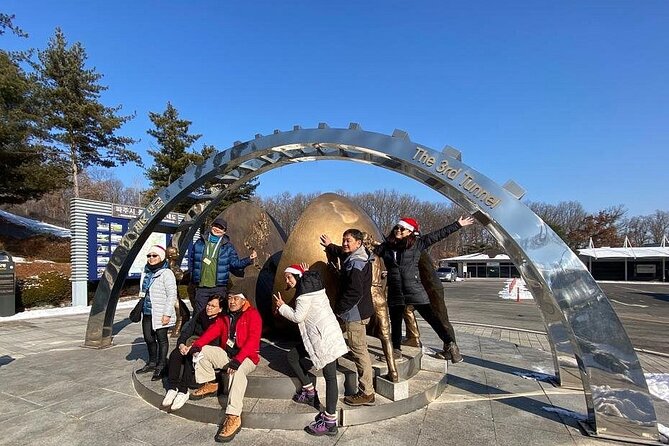
The Third Tunnel of Aggression is the most physical stop. Discovered in 1978, it is one of several tunnels attributed to North Korean attempts to move forces south. The tunnel is about 1,635 meters long and lies roughly 52 kilometers from Seoul.
You walk downhill through the access tunnel, then continue through the low, narrow passage. A hard hat is provided, and you should fasten it properly. Taller visitors may bump their heads, especially in the lower sections.
The return walk is uphill, and the route includes stairs and inclines. You should wear sturdy, comfortable shoes and be ready for a workout. The tunnel may feel cool compared with Seoul, but the walk itself can still be tiring, particularly on a hot or humid day.
You cannot simply wander at your own speed. The tour keeps moving, and the tunnel’s narrow shape makes it important to follow instructions. This is not suitable for anyone who cannot manage a sustained walk with stairs. The tour information says most people can participate, but the physical demand is real.
The tunnel is valuable because it makes the border conflict concrete. A lecture about infiltration plans is one thing. Walking through a passage cut underground gives you a far clearer sense of the planning, labor, and danger involved.
Dora Observatory and the view across the border
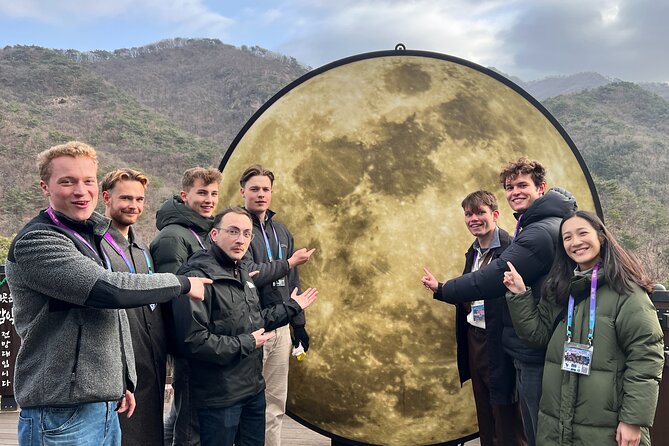
Dora Observatory is usually the visual high point. Built in 1986 and renovated in 2018, it sits on Dorasan and offers one of the closest approved views of North Korea from the South.
You can use telescopes to look across the border. On a clear day, you might see North Korean territory, fields, roads, buildings, and the surrounding hills. Fog, haze, and weather can limit the view, so keep your expectations sensible. The telescope is useful, but this is not a guaranteed close-up of life in North Korea.
The observatory also gives your guide a chance to explain the geography. The sight is less about identifying every building than understanding how close the two countries are, despite the political distance between them.
Visitors can buy North Korean products at the observatory. This is a brief shopping opportunity, not a major part of the tour, but it gives you a chance to see how border tourism presents objects from the other side.
A guide who handles this stop well will explain what you are seeing without turning it into a novelty. Alex, Kelly, Moon, Crystal, and Nancy are repeatedly praised for keeping the historical context clear and answering questions. If fog blocks the view, a flexible guide may reverse the itinerary or adjust the timing, as happened on one particularly misty morning.
Tongilchon village and a slower rural stop
Tongilchon-gil takes you to Tongilchon Jangdankong Maeul, a village known for Jangdan soybeans grown in soil near the DMZ. The stop lasts about 20 minutes, so you should think of it as a short local pause rather than a full village visit.
You may find soybean products and simple local items for sale. The stop adds a useful counterpoint to the military sites. The border area is not only fences, observation decks, and memorials. People also farm, sell food, and maintain a daily life shaped by the nearby military zone.
Time is limited, though. One itinerary includes about 45 minutes in a DMZ village for food, facilities, a garden, and shopping, but other versions may provide less time. If you want a long lunch or a relaxed rural visit, check the package details before booking.
Lunch is not included in the base price. Some versions may offer a chance to eat in the village, but you should not assume a meal is part of the $35 fare. Bring money and be prepared for a quick meal if the schedule allows one.
Majang Lake and the suspension bridge
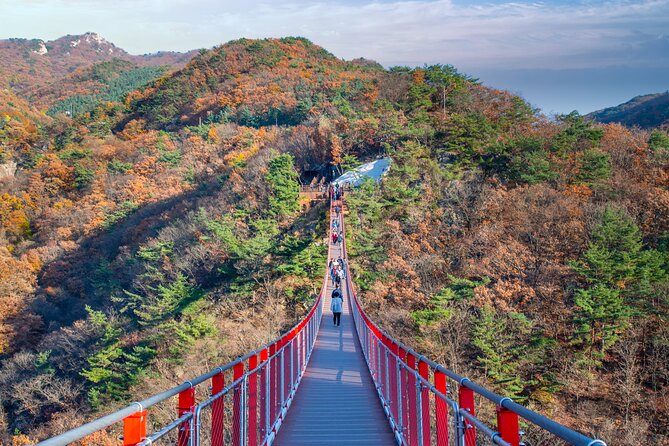
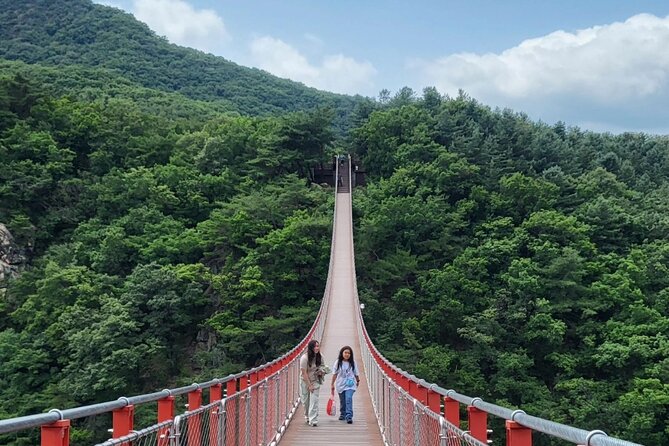
The day may end at Majang Lake, also called Majang Reservoir, where the 262-meter suspension bridge crosses the water about 25 meters above the lake. It opened in 2020 and offers a very different mood from the DMZ sites.
The bridge gives you a scenic walk and a chance to stretch after the tunnel and bus rides. The setting is calmer, and the crossing can be a welcome final stop. If you dislike heights or exposed bridges, you may prefer to skip it.
Pay close attention when booking. The Majang Lake bridge is listed as optional, and the basic DMZ-only option does not include it. The same applies to the Gamaksan Red Suspension Bridge and strawberry picking. The title of the experience highlights Majang Lake, but the included features depend on the package selected at checkout.
Some versions also include the Gamaksan Red Suspension Bridge rather than, or in addition to, Majang Lake. Ask which add-on is included in your selected fare so you are not expecting a bridge crossing that is not covered.
What the $35 price really buys you
At $35, this is a strong-value day if you want the main DMZ sights from Seoul. You get a professional English or Chinese-speaking guide, transport, entrance arrangements, and access to the Third Tunnel, Dora Observatory, and controlled areas that are difficult to visit independently.
The price does not include lunch, hotel drop-off, or every optional bridge and activity. That distinction matters. A low headline price can become higher once you add Majang Lake, Gamaksan, or strawberry picking.
Even so, the practical value remains good. You avoid piecing together transportation to Imjingak, the tunnel, and Dora Observatory. You also have someone handling military entry procedures and explaining the sites in real time.
The trade-off is a large group and a fixed schedule. You pay less than you would for a private outing, but you have less control over how long you spend at each stop. I would choose this option for a first visit to the DMZ, especially if you want breadth more than quiet reflection.
Practical advice for a smoother day
Arrive early at the meeting point. Several buses may leave together, and a delayed arrival can create confusion.
Bring your passport. It is required for the checkpoint, and a phone photograph may not be enough.
Wear comfortable shoes. The Third Tunnel includes stairs, inclines, and a long uphill return. A hard hat protects you from the low ceiling, but it will not make the walk easier.
Carry a jacket or extra layer. The weather may shift during the day, and the tunnel can feel cooler than the open-air stops.
Bring cash or a payment method for lunch and souvenirs. Food is not included, and North Korean products may be available at Dora Observatory.
Keep your schedule open after the tour. Return traffic and military timing can affect the finish, even though the planned duration is about eight hours.
Try to ask questions on the bus. Guides such as Nancy, Alex, Kelly, Moon, and Emily are praised for turning travel time into useful history lessons. Their personal stories can make the political subject easier to understand.
Who should book this experience
I would recommend this tour if you are visiting Seoul for the first time and want a broad introduction to the Korean War, the divided peninsula, and the DMZ. It suits curious visitors who want both memorials and physical sights, especially the Third Tunnel and Dora Observatory.
It also works well for people who prefer a guided day trip over independent planning. The military checkpoint, controlled access, and distant locations make a guide particularly helpful.
You should think twice if you dislike group tours, long bus rides, strict timing, or stairs. The day can feel rushed when military exercises or early closures change the plan. The group may be large, and not every optional stop is included in the lowest price.
Should you book the Seoul DMZ and Majang Lake tour?
Book it if you want the best range of major DMZ sights for a modest price, and you are willing to accept a busy schedule. The Third Tunnel, Dora Observatory, Imjingak Park, and Bridge of Freedom give you a solid first look at Korea’s divided history, while Tongilchon and Majang Lake add variety.
Choose the package carefully. Confirm whether Majang Lake, Gamaksan Red Suspension Bridge, or strawberry picking is included, and remember that lunch and hotel drop-off are not covered. Bring your passport, wear good shoes, and expect a full day.
The tour is not polished into a slow, private experience. It is a practical, history-heavy outing with a strong chance of meeting a warm and engaging guide. For many visitors to Seoul, that is a fair trade for seeing a part of Korea that is both difficult to reach and impossible to understand from a city museum alone.
FAQ
How long does the DMZ tour last?
The tour lasts approximately eight hours, including transportation from Seoul and the return journey.
Where can I meet the tour in Seoul?
Meeting points are available at Myeongdong Subway Station Exit 9, Seoul City Hall Subway Station Exit 6, and outside Hongdae Subway Station Exit 3.
Is hotel pickup included?
Pickup is provided from a main subway station near your hotel or from the downtown area. Hotel drop-off is not included.
Do I need my passport?
Yes. You must bring your passport, military ID card, or South Korea-issued identification for the checkpoint at Unification Bridge.
Is lunch included?
No. Lunch is not included in the tour price.
Are the Majang Lake and Gamaksan bridges included?
Not in every package. The bridges are optional, so check which version you selected during booking. The DMZ-only option does not include these bridge crossings.
Can most people participate in the tour?
Most people can participate, but the Third Tunnel includes stairs, inclines, and a physically demanding walk. Comfortable shoes are strongly advised.
Just added in Seoul
- Suwon: Baseball Game with Fortress and Local Food Tour★ 5.0 · 3 reviews
- Seoul: War Memorial of Korea Private Guided Museum Tour★ 4.9 · 29 reviews
- Seoul: Wine & Korean BBQ, Perfect Pairing Dinner in Sinchon★ 5.0 · 6 reviews
- Seoul : Your Personal Photographer in Gyeongbokung★ 5.0 · 7 reviews
- Seoul : Efoil Experience in Han River★ 5.0 · 5 reviews
- Seoul: Vivaldi Park Winter Ski with Eobi Ice Valley Day Tour★ 4.6 · 16 reviews
- Seoul: Vivaldi Park Winter Ski with Nami Island Day Tour★ 5.0 · 4 reviews
- Seoul: SnowyLand in Vivaldi Park with Nami or Alpaca★ 4.8 · 11 reviews
DMZ & JSA Tours, compared.
Best DMZ Tour Korea from Seoul (Red Suspension Bridge Optional)
Read our review →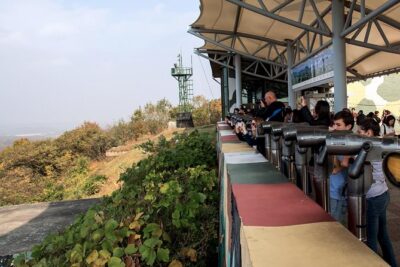
DMZ Tour: 3rd Tunnel, Option(Suspension Bridge, Boat) from Seoul
Read our review →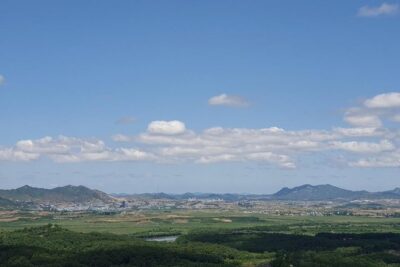
DMZ tour south Korea from Seoul (NK experience hall, defector)
Read our review →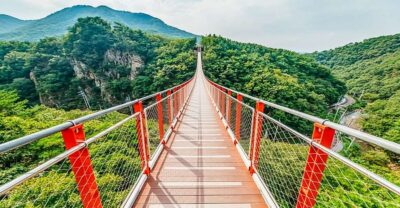
DMZ Insider Tour: 3rd Tunnel, NK Defector Meet & Red Bridge
Read our review →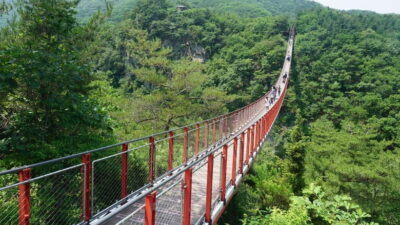
Signature DMZ Tour: Exclusive Defector Talk & Suspension Bridge
Read our review →
Thrilling Korean DMZ 3rd Tunnel Tour from Seoul + Red Bridge Rush
Read our review →
DMZ Past and Present: Korean Demilitarized Zone Tour from Seoul
Read our review →Browse the lists this tour appears in