
Reviewed · DRINKING TOURS
Drinking and Eating through the Alleys of Seoul
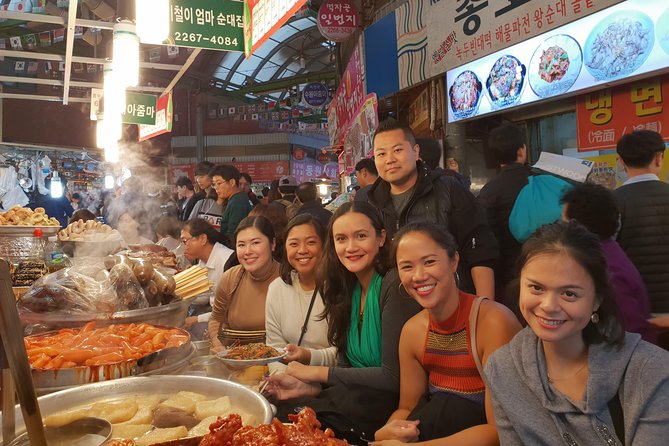
Seoul’s best food is often found away from the polished restaurant fronts. This five-hour walk with Mike, a former chef with a sharp eye for Korean food and drink, takes you from Gwangjang Market into narrow Jongro and Euljiro alleys where locals eat, drink, and catch up. You’ll try familiar dishes, unusual bites, and Korean rice wine without having to decode every menu.
I like the careful food selection and the small-group format, capped at 11 people. Mike has tasted his way through the market stalls and can explain what you are eating, how it is prepared, and how to approach something new. The main drawback is cost control: the $85 tour price does not cover most food or drinks, so you need extra cash and a willingness to share dishes.
Key points to know before you book
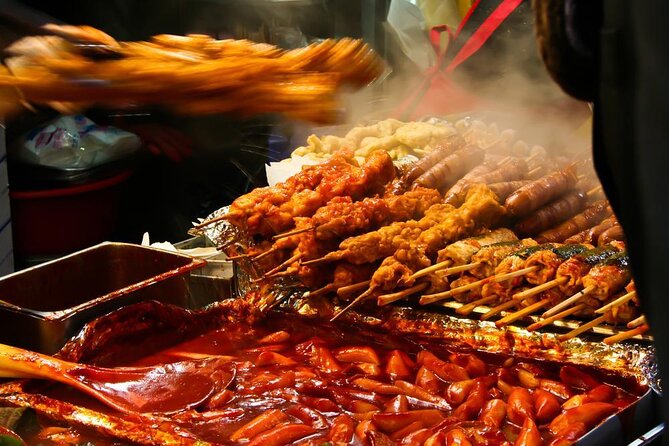
- Gwangjang Market starts the feast: Spend about two hours tasting a range of Korean foods and drinks in one of Seoul’s best-known markets.
- Mike’s food expertise shapes the route: His background as a chef and sommelier helps him explain flavors, preparation, drinks, and local eating habits.
- The alleys are the real draw: After the market, the tour moves into Jongro and Euljiro-dong, where small local spots replace the main tourist streets.
- Food spending is separate: Your $85 covers the guided experience, taxes, and a round of drinks at the last stop, but most food and drink costs are shared by the group.
- Come ready to try new things: Live octopus and less familiar local dishes may appear, but Mike can offer safer choices and explain each item.
- It ends near Insadong: The final point is close to a subway station, with the option to continue exploring on your own.
Why this Seoul food walk feels different
Many food tours stay on a simple path: market stall, famous dish, photo, and goodbye. This one uses Gwangjang Market as a starting point, then shifts into the side streets of central Seoul. That change matters. You get the recognizable market experience, but you also see the kind of places you would probably miss if you were relying on English signs or a map app.
Mike is the key to the experience. He grew up in Chicago, speaks excellent English, and has spent months testing food and drink across Seoul. His approach is practical rather than showy. He can compare stalls, explain why one version of a dish is better than another, and help you decide how adventurous you want to be.
The group size helps. With no more than 11 people, it is easier to ask questions, share food, and adjust the pace. The tour can suit a family with teenagers, a solo visitor looking for company, or a couple that already knows the usual Korean dishes and wants something less predictable.
A few more things to do in Seoul worth a look
- Seoul: Pub Crawl
★ 4.7 · 903 reviews - The Seoul Pub Crawl Official
★ 5.0 · 838 reviews - Seoul: Anthony Bourdain-Inspired BBQ and Pub Experience
★ 5.0 · 186 reviews
Gwangjang Market: two hours of small bites and local color
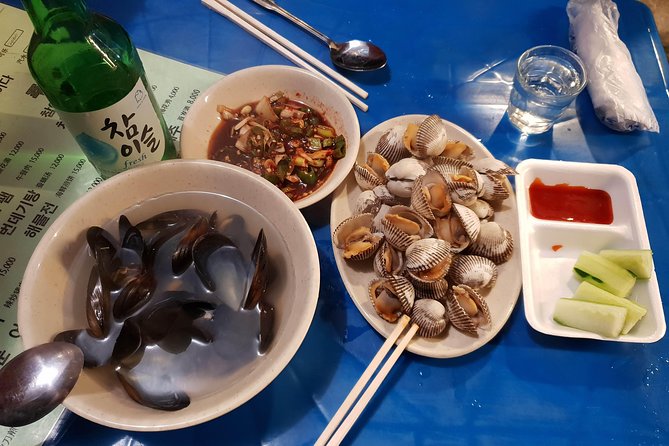
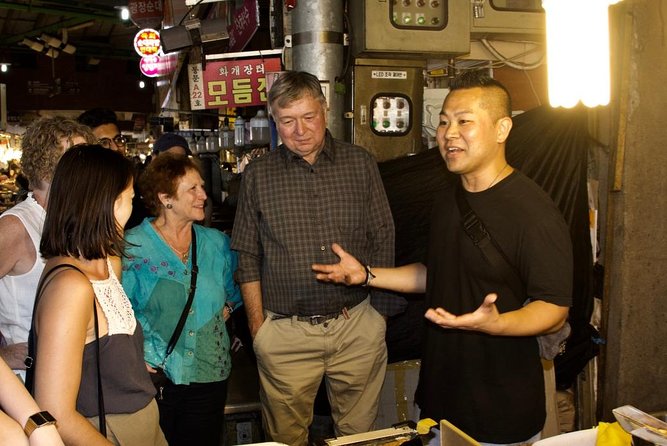
The first stop is Gwangjang Market, where you spend around two hours tasting a variety of food and drinks. Admission is free, but you should expect to pay for what you eat. Since dishes are shared, the actual cost depends on how hungry and adventurous your group is.
This is a good place to begin because a market gives you a broad look at Korean eating habits in a short time. Instead of committing to a full meal at one restaurant, you can sample several items. That is especially useful if you are still learning which flavors you like, or if you are unsure about fermented, spicy, chewy, or raw foods.
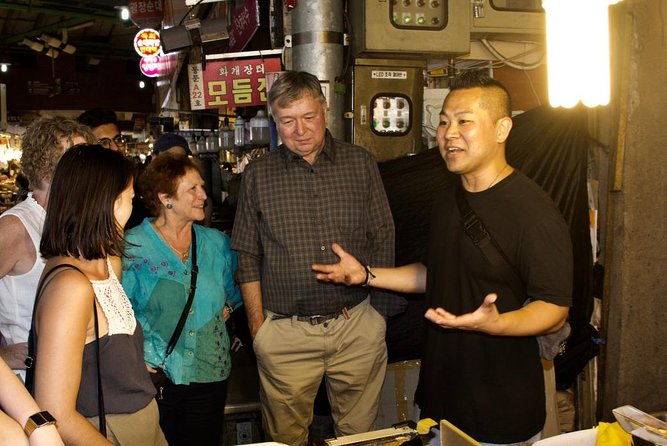
Mike’s role makes the market less confusing. He knows the stalls and can point you toward strong choices rather than leaving you to pick at random. He also explains how to eat the food, what ingredients are involved, and how the dishes fit into Korean food culture.
You may encounter adventurous options, including live octopus. That is not a minor detail. If the thought of moving seafood makes you nervous, this is a tour where you should say so early. You can try a small bite, choose a milder dish, or pass altogether. The point is to explore, not to prove anything.
The market portion can also be the busiest and fastest-moving part of the afternoon. You will be walking, stopping, sharing, and making decisions as you go. Wear comfortable shoes and avoid arriving after a heavy meal. Portions are not necessarily enormous at each stop, but the total amount adds up over several hours.
Jongro’s side streets: where the tour earns its price
After Gwangjang Market, the group walks through central Seoul toward Jongro Gallery and nearby alleys. The route description is simple, but the important feature is the setting: small eateries and local drinking spots tucked away from the main road.
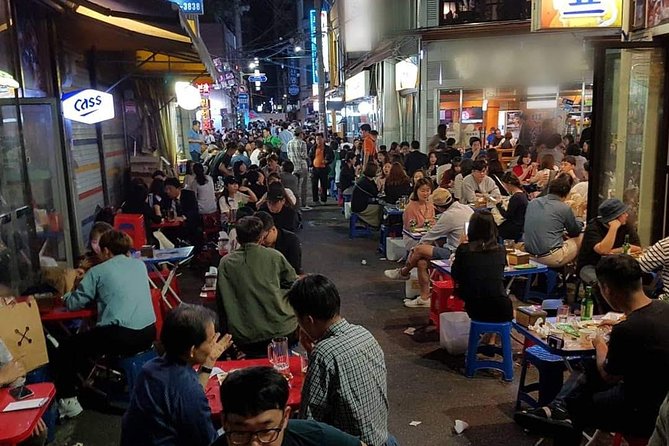
This is where the tour becomes difficult to copy on your own. You might find the broad neighborhood easily enough, but locating a particular restaurant, tent, or back-alley bar is another matter. English menus may be limited, and several places can look unremarkable from the outside.
The food here is not presented as a formal tasting menu. Instead, you stop at several small places and share what the group chooses. Mike guides the ordering and gives context as you go. He also lets the group help set the pace and amount of food, which is useful if one person wants to try everything while another prefers smaller portions.
I like this flexible approach. It keeps the tour from feeling like a fixed conveyor belt of dishes. It also reduces waste. You can take a bite of something unfamiliar without being stuck with a full serving.
You should still expect a serious amount of eating. One group described the route as including street food, a full meal at a local restaurant, fried chicken, and pub-style food. The exact stops can vary, but the clear message is to arrive hungry and thirsty.
Euljiro-dong and Korean rice wine
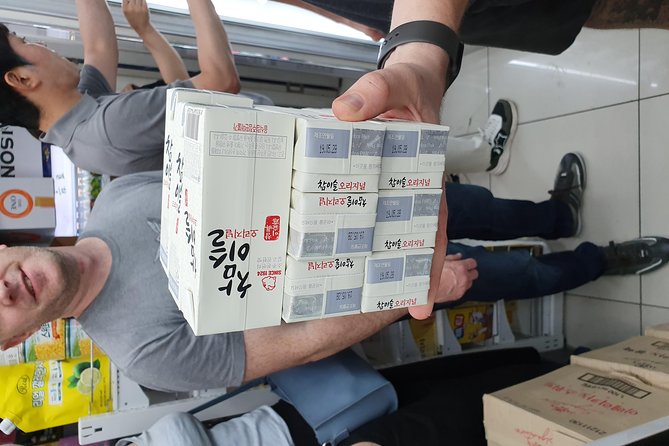
The final named stop is Euljiro-dong, with about 40 minutes devoted to Korean rice wine tasting. This gives the tour a change of pace after the market snacks and alley restaurants.
Makgeolli, the milky Korean rice wine, is likely to be part of the tasting, along with other drinks such as beer or soju. The tasting is not only about alcohol strength. Mike explains the differences between drinks and helps you understand how they fit with Korean food and social life.
For some people, this will be the most memorable part of the tour. Rice wine can be unfamiliar to visitors who know Korean food mainly through barbecue, noodles, or fried chicken. It also shows why Korean meals often work as social occasions rather than simple stops for fuel.
Alcohol is included in one specific way: Mike buys a round at the last stop. Most other food and drink costs are not included. Keep that distinction clear. The tour price is not an all-you-can-eat package, and the final round should not be read as covering the full evening.
Same base, a different kind of day out:
- Best DMZ Tour Korea from Seoul (Red Suspension Bridge Optional)
★ 5.0 · 41,422 reviews - DMZ Tour: 3rd Tunnel, Option(Suspension Bridge, Boat) from Seoul
★ 5.0 · 21,373 reviews - DMZ tour south Korea from Seoul (NK experience hall, defector)
★ 5.0 · 20,599 reviews - Seoul: DMZ Tour with Optional Suspension Bridge
★ 4.8 · 5,277 reviews
What the $85 price really buys you
The tour costs $85 per person. Food and most drinks are extra, with the group splitting the bill for shared items. One group found its additional spending came to under $20 per person, but your total can be higher if you order more or choose pricier drinks.
At first, paying separately for food may seem less convenient. I see an advantage, though. You are not paying for a fixed menu that may include dishes you do not want. The group can order more of what it likes, try less of what sounds risky, and adjust the final bill to its appetite.
The real value is the access and guidance. You are paying for a five-hour route, a small group, translation help, ordering support, local food knowledge, and a guide who has compared many places rather than simply selecting the most famous stall.
The tour also offers useful value beyond the meal itself. Mike gives recommendations for restaurants, bars, beer, skincare, and places in Seoul and Busan. If you book early in your visit, you can use those suggestions for the rest of your stay. If you book on your last day, the food experience still works, but you lose some of that practical follow-up value.
The walking, timing, and meeting points
The tour lasts about five hours and begins at 407 Dongho-ro in Seoul’s Jongno District. It ends at 103-4 Nagwon-dong, also in Jongno, close to Insadong and a subway station.
The walking is spread across the food stops rather than presented as a hard-paced sightseeing march. Still, you should expect to be on your feet for much of the afternoon or evening. One older participant found the walking manageable, but comfortable shoes remain a sensible choice.
Because the route moves through markets and small eateries, timing can shift a little with the group’s appetite and pace. You will get more from the experience if you allow the full five hours rather than treating it as a quick meal with a short walk attached.
At the end, Mike can show you to the subway station. Many people continue walking around Insadong, which makes the finish convenient for extending the evening with shops, galleries, cafes, or another meal.
The tour requires good weather. If poor weather cancels it, you can choose another date or receive a full refund. You can also cancel for a full refund up to 24 hours before the start time. The activity needs a minimum number of people, so a cancellation for that reason also comes with a date change, another experience, or a refund.
Who should book this experience
This tour suits you if food is one of the main reasons you visit Seoul. It is especially useful if you want help with menus, ordering, unfamiliar ingredients, and local drinking customs.
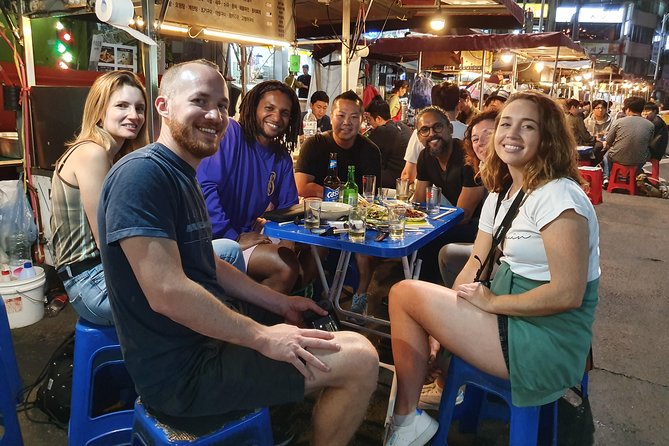
It also works well for solo visitors. The small group gives you company while keeping the experience more personal than a large bus-style outing. Couples, families, and groups of friends can join too. Families with teenagers have enjoyed the range of food, though parents should be ready for unusual dishes and alcohol-focused stops.
You do not need to be an expert in Korean food. In fact, a little uncertainty is part of the appeal. Mike offers both familiar and adventurous options, so you can decide how far to go.
This is less suitable if you want a neat, pre-paid tasting menu with every cost settled in advance. It is also not ideal if you dislike walking, sharing food, paying extra as you go, or trying dishes outside your usual comfort zone.
Small details that improve the experience
Arrive hungry, but not so hungry that you rush through the first stop. You will be eating across several locations, and a little restraint early on helps you enjoy the whole route.
Bring extra Korean won or a payment method that works for shared food costs. The tour price does not include dinner, and the group divides the food bill. If you are traveling with children or do not drink, tell Mike early so he can help shape the choices.
Book near the beginning of your Seoul stay if you want restaurant tips you can use later. If you already know Korean food well, explain what you have tried so far. Mike can then steer the group toward less familiar dishes rather than repeating the basics.
Finally, keep your plans after the tour loose. You may finish near Insadong, but after five hours of eating and drinking, you might want to continue exploring at an easy pace rather than hurry to a distant reservation.
Should you book Drinking and Eating through the Alleys of Seoul?
Book it if you want a guided introduction to Seoul’s food culture that goes beyond the famous dishes. The combination of Gwangjang Market, Jongro’s side streets, Euljiro rice wine, and Mike’s chef-led explanations gives you both a broad sample and a look at places you might not find alone.
Skip it if you want every meal and drink included, a short walking route, or a polished restaurant-only experience. For most food-focused visitors, the separate food cost is a fair trade for choice and flexibility. Bring extra money, arrive ready to experiment, and treat the tour as a five-hour introduction to eating well in Seoul.
FAQ
How long does the tour last?
The experience lasts approximately five hours.
How much does the tour cost?
The listed price is $85 per person. Most food and drinks are not included, so you should budget extra for shared dishes and beverages.
Is food included in the tour price?
No. Food costs are separate and are generally split among the people in the group. Mike buys a round of drinks at the final stop.
Where does the tour begin and end?
It begins at 407 Dongho-ro in Seoul’s Jongno District and ends at 103-4 Nagwon-dong, also in Jongno. The ending point is close to a subway station and near Insadong.
How large is the group?
The tour has a maximum of 11 participants.
Can I cancel the booking?
You can cancel up to 24 hours before the start time for a full refund. Cancellations or changes made less than 24 hours before the start time are not accepted for a refund.
Just added in Seoul
- Suwon: Baseball Game with Fortress and Local Food Tour★ 5.0 · 3 reviews
- Seoul: War Memorial of Korea Private Guided Museum Tour★ 4.9 · 29 reviews
- Seoul: Wine & Korean BBQ, Perfect Pairing Dinner in Sinchon★ 5.0 · 6 reviews
- Seoul : Your Personal Photographer in Gyeongbokung★ 5.0 · 7 reviews
- Seoul : Efoil Experience in Han River★ 5.0 · 5 reviews
- Seoul: Vivaldi Park Winter Ski with Eobi Ice Valley Day Tour★ 4.6 · 16 reviews
- Seoul: Vivaldi Park Winter Ski with Nami Island Day Tour★ 5.0 · 4 reviews
- Seoul: Sokcho beach, market, hot spring and Seorak Cable Car★ 4.8 · 5 reviews
Drinking Tours, compared.
Anthony Bourdain-Inspired BBQ and Pub Experience
Read our review →
Korean Drinking Games Night (non-drinkers welcome)
Read our review →
Baseball Game Ticket with Dinner/Beer with the host
Read our review →
Korean Chicken & Beer Night Tour with Local Hidden Gems
Read our review →Browse the lists this tour appears in