
Reviewed · SUWON HWASEONG FORTRESS TOURS
Hwaseong Fortress and Korean Folk Village Tour from Seoul
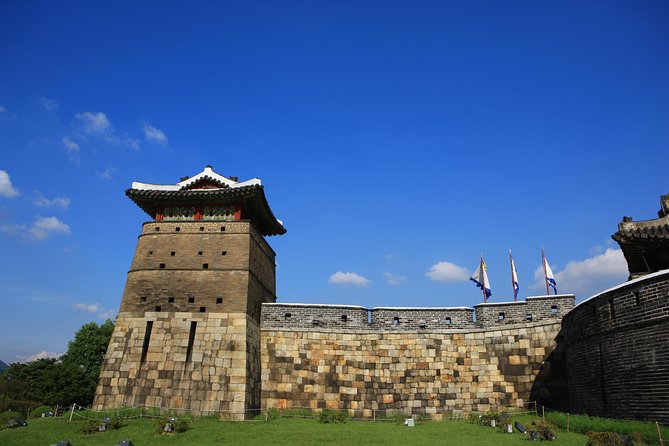
Hwaseong Fortress is the star of this day out from Seoul. Built between 1794 and 1796 under King Jeongjo, its walls, gates, artillery towers, and mountain setting give you a clear look at late Joseon military design. I like that the tour pairs this grand site with the Korean Folk Village, where old houses, workshops, food stalls, and live cultural shows make the past easier to picture.
I also like the small group format, capped at nine people, and the hotel pickup by comfortable coach. The main caution is the schedule: some travelers found the guide hurried, and performances at the folk village can be canceled. Lunch information is also inconsistent, so confirm at booking whether it is covered in your departure package.
Key points to know
- Hwaseong Fortress comes first: Walk sections of Suwon’s UNESCO-listed walls, gates, and defensive towers with an English-speaking guide.
- The folk village is more than old houses: You can see workshops, household objects, cultural performances, a market, and seasonal events.
- Guide quality matters: Richard is singled out for clear explanations, practical Seoul advice, and considerate care, but guide experience can vary.
- The group is small: A maximum of nine people makes coach transport and questions easier than on a large bus tour.
- Expect a full day outside Seoul: Suwon is about 30 kilometers from central Seoul, so this is a useful time saver if you want both sites in one outing.
- Check the lunch details: The description presents bibimbap as part of the day, while the inclusions also say food is not included.
Why Hwaseong Fortress makes a strong first stop
The tour begins with hotel pickup at about 8:30 a.m. You travel south from Seoul toward Suwon in a climate-controlled coach or van, with the guide explaining the setting and the story of the fortress along the way.
Hwaseong Fortress was built when Suwon served as one of four important regional government centers during the Joseon dynasty. King Jeongjo ordered the fortress in part to honor his father and in part to support a new city with its own economic strength. That gives the site more meaning than a simple defensive wall. It was also a political and urban project.
At the fortress, you follow the guide to sections of the fortified wall, gates, and artillery towers. The masonry and defensive layout show how Joseon builders adapted older Korean ideas with more advanced late-18th-century planning. The guide’s explanation is useful here because the fortress can otherwise seem like a long stone wall with scattered towers.
The walls are usually described as stretching about 5,700 meters around the city, with Paldalsan Mountain at the center. You will not cover every section during the scheduled visit, so think of this as a guided introduction rather than a complete fortress walk.
The listed stop is about one hour, which is enough to see major features and hear the basic story. It is not enough for a slow circuit, extended photography, or a long independent walk. If you want to examine every gate or hike extensively, a separate Suwon visit will serve you better.
Richard, one of the guides associated with this experience, has been praised for explaining the site clearly and looking after practical needs. That is important at Hwaseong, where good interpretation turns impressive stonework into a readable story. Guide quality can vary, though, and one account described a friendly guide who knew less about the fortress than expected.
More fortress walls within reach of Seoul:
- Seoul: Suwon Hwaseong Fortress & Korean Folk Village Tour
★ 4.7 · 214 reviews - Beyond Seoul: Starfield Library, Hwaseong Fortress & Cave Quest
★ 5.0 · 177 reviews - From Seoul: Suwon Hwaseong Fortress Tour
★ 5.0 · 108 reviews
The Joseon story behind the walls
Hwaseong dates from the closing years of the Joseon dynasty, which ruled Korea from 1392 to 1910. Its design reflects a period when fortified cities needed to protect officials, residents, supplies, and royal interests.
The site was designated a UNESCO World Heritage Site in 1997 because of its historical and architectural value. You can see why during the walk: the fortress combines walls, gates, lookout points, and artillery positions rather than relying on one massive central structure.
The guide-led format is most helpful if Korean history is new to you. You hear why Suwon mattered, why King Jeongjo chose to build, and how the fortress fit into his plans for his father and for the city. Without that background, the visit risks becoming a quick photo stop.
Daily performances may take place at or near the fortress, and Suwon also holds a cultural festival each fall. The tour does not promise a particular show, so treat performances as a possible extra rather than a guaranteed part of your morning.
Wear shoes you can walk in. The tour requires a moderate level of physical fitness, and fortress paths may include uneven ground, slopes, and steps. The experience is not presented as a strenuous hike, but it is not a coach-only sightseeing trip either.
A Korean lunch at the folk village market
After Hwaseong, the coach continues to the Korean Folk Village. The traditional market is the natural place to stop for food, and the planned meal is bibimbap, a Korean rice dish served with meat and vegetables.
The lunch arrangement needs special attention before you pay. The main description presents a typical Korean lunch as included, but the separate inclusions list says food and drinks, and lunch, are not included. That is a real difference, not a minor wording issue. Ask the operator what your $91 package covers and budget extra money for food, drinks, rice cakes, or traditional liquor if needed.
Even with that uncertainty, the market adds something useful to the day. You are not eating in an anonymous roadside restaurant. You get a chance to see the kind of food and snacks associated with a recreated traditional setting, with time to choose additional specialties if they appeal to you.
The lunch stop may feel brief if the afternoon program is packed. If you prefer a long meal with several dishes, this tour is probably not built around food. If you want a practical, familiar Korean meal between two cultural sites, bibimbap is a sensible choice.
Old houses and working craft shops at the Korean Folk Village
The Korean Folk Village opened in 1974 and was created from more than 260 restored traditional houses. The houses represent elements of the late Joseon period and come from different regions of Korea, giving you more variety than a single preserved home.
Inside, you can see household goods and objects linked to daily life. That is the village’s main strength. Hwaseong shows how a king and engineers planned a fortified city. The folk village shows how people cooked, worked, worshipped, stored goods, and lived in ordinary homes.
Workshops demonstrate traditional crafts such as pottery, basket making, bamboo work, paper, brassware, fans, musical instruments, and embroidery. Demonstrations can make the visit more engaging than simply walking through empty buildings. You may also find craft items for sale, though the provided details do not promise a specific shopping period or particular products.
The village also presents folk customs, including nongak farmer’s music and jultagi tightrope acrobatics. Depending on the season and the day, programs may include martial arts on horseback, a traditional wedding ceremony, and other special events.
Here is the catch: shows can be canceled, and the timing may not fit neatly into your route. One account described a guide who seemed eager to move on rather than wait for performances. If a show is your main reason for booking, check the day’s program before setting your expectations.
The village includes a family-friendly theme park with 15 attractions, but this tour is primarily cultural. Do not assume you will have time to use those rides. Your available time is likely better spent on houses, workshops, the market, and any scheduled performances.
More living-history stops from Seoul:
- Korean Folk Village and Suwon Hwaseong Fortress Day Tour(EG Tour)
★ 4.5 · 80 reviews - Seoul: Suwon Hwaseong, Folk Village, & Starfield Library
★ 4.8 · 55 reviews - Traditional Korean folk village Afternoon tour
★ 5.0 · 52 reviews - Namhansanseong UNESCO Historical Sites and Korean Folk Village-Private Tour
★ 5.0 · 29 reviews
What the small group and coach transport mean
The tour accepts a maximum of nine people, and some departures may be private or nearly private. That makes a practical difference. You can usually hear the guide more easily, ask questions without holding up a large crowd, and get in and out of a smaller vehicle faster.
Transport is one of the tour’s strongest conveniences. Suwon is roughly 30 kilometers from Seoul, and combining the two sites by coach saves you from arranging separate trains, buses, taxis, and entrance tickets. The coach is described as comfortable and climate-controlled, and the return journey ends with drop-off at Myeongdong Station rather than necessarily at your hotel.
Read the pickup details carefully. Hotel pickup is included, but the final information specifically names Myeongdong Station for drop-off. If you are staying outside the pickup area or need to return to a particular Seoul neighborhood, confirm the exact meeting and drop-off arrangements.
The total duration is about eight hours. That sounds generous, but travel between Seoul, Suwon, the fortress, the village, and the return point uses part of the day. The two listed sightseeing stops are each described as about one hour, so the experience is best understood as a guided overview with transport, not a slow exploration of either site.
How much value do you get for $91?
At $91 per person, this is not the cheapest way to see Suwon. The value comes from combining transportation, admission to both sites, a guide, and a full day outside Seoul in one booking.
I think the price makes more sense for first-time visitors who want structure. You do not need to work out the route to Suwon, locate the fortress, compare local transport, or figure out the folk village on your own. The guide also supplies context that signs and quick online research may not provide.
The value is weaker if you are comfortable using public transportation, want several hours at the fortress, or prefer to choose your own restaurants and museums. You may see more by arranging a private Suwon day independently, especially if you want to walk farther along the walls.
The small group helps justify the cost. A group of nine feels more personal than a large sightseeing bus, and private departures can provide extra flexibility, though the schedule still appears fairly organized. Some people wanted more free time for shopping and wandering, so do not book this expecting a loosely planned day.
Guide quality can shape the whole day
The guide is central to this experience. At Hwaseong, you need someone who can explain King Jeongjo’s motives, the fortress design, and Suwon’s role in the Joseon period. At the folk village, you benefit from someone who can distinguish household customs, craft work, and performance traditions.
Richard receives especially strong praise for being attentive, clear, and helpful. He also offers Seoul and food tips, which can make the day more useful beyond the two main stops. Those small practical suggestions are a nice bonus after the formal sightseeing ends.
Still, do not assume every guide will have the same level of historical expertise. One departure had a friendly and talkative guide who showed more interest in conversation than in explaining the fortress. Another account found the guide too rushed around the folk village shows.
You can improve the experience by asking early about the day’s performance schedule and telling the guide which parts matter most to you. If you care about architecture, ask for more fortress detail. If you care about crafts or shows, say so before reaching the folk village.
Weather, pace, and who should book
Rain can shorten the outdoor portions. Hwaseong depends on walking beside open walls, and the folk village also requires time outside between buildings and workshops. Bring suitable clothing and accept that weather may change the plan.
The pace suits you if you want a clear introduction to two major cultural sites in one day. It is less suitable if you dislike guided schedules, need long rest periods, or want time to shop and wander without a group.
I would recommend this tour for first-time Seoul visitors, families interested in traditional culture, and anyone who wants a simple day trip without managing transport. It also works well for people who prefer English explanations at historical sites.
I would hesitate if your priority is a slow fortress hike, detailed architecture study, or guaranteed performances. In those cases, visit Suwon independently or choose a tour that promises more time at one site.
Free cancellation is available until 24 hours before the start time. The activity requires at least two people per booking, and adult pricing applies to most participants, with children age two and younger excepted.
Should you book this Suwon day trip?
Book it if you want efficient coverage of Hwaseong Fortress and the Korean Folk Village with hotel pickup, admissions, a small group, and a guide. The combination gives you both royal military planning and ordinary Joseon-era life, which is more rewarding than seeing either site alone.
Before confirming, settle two points: exactly what lunch includes and where you will be dropped off. Also ask how much independent time you will have and whether the day’s performances are scheduled. If those details suit you, the $91 price is fair for a convenient, guided day outside Seoul.
FAQ
How long does the Hwaseong Fortress and Korean Folk Village tour last?
The experience lasts about eight hours, including transportation from Seoul, sightseeing at both locations, and the return journey.
What time does the tour start?
The stated start time is 8:30 a.m.
Is hotel pickup included?
Yes. Hotel pickup service is included, although you should confirm the exact pickup area when booking.
Where does the return transfer end?
The included information specifies drop-off at Myeongdong Station.
Is transportation provided between Seoul and the attractions?
Yes. The tour uses a comfortable, climate-controlled coach or van for the day’s transfers.
Is a guide included?
Yes. A professional English-speaking guide is included.
How large is the tour group?
The activity has a maximum of nine people. A minimum of two people is required per booking.
Are entrance tickets included?
Admission tickets for Hwaseong Fortress and the Korean Folk Village are included.
Is lunch included?
The tour information is inconsistent. The main description presents bibimbap lunch at the folk village market, while the inclusions state that food, drinks, and lunch are not included. Confirm this point with the operator before booking.
What happens if I need to cancel?
You can receive a full refund if you cancel at least 24 hours before the local start time. Cancellations or changes made less than 24 hours before the start time are not accepted for a refund.
Just added in Seoul
- Your Personal Seoul Photographer!★ 4.1 · 15 reviews
- You’re Invited to Our Home in Seoul: The Only Cooking Class!★ 5.0 · 8 reviews
- From Seoul: Yongpyong Ski Day Tour with Transportation★ 4.9 · 40 reviews
- Seoul: Korean & English Language Exchange Global Party★ 5.0 · 28 reviews
- From Seoul: Hwacheon Ice Fishing and Lighting Festival Tour★ 4.5 · 4 reviews
- Unique Native Experience : Han River Picnic, Board game, BBQ★ 5.0 · 3 reviews
- Seoul: Gangneung BTS K-Pop & K-Drama Filming Locations Tour★ 4.6 · 14 reviews
- K-Pop Making Class with a Producer!★ 5.0 · 3 reviews
Suwon Hwaseong Fortress Tours, compared.
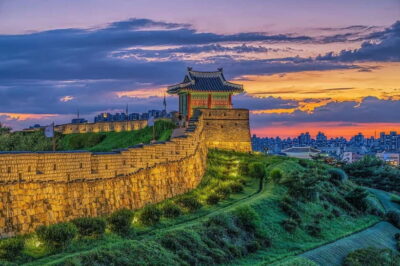
Suwon Hwaseong Fortress & Korean Folk Village Tour
Read our review →
Beyond Seoul: Starfield Library, Hwaseong Fortress & Cave Quest
Read our review →

Suwon Hwaseong+Gwangmyeong Cave+Starfield Library from Seoul
Read our review →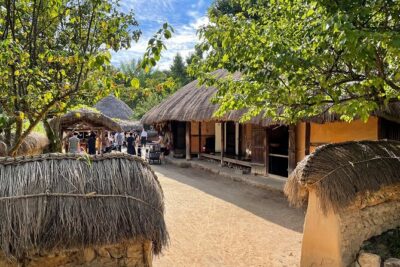
Hwaseong Fortress/Folk Village/Starfield Library Suwon
Read our review →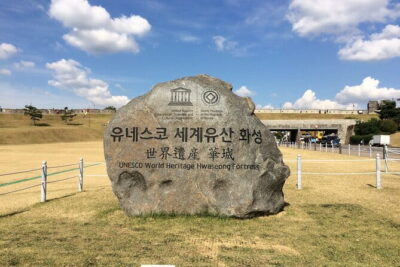
Day Tour of Suwon Hwaseong Fortress Starfield Waujeongsa Temple
Read our review →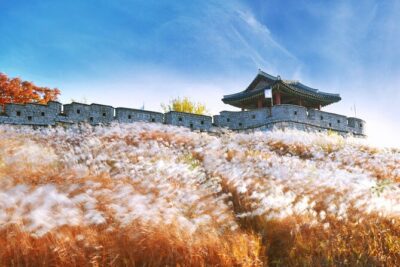
Day Trip to UNESCO: Suwon Fortress Adventure from Seoul
Read our review →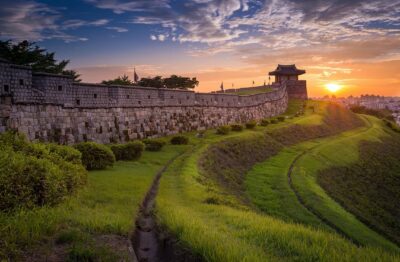
Night View Tour to Suwon Hwaseong Fortress from Seoul
Read our review →Browse the lists this tour appears in