
Reviewed · UNESCO WORLD HERITAGE TOURS
Day Trip to UNESCO: Suwon Fortress Adventure from Seoul
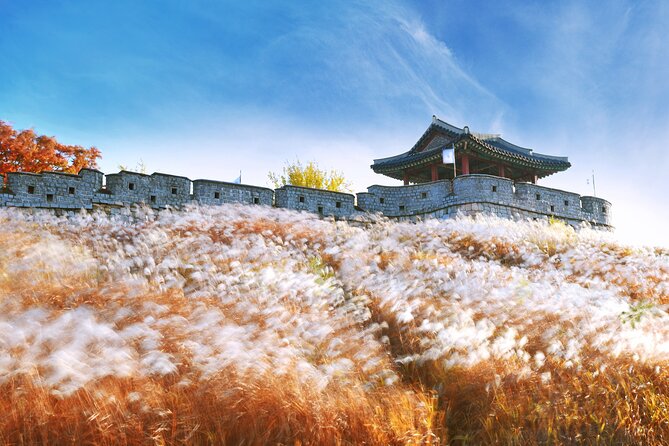
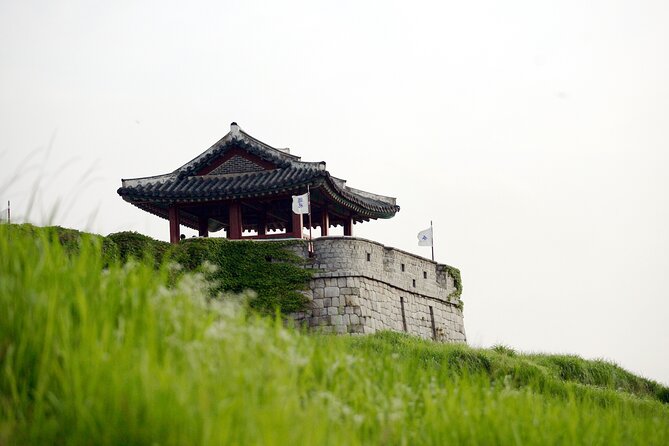
Suwon’s Hwaseong Fortress is more than a photogenic wall around an old city. It was built by King Jeongjo in the late Joseon period as a statement of royal power and filial devotion to his father. I like that this half-day trip gives you both the fortress and Hwaseong Haenggung Palace, so you see the military and royal sides of the same project.
I also like the efficient morning schedule and the guides, including Sophie, Stella, Henry, Park, and Thomas, who bring plenty of historical context and often help with photos. The main consideration is weather: much of the visit takes place outdoors, and heavy rain can limit what you see. The meeting arrangement also requires care, since central hotel pickup may be possible, but the standard start is at Myeongdong and the return is to Myeong-dong.
Why this Suwon outing is worth your morning
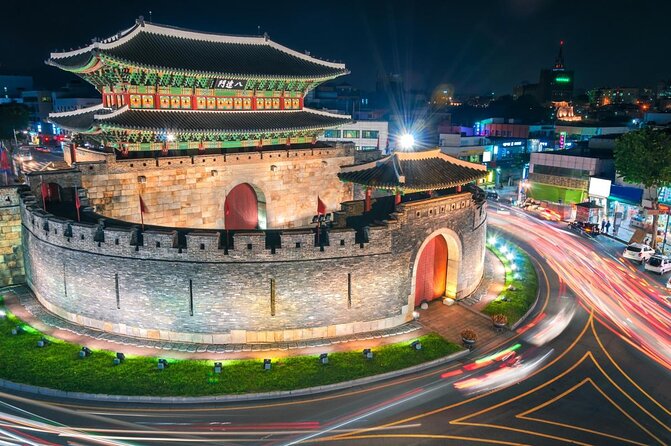
- A UNESCO-listed fortress with a living city inside it: Hwaseong is not an isolated ruin. Commercial and residential areas sit within and around the historic walls.
- Two different Joseon experiences: The fortress explains defense and engineering, while Hwaseong Haenggung Palace shows royal life and wartime retreat.
- Strong guide-led history: Guides such as Stella, Henry, Sophie, Park, and Leo are praised for clear explanations and thoughtful pacing.
- A useful four-hour format: You can see Suwon in the morning and still have the afternoon for shopping or sightseeing in Seoul.
- Possible small-group atmosphere: Some departures have been intimate enough to feel almost private, while the advertised maximum is 100 people.
- A practical Seoul departure: Transport is by air-conditioned coach or minivan, with the standard meeting point near Myeongdong Station.
King Jeongjo’s fortress and the story behind it
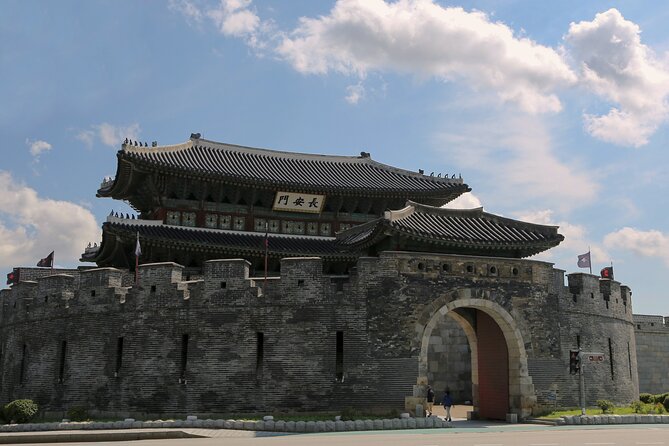
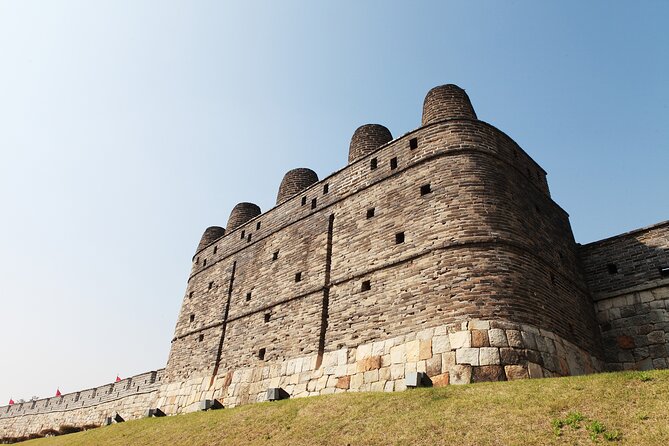
Hwaseong Fortress dates from the latter part of the Joseon Dynasty, which ruled Korea from 1392 to 1910. King Jeongjo ordered its construction as part of his plan to honor his father, whose tomb he visited outside Seoul. That personal motive gives the site more emotional weight than a simple military installation.
Your guide explains how the fortress served several purposes at once. It protected Suwon, displayed the king’s authority, supported his journeys to his father’s tomb, and helped develop the city as an important royal center.
This is where a guide makes a real difference. On your own, you can admire the stonework, gates, walls, and views, but it is harder to understand why the fortress was built in this particular form. Guides such as Henry and Melvin have been especially good at explaining the people, decisions, and political setting behind the construction.
The tour focuses on the fortress highlights and the meaning of its directional gates. Do not expect a slow, all-day walk along every section of the wall. You get a selected visit designed to explain the main features within a four-hour outing from Seoul.
More fortress walls within reach of Seoul:
- Seoul: Suwon Hwaseong Fortress & Korean Folk Village Tour
★ 4.7 · 214 reviews - Beyond Seoul: Starfield Library, Hwaseong Fortress & Cave Quest
★ 5.0 · 177 reviews - From Seoul: Suwon Hwaseong Fortress Tour
★ 5.0 · 108 reviews
Walking through Hwaseong Fortress
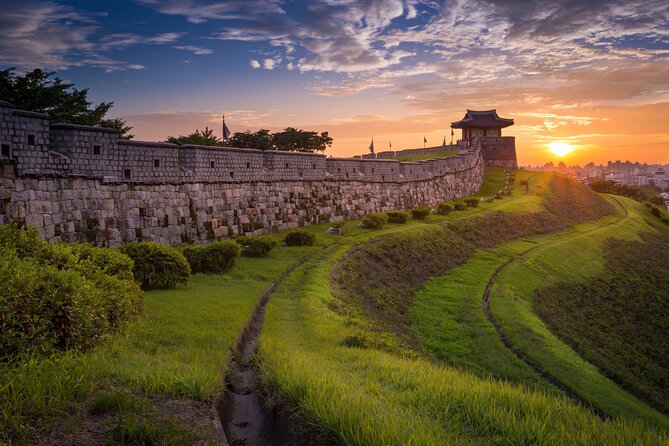
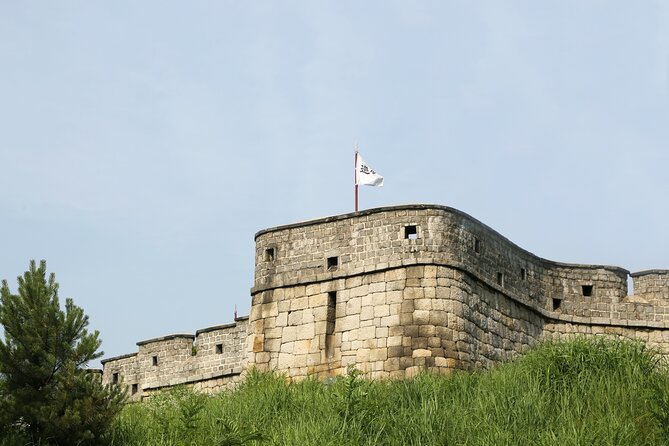
The fortress visit is scheduled for about 90 minutes, making it the main part of the day. You can expect time around the walls and gates, with explanations of the defensive design and King Jeongjo’s reasons for creating the complex.
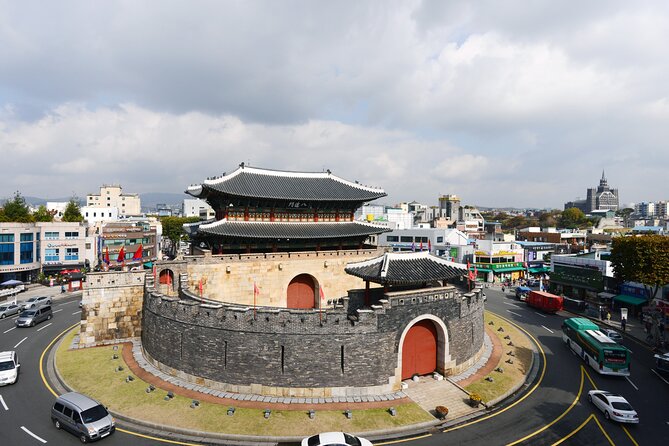
One unusual feature is that Hwaseong is closely tied to modern Suwon. This is not a remote archaeological site with nothing around it. Streets, homes, shops, and ordinary city life remain part of the setting. That mixture can make the visit feel less polished than a completely preserved royal compound, but it also shows how the historic structure continues to function as part of the city.
The wall is especially good for photographs, though the exact views you get depend on the route, weather, and pace. One past experience included a trolley ride, which provided a quick look at the fortress but moved past some of the best photo spots without stopping. If photography matters to you, tell your guide early and ask when you will have time to pause.
Several guides make an effort to keep the walking comfortable. Thomas, for example, checked the pace for older family members and offered to take photographs. Stella has adjusted visits around what the group wanted to see, while Leo helped people reach the meeting point and knew useful places for pictures.
The fortress can be beautiful in poor weather, but rain changes the experience. Wet stone, limited visibility, and fewer chances to stop can make the outdoor portion less satisfying. Bring suitable shoes and clothing, and understand that the guide can explain the site even when conditions prevent a full walk.
Hwaseong Haenggung Palace in 30 minutes
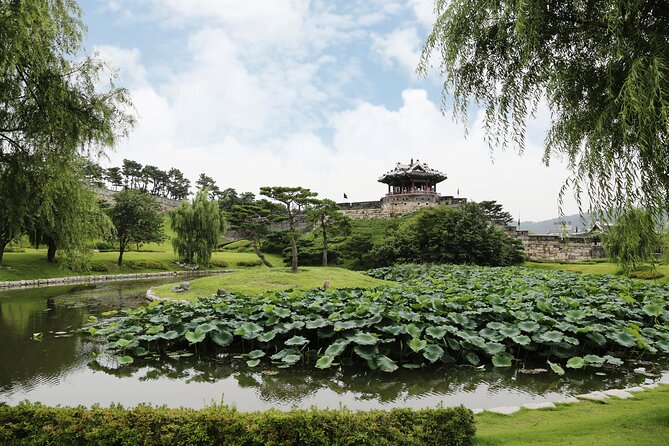
The second stop is Hwaseong Haenggung Palace, visited for about 30 minutes. A haenggung was a temporary palace where the king and royal family could stay during war or while traveling. Hwaseong Haenggung is the largest of these temporary palaces.
King Jeongjo used it during visits to worship at his father’s tomb, as well as for shelter during wartime. That makes the palace a useful counterpoint to the fortress. The walls show how the city could be defended, while the palace shows where the king conducted royal business and stayed during these journeys.
Thirty minutes is enough for an introduction, but it is not a long, unhurried palace visit. You may pass through several courtyards and buildings while your guide explains their purpose. Some departures also include a short film or a traditional military performance, though timing and program details can vary.
The palace is often the easier stop for visitors who prefer architecture and royal customs over military history. It also offers more contained spaces for photographs. The tradeoff is that the brief schedule can feel compressed, especially if the fortress portion runs late or a performance is due to start.
A guide-led visit makes the history easier to follow
The most consistent strength of this experience is the guide. The exact person depends on the departure, but past guides have included Sophie, JL, Shin, Henry, Stella, Thomas, Chloe, Park, Leo, Geanie, and Melvin.
Expect different personalities rather than a single fixed presentation. Sophie has been praised for detailed explanations and a considerate manner. JL has led small groups with an easy, approachable style. Stella has been particularly good at shaping the visit around the group and avoiding a rushed feel.
Park is a good fit if you enjoy Korean film and television connections. She has pointed out filming locations and added humor to the historical explanations. She also speaks Japanese and English, which can help Japanese-speaking participants follow the visit more comfortably.
The value of the guide is not just information. A good guide helps you notice architectural details, keeps the group moving, finds photo opportunities, and explains why a gate or courtyard matters. Guides have also helped families with photographs and checked that the walking speed feels manageable.
Because the company can use a coach, minivan, or even a private car for a small departure, the mood can vary. Some outings have been small enough for a family of three to ask frequent questions. Other departures may be larger, with a listed maximum of 100 people. If a small group is important to you, do not assume it is guaranteed.
Other listed sites within reach of Seoul:
- DMZ Tour, 2nd Tunnel & UNESCO Suspension Bridge Tour from Seoul
★ 5.0 · 48 reviews - From Seoul: 5-Day Tour of Korea with UNESCO Sites
★ 4.8 · 22 reviews - Seoul: Ganghwa Island UNESCO World Heritage Private Tour
★ 5.0 · 8 reviews - DMZTour from Seoul:3rd Tunnel,North Korea View&UNESCO Valley
★ 5.0 · 3 reviews
Transport from Seoul and the morning schedule
The tour begins at 8:20 a.m. near Myeongdong Station, at the stated meeting point on Chungmuro 2-ga. A drive of more than 40 minutes has been reported for the trip to Suwon, although traffic can affect the timing.
Air-conditioned transport is included, which is useful in Seoul’s hot summers, cold winters, or wet seasons. You avoid arranging a separate train or taxi connection and can spend the journey listening to the guide or resting.
The pickup wording deserves attention. Central Seoul hotels may qualify for pickup, but if your accommodation is outside the usual area, the guide may direct you to the nearest central hotel or subway station. The standard return is to Myeong-dong, not necessarily to your hotel door.
That arrangement works well if you are staying around Myeongdong or planning an afternoon there. It is less convenient if your hotel is elsewhere and you expected a true door-to-door excursion. Check the exact pickup instructions after booking so you are not trying to find a vehicle at the last minute.
The tour does not stop at shopping centers. That is a plus if you want a focused cultural outing rather than a sightseeing trip mixed with sales stops.
What the $48 price gets you
At $48 per person, the price is reasonable if you value direct transport, admission, and a guide who can connect the sites into one story. Fortress and palace admission are included, as is transport by coach or minivan.
The best value comes from the time saved. You can reach Suwon without working out the route, buying separate tickets, or figuring out how to connect the fortress and palace. The half-day format also leaves the afternoon open, which is useful during a short Seoul visit.
The price is less attractive if you prefer to explore slowly, take extensive photographs, or spend hours walking the entire fortress circuit. You are paying for convenience and interpretation, not a full-day Suwon study.
Meals, drinks, personal spending, and travel insurance are not included. Plan to eat before or after the tour rather than expecting a meal stop. Since the morning is tightly timed, bring water and anything you need for the outdoor walk.
Group discounts are available, and mobile ticketing makes the booking side simple. A minimum of two people per booking applies. If there are not enough participants, the operator may cancel after confirmation and offer an alternative or a full refund.
Who will enjoy this tour most
I would recommend this outing to first-time visitors who want to understand Joseon Korea without giving up a full day in Seoul. It suits families, couples, and history fans who prefer a guide to explain what they are seeing.
It is also a good choice if you like mixing major sights with ordinary city surroundings. Hwaseong does not feel sealed away from Suwon, and that connection gives the visit a more grounded feel.
You may want a different arrangement if you are a serious photographer, a slow walker, or someone who wants to explore every gate and wall at leisure. A private or self-guided full-day visit would give you more control, though it would not provide the same built-in transport and historical commentary.
The walk is manageable for most people according to the activity information, but much of it is outdoors. Anyone concerned about mobility, heat, cold, or rain should ask about the planned route and pace before departure.
Timing, weather, and practical tips
Start with comfortable shoes. The fortress portion involves outdoor walking, and stone surfaces can become unpleasant in wet weather.
Bring a rain jacket or sun protection according to the forecast. Weather has affected the amount of fortress walking possible, and a poor day can reduce the value of an otherwise well-planned visit.
If you want photographs, mention it to your guide at the start. Guides including Thomas and Leo have been helpful with family pictures, but you should not assume every stop allows long pauses.
Ask about any scheduled performance when you arrive. A traditional military display has been a highlight on some outings, but arriving late can limit your view. The program may also include a trolley ride, which is convenient but may not stop at every ideal photo location.
The tour is free to cancel up to 24 hours before the start time for a full refund. Changes or cancellations inside that 24-hour window are not accepted for a refund, and the cutoff uses local time.
Should you book the Suwon Fortress tour?
Book it if you want a compact, guided introduction to Suwon with transport from central Seoul, admission, and a clear Joseon-era story. The combination of Hwaseong Fortress and Hwaseong Haenggung Palace gives the morning a good balance, and the guides are the main reason the visit feels more useful than simply viewing walls and courtyards on your own.
Think twice if your top priority is a slow photographic walk or guaranteed door-to-door hotel service. Weather and group size can affect the experience, and the standard return is to Myeong-dong.
For most Seoul visitors with one free morning, I would choose this tour for its efficient schedule and strong historical focus. Just check the pickup point, prepare for outdoor conditions, and keep the afternoon open for your own Seoul plans.
FAQ
How long does the tour last?
The experience lasts approximately four hours, including the trip between Seoul and Suwon.
What time does the tour start?
The scheduled start time is 8:20 a.m.
Where does the tour begin?
The standard meeting point is near Myeongdong Station, at 1061-7 Chungmuro 2(i)-ga in Jung District, Seoul.
Where does the tour end?
The tour ends in the Myeong-dong area of Seoul.
Is hotel pickup available?
Pickup is available only for centrally located Seoul hotels. If your accommodation is elsewhere, the guide may arrange a meeting at the nearest central hotel or subway station.
Are entrance fees included?
Yes. Admission to Hwaseong Fortress and Hwaseong Haenggung Palace is included.
Can I cancel for a full refund?
Yes, if you cancel at least 24 hours before the experience start time. Cancellations or changes made less than 24 hours in advance are not eligible for a refund.
Just added in Seoul
- Suwon: Baseball Game with Fortress and Local Food Tour★ 5.0 · 3 reviews
- Seoul: War Memorial of Korea Private Guided Museum Tour★ 4.9 · 29 reviews
- Seoul : Efoil Experience in Han River★ 5.0 · 5 reviews
- Seoul: Wine & Korean BBQ, Perfect Pairing Dinner in Sinchon★ 5.0 · 6 reviews
- Seoul : Your Personal Photographer in Gyeongbokung★ 5.0 · 7 reviews
- Seoul: Vivaldi Park Winter Ski with Eobi Ice Valley Day Tour★ 4.6 · 16 reviews
- Seoul: Vivaldi Park Winter Ski with Nami Island Day Tour★ 5.0 · 4 reviews
- Seoul: SnowyLand in Vivaldi Park with Nami or Alpaca★ 4.8 · 11 reviews
UNESCO World Heritage Tours, compared.
Gyeongju UNESCO World Heritage Guided Day Tour
Read our review →
Jeju Southern UNESCO Full Day Tour with Mt.Halla
Read our review →
Private Gyeongju Tour – Explore Gyeongju UNESCO Sites
Read our review →
Jeju island Southern UNESCO Day Tour With Hallasan MT
Read our review →
Gyeongju UNESCO Legacy Tour with National Museum
Read our review →Browse the lists this tour appears in