
Reviewed · UNESCO WORLD HERITAGE TOURS
Namhansanseong UNESCO Historical Sites and Korean Folk Village-Private Tour
Namhansanseong gives you the most memorable part of this outing: a mountain fortress where Seoul’s past meets quiet forest trails. I like the pairing of serious military history with the Korean Folk Village’s hands-on look at Joseon-era homes, crafts, and performances. I also like having a private guide who can adjust the pace, answer questions, and help with lunch.
The main thing to consider is the walking. One full day reached about 18,000 steps, and the path around the fortress includes steep sections between gates. The folk village is broad and can feel more staged than the fortress, so this works best if you want a busy history day rather than a slow city tour.
Key points to know before booking
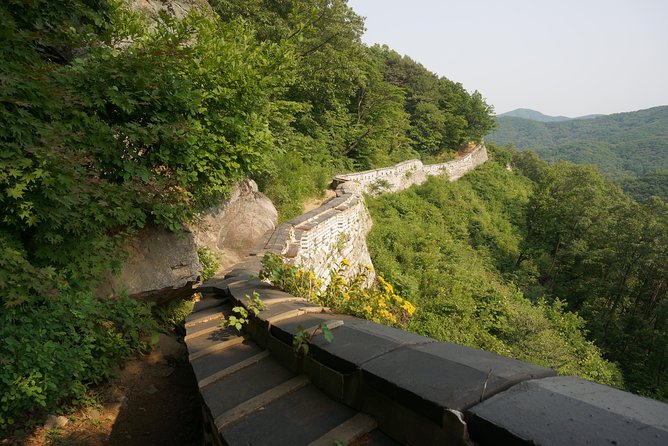
- Namhansanseong is the active part of the day: Expect mountain paths, fortress walls, gates, and several hours on foot.
- The private format keeps the day flexible: Guides such as David, Jimmy, Benny, BJ, Alfonso, and Chance Kim have been praised for adjusting pace and helping families.
- The two stops tell different stories: The fortress focuses on defense and royal history, while the folk village shows homes, customs, performances, and daily life.
- Lunch is included: You receive a Korean traditional meal, though you can discuss food preferences with the guide.
- The Korean Folk Village includes live performances: Martial arts, acrobatics, dance, and other traditional displays add movement to the historical setting.
- The price reflects private transport and attention: At $198 per person, value improves for a small group that wants a full day without planning routes or driving.
Why this makes a strong day outside Seoul
This tour gives you two very different views of old Korea in one outing. Namhansanseong is a real defensive site spread across Namhansan Mountain. The Korean Folk Village is a large cultural attraction built from relocated or restored houses from across the country.
That contrast is useful. At the fortress, you are dealing with walls, gates, mountain ridges, and the practical needs of a military stronghold. At the folk village, you see how homes were arranged, how social rank shaped domestic space, and how older customs are presented through performances and demonstrations.
The tour begins with hotel pickup at about 9:00 a.m. You ride in an air-conditioned private vehicle with an English-speaking driving guide. Because this is a private activity, only your group takes part, which matters if you are traveling with children, older family members, or people with different walking speeds.
The public rating is 4.9 from 29 ratings, with 97 percent recommending the experience. Those numbers suggest a consistently strong operation, but they should not hide the physical side of the day. You need comfortable shoes, water, and enough energy for a long outing.
More living-history stops from Seoul:
- Seoul: Suwon Hwaseong Fortress & Korean Folk Village Tour
★ 4.7 · 214 reviews - Korean Folk Village and Suwon Hwaseong Fortress Day Tour(EG Tour)
★ 4.5 · 80 reviews - Seoul: Suwon Hwaseong, Folk Village, & Starfield Library
★ 4.8 · 55 reviews
Walking the walls at Namhansanseong
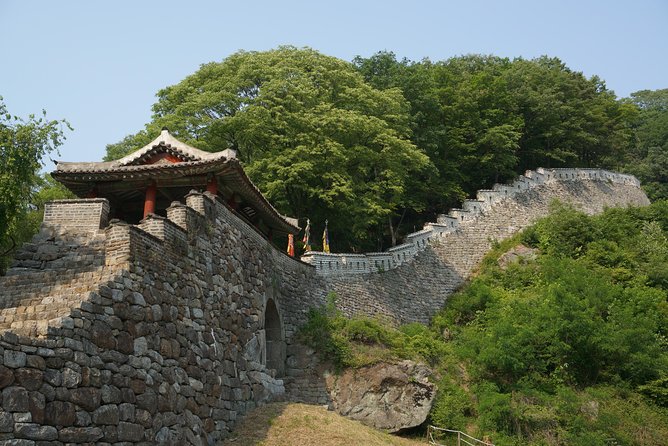
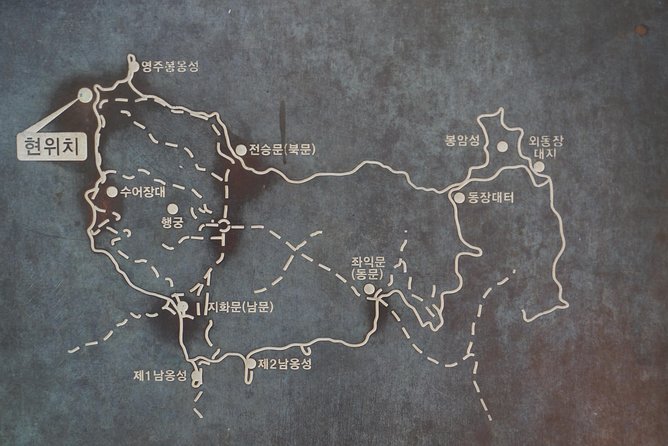
Namhansanseong is the clear highlight for anyone who likes history with fresh air. The fortress sits in Namhansanseong Provincial Park, about 24 kilometers southeast of Seoul and roughly 6 kilometers northeast of Seongnam.
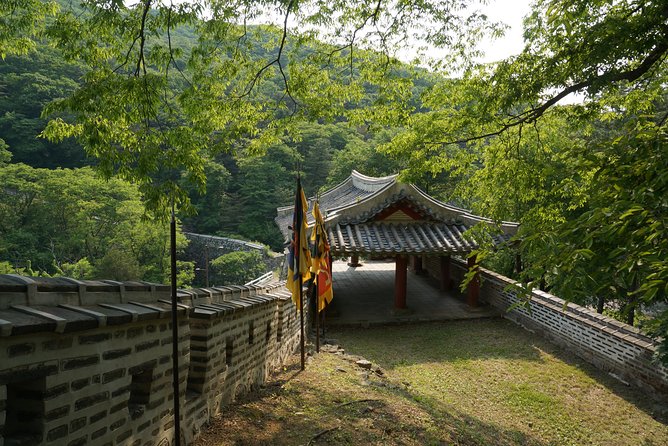
It was one of four forts built to protect Hanyang, the former name of Seoul. The other defensive sites were positioned toward the north, south, and west, while Namhansanseong guarded the eastern approach. Its location on Namhansan Mountain explains both its strength and the amount of uphill walking involved.
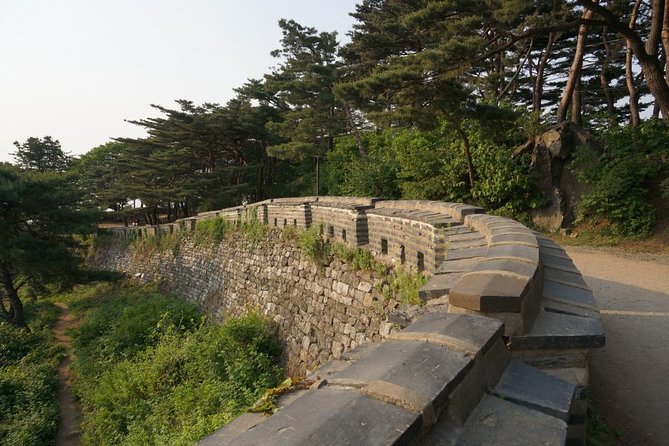
The wider network of paths totals about 12.4 kilometers. The main fortress accounts for about 8.9 kilometers, with additional outer sections and Sinnamsanseong Fortress. You will not necessarily cover every path, but the visit is not a quick stop beside a gate. The standard visit allows about four hours, giving your guide time to explain the walls and walk with you.
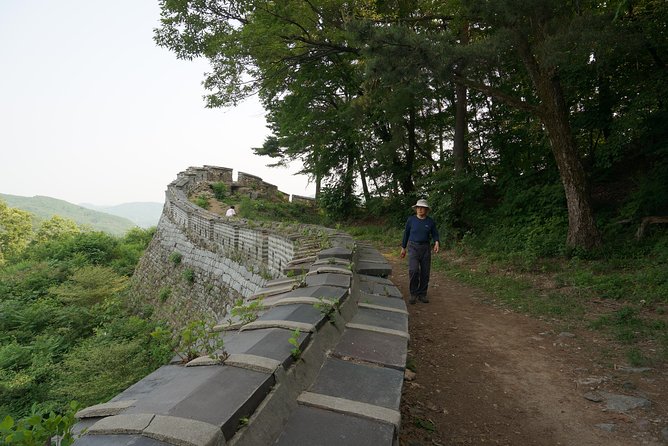
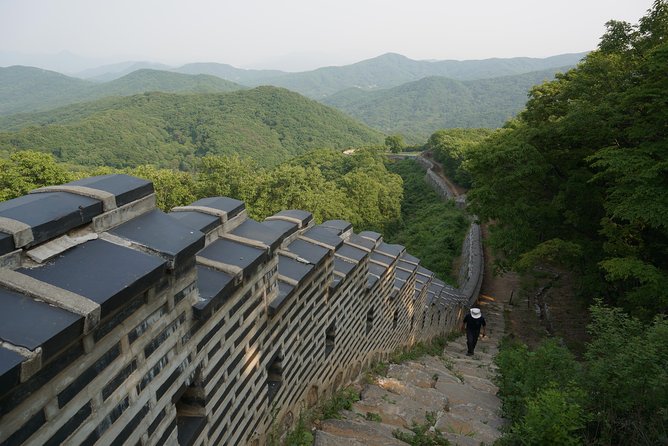
The fortress wall reaches about 7.3 meters in height in places. From the wooded paths, you get a sense of why this was a useful defensive position. The mountain made access difficult, while the walls connected ridges and gates into a larger fortified system.
I would not treat this as a gentle sightseeing stroll. The walk between gates can be steep, and conditions may change with rain, snow, or fallen leaves. One visitor specifically advised bringing your most comfortable walking shoes, which is sound advice. If you have limited mobility, tell the guide at the start so the pace and route can be handled sensibly.
The private setup is particularly useful here. David has been praised for changing the pace to suit age and fitness, while Jimmy has walked the full route with guests and remained attentive throughout. Chance Kim has also been praised for hiking ability and taking photographs. You cannot guarantee a particular guide unless the operator confirms it, but these names give you a useful sense of the team’s strengths.
Autumn color adds beauty to the walk, and snow can make the fortress feel especially striking. Rain does not cancel the historical value, but it can make stone paths and slopes less pleasant. Check the forecast and dress for a proper outdoor walk rather than a short city excursion.
What makes the fortress worth the effort
Namhansanseong rewards curiosity more than checklist sightseeing. A guide can explain why the fort was placed on the mountain, how it related to Seoul’s defenses, and how the gates and walls worked together.
Without context, you might see only an old wall through the trees. With a good explanation, the site becomes easier to read. You can connect the steep approach with defense, the gates with movement and control, and the mountain setting with the practical limits faced by people stationed there.
The setting also breaks up a museum-heavy Seoul itinerary. You get trees, open air, and long views along with the history. This is one of the reasons the first half feels more authentic than a recreated attraction.
Allow yourself to be active. The day can reach around 18,000 steps, depending on the route and pace. Families have managed the outing with babies and younger children, but the private format helps most when the guide communicates well and listens to your needs.
A Korean lunch between the two sites
Lunch is included and is described as a Korean traditional meal. You can also discuss food preferences with the guide, and one guide, Benny, has helped accommodate food restrictions and offered lunch choices.
The meal is a practical part of the day rather than a separate food tour. One account described it as simple but good, while another was not especially impressed by the traditional lunch. That is a fair warning if you are selective about food or expect a polished restaurant experience.
The included meal still has value. You do not need to stop and search for a restaurant during a tightly scheduled day, and your guide can help explain the dishes. If you have allergies, restrictions, or strong preferences, raise them early rather than waiting until you sit down.
Personal snacks and drinks are not included. Bring water, especially for the fortress walk, and carry a small snack if you know you need something between meals.
Other listed sites within reach of Seoul:
- Day Trip to UNESCO: Suwon Fortress Adventure from Seoul
★ 5.0 · 56 reviews - DMZ Tour, 2nd Tunnel & UNESCO Suspension Bridge Tour from Seoul
★ 5.0 · 48 reviews - Andong Hahoe Village [UNESCO site] Premium Private Tour from Seoul
★ 5.0 · 24 reviews - From Seoul: 5-Day Tour of Korea with UNESCO Sites
★ 4.8 · 22 reviews
Seeing Joseon life at the Korean Folk Village
After lunch, you spend about four hours at the Korean Folk Village. The site covers approximately 990,000 square meters and is arranged in a setting described by the traditional Korean principle of facing water with mountains behind.
The village contains real houses relocated from different provinces, along with restored or reconstructed buildings based on research and specialist review. The result is a broad picture of Joseon-period life rather than one single regional style.
You can compare commoners’ homes with aristocratic houses and notice how building size, layout, and materials reflected social position. The attraction is useful because it connects history to ordinary details: where people lived, how houses were arranged, and how daily routines differed across social ranks.
The village also changes with the seasons. Its gardens, paths, houses, and performances give you plenty to see, though the scale can make the visit feel like a long walk through a large cultural park.
This stop is more polished and arranged for public presentation than Namhansanseong. That is not a flaw, but you should know the difference. The fortress is an original defensive site in a mountain park. The folk village is a constructed visitor setting that uses authentic or relocated buildings to show older life.
Some people find it fascinating, especially if they enjoy Korean architecture, television filming locations, or traditional customs. Others may find it less essential than the fortress. I would give it more weight if you want to understand housing and social life, not just military history.
Performances that bring the village to life
The Korean Folk Village includes traditional performances, with martial arts and acrobatics among the advertised highlights. Dance and other cultural presentations may also form part of the program.
These shows help keep the visit from becoming a quiet walk past buildings. They give you a chance to see movement, skill, music, and public customs connected to traditional Korean culture.
Show timing can affect your route, so your guide’s local planning matters. Ask about the performance schedule at the start of the visit. If you have limited time, make the shows a priority and then explore the buildings around them.
The village also has souvenirs, which can add a pleasant browsing stop. Keep your expectations in check, since this is still a major cultural attraction rather than a small village untouched by tourism.
The private guide is the main value
The strongest part of this tour is not simply the vehicle or the entrance tickets. It is the guide who ties the two sites together.
Guides named in the feedback include David, Jimmy, Benny, BJ, Alfonso, Chance Kim, Chansoo Kim, and Kwon Bang. They have been praised for explaining Korean history, taking photographs, answering questions, teaching bits of Korean, and helping families with children.
That range matters because the day can be adjusted around your group. A patient guide can slow down the fortress walk, help with food restrictions, take a family photo, or spend more time on architecture if that interests you most.
The driving guide also removes the need to work out transport between Seoul, the mountain, the lunch stop, and the folk village. Round-trip hotel pickup and drop-off make the day easier, especially when you are tired after several hours on foot.
You should still tell the guide what you want. Ask for more walking if you like hiking, request a gentler route if needed, and say clearly if food or timing is important. Private does not mean every preference is automatically known.
Is $198 per person a fair price?
At $198 per person, this is not a budget day trip. The price includes private transportation, hotel pickup and drop-off, an English-speaking driving guide, admission to both attractions, and lunch.
The value depends heavily on group size. For a couple or a small family, you are paying for convenience, personal attention, and a full eight to nine hours without arranging separate transport. For a larger private group, the per-person price may feel easier to justify.
You are also paying for time. Reaching Namhansanseong and the Korean Folk Village independently would require planning several transport stages, checking opening and performance details, and managing the return to Seoul after a tiring walk.
The price makes less sense if you want only a short fortress visit, dislike long walking days, or prefer to explore at your own pace. In that case, an independent visit to one site may suit you better.
For a first visit to Seoul, I see the tour as good value for people who want a guided history day with minimal logistics. The private format and included meal do real work here. The cost is harder to defend if the folk village does not appeal to you.
Who should book this day?
This experience suits you if you want:
- A full day focused on Korean history and traditional culture
- A mountain walk with fortress walls and forest scenery
- Private transportation from Seoul
- A guide who can answer questions in English
- A flexible pace for a family or small group
- Traditional performances and historic homes in one attraction
- A break from central Seoul without arranging the route yourself
You may want another plan if you dislike hills, prefer short visits, or want a food-focused day. The fortress is the more compelling stop for serious history, while the folk village adds architecture, daily-life displays, performances, and souvenirs.
The activity is generally suitable for most people, and service animals are allowed. Still, the long walking time means you should be honest about fitness and tell the guide about any concerns at pickup.
Cancellation is free up to 24 hours before the 9:00 a.m. start time. Changes or cancellations inside that window are not accepted for a refund.
My verdict on Namhansanseong and the Folk Village
I would book this tour if I wanted a well-organized day that combines a real mountain fortress with a broad presentation of Joseon life. Namhansanseong supplies the stronger sense of place, while the folk village fills in the domestic and social details that the fortress cannot show.
The best reason to choose it is the private guide. A thoughtful guide can turn a steep walk and a large cultural site into a connected story. David, Jimmy, Benny, BJ, Alfonso, and the other named guides have shown the kind of personal attention that makes this format worthwhile.
Go prepared for a long day, comfortable shoes, and a lunch that may be plain rather than memorable. If that sounds like a fair trade for history, scenery, transport, and a private pace, this is a strong choice outside Seoul.
FAQ
How long does the tour last?
The tour lasts approximately eight to nine hours.
What time does the tour start?
The stated start time is 9:00 a.m.
Is hotel pickup included?
Yes. Pickup and drop-off at your hotel are included.
Is transportation private?
Yes. You travel in private, air-conditioned transportation, and only your group participates in the activity.
Is a guide included?
Yes. The tour includes an English-speaking driving guide.
Is lunch included?
Yes. A Korean traditional lunch is included, and food preferences can be discussed with the guide.
Are drinks and snacks included?
No. Personal snacks and drinks are not included.
How long is the visit to Namhansanseong Fortress?
The scheduled visit to Namhansanseong Fortress is about four hours.
How long is the visit to the Korean Folk Village?
The scheduled visit to the Korean Folk Village is about four hours.
Are admission tickets included?
Yes. Admission to both Namhansanseong Fortress and the Korean Folk Village is included.
Is this tour suitable for most participants?
The tour information states that most people can participate. You should still plan for substantial walking, including steep sections around the fortress.
Can I cancel for a refund?
You can cancel at least 24 hours before the start time for a full refund. Cancellations or changes made less than 24 hours before the start are not accepted.
More Historical Tours in Seoul
- Seoul: Evening Dark History, Folklore & Ghost Story Walking Tour
★ 5.0 · 593 reviews - Hanbok Photoshoot and History Tour at Gyeongbokgung Palace
★ 5.0 · 276 reviews - From Seoul: Dae Jang Geum Park Historic K-Drama Set Tour
★ 4.9 · 143 reviews - Seoul: City Highlights and Historical Experience No Shopping
★ 5.0 · 74 reviews
Just added in Seoul
- Your Personal Seoul Photographer!★ 4.1 · 15 reviews
- You’re Invited to Our Home in Seoul: The Only Cooking Class!★ 5.0 · 8 reviews
- From Seoul: Yongpyong Ski Day Tour with Transportation★ 4.9 · 40 reviews
- Seoul: Korean & English Language Exchange Global Party★ 5.0 · 28 reviews
- From Seoul: Hwacheon Ice Fishing and Lighting Festival Tour★ 4.5 · 4 reviews
- Unique Native Experience : Han River Picnic, Board game, BBQ★ 5.0 · 3 reviews
- Seoul: Gangneung BTS K-Pop & K-Drama Filming Locations Tour★ 4.6 · 14 reviews
- K-Pop Making Class with a Producer!★ 5.0 · 3 reviews
UNESCO World Heritage Tours, compared.
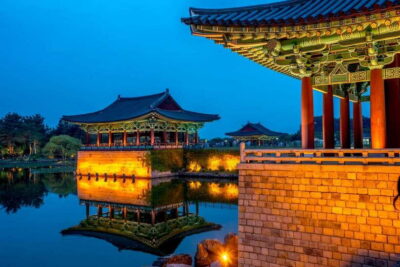
Gyeongju UNESCO World Heritage Guided Day Tour
Read our review →
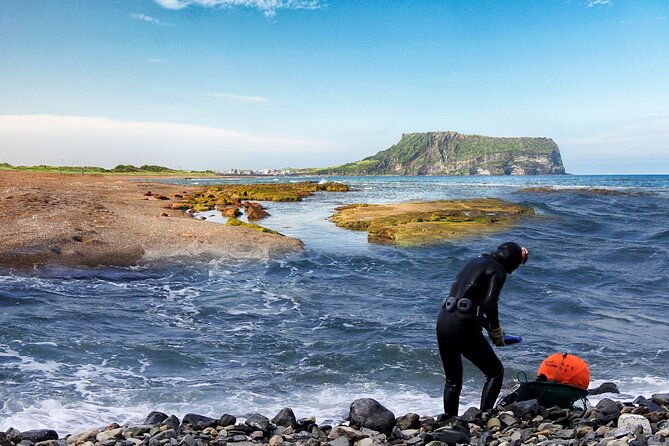
East Jeju Essentials – Seongsan Ilchulbong (UNESCO) & Haenyeo
Read our review →
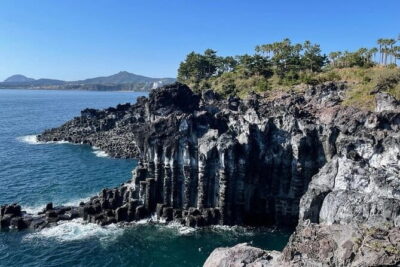
Jeju Southern UNESCO Full Day Tour with Mt.Halla
Read our review →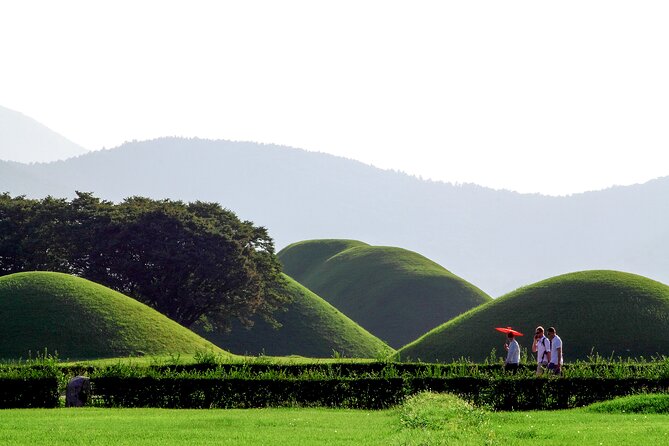
Gyeongju UNESCO sites Private tour with licensed tour guide
Read our review →
Private Gyeongju Tour – Explore Gyeongju UNESCO Sites
Read our review →
Browse the lists this tour appears in