
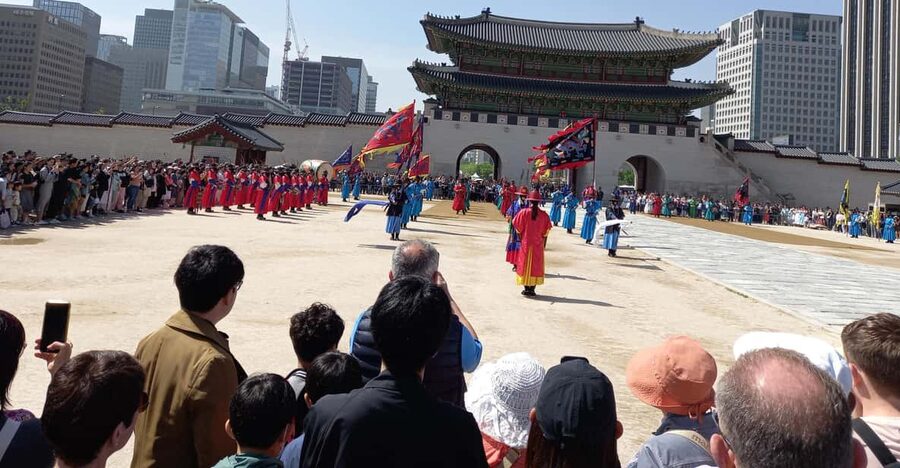
Reviewed · PALACE & GYEONGBOKGUNG TOURS
Seoul: 4-Hour Guided Tour to Palace, Bukchon, Jogyesa Temple
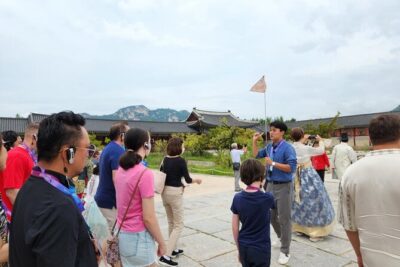
Gyeongbokgung Palace is the heart of this four-hour walk, but the real subject is the idea behind the stones, gates, courtyards, and roofs. Guide Paul Koo explains how Confucian thought shaped Joseon Korea, then connects that world to the Folk Museum, Bukchon’s old homes, and Jogyesa Temple. I like that the tour gives you a way to understand what you are seeing, rather than sending you from photo spot to photo spot.
I especially like the private format for up to two people and the freedom to choose your meeting place and start time after booking. I also like the clear focus on architecture and ideas, a strong match for visitors who want more than pretty palace pictures. The main drawback is cost: $152 is a reasonable private-guide fee for two people, but palace admission, transport, food, and other entrance fees are extra.
Key points to know before booking
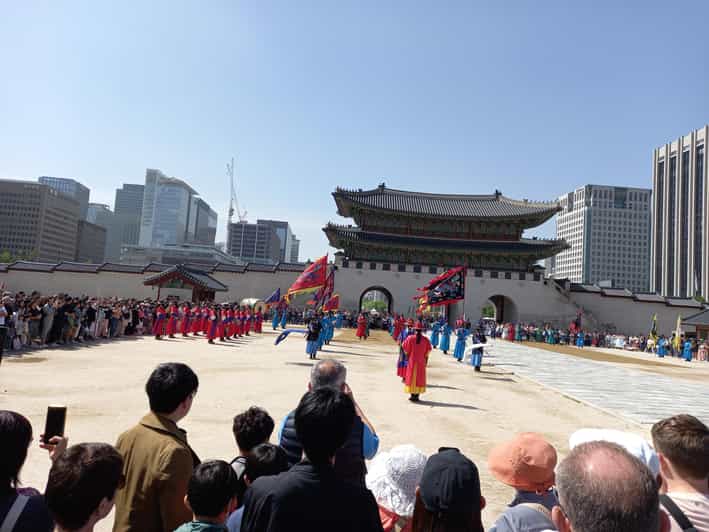
- Gyeongbokgung receives most of the time: Expect about 2 hours and 20 minutes at Seoul’s largest and most important Joseon palace.
- Confucian culture shapes the explanation: Paul Koo uses palace design and traditional homes to explain Korea’s national ideals during the Joseon period.
- The Folk Museum adds ordinary life: Exhibits cover birth, marriage, illness, work, seasonal customs, aging, and death.
- Bukchon gives you old Seoul beside modern Seoul: The hanok village has roughly 1,000 traditional homes, with city towers and N Seoul Tower visible in the distance.
- Jogyesa is listed as a highlight, but confirm the route: The detailed schedule names Insadong for 30 minutes, while the tour description also includes Jogyesa Buddhist Temple.
- The price covers guidance, not admissions or rides: Budget separately for palace entry, transport, and any other paid stop.
Why this tour is really about reading Seoul
Many palace visits give you a simple sequence: gate, throne hall, garden, photograph, exit. This experience takes a more thoughtful route. Its central idea is that buildings express the values of the people who made them.
In Joseon Korea, Confucianism shaped government, family life, social duties, education, and public architecture. That matters at Gyeongbokgung. The palace is not just an attractive collection of painted beams and tiled roofs. Its arrangement reflects an ordered political world, with the king, officials, ceremonies, and state work placed within a formal plan.
I like this approach because it gives you something to listen for. When Paul explains a roofline, gate, courtyard, or ceremonial space, you can connect the physical place with the beliefs behind it. That can make a major difference at a site where it is easy to take a few pictures and miss the larger point.
The tour is also a good fit if you are new to Korean history. The guide’s explanations are intended to make Confucian ideas understandable without requiring prior study. One booking described Paul’s explanations as clear and engaging, with special attention to cultural, historical, and religious context. Another praised his attention to detail and his ability to find good places and angles for photographs.
More palace and old-quarter walks in Seoul:
- Seoul: Gyeongbok Palace, Bukchon Village, and Gwangjang Tour
★ 4.9 · 2,321 reviews - Best Seoul City Tour (Gyeongbokgung Palace,Insadong,Namsan Tower)
★ 5.0 · 1,647 reviews - Small-Group Royal Palace and Seoul City Tour (hotel pick-up)
★ 5.0 · 1,474 reviews
Starting at Gwanghwamun Square
The stated starting point is Gwanghwamun Square, one of the most useful places in central Seoul for getting your bearings. It places you close to Gyeongbokgung and sets up the transition from present-day Seoul to the Joseon capital.
The exact meeting place and time can be chosen after booking, and you may arrange to meet at your hotel. That is helpful if you are staying nearby or prefer not to cross town before a four-hour walking tour. Since transportation between stops is not included, ask Paul to confirm the meeting point, route, and any needed rides before the day begins.
This flexibility is one of the better practical features of a private tour. A morning start may suit visitors who want to continue sightseeing afterward, while a later start can fit a packed Seoul schedule. The available time depends on the booking calendar, so check before planning other fixed activities.
Gyeongbokgung: Seoul’s grandest Joseon palace
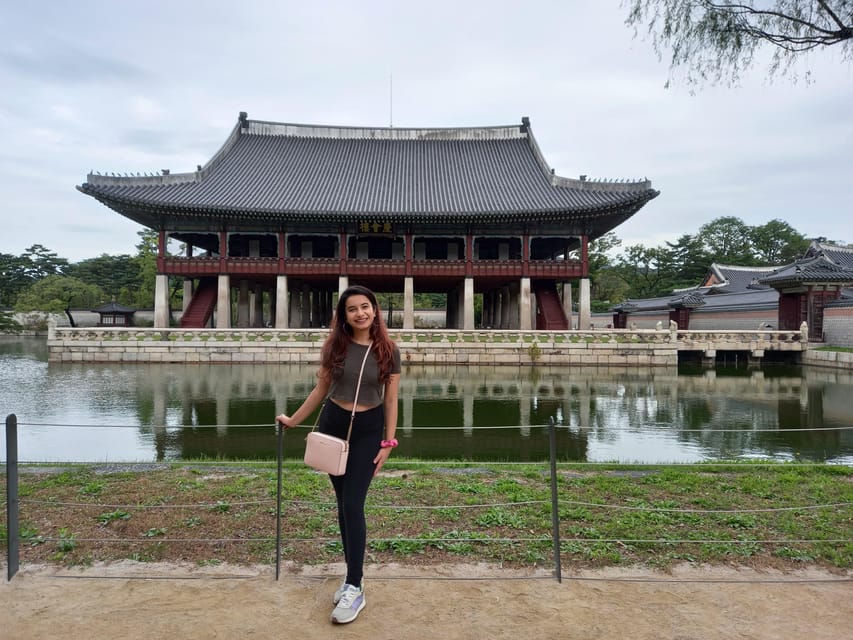
The tour allows about 2 hours and 20 minutes at Gyeongbokgung, making this the main event. Built in 1395 as the principal palace of the Joseon Dynasty, it is described as the largest and most magnificent of Seoul’s palaces.
Its setting is important. Gyeongbokgung was built on flat ground and follows an authentic Confucian palace structure. That layout gives Paul plenty to explain, from the palace’s formal organization to the way its architecture expressed Joseon political values.
You will spend enough time here for more than a quick circuit. The long palace segment lets you pause at major buildings, ask questions, and hear how the site functioned as a royal and administrative center. If you care about design, this is the part of the tour where the guide’s specialty has the most room to work.
The word beautiful is often used too easily for historic buildings, but Gyeongbokgung earns it through proportion, painted decoration, roof forms, courtyards, and the contrast between open space and detailed timber work. The tour’s value is that it tries to explain why those features matter, not just point them out.
There is a practical cost to remember. Palace admission is not included, so you pay separately. The information provided does not state the admission amount, so check current pricing before you go.
Allow some mental space for the palace. Two hours and 20 minutes is a generous portion of a four-hour tour, and it may feel slow if your main goal is to collect quick photographs. If you enjoy stopping, listening, and asking questions, the timing is useful.
The National Folk Museum and everyday Joseon life
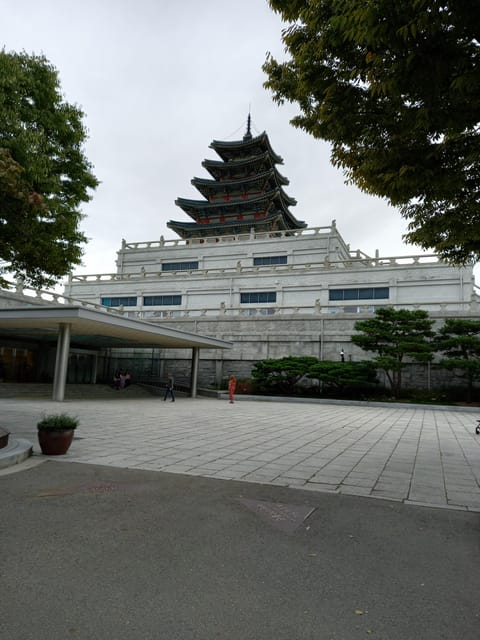
The National Folk Museum of Korea receives about 30 minutes of guided attention. This stop changes the scale of the tour. Gyeongbokgung shows the official world of the court and state, while the museum focuses on ordinary people and daily customs.
The exhibitions cover the stages of life from birth and childhood through marriage, aging, illness, treatment, and death. They also address seasonal activities, ceremonies, commemorations, and folk traditions. That makes the museum a useful companion to the palace: you see not only how rulers and officials organized society, but also how customs shaped family and community life.
Thirty minutes is enough for an introduction, but not for every display. You should treat this as a focused guided visit rather than a complete museum tour. Paul can help you identify the sections most connected to the day’s theme, especially the relationship between Confucian values and social rituals.
I like the museum’s place in the schedule because it keeps the tour from becoming only an architecture walk. It helps answer a basic question: how did the ideas represented by palace buildings affect real people? The museum provides a more grounded view of Korean tradition.
A few more things to do in Seoul worth a look
- Seoul: Night Market Food Tour with Local Guide
★ 4.9 · 943 reviews - DMZ Guided Tour with Suspension Bridge / Gondola from Seoul
★ 5.0 · 876 reviews - Downtown Seoul Guided Food & Market Tour with 8+ Local Tastings
★ 5.0 · 580 reviews - Seoul: DMZ Guided Tour with Suspension Bridge and Gondola
★ 4.9 · 553 reviews
Bukchon Hanok Village: old homes and a modern skyline
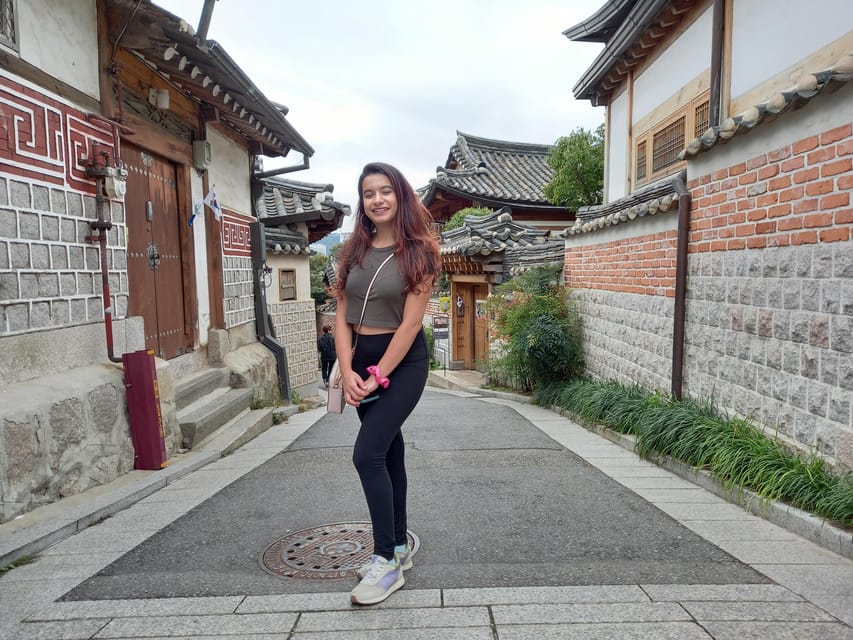
The Bukchon segment lasts about 40 minutes. Bukchon Hanok Village is known for its traditional Korean homes, called hanok, and the area contains about 1,000 of them. The village offers a striking view of older Seoul alongside modern buildings, including N Seoul Tower in the distance.
This is one of the most photogenic parts of the route, but the point is not only the view. Hanok design gives Paul another way to discuss traditional Korean architecture and the values that shaped it. You can look at rooflines, wooden structures, narrow lanes, and the way homes fit together in a historic neighborhood.
The city contrast is especially useful. Seoul is not divided neatly into an old quarter and a modern quarter. In Bukchon, traditional houses, high-rise buildings, distant towers, and busy urban life share the same view. That mix helps explain why the city feels so distinctive.
Forty minutes is enough for an introduction and a guided walk, but do not expect to inspect the entire village. Bukchon is spread across lanes and slopes, and the scheduled time is brief compared with the size of the area. If you want extended photography or independent wandering, you may need to return later on your own.
You should also follow Paul’s lead about where to stop and how long to linger. Bukchon is a lived-in neighborhood, not just an open-air museum. The supplied information does not give specific visitor rules, but ordinary respect matters in any residential area: keep voices low, avoid blocking lanes, and do not treat private homes as exhibits.
Insadong and the question of Jogyesa Temple
The detailed schedule gives Insadong 30 minutes. Insadong is a natural companion to the palace and Bukchon stops because it connects traditional culture with a central shopping and cultural district. The exact activities within that half hour are not specified, so you should ask what Paul plans to cover when confirming the reservation.
Jogyesa Buddhist Temple is listed as one of the tour’s important highlights and is described as the headquarters of a Korean Buddhist organization. It was built in 1926 in Insadong, close to Gyeongbokgung. The temple is smaller than the palace, but its role gives it importance beyond its size.
There is a scheduling point you should clarify. The detailed itinerary names Insadong for 30 minutes, while the wider tour description includes Jogyesa Temple. The supplied information does not clearly say whether the temple replaces part of the Insadong stop, sits within it, or is always included. Ask Paul directly before booking if Jogyesa is essential to you.
That small confirmation matters because four hours passes quickly. Gyeongbokgung and the Folk Museum account for nearly three hours, leaving limited time for Bukchon and Insadong. A private tour gives you more control, but it does not create extra minutes.
Bongeunsa and N Seoul Tower are not part of the detailed route
The highlights also mention Bongeunsa Buddhist Temple and a view involving N Seoul Tower. Bongeunsa is described as a beautiful place where old and new Seoul meet, but it does not appear in the four-stop detailed itinerary.
N Seoul Tower admission is specifically listed as not included. That does not necessarily mean a tower visit is part of the standard four-hour plan. It may refer to an optional stop or to views of the tower from Bukchon. Again, confirm the exact route if either Bongeunsa or the tower is important to your plans.
This is not a reason to dismiss the tour. It is simply a case where the short description includes more highlights than the timed schedule confirms. A careful booking message can prevent disappointment and help you understand what fits into the four hours.
What the $152 private price means
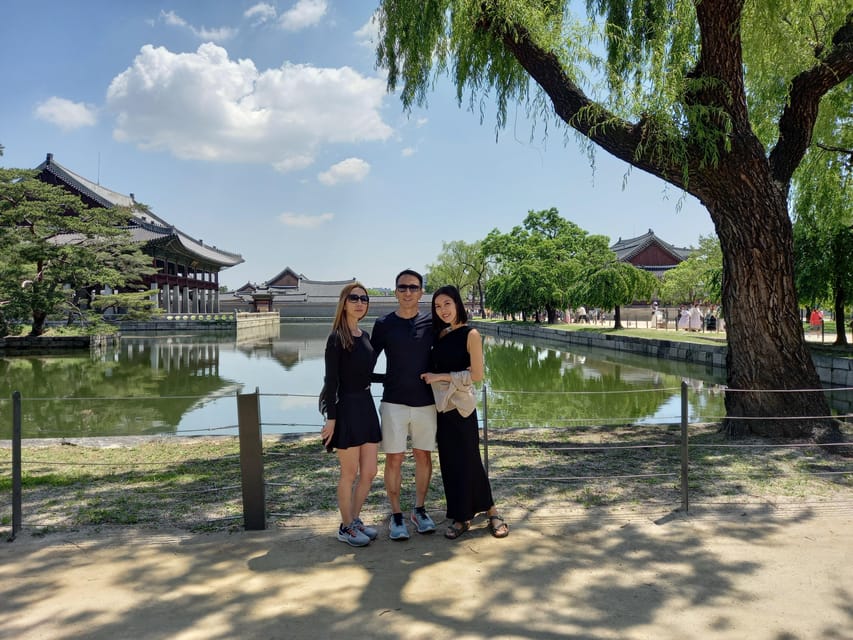
The listed price is $152 per group of up to two people. It covers four hours of guide service and information, not a ticketed sightseeing package.
For two people, that works out to $76 each before admissions and transport. The value depends on how much you want interpretation. If you only want to walk through Gyeongbokgung and Bukchon, you can visit those areas independently for less. If you want one person to connect palace design, Confucian thought, folk customs, Buddhist practice, and traditional housing, the private format offers a more direct experience.
The group limit is also worth noting. You are not paying a per-person rate for a large party, and the guide can focus on your questions. The format should suit couples, friends, or a parent and adult child who want a flexible conversation rather than a fixed group presentation.
You will need to budget for the palace admission, transport between locations, food and drinks, and insurance. N Seoul Tower admission is also excluded. Because the tour runs four hours, you may not need a meal during the route, but do not assume food is provided.
Free cancellation is available up to 24 hours before the start for a full refund. You can also reserve and pay later, which helps if your Seoul schedule is still shifting. Reservation in advance and guide confirmation are requested, so do not leave the meeting details until the last minute.
Who will get the most from Paul Koo’s approach
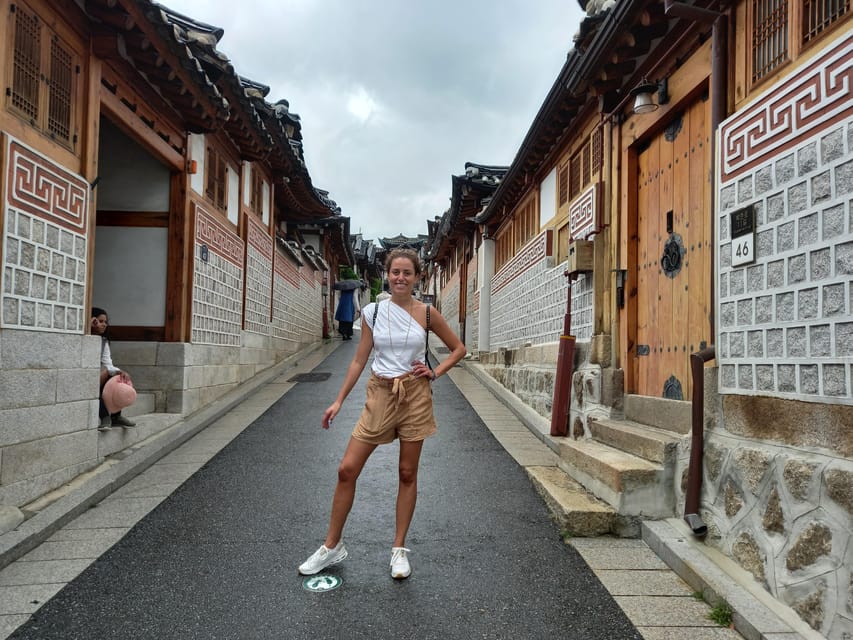
I would choose this tour if you like context, architecture, and guided conversation. Paul’s particular strength is the link between Confucian culture and Joseon buildings, so the experience should suit you if you want to understand why places look and function as they do.
It also fits first-time visitors who want a clear introduction to traditional Seoul in one half-day. You get a palace, a museum, a traditional residential district, and a cultural area without having to plan the order yourself.
The tour may be less suitable if you want a relaxed photo walk with lots of free time. Gyeongbokgung takes most of the schedule, and the other stops are tightly timed. It may also disappoint you if you expect Bongeunsa or N Seoul Tower without confirming that they are included.
The English-language format is another practical point. The activity is offered with a live English-speaking guide, and the comments about Paul point to clear explanations, detailed historical information, and help with photographs. If those are your priorities, his approach appears well matched to the tour’s subject.
Should you book this Seoul tour?
Book it if you want the story behind Seoul’s traditional buildings, not just their appearance. The strongest reason to choose it is Paul Koo’s focused explanation of Confucian culture, especially at Gyeongbokgung, paired with the everyday customs shown at the Folk Museum.
The price is easier to justify for two people who value a private guide and can split the fee. Before paying, confirm three details: the current palace admission, how transport between stops will work, and whether Jogyesa, Bongeunsa, or N Seoul Tower is actually included in your chosen route.
If you prefer independent sightseeing, skip the private guide and spend the money on more time at the palace and Bukchon. But if you want to leave Seoul’s historic center knowing what the buildings and rituals mean, this compact four-hour tour is a strong choice.
FAQ
How long does the Seoul tour last?
The tour lasts four hours.
What places are included in the detailed schedule?
The detailed schedule starts at Gwanghwamun Square and includes Gyeongbokgung, the National Folk Museum of Korea, Bukchon Hanok Village, and Insadong.
Is Jogyesa Buddhist Temple included?
Jogyesa Temple is listed as a highlight, but the detailed schedule names Insadong for 30 minutes rather than giving Jogyesa its own timed stop. Confirm the exact route with Paul before booking.
Who leads the tour?
The English-speaking guide is Paul Koo.
What does the $152 price include?
The price includes four hours of guide service and information for a private group of up to two people.
Are admission tickets and transportation included?
No. Palace admission, N Seoul Tower admission, transportation, food and drinks, and insurance are not included.
Just added in Seoul
- Suwon: Baseball Game with Fortress and Local Food Tour★ 5.0 · 3 reviews
- Seoul: War Memorial of Korea Private Guided Museum Tour★ 4.9 · 29 reviews
- Seoul: Wine & Korean BBQ, Perfect Pairing Dinner in Sinchon★ 5.0 · 6 reviews
- Seoul : Your Personal Photographer in Gyeongbokung★ 5.0 · 7 reviews
- Seoul : Efoil Experience in Han River★ 5.0 · 5 reviews
- Seoul: Vivaldi Park Winter Ski with Eobi Ice Valley Day Tour★ 4.6 · 16 reviews
- Seoul: Vivaldi Park Winter Ski with Nami Island Day Tour★ 5.0 · 4 reviews
- Seoul: SnowyLand in Vivaldi Park with Nami or Alpaca★ 4.8 · 11 reviews
Palace & Gyeongbokgung Tours, compared.
Gyeongbok Palace, Bukchon Village, and Gwangjang Tour
Read our review →
Best Seoul City Tour (Gyeongbokgung Palace,Insadong,Namsan Tower)
Read our review →
Small-Group Royal Palace and Seoul City Tour (hotel pick-up)
Read our review →
Seoul City Sightseeing Tour Including Gyeongbokgung Palace, N Seoul Tower, and Namsangol Hanok Village
Read our review →
Seoul Highlights: Gyeongbok Palace, Insadong & N Seoul Tower
Read our review →
Seoul City Half Day Tour-Gyeongbok Palace Guard Changing Ceremony
Read our review →
Browse the lists this tour appears in