
Reviewed · DMZ & JSA TOURS
Ultimate Korea DMZ Tour from Seoul (Gondola & Suspension Bridge)
The most striking part of this DMZ day tour is the mix of solemn history and ordinary Korean scenery. You move from a war relic and a memorial altar to a gondola crossing, a market village, and a telescope aimed at North Korea. It makes the division feel less like a line on a map and more like a fact woven into daily life.
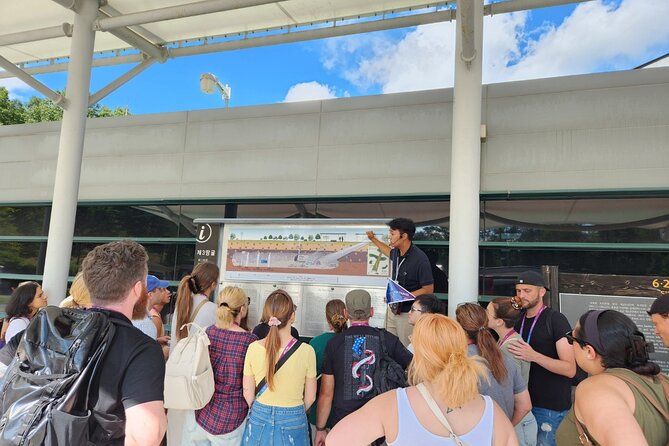
I like the way the tour combines the Third Tunnel with the Paju Peace Gondola. One puts you inside the military story, while the other gives you a broad view of the Imjin River and the restricted zone. I also like the guides’ role. Nancy, Emily, Diane, Gogo, Crystal, and others are praised for clear explanations, good humor, and keeping a large group moving.
The drawback is the pace. You may walk uphill, squeeze through a low tunnel, cross a suspension bridge, and make many short stops in one long day. The tour suits active visitors who want to see a lot, but it is not a relaxed countryside outing.
Key points to know before booking
- The Third Tunnel requires effort: The return walk is uphill, and the passage is narrow in places.
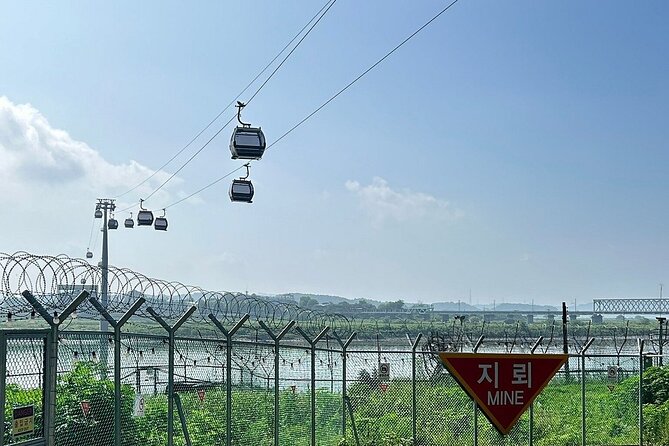
- The gondola crosses the Imjin River: It goes beyond the Civilian Control Line and adds a memorable view of the DMZ.
- You need official identification: Soldiers check passports, military IDs, or South Korea-issued ARC cards at the Unification Bridge.
- The day covers many stops: Imjingak, the Bridge of Freedom, memorials, the tunnel, Dora Observatory, and a suspension bridge all fit into roughly 7.5 hours.
- Guides make a major difference: Nancy, Emily, Diane, Gogo, Crystal, Hana, and others are singled out for warmth, organization, and clear historical storytelling.
- Return drop-off is central, not at your hotel: You finish at Hongdae, Seoul City Hall, or Myeongdong.
What this DMZ tour is really like
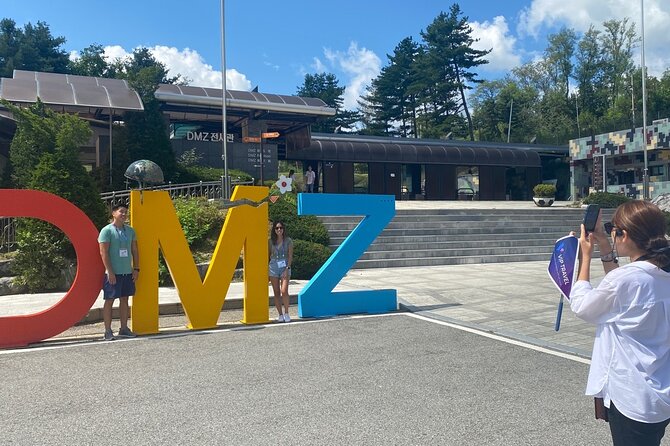
This is not simply a bus ride to a viewpoint. It is a full-day introduction to the Korean War, the armistice, separated families, and the uneasy border that still divides the peninsula.
You meet at one of three central Seoul locations: Myeongdong Subway Station Exit 9, Seoul City Hall Subway Station Exit 6, or Hongdae Subway Station Exit 3. From there, an air-conditioned vehicle takes you north. The exact order can change with military access and crowd levels, so plan for an early start even if the posted time looks later.
The group can be large, with a maximum of 150 people. That matters. A large coach keeps the price low, but you need to listen carefully for meeting times and stay close to your guide. The strongest guides, including Nancy and Alex, are praised for keeping people informed and on schedule despite the number of stops.
The cost is about $35 per person, which is strong value if you want transport and entry fees handled in one day. You would otherwise need to arrange transport to the restricted areas, manage military checks, and coordinate several separate sites. Lunch is not included, and hotel drop-off is not provided, so the low price does not mean every expense is covered.
Other trips up to the border from Seoul:
- Best DMZ Tour Korea from Seoul (Red Suspension Bridge Optional)
★ 5.0 · 41,422 reviews - DMZ Tour: 3rd Tunnel, Option(Suspension Bridge, Boat) from Seoul
★ 5.0 · 21,373 reviews - DMZ tour south Korea from Seoul (NK experience hall, defector)
★ 5.0 · 20,599 reviews
Imjingak turns war memory into a public park
Imjingak Pyeonghwa-Nuri Park is the emotional opening to the day. It is a public space devoted to peace and Korean reunification, with memorials, exhibits, flags, and wide views around the Imjin River.
The park includes the Bridge of Freedom, a wooden bridge built after the 1953 armistice. It carried 12,773 prisoners back to South Korea. That number gives the bridge weight, but the place is not presented as a dark museum piece. You see families, visitors, and signs of hope for future reunification alongside the war memorials.
You also encounter Mangbaedan Memorial Altar, where families honor relatives who remain in North Korea. Prayer ribbons move in the wind, and the site helps explain the human cost behind the political division. The Peace Bell, a 21-ton bronze bell cast in 2002, carries the same message in a larger, public form.
The Imjin River Dokgae Bridge and the old steam locomotive at Jangdan Station add physical reminders of the war. The locomotive, known as the Iron Horse, once ran on the Gyeongui Line before fighting stopped the railway. These objects are useful because they make the conflict easier to picture than dates and speeches alone.
Allow yourself time to look around, but do not wander far. This tour moves on a schedule, and the coach will not wait for a long solo visit to every display.
The gondola gives you a different view of the border
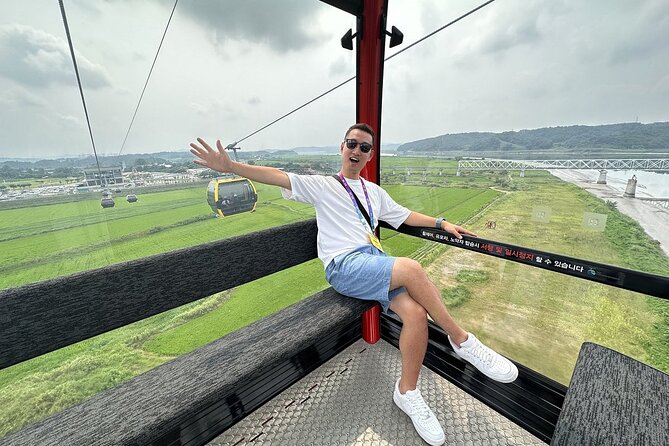
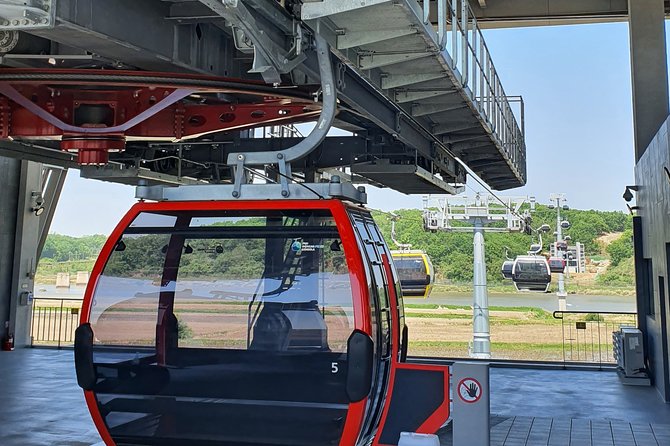
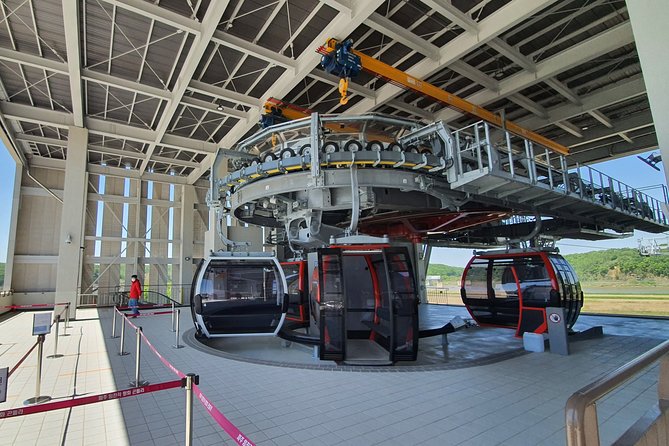
The Paju Imjingak Peace Gondola is one of the tour’s most unusual features. It carries you across the Imjin River and beyond the Civilian Control Line, giving you a high view of the river, nearby fields, and the area toward the DMZ.
The ride lasts about an hour as part of the stop, though the actual crossing is shorter. The value is not speed. It is the chance to see the border area from above instead of only from a bus, road, or lookout point.
This is listed as optional, so confirm how the add-on works when you book. The tour information also lists admission fees as included, but the optional wording means you should not assume every added activity is automatic in every departure arrangement.
The gondola is a good choice if you want a calmer break between the more serious military sites. It also helps families and visitors who prefer views to long museum visits. Still, the ride does not replace the main DMZ stops. It is an extra perspective, not the central historical lesson.
Military checks make the DMZ feel real
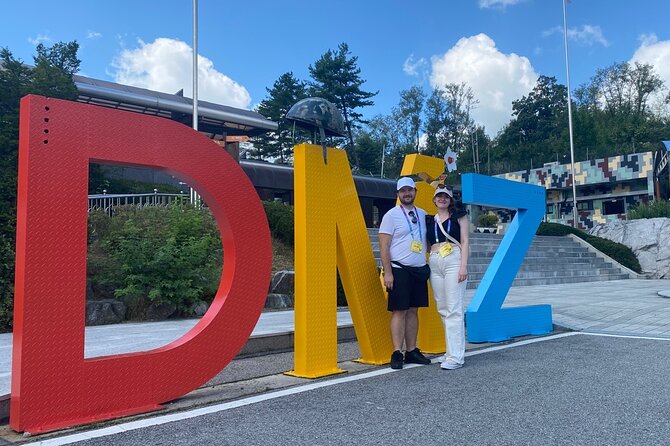
The bus pauses at the Unification Bridge military checkpoint. Soldiers inspect the vehicle and check identification, so keep your passport, military ID, or South Korea-issued ARC card easy to reach.
This is not a theatrical border performance. It is part of the practical reality of visiting a controlled area. Follow your guide’s instructions and do not assume you can photograph everything. At some sites, photography toward North Korea is restricted, and rules can change according to military conditions.
The tour information describes the DMZ as a four-kilometer-wide strip separating North and South Korea since 1953. At certain points you may see fencing, watch areas, and quiet stretches of land. The silence can feel more powerful than a dramatic monument, particularly when you remember that the armistice did not create a formal peace treaty.
Other walks with a drop below them near Seoul:
- Seoul: DMZ Tour with Optional Suspension Bridge
★ 4.8 · 5,277 reviews - Signature DMZ Tour: Exclusive Defector Talk & Suspension Bridge
★ 5.0 · 4,459 reviews - DMZ; NK Defector, 3rd Tunnel, Suspension Bridge,Hotel pickup
★ 4.9 · 2,055 reviews - DMZ Tour from Seoul – Optional Suspension Bridge Experience
★ 5.0 · 1,918 reviews
The Third Tunnel is the day’s hardest walk
The Third Tunnel of Aggression is the stop that requires the clearest warning. North Korean forces dug it beneath the border, and it was discovered south of the DMZ. You walk into a section of the tunnel, often in a confined passage with a low ceiling, then face an uphill return.
Several visitors praise the historical value but describe the walk back as difficult. That is fair. The tunnel itself may take only a short time to view, yet reaching the end and returning can take more effort than expected. The tight space can also be uncomfortable if you dislike enclosed areas.
Wear shoes with a firm grip and bring water. You may prefer to spend extra time at the displays near the entrance if the physical section is not suitable for you, but the tour does not offer full access alternatives for people with mobility limitations.
The tunnel is worthwhile because it changes the scale of the conflict. A military plan becomes a narrow passage under your feet. Just do not judge the stop by the length of the viewing area. The effort is part of the experience.
Dora Observatory offers a controlled look north
Dora Observatory provides one of South Korea’s closest public viewpoints toward North Korea. It sits on Dorasan and was rebuilt in 2018. From the viewing area, you use telescopes to look across the border when conditions and military rules permit.
The view depends on weather, haze, and access restrictions. You might see North Korean countryside or settlements, but do not expect a clear, close look every time. Photography may be limited in marked areas, and the guide will explain where cameras are allowed.
This is where the tour’s historical explanation matters most. Without context, a telescope view can feel brief and abstract. With a good guide such as Nancy, Emily, or Diane, you get help understanding what you are seeing and why the viewpoint matters.
Keep the stop efficient. The group may have limited time, and the line for telescopes can move slowly when several buses arrive.
Tongilchon adds an everyday side to the DMZ
Tongilchon-gil and the Unification Village offer a less dramatic but useful pause. This area lies beyond the Civilian Control Line, and its Jangdan soybeans are a local specialty.
You may find North Korean products and regional souvenirs for sale. This is a good moment to browse or buy a small item, especially if you want something tied to the border area rather than a standard Seoul souvenir.
Do not expect a long village walk. The stop is about 20 minutes, so use it for a quick look, a purchase, or a short break. Lunch is not included in the tour price, and any restaurant meal arranged during the day should be treated as an extra cost.
The suspension bridge adds scenery and exercise
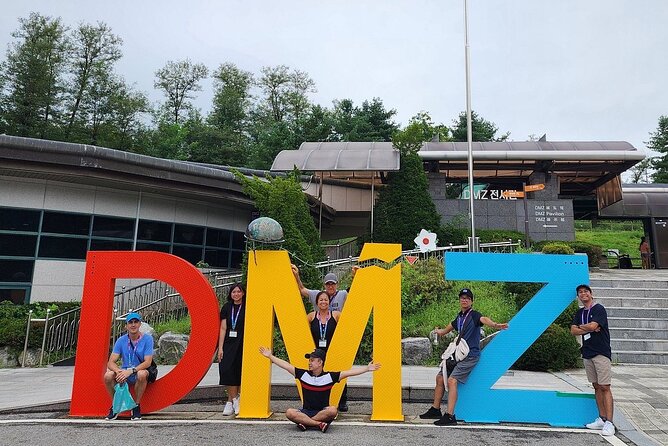
The Gamaksan Red Suspension Bridge is an optional stop near the DMZ. It is 150 meters long and 1.5 meters wide, with views over the surrounding area. Built in 2018, it honors Korean War heroes.
The bridge is not just a photo stop. Reaching it involves walking, and the tour’s schedule may make the approach feel brisk. You should be comfortable with hills and steps. Once on the bridge, it can sway slightly underfoot, which adds excitement for some people and discomfort for others.
Some departures also include Majang Lake and its 220-meter suspension bridge. The reservoir setting is more recreational, with water and greenery around the crossing. Since the itinerary labels these bridge stops optional, check the day’s exact plan rather than assuming both will be included.
I like this part of the tour because it breaks up the military sites. After memorials, checkpoints, and the tunnel, a bridge over a lake or wooded valley gives you a chance to breathe. The tradeoff is that it adds more walking to an already full day.
Guides are the tour’s biggest strength
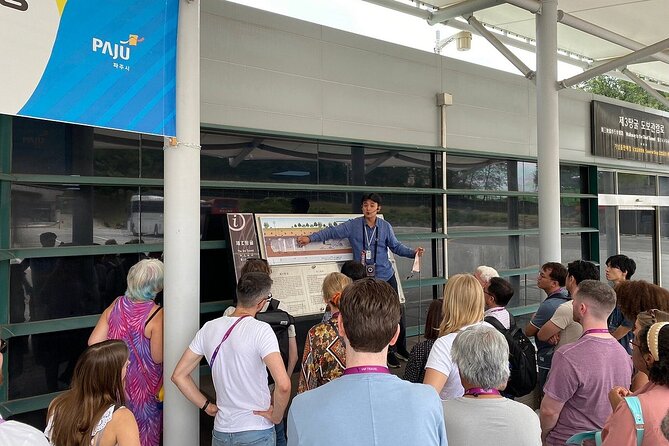
The guide shapes this experience more than the vehicle or the admission tickets. You need someone who can explain the Korean War in plain language, manage a large group, and handle changes at military sites.
Nancy receives especially strong praise for energy, organization, historical explanations, and keeping the group moving. Emily is noted for detailed information and courtesy. Diane is described as warm and clear, while Gogo is praised for managing time across many stops. Crystal, Hana, Alex, Kelly, Jenny, Moon, and Ray are also named for helpful explanations, humor, or personal stories.
Guide assignment is not guaranteed, so do not book solely for one person. Still, the repeated pattern is useful: this operator places real emphasis on live commentary rather than simply dropping you at monuments.
Listen during the bus rides. The coach time is part of the lesson, not dead time. Guides can explain the war, the armistice, military rules, and the meaning of reunification before you reach each site.
Who should book this day trip?
I would choose this tour if you have one free day in Seoul and want the major DMZ sights without arranging transport yourself. It works well for families, first-time visitors, and anyone who wants both history and outdoor views.
You should be ready for:
- A full day of roughly 7.5 hours
- Early meeting times caused by demand and military access
- Walking uphill at the tunnel and suspension bridge
- A narrow passage underground
- A large group and fixed meeting times
- Identification checks at the military checkpoint
- No hotel drop-off
- Extra spending for lunch or optional activities, depending on the departure
The tour is less suitable if you need step-free access, dislike enclosed spaces, or want a slow visit at each location. The itinerary covers many places, but most stops are short. You get breadth rather than long, quiet museum time.
Free cancellation is available up to 24 hours before the start time. After that, refunds are not provided, and late changes are not accepted.
Should you book the Ultimate Korea DMZ Tour?
Book it if you want a high-value introduction to the DMZ with transport, a guide, the Third Tunnel, Dora Observatory, Imjingak, the gondola, and a suspension bridge in one day.
The price is modest for the number of sites and the logistics involved. The main compromises are the large possible group, quick timing, walking demands, and optional-stop details that should be confirmed before departure.
My practical advice is simple: wear comfortable shoes, bring identification, keep your camera ready but follow military rules, and stay close to the guide. If you do that, this tour gives you a strong, varied look at one of the world’s most unusual borders without making you organize the difficult parts yourself.
FAQ
How long does the tour last?
The tour lasts approximately 7 hours and 30 minutes.
Where can I meet the tour?
You can meet at Myeongdong Subway Station Exit 9, Seoul City Hall Subway Station Exit 6, or Hongdae Subway Station Exit 3.
Is transportation included?
Yes. Round-trip transportation from Seoul in an air-conditioned vehicle is included.
Do I need to bring identification?
Yes. At the Unification Bridge checkpoint, soldiers check passports, military IDs, or South Korea-issued ARC cards.
Is lunch included?
No. Lunch is not included in the tour price.
Where does the tour end?
Drop-off is available at Hongdae, Seoul City Hall, or Myeongdong. Hotel drop-off is not provided.
Is the tour suitable for people with limited mobility?
The tour includes uphill walks, a narrow tunnel, and possible suspension bridge walks. The available information says there are no full alternatives for visitors with disabilities, so you should consider the walking and tunnel conditions before booking.
Just added in Seoul
- Suwon: Baseball Game with Fortress and Local Food Tour★ 5.0 · 3 reviews
- Seoul: War Memorial of Korea Private Guided Museum Tour★ 4.9 · 29 reviews
- Seoul: Wine & Korean BBQ, Perfect Pairing Dinner in Sinchon★ 5.0 · 6 reviews
- Seoul : Your Personal Photographer in Gyeongbokung★ 5.0 · 7 reviews
- Seoul : Efoil Experience in Han River★ 5.0 · 5 reviews
- Seoul: Vivaldi Park Winter Ski with Eobi Ice Valley Day Tour★ 4.6 · 16 reviews
- Seoul: Vivaldi Park Winter Ski with Nami Island Day Tour★ 5.0 · 4 reviews
- Seoul: Sokcho beach, market, hot spring and Seorak Cable Car★ 4.8 · 5 reviews
DMZ & JSA Tours, compared.
Best DMZ Tour Korea from Seoul (Red Suspension Bridge Optional)
Read our review →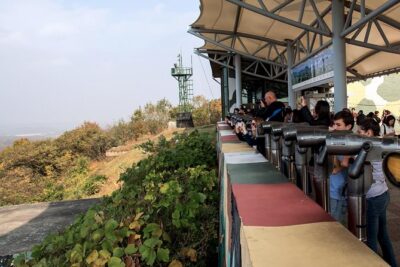
DMZ Tour: 3rd Tunnel, Option(Suspension Bridge, Boat) from Seoul
Read our review →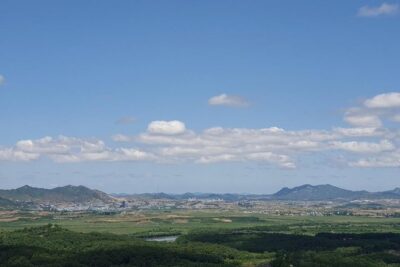
DMZ tour south Korea from Seoul (NK experience hall, defector)
Read our review →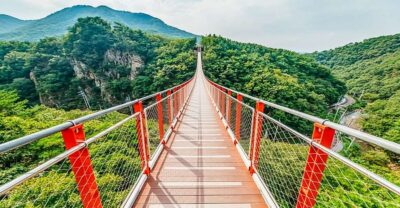
DMZ Insider Tour: 3rd Tunnel, NK Defector Meet & Red Bridge
Read our review →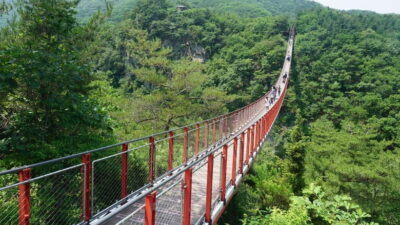
Signature DMZ Tour: Exclusive Defector Talk & Suspension Bridge
Read our review →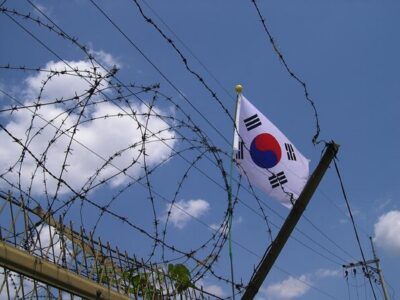
Thrilling Korean DMZ 3rd Tunnel Tour from Seoul + Red Bridge Rush
Read our review →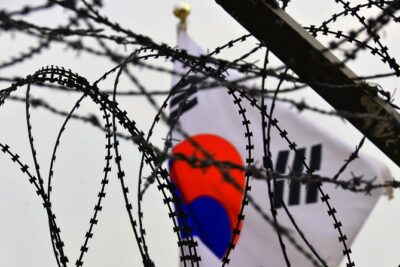
DMZ Past and Present: Korean Demilitarized Zone Tour from Seoul
Read our review →Browse the lists this tour appears in