
Reviewed · DMZ & JSA TOURS
DMZ Past and Present: Korean Demilitarized Zone Tour from Seoul
The most striking part of this tour is the chance to look across an active border into North Korea, not from a television screen but through binoculars at Dora Observatory. I like the clear historical arc, from Korean War artifacts and the Freedom Bridge to the Third Tunnel and the modern border, and I like that a guide helps explain what you are seeing. Guides such as AJ, Katie, Grace, and Sadie are often praised for making a serious subject lively and easy to follow.
The main consideration is the Third Tunnel. You walk about 400 meters down an 11-degree slope, then back up through a narrow passage. Taller visitors may bump their heads even with a hard hat, and the tunnel can feel demanding. You should also confirm your pickup details carefully, since pickup arrangements vary, while the return is to central Seoul rather than necessarily to your hotel.
Key points to know before booking
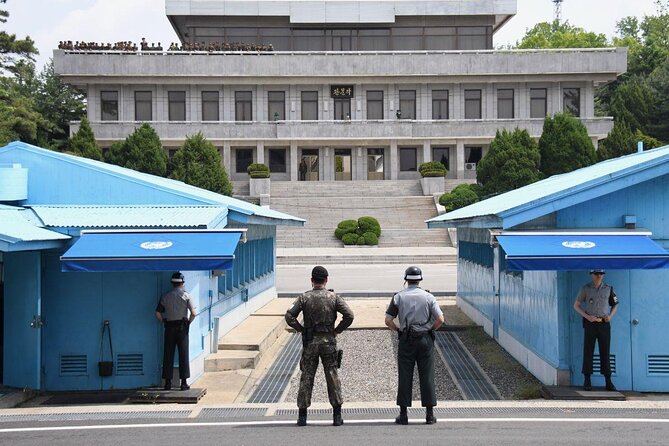
- Look across the border at Dora Observatory: Binoculars let you view North Korea and the village of Kijongdong from the South Korean side.
- Walk inside the Third Infiltration Tunnel: The 400-meter route is steep, narrow, and physically more demanding than a normal sightseeing stop.
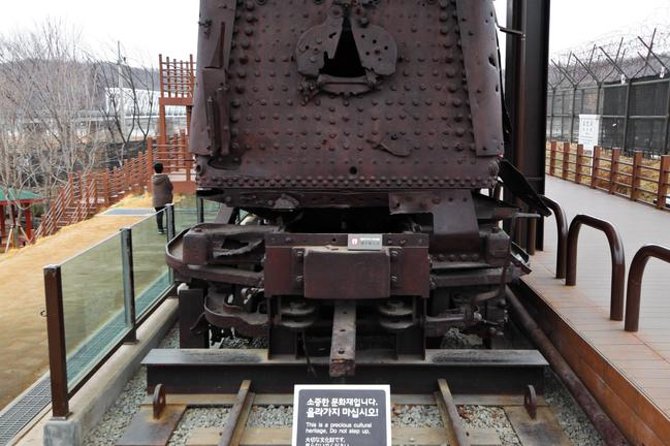
- Connect the war to the present: Imjingak Park, Freedom Bridge, the DMZ Museum, and the observation point form a useful historical sequence.
- Expect a half-day coach trip: The full outing lasts about 6 hours and 30 minutes, with transport in an air-conditioned coach.
- Bring your passport: A current, valid passport is required on the day, but you do not need to send a copy when booking.
- Check the pickup message: Hotel pickup may be arranged in downtown Seoul, but the stated return is to central Seoul, and lunch and the optional tram are not included.
Why this DMZ tour is worth your time
The Korean Demilitarized Zone is not a normal sightseeing attraction. It is a heavily controlled border created after the Korean War, and access is limited. You cannot simply arrive and wander in on your own. This tour gives you the transport, required access, and guide commentary needed to see several important sites in one morning or afternoon.
At $37 per person, the price is appealing for a six-and-a-half-hour outing that includes coach transport, admission, and a guide. You are paying less for luxury than for access and coordination. The border rules, coach transfers, and timed visits would be awkward to arrange independently, even if independent access were possible.
I especially like the way the day moves from familiar war memorials to places where the border feels immediate. You first meet the conflict through objects and stories at Imjingak, then walk a former prisoner-of-war crossing, enter a tunnel built beneath the border, and finally look toward North Korea. That progression gives the tour a clear purpose instead of turning the DMZ into a quick photo stop.
The tour is usually capped at 40 people. That is not a small private group, so you should expect a shared coach and some movement between fixed stops. The upside is a lower price and a social, organized format. The downside is that time at certain locations can be brief, especially when the group must stay on schedule.
Other trips up to the border from Seoul:
- Best DMZ Tour Korea from Seoul (Red Suspension Bridge Optional)
★ 5.0 · 41,422 reviews - DMZ Tour: 3rd Tunnel, Option(Suspension Bridge, Boat) from Seoul
★ 5.0 · 21,373 reviews - DMZ tour south Korea from Seoul (NK experience hall, defector)
★ 5.0 · 20,599 reviews
Leaving Seoul for the border
The outing begins with pickup in downtown Seoul or at an arranged meeting point, depending on your booking details. Some people have been collected near their hotels, and the operator has used WhatsApp to send clear meeting instructions. Still, check the final message closely. The general information is not perfectly consistent about hotel pickup, so do not assume that every Seoul address receives door-to-door service.
The coach is air-conditioned, which matters because the day includes outdoor walking, waiting, and a physically demanding tunnel visit. The drive takes you away from Seoul’s dense city center toward the Imjin River and the border area. Your guide provides the historical setting along the way, helping you understand why a place that looks calm today remains politically tense.
Several guides receive particular praise for their approach. AJ is described as cheerful, humorous, and strong on Korean history. Katie is noted for her energy and good pacing, while Grace, Sadie, Chloe, Erica, Yeoni, and L. Shin are also praised for clear explanations and friendly help. Guide assignments can change, of course, but the format depends heavily on the person leading your coach.
Imjingak Park and the Freedom Bridge
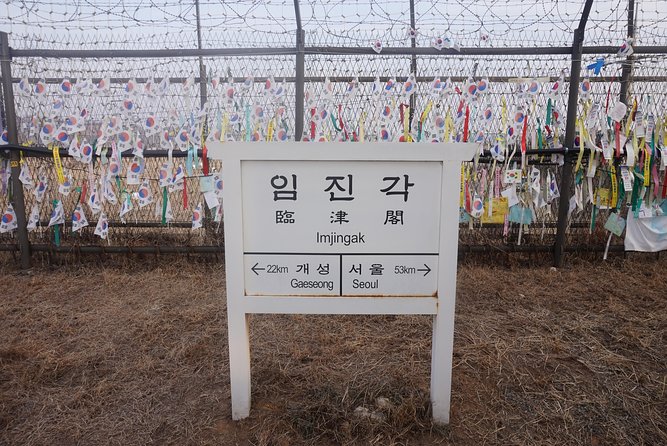
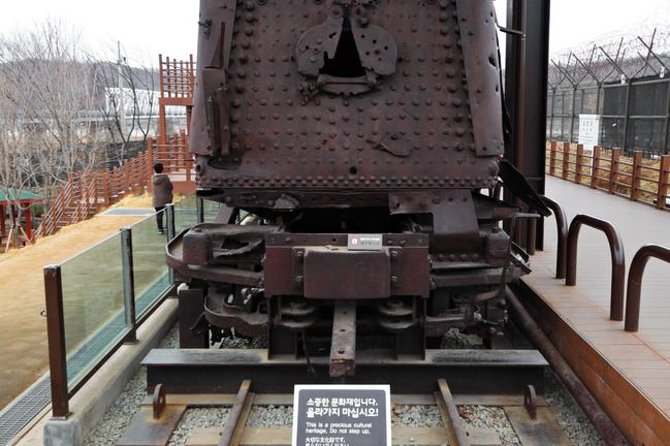
Your first stop is Imjingak Pyeonghoa-Nuri Park, beside the Imjin River. The park contains artillery and other war artifacts connected with the Korean conflict. It is an accessible opening to the day because you can begin with visible objects rather than trying to absorb a long lecture while standing at a restricted border post.
The stop is listed at about 15 minutes, including the visit to Freedom Bridge. That is enough for a quick look and some photographs, but not enough for a slow museum-style visit. Keep your attention on the guide’s explanation, since the meaning of the site matters more than the number of pictures you take.
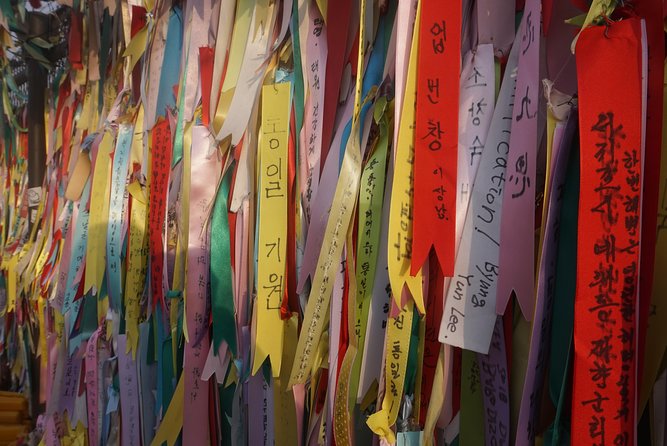
Freedom Bridge is associated with the return of nearly 13,000 prisoners of war to South Korea after the conflict. It is both a physical crossing and a symbol of separation, return, and hope. I find this stop useful because it gives the border a human scale. The DMZ is often described in terms of soldiers and military hardware, but a bridge crossed by people heading toward freedom tells a more personal story.
You may also have time around the wider park area, though the exact amount depends on the day’s schedule. The tour is structured, so do not count on wandering everywhere at leisure. The short visit works best if you see Imjingak as an introduction rather than the main event.
The Third Infiltration Tunnel is the physical challenge
After Imjingak, you return to the coach and travel to the Third Infiltration Tunnel. Four such tunnels are known beneath the border, and this one is presented as a route planned and dug by North Korea for a possible military advance into the South.
The visit involves walking roughly 400 meters down an 11-degree gradient, then walking back. The passage is narrow and low in sections, and the tunnel visit is often described as one of the most memorable parts of the tour. It is also the stop most likely to test your legs, knees, balance, and patience.
Wear comfortable shoes with a good grip. Loose, comfortable clothing is sensible, and you should not treat this as a casual stroll. The tunnel has a steep return climb, so pace yourself and take the physical warning seriously. Most people can take part, but you need enough fitness to manage the full route.
Height is another practical issue. One tall visitor, at about 5 feet 7 inches, reported hitting the ceiling several times. Hard hats are used, but you should still walk carefully and keep your head lowered where needed. If you dislike confined spaces, have mobility concerns, or are unsure about the gradient, this stop deserves serious thought before booking.
The tunnel has strong historical value because it shows how close the military threat could come to Seoul. At the same time, the visit is not comfortable or leisurely. That contrast is part of its effect. You do not simply hear that the border was fortified; you feel the awkwardness of moving through a tight passage below ground.
The standard visit lasts about 30 minutes. Some descriptions refer to a 350-meter walk, while the practical guidance gives about 400 meters and an 11-degree slope. Use the longer figure when deciding if you can manage it. The exact walking distance may depend on where access is measured, but the physical demand is clear.
Same base, a different kind of day out:
- Seoul: DMZ Tour with Optional Suspension Bridge
★ 4.8 · 5,277 reviews - Signature DMZ Tour: Exclusive Defector Talk & Suspension Bridge
★ 5.0 · 4,459 reviews - Thrilling Korean DMZ 3rd Tunnel Tour from Seoul + Red Bridge Rush
★ 5.0 · 3,097 reviews - Ultimate Korea DMZ Tour from Seoul (Gondola & Suspension Bridge)
★ 5.0 · 2,396 reviews
Dora Observatory and a distant view of North Korea
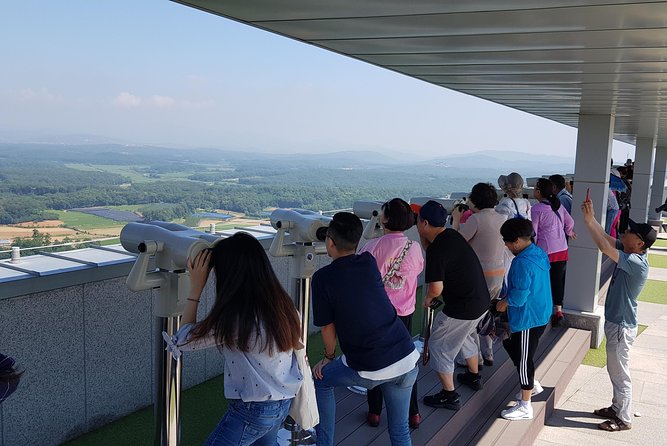
Dora Observatory is the moment many people anticipate. From the South Korean side, you look across the DMZ with binoculars toward North Korea. The guide points out what you can see and explains aspects of life on the other side, including the village of Kijongdong.
The observatory stop is listed at about 15 minutes. That is enough to use the binoculars and take in the view, but it can feel short if the weather is poor, visibility is hazy, or several people are waiting for a turn. You are not getting a long private viewing session. You are getting a carefully managed glimpse from a controlled observation point.
This is also where expectations matter. You see North Korea from a distance, not a close-up town visit, and the view depends on conditions. The experience is powerful because of the restriction itself. A quiet village, fields, or distant buildings can carry unusual weight when you know they are on the other side of one of the world’s most protected borders.
Use the guide’s directions rather than trying to interpret every distant shape yourself. AJ, Erica, Grace, and several other guides are praised for explaining what to watch for and answering questions in clear English. The commentary turns the binocular view into more than a quick sighting.
The DMZ Museum and the story behind the border
The tour program also includes the DMZ Museum, where photographs and war artifacts provide more background. Museum time can help fill in details that are difficult to grasp at the outdoor sites, especially the division of Korea, the Korean War, and the continuing separation of families and communities.
The supplied schedule highlights Imjingak, the Third Tunnel, and Dora Observatory as the main timed stops, so the exact amount of museum time may depend on the day’s operations. Treat it as a useful part of the program, but do not book this tour expecting an extended museum visit with hours for every display.
I like having this indoor historical element because the day could otherwise become too focused on military sights. Photographs and objects help explain the human cost and the long aftermath. The best guides connect the museum material to what you see outside, rather than presenting isolated facts.
Some tours also offer an additional question-and-answer session with a North Korean defector, but that is not listed as a standard inclusion here. Do not assume it is part of the $37 price. If that conversation matters to you, ask the operator before booking.
Timing, group size, and the return to Seoul
The total outing lasts about 6 hours and 30 minutes. That is long enough to make the border area a serious half-day commitment, but short enough to leave part of your Seoul day available. Some departures offer two pickup times, which can help if you do not want an especially early start. Confirm the available departure options for your date.
The pace is usually purposeful. You move by coach, get a short period at each stop, and rejoin the group on time. That organization is valuable at a restricted military area, though it leaves less room for spontaneous exploration.
The return ends in central Seoul. Hotel drop-off is not guaranteed, even if pickup has been arranged, so plan your afternoon around a central Seoul finish. Lunch is not included. Bring whatever food or drink you need, but do not expect the tour price to cover a meal.
An optional tram is also excluded. Since the core experience already includes the tunnel, observatory, museum, and park, the extra cost may or may not matter to you. Ask what the tram covers before paying for it, especially if your main goal is the border history rather than transport convenience.
What to bring and what to expect at the border
Bring your current valid passport. You do not need to send a passport copy in advance, but you must have the document with you on the day. Border access can be controlled, and forgetting it could prevent participation.
Wear walking shoes and clothes that allow easy movement. The tunnel is the key reason. You will also spend time moving outdoors at Imjingak and Dora Observatory, so layers are useful, though the tour information does not promise any particular weather conditions.
Keep your expectations realistic. Access can be controlled, viewing time can be short, and the border is not a theme park attraction. The most valuable part is the combination of place, explanation, and limited access. You are there to understand a divided country, not simply to collect a dramatic photograph.
The activity is rated 4.8 out of 5 from 2,487 ratings, with 96 percent recommending it. Those numbers fit the strongest parts of the experience: reliable organization, good guide communication, a fair price, and the rare chance to view North Korea. The lower-risk choice is to book for the history and access, not because every minute will be relaxed or every view will be clear.
Who should book this DMZ tour?
I would choose this tour if you want a practical introduction to the Korean border without paying for a private guide. It suits first-time visitors to Seoul, history-minded people, and anyone curious about how the Korean War still shapes daily life and politics.
It is also a good match if you value a guide who can answer questions and keep the day moving. AJ, Katie, Grace, Sadie, Chloe, Erica, Yeoni, and L. Shin are among the guides praised for warmth, energy, clear English, and strong historical explanations. You cannot select a specific guide with certainty, but the guide’s role is central to the experience.
I would think twice if you cannot manage a steep 400-meter tunnel walk, dislike narrow spaces, need a fully flexible schedule, or expect a close look at North Korean towns. The observatory offers only a distant view, and the tour uses fixed timings.
The cancellation policy is generous if your plans change: cancel at least 24 hours before the start time for a full refund. Changes or cancellations made less than 24 hours ahead are not accepted for a refund.
Should you book it?
Book this tour if you want the essential DMZ experience at a modest price: wartime objects at Imjingak, the symbolic Freedom Bridge, the Third Tunnel, a museum visit, and binocular views from Dora Observatory. The guide commentary and organized transport make the $37 cost good value.
Skip it if the tunnel would be too difficult or if you want a slow, private visit with long periods at each site. For most visitors who can manage the walking, this is a focused and meaningful half-day that brings the Korean division into clear view without making the experience feel remote or abstract.
FAQ
How long does the DMZ tour last?
The tour lasts approximately 6 hours and 30 minutes, including transportation between Seoul and the DMZ sites.
Is hotel pickup included?
Hotel pickup may be arranged for downtown Seoul, but the provided tour details are not fully consistent about this. Check your confirmation and pickup message carefully. Return transport ends in central Seoul rather than necessarily at your hotel.
Do I need to bring my passport?
Yes. You need a current, valid passport on the day of the tour. You do not need to send a copy of your passport in advance.
How difficult is the Third Infiltration Tunnel walk?
You should be fit enough to walk about 400 meters down and back up an 11-degree gradient. The tunnel is steep, narrow, and low in places. Comfortable shoes are recommended, and taller visitors may need to watch their heads even with a hard hat.
Is lunch included?
No. Lunch is not included in the tour price.
Is the tram included?
No. The tram is listed as an additional cost and is not included with the standard tour.
How many people can join the tour?
The maximum group size is 40 people. Transport is provided in an air-conditioned coach.
Can I cancel for a full refund?
Yes, if you cancel at least 24 hours before the experience start time. Cancellations or changes made less than 24 hours before the start time are not accepted for a refund.
Just added in Seoul
- Suwon: Baseball Game with Fortress and Local Food Tour★ 5.0 · 3 reviews
- Seoul: War Memorial of Korea Private Guided Museum Tour★ 4.9 · 29 reviews
- Seoul : Your Personal Photographer in Gyeongbokung★ 5.0 · 7 reviews
- Seoul : Efoil Experience in Han River★ 5.0 · 5 reviews
- Seoul: Wine & Korean BBQ, Perfect Pairing Dinner in Sinchon★ 5.0 · 6 reviews
- Seoul: Vivaldi Park Winter Ski with Eobi Ice Valley Day Tour★ 4.6 · 16 reviews
- Seoul: Vivaldi Park Winter Ski with Nami Island Day Tour★ 5.0 · 4 reviews
- Seoul: SnowyLand in Vivaldi Park with Nami or Alpaca★ 4.8 · 11 reviews
DMZ & JSA Tours, compared.
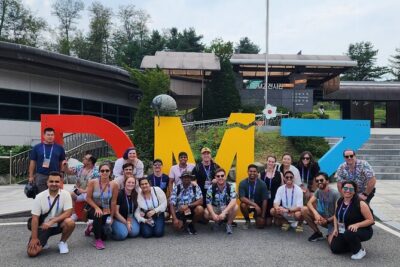
Best DMZ Tour Korea from Seoul (Red Suspension Bridge Optional)
Read our review →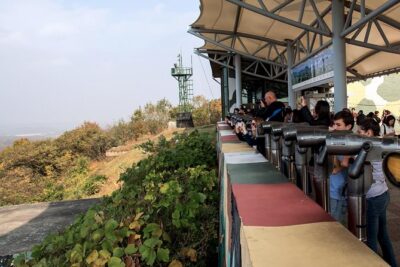
DMZ Tour: 3rd Tunnel, Option(Suspension Bridge, Boat) from Seoul
Read our review →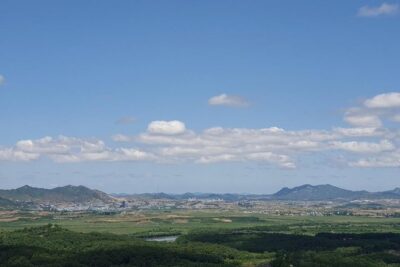
DMZ tour south Korea from Seoul (NK experience hall, defector)
Read our review →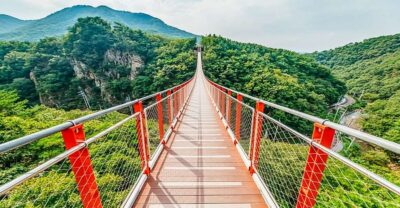
DMZ Insider Tour: 3rd Tunnel, NK Defector Meet & Red Bridge
Read our review →
Signature DMZ Tour: Exclusive Defector Talk & Suspension Bridge
Read our review →
Thrilling Korean DMZ 3rd Tunnel Tour from Seoul + Red Bridge Rush
Read our review →
Ultimate Korea DMZ Tour from Seoul (Gondola & Suspension Bridge)
Read our review →Browse the lists this tour appears in