
Reviewed · TOURS IN SEOUL
Learn and Make Your Very Own Craft Makgeolli
Makgeolli is not simply Korea’s cloudy rice drink. In this small, hands-on class, you learn how rice, nuruk, yeast, time, and touch turn into something you can keep brewing at home. Joe guides you through tastings and practical work at Baekusaeng Makgeolli, near Ahyeon-dong.
I like the tasting flight, which shows how much makgeolli can change in sweetness, acidity, aroma, and texture. I also like that you take home about 1.2 liters of your own batch, rather than leaving with only a recipe or a souvenir cup.
The main consideration is the price, $70.70 per person, for a class lasting about two hours. It offers strong value if you care about Korean food culture and want to make the drink yourself, but it may feel costly if you only want a quick tasting.
Key points before you book
- Taste several styles first: Compare makgeolli made with different methods and ingredients before you start working.
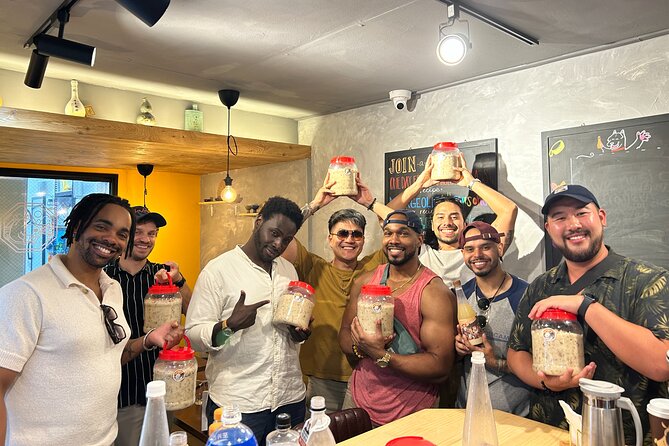
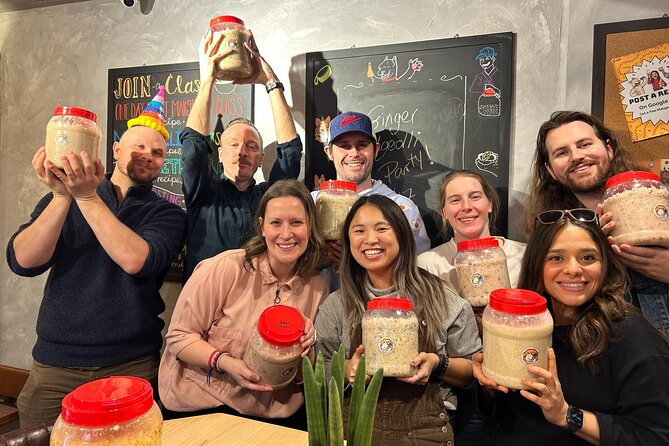
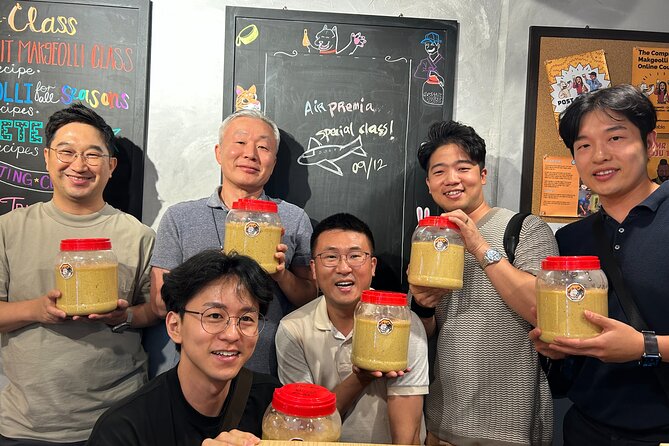
- Make your own batch: Prepare about 1.2 liters to take home and continue fermenting.
- Learn from Joe: The instructor explains the process clearly in English and can use translation help when needed.
- Expect real hands-on work: You handle ingredients and equipment instead of watching a demonstration from the sidelines.
- Small-group setting: The class accepts a maximum of 15 people, with the possibility of a more personal session in a smaller group.
- Plan around the location: Meet at 346-35 Ahyeon-dong in Mapo-gu, Seoul, and return to the same point when the class ends.
Why this makgeolli class is different from a tasting bar
A bar can introduce you to makgeolli. This class explains what is in the bottle and gives you a chance to make the drink yourself.
That difference matters. Commercial makgeolli often tastes sweet, light, and easy to drink. Craft versions can show more grain, tartness, fermentation character, and texture. Here, you taste several examples before making your own, so the brewing lesson has a clear purpose. You are not memorizing terms in the abstract. You are tasting the results.
Baekusaeng Makgeolli also presents itself as more than a one-day workshop. Its teaching focuses on methods you can repeat at home, including traditional ingredients and fermentation practices. The aim is to help you understand the process well enough to experiment later, not simply follow one fixed recipe once.
That makes this a good choice for people who enjoy food workshops, home fermentation, Korean drinking culture, or practical classes. If you prefer a polished performance with little participation, this is probably not the right fit.
Other trips people book in Seoul:
- Best DMZ Tour Korea from Seoul (Red Suspension Bridge Optional)
★ 5.0 · 41,422 reviews - DMZ Tour: 3rd Tunnel, Option(Suspension Bridge, Boat) from Seoul
★ 5.0 · 21,373 reviews - DMZ tour south Korea from Seoul (NK experience hall, defector)
★ 5.0 · 20,599 reviews
Arriving in Ahyeon-dong
The meeting point is 346-35 Ahyeon-dong, Mapo-gu, Seoul. You should allow time to find the location, especially if you are unfamiliar with Seoul’s smaller streets and local commercial areas.
One useful detail is the intimate setting. The class takes place in a small makgeolli bar or microbrewery-style shop rather than a large visitor center. The space has been described as cozy and clean, with a Korean market setting and a practical brewing feel. That gives the lesson a more local character, though it also means you should not expect a spacious classroom.
Finding a small venue can take a little patience. Joe has helped participants who had trouble locating the shop, so keep the meeting details available on your phone and arrive with enough time to get your bearings. The activity ends back at the same place, which keeps the logistics simple.
The experience is near public transportation, and a mobile ticket is provided. Confirmation arrives when you book. The group limit is 15 people, a sensible maximum for a class that involves tasting, discussion, and shared preparation.
Starting with a flight of makgeolli
The class begins with tasting. This is one of its strongest features because it gives you a reference point for everything that follows.
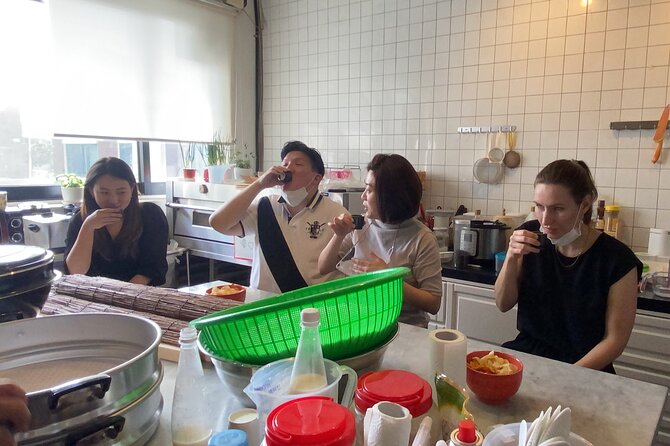
You may taste several blends and styles while Joe explains the differences. Pay attention to four basic qualities: aroma, sweetness, acidity, and texture. A makgeolli can be creamy or light, sharply tart or gently sweet, grain-forward or relatively clean. The cloudy appearance tells you only part of the story.
This tasting also helps separate traditional craft makgeolli from mass-market bottles found in supermarkets or served in restaurants. The comparison is useful for anyone who has tried makgeolli before and assumed all versions taste roughly alike.
The class includes plenty of samples, but you should still pace yourself. The drink is easy to underestimate, particularly when you are tasting several versions while listening and working. Eat beforehand if needed, and remember that the session is a class with alcohol, not an open-ended drinking event.
The sampling has a social side, too. You may share the table with people from several countries, and the tasting gives everyone an easy topic to discuss. Solo participants can fit in comfortably, since the class is built around shared work rather than private instruction only.
Understanding rice, nuruk, and fermentation
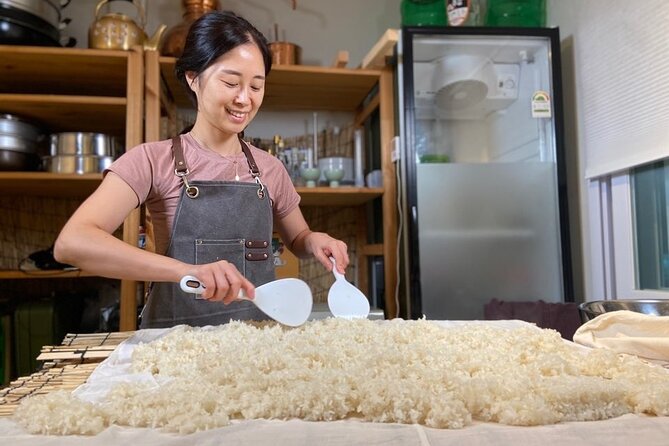
After tasting, Joe explains the ingredients and tools used in makgeolli brewing. Rice is central, but it is not the whole story. Nuruk, the fermentation starter used in Korean brewing, helps provide the organisms and enzymes that make the process possible. Yeast activity, moisture, temperature, filtering, and conditioning all affect the final drink.
You will learn how fermentation changes the mixture over time. The batch you take home is not simply finished alcohol in a souvenir container. It continues developing, and you are shown enough of the process to carry it forward yourself.
That is an important strength. Many food workshops let you assemble something and take home a finished product. Here, you take home a living stage of the brewing process. You need to pay attention to the instructions because the work continues after the class.
Joe’s teaching style appears suited to beginners who want clear explanations without being treated as passive spectators. He has written Korean terms on a whiteboard for students who found spoken English difficult, and he has used Google Translate to help explain points to Japanese-speaking participants. That does not mean every moment will be translated into every language, but the class has a practical, patient approach to communication.
The class is conducted in English, and one participant described Joe’s English as very easy to understand. If you are not comfortable with English, the hands-on nature helps. You will still need to follow instructions, but much of the session involves watching, touching, mixing, and asking questions rather than listening to a long lecture.
Same base, a different kind of day out:
- Seoul: DMZ Tour with Optional Suspension Bridge
★ 4.8 · 5,277 reviews - Signature DMZ Tour: Exclusive Defector Talk & Suspension Bridge
★ 5.0 · 4,459 reviews - Thrilling Korean DMZ 3rd Tunnel Tour from Seoul + Red Bridge Rush
★ 5.0 · 3,097 reviews - DMZ Past and Present: Korean Demilitarized Zone Tour from Seoul
★ 5.0 · 2,481 reviews
Making about 1.2 liters of your own batch
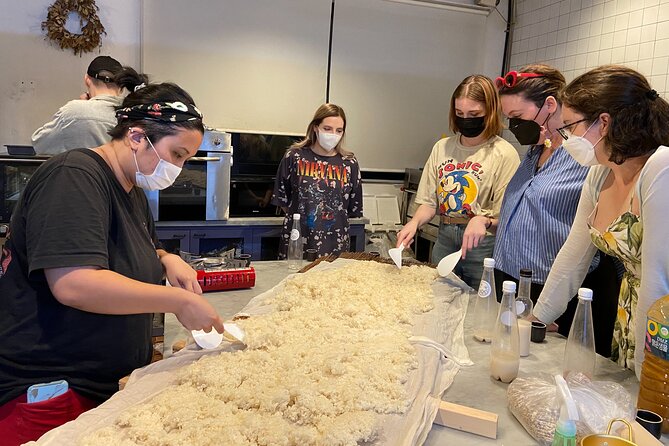
The hands-on section is the heart of the experience. You work with the ingredients and follow the brewing steps under Joe’s direction. The exact recipe can involve creative choices, and one session included a pumpkin mash, showing that makgeolli does not have to be limited to one narrow flavor profile.
You should expect to get involved rather than simply take photographs. The point is to understand the feel of the process, how the ingredients come together, and what needs to happen next. Joe shares methods drawn from traditional brewing while also encouraging experimentation.
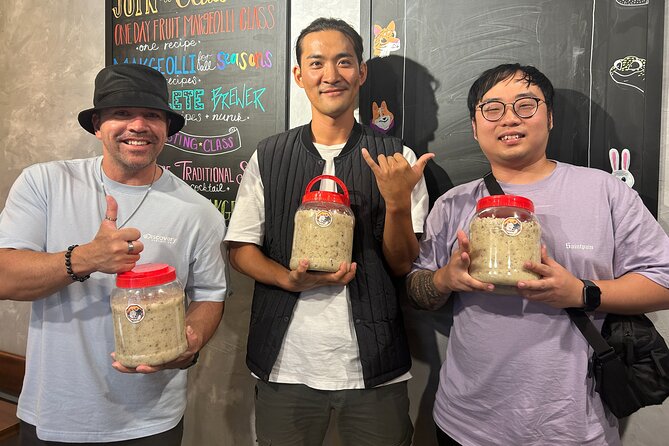
At the end, your makgeolli base is placed in a large plastic bottle, similar in size to a bottle used for fruit liqueur. You take home approximately 1.2 liters and continue the fermentation yourself.
This is where the class offers more lasting value than a standard tasting. You leave with a project. The result may not be identical to Joe’s version, and that is part of the lesson. Fermentation depends on conditions and handling, so the experience gives you a starting point rather than a guarantee of a fixed result.
You should be ready to follow the aftercare directions carefully. The class description makes clear that the drink still needs to be fermented and finished at home. If your Seoul visit is short, consider how you will manage that process after returning home. The activity is most useful when you are willing to keep learning after the class ends.
What Joe adds to the experience
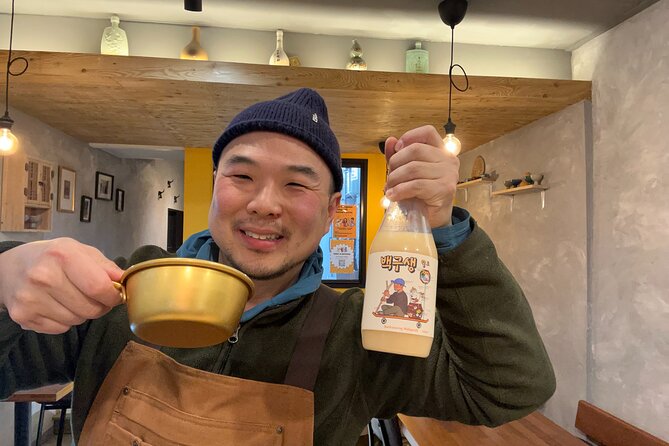
Joe is central to the class. He teaches the cultural background, explains the brewing process, answers questions, and leads the practical work. His flexibility is also useful: a date change was handled quickly for one couple, and he has provided extra help when participants struggled with directions or language.
The strongest praise focuses on his clear instruction, calm communication, and willingness to make the process understandable. Those qualities matter in fermentation, where a vague explanation can leave you unsure about what to do next.
The class also benefits from Joe’s wider interest in makgeolli education. Baekusaeng Makgeolli produces brewing resources for people who want to continue, including a published book and online courses. You do not need to buy or use those resources to take the class, but their existence suggests that the workshop is part of a larger teaching program rather than a one-off tourist demonstration.
For a beginner, that focus is reassuring. You can ask why a step matters instead of simply copying a gesture. For someone already brewing at home, the value may lie in comparing methods and tasting different outcomes.
Value at $70.70 per person
At $70.70, this is not the cheapest way to spend two hours in Seoul. You can buy bottles of makgeolli for far less, and a regular bar visit will cost less if your only goal is to drink.
The price makes more sense when you count what is included: instruction, a guided tasting of several styles, hands-on brewing, and approximately 1.2 liters of your own batch to continue at home. You are paying for access to a teacher and a process, not merely for alcohol.
I would consider it good value for anyone who enjoys workshops or wants a deeper connection to Korean food culture. The take-home batch also gives the experience a second stage, since you can watch the fermentation continue after leaving Seoul.
Value depends on your interests. If you do not drink alcohol, have little interest in fermentation, or want a broad sightseeing tour, spend the money elsewhere. If you have already tried makgeolli and want to understand why bottles taste different, the class gives you much more than a standard tasting.
The activity is commonly booked about 23 days ahead, so it is sensible to reserve early if your Seoul dates are fixed. The maximum group size is 15, but smaller attendance may offer more time for questions and individual help.
Who should take this class
I would recommend it to:
- People who enjoy Korean food and drink culture
- Home brewers and fermentation hobbyists
- First-time makgeolli drinkers who want useful context
- Couples and friends looking for a shared activity
- Solo visitors who like meeting people through a hands-on class
- Anyone willing to continue the brewing process after returning home
It is also a good first-evening activity if you want something social but structured. One class began with cultural background, moved into tasting and practical work, and ended with the group sharing a final drink around the newly prepared batch.
Families with children may need to consider the alcohol-focused format. The provided information confirms that service animals are allowed, but it does not describe every physical feature of the venue. If you have mobility concerns or need specific facilities, contact the provider before booking.
Practical details that affect your day
The activity lasts about two hours. That is long enough for tasting, explanation, and making the batch, but short enough to fit around other Seoul plans.
Wear clothing you do not mind using during a food preparation activity. The class is hands-on, so avoid treating it like a sit-down lecture where you never touch anything. Specific clothing requirements are not provided, but practical dress is sensible.
Keep the meeting address handy. Small shops can be harder to spot than major attractions, and at least one participant needed help finding the venue. Since the class ends where it begins, you do not need to arrange a separate pickup or learn a second location.
Free cancellation is available if you cancel at least 24 hours before the start time. Cancellations made less than 24 hours ahead are not refunded, and late changes are not accepted. The cut-off follows Seoul local time, so check the clock carefully if you are booking from another country.
Is this the right Seoul experience for you?
Book this class if you want to taste beyond supermarket makgeolli, learn how fermentation works, and leave with your own batch to finish at home. The class is strongest when you value instruction, participation, and a connection to Korean brewing traditions.
Skip it if you want only a quick drink, dislike group workshops, or cannot manage the follow-up fermentation after the class. At $70.70, it needs to be more than a tasting to justify the cost.
For curious drinkers, food-minded visitors, and home brewers, Baekusaeng Makgeolli offers a rare combination: several styles to compare, clear instruction from Joe, and a real project to take beyond Seoul.
FAQ
Where does the makgeolli class take place?
The meeting point is 346-35 Ahyeon-dong, Mapo-gu, Seoul, South Korea.
How long does the class last?
The activity lasts approximately two hours.
What is included in the class?
You taste selected makgeolli, learn about ingredients and brewing tools, study fermentation and finishing methods, and prepare approximately 1.2 liters of makgeolli to take home.
Do I get to take home the makgeolli I make?
Yes. You take home your own batch, which continues fermenting and requires further processing after the class.
How many people can join?
The maximum group size is 15 people.
Is the class conducted in English?
The class is taught by Joe in English. Additional communication help, including written Korean terms and translation support, may be used when needed.
Is public transportation available near the meeting point?
Yes. The meeting point is near public transportation.
Are service animals allowed?
Yes. Service animals are allowed.
Can I cancel for a full refund?
You can receive a full refund if you cancel at least 24 hours before the experience start time. Cancellations or changes made less than 24 hours before the start time are not accepted for a refund.
Just added in Seoul
- Suwon: Baseball Game with Fortress and Local Food Tour★ 5.0 · 3 reviews
- Seoul: War Memorial of Korea Private Guided Museum Tour★ 4.9 · 29 reviews
- Seoul: Wine & Korean BBQ, Perfect Pairing Dinner in Sinchon★ 5.0 · 6 reviews
- Seoul : Your Personal Photographer in Gyeongbokung★ 5.0 · 7 reviews
- Seoul : Efoil Experience in Han River★ 5.0 · 5 reviews
- Seoul: Vivaldi Park Winter Ski with Eobi Ice Valley Day Tour★ 4.6 · 16 reviews
- Seoul: Vivaldi Park Winter Ski with Nami Island Day Tour★ 5.0 · 4 reviews
- Seoul: SnowyLand in Vivaldi Park with Nami or Alpaca★ 4.8 · 11 reviews
Tours in Seoul, compared.
Best DMZ Tour Korea from Seoul (Red Suspension Bridge Optional)
Read our review →
DMZ Tour: 3rd Tunnel, Option(Suspension Bridge, Boat) from Seoul
Read our review →
DMZ tour south Korea from Seoul (NK experience hall, defector)
Read our review →
Signature DMZ Tour: Exclusive Defector Talk & Suspension Bridge
Read our review →
Thrilling Korean DMZ 3rd Tunnel Tour from Seoul + Red Bridge Rush
Read our review →
DMZ Past and Present: Korean Demilitarized Zone Tour from Seoul
Read our review →
Ultimate Korea DMZ Tour from Seoul (Gondola & Suspension Bridge)
Read our review →Browse the lists this tour appears in