
Reviewed · TOURS IN SEOUL
Seoul E-bike Tour
Seoul’s historic center covers a lot of ground, and this three-hour e-bike ride is a smart way to connect its big sights without spending the morning on foot. You pedal through palace districts, old neighborhoods, markets, and temple streets, with guides such as TJ, Harry, Vincent, Jun, Hagar, and Taejin leading the way.
I like the early start, the market food stop, and the way the route uses quieter streets and bike lanes when possible. I also like that the guides take photos during the ride and send them afterward. The main consideration is pace: most stops are short, so this works best as an introduction rather than a deep visit to each attraction.
Key points at a glance
- Electric assistance makes Seoul’s hills manageable: You still pedal, but the bikes take much of the strain out of the ride.
- A useful first look at central Seoul: The route links Cheonggyecheon, Gyeongbokgung, Tongin Market, Seochon, Bukchon, and Jogyesa Temple.
- Food is part of the tour: You sample Korean snacks at Tongin Market, including rice cakes and tteokbokki.
- Small groups keep the ride personal: The maximum is 15 people, with guides watching the front and back of the group.
- Good timing can add a special moment: The schedule may line up with the changing of the guard at Gyeongbokgung Palace.
- You must plan for water and weather: Bring a reusable bottle, arrive 20 to 30 minutes early, and remember that poor weather can cancel the ride.
Why an e-bike works so well in central Seoul
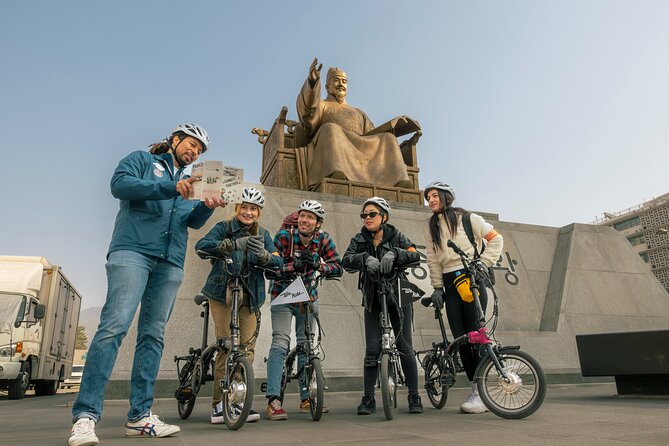
The best reason to choose this tour is simple: Seoul’s main historic sights are close enough to connect, but not always close enough to make walking between them pleasant. An electric bike lets you cover more ground while keeping your energy for the stops.
You will still ride under your own power, but the assistance matters on hills, especially around Bukchon Hanok Village and the older streets near Seochon. The route is not presented as a hard cycling workout. People with moderate physical fitness should be able to manage it, although you need to be comfortable riding in an urban setting.
The tour begins and ends at We Ride Korea Bicycle Tours & Rentals, at Le Meilleur Jongno Town, 19 Jong-ro in Jongno District. Arrive 20 to 30 minutes before departure. That extra time is used for fitting the bike, issuing safety equipment, and explaining how to ride safely. Do not treat the start time as your arrival time.
The group can include up to 15 people. That is larger than a private ride, but still small enough for the guide to give directions and answer questions. The team uses front and back riders to help keep the group together, an important detail when crossing streets and moving through busy parts of the city.
Other trips people book in Seoul:
- Best DMZ Tour Korea from Seoul (Red Suspension Bridge Optional)
★ 5.0 · 41,422 reviews - DMZ Tour: 3rd Tunnel, Option(Suspension Bridge, Boat) from Seoul
★ 5.0 · 21,373 reviews - DMZ tour south Korea from Seoul (NK experience hall, defector)
★ 5.0 · 20,599 reviews
Cheonggyecheon Stream and the palace gate
The first sightseeing stop is Cheonggyecheon Stream, once an important waterway through the city. You get a short pause here, about 10 minutes, to hear how the stream fits into Seoul’s past and to enjoy the open space.
This is a brief orientation stop, not a long walk beside the water. That is useful at the beginning because it gives you a sense of Seoul’s central districts before the route moves toward the major historic sights.
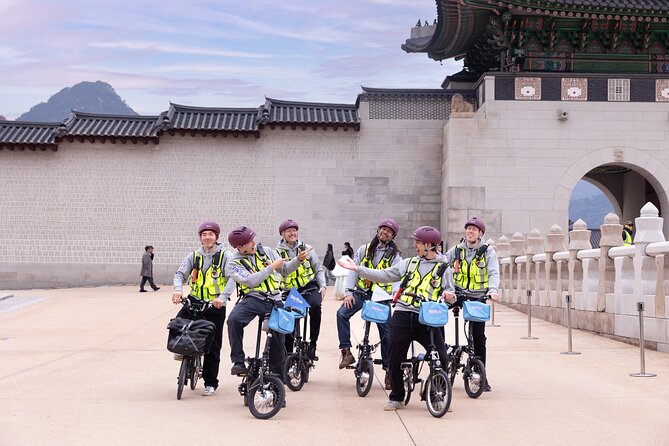
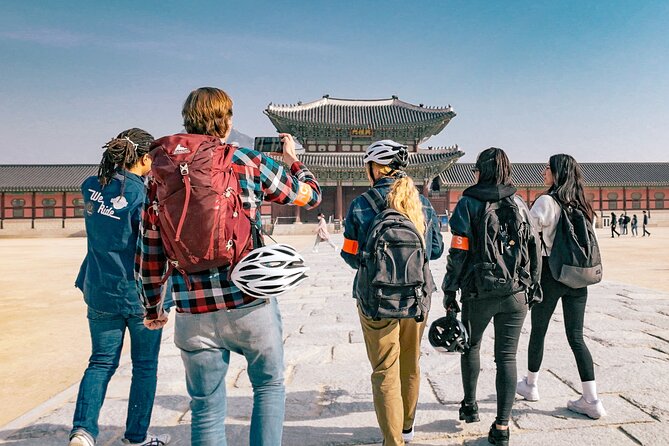
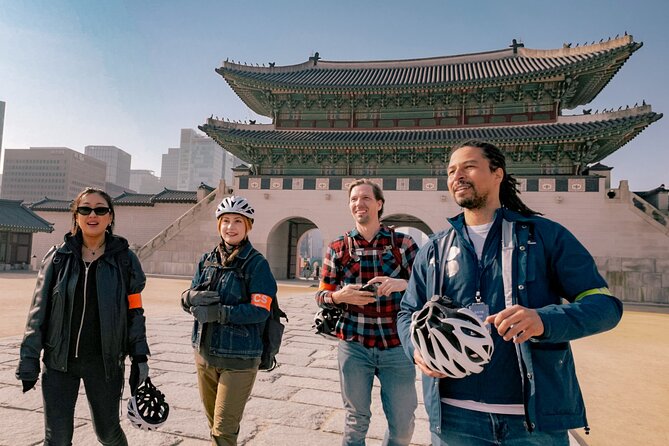
At Gyeongbokgung Palace, the focus is the grand gate and the setting around Korea’s best-known royal palace. The stop is also about 10 minutes, but timing can make it much more rewarding. Some departures have arrived in time for the changing of the guard, allowing you to watch the ceremony from start to finish.
That timing is not something you should assume is guaranteed, so ask your guide about the schedule on the day. Even without the ceremony, the palace gate gives you one of Seoul’s essential photographs and a clear introduction to the city’s royal past.
You will not have time here for a full palace visit. If Gyeongbokgung is high on your list, plan to return on another visit, when you can explore its courtyards and buildings at a slower pace.
Tongin Market adds a genuine food stop
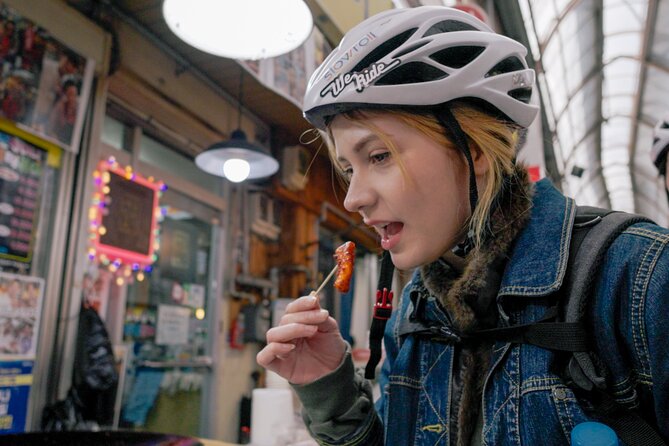
Tongin Market is one of the most useful stops because it breaks up the sightseeing with something to eat. Your guide points you toward local Korean snacks, and the included food gives you a taste of the market without requiring you to plan a separate meal.
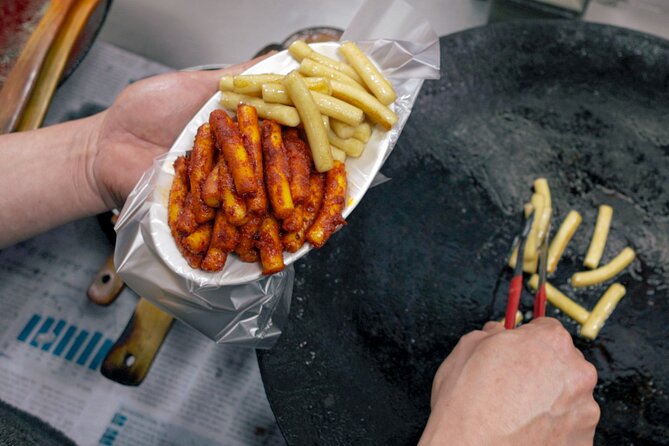
The food can include rice cakes and tteokbokki, a spicy Korean dish that is a favorite at street-food stalls. Some departures have included several kinds of rice cakes, and vegetarian or vegan snack choices have also been part of the experience. The exact food selection can change, so think of this as a tasting stop rather than lunch.
You get about 10 minutes here, which is enough for a sample and a quick look around but not enough for a long market crawl. Lunch is not included. If you usually need a substantial breakfast or lunch, eat before or after the tour.
I like this part of the route because it connects the historic sights with everyday Seoul. You are not only looking at gates and preserved buildings. You are also seeing where people shop and grab a quick bite.
Seochon, old defenses, and a possible drink break
From Tongin Market, the route continues into Seochon, an older neighborhood near the palace. This section includes a look at an ancient city defense and a surviving gate in the old city wall.
The stop lasts roughly 10 minutes, with an optional hot drink and a short walk. That wording matters. The drink is optional, and the stop is not designed as a long cafe visit. It is a chance to pause, stretch, and notice the older urban pattern around you.
Seochon is also one reason a bicycle tour can feel more personal than a large vehicle tour. A bus can carry you past a neighborhood, but a bike can take you through smaller streets and alleyways where the scale of the city changes. You get a better sense of how palace districts, market streets, and residential lanes fit together.
The route may include seasonal adjustments, so the exact path can change. That flexibility is useful in Seoul, where weather and local conditions can affect the most pleasant streets to ride.
Same base, a different kind of day out:
- Seoul: DMZ Tour with Optional Suspension Bridge
★ 4.8 · 5,277 reviews - Signature DMZ Tour: Exclusive Defector Talk & Suspension Bridge
★ 5.0 · 4,459 reviews - Thrilling Korean DMZ 3rd Tunnel Tour from Seoul + Red Bridge Rush
★ 5.0 · 3,097 reviews - DMZ Past and Present: Korean Demilitarized Zone Tour from Seoul
★ 5.0 · 2,481 reviews
The Blue House and Bukchon Hanok Village
The Blue House, the former presidential residence, is another short photo and history stop. The tour presents it as part of Seoul’s modern political story, set among the older royal and residential districts.
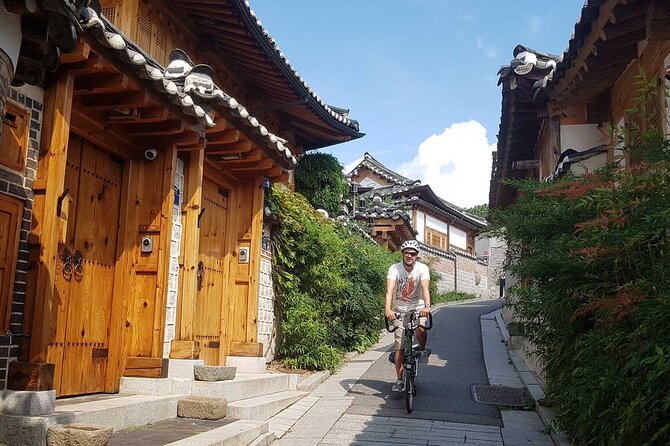
After that, you ride toward Bukchon Hanok Village. This is one of the most scenic parts of the route, with traditional Korean homes, tiled roofs, narrow lanes, and hills. You should expect a photo stop of about 15 minutes rather than a complete neighborhood visit.
The electric assistance is especially helpful here. Bukchon is hilly, and riding up its streets can be tiring on a standard bicycle. The e-bike does not remove every effort, but it makes the climb much easier and lets you pay attention to the buildings instead of staring at the pavement.
Bukchon is a living residential area, not simply an open-air museum. Keep your voice down, stay with the group, and follow your guide’s directions about where to stop. The short visit gives you a look at the neighborhood, but you will need extra time if you want to wander its lanes or visit a traditional home.
Some departures have included a stop inside a hanok home, where the guide explains traditional architecture and the underfloor heating system used in Korean houses. This is the sort of detail that gives the buildings meaning, though the exact indoor stop may vary with the day’s route.
Jogyesa Temple is a calm finish
The last major stop is Jogyesa Temple, a peaceful Buddhist site in central Seoul. After the traffic, palace grounds, market, and hills, the temple makes a fitting final pause.
You get about 15 minutes here. That is enough to look around, take photographs, and enjoy a quieter atmosphere. It is not a formal temple program or extended cultural visit, but it gives the tour a different note from the earlier royal and political sights.
You then ride back to the starting point. The activity ends where it began, which makes the logistics easier if you have plans nearby or need to collect belongings.
Guides, safety, and the feel of the ride
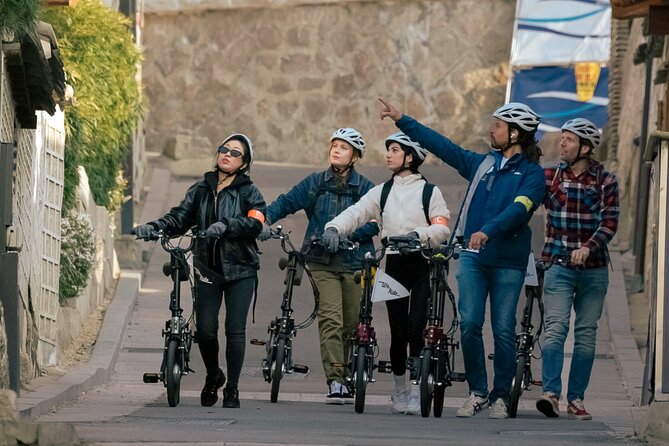
The guide team is one of the tour’s strongest features. Names that appear across the departures include TJ, Harry, Vincent, Jun, Hagar, Taejin, and Limmi. Their roles go beyond pointing out buildings. They explain history and culture, manage the road crossings, suggest places to eat afterward, and help you understand where to go next in Seoul.
Several guides are described as fluent in English, and the company includes both local and long-term Korea-based perspectives. That can help when a building, custom, or political reference needs more context than a quick sign provides.
The guides also take photographs during the ride. That is a real convenience. Instead of stopping every few minutes to ask someone else to take a picture, you can stay with the group and enjoy the route. Photos are sent after the tour, according to the experience details.
Safety equipment includes a helmet and vest, and comprehensive insurance is included. The ride is described as easy rather than strenuous, but you should still be comfortable on a bicycle and able to manage a moderate level of physical activity.
The route is planned to avoid the heaviest crowds when possible, especially with an early start. It uses bike lanes and quieter back routes where available, but this is still an urban ride. You will need to follow instructions, watch the road, and stay close to the group.
What $120 gets you
At $120 per person, this is not a cheap way to rent a bicycle for three hours. You are paying for the e-bike, safety gear, insurance, guide service, market snacks, route planning, group support, and photographs.
The value is strongest if you have limited time in Seoul or want a useful orientation on your first morning. In three hours, you see several districts that would take much longer to connect on foot. You also get a guide who can point out places to revisit later.
The price is harder to justify if you already know central Seoul well, plan to spend a full day at Gyeongbokgung and Bukchon, or prefer exploring alone at a slow pace. The brief stops mean you are paying for range and structure, not long visits inside each sight.
With a maximum of 15 people and many departures operating with smaller groups, the experience offers more personal attention than a large bus tour. It also supports a different kind of sightseeing: you pass through local streets and small businesses rather than seeing the city only through major monuments.
Practical tips before you book
Bring a reusable water bottle. Water is not included, and the tour specifically requires you to bring one or buy one from the company. A refill station may be available along the route, but you should start with water.
Wear comfortable clothes and shoes suitable for riding and short walks. Seoul’s summer heat can make even an assisted ride feel warm, while the hills around Bukchon still require some effort.
Keep your schedule flexible after the tour. The experience runs for about three hours, but the listed stop times are approximate and the route may be adjusted for seasonal highlights, traffic, or local conditions.
The tour needs good weather. If poor weather forces cancellation, you are offered another date or a full refund. You can cancel for a full refund up to 24 hours before the start time. Changes or cancellations inside that 24-hour window are not accepted.
Service animals are allowed, and the meeting point is near public transportation. Confirmation is provided when you book. The activity returns to the original meeting point.
Who should choose this Seoul e-bike tour?
I would choose this ride if you are visiting Seoul for the first time, have only a few days, or want a quick map of the historic center before exploring on your own. It suits couples, families with older children, and mixed-age groups who can ride a bicycle and manage a moderate activity level.
It is also a good fit if you want food, history, and neighborhoods in one outing. The route does not stay inside one attraction. It moves from stream to palace, market, residential quarter, presidential site, hanok village, and temple.
I would skip it if your main goal is a slow palace visit, extensive shopping, or a long meal at Tongin Market. You will see many places, but you will not have much time at each one. Anyone uncomfortable cycling in city streets should consider a walking or vehicle-based tour instead.
Should you book it?
Book this Seoul e-bike tour if you want a well-planned overview and like the idea of covering central Seoul on two wheels. The electric bikes make the hills manageable, the market stop adds local flavor, and the guides provide useful history without turning the morning into a lecture.
Before booking, accept the tradeoff: this is a fast sampler. You will photograph Gyeongbokgung, Bukchon, the Blue House, and Jogyesa Temple, but you will need to return later for a full visit. For a first morning in Seoul, especially when time is short, the $120 price can be fair value for the access, support, snacks, and range.
FAQ
How long does the Seoul e-bike tour last?
The tour lasts approximately three hours, including the riding and sightseeing stops. You must arrive 20 to 30 minutes before the scheduled start for bike fitting, safety instructions, and preparation.
Where does the tour start and finish?
It starts at We Ride Korea Bicycle Tours & Rentals at Le Meilleur Jongno Town, 19 Jong-ro, Jongno District, Seoul. The tour ends back at the same meeting point.
What is included in the price?
The price includes use of an e-bike, helmet, vest, comprehensive insurance, local Korean snacks from the traditional market, and a local guide.
Is lunch included?
No. Lunch is not included. The tour includes market snacks, but you should plan another meal if you need something more substantial.
Do I need to bring water?
Yes. You must bring a reusable water bottle or purchase one before the tour. A refill station may be available along the route.
How many people can join the tour?
The maximum group size is 15 people. Actual groups may be smaller.
What happens if the weather is bad?
The experience requires good weather. If it is canceled because of poor weather, you can choose another date or receive a full refund. Free cancellation is available up to 24 hours before the start time.
Just added in Seoul
- Suwon: Baseball Game with Fortress and Local Food Tour★ 5.0 · 3 reviews
- Seoul: War Memorial of Korea Private Guided Museum Tour★ 4.9 · 29 reviews
- Seoul: Wine & Korean BBQ, Perfect Pairing Dinner in Sinchon★ 5.0 · 6 reviews
- Seoul : Your Personal Photographer in Gyeongbokung★ 5.0 · 7 reviews
- Seoul : Efoil Experience in Han River★ 5.0 · 5 reviews
- Seoul: Vivaldi Park Winter Ski with Eobi Ice Valley Day Tour★ 4.6 · 16 reviews
- Seoul: Vivaldi Park Winter Ski with Nami Island Day Tour★ 5.0 · 4 reviews
- Seoul: SnowyLand in Vivaldi Park with Nami or Alpaca★ 4.8 · 11 reviews
Tours in Seoul, compared.
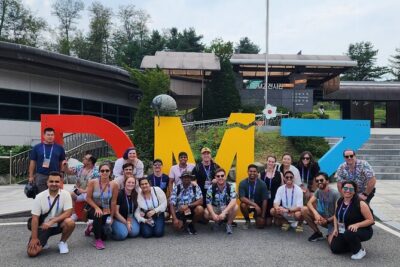
Best DMZ Tour Korea from Seoul (Red Suspension Bridge Optional)
Read our review →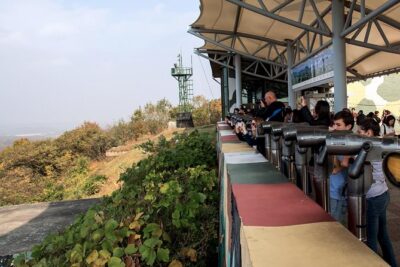
DMZ Tour: 3rd Tunnel, Option(Suspension Bridge, Boat) from Seoul
Read our review →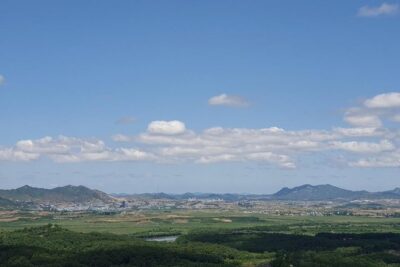
DMZ tour south Korea from Seoul (NK experience hall, defector)
Read our review →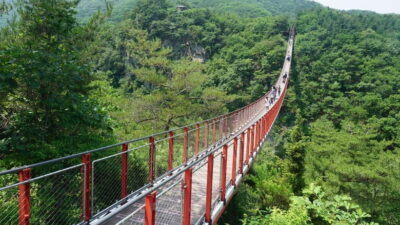
Signature DMZ Tour: Exclusive Defector Talk & Suspension Bridge
Read our review →
Thrilling Korean DMZ 3rd Tunnel Tour from Seoul + Red Bridge Rush
Read our review →
DMZ Past and Present: Korean Demilitarized Zone Tour from Seoul
Read our review →
Ultimate Korea DMZ Tour from Seoul (Gondola & Suspension Bridge)
Read our review →Browse the lists this tour appears in