Reviewed · TOURS IN SEOUL
Seoul Self-Guided Audio Tour
Seoul’s past and future sit remarkably close together. This self-guided audio tour connects royal palaces, Buddhist temples, war memorials, design landmarks, art museums, and shopping districts in one broad city story. You can listen at your own pace while moving between stops, or play the recordings before you go to decide what deserves your time.
I like the low $9 price and the freedom to start anywhere. I also like the mix of well-known sights and useful contrasts, such as placing quiet Bongeunsa Temple near Starfield Library and Seoul Sky. The catch is that this is an audio guide with a map, not a guide who walks beside you or gives turn-by-turn directions.
Key points to know before booking
- Sixteen major sights cover royal Seoul, modern architecture, museums, temples, parks, and the Han River.
- Two private links provide the audio playlist and an interactive Google My Maps route.
- No fixed meeting point means you can begin and finish wherever it suits your day.
- Entry fees are extra at Gyeongbokgung Palace, Changdeokgung Palace, N Seoul Tower, Leeum Art Museum, and Seoul Sky.
- The tour is designed for about three hours, but you can spread it over multiple days.
- Access links last up to six days, so save them before setting out and do not assume instant delivery after booking.
What this Seoul audio tour really gives you
Think of this as a portable introduction to Seoul, not a conventional guided walk. You receive one link to audio on SoundCloud and another to a Google My Maps page. Each map point connects to the relevant recording, so you can select one sight at a time or listen through the full playlist before leaving your hotel.
That setup is useful in a city as spread out as Seoul. The 16 stops are not packed into one compact pedestrian route. You will need public transport or other transportation between several areas, and transport is not included. The map helps you plan, but it does not function as an automatic street-by-street navigation system.
The stated duration is about three hours, with roughly 10 minutes assigned to each stop. In practice, that is enough for a quick orientation and a short audio explanation, but not enough to properly visit every palace, museum, park, and observation deck. I would treat the three hours as listening time and planning time, then add extra hours for admissions, photographs, meals, and transport.
Other trips people book in Seoul:
- Best DMZ Tour Korea from Seoul (Red Suspension Bridge Optional)
★ 5.0 · 41,422 reviews - DMZ Tour: 3rd Tunnel, Option(Suspension Bridge, Boat) from Seoul
★ 5.0 · 21,373 reviews - DMZ tour south Korea from Seoul (NK experience hall, defector)
★ 5.0 · 20,599 reviews
Royal Seoul begins at Gyeongbokgung Palace
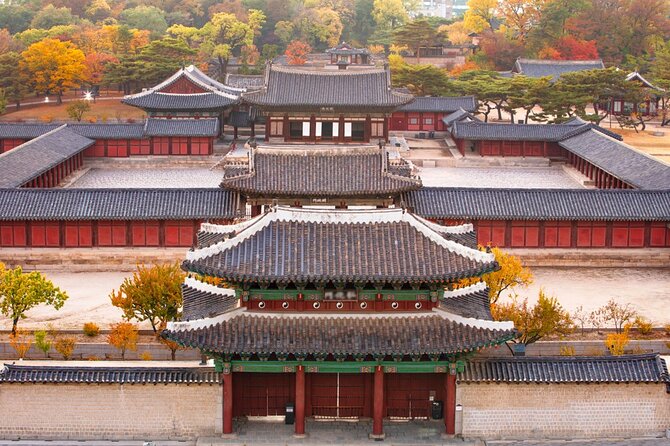
Gyeongbokgung is the natural starting point for understanding Seoul’s royal past. The audio focuses on Joseon-era architecture, the palace’s role as the seat of power, and the difficult events that shaped its story.
The 10-minute recording gives you a useful frame before you walk through the grounds. You will need to pay the admission fee separately, and you should allow more than 10 minutes if you want to look at the courtyards and buildings rather than simply hear the explanation from outside.
This is one of the stops where timing matters most. A past booking problem came from arriving after the palace had closed, while the audio access was misunderstood as a timed entry. It is not. The product does not reserve admission and does not keep a gate open. Check the palace’s opening hours yourself, then use the audio before or during your visit.
Bukchon Hanok Village shows tradition in daily life
Bukchon offers a change of scale. Instead of grand palace buildings, you find traditional hanok houses arranged along neighborhood lanes. The recording explains hanok design and how the area became a cultural district with cafés, galleries, and shops.
Admission is free, but this is still a residential area rather than a standard museum. Keep your voice low and remember that people live here. The audio can help you notice the design principles behind the tiled roofs, wooden details, and compact layout, but it will not guide you around every lane.
A short visit works well here if you are combining Bukchon with Gyeongbokgung and Changdeokgung. You may want to pause the audio while walking, since the streets can be more useful to explore with your eyes than through constant narration.
Changdeokgung adds nature to the royal story
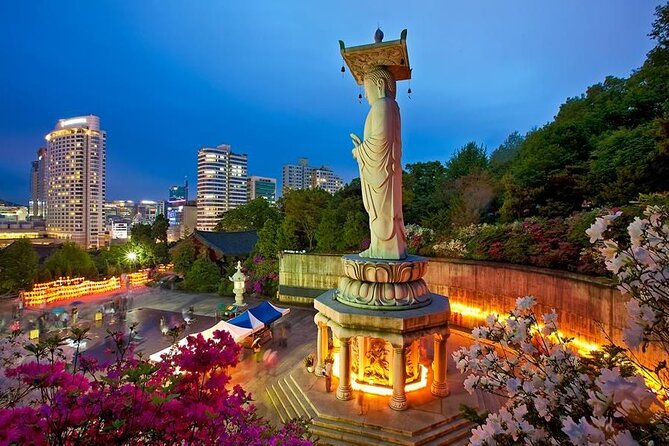
Changdeokgung is another paid palace stop, known for its relationship with the surrounding terrain and its famous Secret Garden. The audio places the palace within royal history and explains why its design differs from a purely formal court complex.
The suggested 10 minutes is enough to introduce the site, but it is not enough for a full palace visit. You will pay admission separately, and any extra garden arrangements or operating rules should be checked before you go.
I like having both major palaces in the same audio package. Gyeongbokgung helps you understand royal authority and ceremonial design, while Changdeokgung gives you a different sense of how buildings and nature were brought together.
Same base, a different kind of day out:
- Seoul: DMZ Tour with Optional Suspension Bridge
★ 4.8 · 5,277 reviews - Signature DMZ Tour: Exclusive Defector Talk & Suspension Bridge
★ 5.0 · 4,459 reviews - Thrilling Korean DMZ 3rd Tunnel Tour from Seoul + Red Bridge Rush
★ 5.0 · 3,097 reviews - DMZ Past and Present: Korean Demilitarized Zone Tour from Seoul
★ 5.0 · 2,481 reviews
Jogyesa Temple offers a quiet pause
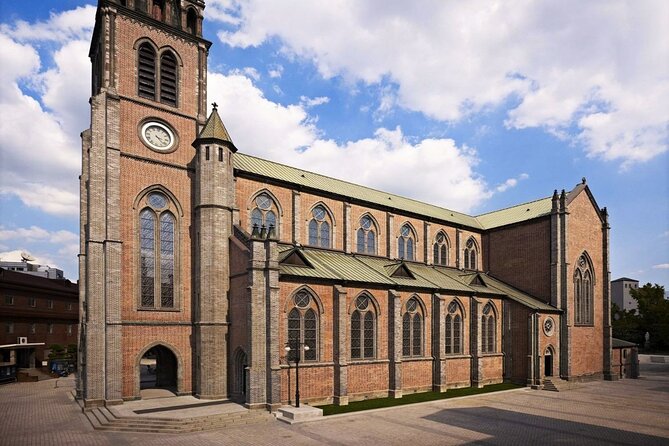
Jogyesa is the main Buddhist stop in central Seoul. The recording covers Korean Buddhist practice, temple symbolism, and the site’s place in modern Korean history.
There is no admission fee, making it one of the easiest stops to add without planning around ticket sales. It also provides a welcome change after palace grounds and city streets. The 10-minute commentary should help you understand what you are seeing without turning the visit into a formal religious tour.
You can use this stop as a short pause between the historic center and the newer parts of Seoul. The audio explains the site, but respectful behavior remains your responsibility. Keep the volume low and follow any posted instructions.
Cheonggyecheon explains Seoul’s urban change
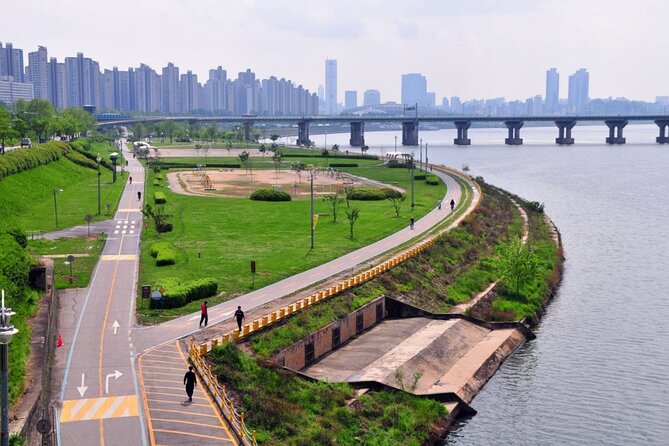
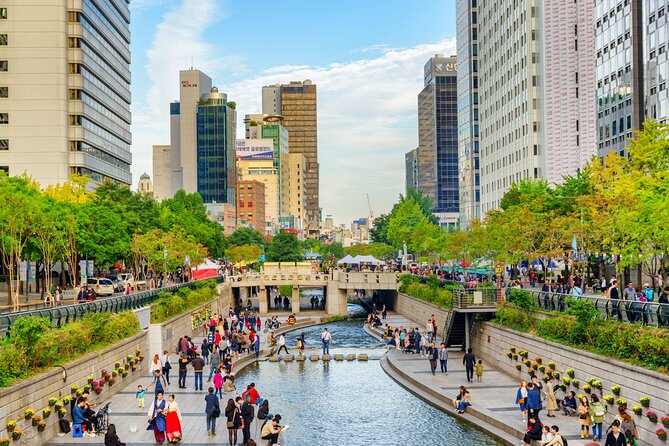
Cheonggyecheon Stream is less about old buildings and more about how Seoul reshaped its public spaces. The recording follows the stream’s transformation from a covered roadway into a pedestrian-friendly waterway and considers its effect on the city’s ecology.
This is a free stop, and you can spend as little or as much time as your schedule allows. The audio is especially useful here because the physical scene alone does not tell you what used to occupy the corridor.
It also gives the tour a strong modern theme. Seoul is not presented only as a city of palaces and temples. You hear how major planning decisions changed the way people experience the center of the capital.
Dongdaemun Design Plaza looks toward Seoul’s future
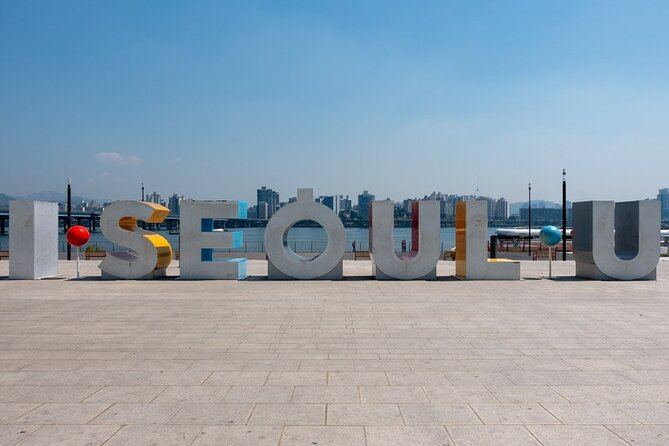
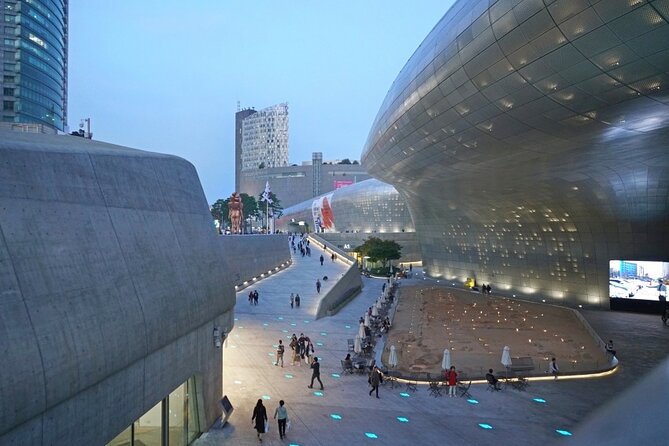
Dongdaemun Design Plaza, designed by Zaha Hadid, brings architecture, fashion, and design into the tour. Its curved, futuristic form is a sharp contrast to the wooden houses of Bukchon and the tiled roofs of the palaces.
The exterior is free to visit, while special exhibitions or interior events may have separate arrangements. The audio concentrates on the building’s design and its role as a creative center, so it works well for a short architectural stop.
This is also a good place to remember that the tour is not a single walking loop. Dongdaemun sits in a different part of the city from the western palace area, and you will need to plan the transfer yourself.
Myeong-dong Cathedral links faith and democracy
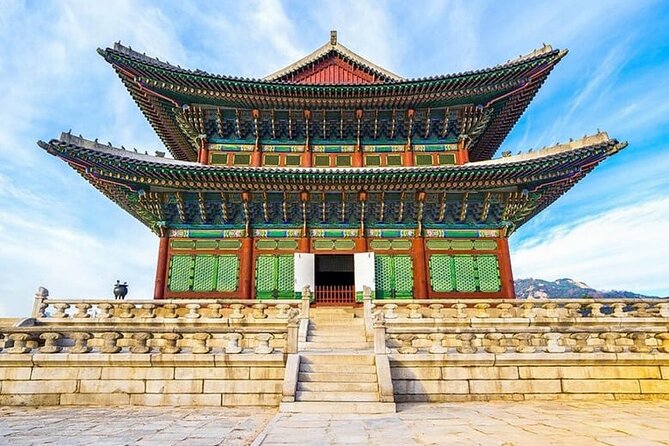
Myeong-dong Cathedral adds a Catholic perspective to Seoul’s story. Its Gothic Revival design makes it visually distinctive, while the audio explains its place in Korea’s democracy movement.
The visit is free, and the 10-minute recording gives the building more meaning than a quick photograph would. You hear how a religious site can also become connected to major political and social events.
Because it is located in a busy commercial area, you can combine the stop with shopping or a meal. The audio link lets you choose the cathedral without committing to a full guided group schedule.
N Seoul Tower and Namsan Park work best together
N Seoul Tower is one of the tour’s paid viewpoints. The recording covers the tower’s communications role, the panoramic view, and the familiar love-lock tradition. Admission to the tower is not included.
Below and around it, Namsan Park supplies a different experience. The free park stop discusses the mountain’s importance in feng shui and its role as a green refuge in the middle of Seoul. The two recordings make sense as a pair: one explains the city from above, and the other explains the hill and park beneath you.
Give yourself more than 10 minutes if you want to enjoy the outlook. The audio introduces the place, but weather and visibility will affect what you can see. I would avoid treating the tower as a guaranteed highlight on a hazy day, though the park remains worthwhile on its own.
Leeum Art Museum brings old and new art together
Leeum Art Museum is a paid attraction with traditional Korean art and contemporary works. Its buildings, designed by well-known architects, are part of the appeal, so the stop speaks to both art and architecture.
The audio can help you understand the museum’s broad purpose before entering. It cannot replace time inside the galleries, and 10 minutes is only an introduction. If art is a priority for you, treat this as one of the places to extend beyond the basic schedule.
Its location also adds variety. After palaces and temples, you get a modern museum setting where Korean artistic traditions are placed beside newer work.
The War Memorial makes modern Korea personal
The War Memorial of Korea is free and deals with the Korean War and the continuing effects of the peninsula’s division. This is one of the more serious stops, and it gives necessary context to a country often presented only through food, shopping, music, and technology.
The 10-minute audio segment is an introduction rather than a full museum visit. You will need considerably more time if you want to read displays and examine the exhibits. Even a short stop can help you place present-day Korea within its recent past.
I value this part of the route because it keeps the tour from becoming a collection of pretty buildings. Seoul’s modern identity includes conflict, division, recovery, and ongoing political tension.
The National Museum of Korea covers 5,000 years
The National Museum of Korea provides the broadest historical sweep, from prehistoric periods to modern Korea. Admission is free, which makes it a strong value stop, though you should allow much more than 10 minutes if you want to see the collection properly.
The audio points you toward artifacts that shaped Korean identity and gives you a structure for a very large museum. That is important because a huge collection can be difficult to approach without a plan.
I would use the recording before entering, then choose a few sections rather than trying to see everything. This is another stop where the tour’s three-hour estimate does not match the time needed for a satisfying visit.
Hangang Park shows the river’s role
Hangang Park offers open space along the Han River and explains how the river influenced Seoul’s growth and culture. It is free, and the stop works well when you need a break from museums and historic sites.
The audio gives the river a civic and cultural context rather than treating it as scenery alone. You can listen while walking, sitting, or planning the next part of your day.
This stop also reinforces the tour’s wide coverage. You are not only moving between monuments. You are seeing the natural feature around which much of Seoul developed.
Bongeunsa Temple meets Starfield Library
Bongeunsa is a 1,200-year-old Buddhist temple in one of Seoul’s most modern districts. Its free audio stop focuses on the temple’s long role in Korean Buddhism and the calm it offers among high-rise buildings.
Nearby, Starfield Library presents a very different kind of public space. Its tall shelves and open design have made it one of Seoul’s most photographed interiors, while the audio explains how literature and shopping are combined in a distinctly modern setting.
I like these two stops together because the contrast is clear without needing much explanation. One represents long religious continuity, the other Seoul’s commercial and cultural present. Both are free to visit.
Seoul Sky closes with a high view
Seoul Sky occupies the upper levels of Korea’s tallest building and is the final paid viewpoint in the route. The audio explains the engineering behind the skyscraper and links its height to Seoul’s rapid urban growth.
Admission is separate, and the short recording should be treated as preparation for the visit rather than the whole experience. You will want extra time for the view, photographs, and the building itself.
This makes a fitting final stop because the tour moves from Joseon palaces to a super-tall tower. You finish with a clear sense of how dramatically Seoul has changed.
Is $9 good value?
At $9 per person, the tour is inexpensive if you want broad orientation rather than personal guiding. You receive audio for 16 attractions, a map, and the freedom to choose your own route. A live private guide would cost far more, but this product also provides far less interaction.
The value drops if you expect admission tickets, transport, or automatic navigation. Several major stops charge separately, and reaching all 16 locations will take planning. The tour also requires a working phone, internet access for the links, and enough battery for audio and maps.
The access links are valid for up to six days, so the best use may be to split the route. Listen to the palace and temple sections on one day, the museums and war memorial on another, and the towers and modern districts on a third.
How to avoid the common problems
Save both links as soon as they arrive. Access is sent by email on your selected travel date before your chosen start time, but one booking experienced a delay and received the link after leaving the palace. If you need to enter a site at a particular hour, do not book at the last minute and assume instant access.
Also, do not confuse the audio with a timed tour. There is no fixed 5 p.m. start or reserved entry. Check opening hours and ticket requirements for every paid attraction yourself.
The map shows locations and connects each point to its recording, but it does not guide you step by step through Seoul’s streets. Plan your subway or bus transfers separately.
Who should book this experience?
I would choose this for an independent visitor who likes context but does not want to join a group. It suits people who enjoy choosing their own pace, skipping a stop, or returning to a favorite site later.
It is also useful for a first visit when you want to see how Seoul’s royal, religious, artistic, military, commercial, and technological sides fit together. Families and small private groups can listen together, and most people can participate.
I would not choose it if you want a live expert answering questions, door-to-door transport, or a tightly organized three-hour route. The broad selection is its strength, but the same breadth means you must make the practical decisions yourself.
Should you book the Seoul Self-Guided Audio Tour?
Book it if $9 for a flexible introduction sounds useful and you are comfortable using a map, arranging transport, and paying separate entrance fees. The palace-to-skyscraper range is impressive, and the audio gives free sights such as Jogyesa, Cheonggyecheon, Namsan Park, and Hangang Park more context.
Skip it if your priority is detailed museum touring or hands-on guidance. For the best experience, download or save the links early, check opening hours, choose only a few paid attractions, and spread the route across several days instead of rushing through all 16 stops.
FAQ
How long does the Seoul Self-Guided Audio Tour take?
The estimated duration is about three hours, with approximately 10 minutes assigned to each of the 16 stops. You can spend longer at any attraction or split the experience across multiple days.
Is there a fixed starting point?
No. You can begin and end anywhere in Seoul because this is a self-guided activity. The suggested order is optional.
Is transportation included?
No. Transportation, pickup, and drop-off are not included. You use the interactive map to plan how to move between attractions.
Are admission tickets included?
No. Entry fees are separate wherever required. Paid attractions include Gyeongbokgung Palace, Changdeokgung Palace, N Seoul Tower, Leeum Art Museum, and Seoul Sky.
How do I access the audio guides?
You receive two private links by email on your selected travel date before your starting time. One opens the SoundCloud audio content, and the other opens the Google My Maps route.
How long are the access links valid?
The private audio and map links remain valid for up to six days.
Is this a private guided tour?
It is a private self-guided activity for your group only. There is no live guide accompanying you, and the audio does not provide automatic street-by-street navigation.
Just added in Seoul
- Your Personal Seoul Photographer!★ 4.1 · 15 reviews
- You’re Invited to Our Home in Seoul: The Only Cooking Class!★ 5.0 · 8 reviews
- From Seoul: Yongpyong Ski Day Tour with Transportation★ 4.9 · 40 reviews
- Seoul: Korean & English Language Exchange Global Party★ 5.0 · 28 reviews
- From Seoul: Hwacheon Ice Fishing and Lighting Festival Tour★ 4.5 · 4 reviews
- Unique Native Experience : Han River Picnic, Board game, BBQ★ 5.0 · 3 reviews
- Seoul: Gangneung BTS K-Pop & K-Drama Filming Locations Tour★ 4.6 · 14 reviews
- K-Pop Making Class with a Producer!★ 5.0 · 3 reviews
Tours in Seoul, compared.
Best DMZ Tour Korea from Seoul (Red Suspension Bridge Optional)
Read our review →
DMZ Tour: 3rd Tunnel, Option(Suspension Bridge, Boat) from Seoul
Read our review →
DMZ tour south Korea from Seoul (NK experience hall, defector)
Read our review →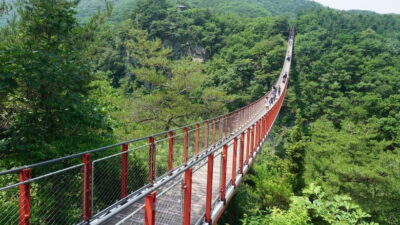
Signature DMZ Tour: Exclusive Defector Talk & Suspension Bridge
Read our review →
Thrilling Korean DMZ 3rd Tunnel Tour from Seoul + Red Bridge Rush
Read our review →
DMZ Past and Present: Korean Demilitarized Zone Tour from Seoul
Read our review →