
Reviewed · TOURS IN SEOUL
Seoul Private Food Tours with a Local Foodie: 100% Personalized
Seoul’s food culture is best understood one bite at a time, and this private walk gives you a local host to explain what is on the plate. You may visit Gwangjang Market, Namdaemun, Myeongdong, or a neighborhood food district, then sample 6 to 8 local dishes at two or three eateries. The route can change, so this is less a fixed tour than a food outing built around your interests.
I like the private format, since you can ask questions, slow down for children or older family members, and flag food allergies in advance. I also like the chance to pair street food with a proper Korean barbecue meal and one included drink. The main caution is the host match: some hosts, such as Jay, GJ, Andrew, Sujeong, Oky, Yujin, and Ben, have been praised for food knowledge and care, but the experience can feel less worthwhile if your host is not strongly focused on food.
Key points to know before booking
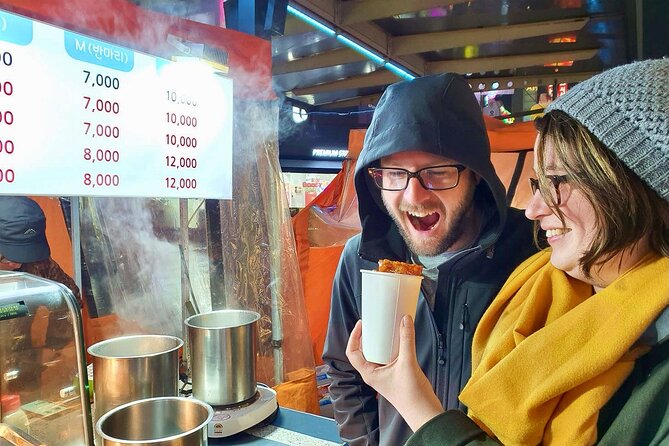
- 6 to 8 tastings: Food comes from two or three eateries, with one wine, beer, or soft drink included.
- A changeable Seoul route: Possible stops include Gwangjang Market, Namdaemun Market, Myeongdong, Sindang-dong, Sillim-dong, or Noryangjin Fish Market.
- Private attention: Only your own group takes part, making it easier to discuss allergies, energy levels, and food preferences.
- Korean barbecue included: The tour combines small street-food samples with a traditional sit-down meal, although the exact food plan depends on your host.
- Three hours on foot: Public transportation may be used, but you should expect a walking-heavy outing.
- Strongest value comes from the guide: A good host can add city history, restaurant judgment, photos, and useful local context.
A private food walk, not a fixed restaurant crawl
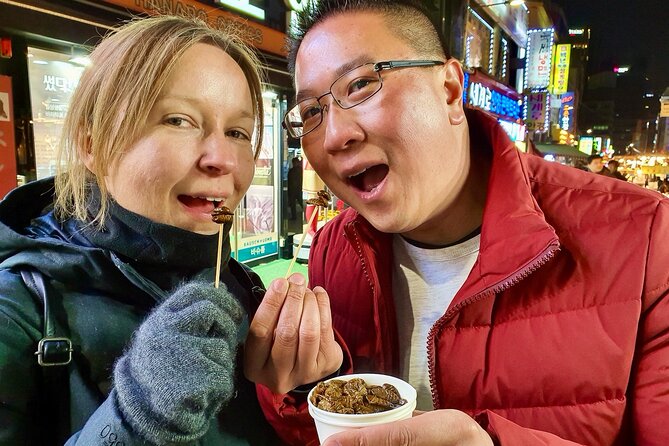
The first thing to understand is the format. You are not buying a set route with guaranteed stops at every market named in the description. You are booking a private, personalized outing with a local host, and the food districts listed are possible choices rather than promises.
That flexibility can work very well. If you want classic market food, your host might steer you toward Gwangjang or Namdaemun. If you prefer a particular style of dish, the route may focus on a food district known for it. You can also ask for a gentler pace, which matters when you are eating several times during a three-hour walk.
It can also create uncertainty. The tour description refers to street-food towns, alternative markets, and a Korean barbecue restaurant, while the listed inclusions focus on 6 to 8 tastings at two or three eateries. Before you start, clarify whether your plan includes a full barbecue meal or mainly smaller portions. The overview presents barbecue as part of the experience, but the exact arrangement may depend on the route and host.
A few more things to do in Seoul worth a look
- Seoul Street Food Market Tour
★ 5.0 · 1,226 reviews - Seoul: Night Market Food Tour with Local Guide
★ 4.9 · 943 reviews - Downtown Seoul Guided Food & Market Tour with 8+ Local Tastings
★ 5.0 · 580 reviews
Gwangjang and Namdaemun: two useful starting points
Gwangjang Market is one of the clearest choices for a first taste of Seoul’s food culture. The tour is designed to introduce you to unfamiliar ingredients and dishes, with your host explaining what you are eating and how it fits into everyday Korean food customs.
This is where the private format earns its keep. You can point to something that looks unfamiliar and ask how it is prepared, when people eat it, or what texture to expect. If you are cautious with spice, seafood, or fermented food, your host can help you choose more comfortably.
Namdaemun Market offers a different feel, with many quick bites and food stalls woven into one of Seoul’s oldest commercial areas. It is a practical place to sample small portions rather than commit to a large meal. That said, eating from stalls can be a disappointment if you expect a formal tasting menu. One past complaint came from someone who felt that picking up bits of food from stalls did not count as a full food tour. You should book this with the understanding that market tasting is central to the experience.
Sindang-dong’s Tteokbokki Town
The itinerary may include Sindang-dong, known for its tteokbokki restaurants. The plan here is to sample 6 to 8 street foods recommended by your host, with tteokbokki, the chewy rice-cake dish, likely to be a central theme if this district is selected.
A food district like this is useful because it shows how one dish can develop its own local identity. You are not simply checking off a famous snack. You are seeing a neighborhood built around a signature food and comparing the way dishes are served across several stops.
Six to eight tastings sounds generous for three hours, especially when a sit-down barbecue meal may also be included. Portions may be small, but you should still arrive hungry and avoid scheduling another major meal immediately afterward. If you have food allergies or strong dislikes, tell your host before the walk begins. Andrew was specifically praised for handling food allergies and accommodating children dealing with jet lag, which shows how much advance communication can improve the outing.
Myeongdong’s street-food alley
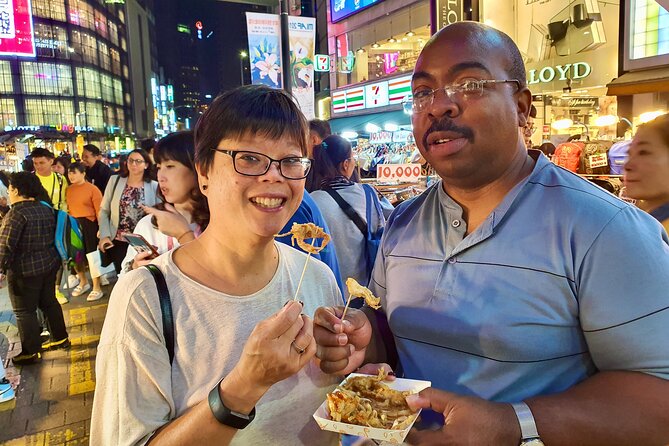
Myeongdong is the most obvious stop for quick street-food sampling. Here, the useful part is not only the food itself but the story behind it. Your host may explain where certain snacks came from and how dishes were developed and refined in Seoul.
This stop suits first-time visitors who want an easy introduction to Korean street food without committing to a long restaurant meal. It can also be a good choice if your group has mixed tastes, since several people can choose different small bites.
The tradeoff is that Myeongdong is a major shopping area, so this may feel less local than a neighborhood food town. If your priority is an offbeat food experience, say so clearly when arranging the tour. The experience is personalized, but it is not automatically an off-the-beaten-path tour. One poor match involved a host who admitted not being a serious food enthusiast, leaving the guest disappointed by the lack of unusual or authentic food insight.
Same base, a different kind of day out:
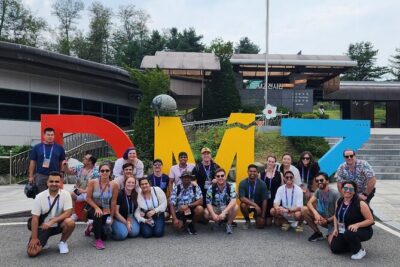
- Best DMZ Tour Korea from Seoul (Red Suspension Bridge Optional)
★ 5.0 · 41,422 reviews - DMZ Tour: 3rd Tunnel, Option(Suspension Bridge, Boat) from Seoul
★ 5.0 · 21,373 reviews - DMZ tour south Korea from Seoul (NK experience hall, defector)
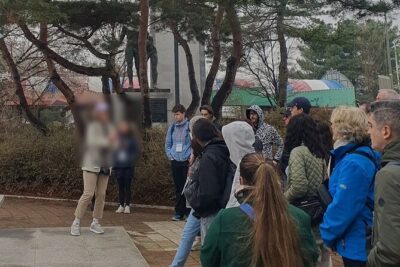
★ 5.0 · 20,599 reviews - Seoul: DMZ Tour with Optional Suspension Bridge
★ 4.8 · 5,277 reviews
Sundae Town and Noryangjin Fish Market
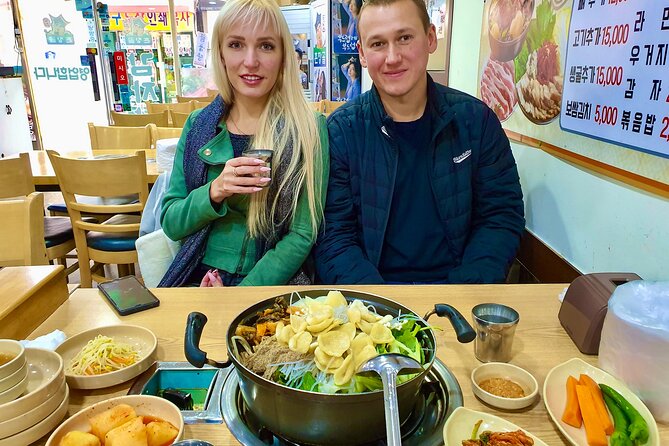
Sillim-dong’s Sundae Town is another possible stop. Its focus is sundae, a Korean blood sausage, along with the district’s signature preparations. This is a stronger choice for adventurous eaters who want to try a dish they may not encounter on a standard city tour.
Noryangjin Fish Market offers a seafood-centered alternative. The information provided does not guarantee exactly what you will eat there, so you should treat it as a possible route rather than a fixed stop. If seafood is important to you, ask your host to include it. If seafood is a problem, make that clear before the itinerary is set.
These food districts show why the private setup can be better than a large group tour. You can decide how far outside your comfort zone to go, and your host can explain ingredients before you order. Still, the quality of the experience depends heavily on the host’s ability to guide those choices.
The Korean barbecue meal
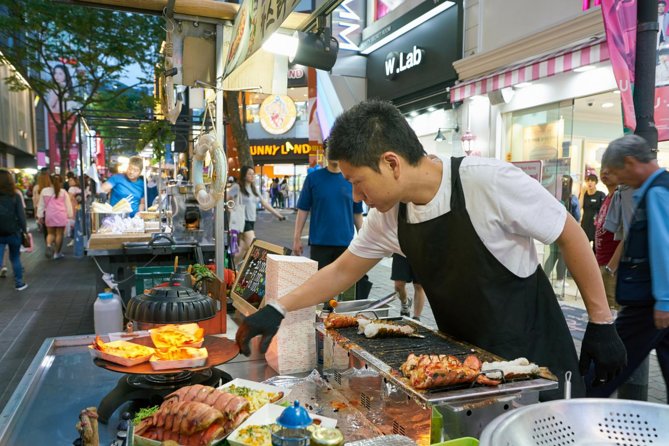
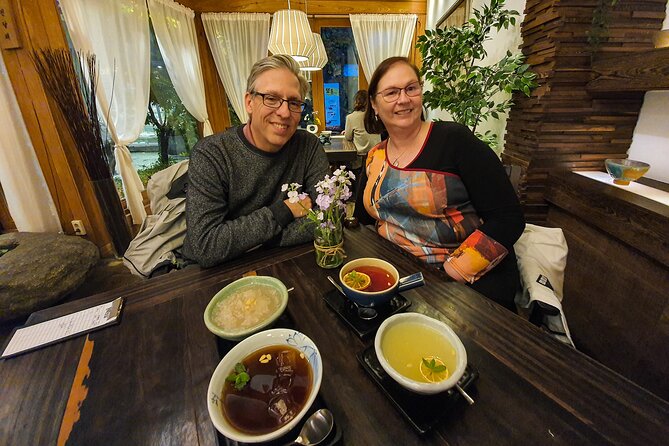
The barbecue portion gives the walk some structure. Instead of eating only one small snack after another, you should have a chance to sit down for a more traditional Korean meal. Several strong experiences specifically praised the restaurant choice and the combination of food with city sightseeing.
Sujeong, for example, was praised for combining good eateries with major city sights, while Oky was singled out for local flavors, markets, and Korean barbecue. That combination is one of the tour’s best features. Food becomes a way to understand the city rather than a string of disconnected samples.
Do not assume the barbecue restaurant is a luxury dining experience. The price of $225.63 per person is high for a three-hour food outing if you measure it only by the amount of food. You are paying for a private host, route planning, personal attention, and interpretation, with some food included. The value improves for a small family or couple that wants guidance without joining strangers. It is weaker for a solo diner or budget-conscious eater who mainly wants to buy inexpensive market snacks.
Because additional food and drinks are not included, ask how much of the included budget is intended for the barbecue meal and how much covers market samples. One drink is included, such as wine, beer, or a soft drink. Other purchases are extra.
What the best hosts add
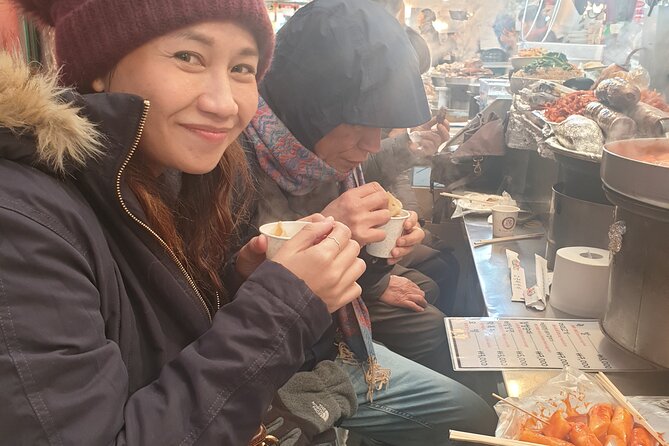
The strongest part of this experience is not a specific market. It is the person leading you through Seoul.
Jay was praised for explaining both the food and the city, checking that the walking pace was comfortable, taking photographs, and discussing the construction of Seoul. That is a good reminder that a food guide can add much more than restaurant names. The right host helps you connect dishes with neighborhoods, customs, and the way the city has changed.
GJ was praised for finding good food and making the outing fun. Andrew handled children and food allergies with care. Sujeong added city sights and photographs. Oky and Yujin were associated with local restaurants and less obvious food spots. Ben offered a small-group format in which the route could be chosen from several possible sites.
You should not assume you will get one of these named hosts. Their experiences show what is possible, not what every booking guarantees. Since the rating is 4.4 from 14 reviews, the overall record is good but not spotless. The low ratings point to a real issue: a private tour is only as strong as the person assigned to you.
Three hours on foot in central Seoul
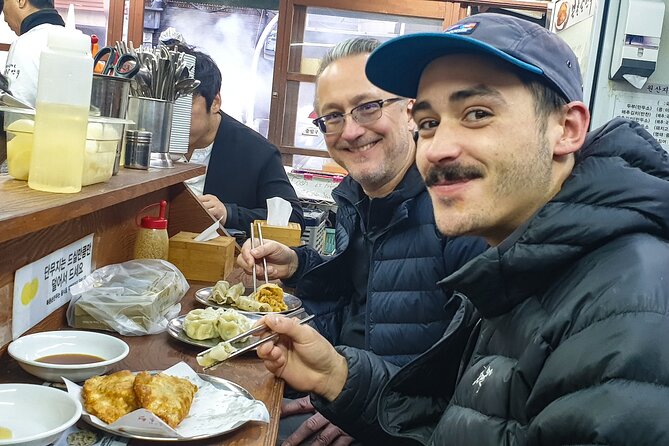
The listed meeting point is at 109 Jae-dong in Jongno District, but the exact meeting location is flexible. You can request a hotel or accommodation meet-up if you are staying centrally, or agree on a convenient nearby location with your host.
Plan for walking. Public transportation may be used, but it is primarily a walking experience, and the route can pass through markets, alleys, and food neighborhoods. Wear comfortable shoes and avoid arriving after a long sightseeing day unless you know your group can manage three hours of walking and eating.
The tour ends back at the meeting point. That makes it easy to continue exploring if you finish near a central district, but it also means you should not expect a one-way transfer to your next attraction.
Most people can take part, and service animals are allowed. Since the experience is private, you can discuss mobility needs and food limits ahead of time, but the supplied information does not promise a fully step-free route.
Is $225.63 per person fair?
At $225.63 per person, this is a premium experience. The price makes the most sense when you want personal guidance, a flexible route, and someone to handle the first decisions in a food culture that may be unfamiliar.
It is especially useful at the start of a Seoul visit. A good host can introduce dishes you might otherwise skip, show you how markets work, and point out areas worth returning to on your own. If Jay’s style is what you receive, you may also get photographs and a wider introduction to Seoul’s development.
The cost is harder to justify if you mainly want cheap street food, a guaranteed list of restaurants, or a large quantity of food. You will pay extra for privacy and planning, not simply for six to eight bites. Group discounts may help, but the supplied details do not state the amount, so check the price for your party before booking.
Who should book this Seoul food tour?
I would choose this for a couple, family, or small private group that wants a gentle introduction to Korean food and values conversation. It also suits first-time visitors who do not want to guess which market stall or restaurant to try.
It is a good fit for people who want flexibility around allergies, children, food preferences, or walking speed. The strongest host experiences show that the tour can cover food, local neighborhoods, history, photographs, and city orientation in one outing.
I would hesitate if you are a serious food expert expecting a tightly researched culinary tour with a guaranteed specialist. The host may be excellent, but the host match is not fully predictable. I would also hesitate if you dislike street food, want a fixed menu, or consider $225.63 too much for a meal and a walk.
Free cancellation is available up to 24 hours before the local start time. Changes or cancellations inside that window are not accepted for a refund, so keep that cutoff in mind.
Final verdict: a flexible introduction with one important condition
Book this experience if you want a private food guide who can adjust the route and help you make sense of Seoul’s markets, snacks, and barbecue. Ask for a host with strong food experience, share allergies and dislikes early, and confirm whether your plan includes a full barbecue meal.
Skip it if you want a guaranteed offbeat food specialist or a fixed restaurant schedule. The best version is personal, friendly, and useful, with the guide adding context that turns random snacks into a picture of Seoul life. The weaker version is simply a paid walk between stalls. At this price, the guide must do more than point at food.
FAQ
How long does the Seoul food tour last?
The experience lasts approximately three hours and is primarily a walking tour.
How many food tastings are included?
You receive 6 to 8 tastings of local food from two or three eateries, along with one included drink.
Is a Korean barbecue meal included?
The experience description includes a traditional meal at a Korean barbecue restaurant. Since the route is private and personalized, confirm the exact meal plan with your local host.
Which markets and neighborhoods might the tour visit?
Possible areas include Gwangjang Market, Namdaemun Market, Myeongdong Street Food Alley, Sindang-dong’s Tteokbokki Town, Sillim-dong’s Sundae Town, and Noryangjin Fish Market.
Is the tour private?
Yes. Only your own group participates in the activity.
Where does the tour start and finish?
The listed starting point is 109 Jae-dong in Seoul’s Jongno District. The activity ends back at the meeting point, although a central hotel or accommodation meet-up can be requested.
Is transportation included?
Transportation is not included. The experience is mainly on foot, although public transportation may be used during the route.
Can I cancel for a full refund?
Yes, if you cancel at least 24 hours before the local start time. Cancellations or changes made less than 24 hours before the start are not accepted for a refund.
Just added in Seoul
- Your Personal Seoul Photographer!★ 4.1 · 15 reviews
- You’re Invited to Our Home in Seoul: The Only Cooking Class!★ 5.0 · 8 reviews
- From Seoul: Yongpyong Ski Day Tour with Transportation★ 4.9 · 40 reviews
- Seoul: Korean & English Language Exchange Global Party★ 5.0 · 28 reviews
- From Seoul: Hwacheon Ice Fishing and Lighting Festival Tour★ 4.5 · 4 reviews
- Unique Native Experience : Han River Picnic, Board game, BBQ★ 5.0 · 3 reviews
- Seoul: Gangneung BTS K-Pop & K-Drama Filming Locations Tour★ 4.6 · 14 reviews
- K-Pop Making Class with a Producer!★ 5.0 · 3 reviews
Tours in Seoul, compared.
Best DMZ Tour Korea from Seoul (Red Suspension Bridge Optional)
Read our review →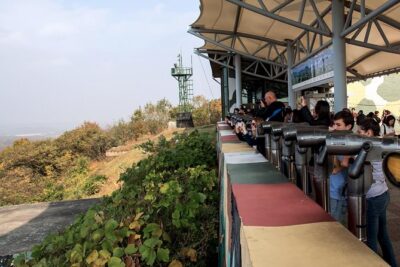
DMZ Tour: 3rd Tunnel, Option(Suspension Bridge, Boat) from Seoul
Read our review →
DMZ tour south Korea from Seoul (NK experience hall, defector)
Read our review →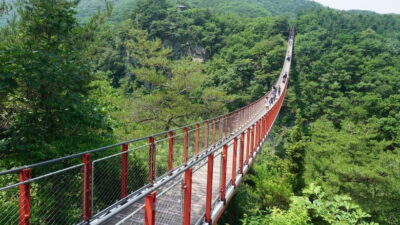
Signature DMZ Tour: Exclusive Defector Talk & Suspension Bridge
Read our review →
Thrilling Korean DMZ 3rd Tunnel Tour from Seoul + Red Bridge Rush
Read our review →
DMZ Past and Present: Korean Demilitarized Zone Tour from Seoul
Read our review →
Ultimate Korea DMZ Tour from Seoul (Gondola & Suspension Bridge)
Read our review →Browse the lists this tour appears in