

Reviewed · HANBOK RENTAL EXPERIENCES
Small Group Seoul Highlight Tour opt. Hanbok & Tea Ceremony
Seoul can feel huge on your first morning. This 8 to 9 hour small-group tour gives you a fast but meaningful orientation, linking royal palaces, old neighborhoods, food markets, a Buddhist temple, and the city’s best high view. You finish with a clearer sense of how Seoul fits together.
I like the small maximum of 15 people, though many departures are smaller, and I like the way the guides adjust the day when the group is tiny. Guides including Jiwon, Jake, Joey, Jinny, Jones, Jun, Hera, Wookie, and Yujin are praised for clear English, good humor, history lessons, and taking photos.
The tradeoff is pace. You cover a lot of ground, and lunch, hanbok rental, and some personal spending are extra. Pickup is also limited to central tourist areas, with drop-off available in Dongdaemun, Myeongdong, or City Hall rather than every Seoul hotel.
Key points to know before booking
- Gyeongbokgung gets two hours: You have enough time for palace courtyards, gates, history, and photos rather than a quick drive-by.
- The changing of the guard is time-sensitive: It is scheduled for 10 a.m. and 2 p.m., and bad weather can cancel it.
- Hanbok is an optional add-on: You choose and pay for the rental at the shop near the palace, with prices varying by outfit.
- The tea ceremony adds a quiet cultural pause: It is held at Insadong Sunyoodam, even though the activity details also reference Osulloc Tea House Bukchon.
- Namsan gives Seoul a useful finale: The cable car and N Seoul Tower lookout let you identify many of the places you visited earlier.
- Lunch is flexible, not included: Your guide suggests places in Insadong, but you pay directly at the restaurant or food stall.
Why this one-day Seoul route works
This tour is built for the first day of a Seoul stay. Instead of spending your morning working out subway lines, palace entrances, and the city’s broad layout, you ride in an air-conditioned vehicle and let a guide connect the stops.
The route has a good mix. Bukchon gives you traditional lanes. Gyeongbokgung supplies royal Korea and formal architecture. Gwangjang Market brings in food and daily life. Namsan gives you the city from above. Insadong and the tea ceremony slow things down with crafts, galleries, and Korean tea culture.
The group limit is 15, but the useful detail is that several people ended up in groups of fewer than 10, and some departures had only two passengers. A smaller group makes it easier to hear explanations and ask questions. It can also give the guide room to change the order or spend more time on a place that interests you.
That flexibility is not guaranteed, but it is a real strength of a small-group format. Jiwon, Hera, and other guides are described as adjusting the pace for older family members, children, solo visitors, and couples. That matters on a full day with many stops.
Other dress-up and photo days in Seoul:
- Seoul: Hanbok Rental with Gyeongbokgung Palace Entry
★ 4.6 · 611 reviews - Seoul: Gyeongbok Palace with Gigibebe Hanbok Rental
★ 4.5 · 289 reviews - Hanbok Photoshoot and History Tour at Gyeongbokgung Palace
★ 5.0 · 276 reviews
Bukchon Hanok Village starts with Seoul’s old lanes
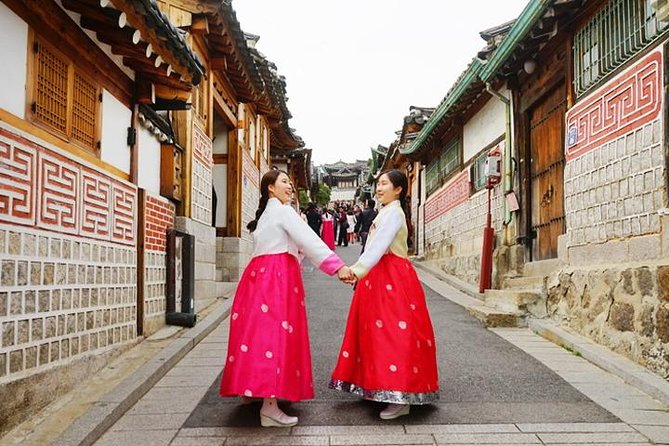
Bukchon Hanok Village is your first look at traditional Korean homes in the middle of modern Seoul. The narrow lanes climb through an area where local people still live, so this is not simply an open-air museum.
You get about 30 minutes here. That is enough for a short walk, photographs, and a look at the wooden details and tiled roofs. From higher parts of the village, you can also see Seoul spreading out around the traditional houses.
The short visit is practical but limited. Bukchon has plenty of lanes, and you will not explore every corner in half an hour. Keep your voice down and remember that these are residential streets. The best use of the stop is to let your guide point out the layout, offer photo advice, and help you understand why old homes remain in this central district.
Jogyesa Temple offers a quieter 30 minutes
At Jogyesa Temple, the focus shifts from residential architecture to Korean Buddhism. It is the central Seoul headquarters of the Jogye order, and its location among city streets makes the temple feel especially accessible.
You have 30 minutes, with admission included. That gives you time to look at the main temple area, observe the atmosphere, and hear how Buddhism fits into Korean culture. A guide helps turn a short visit into more than a photo stop.
This is not a long temple study. If you want extended time for quiet observation or detailed religious history, you may find the stop brief. Still, it provides useful contrast before the grand scale of the palace.
Gwanghwamun Square frames the royal district
Gwanghwamun Square is a quick 10-minute stop, but it helps you understand the area around Gyeongbokgung Palace. It follows the broad route associated with the Joseon dynasty and offers a clear view toward the palace grounds.
Do not expect a long walk here. The value is orientation. Your guide can show you how the square, palace gate, and central Seoul connect, which makes the later palace visit easier to place in context.
Same base, a different kind of day out:
- Best DMZ Tour Korea from Seoul (Red Suspension Bridge Optional)
★ 5.0 · 41,422 reviews - DMZ Tour: 3rd Tunnel, Option(Suspension Bridge, Boat) from Seoul
★ 5.0 · 21,373 reviews - DMZ tour south Korea from Seoul (NK experience hall, defector)
★ 5.0 · 20,599 reviews - Seoul: DMZ Tour with Optional Suspension Bridge
★ 4.8 · 5,277 reviews
Hanbok changes the palace visit
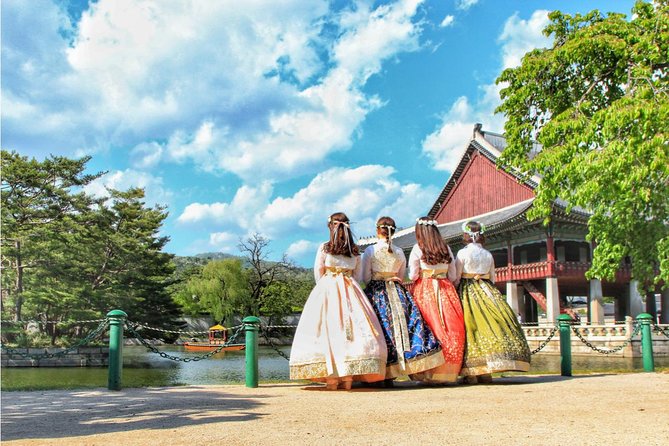
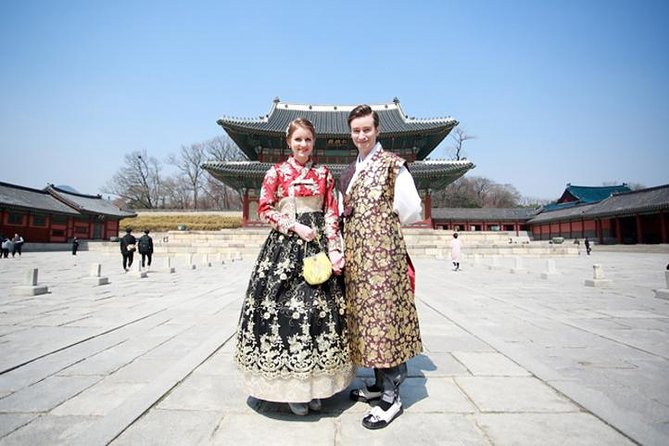
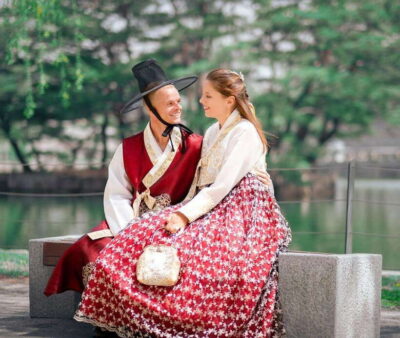
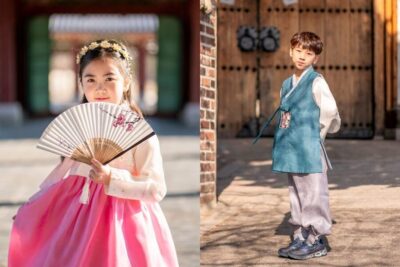
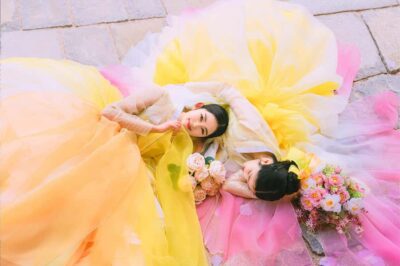
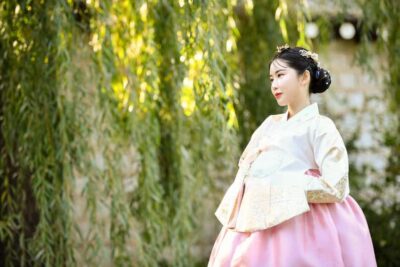
Before Gyeongbokgung, you can stop at 3355 Hanbok Rental and choose traditional clothing. This is not included in the $89 price, and you pay at the shop. The selection has different styles and prices, so allow for personal choice rather than treating the rental as a fixed-cost add-on.
Wearing hanbok can make the palace visit feel more connected to the setting, especially in photographs. One family described feeling as if they had stepped into the Joseon period. Guides such as Jiwon and others may also help with photos at the palace and nearby lanes.
You do not need hanbok to enter or enjoy Gyeongbokgung. One useful practical point came up from a visitor who did not rent one: the group may wait while others change, so ask your guide about entering the palace earlier if you are skipping the costume and want to catch a ceremony.
Gyeongbokgung deserves the longest stop
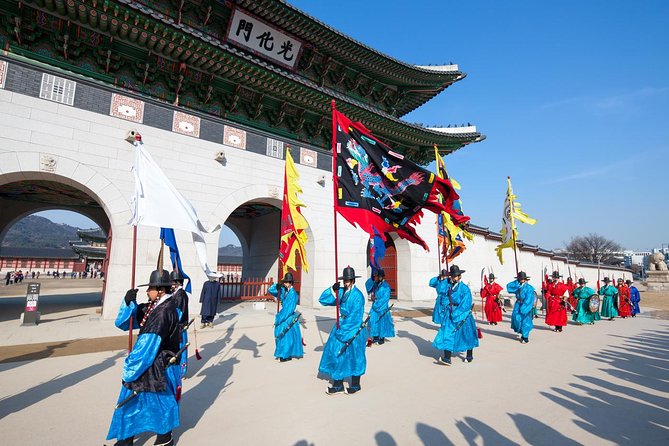
Gyeongbokgung Palace receives about two hours, making it the anchor of the day. It was the royal palace of the Joseon dynasty, Korea’s last dynasty, and its gates, courtyards, halls, and open spaces give you the clearest introduction to the country’s royal past.
Two hours is a sensible amount of time. You can walk at an easy pace, stop for photographs, and listen to the guide explain the palace and its role in Korean history. The guides are repeatedly praised for turning dates and dynasties into stories instead of delivering a dry list of facts.
The palace is also the place where guide quality matters most. Jake is described as explaining history and small cultural details clearly. Jun is praised for tailoring the commentary to the group. Jiwon is noted for taking photos and answering questions. Your exact guide will vary, but the tour company uses several guides with a strong focus on personal attention.
The changing of the guard ceremony is scheduled for 10 a.m. and 2 p.m. The schedule matters because your 8 a.m. start may place you near the earlier ceremony, depending on pickup and traffic. Weather can cancel the event, so treat it as a possibility rather than a promise.
Gwangjang Market brings food into the day

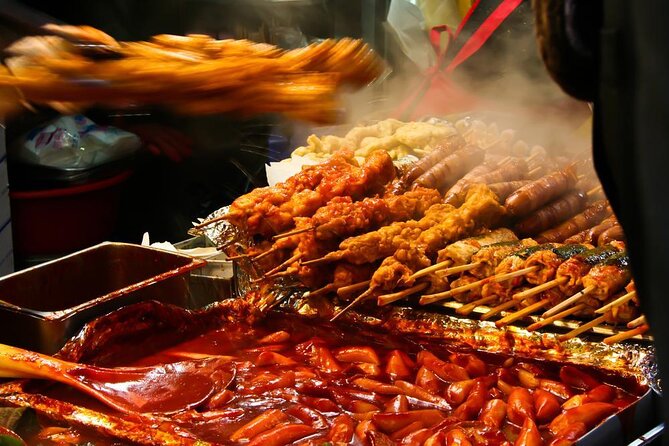
Gwangjang Market is where the tour moves from palaces to eating. You have about 40 minutes to see food stalls offering traditional Korean dishes, street food, and newer options. The market is also associated with the Netflix series Street Food, which may make some stalls feel familiar.
Food is not included. Your guide suggests what to try, but you pay at the stall. This arrangement works well if your group has different appetites, though 40 minutes is not a long lunch. If you want a full sit-down meal, keep your expectations in check or ask your guide how the timing will work that day.
I like this stop because it keeps the tour from becoming a parade of monuments. You see a working food market and get a direct look at how people eat and socialize. Guides have also arranged local meals when guests asked, including ginseng chicken soup, but special requests depend on time and the guide’s judgment.
Namsan Cable Car and N Seoul Tower finish with a view
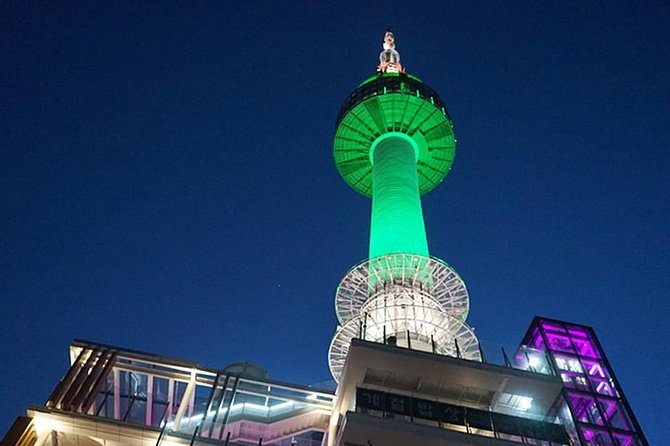
The Namsan section gives the day a change of scale. You ride the cable car to Namsan Park, where N Seoul Tower sits above the city. The cable car ride and access listed for the plan are included, while the tower grounds themselves are free to enter.
You have about 30 minutes for the cable car and around one hour at N Seoul Tower. From the mountain, you can look across old central Seoul toward Gangnam and pick out areas visited earlier. The love-lock displays add a familiar photo stop, but the main reason to come is the wide view.
This is one of the tour’s best structural choices. After hours at street level, you see how large Seoul really is. It also helps you plan the rest of your holiday because you can identify districts and decide where you want to return on your own.
Tea ceremony adds calm to a packed day
The optional Korean tea ceremony is one of the most distinctive parts of the experience. A tea master explains how the ceremony proceeds and introduces the customs behind Korean tea preparation. The session lasts about 30 minutes and is included as an optional part of the package.
The location details need care. The itinerary names Osulloc Tea House Bukchon, but also says the actual tea ceremony takes place at Insadong Sunyoodam and may not appear correctly on Google Maps. Confirm the meeting point with your guide rather than navigating there independently.
This is not a large performance. It is described as an intimate, peaceful session with a warm host and carefully prepared tea. If you have spent the morning moving between major sights, the slower pace can be a welcome change.
I would add it if you want cultural context beyond palace photographs. If your priority is shopping or extra time at the market, you may prefer to skip it. The choice depends on the departure’s timing and your own interests.
Insadong gives you time for lunch and browsing
Insadong is the final major district, with art galleries, craft shops, souvenir stores, traditional restaurants, and cafes. You have about an hour here, including lunch time.
Lunch is not included, so this is your chance to choose what suits you. Your guide can suggest places along the street, and you pay directly. Insadong is also a practical place to buy small gifts, Korean crafts, and art rather than generic airport souvenirs.
The hour goes quickly. If you want to shop seriously, you may need to return later. As a final stop, though, Insadong works well because it leaves you near shops and restaurants rather than ending at an isolated attraction.
What the $89 price really covers
At $89 per person, the value comes from combining transportation, a professional guide, palace admission, Jogyesa Temple admission, the Namsan Cable Car, bottled water, and hotel pickup. You are also paying for a full day of route planning in a city where the sights are spread across several districts.
The price does not cover lunch, hanbok rental, or hotel drop-off. Hanbok costs vary by the outfit you choose, and lunch depends on what you order. Drop-off is limited to Dongdaemun, Myeongdong, or City Hall, so you may need to use the metro or arrange your own ride afterward.
For a first Seoul visit, I see solid value if you want the major sights in one day. It is less attractive if you prefer lingering in one neighborhood, shopping at length, or setting your own meal schedule.
Who will get the most from this tour
I would choose this tour if you have limited time, are visiting Seoul for the first time, or want a clear city introduction before exploring independently. It also suits solo visitors who want company and families who would rather not manage transport between ten stops.
The guides are praised for helping older adults keep a comfortable pace and for engaging children with stories and photos. The day is still active, with walking through palace grounds, village lanes, markets, and city areas, so comfortable shoes matter.
This is also a good choice if you want practical suggestions for the rest of your stay. Several guides, including Jun, Jiwon, Jinny, and Jones, are described as offering tailored recommendations based on guests’ interests.
Pickup begins around 8 a.m., but coverage is not universal. Confirm that your hotel is in the central pickup area. The experience is near public transport, and one person used the metro after discovering their hotel was outside the pickup zone.
Should you book the Seoul Highlight Tour?
Book it if you want one well-filled day that combines royal Seoul, traditional neighborhoods, Korean food culture, a mountain view, and optional hands-on customs. The guide can make a major difference, and the strongest reports point to patient, funny, attentive people who answer questions and help with photos.
Think twice if you dislike fixed schedules or want long meals and unhurried museum time. The route is ambitious, and weather can cancel the guard ceremony. Still, for $89, the included transport and admissions make this a practical starting point, especially when you add the tea ceremony for a quieter look at Korean culture.
FAQ
How long does the Seoul Highlight Tour last?
The tour lasts approximately 8 to 9 hours and begins at about 8 a.m.
What attractions are included?
The route includes Bukchon Hanok Village, Jogyesa Temple, Gwanghwamun Square, Gyeongbokgung Palace, Gwangjang Market, Namsan Cable Car, N Seoul Tower, the tea ceremony option, and Insadong.
Is hotel pickup included?
Yes, hotel pickup is included, but pickup does not cover every location in Seoul. Central tourist areas are the main pickup zone, so confirm your hotel before booking.
Is hotel drop-off included?
Drop-off is available in Dongdaemun, Myeongdong, or City Hall. Drop-off at every hotel is not included.
Is lunch included?
No. The guide suggests places in Insadong, but you pay for your own lunch.
Is hanbok rental included?
No. Hanbok rental is optional, and you pay at the rental shop. Prices vary according to the outfit you choose.
Is the tea ceremony included?
The tea ceremony is offered as an optional included part of the experience. The details identify Insadong Sunyoodam as the actual location, so confirm the meeting point with your guide.
Can I see the changing of the guard?
The ceremony takes place at Gyeongbokgung at 10 a.m. and 2 p.m. Bad weather can lead to cancellation.
What is the cancellation policy?
You can cancel up to 24 hours before the start time for a full refund. Changes or cancellations made less than 24 hours before the start time are not accepted for a refund.
Just added in Seoul
- Suwon: Baseball Game with Fortress and Local Food Tour★ 5.0 · 3 reviews
- Seoul: War Memorial of Korea Private Guided Museum Tour★ 4.9 · 29 reviews
- Seoul: Wine & Korean BBQ, Perfect Pairing Dinner in Sinchon★ 5.0 · 6 reviews
- Seoul : Your Personal Photographer in Gyeongbokung★ 5.0 · 7 reviews
- Seoul : Efoil Experience in Han River★ 5.0 · 5 reviews
- Seoul: Vivaldi Park Winter Ski with Eobi Ice Valley Day Tour★ 4.6 · 16 reviews
- Seoul: Vivaldi Park Winter Ski with Nami Island Day Tour★ 5.0 · 4 reviews
- Seoul: SnowyLand in Vivaldi Park with Nami or Alpaca★ 4.8 · 11 reviews
Hanbok Rental Experiences, compared.
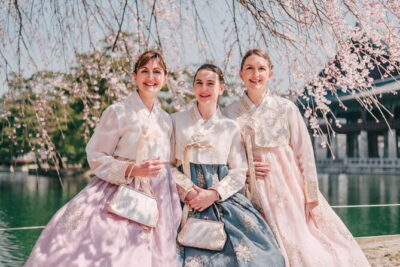
Hanbok Photoshoot and History Tour at Gyeongbokgung Palace
Read our review →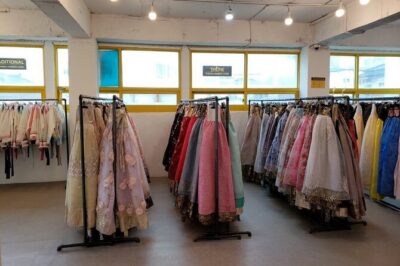
Gyeongbokgung Palace Hanbok Rental Experience in Seoul
Read our review →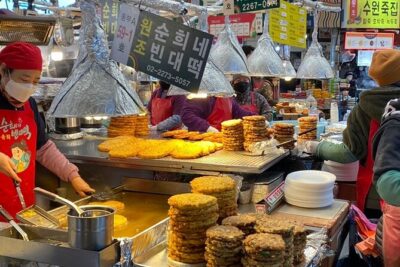
Seoul City Full Day Tour – Changdeok Palace (wearing Hanbok)
Read our review →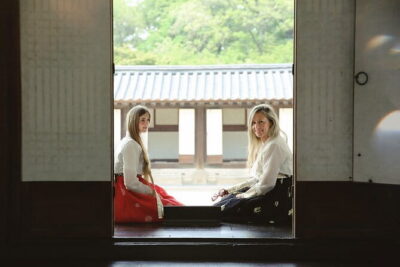
Browse the lists this tour appears in