
Reviewed · PALACE & GYEONGBOKGUNG TOURS
Seoul Cultural Tour – Kimchi Making, Gyeongbok palace with Hanbok
Trying on a royal-style hanbok, walking through Gyeongbokgung Palace, and making your own kimchi gives this Seoul tour more substance than a quick palace photo stop. You get Korean clothing, food, manners, games, tea, and history in one well-packed outing.
I like the hands-on kimchi class, where you learn how this staple fits into Korean cooking, and I like the small group size, capped at 10 people. Guides including Jay, Alice, Grace, Mi So, and Lady K have been praised for friendly help and patient photo-taking. The main consideration is the schedule: the details describe both a 3.5-hour cultural experience and a roughly 6.5-hour tour, so confirm the exact timing and return stops before booking.
Key points to know before booking
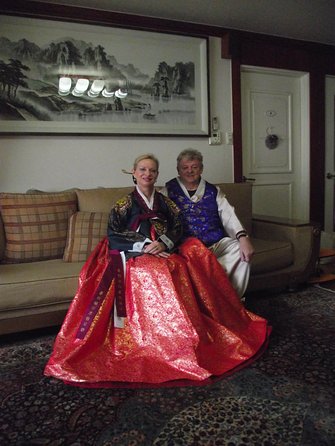
- Hanbok is the star photo opportunity: Choose from many outfits, including wedding and royal styles, then visit the palace in traditional dress.
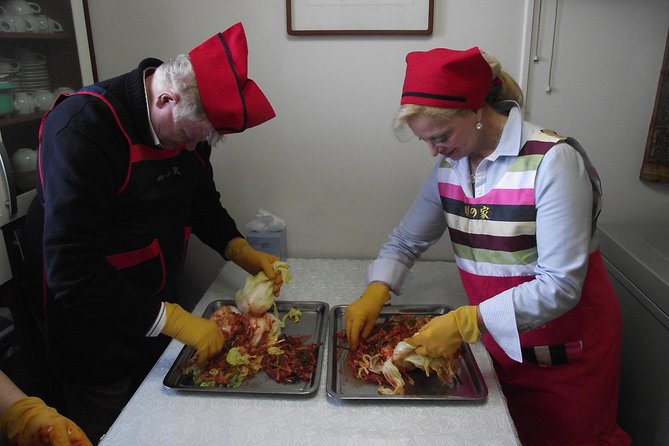
- Kimchi is hands-on: A 30-minute class covers preparation, tradition, and the many ways kimchi appears in Korean meals.
- The tour adds Korean customs: Tea ceremony etiquette, polite manners, and the folk game Yut-Nori give the day more context.
- Gyeongbokgung and Insadong anchor the route: You get a major royal palace plus one of Seoul’s best-known traditional shopping and culture districts.
- Hotel pickup keeps the morning simple: Transport is included in Seoul, with the return route potentially stopping at a ginseng center or amethyst factory.
- The small group matters: A maximum of 10 people makes it easier to ask questions, get help with clothing, and take photos.
Why this Seoul cultural tour works
Many Seoul sightseeing tours show you a palace, point out a few buildings, and move on. This one asks you to take part. You dress in hanbok, practice formal customs, play a traditional game, and work with food you will see on Korean tables throughout your trip.
That mix is the tour’s strongest feature. You are not only looking at Korean culture from the outside. You get a short, friendly introduction to how people dress for ceremonies, how politeness is expressed, and why kimchi is far more than a side dish.
The experience costs $99 per person. That is not the cheapest way to see Gyeongbokgung Palace, especially if your main goal is simply to walk around the grounds. But the price includes hotel pickup in Seoul, a professional English or Chinese-speaking guide, the kimchi-making lecture fee, taxes, and the organized cultural activities.
I see the value most clearly for first-time visitors who want several classic Seoul experiences handled in one morning or day. You are paying for convenience and instruction, not just admission to a palace. If you already have palace plans and prefer a long, independent visit, the package may feel less efficient.
More Cooking Classes in Seoul
- Local Home Korean Cooking Class & Market Adventure in Seoul
★ 5.0 · 1,024 reviews - Master Korean traditional cooking with a Kimchi chef
★ 5.0 · 385 reviews - Seoul: Korean Cooking Class at a Local Home and Market Tour
★ 5.0 · 348 reviews
Starting with hanbok and Korean manners
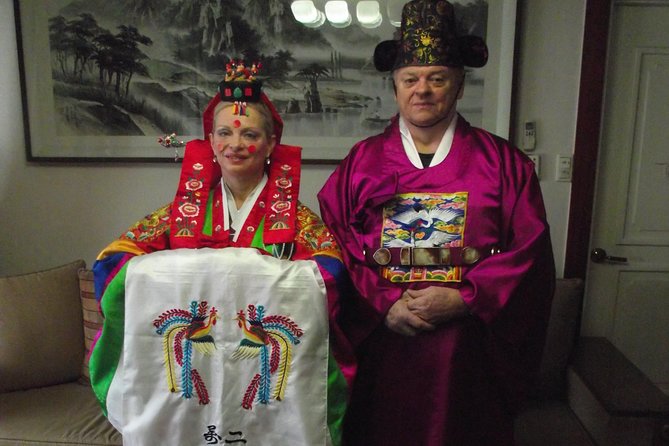
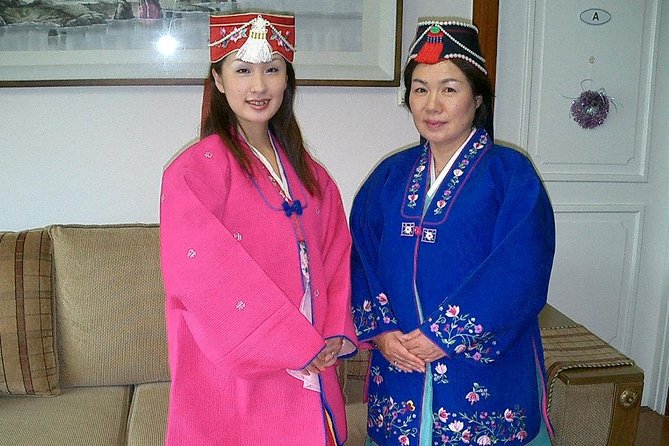
The hanbok fitting is likely to be the most memorable part for many people. You select traditional clothing and dress for photographs, with options that can include wedding and royal outfits. The available feedback specifically praises the wide choice of clothing and the help provided with photos.
This is a good place to slow down. The hanbok is not simply a costume for a picture. The clothing introduces you to the visual language of Korean ceremonies and court life. The tour also includes practice in formal social etiquette and polite manners, so the clothing connects to behavior rather than being treated as a prop.
You will want to allow time for choosing an outfit and getting comfortable in it. Traditional clothing can make walking and sitting feel different from normal sightseeing clothes, so wear something easy underneath. That advice is practical rather than glamorous, but it can make the palace portion much more pleasant.
The guides seem to play an important role here. Grace is described as highly interactive, while Jay is praised for mixing warmth with professionalism. Alice is noted for shaping the tour around what the group wanted to do and helping create many photographs. Those details matter because hanbok is much more fun when someone helps with the outfit and takes the picture instead of leaving you to manage a phone at arm’s length.
Gyeongbokgung Palace in traditional dress
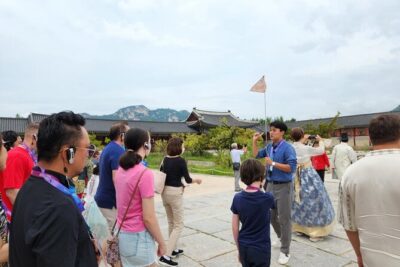
Gyeongbokgung Palace is the tour’s major historical setting. Visiting in hanbok gives the stop a stronger sense of occasion than arriving in ordinary street clothes. You can take photographs in the palace grounds while your guide explains the setting and connects it to Korean royal customs.
The attraction here is visual and cultural. You get grand palace architecture, traditional clothing, and a guide who can explain what you are seeing. For a first visit to Seoul, this is a useful pairing because the palace gives the hanbok experience a real setting.
Keep your expectations sensible. This is not presented as a long specialist palace tour, and the day has several other activities to fit in. If Gyeongbokgung is your top priority, you may want a separate visit so you can explore at your own speed. On this tour, the palace is one part of a larger cultural sampler.
The group limit of 10 should help. A small group makes it easier to hear explanations and get assistance with photos. It also reduces the chance that the palace visit feels like a procession. The exact amount of time at Gyeongbokgung is not stated, so ask your guide at the start how long you will have there.
Tea ceremony, etiquette, and Yut-Nori
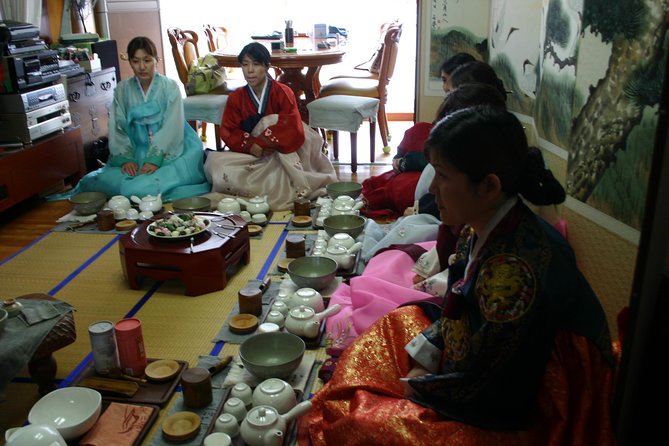
The tea ceremony adds a quieter change of pace after the clothing and palace visit. You receive Korean tea and learn about formal manners and social etiquette. This part is valuable because it shows a more restrained side of Korean tradition, balancing the playful energy of dressing up and taking pictures.
The folk game Yut-Nori brings the group together in a less formal way. It is associated with the Joseon era and gives you a simple way to engage with an old Korean pastime. You do not need special skill to enjoy this kind of activity, and it works well for families and mixed-age groups.
One particularly useful feature is the guide’s role in keeping everyone involved. The experience has worked for groups that included older Japanese women as well as other international visitors, with the host making sure the activities remained engaging for all. That suggests a flexible pace, though the tour still packs in a lot.
Families should find this section approachable. One account specifically describes the outing as family-friendly, with children enjoying the hanbok and activities. Still, the schedule is active, and anyone who needs a slow, open-ended morning may prefer a less structured plan.
Other dress-up and photo days in Seoul:
- Seoul: Hanbok Rental with Gyeongbokgung Palace Entry
★ 4.6 · 611 reviews - Small Group Seoul Highlight Tour opt. Hanbok & Tea Ceremony
★ 5.0 · 318 reviews - Seoul: Gyeongbok Palace with Gigibebe Hanbok Rental
★ 4.5 · 289 reviews - Hanbok Photoshoot and History Tour at Gyeongbokgung Palace
★ 5.0 · 276 reviews
The 30-minute kimchi-making class
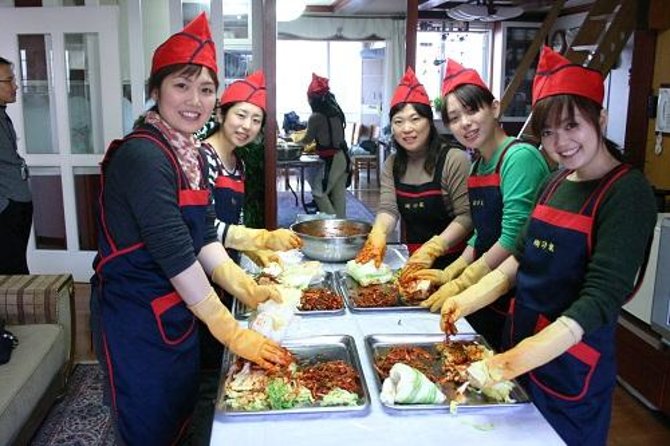
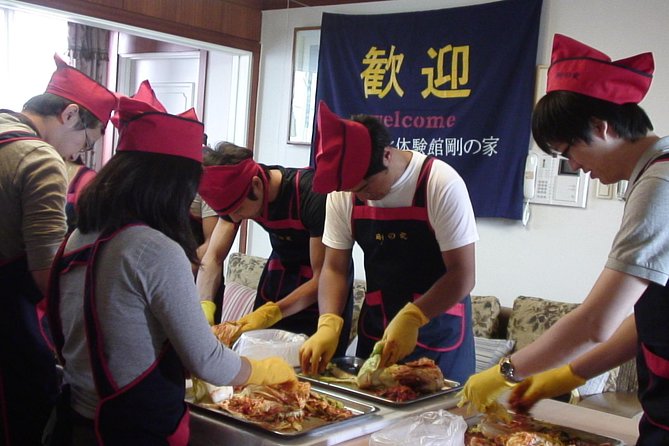
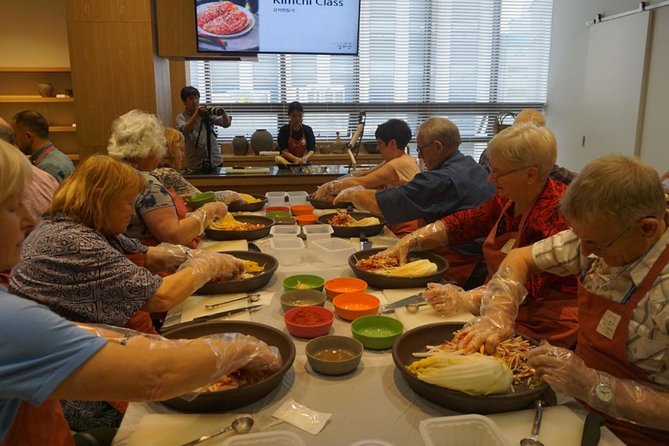
Kimchi is the food lesson at the center of the experience. The class lasts 30 minutes and covers the history and tradition behind the dish, then guides you through preparing it yourself. You learn why kimchi has such a central place in Korean cooking and how it is used in the wider diet.
The short format is both a strength and a limitation. Thirty minutes is long enough to give you a practical introduction and let you work with the ingredients, but not long enough for a full cooking course or a broad study of regional kimchi styles. Think of it as a hands-on cultural lesson, not professional culinary training.
The activity is especially useful early in a Seoul trip. After the class, you will recognize kimchi as more than the spicy red side dish placed beside a meal. You will have a better sense of its preparation and role in Korean food culture, which can make later restaurant meals more interesting.
One account describes the appeal as getting elbow deep in bright red kimchi while learning the ingredients that make it distinct. That is a fair picture of the activity’s charm: it is tactile, informal, and easy to remember.
A practical point is worth noting. The kimchi venue has not always operated on the original schedule. In one case, a closure led to a rescheduled visit and a private outing on another day. That worked out well, but it shows why you should keep some flexibility if the class location or timing changes.
Insadong and the return route
Insadong is listed as the second main stop. The district is associated with traditional Korean arts, shops, tea, and souvenirs, making it a natural partner for the palace and cultural activities. The supplied details do not specify exactly how much time you spend there, so treat it as part of the planned route rather than assuming a long free-shopping period.
The return journey may include a visit to a ginseng center or an amethyst factory. These stops can be useful if you want background on two products often linked with Korean shopping, but they are also the least essential part of the day for some people. If your priority is food, clothing, and history, you may see them as an extra retail-oriented stop.
The route wording allows for either a ginseng or amethyst visit, so ask which one is planned. You should also clarify if the stop is brief or includes a presentation. That simple question helps you judge how much free time remains and whether you want to plan an evening reservation.
Round-trip hotel transport is included in Seoul. This is a real benefit in a city where morning traffic and transfers can eat into your sightseeing time. Pickup details can vary by hotel, so provide the correct location when booking and confirm the meeting arrangement.
Timing, group size, and language
The stated start time is 9:30 am. The overall duration is listed as approximately 6 hours and 30 minutes, while the cultural experience is also described as 3.5 hours. Since those figures do not match, I would confirm the full schedule before paying, especially if you have an afternoon booking or a train to catch.
The maximum group size is 10. That is small enough for personal help with the hanbok, better access to the guide, and more relaxed participation in the folk game. It also makes the tour more suitable for solo visitors who want some company without joining a large coach group.
Professional guiding is offered in English or Chinese. Several guide names appear in the experience history, including Jay, Alice, Grace, Mi So, Lena, Tom, and Lady K. You should not assume a particular guide will lead your date, but the range of praise points to an important strength: the guide’s attitude can shape the day, particularly during the clothing fitting and photographs.
The activity is near public transportation, but hotel pickup is offered. That gives you two practical ways to manage the morning. Pickup is easiest if your hotel falls within the service area. Public transport is useful if you need to reach a designated meeting point or if you are staying outside the pickup zone.
Who should book this experience
I would recommend this tour to first-time Seoul visitors who want a broad introduction without having to arrange each part separately. It suits couples, families, solo visitors, and anyone who wants photographs in hanbok but also wants the day to include food and customs.
It is especially good for people who like participation. If you enjoy trying a local activity, learning a few manners, and playing a traditional game, the schedule gives you plenty to do. It also works well for visitors who want a guide to explain the meaning behind the activities rather than simply provide transport.
You may want another option if you prefer independent sightseeing, long museum visits, or a slow palace walk. The tour is tightly programmed, and the possible ginseng or amethyst stop may not appeal to every shopper. The unclear duration is another reason to confirm the itinerary before booking.
The tour has a five-star rating from 25 reviews and a 100 percent recommendation figure. Those numbers suggest strong satisfaction, but the practical takeaway is more useful than the score: the most consistently praised parts are the hanbok fitting, photography, friendly guides, and kimchi activity.
Booking, cancellation, and final value
You receive confirmation when booking, and free cancellation is available up to 24 hours before the start time for a full refund. Changes or cancellations inside that 24-hour window are not accepted for a refund, with cut-off times based on local Seoul time.
At $99, I consider this a fair package price if you value the hotel transport, small group, guide, hanbok help, palace visit, tea, game, and cooking activity. It is less compelling if you only want Gyeongbokgung or only want a kimchi class, since arranging one focused activity could cost less and leave you more free time.
I would book it if you want an easy cultural overview with plenty of photographs and hands-on moments. Confirm the actual duration, the return stop, and the pickup details first. Those three checks will tell you if the day fits your wider Seoul plans.
FAQ
What is included in the Seoul cultural tour?
The tour includes the kimchi-making lecture fee, a professional English or Chinese-speaking guide, hotel pickup in Seoul, and all taxes, fees, and handling charges.
Does the tour include lunch?
No. Lunch is not included.
What time does the tour start?
The stated start time is 9:30 am.
How long does the experience last?
The overall duration is listed as approximately 6 hours and 30 minutes. The description also refers to a 3.5-hour cultural experience, so confirm the exact schedule before booking.
What places are included?
The main itinerary lists Gyeongbokgung Palace and Insadong. The return route may also include an amethyst factory or a ginseng center.
How many people can join the tour?
The activity has a maximum of 10 travelers.
Can I cancel for a full refund?
Yes. You can cancel at least 24 hours before the start time for a full refund. Cancellations or changes made less than 24 hours before the start time are not refunded or accepted.
More Historical Tours in Seoul
- Seoul: Evening Dark History, Folklore & Ghost Story Walking Tour
★ 5.0 · 593 reviews - From Seoul: Dae Jang Geum Park Historic K-Drama Set Tour
★ 4.9 · 143 reviews - Seoul: City Highlights and Historical Experience No Shopping
★ 5.0 · 74 reviews - Street photoshoot and Seoul Hidden gem History Walking Tour
★ 5.0 · 68 reviews
More palace tours in Seoul
- Seoul: Gyeongbok Palace, Bukchon Village, and Gwangjang Tour
★ 4.9 · 2,321 reviews - Best Seoul City Tour (Gyeongbokgung Palace,Insadong,Namsan Tower)
★ 5.0 · 1,647 reviews - Small-Group Royal Palace and Seoul City Tour (hotel pick-up)
★ 5.0 · 1,474 reviews - Seoul City Sightseeing Tour Including Gyeongbokgung Palace, N Seoul Tower, and Namsangol Hanok Village
★ 5.0 · 1,423 reviews
Just added in Seoul
- Your Personal Seoul Photographer!★ 4.1 · 15 reviews
- You’re Invited to Our Home in Seoul: The Only Cooking Class!★ 5.0 · 8 reviews
- From Seoul: Yongpyong Ski Day Tour with Transportation★ 4.9 · 40 reviews
- Seoul: Korean & English Language Exchange Global Party★ 5.0 · 28 reviews
- From Seoul: Hwacheon Ice Fishing and Lighting Festival Tour★ 4.5 · 4 reviews
- Unique Native Experience : Han River Picnic, Board game, BBQ★ 5.0 · 3 reviews
- Seoul: Gangneung BTS K-Pop & K-Drama Filming Locations Tour★ 4.6 · 14 reviews
- K-Pop Making Class with a Producer!★ 5.0 · 3 reviews
Palace & Gyeongbokgung Tours, compared.
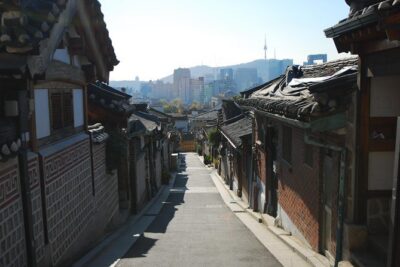
Gyeongbok Palace, Bukchon Village, and Gwangjang Tour
Read our review →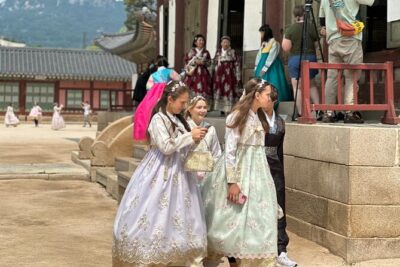
Best Seoul City Tour (Gyeongbokgung Palace,Insadong,Namsan Tower)
Read our review →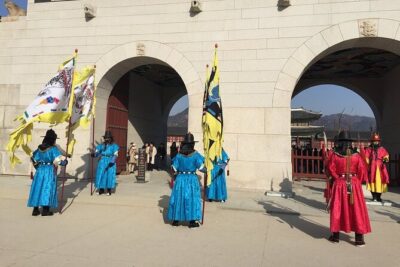
Small-Group Royal Palace and Seoul City Tour (hotel pick-up)
Read our review →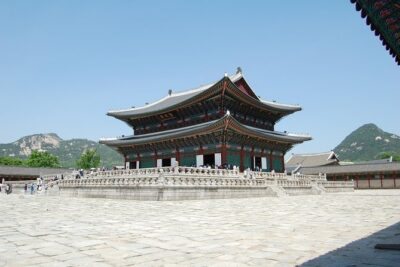
Seoul City Sightseeing Tour Including Gyeongbokgung Palace, N Seoul Tower, and Namsangol Hanok Village
Read our review →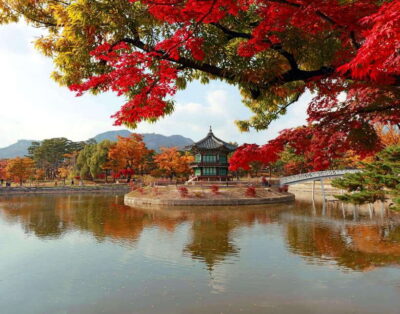
Seoul Highlights: Gyeongbok Palace, Insadong & N Seoul Tower
Read our review →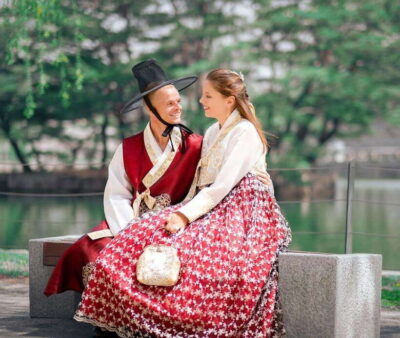
Seoul City Half Day Tour-Gyeongbok Palace Guard Changing Ceremony
Read our review →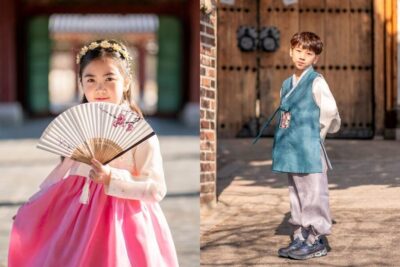
Browse the lists this tour appears in