
Reviewed · TOURS IN BUSAN
Busan Seafood Tour : Oyster village Tour with Oyster cuisines
Busan’s best seafood story may begin far from its famous port. This four-hour outing takes you by city bus from Hadan Station to an oyster-producing village near the city, where you can see the tools, work, and people behind Korea’s winter oyster trade before sitting down to eat the catch.
I like the local bus ride, which turns the outing into part of daily Busan life rather than a sealed-off excursion. I also like the oyster lunch, with soup, rice, and pancake included, plus the chance to ask guides such as Su Yang or Mr Chang about Korean food and drinking customs.
The main drawback is the narrow season. This tour runs only from November through February, and the schedule depends on good weather. At $180 per person, it makes the most sense if you care about food culture and a small village experience, not just a quick seafood meal.
Key points to know before booking
- The tour begins at Hadan Station Exit 3: You meet at 10:00 on Line 1, station number 102.
- The village is reached by city bus: Round-trip bus fare is included, but the ride is part of the experience rather than private transport.
- You see oyster farming at close range: Expect village walks, oyster-farming equipment, and workers shucking oysters.
- Lunch includes two oyster dishes: Oyster soup with rice and oyster pancake are included in the $180 price.
- The season is short: Departures are offered only from November through February.
- The group is limited to 15 people: That should allow room for questions and a more personal walk.
Why this oyster village is worth the trip from Busan
Busan is easy to reduce to seafood markets, harbor views, and city streets. This outing gives you a different food story: you travel to a working fishing village where oysters are produced, handled, and prepared close to the source.
That matters because the meal makes more sense after you see the work behind it. You can look at the tools used for oyster farming and watch workers shucking oysters. The village walk is not only a scenic pause from the city. It shows you how a familiar Korean ingredient reaches the table.
You should keep your expectations practical. This is not a large museum or a staged cooking show. The appeal lies in seeing an active village and listening as your guide explains what you are looking at. The amount of activity can vary by day, but the advertised visit includes both village sights and oyster shucking.
The tour is especially suited to people who want food tied to place. If you only want a restaurant meal, you can find faster options in Busan. If you want to understand why oysters matter in this part of Korea, the trip gives lunch a useful sense of context.
Other trips people book in Busan:
- Busan: Gyeongju Guided Day Trip to Three Kingdoms Capital
★ 4.8 · 1,925 reviews - Small Group Full Day Busan Tour (Max 6 Pax)
★ 5.0 · 1,464 reviews - From Busan: Gyeongju UNESCO World Heritage Guided Day Tour
★ 4.8 · 1,250 reviews
Meeting at Hadan Station at 10:00
The day starts at Hadan Station Exit 3 on Line 1, station number 102. This is an important detail because Hadan is the fixed meeting point, and the tour does not begin at your hotel.
You should allow enough time to find the correct exit and arrive ready to leave at 10:00. The activity offers pickup, but the specific meeting information supplied for this tour identifies Hadan Station as the start. Confirm the pickup details when booking if you need another arrangement.
The group can include up to 15 people. That is small enough for a guide to answer questions during the walk, while still being large enough that the outing has a group-tour feel. You are not booking a private car or a one-to-one food lesson.
The first transport is a city bus. Round-trip fare from Hadan Station to the village is included, so you do not need to budget separately for those rides. Still, this is public transportation, not private touring. The bus ride may feel less polished than a direct vehicle, but it connects the trip to ordinary local life and keeps the focus on the village rather than on a luxury transfer.
The bus ride to a working fishing village
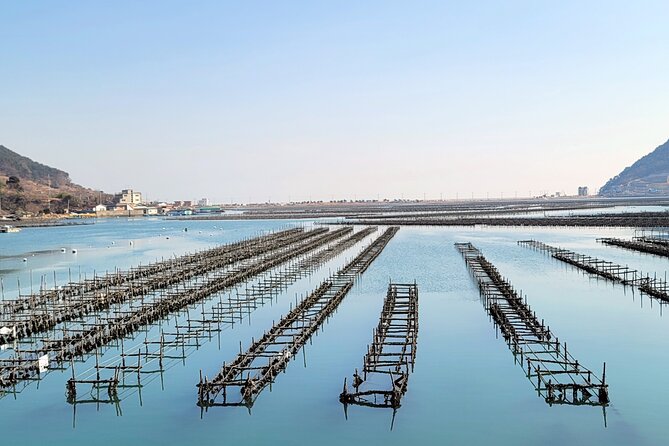
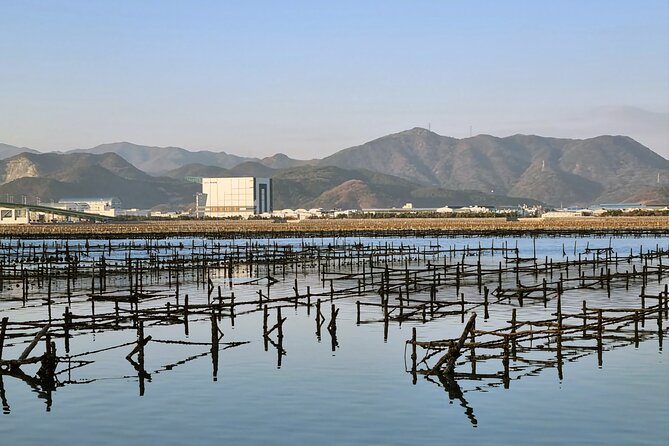
The village is on an island near Busan, according to the tour details. You travel there by city bus and arrive at about 11:30, giving you roughly an hour and a half for the village visit before lunch.
The route itself is part of the outing’s character. You leave the city behind and reach a smaller community linked to oyster production. The supplied information does not give the village’s name, so you should not book this expecting a famous landmark or a named tourist district. Its value is the working setting.
Bring a camera if you enjoy ordinary details. The tour specifically allows time to take pictures of the village, and you can look for oyster-farming tools and signs of the local seafood trade. These details can be more revealing than a viewpoint because they show how people use the shoreline and work around the harvest.
The walk also requires a moderate level of physical fitness. You will ride a bus, walk around the village, and spend time on your feet before lunch. No special strenuous activity is listed, but this is not a sit-down tasting from start to finish.
Seeing oyster farming and shucking
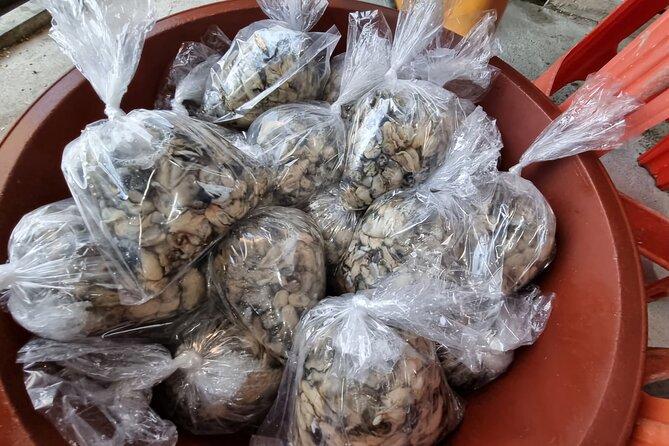
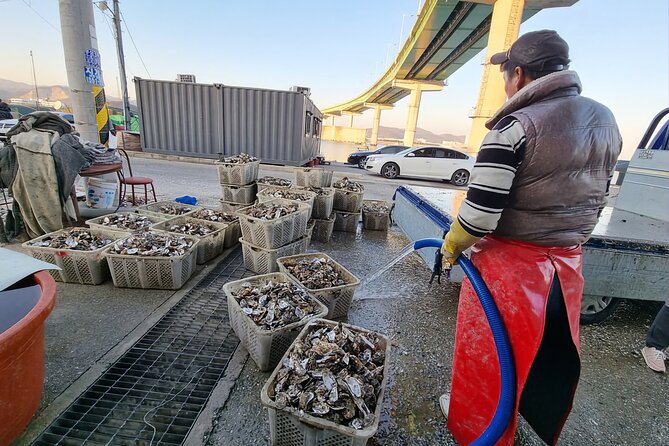
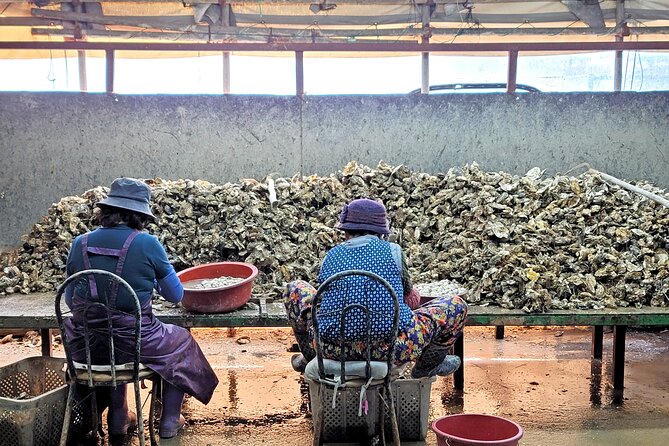
The strongest part of the morning is the chance to see oyster production rather than simply hear about it. You can view the tools used for oyster farming and watch workers shucking oysters. That gives the food a clear connection to the people and equipment that handle it.
Your guide explains the setting as you walk. Su Yang has been praised for combining the village walk with explanations of oysters and Korean history. Another guide, Mr Chang, is associated with a warm, attentive approach to the group. The supplied information also describes the Korean guide as professional and friendly, so you can expect the human side of the tour to matter as much as the transport and meal.
Keep in mind that working activity is not a performance scheduled for each visitor. You are seeing a real village, and what you observe may depend on the day and the work underway. That is a fair trade for a more genuine setting, but it means you should not expect a fixed demonstration with every step timed for photographs.
This section is most valuable if you ask questions. You can ask how the tools are used, what the workers are doing, and how oysters fit into local food culture. The guide is there to connect those small details to the meal that follows.
Same base, a different kind of day out:
- Busan Private Tour with licensed tour guide + private vehicle
★ 5.0 · 1,143 reviews - Busan: Coastal Treasures Beach Train, Culture Village & More
★ 4.7 · 832 reviews - Busan’s Cultural Wonders with Beach Train & Gamcheon Village etc
★ 4.5 · 663 reviews - Gyeongju UNESCO World Heritage Guided Day Tour from Busan
★ 5.0 · 660 reviews
Lunch at about 12:00
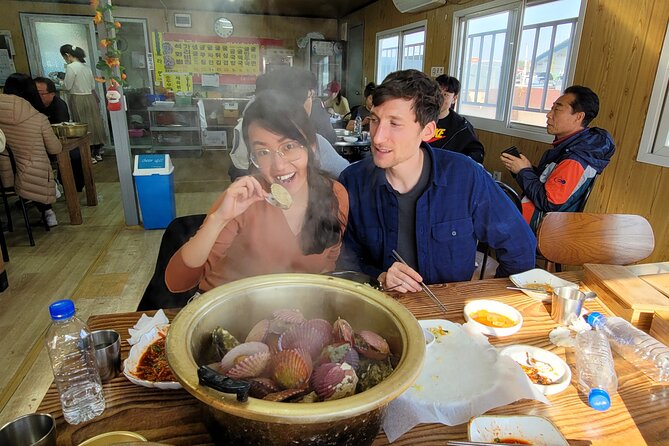
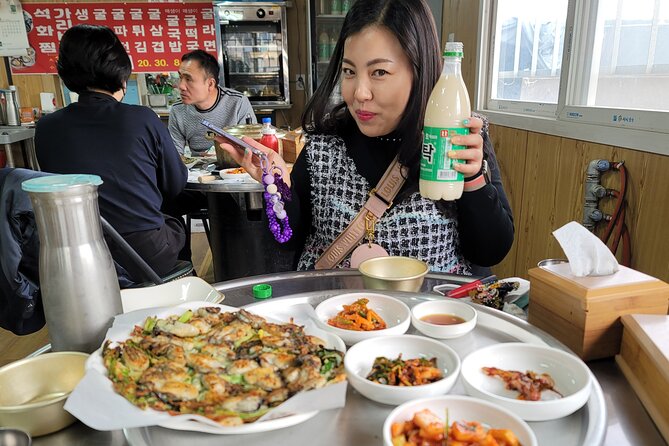
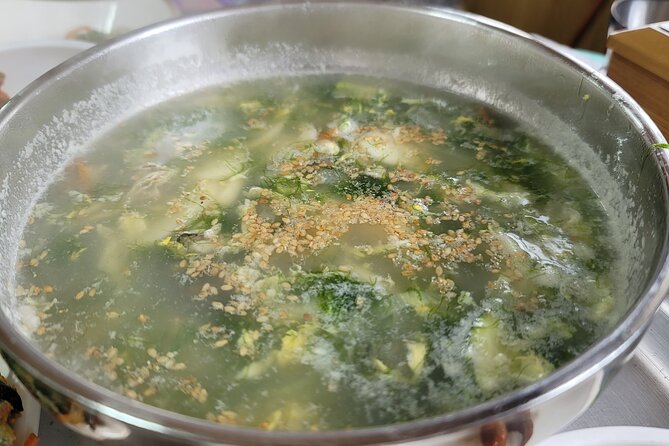
Lunch begins around noon at a restaurant near the fishing village. The included meal features oyster soup with rice and oyster pancake. Both dishes are central to the experience, rather than an afterthought added to a sightseeing tour.
The soup with rice gives you a simple, filling Korean meal built around the day’s featured ingredient. The pancake offers a different texture and style of preparation. Tasting both helps you see how one seafood ingredient can appear in more than one familiar Korean format.
The restaurant is described as famous and popular, so you may face a wait. On one outing, the group waited about 30 minutes for a table. That can be frustrating when the schedule is compact, but it also suggests the restaurant is part of the local food circuit rather than a room reserved only for tour groups.
You should allow some flexibility at lunch. The planned schedule places lunch at 12:00 and the return bus at 13:30, leaving about 90 minutes for the meal and any wait. If the restaurant is busy, the guide may need to manage the timing closely.
Alcoholic drinks are not included. The guide explains Korean food culture and drinking culture while you eat, but you pay separately for any alcoholic beverage. Travel insurance is also not included.
What the food culture explanation adds
The meal is more useful when you understand how it fits Korean dining customs. The guide discusses Korean food culture and drinking culture while you eat, giving you a chance to connect the dishes to everyday habits rather than treating them as isolated samples.
This is a good reason to choose the tour over simply ordering oyster soup in the city. In a restaurant on your own, you can taste the food, but you may not learn why the dishes are served in that form or how seafood relates to social meals in Korea.
The experience is still not a full cooking class. You do not make the soup or pancake, and no hands-on preparation is listed. The focus is observation, explanation, and eating.
If you do not eat oysters, this is a poor match. The lunch is built around them, and the morning also centers on oyster farming. The tour is designed for someone who wants more than one oyster taste and is happy to make the ingredient the main subject of the day.
Returning to Hadan Station at 13:30
The group leaves the village by bus at about 13:30 and reaches Hadan Station around 14:30. The full outing lasts about four hours, so you still have much of the afternoon available for Busan plans.
That timing makes this easier to combine with other sightseeing than a full-day excursion. You should avoid booking another fixed activity too close to 14:30, though. Restaurant waits, bus schedules, and weather can affect the return.
The tour finishes back at the meeting point. That is convenient if you plan to continue from Hadan Station, but it does not provide a hotel drop-off based on the information supplied. Plan your next move from the station.
The public bus return also keeps the experience grounded in local transport. If you prefer a private vehicle, a faster pace, or a tightly controlled schedule, this may feel less comfortable. If you like seeing how a place connects beyond its central streets, the bus is part of the appeal.
Is $180 a fair price?
At $180 per person, this is not a cheap way to eat oysters. The price covers about four hours, round-trip bus fare from Hadan Station, the village visit, guide service, and the included oyster lunch.
The value depends on what you are comparing it with. If you compare it with the price of soup and a pancake at a city restaurant, the tour costs much more. If you compare it with a guided food and culture outing that includes transport to a rural village, interpretation, and lunch, the price is easier to justify.
I would book it for the access and explanation, not for the quantity of food. You are paying to reach an oyster-producing community, see the farming setting, ask questions, and eat dishes tied to the area. The small maximum group of 15 also adds value, since the guide can speak with you during the walk.
Group discounts are offered, so the final cost may work better for people booking together. Alcohol, insurance, and any extra purchases are separate. You should also remember that the short operating season limits your flexibility.
Who should choose this Busan food tour?
This outing suits you if you enjoy seafood, local transport, village walks, and food stories that connect a dish to its source. It is also a good fit if you want a break from central Busan and prefer a guide who can explain Korean culture along the way.
It is less suitable if you dislike oysters, need hotel-to-hotel transport, or want a broad Busan sightseeing tour. The focus is narrow by design: oyster farming, a fishing village, and an oyster meal.
The moderate fitness requirement matters for anyone with mobility concerns. You will use public transportation and walk around the village, but the supplied details do not describe step-free access or special mobility arrangements. Ask the provider before booking if you need specific assistance.
The tour operates only from November through February. That seasonal window may suit you because oysters are a winter specialty, but it is a firm limit. You cannot treat this as a year-round option.
Booking, weather, and cancellation details
You receive confirmation at booking in most cases. If you book within nine days of the travel date, confirmation may arrive within 48 hours and remains subject to availability.
Free cancellation is available up to 24 hours before the start time for a full refund. Changes or cancellations made less than 24 hours before the start time are not accepted for a refund. Cutoff times use local time.
The experience requires good weather. If poor weather forces cancellation, you can receive a different date or a full refund. That policy matters because the village walk and bus journey are central to the day, not minor extras.
Should you book the oyster village tour?
Book it if you want to see a working oyster village near Busan and understand the food before you eat it. The combination of a city bus, farming tools, oyster shucking, a guided walk, and two oyster dishes gives the outing a clear local purpose.
Think twice if $180 feels high for lunch, if you need private transport, or if you are visiting outside November through February. The restaurant may also involve a wait, and the day depends on weather.
For the right audience, this is a focused and memorable half-day. You leave the city, see where the oysters come from, and return with a better sense of how Korean seafood culture reaches the table.
FAQ
Where does the tour begin?
It begins at Hadan Station Exit 3 on Line 1, station number 102, with a meeting time of 10:00.
Where does the tour finish?
The activity ends back at Hadan Station, the original meeting point.
How long does the experience last?
It lasts approximately four hours, from 10:00 until about 14:30.
How do you reach the oyster village?
You take a city bus from Hadan Station to the oyster-producing village. Round-trip bus fare is included.
What food is included?
Lunch includes oyster soup with rice and oyster pancake.
Are drinks included?
Alcoholic beverages are not included.
When is the tour available?
It is available from November through February, a four-month operating season.
How many people can join?
The maximum group size is 15 people.
What happens if bad weather cancels the tour?
You will be offered another date or a full refund if the experience is canceled because of poor weather.
Just added in Busan
- Visit Busan night market and enjoy the night view of Busan harbor★ 5.0 · 6 reviews
- Real Busan Walking Experience★ 5.0 · 27 reviews
- Full Day Private car tour to UNESCO Gyeongju&Yangdong village★ 5.0 · 5 reviews
- Suncheon and Yeosu Daily Private Tour with Pickup Service★ 5.0 · 3 reviews
- 7 Highlights Gyeongju City One Day Small Group Tour from Busan★ 5.0 · 24 reviews
- 1 Day Private Busan Guided Tour★ 4.5 · 3 reviews
- Suncheon one day tour from Seoul, Busan or Suncheon★ 5.0 · 3 reviews
- Busan Highlights Shore Tour – Cruise Return Assured★ 4.5 · 34 reviews
Tours in Busan, compared.

Gyeongju Guided Day Trip to Three Kingdoms Capital
Read our review →

Gyeongju UNESCO World Heritage Guided Day Tour
Read our review →
Busan Private Tour with licensed tour guide + private vehicle
Read our review →
Coastal Treasures Beach Train, Culture Village & More
Read our review →
Busan’s Cultural Wonders with Beach Train & Gamcheon Village etc
Read our review →
Private Busan Tour -Explore Cultural Landmarks with a Local Guide
Read our review →
Old Korea Thousand History Tour of Gyeongju from Busan
Read our review →Browse the lists this tour appears in