
Reviewed · UNESCO WORLD HERITAGE TOURS
Gyeongju UNESCO World Heritage Guided Day Tour from Busan
Gyeongju is the place to go when you want Korea’s ancient Silla kingdom brought into focus. This full-day trip from Busan links Bulguksa Temple, royal tombs, traditional homes, and illuminated Wolji Pond without making you sort out several local buses or admission tickets.
I like two things right away: you can choose between a countryside-heavy UNESCO route and a museum-focused route, and the bus lets you cover a lot of ground in one day. Guides such as Irene, Vincent, Sol, Bobby Kim, and Charles have been praised for clear explanations, good organization, and help with photos. The tradeoff is simple: this is a long, busy day, often 10 to 12 hours, with plenty of walking and some time spent on the road.
Key points to know before booking
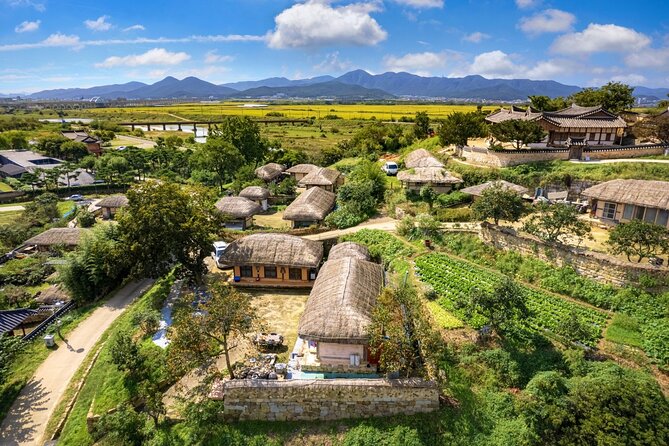
- Yangdong Village gives the UNESCO route its rural character, with traditional houses spread across green hills and lanes.
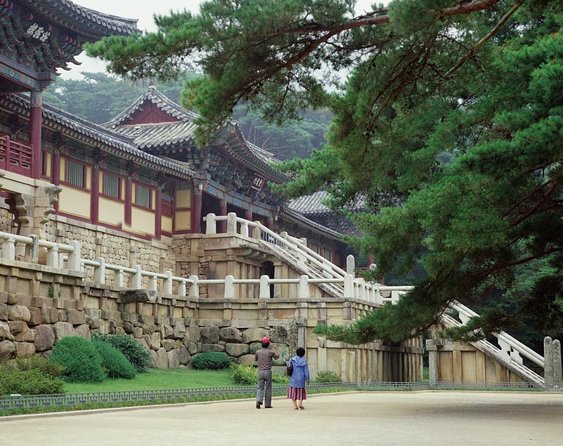
- Bulguksa Temple is the central cultural stop, with about 70 minutes to see its stone steps, halls, and Buddhist artwork.
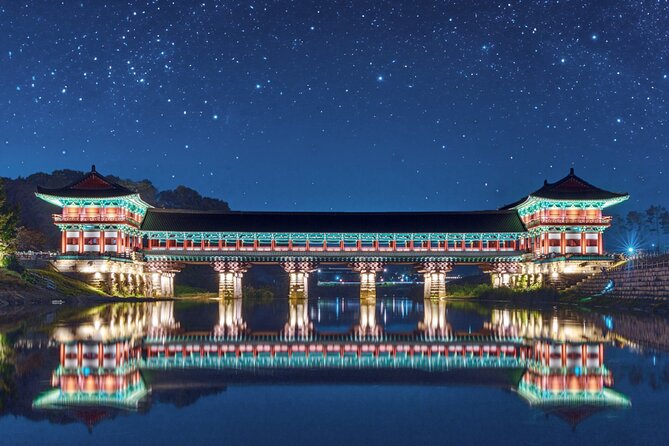
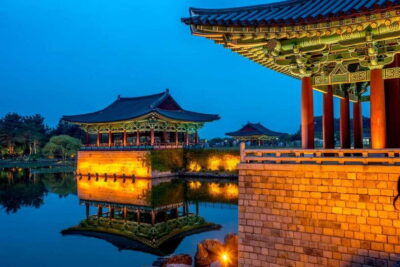
- Wolji Pond is often the visual highlight, especially when the palace buildings and bridge are lit later in the day.
- You choose one route, not both. The UNESCO option visits Yangdong Village, Daereungwon, Woljeonggyo Bridge, and Donggung Palace and Wolji Pond. The Museum option replaces those major stops with Hwangnidan-gil and Gyeongju National Museum.
- Lunch and dinner are not included, so budget extra and plan for limited food choices at Yangdong Village.
- Most stops are outdoors, and the day can run from a morning pickup until around 8 or 9 p.m., depending on traffic and your drop-off point.
Why Gyeongju makes a worthwhile day from Busan
Busan gives you beaches, markets, and modern city life. Gyeongju gives you Korea’s Silla-era story in physical form: temples, tombs, village homes, palace grounds, and museum treasures. The contrast makes this a strong day trip if your Busan stay is long enough for one full day away.
The tour uses an air-conditioned coach or minivan and includes round-trip transport from central Busan. That matters because Gyeongju’s important sites are spread across the city and surrounding countryside. You are not simply walking from one attraction to the next. You are moving between separate historical areas, and the coach keeps the day practical.
The group can be as large as 43 people. That brings a lower price, currently about $57.14 per person, but it also means you need to stay alert at meeting points. The guide will keep the schedule moving, yet you should not expect the relaxed pace of a private tour.
More Silla-era sites from Busan:
- Busan: Gyeongju Guided Day Trip to Three Kingdoms Capital
★ 4.8 · 1,925 reviews - From Busan: Gyeongju UNESCO World Heritage Guided Day Tour
★ 4.8 · 1,250 reviews - Old Korea Thousand History Tour of Gyeongju from Busan
★ 5.0 · 518 reviews
Bulguksa Temple starts the historical story
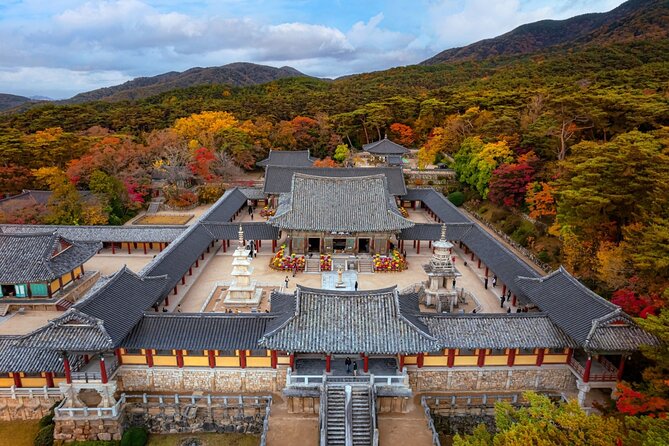
Bulguksa is the first stop on both tour choices, with about 70 minutes and admission included. Built in the eighth century, it is one of Korea’s best-known Buddhist temples and a UNESCO World Heritage site.
The appeal is not just the age of the complex. Bulguksa is carefully arranged on rising ground, with stone stairways, terraces, gates, pagodas, and wooden halls creating a sense of movement from the entrance toward the upper temple. Your guide can provide the background that helps you read the structure rather than simply photograph it.
You should expect walking on uneven surfaces and stone steps. The time is enough for a useful visit, but not enough for a slow inspection of every corner. One practical complaint about this day is that major stops can feel rushed, especially when the group has to move together.
Still, Bulguksa earns its place. If you have only one temple visit in Korea, this gives you a strong example of Silla Buddhist design and a clear introduction to Gyeongju’s past.
Yangdong Village adds two hours of countryside
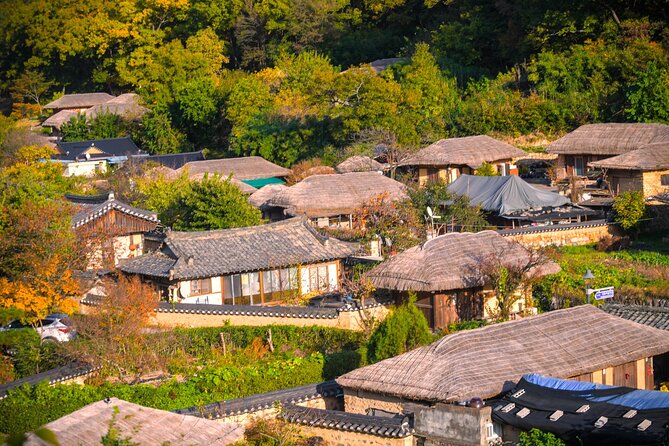
The UNESCO route continues to Yangdong Folk Village for about two hours and 15 minutes. This is Korea’s largest and best-preserved traditional village, with old homes set among low hills and open countryside.
Yangdong feels different from Bulguksa. Instead of a formal religious complex, you get a village shaped by family life, farming, social rank, and the terrain. The paths rise and fall, and the houses are spread out rather than packed along a single street. Wear shoes you can walk in comfortably.
This stop is one of the strongest reasons to select the UNESCO option. It gives the day a rural rhythm and lets you see traditional Korean architecture in its original setting. You are not looking at one reconstructed building. You are seeing a whole settlement.
Lunch here is at your own expense. Food options can be limited, and the village cafe has been described as cash-only, with chicken, seafood, and pork dishes. Vegetarians should bring food rather than count on a broad menu. Some visitors have enjoyed a traditional ginseng chicken meal, while others found the food small for the price, so I would treat lunch as a convenience rather than a major reason to book.
Royal tombs and Hwangnidan-gil show old and new Gyeongju
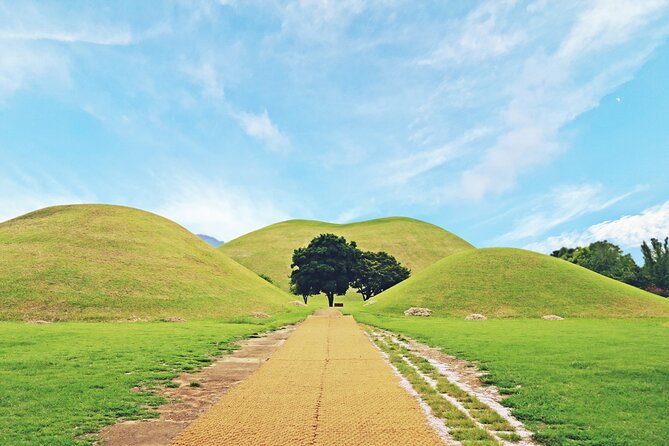
Daereungwon Tomb Complex gives you about 45 minutes on the UNESCO route. The park contains 23 Silla-era tombs, including Cheonmachong, for which admission is included.
The tombs look like large grassy mounds, but their size and number make the royal burial grounds easy to appreciate. The Cheonmachong ticket adds a closer look at the construction and finds connected with one tomb. Your guide can help explain why these rounded burial hills are so important to Gyeongju.
After Daereungwon, the group gets about 45 minutes around Hwangnidan-gil Street. This is where ancient Gyeongju meets present-day Korea, with hanok-style cafes, snacks, small shops, and modern food spots. It is a useful break after the temple and village walking, although some people may find the stop too long late in the day.
Dinner is not provided. You choose where to eat along the street, and most places accept credit cards. The freedom is useful, but a large group arriving at once can make the meal stop feel less simple than it sounds. If you want to get home earlier, this is one part of the schedule that can feel expendable.
Other listed sites within reach of Busan:
- From Busan to Gyeongju UNESCO Legacy Tour with National Museum
★ 5.0 · 87 reviews - Jeju: Eastern Jeju UNESCO Spots Day Tour
★ 4.9 · 1,148 reviews - Jeju: Southern Top UNESCO Spots Bus Tour
★ 4.9 · 648 reviews - Jeju Southern UNESCO Full Day Tour with Mt.Halla
★ 5.0 · 400 reviews
Woljeonggyo Bridge is short but photogenic
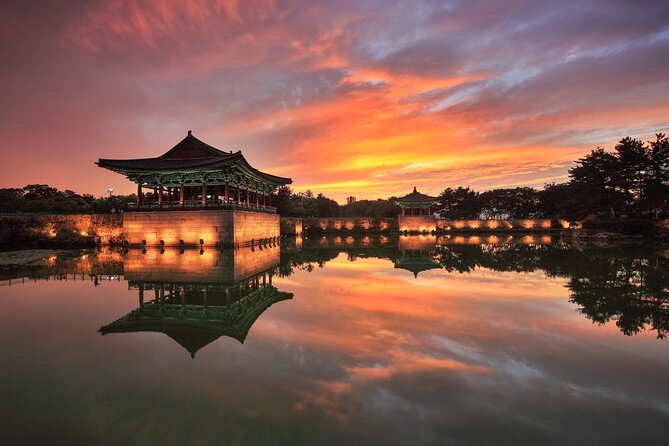
The UNESCO route includes about 20 minutes at Woljeonggyo Bridge. This reconstructed historic bridge uses stone arches and traditional-style wooden structures to cross the river.
Twenty minutes is not much, but the stop works as a photo break and a change of pace. The bridge is especially attractive when lit, though the precise light and traffic conditions can affect how much time you spend there. Do not expect a long historical tour here. It is a compact stop that adds variety to a full schedule.
The bridge also helps connect Gyeongju’s separate sights into a larger picture. You see how royal, religious, residential, and civic places occupied the same broader area rather than existing as isolated attractions.
Donggung Palace and Wolji Pond reward the late hour
The final major UNESCO stop is Donggung Palace and Wolji Pond, with about one hour and admission included. The pond was created in 674 as part of the Silla palace complex. It was used for royal gatherings and remains one of Gyeongju’s most atmospheric historic sites.
This stop often becomes the day’s favorite because it changes character as evening arrives. Reflections in the water, the palace buildings, and the surrounding park make the site especially appealing for photographs. Several guides, including Sol and Bryan, have been praised for helping groups understand the setting while keeping everyone on time.
There is a scheduling catch. If traffic delays the day, you may reach the evening sites later than planned or have less time elsewhere. That is not necessarily bad, since the pond benefits from darkness, but you should accept that the return to Busan may be late. One guest reported leaving around 9 p.m. after a 9 a.m. pickup, while another described a 10 a.m. departure and 8 p.m. return. Your exact timing depends on the pickup point, traffic, and weather.
The Museum route suits a different kind of history fan
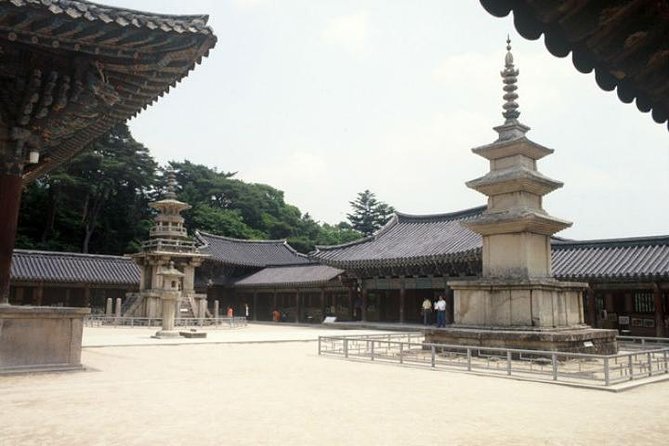
The alternative Museum tour keeps Bulguksa but replaces the UNESCO route’s Yangdong Village, Daereungwon, Woljeonggyo Bridge, and Donggung Palace and Wolji Pond with Hwangnidan-gil and Gyeongju National Museum.
The museum holds Silla artifacts, including golden crowns and Buddhist relics. This option makes sense if you prefer objects, displays, and indoor interpretation to long outdoor walks. It can also be the better choice in poor weather, although the full day still includes outdoor time at Bulguksa and Hwangnidan-gil.
You should check the exact route you select when booking. The two choices are not a minor variation. The UNESCO option gives you more countryside, royal tombs, and evening scenery. The Museum option gives you more time with archaeological objects and a contemporary street stop.
What the guide adds to a large group
The guide can make or break a day with this many stops. The strongest guiding comments center on clear history, steady timing, a friendly manner, and practical help. Irene has been praised for being warm, humorous, and organized. Vincent is known for historical context and photo suggestions. Sol has been described as especially organized and helpful, while Bobby Kim has received praise for answering questions and looking after the whole group.
The language options are English, Chinese, and Korean. Guides may split language groups or provide information in more than one language, so the exact presentation can vary. You should expect a mixture of group explanations and free time rather than constant commentary.
Photo help is a recurring strength. Guides such as Charles and Lee have helped with memorable pictures, which is useful when you are traveling alone or with a small family group. A good guide also helps with the practical side: where to meet, how long remains, and which path to take back to the bus.
The large group has limits. You may wait for slower walkers, and the guide cannot give everyone a long personal conversation. Keep your phone charged, pay attention to meeting instructions, and do not wander far during free time.
The real cost of a $57.14 day
At $57.14, the tour offers solid value if you want several Gyeongju areas in one day. Transport, a guide, and the listed admission fees are included. The UNESCO option includes Yangdong Village, Donggung and Wolji, and the Cheonmachong Tomb ticket. You avoid paying separate fares and figuring out how to connect distant sites.
Meals, insurance, and personal spending are not included. Set aside money for lunch, dinner, drinks, and snacks. If you want a cafe stop at Hwangnidan-gil, that is extra too.
The price is less attractive if you dislike group schedules or want to linger. You are paying for reach and convenience, not a slow, private exploration. The bus time can be tiring, and traffic can stretch the day. For a first visit to Gyeongju from Busan, I think the convenience is the main value.
How to prepare for the long day
Most of the sightseeing is outside. Bring layers because the day may move from cool morning air to warmer afternoon conditions and then back to cooler evening temperatures. Comfortable shoes matter at Bulguksa, Yangdong Village, the tomb park, and Wolji Pond.
The schedule includes hills, paths, steps, and a fair amount of walking. The tour information says most people can participate, but the pace may challenge anyone who has difficulty walking for several hours.
The tour uses mobile tickets, and confirmation arrives when you book. WhatsApp and a Google account may be needed for full participation in some communication arrangements, though workarounds are possible. If you do not use those services, contact the operator before the day so you are not sorting it out at the meeting point.
Free cancellation is available up to 24 hours before the start time. Changes or cancellations inside that window are not accepted for a refund.
Who should choose this Gyeongju tour
I would choose the UNESCO route if you want the broadest picture of Gyeongju: a major temple, a traditional village, royal tombs, a historic bridge, and an evening palace pond. It is the fuller visual experience and the better fit for a first visit.
I would choose the Museum route if Silla objects and indoor displays matter more to you than rural village paths and night scenery. It also gives you a clearer museum-centered day, though Bulguksa and the street stop remain part of the plan.
This tour suits you if you have limited time in Busan, enjoy history with a guide, and prefer not to manage regional transport. It is less suitable if you want a quiet pace, a carefully planned meal, or the freedom to spend half a day at one site.
Should you book it?
Book this trip if you want to see why Gyeongju is one of Korea’s essential history stops and you accept a very full day. The best moments are likely to be the scale of Yangdong Village, the carved and stepped spaces of Bulguksa, the royal tombs, and the evening reflections at Wolji Pond.
Skip it if 10 to 12 hours on a coach sounds miserable or if you want deep time at each place. For most first-time visitors based in Busan, though, the combination of transport, admissions, several major sites, and capable guides makes the $57.14 price fair. Choose the UNESCO option for scenery and variety. Choose the Museum option for artifacts and a less countryside-heavy day.
FAQ
How long does the Gyeongju tour from Busan last?
The experience lasts approximately 10 to 12 hours. The exact end time depends on traffic, weather, the pickup location, and the route selected.
What are the two tour options?
The UNESCO route includes Bulguksa Temple, Yangdong Folk Village, Daereungwon Tomb Complex, Hwangnidan-gil Street, Woljeonggyo Bridge, and Donggung Palace and Wolji Pond. The Museum route includes Bulguksa, Hwangnidan-gil, and Gyeongju National Museum.
Is transportation included?
Yes. Round-trip transport from central Busan is provided by air-conditioned coach or minivan.
Are entrance fees included?
Yes, the listed included fees cover Yangdong Village, Donggung and Wolji, and the Cheonmachong Tomb ticket on the UNESCO route. Bulguksa admission is also included in the tour schedule. Hwangnidan-gil and Woljeonggyo Bridge are free stops, and Gyeongju National Museum admission is listed as free.
Are meals included?
No. Lunch, dinner, drinks, and personal expenses are not included. You should budget separately for food at Yangdong Village and Hwangnidan-gil.
What languages are available?
The tour provides English, Chinese, and Korean speaking guides.
Can I cancel for a full refund?
Yes, you can cancel at least 24 hours before the experience start time for a full refund. Cancellations or changes made less than 24 hours before the start time are not accepted for a refund.
More Historical Tours in Busan
- Busan history and market food tour with local chef
★ 5.0 · 58 reviews - From Busan: Echoes of Silla Gyeongju Historical Day Tour
★ 4.8 · 55 reviews - From Busan: Gyeongju Historical Day Tour with Sky Capsule
★ 4.7 · 17 reviews - From Busan: Gyeongju Full-Day Historical Tour
★ 4.1 · 6 reviews
Just added in Busan
- From Busan: Gyeongju Historical Day Tour with Sky Capsule★ 4.7 · 17 reviews
- From Busan: Gyeongju Full-Day Historical Tour★ 4.1 · 6 reviews
- Busan: Winter Healing Park and (Gyeongju/Daegu) One Day Tour★ 5.0 · 5 reviews
- Busan’s Best: Sea Temples, Yacht Tour & Sky Capsule Day Tour★ 4.8 · 24 reviews
- Busan: Sky Capsule+ Huinnyeoul+ Gamcheon+ Songdo+ Night View★ 4.9 · 10 reviews
- Busan: Private Chartered Car Tour★ 4.1 · 7 reviews
- Busan: Jagalchi Market & Gamcheon village Walking Tour★ 5.0 · 7 reviews
- Busan: Night Small Group Photo Tour (Max 7)★ 5.0 · 33 reviews
UNESCO World Heritage Tours, compared.
Gyeongju UNESCO World Heritage Guided Day Tour
Read our review →
Jeju Southern UNESCO Full Day Tour with Mt.Halla
Read our review →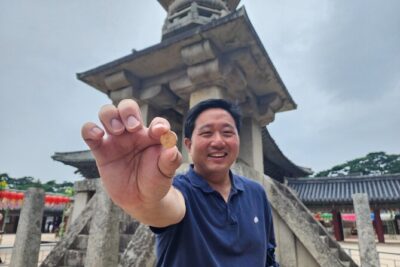
Private Gyeongju Tour – Explore Gyeongju UNESCO Sites
Read our review →
Jeju island Southern UNESCO Day Tour With Hallasan MT
Read our review →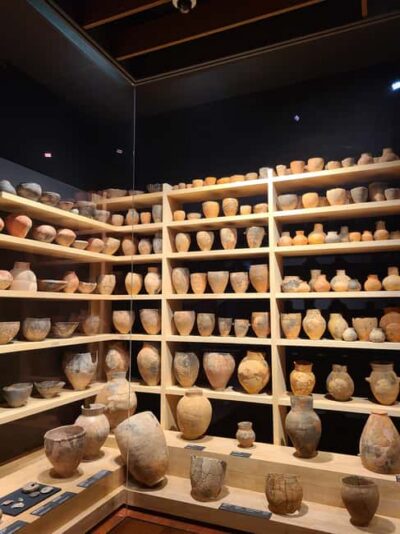
Gyeongju UNESCO Legacy Tour with National Museum
Read our review →Browse the lists this tour appears in