
Reviewed · CITY TOURS
Full Day- Essential Seoul City Tour & Gourmet Tour(including Lunch and Dinner)
Seoul’s best introduction may be eaten one course at a time. This private day links Gyeongbokgung Palace, Bukchon, Insadong, and Gwangjang Market with ginseng chicken soup, traditional tea, snacks, and market food. You get the city’s royal, religious, artistic, and everyday sides without spending your first day figuring out subway transfers.
I like the hotel pickup and private vehicle, especially when you are jet-lagged or traveling with older relatives. I also like the food plan: lunch at a Michelin-listed restaurant, tea in a traditional house, and dinner made up of Korean street foods with makgeolli.
The tradeoff is pace. You cover a lot of Seoul in about nine hours, and one account recorded roughly nine miles of walking. The day can feel rushed in hot weather or if you want long, quiet visits at each stop.
What makes this Seoul day worth considering
- Royal Seoul in one morning: Enter Gyeongbokgung Palace and visit the National Folk Museum of Korea.
- Food with local character: Try samgyetang, traditional tea, mung bean pancakes, dumplings, noodles, and Korean rice wine.
- Private transportation: Your group receives hotel pickup and drop-off in Seoul in an air-conditioned vehicle.
- A useful first-day map: See major central districts before deciding where to return on your own.
- Flexible guiding: Guides such as Bergen Park, Shawn, Tony, John, Don Lee, and Kimsoo have adjusted the day for personal interests, weather, and walking needs.
- A serious walking day: Comfortable shoes, water, and a realistic view of your stamina matter.
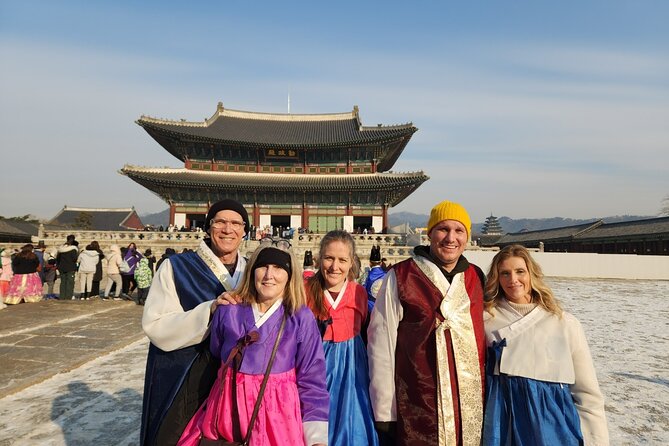
A royal start at Gyeongbokgung Palace
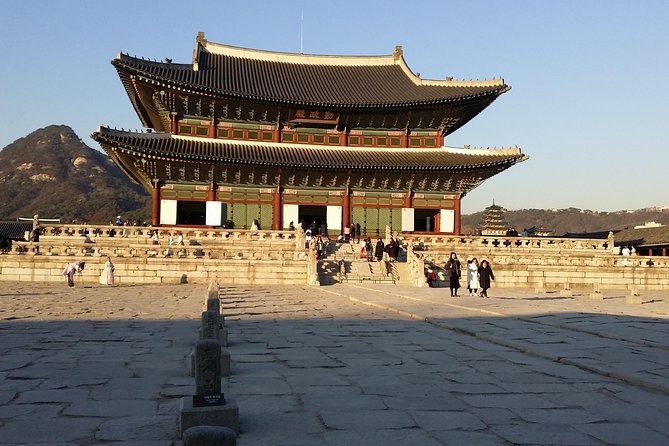
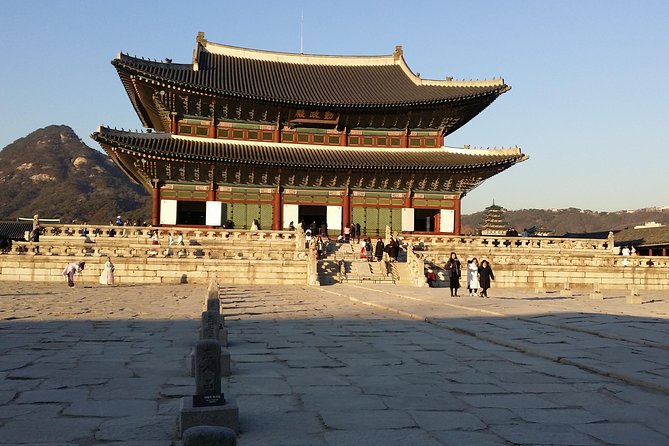
The day begins at 9:00 a.m., with pickup at your Seoul hotel. The first major stop is Gyeongbokgung Palace, built in 1395 as the first of Seoul’s five Joseon palaces.
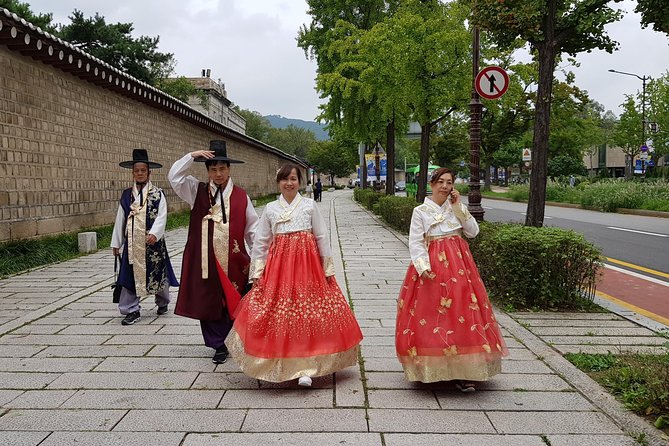
Allow about an hour here. Your guide can explain the palace layout, Joseon royal life, traditional design, and the role of feng shui in its setting. The changing of the guard is a particular highlight when the timing works, with guards in colorful traditional dress adding a lively visual moment to the stone courtyards and painted gates.
Gyeongbokgung is a strong first stop because it gives you a framework for the rest of the day. You see the old royal capital before moving into neighborhoods shaped by religion, trade, art, and modern city life.
The palace visit also shows why a guide can help on a short trip. You can walk through the grounds alone, but a licensed English-speaking guide gives names and meaning to what might otherwise look like a series of beautiful buildings.
A few more things to do in Seoul worth a look
- Seoul City Private Full-Day Tour Including Lunch
★ 5.0 · 469 reviews - Premium Private DMZ Tour & (Suspension Bridge or N-Tower) include lunch
★ 5.0 · 348 reviews - Private DMZ Tour with North Korean Defector + N Korean Lunch
★ 5.0 · 122 reviews
Daily life at the National Folk Museum
Next comes the National Folk Museum of Korea, with about 30 minutes inside. The museum focuses on ordinary Korean life, from birth through death, rather than only kings and major political events.
This brief visit works as a cultural primer. You may see displays related to customs, household life, work, clothing, and ceremonies. The stop is included in the admission fees, so you do not need to calculate another ticket during the day.
Thirty minutes is not enough for a detailed museum visit. Think of it as a focused introduction, not a place to read every display. If museums are your main reason for visiting Seoul, you may want to return independently with more time.
Bukchon’s lanes and traditional houses
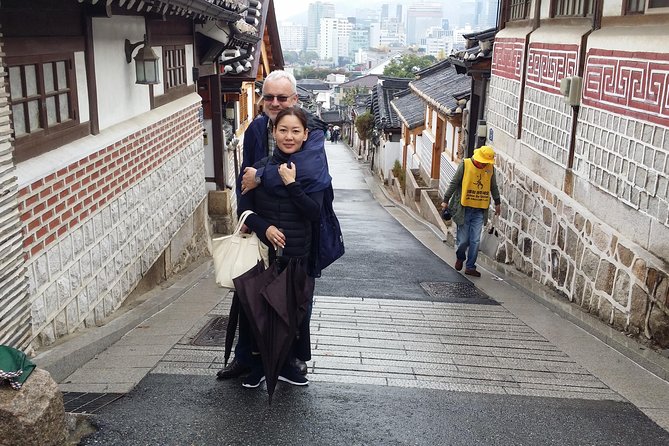
The tour then moves to Bukchon Hanok Village for about 40 minutes. Buk means north and chon means village, and the area is known for traditional hanok houses with tiled roofs.
Bukchon gives you a close look at old residential Seoul. Unlike a palace, this is a neighborhood of homes and narrow streets, so the experience feels more connected to everyday city life. The uphill lanes and stone paths can be tiring, especially after the palace grounds.
Keep your voice low and remember that Bukchon remains a residential area. The tour’s private format helps your guide adjust the route if walking is difficult. Several accounts describe guides modifying stops or the pace for a bad knee or an older parent, but you should still tell the operator about mobility concerns before the day begins.
Jogyesa Temple and central Buddhist Seoul
Jogyesa Temple provides a calmer change of mood. You spend about 30 minutes at this major Buddhist temple, which serves as the headquarters of the Jogye Order, Korea’s largest Buddhist sect.
The temple sits in central Seoul, surrounded by city streets, yet its grounds offer a clear pause from traffic and shopping. Look for the details in the temple buildings, lanterns, and religious objects. Your guide can explain how Buddhism fits into Korean culture and how the temple functions today.
This is not a long temple study. It is a short visit that balances the palace and residential neighborhood stops. Dress and behave respectfully, and follow your guide’s instructions if a ceremony is taking place.
Same base, a different kind of day out:
- Best DMZ Tour Korea from Seoul (Red Suspension Bridge Optional)
★ 5.0 · 41,422 reviews - DMZ Tour: 3rd Tunnel, Option(Suspension Bridge, Boat) from Seoul
★ 5.0 · 21,373 reviews - DMZ tour south Korea from Seoul (NK experience hall, defector)
★ 5.0 · 20,599 reviews - Seoul: DMZ Tour with Optional Suspension Bridge
★ 4.8 · 5,277 reviews
Insadong, tea, and a slower half hour
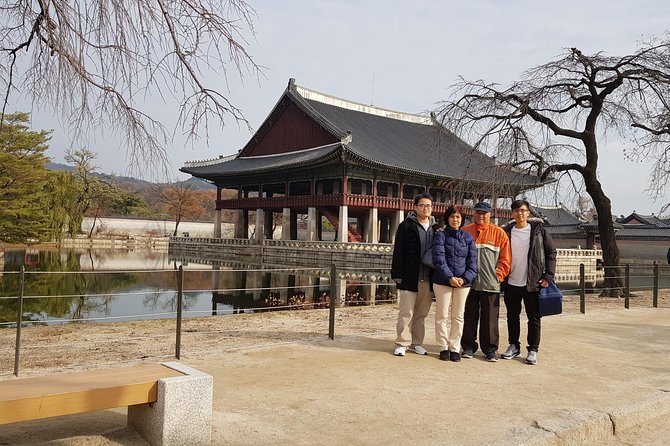
Insadong is the day’s traditional arts and shopping district. You have about an hour to walk its streets, browse shops, and see an older side of central Seoul.
The area once housed a government office connected with royal paintings and court art. Today, it is a useful place to look for crafts, souvenirs, galleries, and traditional food. It can also feel commercial, so the value comes from having a guide point out what fits your interests rather than simply walking through shops.
At the Kyung-In Museum of Fine Art, you visit Dawon Traditional Tea Garden in a hanok. The tea stop lasts about 30 minutes and is one of the day’s best pauses. After several sights and city streets, sitting down with traditional Korean tea gives you time to rest and ask questions.
Tea preferences matter here. The included plan is built around traditional tea, and one dissatisfied customer declined it. If you do not like tea, tell the guide early so expectations are clear. If you enjoy quiet cultural stops, this may be one of the most memorable parts of the day.
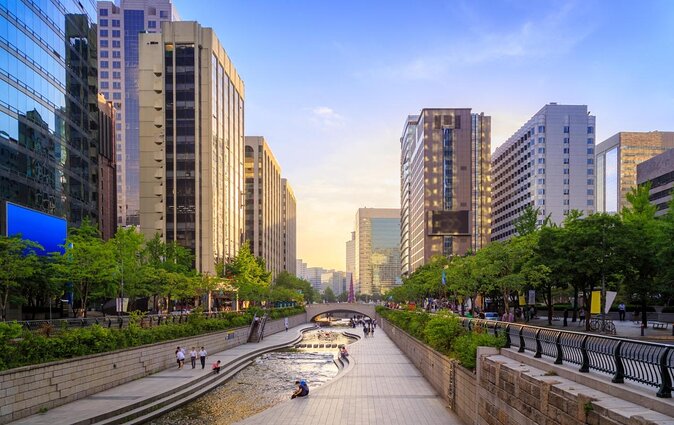
Cheonggyecheon Stream and Seoul’s modern reset
The stop at Cheonggyecheon Stream lasts about 20 minutes. The waterway runs roughly 11 kilometers through central Seoul and occupies the site of a former natural stream.
Its modern story is as important as its appearance. After the Korean War, refugees built homes along the stream. Later, the area was transformed into an urban waterway and public walking space. Your guide can connect this project to Seoul’s changing relationship with traffic, redevelopment, and public space.
Twenty minutes is enough for a look and a short walk, but not a full exploration. You may want to return in the evening if your schedule allows. This stop works well as a bridge between old Seoul and the market neighborhoods later in the day.
Baek In-je’s House and a closer hanok look
Baek In-je’s House is another hanok site, this time a preserved home and cultural heritage museum in Bukchon. The visit lasts about an hour.
After seeing Bukchon from its lanes, entering a preserved house adds useful detail. You can better understand how traditional homes were arranged and how architecture shaped daily life. The site also gives the day another quieter indoor stop.
Because the day includes both Bukchon and Baek In-je’s House, the schedule repeats the hanok theme. That is helpful if traditional architecture interests you, but less appealing if you prefer modern design, shopping, or museums. Ask your guide how much time you will spend inside and outside if you have a strong preference.
Lunch: samgyetang and a practical food warning
Lunch is planned around ginseng chicken soup, or samgyetang, at a Michelin-listed restaurant rather than a group-tour dining hall. This is an important part of the value. Food-led sightseeing works best when the meal is a real local specialty, not a generic buffet stop.
Samgyetang is a whole young chicken served in broth with ginseng and other ingredients. The listing also says a vegetarian restaurant is available, so tell the provider about dietary needs before departure.
The meal plan is not completely fixed in practice. One guide, Bergen Park, has redirected lunch when a customer did not want chicken. That kind of flexibility is useful, but it also means the exact meal and cost can change according to your choices.
Do not assume every drink is included. Lunch, dinner, snacks, tea, and certain beverages are part of the stated package, but a requested diet cola was not available at one restaurant. If you want a particular soft drink, ask before ordering.
Gwangjang Market: the day’s liveliest meal
The final major stop is Gwangjang Market, where you spend about an hour. Opened in 1905, it is recognized as Korea’s first commercial market and remains one of the best places in this tour to see food prepared and served in a busy public setting.
Dinner is built around sharing several traditional street foods rather than ordering one large dish per person. Expect the chance to try items such as mung bean pancakes, dumplings, and knife-cut noodles, with makgeolli served alongside. The point is variety, so portions may be small and shared.
This arrangement makes sense if you want to taste many things. One full serving at each stall would leave you full after the first dish, so your guide may order modest amounts for the group. If you are very hungry or have firm dietary restrictions, clarify how the included dinner works before booking.
A memorable moment for some visitors has been meeting the noodle vendor made famous by Netflix. That is not something you should treat as guaranteed, but it shows the kind of food-focused local encounter the market can offer.
Gwangjang is also where the day’s social energy peaks. After palaces, museums, temples, and tea, you finish with food stalls, conversation, and a glass of makgeolli. For many people, this is the most enjoyable part of the experience.
How much walking and driving to expect
The private vehicle is a major practical advantage. Seoul’s sights are spread across central districts, and moving between them by car saves time and reduces the need to manage subway stations, transfers, and directions.
You still walk a lot. The palace grounds, Bukchon lanes, Insadong streets, temple grounds, market aisles, and hanok sites add up. One person estimated about nine miles in a day, while another account described the pace as fast in June heat.
Wear shoes that you can walk in for hours. Bring water, and tell your guide early if you need regular sitting breaks. The private format allows more adjustment than a large coach tour, but nine hours of sightseeing cannot become a slow museum day without cutting stops.
Rain and heat can change the feel of the day. A guide can keep the program moving in poor weather, but outdoor sights such as Bukchon, Cheonggyecheon, and palace grounds are less comfortable when it is wet or very hot.
What the $299 price really covers
The price is $299 per person. That is not cheap compared with using Seoul’s subway and visiting free public areas on your own.
You are paying for more than admission tickets. The fee includes hotel pickup and drop-off in Seoul, private transportation, an air-conditioned vehicle, an officially licensed English-speaking guide, lunch, dinner, snacks, traditional tea, and taxes. Gyeongbokgung and the National Folk Museum admission are included, while other listed stops are free.
The value is strongest for a first visit, a short stay, a family group, or anyone who wants food choices handled without research. A private car also matters if your group includes an older parent or someone who dislikes long public transport connections.
The value is weaker if you are comfortable planning Seoul yourself, already know the palace and market areas, or prefer to linger at one site. Some major attractions cost nothing to enter, and you may spend less by using public transit and choosing your own meals.
There is also an important distinction between included food and unlimited food. The tour includes specific meal experiences, but extra dishes, special drinks, or changes from the planned restaurants may not be covered. Ask what is included for each member of your group before the day starts.
The guides and the private-tour feel
Bergen Park is the guide most often associated with this experience, and other guides named in the material include Shawn, Tony, John, Don Lee, and Kimsoo. The exact guide depends on availability.
The strongest pattern is personal attention. Guides have helped with bad knees, adjusted meeting arrangements for someone nervous about public transport, changed stops for family interests, and read the group’s energy when a full day became too much.
That flexibility is a real advantage over a fixed group excursion. You can ask about Korean customs, history, food, or modern life as you go. Some guides also take photographs and suggest other destinations such as Andong, Gyeongju, Busan, Jeju, or Nami Island.
Personal guiding is also subjective. One account found the conversation too focused on personal topics and felt the sightseeing explanations were too brief. Another raised concerns about food handling and personal space. Those complaints are not minor if you prefer a formal, low-contact guide. Set clear boundaries at the start, especially about touching, food preferences, and how much historical explanation you want.
The overall rating is 4.9 from 73 ratings, with 97 percent recommending the experience. That points to a strong record, but no private tour suits every personality. A direct conversation at pickup can prevent misunderstandings.
Who should book this day
I would choose this tour if you are visiting Seoul for the first time and want a strong orientation in one day. It is also a good fit if you have only a few days, want Korean food built into the schedule, or are traveling with relatives who benefit from a private vehicle.
Food lovers should pay special attention to the lunch and market structure. You get both a sit-down specialty meal and a chance to sample several street foods, rather than spending the day on sightseeing alone.
I would hesitate if you dislike fast days, have limited walking ability, or want to spend hours inside museums. The schedule covers nine stops and several districts, so it favors breadth over long, quiet visits.
Free cancellation is available if you cancel at least 24 hours before the 9:00 a.m. start time. Changes or cancellations inside that window are not accepted for a refund.
Should you book it?
Book this private Seoul day if you want the city’s essential sights, local food, and transportation sorted out in one go. The palace, tea house, and Gwangjang Market meal give the day a clear rhythm, and the private guide can make the route more comfortable for your group.
Skip it if you enjoy building your own days, riding public transit, and choosing every restaurant yourself. At $299 per person, the tour earns its price through time saved, private transport, guiding, and included meals, not through admission tickets alone.
FAQ
How long does the tour last?
The experience lasts about nine hours, beginning at 9:00 a.m.
Is hotel pickup included?
Yes. Pickup and drop-off are provided at your hotel in Seoul.
Is this a private tour?
Yes. Only your group participates in the activity.
What food is included?
Lunch includes ginseng chicken soup at a Michelin-listed restaurant, with a vegetarian restaurant also available. Dinner includes traditional street foods at Gwangjang Market and Korean rice wine, or makgeolli. Snacks and beverages, including traditional tea, are also included.
Which Seoul sights are included?
The stops include Gyeongbokgung Palace, the National Folk Museum of Korea, Bukchon Hanok Village, Jogyesa Temple, Insadong, Kyung-In Museum of Fine Art and Dawon Traditional Tea Garden, Cheonggyecheon Stream, Baek In-je’s House, and Gwangjang Market.
Is transportation provided during the day?
Yes. The tour includes private transportation in an air-conditioned vehicle.
Can I cancel for a full refund?
Yes, if you cancel at least 24 hours before the experience’s start time. Cancellations made less than 24 hours before the start time are not refunded.
Just added in Seoul
- Suwon: Baseball Game with Fortress and Local Food Tour★ 5.0 · 3 reviews
- Seoul: War Memorial of Korea Private Guided Museum Tour★ 4.9 · 29 reviews
- Seoul: Wine & Korean BBQ, Perfect Pairing Dinner in Sinchon★ 5.0 · 6 reviews
- Seoul : Your Personal Photographer in Gyeongbokung★ 5.0 · 7 reviews
- Seoul : Efoil Experience in Han River★ 5.0 · 5 reviews
- Seoul: Vivaldi Park Winter Ski with Eobi Ice Valley Day Tour★ 4.6 · 16 reviews
- Seoul: Vivaldi Park Winter Ski with Nami Island Day Tour★ 5.0 · 4 reviews
- Seoul: SnowyLand in Vivaldi Park with Nami or Alpaca★ 4.8 · 11 reviews
City Tours, compared.
Best Seoul City Tour (Gyeongbokgung Palace,Insadong,Namsan Tower)
Read our review →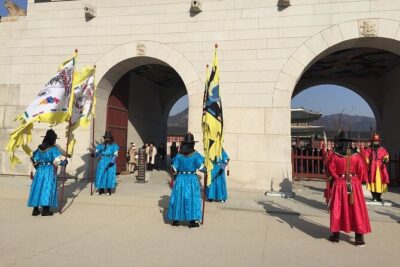
Small-Group Royal Palace and Seoul City Tour (hotel pick-up)
Read our review →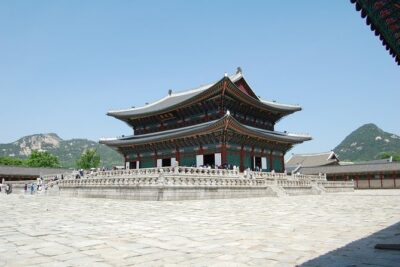
Seoul City Sightseeing Tour Including Gyeongbokgung Palace, N Seoul Tower, and Namsangol Hanok Village
Read our review →
Dark Side of the City and Ghost Stories Walking Tour
Read our review →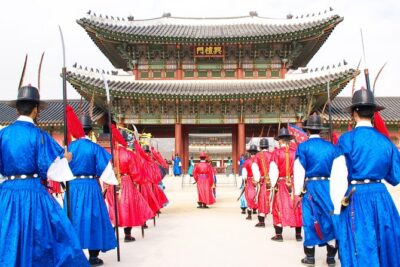
Seoul City Private Full-Day Tour Including Lunch
Read our review →
Seoul City Half Day Tour-Gyeongbok Palace Guard Changing Ceremony
Read our review →
Guided City Wall Sunset Hike with Korean Dinner
Read our review →Browse the lists this tour appears in