
Reviewed · DRINKING TOURS
Korean Brewery
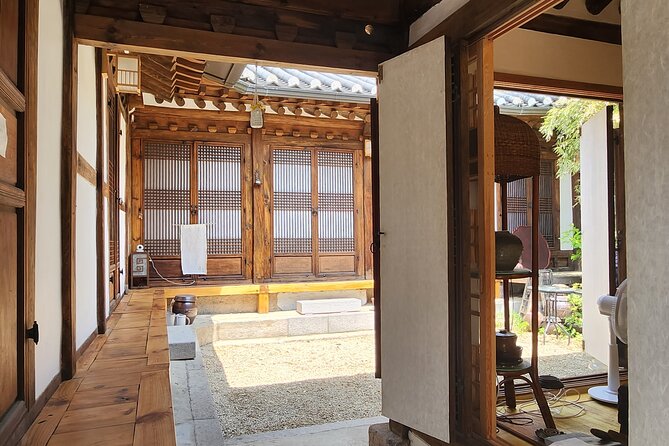
The best part of this Seoul evening is the meeting with a 10th-generation brewmaster in his own workshop. You taste rice-based makgeolli, yakju, and soju while learning how each drink is brewed or distilled, then sit down to a full Korean meal with more makgeolli.
I like the intimate group size, which gives you room to ask questions, and I like that the meal is not an afterthought. The food includes doenjang jjigae, jeon, bossam, side dishes, and regional seafood ingredients. The main drawback is the meeting point at 165 Anguk-dong can be tricky to find, especially if you do not know Seoul well, so arrive early.
Key points
- Meet a 10th-generation artisan: The brewmaster has been designated a Human National Treasure by the city of Seoul and uses a family recipe.
- Taste three Korean alcohol styles: Compare makgeolli, yakju, and soju while learning about alcohol levels, ingredients, and production methods.
- Walk through two central neighborhoods: The route links Bukchon Hanok Village with Insadong, combining old houses, craft workshops, and food culture.
- Finish with a proper Korean dinner: Expect jeon, bossam, soybean paste stew, side dishes, and premium makgeolli.
- Small groups make a difference: The published maximum is 12 people, with a minimum of two people per booking.
- Plan for a two-and-a-half-hour evening: You walk between stops, taste several drinks, and return to the starting point.
Meeting a Seoul brewmaster in Bukchon
This is not a bar crawl built around quick shots. The focus is Korean drinking culture, especially the old rice-based drinks that many visitors know only by name.
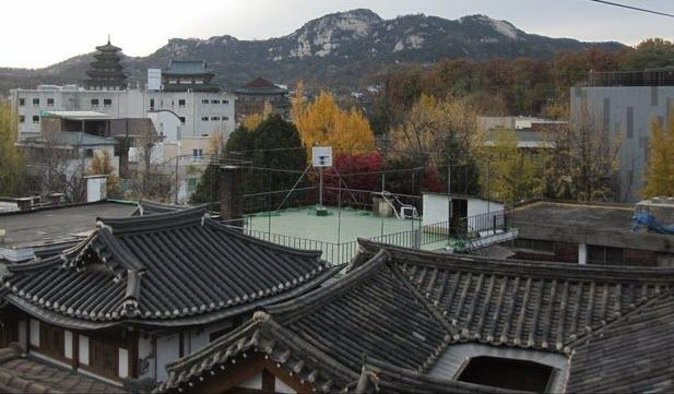
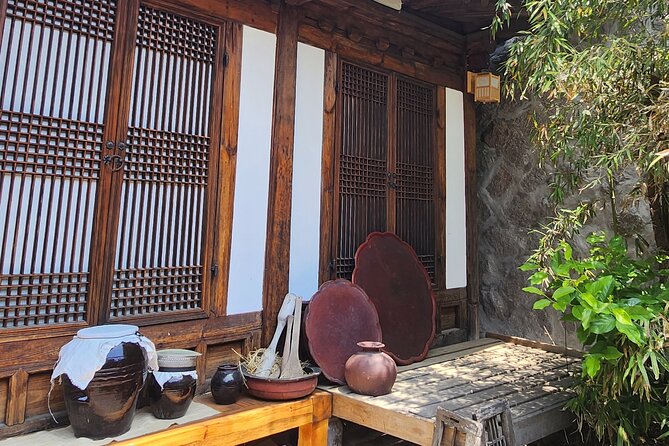
You begin at 165 Anguk-dong in Jongno District. From there, your guide leads the group on foot toward Bukchon Hanok Village. The neighborhood is known for its old traditional houses, craft workshops, and narrow streets. It gives the evening a useful setting because you are seeing historic Seoul while learning about drinks with equally old roots.
The walk is part of the experience, not just a way to get from one address to another. Guides such as Veronica and Jay have added neighborhood explanations and food suggestions along the way. That can make the opening stretch feel more like a local orientation than a simple transfer.
You should wear comfortable walking shoes. The tour operates in all weather, so dress for the forecast. The meeting point is near public transportation, but one published account found the directions less clear than expected. I would allow extra time, particularly if this is your first visit to the Anguk area.
A few more things to do in Seoul worth a look
- Seoul: Pub Crawl
★ 4.7 · 903 reviews - The Seoul Pub Crawl Official
★ 5.0 · 838 reviews - Drinking and Eating through the Alleys of Seoul
★ 5.0 · 364 reviews
Three drinks, three different identities
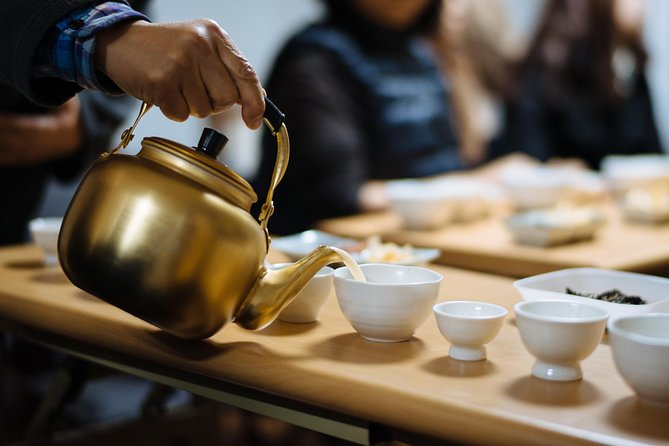
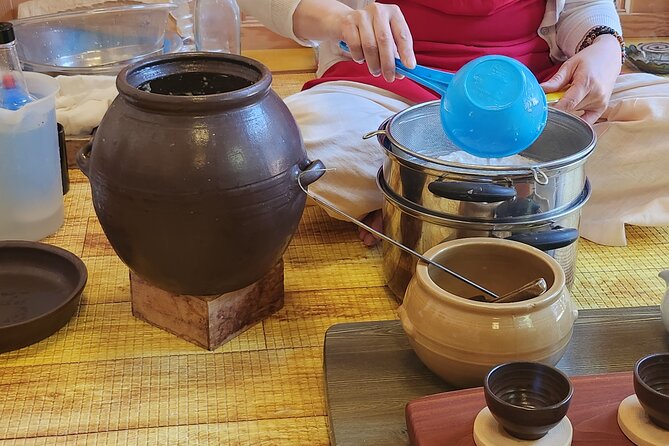
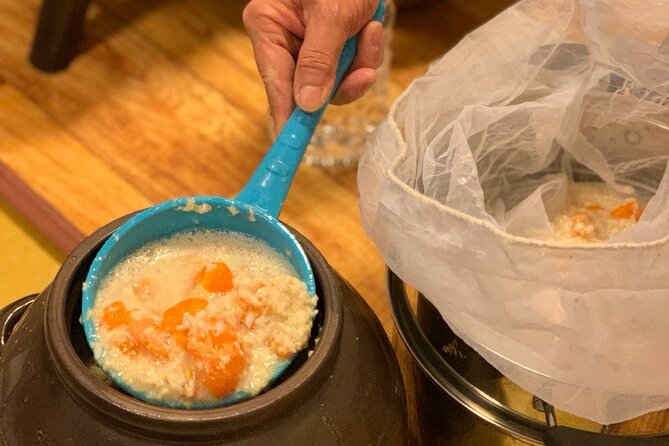
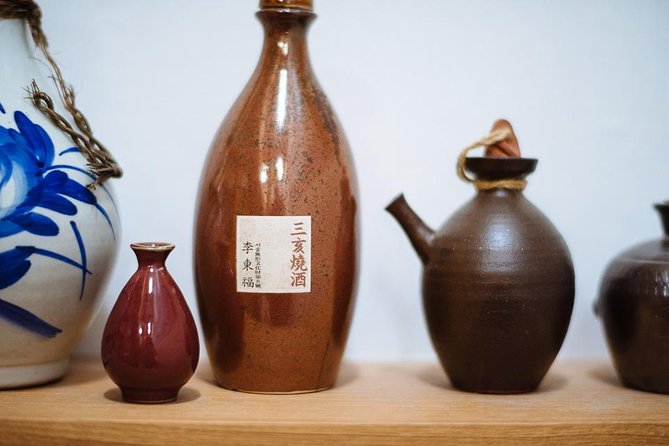
At the workshop, the brewmaster explains how traditional Korean alcohol is made from rice. The tasting includes makgeolli, yakju, and artisan soju, with the guide translating the process and putting the drinks into context.
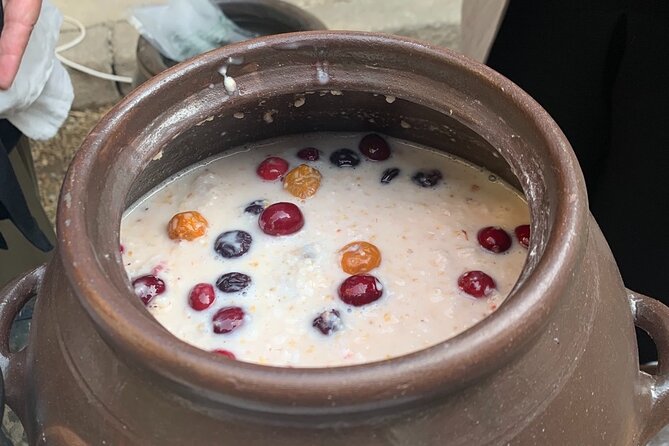
Makgeolli is the cloudy rice drink most closely associated with casual Korean dining. It is generally softer and more rustic in character than clear distilled spirits, and it works well with savory food. Here, you taste it at the workshop and again with dinner, which lets you notice how the drink behaves alongside different dishes.
Yakju is a clear rice wine. The tasting can include different styles and seasonal varieties. One reported tasting featured a grape-flavored yakju that reminded the drinker of wine, while other samples had their own distinct character. The exact pours can change, so do not expect a fixed flight every time.
Soju is the distilled drink. The lesson covers distillation and alcohol content, helping you understand why artisan soju can taste very different from the inexpensive bottles commonly found in Korean restaurants. A mushroom-infused soju has been served on one occasion, with an earthy flavor compared to whiskey.
Those details matter because the tasting is not just a sequence of drinks. You get a vocabulary for comparing them. The guide explains what is brewed, what is distilled, and why the alcohol strength differs. If you are curious about home brewing or professional beer making, the workshop visit may be especially rewarding. One couple included a homebrewer and a professional brewer, and the chance to talk with the master brewer was a major part of their evening.
The value of meeting a 10th-generation artisan
The brewmaster is described as a city-designated Human National Treasure and a 10th-generation maker who follows a secret family recipe. That does not mean you will receive every technical detail of the formula. It does mean the visit connects the tasting to a living family tradition rather than a modern tasting room designed only for tourists.
You can see the workshop and learn about the production process directly from the artisan, with interpretation from the guide. On one occasion, the master was making a fresh batch of soju and allowed the group to sample experimental projects. That sort of access is not guaranteed, but it shows why a small group helps.
The atmosphere is likely to feel personal. The tasting takes place in a working setting, and the brewmaster is known for teaching with humor. You may ask questions about ingredients, fermentation, distillation, and alcohol levels instead of simply being handed a printed list.
The drinks can be stronger than casual makgeolli served at dinner, so pace yourself. This is a two-and-a-half-hour food and alcohol experience, not a reason to drink as quickly as possible. The guide is there to help explain the samples, but you remain responsible for knowing your limits.
From Bukchon Hanok Village to Insadong
The first listed neighborhood stop is Bukchon Hanok Village, with about 40 minutes set aside for the walk and visit. The area is naturally linked to the brewer’s workshop, making the route efficient. You see old Korean houses and craft shops before moving into the tasting.
Bukchon is hilly in parts and includes pedestrian streets, so comfortable footwear is useful. The walk also means this tour may not suit you if you want a seated tasting from start to finish. The movement is modest, but the evening has a walking component in addition to standing at the workshop and sitting at dinner.
From Bukchon, the route continues toward Insadong. This is one of Seoul’s best-known areas for traditional arts, food, and older cultural sights. The tour uses the neighborhood as a bridge between the drinks and the meal, rather than treating dinner as a separate restaurant booking.
The central location is convenient for continuing your evening in Seoul, although the tour itself ends back at the original meeting point. Hotel pickup and drop-off are not included, so you arrange your own way to Anguk-dong and home afterward.
Same base, a different kind of day out:
- Best DMZ Tour Korea from Seoul (Red Suspension Bridge Optional)
★ 5.0 · 41,422 reviews - DMZ Tour: 3rd Tunnel, Option(Suspension Bridge, Boat) from Seoul
★ 5.0 · 21,373 reviews - DMZ tour south Korea from Seoul (NK experience hall, defector)
★ 5.0 · 20,599 reviews - Seoul: DMZ Tour with Optional Suspension Bridge
★ 4.8 · 5,277 reviews
Dinner is a major part of the evening
After the workshop, you sit down at a small restaurant on a side street in Insadong. The meal includes traditional Korean dishes such as doenjang jjigae, jeon, bossam, and assorted side dishes.
Doenjang jjigae is a savory soybean paste stew. Jeon are Korean-style pancakes, often made with vegetables, seafood, or other fillings. Bossam is boiled pork belly served with accompaniments. Together, these dishes provide a broad introduction to Korean home-style and restaurant food rather than a single specialty.
The restaurant also uses ingredients connected with the tidal flats of Jeollanam-do, a province in southwestern Korea. The meal may include more than 15 dishes, according to the supplied description, so you should expect variety rather than a small tasting plate.
This is where the premium makgeolli earns its place. The drink is served with dinner, and the guide explains how it differs from what you tasted at the workshop. Food changes the way you notice sweetness, acidity, texture, and alcohol. A drink that seems bold by itself can make more sense beside pork, pancakes, stew, and salty side dishes.
The meal may not suit every palate. One participant found the traditional seafood dishes interesting but not especially suited to personal taste. That is a fair warning. This is a chance to try regional Korean food, not a menu designed around familiar Western preferences. If you dislike fermented flavors, seafood, soybean paste, or pork, ask the guide what is being served before booking.
Guides add the local context
The guide matters here because the brewmaster may not provide instruction in English directly. Guides including Veronica and Jay have been praised for clear interpretation, humor, warmth, and extra neighborhood information.
Veronica has also helped guests with restaurant suggestions and things to do in Seoul. Jay has been noted for fluent English and attentive handling of the group. Guide assignments can vary, so you should not book solely on the hope of having one particular person, but the experience depends heavily on good interpretation.
A strong guide ties the drinks to daily Korean food culture. You learn not only how soju is made but also how Korean drinking fits with meals, regional ingredients, and social habits. That makes the evening useful for the rest of your time in Korea. You will recognize more bottles and understand more of the menu when you visit restaurants on your own.
A small group makes the tasting better
The activity is limited to 12 people according to the additional booking information. The headline material also refers to a limit of 15, so the safest expectation is a small group with a maximum of 12.
That size works well for a workshop visit. You can hear the explanations, ask questions, and stay connected with the guide while walking through Bukchon and Insadong. A private booking is also possible in some cases. One private group of five found the evening especially comfortable, while another booking ran with only two people.
The minimum is two people per booking. Solo visitors are asked to contact the provider individually, so you should not assume that a one-person reservation will be accepted through the standard booking path.
The small size also helps at dinner. You can discuss the food as it arrives and ask how the dishes relate to local customs. Large groups often turn this sort of meal into a noisy procession. Here, the format is more relaxed.
Is $150 a fair price?
At $150 per person, this is not a bargain alcohol tasting. The price includes a local guide, alcoholic beverages, premium makgeolli, the workshop visit, and an upscale local meal. You are also paying for interpretation and a walking introduction to Bukchon and Insadong.
I think the price makes sense if you value access and context. A restaurant meal and a few bottles of soju would cost less, but they would not provide the visit with a 10th-generation artisan or an explanation of three different Korean alcohol styles. You also avoid the work of finding a suitable workshop and a traditional restaurant on your own.
The value is weaker if you mainly want a cheap night out or already know Korean drinks well. The meal is substantial, but additional food and drinks are not included. You may also find the itinerary too gentle if you prefer a fast-moving sightseeing tour with many major landmarks.
The experience is booked about 32 days ahead on average. That suggests you should reserve early if your Seoul dates are fixed, especially if you want a particular evening or a private booking.
Who should book this evening?
I would choose this for you if food and drink are central to your trip. It suits curious first-time visitors, people interested in traditional production, and anyone who wants a more local evening than a standard city tour.
It is also a strong choice for beer makers, wine drinkers, spirits fans, and homebrewers. The workshop gives you a chance to ask technical questions, while the dinner shows how the drinks work with food.
You may want to skip it if you do not drink alcohol, cannot manage a walking route, or prefer familiar food. The minimum age is 21, and the activity operates in all weather. You should also be comfortable with dishes that may include seafood, pork, fermented ingredients, and soybean paste.
The tour lasts about two hours and 30 minutes and ends where it began. That makes it easy to fit into a Seoul itinerary, but it is long enough that you should avoid scheduling another fixed evening event immediately afterward.
Final call on the Korean Brewery tour
Book this if you want to understand Korean alcohol rather than simply sample it. The strongest parts are the artisan workshop, the clear comparison between makgeolli, yakju, and soju, and the generous dinner in Insadong.
The main cautions are the price, the unclear meeting directions, the walking, and the possibility that some dishes will be unfamiliar. Arrive early, wear good shoes, pace your drinks, and come ready to try food outside your usual comfort zone.
For a culturally focused Seoul evening with a small group, this is a thoughtful choice. It gives you stories, flavors, and useful background you can carry into the rest of your time in Korea.
FAQ
How long does the Korean Brewery experience last?
The experience lasts approximately two hours and 30 minutes, including the neighborhood walk, workshop visit, tastings, and traditional dinner.
Where does the tour start?
It starts at 165 Anguk-dong, Jongno District, Seoul, South Korea.
Where does the tour end?
The activity ends back at the original meeting point.
What Korean drinks are included?
The tasting includes traditional makgeolli, yakju, and artisan soju. Premium makgeolli is also served with the meal.
What food is served at dinner?
The meal can include doenjang jjigae, jeon, bossam, assorted side dishes, and regional ingredients from the tidal flats of Jeollanam-do. The description also refers to more than 15 different dishes.
How many people can join the tour?
The additional booking information gives a maximum of 12 participants. The activity requires at least two people per booking.
Is there a minimum age?
Yes. Participants must be at least 21 years old.
Is hotel transportation included?
No. Hotel pickup and drop-off are not included. You make your own way to the meeting point and return there at the end.
More Breweries in Seoul
- Makgeolli Brewing Class
★ 5.0 · 21 reviews - Learn and Craft Makgeolli in a Traditional Brewery
★ 5.0 · 12 reviews
Just added in Seoul
- Your Personal Seoul Photographer!★ 4.1 · 15 reviews
- Seoul: Korean & English Language Exchange Global Party★ 5.0 · 28 reviews
- You’re Invited to Our Home in Seoul: The Only Cooking Class!★ 5.0 · 8 reviews
- From Seoul: Yongpyong Ski Day Tour with Transportation★ 4.9 · 40 reviews
- From Seoul: Hwacheon Ice Fishing and Lighting Festival Tour★ 4.5 · 4 reviews
- Unique Native Experience : Han River Picnic, Board game, BBQ★ 5.0 · 3 reviews
- Seoul: Gangneung BTS K-Pop & K-Drama Filming Locations Tour★ 4.6 · 14 reviews
- K-Pop Making Class with a Producer!★ 5.0 · 3 reviews
Drinking Tours, compared.
Drinking and Eating through the Alleys of Seoul
Read our review →
Anthony Bourdain-Inspired BBQ and Pub Experience
Read our review →
Korean Drinking Games Night (non-drinkers welcome)
Read our review →
Baseball Game Ticket with Dinner/Beer with the host
Read our review →Browse the lists this tour appears in