
Reviewed · PALACE & GYEONGBOKGUNG TOURS
Seoul: Gyeongbok Palace, Bukchon Village, and Gwangjang Tour
Seoul’s past and present come together quickly on this four-hour tour. You move from royal courtyards at Gyeongbokgung Palace to the traditional homes of Bukchon, then up to Bugak Skyway for broad city views before finishing at Gwangjang Market. I like the smart range of sights and the chance to hear local tips from guides such as Grace, Sunny, Chloe, Sophie, and Shin.
I also like the air-conditioned vehicle, which saves your legs and makes it possible to cover several parts of Seoul in half a day. The main caution is the pace: 30 or 40 minutes at a stop is enough for an introduction, but not enough for a slow visit. The ginseng museum also includes a sales presentation, so expect a commercial stop rather than a pure museum visit.
Key points at a glance
- Five very different Seoul stops: See a royal palace, traditional homes, a mountain overlook, a ginseng center, and a food market.
- A useful first-day orientation: The tour gives you history, basic cultural context, food suggestions, and ideas for the rest of your stay.
- Guides make the difference: Grace, Sunny, Chloe, Sophie, Shin, Stella, Henry, and others are praised for clear explanations, humor, photos, and personal attention.
- Short visits keep the route moving: You see a lot in four hours, but you will need to accept limited time at each place.
- The finish is practical: You end at Gwangjang Market, a good place to eat after the tour, but not back at your hotel.
- Good value at $32: Transport, a guide, and admission fees are included, though food, drinks, and personal purchases are extra.
A fast introduction to Seoul’s old and new sides
This tour works best as a first look at Seoul. In a single morning or afternoon, you get royal architecture, neighborhood streets, a mountain viewpoint, an explanation of Korean ginseng, and a famous market. You will not study any one site in great depth, but you will finish with a clearer sense of how Seoul connects its Joseon-era past with its modern city life.
The route also has practical value. Seoul is large, and moving between these areas on your own takes planning. The air-conditioned minivan or coach lets you cover more ground without changing subway lines or trying to work out each connection. That convenience matters most if you have only a short stay or want a guided orientation before exploring alone.
The experience is described as personalized, but the practical details suggest a shared tour rather than a private one. A private tour is not currently being offered, and the group can be as large as 100 people. Your experience will depend partly on the vehicle and group size on your date.
More palace and old-quarter walks in Seoul:
- Seoul: Gyeongbok Palace, Bukchon Village, and Gwangjang Tour
★ 4.9 · 2,321 reviews - Best Seoul City Tour (Gyeongbokgung Palace,Insadong,Namsan Tower)
★ 5.0 · 1,647 reviews - Small-Group Royal Palace and Seoul City Tour (hotel pick-up)
★ 5.0 · 1,474 reviews
Gyeongbokgung Palace in a 30-minute royal snapshot
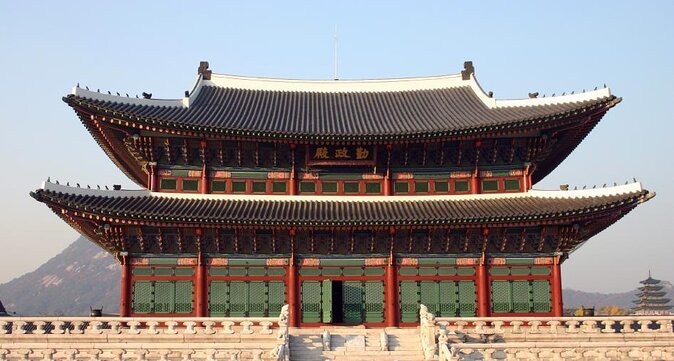
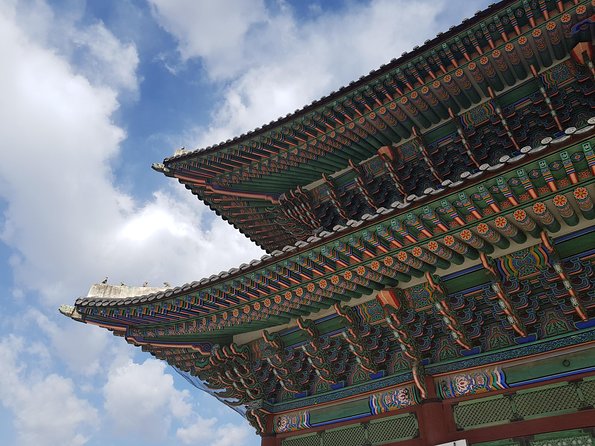
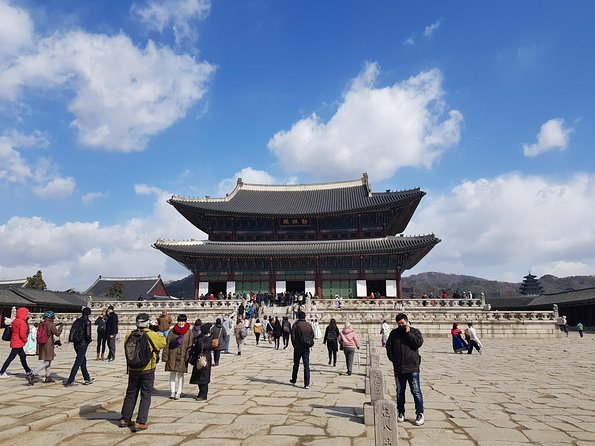
Gyeongbokgung is the strongest historical stop. It was the main palace of the Joseon dynasty and is one of Seoul’s largest and most important palace sites. The grounds give you a useful first lesson in Korean royal architecture, ceremonial space, and the scale of the old capital.
The scheduled visit is only about 30 minutes. That is enough to enter, see key courtyards, take photographs, and hear an explanation from your guide. It is not enough for a leisurely tour of every building or a slow wander through the grounds.
The Royal Guard Changing Ceremony may be part of your visit. This is one of the most visually appealing moments on the route, with colorful uniforms and formal movements. Timing matters, so do not assume you will see the full ceremony unless your guide confirms it on the day.
Your guide is especially useful here. Shin is praised for detailed historical storytelling, while Grace, Sunny, Sophie, Chloe, and Stella are all described as clear and engaging guides. Their role is not simply to point out buildings. They help explain why the palace matters and connect the site to Korean culture and history.
Wear shoes you can walk in comfortably. Palace grounds can involve substantial outdoor walking, and the tour runs in rain or shine. Winter visitors should take the cold seriously. One tour group found December conditions very cold, and another experienced a snowy palace visit. The snow may make beautiful photographs, but it does not make a short outdoor stop warmer.
Bukchon Hanok Village and the rules of a living neighborhood
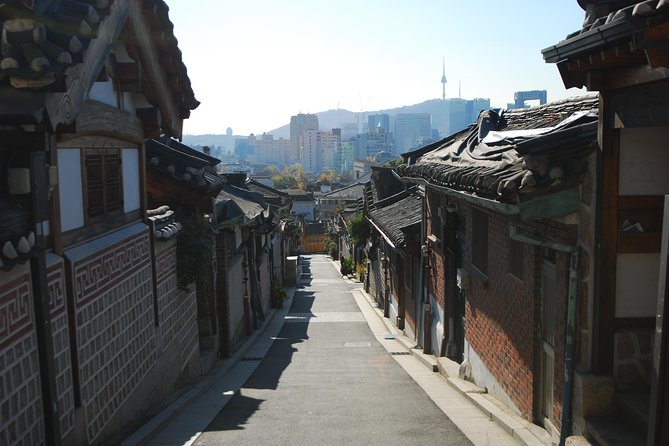
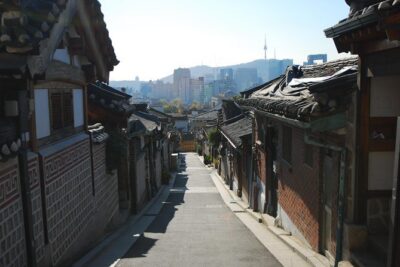
Bukchon Hanok Village takes you into a very different setting. Here, traditional Korean houses called hanok line hilly streets between major central districts. The appeal is visual: tiled roofs, wooden details, narrow lanes, and changing views between the houses.
The planned stop lasts about 20 minutes. Use it for photographs and a short explanation of hanok design. You will not have time to explore every lane, browse at length, or settle into a café.
Bukchon is also a residential area, not an open-air stage set. Keep your voice down, stay aware of entrances, and follow your guide’s instructions. The compact visit is useful because it introduces the neighborhood without asking you to spend a long time walking its slopes.
You may be tempted to rent a hanbok for palace photographs, but this tour does not provide hanbok rental time. If wearing traditional dress is important to you, plan that separately and allow much more time than this route provides.
Bugak Skyway for Seoul from above
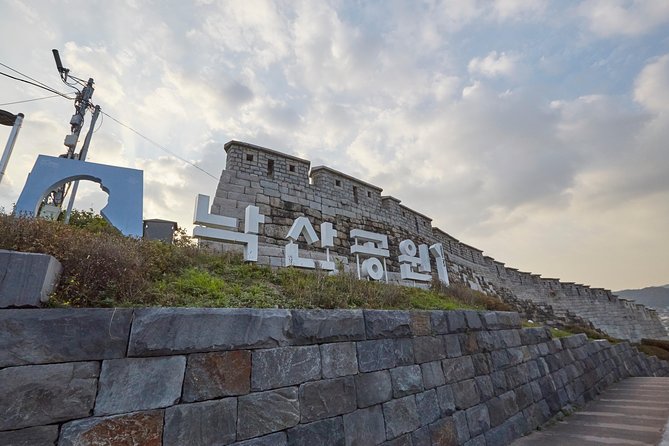
The 40-minute stop at Bugak Palgakjeong, also called the Bugak Pavilion, changes the rhythm of the tour. After the palace and village streets, you reach a mountain viewpoint on the slopes of Bugaksan Mountain. From here, you can look across Seoul from a quieter, higher position.
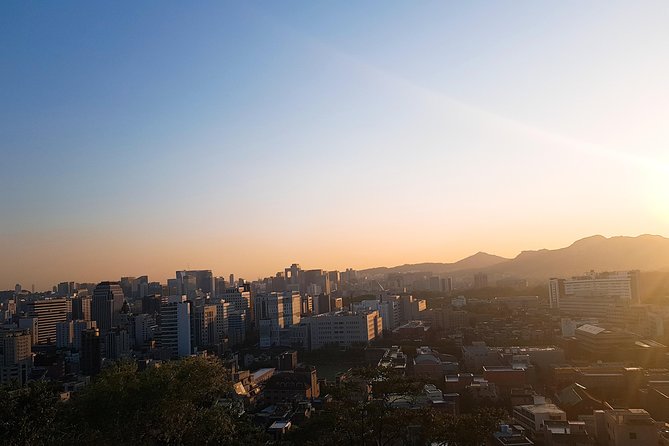
This is one of the route’s best photo stops. The broad view helps you understand Seoul as a huge city surrounded by hills, rather than as a collection of separate neighborhoods. Your guide can also help place the districts you have already seen within the wider city.
The pavilion is a good reason to keep a light jacket or extra layer handy. Conditions can feel colder on an exposed viewpoint, especially in winter. The stop is not a long mountain hike, but you should still expect some walking and uneven or sloped ground.
The main limitation is weather. On a clear day, the view can be a highlight. In rain, haze, or low cloud, you may see less. The tour operates in all weather, so treat the viewpoint as a worthwhile possibility rather than a guaranteed panorama.
More eating your way around Seoul:
- Seoul Street Food Market Tour
★ 5.0 · 1,226 reviews - Seoul: Night Market Food Tour with Local Guide
★ 4.9 · 943 reviews - Seoul Night Palace & Market Food Tour with Vehicle
★ 5.0 · 275 reviews - Seoul Fun Food Tour: 12 different food tastings
★ 5.0 · 266 reviews
The ginseng museum and the sales-presentation question
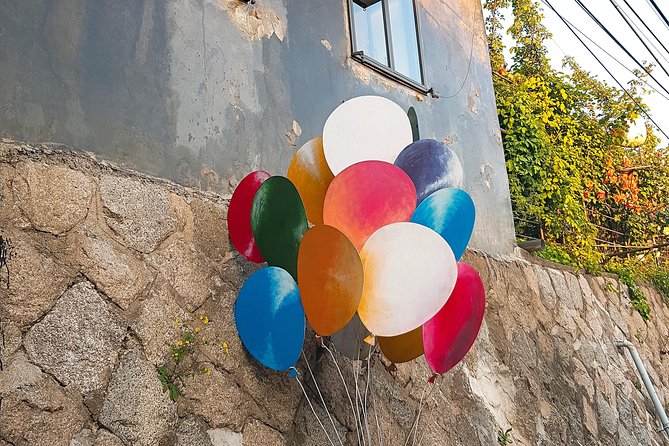
The ginseng stop gives you a look at an important Korean health product. Ginseng has been used in East Asian medicine for centuries and is presented here as a traditional herb associated with many ailments. The stop can help explain why ginseng is such a familiar product in Korean shops and markets.
The listed time is about 30 minutes, but the practical experience includes a sales room. The presentation may be interesting if you want to learn about ginseng products, preparation, and traditional uses. If you are not interested in buying supplements, it can feel like time taken from the sightseeing portion.
This is the clearest drawback on the route. Several comments describe the stop as more sales-focused than museum-focused, with some people feeling rushed through the exhibits before being shown products. Go in with realistic expectations. You can listen, ask questions, and browse without treating the visit as a shopping obligation.
I would not choose this tour mainly for the ginseng museum. I would treat it as a short cultural and commercial stop between the major sights. If you prefer a tour with no shopping component, this itinerary may not be your best match.
Finishing at Gwangjang Market
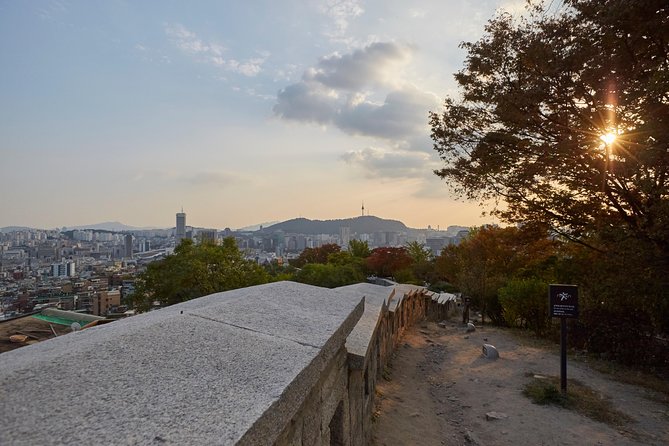
The tour ends at Gwangjang Market, and that is a smart finish. The market is one of Seoul’s best-known places for traditional food stalls and informal eating. After several hours of sightseeing, you can stay on for a meal, try different dishes, or simply walk through the food area at your own pace.
Food and drinks are not included, so bring a separate budget for eating. The tour itself gives you an introduction, but the real value comes from having time afterward to choose what interests you. Your guide may also suggest local foods and places to try.
The ending point is important when planning your day. You do not return to your hotel. The tour begins at Myeongdong Station, near Exit 1 at 61-7 Chungmu-ro 2-ga, and ends at Gwangjang Market. The description also refers to private round-trip transportation, but the detailed meeting information says hotel pickup and drop-off are not included. Plan around the stated meeting point and market ending rather than expecting hotel service.
How the guides shape the experience
The route is fixed, but the guide can change how useful it feels. Grace is praised for being lively, organized, and helpful to solo visitors. Sunny is repeatedly noted for clear English, historical explanations, photography help, and suggestions for other places to see. Chloe is described as funny and attentive, while Sophie receives praise for her energy, kindness, and ability to keep the group together.
Shin is a good fit if you enjoy historical detail. Stella is noted for cultural and historical explanations, and Henry is described as clear and informative in English. These are not small details. With only 20 to 40 minutes at each stop, a guide who explains the essentials well can make the difference between a useful introduction and a rushed photo collection.
Several guides also take photographs for the group. That is handy for solo visitors and couples who want pictures together. Do not treat it as a formal photography service, but it is a helpful extra that has been singled out by many people who enjoyed the tour.
Is four hours enough?
Four hours is enough for a broad introduction, not a full Seoul sightseeing day. You will see five stops, but the time includes driving, organizing the group, and walking between meeting points. The schedule is packed by design.
The short palace and Bukchon visits are the biggest tradeoff. If you want to read every sign, explore side streets, or spend time inside multiple palace buildings, book those places separately. This tour gives you orientation and context, then leaves you with ideas for a second visit.
The route suits a first full day in Seoul particularly well. You can learn the basic layout, ask your guide about food and neighborhoods, and use the rest of your trip to return to the places that interest you most. It also suits a short stopover, when independent planning may take more time than you have.
What the $32 price really includes
At $32 per person, the price is strong for a four-hour guided route that includes transportation, a professional guide, and admission fees. You are paying for convenience and structure rather than an in-depth private tour.
The value is highest if you want to see several districts in one stretch. Public transport can be inexpensive, but moving between five stops still takes time and planning. The vehicle also gives you a break from Seoul’s hills and winter weather.
The value is lower if you already know Seoul well, dislike group tours, or want long visits at major sights. The tour requires at least two people to book, is not currently private, and may have up to 100 participants. A large group can make stops feel less personal and can add waiting time.
Food, drinks, personal expenses, travel insurance, and hotel pickup or drop-off are not included. You can cancel for a full refund if you do so at least 24 hours before the start time. Last-minute cancellations and changes are not accepted under the stated policy.
Who should book this Seoul tour?
I would recommend it to a first-time visitor who wants an efficient start. It is also a good fit for solo visitors who want company, families who prefer arranged transport, and anyone who values a guide’s explanation more than a slow, independent visit.
It is especially useful if you want help with photographs, food ideas, and cultural background. The guides are often praised for remembering names, checking that nobody is left behind, and adjusting their explanations to the group’s interests.
I would hesitate if you want a private experience, dislike shopping stops, or plan to spend half a day inside Gyeongbokgung alone. The ginseng presentation is the main point to weigh carefully, and the pace may feel rushed if you prefer lingering.
FAQ
How long does the tour last?
The tour lasts approximately four hours.
Where does the tour start?
It starts near Myeongdong Station at 61-7 Chungmu-ro 2-ga, Jung District, Seoul, near Exit 1.
Where does the tour end?
The tour ends at Gwangjang Market, not at your hotel.
Is hotel pickup and drop-off included?
No. Hotel pickup and drop-off are not included in the detailed tour information.
Is transportation included?
Yes. Transport by air-conditioned minivan or coach is included.
Are admission fees included?
Yes. Admission fees are included.
Is food included?
No. Food and drinks are not included. You can buy food at Gwangjang Market after the tour.
Is hanbok rental available?
No. Hanbok rental time is not offered as part of this tour.
Can I join at Gyeongbokgung Palace after the tour starts?
No. Joining at Gyeongbokgung Palace after the tour has started is not permitted.
What happens if it rains?
The tour runs rain or shine. Comfortable walking shoes are recommended.
Is the tour private?
No. A private tour is not currently being offered. The maximum group size can be 100 people.
Can I cancel for a full refund?
Yes, if you cancel at least 24 hours before the experience start time. Cancellations made less than 24 hours in advance are not refunded.
Should you book it?
Book this tour if you want a well-priced first look at Seoul and are happy to trade depth for variety. The palace, hanok village, mountain viewpoint, market, and guide commentary give you a useful four-hour introduction, while Gwangjang Market leaves you in a good place to continue on your own.
Skip it if you want a relaxed palace visit or have no interest in a ginseng sales stop. For most first-time visitors with limited time, though, the $32 price and efficient route make this a sensible way to get your bearings before exploring Seoul more deeply on your own.
Just added in Seoul
- Suwon: Baseball Game with Fortress and Local Food Tour★ 5.0 · 3 reviews
- Seoul: War Memorial of Korea Private Guided Museum Tour★ 4.9 · 29 reviews
- Seoul: Wine & Korean BBQ, Perfect Pairing Dinner in Sinchon★ 5.0 · 6 reviews
- Seoul : Your Personal Photographer in Gyeongbokung★ 5.0 · 7 reviews
- Seoul : Efoil Experience in Han River★ 5.0 · 5 reviews
- Seoul: Vivaldi Park Winter Ski with Eobi Ice Valley Day Tour★ 4.6 · 16 reviews
- Seoul: Vivaldi Park Winter Ski with Nami Island Day Tour★ 5.0 · 4 reviews
- Seoul: SnowyLand in Vivaldi Park with Nami or Alpaca★ 4.8 · 11 reviews
Palace & Gyeongbokgung Tours, compared.
Gyeongbok Palace, Bukchon Village, and Gwangjang Tour
Read our review →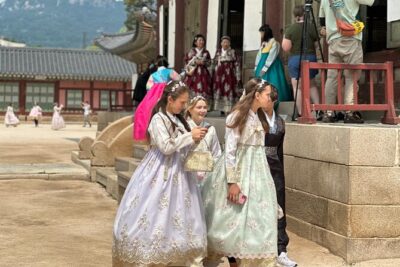
Best Seoul City Tour (Gyeongbokgung Palace,Insadong,Namsan Tower)
Read our review →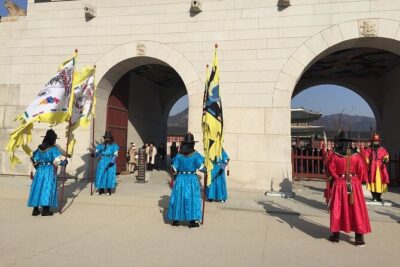
Small-Group Royal Palace and Seoul City Tour (hotel pick-up)
Read our review →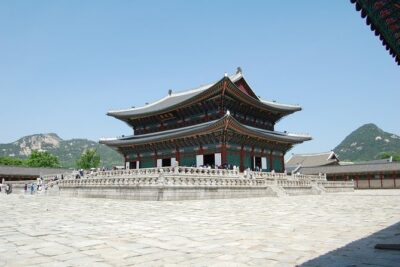
Seoul City Sightseeing Tour Including Gyeongbokgung Palace, N Seoul Tower, and Namsangol Hanok Village
Read our review →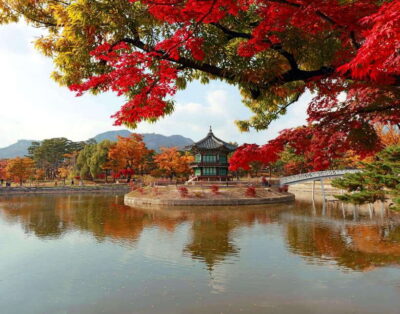
Seoul Highlights: Gyeongbok Palace, Insadong & N Seoul Tower
Read our review →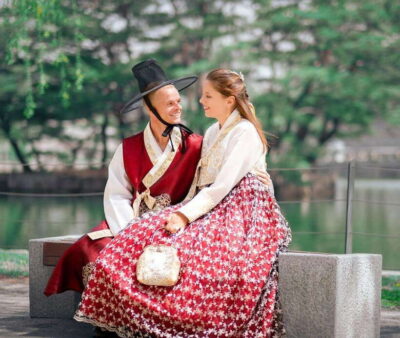
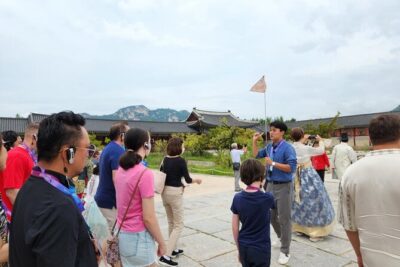
Seoul City Half Day Tour-Gyeongbok Palace Guard Changing Ceremony
Read our review →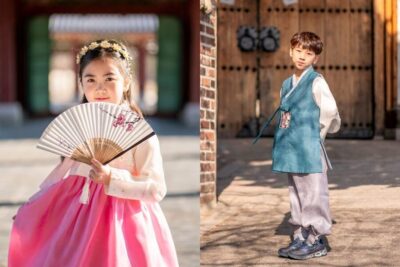
Browse the lists this tour appears in