
Reviewed · DMZ & JSA TOURS
Half-Day South Korea DMZ Small-Group Tour from Seoul
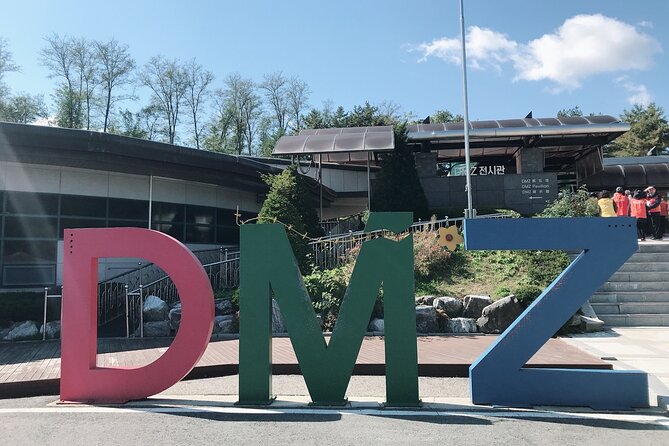
The most striking part of this day is the chance to stand near one of the world’s most closely watched borders, then walk through a tunnel built for a possible North Korean attack. At Dora Observatory, you can look toward North Korea, while the 3rd Tunnel gives the political story a physical, underground shape.
I like the compact route and the included transport, since the DMZ is outside Seoul and difficult to handle on your own. I also like the human touch provided by guides such as Henry Park, who is praised for clear explanations, careful timing, and help with wider Seoul plans. The main catch is that access can change with weather and military conditions, and the tour is non-refundable if you cancel.
Key points at a glance
- Walk through the 3rd Tunnel: Enter a narrow passage discovered in 1978 and learn why South Korea believed it was built for military use.
- Look into North Korea: Dora Observatory offers views toward Gaeseong, Songaksan, and the nearby North Korean area when conditions allow.
- See the Freedom Bridge: This modest bridge carries heavy meaning because South Koreans returned across it after the Korean War.
- Start at Imjingak: Monuments, statues, and memorials introduce the war and the hope for reunification.
- Travel in a small group: The stated maximum is 10 people, with the price listed as $500 per group of up to four.
- Bring the correct passport: Your original passport is mandatory for DMZ entry. A copy or phone photograph will not do.
Why the Seoul DMZ trip matters
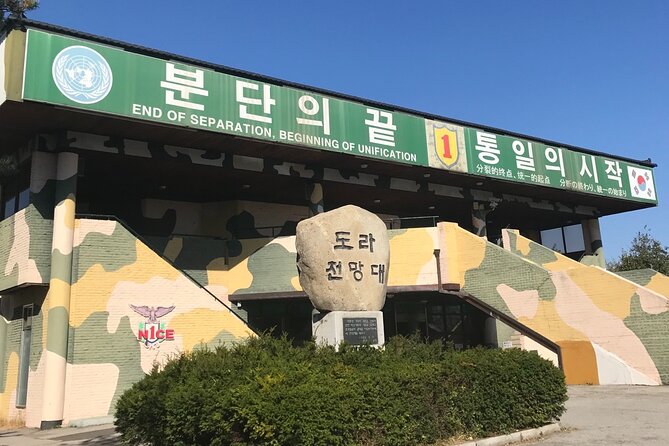
The Demilitarized Zone is not simply a sightseeing stop. It is a living border shaped by the Korean War, military tension, and the continuing division between North and South Korea.
You will not get a full political seminar in six and a half hours, but the route gives you several ways to understand the subject. At Imjingak, you see public memorials and symbols of separation. At the Freedom Bridge, you connect that history with the movement of people. At the 3rd Tunnel, the threat becomes concrete and claustrophobic. At Dora Observatory, you look across the border toward North Korea.
That progression is what makes the outing worthwhile. The stops are not random photo opportunities. Each one adds a different piece to the story.
The mood can also shift quickly. Imjingak has monuments and visitor facilities, while the tunnel is quiet, enclosed, and physically demanding. The observatory depends on visibility. On some days, the view may be clear enough to pick out distant places. On others, haze or military restrictions may limit what you see.
Other trips up to the border from Seoul:
- Best DMZ Tour Korea from Seoul (Red Suspension Bridge Optional)
★ 5.0 · 41,422 reviews - DMZ Tour: 3rd Tunnel, Option(Suspension Bridge, Boat) from Seoul
★ 5.0 · 21,373 reviews - DMZ tour south Korea from Seoul (NK experience hall, defector)
★ 5.0 · 20,599 reviews
Imjingak Pyeonghoa-Nuri Park: a thoughtful opening stop
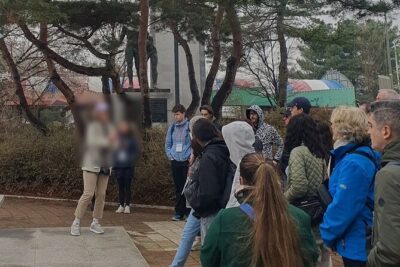
The tour begins at Imjingak Pyeonghoa-Nuri Park, about 7 kilometers from the Military Demarcation Line. You have around 45 minutes here, with admission included.
This is a useful first stop because it gives you context before you reach the more controlled parts of the border area. The park contains statues and monuments connected with the Korean War, along with reminders of the hope that the Korean Peninsula may someday be reunited.
I would give your guide your attention here. The memorials may not explain their meaning fully on their own, and a good guide can connect them to the wider story of war, displacement, and division. Henry Park is specifically praised for his cultural background, clear explanations, friendly manner, and careful time management.
The stop is not designed as a quiet museum visit. It is a public memorial area, so you may find several things competing for your attention. Still, the 45-minute timing gives you enough room to see the main monuments without turning the beginning of the tour into a rushed photo stop.
Freedom Bridge: a simple structure with serious meaning
The Freedom Bridge in Paju is scheduled for about 20 minutes. Architecturally, it is not grand. That is part of the point.
The bridge was built for temporary use, but it became important because South Koreans returned home across it after the Korean War. Its value is historical and emotional rather than decorative. You are looking at an ordinary crossing that became tied to separation, return, and the uncertain fate of families divided by conflict.
Twenty minutes is enough for a short explanation and a look around, but not for a long visit. Think of this as a focused stop that adds meaning to the day rather than a major attraction in its own right.
This is also a good example of why the tour works better with commentary. Without context, the bridge could seem like a plain structure. With the story attached, its purpose becomes much clearer.
The 3rd Tunnel: the day’s most physical stop
The 3rd Tunnel is likely to be the most memorable part of the route. South Korean forces discovered it in 1978. It is about 1,635 meters long, 2 meters wide, and 2 meters high, and it lies roughly 52 kilometers from Seoul.
The tunnel was believed to have been built for a North Korean military advance. Estimates suggest it could have allowed about 30,000 soldiers to move through in a short period. Those figures help explain why the discovery mattered, but the dimensions tell the story better than numbers do.
At 2 meters high and 2 meters wide, the passage is tight. You should expect a walk through a confined underground space rather than a relaxed museum visit. If you dislike narrow areas or find low ceilings uncomfortable, take that seriously before booking.
The tunnel is included in the route, but the provided information does not state that a separate admission charge is included at this stop. The tour does include all fees and taxes overall, yet it is sensible to confirm the exact entry arrangements when your booking is confirmed.
You should also follow instructions closely inside the tunnel. The DMZ is a controlled military area, not a normal public attraction. The physical setting makes the history feel immediate, but it also means this stop may not suit everyone.
A few more things to do in Seoul worth a look
- Seoul: Half-Day DMZ Tour Led by a Retired Military Officer
★ 4.9 · 1,399 reviews - Korean Folk Village Half-day Guided Tour from Seoul
★ 5.0 · 13 reviews - Busan Half-Day Customizable Private Tour in English
★ 5.0 · 34 reviews - Jeju Private Half-Day Tour for Cruise Customers
★ 5.0 · 9 reviews
Dora Observatory: looking across the border
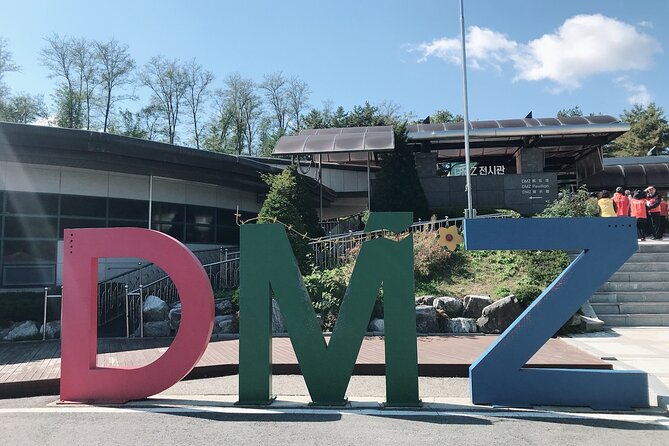
Dora Observatory is near the 3rd Tunnel and was first opened to the public in 1987. You have approximately 45 minutes here.
From the observatory, you may see North Korean territory and places such as Gaeseong, Songaksan, and the Kim Il Sung statue area, depending on visibility and current access rules. The view is the emotional high point for many people because the border becomes something you can see rather than just read about.
Keep your expectations sensible. You are not guaranteed a dramatic panorama. Weather, haze, distance, and military restrictions can affect what is visible. The tour description itself notes that current political conditions can mean some expected sights are not available.
That uncertainty is not a flaw unique to this tour. It is part of visiting a live border. The advantage of having a guide is that you can still understand what you are seeing, or why a certain area is closed or difficult to make out.
The observatory also balances the tunnel nicely. Underground, you feel the threat of conflict. Here, you confront the separation across open space. Together, the two stops make the day more powerful than either would be alone.
The Seoul return: ginseng and duty-free shopping
After the DMZ portion, the route returns to Seoul and includes a 30-minute stop at a ginseng museum and duty-free shop.
The ginseng museum explains different types of ginseng, its history, and its claimed positive effects. This can be useful if you want an introduction to one of Korea’s best-known traditional products. It also gives you a chance to ask questions about what you are seeing before deciding if anything interests you.
The duty-free stop offers boutiques and luxury high-fashion brands. This is not the main reason to book the tour, and some people may find the commercial ending less meaningful than the historical stops. Still, it gives you a chance to browse, and it rounds out the schedule before returning to Seoul.
You should not expect lunch to be included. The package covers transport, an English-speaking guide, and all fees and taxes, but food, accommodation, and personal expenses are not included. Plan for your own meal and purchases.
Guide quality can shape the whole day
The DMZ is a place where a guide matters. Signs and memorials can only give you so much, and the political background is complex. You want someone who can explain the setting without turning the day into a lecture.
Henry Park is the guide most closely associated with the praise attached to this experience. He is described as friendly, professional, helpful, and good at managing time. He is also praised for Korean cultural and food knowledge, driving skill, and practical suggestions for places to eat.
That wider knowledge can be useful. The day begins and ends in Seoul, and a guide who can answer questions about food, culture, or other city sights adds value beyond the border stops. Henry has also been praised for helping with broader Seoul visits that included Gyeongbokgung, Bukchon, and Insadong, though those places are not part of this half-day DMZ itinerary.
Guide assignments can vary, so do not assume Henry will personally lead every departure. The supplied information identifies an English-speaking guide as included, and Henry is the named guide praised in the available feedback.
Group size, transport, and the $500 price
The advertised price is $500 per group of up to four people. That makes the value very different for a couple, a family, or a solo customer.
For four people, the effective cost is $125 per person. For two, it becomes $250 each, and for one person the price is substantial. The tour also states a maximum of 10 participants, so you should clarify how the group pricing and maximum group size apply to your selected booking.
The value comes from convenience. You get transport from Seoul, an English-speaking guide, commentary, and included fees. You do not have to work out the route to Paju, manage the controlled entry process, or keep track of several separate stops.
The six-and-a-half-hour duration is also practical. It is long enough to reach the border area and visit the major points, but short enough to leave part of your Seoul day free. The 8:00 a.m. start and return to Seoul City Hall make the schedule easy to fit into a city stay, though you should allow extra flexibility around military checks and road conditions.
Passport rules and booking timing
Your original passport is mandatory for entry to the DMZ. A photocopy will not be accepted, and neither will a photograph of your passport on your phone. Treat this as the most important practical rule of the day.
There are limited tickets each day, sold on a first-come, first-served basis. Booking about one month ahead is suggested, although last-minute places may appear at random times. Confirmation is sent within 48 hours of booking, subject to availability.
The experience requires good weather. If poor weather causes the operator to cancel, you are offered another date or a full refund. Your own cancellation is different: the booking is non-refundable and cannot be changed for any reason.
Most people can participate, but the tour includes a walk through a low, narrow tunnel. The supplied information does not give detailed accessibility guidance, so ask the operator directly if you have concerns about the tunnel or walking requirements.
Who should book this DMZ tour?
I would recommend it to you if you want a structured introduction to the Korean War and the modern division of the peninsula, especially if you have limited time in Seoul.
It suits people who value explanation as much as sightseeing. The memorial park, bridge, tunnel, and observatory each offer a different angle, and the English commentary helps tie them together.
It is less suitable if you need a guaranteed view into North Korea, dislike enclosed spaces, or prefer to explore at your own pace. The border area is controlled, and access may change. The shopping stop at the end may also feel like an add-on if you want a purely historical day.
Should you book it?
Book this tour if the DMZ is high on your Seoul list and you want the simplest way to see the main accessible sites in one morning and afternoon. The strongest reasons are the efficient route, included transport, small stated group size, and the chance to combine the 3rd Tunnel with Dora Observatory.
The price is easiest to justify for a group of four. Solo visitors and couples should compare the per-person cost with other Seoul DMZ options before committing. Bring your original passport, book early, and accept that weather and current political conditions can change the schedule.
FAQ
How long does the DMZ tour last?
The tour lasts approximately 6 hours and 30 minutes.
Where does the tour start?
It starts in Seoul at 8:00 a.m.
Where does the tour end?
It ends at Seoul City Hall, 110 Sejong-daero, Jung District, Seoul, near City Hall Subway Station on Line 1.
Is an original passport required?
Yes. You must bring your original passport to enter the DMZ. A copy or passport photo is not accepted.
What is included in the price?
The price includes all fees and taxes, an English-speaking guide with commentary, and all transportation.
Is lunch included?
No. Lunch, accommodation, and personal expenses are not included.
What happens if bad weather cancels the tour?
If poor weather causes cancellation, you will be offered a different date or a full refund.
Just added in Seoul
- Your Personal Seoul Photographer!★ 4.1 · 15 reviews
- You’re Invited to Our Home in Seoul: The Only Cooking Class!★ 5.0 · 8 reviews
- From Seoul: Yongpyong Ski Day Tour with Transportation★ 4.9 · 40 reviews
- Seoul: Korean & English Language Exchange Global Party★ 5.0 · 28 reviews
- From Seoul: Hwacheon Ice Fishing and Lighting Festival Tour★ 4.5 · 4 reviews
- Unique Native Experience : Han River Picnic, Board game, BBQ★ 5.0 · 3 reviews
- Seoul: Gangneung BTS K-Pop & K-Drama Filming Locations Tour★ 4.6 · 14 reviews
- K-Pop Making Class with a Producer!★ 5.0 · 3 reviews
DMZ & JSA Tours, compared.
Best DMZ Tour Korea from Seoul (Red Suspension Bridge Optional)
Read our review →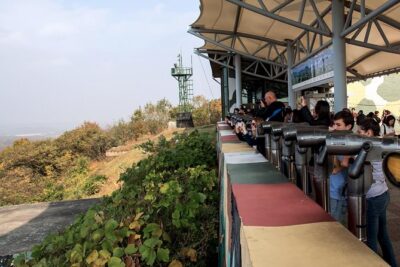
DMZ Tour: 3rd Tunnel, Option(Suspension Bridge, Boat) from Seoul
Read our review →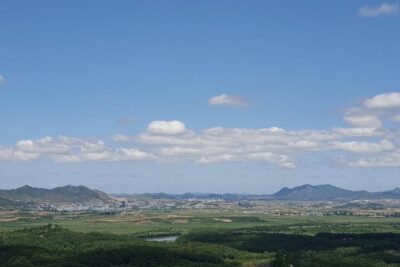
DMZ tour south Korea from Seoul (NK experience hall, defector)
Read our review →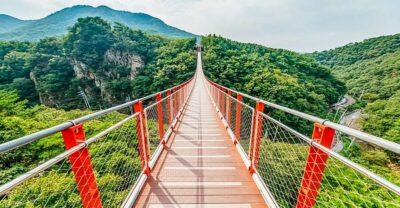
DMZ Insider Tour: 3rd Tunnel, NK Defector Meet & Red Bridge
Read our review →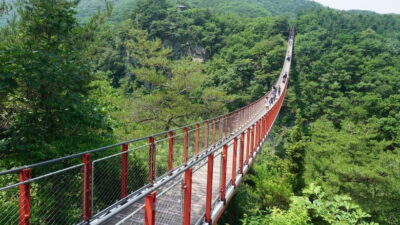
Signature DMZ Tour: Exclusive Defector Talk & Suspension Bridge
Read our review →
Thrilling Korean DMZ 3rd Tunnel Tour from Seoul + Red Bridge Rush
Read our review →
DMZ Past and Present: Korean Demilitarized Zone Tour from Seoul
Read our review →Browse the lists this tour appears in