
Reviewed · PALACE & GYEONGBOKGUNG TOURS
Korean Palace and Temple Tour in Seoul: Gyeongbokgung Palace and Jogyesa Temple
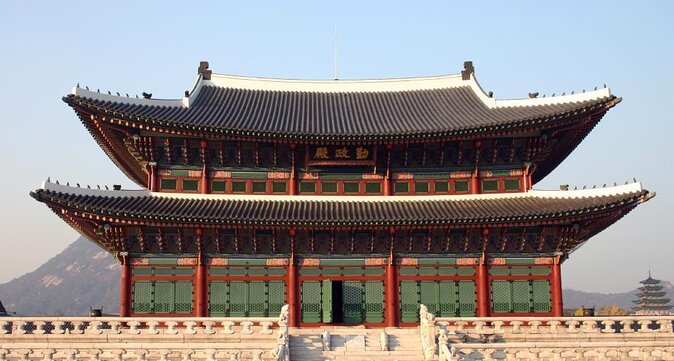
Gyeongbokgung Palace gives this Seoul tour its anchor: broad courtyards, royal buildings, palace gardens, and a direct look at Joseon-era court life. From there, the National Folk Museum explains how ordinary Koreans lived, while Jogyesa Temple offers a quieter look at Buddhism in modern Seoul.
I like the hotel pickup and air-conditioned vehicle, especially when you have only one morning in the city. I also like the mix of royal history, everyday customs, and living religious practice. The main drawback is the 30-minute ginseng-center stop, which some guides handle well but which can feel like a sales pitch.
- Gyeongbokgung Palace: Spend about an hour at Seoul’s largest and grandest royal palace, with admission included.
- National Folk Museum: Get a short introduction to Korean life from ancient times through modernization.
- Jogyesa Temple: See one of Korea’s leading Zen Buddhist temples and learn about Buddhism’s place in Korean culture.
- Strong guide factor: Guides including AJ, Katie, Grace, Chloe, Lizzy, and Jun have been praised for clear explanations, humor, and group care.
- Fast half-day format: Four main stops fit into about 3.5 hours, but you will not have long, leisurely visits.
- Ginseng-center stop: The visit is included in the schedule, so know in advance that shopping is part of the morning.
A useful first morning in Seoul
This tour is built for the first-time visitor who wants a quick cultural orientation without figuring out Seoul’s transport system. At $40 per person, the price covers hotel pickup, an English-speaking local guide, air-conditioned transport, and palace admission. That is fair value if you want convenience and commentary.
You are not buying a slow, specialist palace visit. You are buying a moving introduction to Seoul, with several short stops tied together by a guide. I would choose it early in a Seoul stay, then return later to whichever place deserves more time.
The schedule begins at 8:30 am and lasts about three and a half hours. Pickup is offered from your Seoul hotel, but hotel drop-off is not included. The advertised end point is around Seoul City Hall, so plan the rest of your day from central Seoul rather than assuming you will be returned to your hotel.
The group can include up to 20 people. That is large enough for the guide to matter a great deal. A guide such as AJ, Katie, Chloe, or Grace can keep the morning lively and organized, but a larger group also means you need to stay close and listen for meeting instructions.
Gyeongbokgung Palace, Seoul’s royal centerpiece
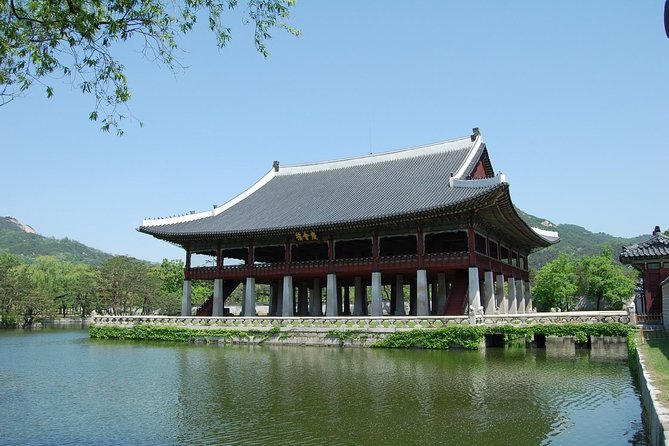
Gyeongbokgung was the primary residence of the royal family during the Joseon Dynasty. It is also the largest of Seoul’s Five Grand Palaces, making it the most substantial stop on the tour.
You get about one hour here, with admission included. That is enough to see the main areas and understand the palace’s role, but not enough for a leisurely wander through every corner. Wear comfortable shoes, since the visit involves walking through the compound rather than simply viewing the palace from outside.
The palace works best with a guide because its courtyards and buildings can blur together if you do not know what you are seeing. A good explanation helps you picture the royal household, court officials, and the strict order of Joseon life. Guides are also useful for pointing out details you might pass without noticing.
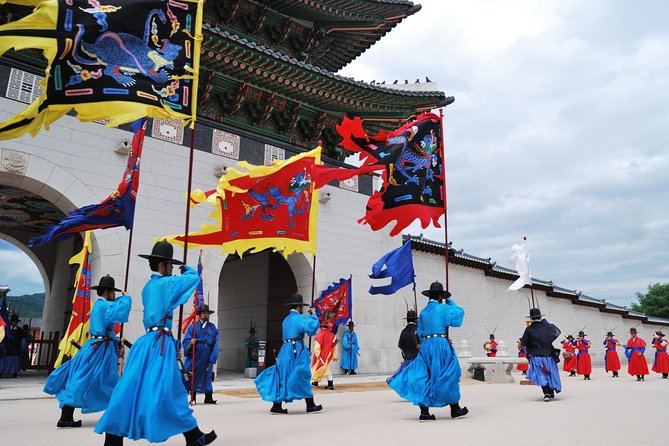
Some tours begin at the back of the palace and move toward the front gate. That route can help the group reach the main entrance at the right time for the changing of the guard, when the schedule allows. One guest found that a change in the order of stops made the palace portion feel rushed, so timing matters here.
Ask your guide early if the changing of the guard is part of your morning plan. The information supplied for this tour does not promise a specific ceremony time, and the order can change. If seeing it is important to you, say so at the start rather than expecting the itinerary to unfold in one fixed order.
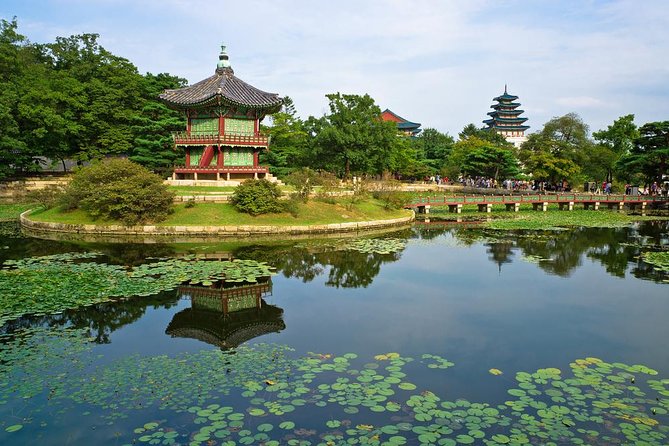
The palace is also a strong photo stop. The wide courtyards and traditional buildings give you a clear sense of royal scale, while the gardens provide a break from the hard lines of the main ceremonial areas. Your free time may be brief, so take photos as you go instead of waiting until the end.
More palace and old-quarter walks in Seoul:
- Seoul: Gyeongbok Palace, Bukchon Village, and Gwangjang Tour
★ 4.9 · 2,321 reviews - Best Seoul City Tour (Gyeongbokgung Palace,Insadong,Namsan Tower)
★ 5.0 · 1,647 reviews - Small-Group Royal Palace and Seoul City Tour (hotel pick-up)
★ 5.0 · 1,474 reviews
The National Folk Museum and ordinary Korean life
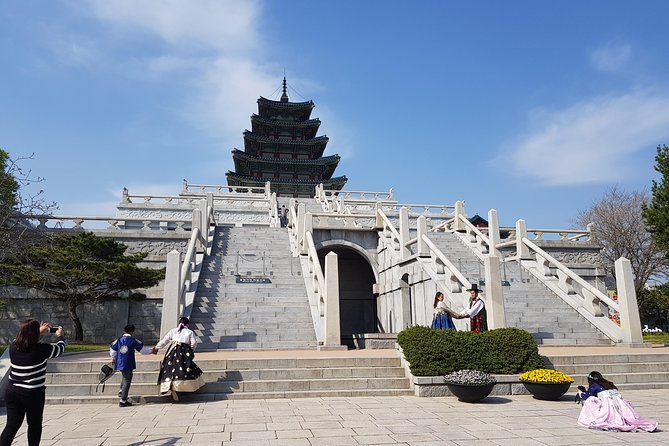
Inside the palace compound, the National Folk Museum adds an important second layer. Gyeongbokgung shows you the royal court. The museum turns your attention to everyday customs and domestic life.
The scheduled visit lasts about 20 minutes. That is short for a museum, so expect an introduction rather than a complete museum visit. Your guide will lead you through selected material and explain how Koreans lived from earlier periods through the country’s rapid modernization.
I like this stop because it keeps the morning from becoming a parade of grand buildings. Palace architecture tells only part of the story. The museum helps connect royal history with clothing, customs, work, family life, and changing ways of living.
If you prefer museums to outdoor walking, this will probably be the most useful indoor portion of the tour. Still, do not expect time to read every display or explore at your own pace. The guide has to keep the group moving so the remaining stops fit into the morning.
Jogyesa Temple and living Buddhist practice
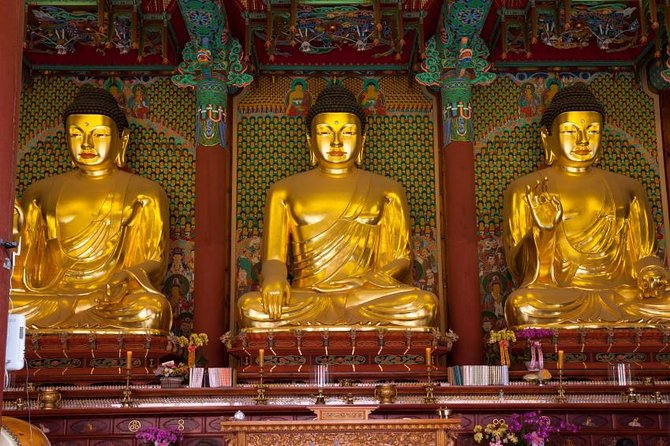
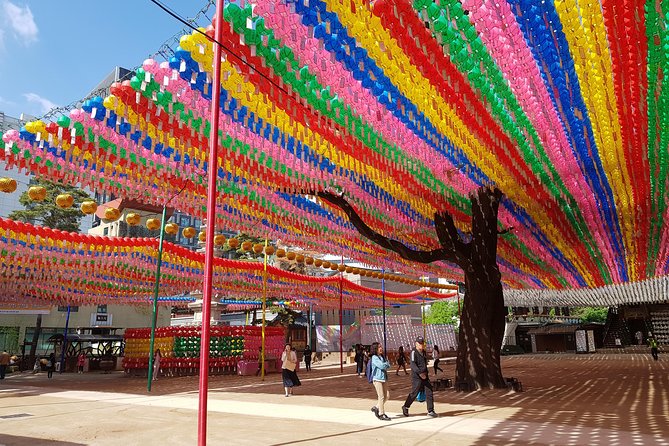
Jogyesa Temple offers a different mood and a different kind of history. It is a leading temple for Zen Buddhism in Korea, and the visit shows that Buddhism is not only a subject from the past. It remains part of daily religious life in Seoul.
The scheduled stop is about 20 minutes. That gives you time to look around, observe the temple setting, and hear an explanation of Buddhism during the Joseon period and in Korea today. The visit is brief, but its contrast with Gyeongbokgung makes the overall tour more interesting.
The temple can feel especially striking when prayer or worship is taking place. One account describes arriving while a prayer leader and many people were participating, creating a more meaningful visit than a simple architectural stop. That kind of moment cannot be guaranteed, but the temple is an active place rather than a preserved palace.
Floral offerings can also add color to the temple grounds. Take care here: the setting is religious, so keep your voice low and follow your guide’s instructions. The stop is designed for observation and explanation, not a long independent exploration.
Some guides visit Jogyesa first and the palace afterward. That can work, but it may compress the palace visit if the group is trying to reach a scheduled ceremony. The route is not entirely in your control, so book this tour for a broad introduction rather than a carefully timed temple-and-palace study.
The ginseng center, the tour’s awkward middle note
The ginseng-center visit lasts about 30 minutes and is included in the stated schedule. It is not an optional extra that appears only if you ask for shopping. You should know about it before booking.
The stop can be interesting if you want to learn about Korean ginseng and see a traditional product sold in a commercial setting. It also gives you a chance to browse, but the tone may feel sales-focused. Several accounts describe a hard sell, and one person felt that the stop took an hour out of the morning, though the planned duration is 30 minutes.
I would treat this as the clear compromise of the tour. The palace and temple are the reason to book. The ginseng center is part of the package, and you should be comfortable spending time there without feeling obliged to buy anything.
This stop also affects value. If you want three and a half hours of pure cultural sightseeing, the shopping visit will frustrate you. If you value hotel pickup, a guide, and transport, the overall cost can still make sense, but the 30 minutes are not available for extra palace or temple time.
Same base, a different kind of day out:
- Best DMZ Tour Korea from Seoul (Red Suspension Bridge Optional)
★ 5.0 · 41,422 reviews - DMZ Tour: 3rd Tunnel, Option(Suspension Bridge, Boat) from Seoul
★ 5.0 · 21,373 reviews - DMZ tour south Korea from Seoul (NK experience hall, defector)
★ 5.0 · 20,599 reviews - Seoul: DMZ Tour with Optional Suspension Bridge
★ 4.8 · 5,277 reviews
What the guides add to a short schedule
The guide can make or break this experience. The strongest guide feedback centers on clear history, warm humor, group organization, picture-taking help, and practical suggestions for the rest of the day.
AJ is praised for bringing Joseon royal life to life and explaining Jogyesa in a thoughtful way. Katie is described as punctual, organized, upbeat, and helpful with photos and ideas for places to visit later. Grace is praised for her pleasant manner and palace explanations, while Chloe, Lizzy, Jun, Charles, Eden, Rebecca, David, and Yeoni are also singled out for friendliness, patience, or strong English.
That is useful information, but guide assignment is not guaranteed. You cannot book specifically on the strength of one person’s name unless the operator confirms it. What you can reasonably expect is a guide-led experience where the quality depends on how much context your guide provides at each stop.
The better guides do more than recite dates. They help you picture royal life, explain why a temple matters, answer questions, keep the group together, and notice when someone needs help. On a fast tour, that personal attention has real value.
There is a less favorable possibility too. One participant felt the information was limited and that public transport plus individual palace admission might have been cheaper. That is a fair criticism if your main goal is simply entry to Gyeongbokgung. The tour earns its price through transport, pickup, structure, and interpretation, not through a large amount of free time.
Pace, walking, and practical comfort
The tour involves a moderate amount of walking. You will move around the palace compound, walk between outdoor areas, enter the museum, and explore the temple. Comfortable walking shoes are a smart choice.
The vehicle helps connect the stops, especially for visitors who do not yet know Seoul. It also means you do not have to carry larger items through every site. One positive detail from the experience is that belongings could be left on the bus while the group explored, though you should still keep valuables with you.
The pace is best described as brisk. The schedule gives roughly one hour at Gyeongbokgung, 20 minutes at the folk museum, 20 minutes at Jogyesa, and 30 minutes at the ginseng center, with driving time included in the morning. You will see a lot, but you will not linger everywhere.
Most people can participate, and the activity is not described as requiring unusual fitness. Still, the walking and short stop times may be tiring if you need frequent breaks. If you want to study museum displays, take extensive photographs, or sit quietly at the temple, an independent visit would give you more control.
Is $40 good value?
At $40, this is a reasonably priced orientation tour. You receive hotel pickup, an air-conditioned vehicle, a local guide, and admission to Gyeongbokgung. You also avoid the work of arranging transport between several central Seoul sights.
The value is strongest for first-time visitors, people with only a free morning, and anyone who prefers a guide to explain what they are seeing. It is also useful if you want to combine palace architecture, folk customs, and Buddhism in one compact outing.
The value drops if you dislike shopping stops or already feel comfortable using Seoul’s public transport. You could spend more time at Gyeongbokgung and Jogyesa independently, with the freedom to set your own pace. You would give up hotel pickup, the vehicle, and the guide’s explanations.
Free cancellation is available if you cancel at least 24 hours before the start time. Changes or cancellations inside that period are not accepted for a refund, so keep the deadline in mind when making plans.
Who should book this half-day tour?
I would recommend it to:
- First-time visitors who want a quick cultural overview
- People staying in Seoul hotels who value morning pickup
- Visitors with limited time who want several major sights in one outing
- Anyone who enjoys history explained through stories rather than signs alone
- People who want to pair a royal palace with an active Buddhist temple
I would hesitate if you want long, quiet visits or dislike commercial stops. Independent sightseeing is likely better for a serious museum visit, extensive palace photography, or a carefully timed religious visit.
This also works well as part of a larger history plan. Pairing it with the War Memorial of Korea or a DMZ visit would give you a broader view of Korea’s royal past, religious traditions, modern state, and divided peninsula. The tour itself should not be expected to cover all of that in one morning.
Should you book it?
Book this tour if you want efficient orientation with a guide and can accept a shopping stop. Gyeongbokgung is the main prize, but the National Folk Museum and Jogyesa Temple give the morning more range than a palace-only outing.
Skip it if you want to set your own pace or feel strongly about avoiding sales presentations. For everyone else, $40 is a fair price for hotel pickup, transport, palace admission, and a guided introduction to three important sides of Seoul. Go in expecting a fast survey, stay close to the group, and treat the ginseng center as the unavoidable tradeoff.
FAQ
What is included in the Korean Palace and Temple Tour?
The tour includes hotel pickup, a local guide, transport in an air-conditioned vehicle, and the admission fee for Gyeongbokgung Palace. Food and drinks are not included.
How long does the tour last?
The tour lasts approximately 3 hours and 30 minutes. It begins at 8:30 am.
Which places does the tour visit?
The itinerary includes Gyeongbokgung Palace, the National Folk Museum of Korea, Jogyesa Temple, a ginseng center, and Seoul City Hall as the drop-off area.
Is hotel drop-off included?
No. Hotel pickup is included, but hotel drop-off is not. The stated end point is Seoul City Hall.
How much walking is involved?
A moderate amount of walking is involved, particularly at Gyeongbokgung Palace and Jogyesa Temple. Comfortable walking shoes are recommended.
Can I cancel for a full refund?
Yes, if you cancel at least 24 hours before the experience start time. Cancellations or changes made less than 24 hours before the start time are not refunded.
Just added in Seoul
- Your Personal Seoul Photographer!★ 4.1 · 15 reviews
- You’re Invited to Our Home in Seoul: The Only Cooking Class!★ 5.0 · 8 reviews
- From Seoul: Yongpyong Ski Day Tour with Transportation★ 4.9 · 40 reviews
- Seoul: Korean & English Language Exchange Global Party★ 5.0 · 28 reviews
- From Seoul: Hwacheon Ice Fishing and Lighting Festival Tour★ 4.5 · 4 reviews
- Unique Native Experience : Han River Picnic, Board game, BBQ★ 5.0 · 3 reviews
- Seoul: Gangneung BTS K-Pop & K-Drama Filming Locations Tour★ 4.6 · 14 reviews
- K-Pop Making Class with a Producer!★ 5.0 · 3 reviews
Palace & Gyeongbokgung Tours, compared.
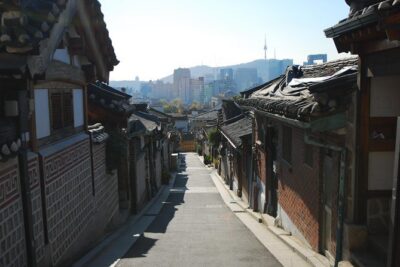
Gyeongbok Palace, Bukchon Village, and Gwangjang Tour
Read our review →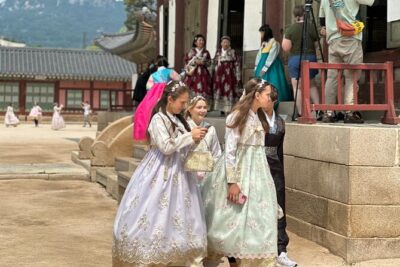
Best Seoul City Tour (Gyeongbokgung Palace,Insadong,Namsan Tower)
Read our review →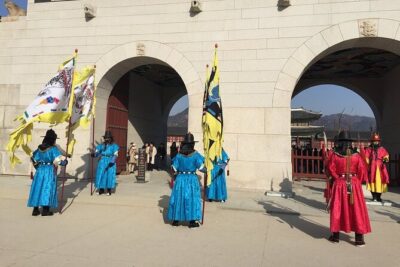
Small-Group Royal Palace and Seoul City Tour (hotel pick-up)
Read our review →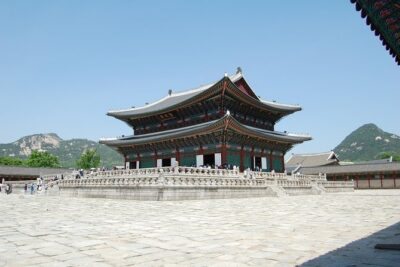
Seoul City Sightseeing Tour Including Gyeongbokgung Palace, N Seoul Tower, and Namsangol Hanok Village
Read our review →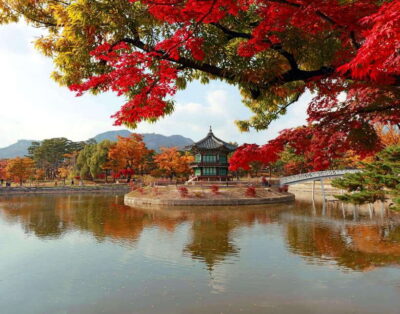
Seoul Highlights: Gyeongbok Palace, Insadong & N Seoul Tower
Read our review →
Seoul City Half Day Tour-Gyeongbok Palace Guard Changing Ceremony
Read our review →
Browse the lists this tour appears in