
Reviewed · UNESCO WORLD HERITAGE TOURS
Full Day Private car tour to UNESCO Gyeongju&Yangdong village
Gyeongju gives you Korea’s ancient capital in one long, well-packed day: royal tombs in the middle of town, a stone observatory, palace ruins beside a moonlit pond, and Bulguksa Temple in the hills. The real strength here is private flexibility. You choose the stops, and your driver handles the long gaps between them.
I like two things right away. First, the $430 group price can be good value for up to eight people, especially when compared with separate taxis or a large group excursion. Second, guides such as Park Jin Hyouck, Ted, and Kei are praised for careful driving, local food suggestions, and adjusting the day for families and older adults. The main drawback is time: six major stops plus lunch is a full plate, and entrance fees are not included.
Key points before you book
- A private day from Busan: Pickup and drop-off are offered at preferred locations, with fuel, parking, tolls, and the vehicle included.
- Choose your priorities: The usual menu includes Bulguksa, Yangdong Folk Village, Daereungwon, Cheonmachong, Cheomseongdae, Donggung and Wolji, Gyochon Village, and Woljeonggyo Bridge.
- Good value for a group: One $430 fee covers up to eight people, not each person separately.
- Expect a busy schedule: Most people can fit about six site visits plus a meal stop, not every listed sight in depth.
- Bring extra money: Lunch and all attraction entrance fees are separate from the tour price.
- Ask about the guide: Park Jin Hyouck, Ted, and Kei are names connected with especially strong service on this tour company’s private outings.
Why Gyeongju makes such a good day trip from Busan
Gyeongju was the capital of the Silla kingdom for roughly 1,000 years. That long period left an unusual concentration of royal tombs, Buddhist monuments, palace remains, and traditional homes. You are not visiting one isolated museum. You are moving through an entire historic setting, with modern cafes and restaurants filling the spaces between ancient sites.
A private car matters because the sights are spread across the city and surrounding countryside. Bulguksa and Yangdong Folk Village are not next door to the central tomb district. With your own vehicle, you avoid planning several public transport connections and can use your limited holiday time for sightseeing.
The day is advertised as about nine hours, while the itinerary also describes a ten-hour customizable tour. Treat it as a full-day outing and confirm the exact pickup and return times before departure. The drive from Busan, the distance between sites, lunch, and traffic all affect how much you can see.
More Silla-era sites from Busan:
- Busan: Gyeongju Guided Day Trip to Three Kingdoms Capital
★ 4.8 · 1,925 reviews - From Busan: Gyeongju UNESCO World Heritage Guided Day Tour
★ 4.8 · 1,250 reviews - Gyeongju UNESCO World Heritage Guided Day Tour from Busan
★ 5.0 · 660 reviews
A private car that keeps the day flexible
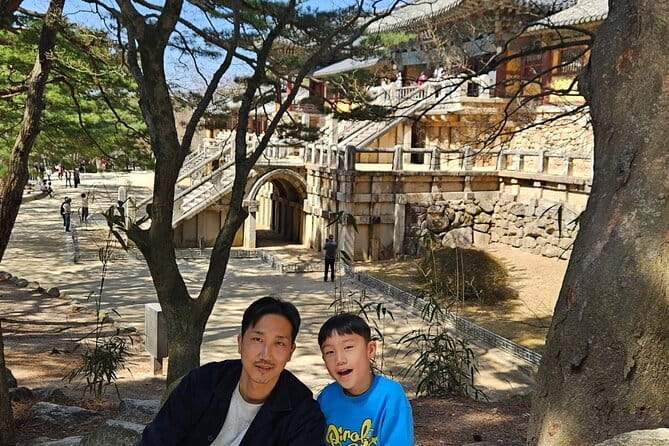
This is a private activity for your group only, with an air-conditioned vehicle and a licensed driving guide. Fuel, parking, tolls, taxes, pickup, and drop-off are included. That removes several small costs that can add up during a long day.
The guide’s role appears to go beyond driving. Park Jin Hyouck is described as attentive to a group with two older adults and two children, while Ted helped a family make the most of a late booking. Kei is noted for combining driving with historical explanations, restaurant suggestions, and practical ideas for the rest of a Korea trip.
That personal service is the main reason to choose this format. You can ask to slow down at a favorite site, skip a stop, or spend lunch in Hwangridan-gil. Still, the guide is not a guarantee of a formal lecture at every monument. The experience will depend partly on who is assigned and how much explanation you request.
Bulguksa Temple and the Silla hills
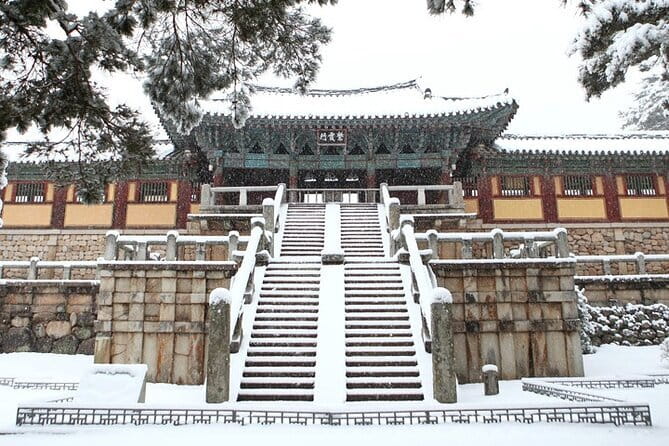
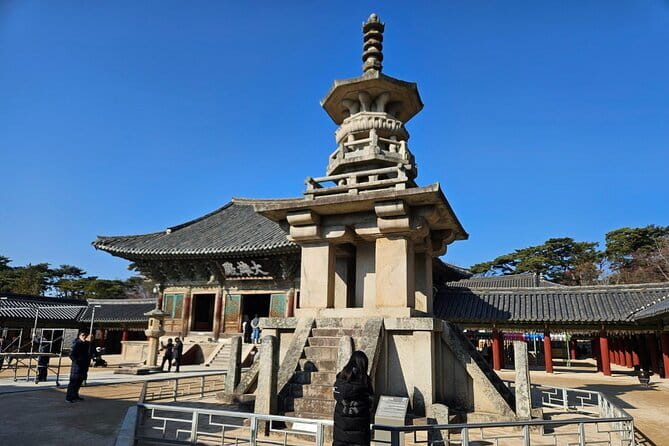
Bulguksa is the cultural anchor of the day. Built during the Silla period, the temple was created with hopes for peace and prosperity. Its courtyards, stone stairways, pagodas, and restored wooden buildings show why it remains one of Korea’s best-known Buddhist sites.
The temple has seven national treasures and was designated with Seokguram Grotto as a UNESCO World Heritage Site in 1995. This tour visits Bulguksa, but Seokguram is not listed as a regular stop, so do not assume the grotto is included.
Plan on about one hour here. That is enough to see the main areas and take in the setting, but not enough for a slow study of every detail. Bulguksa is also noted as a good place for autumn maple color. If seasonal foliage matters to you, tell the guide before the day is fixed.
Royal tombs at Daereungwon and Cheonmachong
Daereungwon Tomb Complex gives Gyeongju its distinctive central-city character. Large grass-covered burial mounds rise among walking paths, with modern streets not far away. The tombs date from the late fifth and early sixth centuries, and excavations produced gold crowns, gold caps, belts, diadems, and gilt-bronze shoes.
Cheonmachong is the only tomb in the Daereungwon complex open to the public. You can see the scale of the burial mound, which is about 12.7 meters high and 50 meters across, and learn how the famous Cheonmado, a painted heavenly horse on a saddle flap, gave the tomb its name.
The suggested timing is one hour for Daereungwon and 30 minutes for Cheonmachong. That combination works well because the outdoor complex gives you space to walk, while the opened tomb supplies a closer look at burial objects and construction. If ancient Korea is your main interest, you may want to protect more time here and cut one of the shorter photo stops.
Other listed sites within reach of Busan:
- From Busan to Gyeongju UNESCO Legacy Tour with National Museum
★ 5.0 · 87 reviews - Gyeongju The UNESCO World heritage sites tour(Private tour)
★ 5.0 · 17 reviews - UNESCO Tongdosa Temple + Gourmet Eonyang Style Bulgogi Lunch
★ 5.0 · 7 reviews - UNESCO World Heritage Gyeongju & Busan Two-city Private Tour.
★ 5.0 · 7 reviews
Cheomseongdae, Korea’s early observatory
Cheomseongdae is a compact stop with unusual importance. Built during the reign of Queen Seondeok, from 632 to 647, it is regarded as the oldest astronomical observatory in Asia. Its stone form gives you a direct look at Silla engineering and the period’s interest in observing the sky.
The visit is planned for about 30 minutes. That is usually enough to see the structure and its surrounding area, though the stop is more about context than a long indoor visit. Ask your guide to explain what is known about its use and construction, since the monument itself is easy to view quickly.
Donggung and Wolji, a palace beside the pond
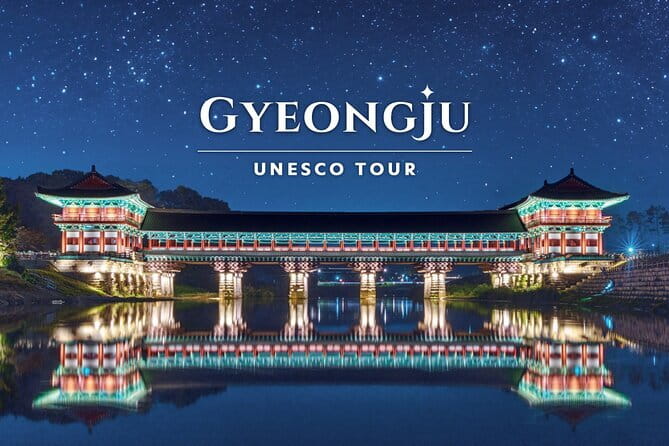
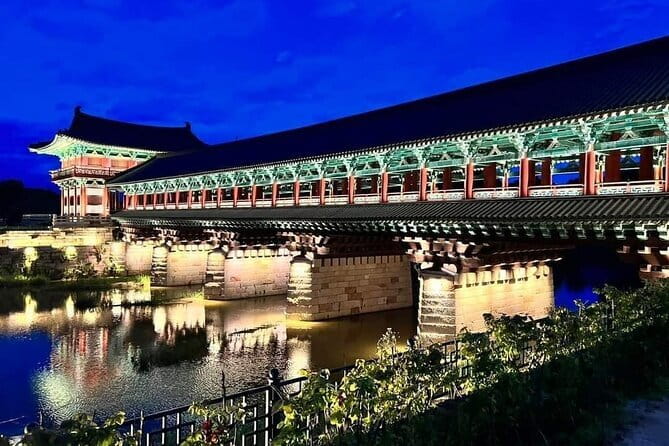
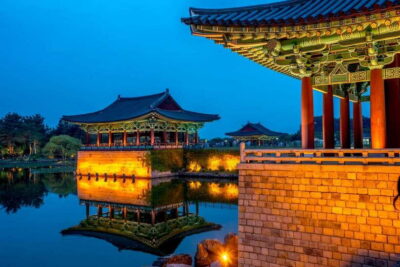
Donggung Palace and Wolji Pond was an eastern palace complex connected with the crown prince and with banquets for important occasions. Today, the remaining foundations and reconstructed elements sit beside the pond, where reflections add much of the site’s appeal.
Allow about one hour. This is one of the better places to keep if you enjoy atmosphere as well as history. It also pairs well with Woljeonggyo Bridge, though fitting both into a tight day may mean shorter visits elsewhere.
The admission fee is listed as included for this stop, but the general tour terms say attraction entrance fees are not included. Because the information is inconsistent, ask the operator which fees are covered on your booking.
Woljeonggyo Bridge and Gyochon Village
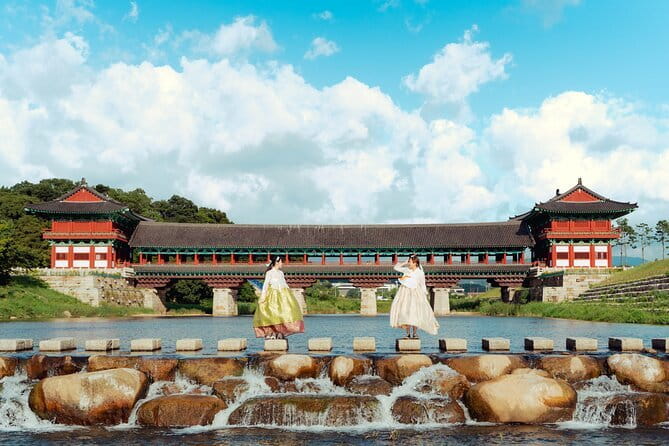
Woljeonggyo Bridge was built during the Unified Silla period, from 676 to 935, then lost to fire during the Joseon dynasty. It was rebuilt in April 2018 through historical research and is now described as Korea’s largest wooden bridge.
The planned visit is listed as 20 minutes in one itinerary and one hour in another. That difference tells you something useful: this is an easy stop to lengthen or shorten depending on your interests. A brief visit covers the bridge and photographs. A longer visit lets you walk through the nearby historic area.
Gyochon Traditional Village offers another side of old Korea. Its hanok homes and Gyeongju Hyanggyo, a Confucian academy and shrine, connect the area with Joseon-period education. Gukhak, Korea’s first state-operated educational institute, was established here in 682.
Gyochon is a good choice if you want traditional buildings without committing to a full countryside visit. The scheduled hour gives you time to walk, but the day becomes crowded if you also try to give every other stop a full hour.
Hwangridan-gil for lunch and a modern break
Hwangridan-gil is where ancient Gyeongju meets present-day Korea. Traditional hanok buildings now hold restaurants, cafes, photo studios, and small shops. Older structures from the 1960s and 1970s add a slightly worn, new-meets-old look.
The tour allows roughly 30 minutes to one hour here, and lunch is extra. The guide can recommend Korean food suited to your taste, or you can use your free time to choose a restaurant yourself.
I like this pause because a day of monuments can become tiring. It gives you a chance to eat, sit down, and see how young Koreans use an old neighborhood. The tradeoff is that a popular food street can consume time quickly, so agree with your guide on how long lunch should last before you order.
Yangdong Folk Village, the countryside highlight
Yangdong Folk Village is the most substantial rural stop. It is Korea’s largest traditional village, with about 160 old homes and thatched cottages, including 54 houses more than 200 years old. Many buildings remain in their original form, giving you a clearer sense of Joseon-period village life than a single restored house can provide.
The village is set in a valley with Seolchangsan Mountain and four mountain ridges beyond it. Its homes, lanes, slopes, and surrounding scenery create a slower experience than central Gyeongju. King Charles III visited in 1993, a detail that adds interest but is not the reason to come.
Allow about one hour, and note that admission is not included. The village can require walking on uneven or sloping paths, so moderate physical fitness is advised. If you want a quiet look at traditional Korean homes, keep this stop. If your priority is royal Silla archaeology, you might spend that time at the tombs and museum instead.
Building a realistic six-stop plan
The full list is too long for deep visits at every location. A practical day usually means choosing six main stops, then adding a meal and perhaps one short photo break.
For a first visit, I would consider Bulguksa, Daereungwon with Cheonmachong, Donggung and Wolji, Cheomseongdae, Hwangridan-gil, and Yangdong Village. That gives you Buddhist culture, royal burials, palace remains, an early scientific monument, modern food culture, and a traditional rural community.
If you prefer a less hurried day, replace Yangdong with Gyochon and Woljeonggyo, since those two fit naturally near the central sights. Families with children or older adults may appreciate fewer steep walks and more time in the vehicle between stops. The private format lets you make that choice.
Is the $430 group price good value?
At $430 for up to eight people, the per-person cost changes sharply with group size. Eight people pay about $54 each before entrance fees and lunch. Four people pay about $108 each, while a couple pays $215 each.
For a full private vehicle, driver, fuel, tolls, parking, and pickup, the price can make sense for a larger group. It is less compelling for two people unless you place a high value on door-to-door convenience and a custom route. A public excursion may cost less, but it will not offer the same control over stops and meal timing.
Remember the extra costs. Meals, personal spending, and attraction entrance fees are excluded, although some individual stops are listed as free or included. Ask for a clear estimate of admission charges before setting your final route.
Who should book this Gyeongju tour?
I would choose this tour for a family, multigenerational group, or group of friends who want one vehicle and one flexible day. It is also useful if Busan is your base and you do not want to arrange separate transport to a spread-out historic area.
It suits people who want to mix major sights with local food and who prefer practical help from a driver-guide. It is less suited to anyone who wants a slow archaeological study, a long museum visit, or a carefully timed photography tour. The schedule is active, and the most satisfying version requires you to choose priorities before setting out.
Confirmation is sent within 48 hours, subject to availability. Free cancellation is available up to 24 hours before the start time. Changes or cancellations inside that window are not accepted for a refund.
Should you book it?
Book this private Gyeongju and Yangdong tour if your group values comfort, control, and a broad look at Korea’s old capital in one day. The strongest reasons are the private car, the ability to shape the route, and the guides’ practical help with food, families, and timing.
I would book it for six to eight people without much hesitation. For a couple, compare the total cost with other transport options and decide how much you value having a guide and vehicle waiting all day. Most important, choose your top five or six sights in advance. That simple step turns a rushed checklist into a useful day among Gyeongju’s temples, tombs, villages, and palace ruins.
FAQ
How long does the tour last?
The experience is described as approximately nine hours, while the customizable itinerary also refers to a ten-hour tour. Confirm the exact duration and pickup time when booking.
Where can the tour start and end?
Pickup and drop-off are offered at preferred locations. The tour can depart from Busan or Gyeongju, and a round-trip or one-way route may be arranged.
How many people can join the private tour?
The $430 price covers one private group of up to eight people.
What is included in the price?
The price includes the air-conditioned vehicle, licensed driving guide, fuel, parking, toll fees, pickup and drop-off at preferred places, and taxes.
Are meals included?
No. Lunch is not included. You can use free time at Hwangridan-gil or ask the guide for a Korean food recommendation.
Are entrance fees included?
The general terms say attraction entrance fees are not included. Some individual stops are listed as free or included, so confirm the exact admission costs for your chosen route.
Is Yangdong Folk Village included?
Yangdong Folk Village is one of the listed stops, but the tour is customizable. Its admission fee is not included.
Can I cancel for a full refund?
Yes, if you cancel at least 24 hours before the experience start time. Cancellations or changes made less than 24 hours ahead are not accepted for a refund.
More private taxi tours in Busan
- Busan: Private Car Charter Customized City Tour
★ 4.8 · 96 reviews - BTS Landmarks Private Car Tour in Busan with a Licensed Guide
★ 5.0 · 10 reviews - Busan: Private Chartered Car Tour
★ 4.1 · 7 reviews - Jeju Island Popular Sightseeing Private Car Charter Tour 5/9hours
★ 5.0 · 382 reviews
Just added in Busan
- Real Busan Walking Experience★ 5.0 · 27 reviews
- Visit Busan night market and enjoy the night view of Busan harbor★ 5.0 · 6 reviews
- Suncheon and Yeosu Daily Private Tour with Pickup Service★ 5.0 · 3 reviews
- 7 Highlights Gyeongju City One Day Small Group Tour from Busan★ 5.0 · 24 reviews
- Busan Seafood Tour : Oyster village Tour with Oyster cuisines★ 5.0 · 3 reviews
- 1 Day Private Busan Guided Tour★ 4.5 · 3 reviews
- Suncheon one day tour from Seoul, Busan or Suncheon★ 5.0 · 3 reviews
- Busan Highlights Shore Tour – Cruise Return Assured★ 4.5 · 34 reviews
UNESCO World Heritage Tours, compared.
Gyeongju UNESCO World Heritage Guided Day Tour
Read our review →
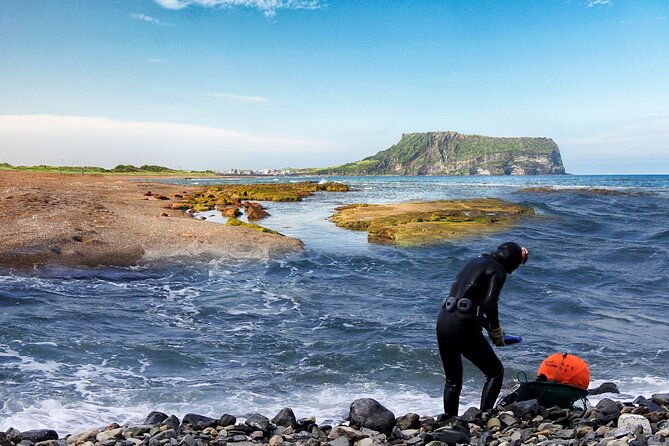
East Jeju Essentials – Seongsan Ilchulbong (UNESCO) & Haenyeo
Read our review →
Jeju Southern UNESCO Full Day Tour with Mt.Halla
Read our review →
Gyeongju UNESCO sites Private tour with licensed tour guide
Read our review →
Private Gyeongju Tour – Explore Gyeongju UNESCO Sites
Read our review →
Browse the lists this tour appears in