
Reviewed · UNESCO WORLD HERITAGE TOURS
From Busan to Gyeongju UNESCO Legacy Tour with National Museum
Gyeongju was the capital of the Silla Kingdom, and this 12-hour day trip from Busan gives you a useful first look at its temples, royal tombs, traditional homes, and museum treasures. The route also adds Ahopsan Bamboo Forest, a quiet 400-year-old grove that feels far removed from the city.
I like the combination of major UNESCO sights and smaller cultural stops, and I like that guides such as DK, Yaho, Kang, Chris, and Yaya stay with the group, explain the sites, and help keep the day moving. The trade-off is simple: this is a full day with a lot of ground to cover, so some stops may feel brief. Lunch, Ahopsan admission, and some optional entry fees are extra.
Key points to know before booking
- Ahopsan Bamboo Forest begins the day: Expect a peaceful walk through dense bamboo, with an uphill section and possible mud.
- Bulguksa Temple is the main historic highlight: Plan for about two hours among one of Korea’s best-known Buddhist sites.
- Gyeongju’s old center adds variety: Gyochon Village, Choe Jun’s House, royal tombs, the museum, and Woljeonggyo Bridge show different sides of the city.
- Seasonal substitutions matter: From March 24 to April 12, Dalmaji Hill or Daereungwon may replace other stops if cherry blossoms are in good condition.
- The guides make a real difference: DK, Yaho, Kang, Chris, and Yaya are praised for clear English, humor, safe driving, flexibility, and historical explanations.
- Plan for extra costs: Lunch is not included, and Ahopsan Forest, Donggung Palace, and Wolji Pond may require separate admission.
Why Gyeongju makes a strong day trip from Busan
Gyeongju is not simply another sightseeing stop. It was the capital of the Silla Kingdom for centuries, and its historic sites are scattered across a broad area. That makes independent sightseeing possible, but not always easy in one day from Busan.
This tour solves the transport problem. You ride in an air-conditioned vehicle, with tolls, fuel, parking, and a professional guide included. You do not need to work out how to connect a forest outside central Busan with Bulguksa, Gyeongju’s museum district, the old village area, and the evening bridge.
At about $48.08 per person, the value is strongest if you want to see several widely separated places in one day. The price does not include lunch or every entrance fee, but round-trip transport alone saves considerable planning. I would see this as a practical introduction to Gyeongju rather than a slow, scholarly study of every site.
More Silla-era sites from Busan:
- Busan: Gyeongju Guided Day Trip to Three Kingdoms Capital
★ 4.8 · 1,925 reviews - From Busan: Gyeongju UNESCO World Heritage Guided Day Tour
★ 4.8 · 1,250 reviews - Gyeongju UNESCO World Heritage Guided Day Tour from Busan
★ 5.0 · 660 reviews
Ahopsan Forest and the first walk of the day
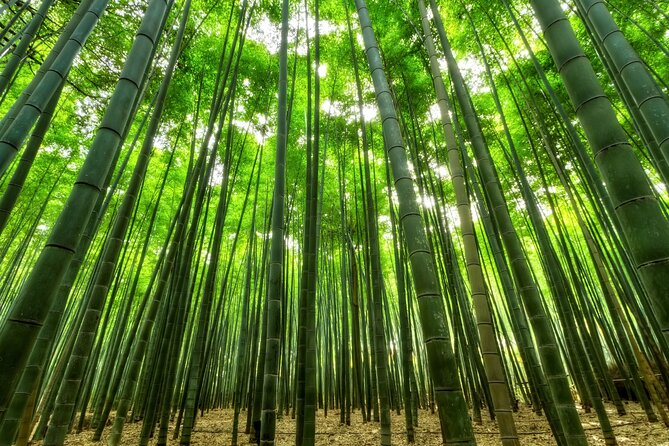
Ahopsan Forest is a privately owned bamboo forest in Busan that has been protected for more than 400 years. Its narrow paths, tall bamboo, and filtered light create a calm opening before the busier historic stops begin.
The forest requires an extra admission fee, and the entry cost is not included in the tour price. You should also wear practical shoes. One section involves an uphill walk, and mud may make white sneakers a poor choice.
The scheduled visit lasts about 90 minutes, which gives you time for photos and a steady walk without turning the forest into a rushed photo stop. If you have trouble walking uphill, tell the guide early. A previous group found that the pace could be adjusted, but this remains a walking stop, not a drive-up viewpoint.
During the cherry blossom period, from March 24 through April 12, Ahopsan may be replaced by Haeundae’s Dalmaji Hill, depending on conditions. Dalmaji offers a shorter 30-minute walk with coastal views and spring blossoms. It is a scenic alternative, but it is not the same experience as the bamboo forest, and bloom timing is not guaranteed.
Gyochon Village and Choe Jun’s House
Gyeongju Gyochon Traditional Village brings you into a quieter part of the city, with hanok houses, narrow lanes, and historic sites linked to local families and education. The village gives the day a human scale after the grander temple grounds.
The stop normally lasts about an hour. I like this part of the route because it gives you room to walk, take photographs, and notice details in the wooden homes instead of moving from one large monument to another.
Choe Jun’s House, also known as the Gyeongju Choi Family House, adds a look at the former residence of one of Korea’s respected noble families. The Choi family lived here for more than 300 years. Your guide can help connect the house to the Joseon period and to the social structure behind the architecture.
Admission to these village stops is listed as free. The drawback is that the visit may feel less dramatic if you want only grand temples and royal remains. For me, that quieter pause is useful. It helps explain how people lived around the official history.
Bulguksa Temple, the day’s essential monument
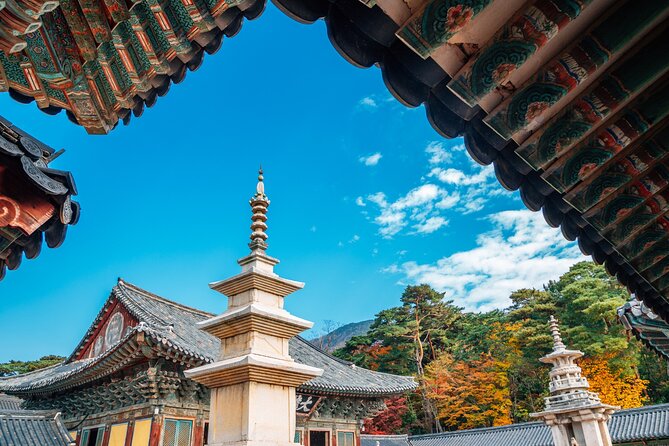
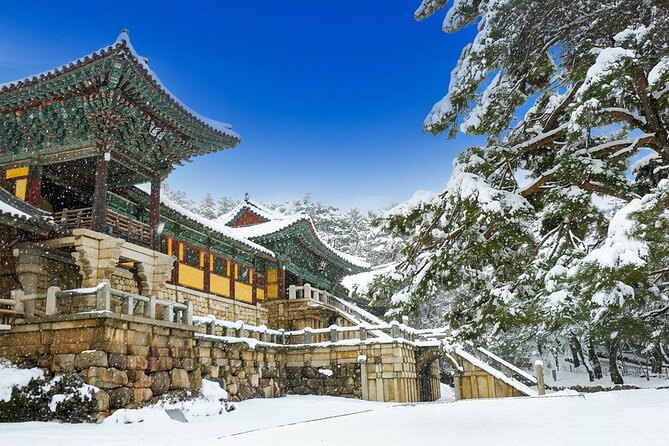
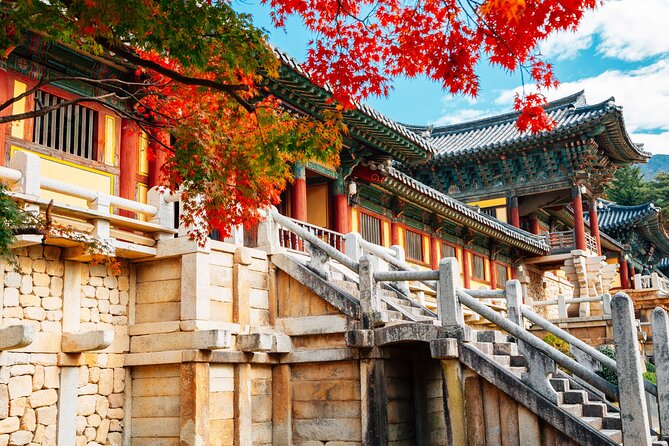
Bulguksa Temple is the major anchor of the tour. The site was first built in 528 during the Silla Dynasty and rebuilt in 774. It is UNESCO-listed and known for its Buddhist art, stone terraces, and formal temple layout.
You have roughly two hours here, enough to explore the grounds without treating the temple as a quick roadside stop. The guide’s explanations are especially useful because the details can be easy to miss: the relationship between the terraces, the gates, the pagodas, and the temple buildings is part of what makes Bulguksa important.
The admission fee is included for Bulguksa, unlike Ahopsan Forest. That makes the tour price easier to judge, since the day’s central historic site does not require another payment.
Wear shoes suitable for uneven paths and steps. The temple is beautiful, but it is not a flat museum visit. You will be walking outdoors, and the day includes several more stops after this one. If you prefer a relaxed temple visit with time for quiet observation, two hours should help. If you want every architectural detail, you may wish for more time.
Other listed sites within reach of Busan:
- Jeju: Eastern Jeju UNESCO Spots Day Tour
★ 4.9 · 1,148 reviews - Jeju: Southern Top UNESCO Spots Bus Tour
★ 4.9 · 648 reviews - Jeju Southern UNESCO Full Day Tour with Mt.Halla
★ 5.0 · 400 reviews - Private Gyeongju Tour – Explore Gyeongju UNESCO Sites
★ 5.0 · 272 reviews
The National Museum and Silla’s finest objects
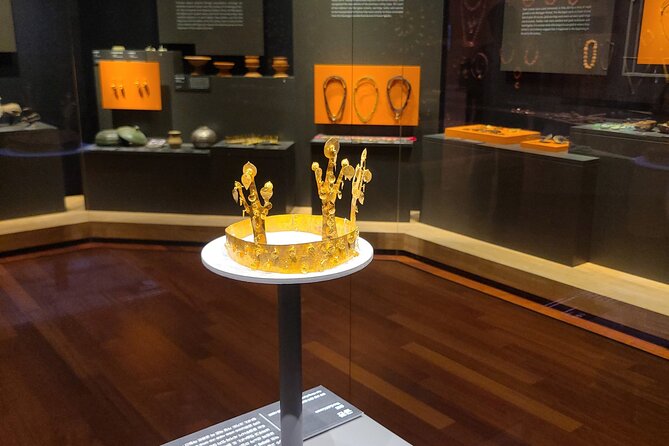
The Gyeongju National Museum is normally part of the itinerary and offers the clearest indoor explanation of the Silla Kingdom. Its collections help put the outdoor sites into context, especially after you have already seen temples, tombs, and traditional homes.
You have about an hour inside. That is enough for a useful overview, but not enough to study every gallery. I suggest focusing on the displays that connect directly with the day’s stops. The museum is most valuable when you use it to understand the objects, beliefs, and craftsmanship behind the monuments you have already visited.
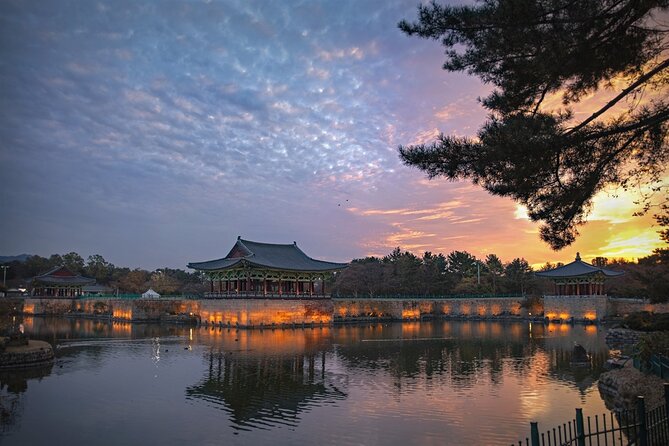
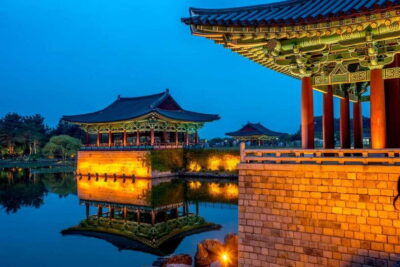
If you prefer another outdoor site, Donggung Palace and Wolji Pond can be offered instead of the museum. Entry is not included for that alternative. The palace and pond are especially appealing when the light changes later in the day, but availability depends on the tour arrangement.
The seasonal plan may also substitute Daereungwon Tomb Complex for the museum during the March 24 to April 12 blossom period. Do not assume you will see every listed alternative. These choices depend on conditions and availability, so confirm the day’s plan with your guide.
Royal tombs and the open space of Daereungwon
Daereungwon is a large complex of grassy royal burial mounds from the Silla Dynasty. The rounded tombs are striking because they rise gently from the city rather than looking like conventional monuments.
A one-hour visit gives you time to walk beside the stone walls and mounds. In spring, cherry blossoms can frame the tombs, creating one of the day’s strongest photo settings. The site also helps you understand the scale and power of Silla, even before you know the names of the rulers buried there.
Daereungwon may be a seasonal substitute rather than an additional stop. If blossoms are the priority, ask what the group will visit before departure. The route cannot promise peak bloom, and weather can change the appearance of the site quickly.
Woljeonggyo Bridge after dark

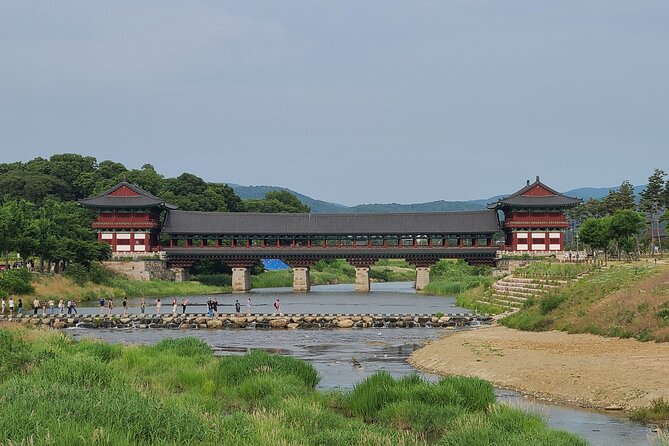
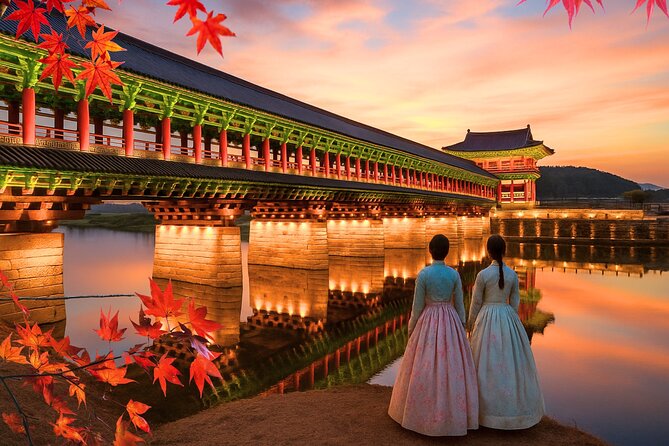
Woljeonggyo Bridge is a reconstruction of a royal bridge from the Unified Silla period. The original bridge was built in 760 and connected the royal palace with the southern part of Gyeongju.
The tour allows about two hours here, often toward the end of the day. That timing matters. The bridge is attractive in daylight, but evening illumination gives it a more dramatic appearance, especially when reflected in the water.
This is one of the places where the long schedule pays off. You are not simply stopping for a photograph and leaving. You can walk around, take night photos, and see how the bridge fits into the surrounding historic area.
The bridge visit can also be one of the more tiring parts of the day. After a forest walk, temple grounds, village lanes, museum galleries, and tomb paths, you may want a seat and a meal. Since lunch and dinner are not included, carry enough money and plan your expectations around a full day away from Busan.
How the guides shape the experience
The guide is the most important variable on a day with this many stops. DK is praised for energy, humor, clear explanations, good time management, and careful driving. Yaho is described as warm, funny, attentive, and especially strong at telling the stories behind each place. Kang is noted for patience, historical detail, safety, and practical help, including assisting with umbrellas in the rain.
Chris is praised for organization, strong English, local knowledge, and adjusting departure times when holiday traffic could affect the route. Yaya is described as communicative and flexible, with a friendly style that can make the group feel relaxed. These guides do not all lead every departure, so you cannot select a specific person unless the booking system allows it.
The best guides on this route do more than point out buildings. They answer questions, suggest photo spots, remember names, and adjust the pace when rain or traffic interferes. That matters because Gyeongju’s history can feel like a long list of dates without a good explanation.
The tour may have as many as 99 people, though some departures are smaller. A small group makes it easier to hear the guide and move between stops. A larger group can mean more waiting at meeting points, so stay aware of the stated return times.
Timing, food, weather, and pickup details
Twelve hours is a serious commitment. You will spend part of the day in the vehicle, and the remaining time walking through outdoor sites. That is the price of fitting Busan, Ahopsan or Dalmaji, Gyeongju, and the evening bridge into one outing.
Lunch is not included. The guide may recommend or arrange a local meal, but you should budget separately. One group enjoyed a traditional Korean buffet, though the exact restaurant and meal plan can vary.
The tour requires good weather. If poor weather causes cancellation, you are offered another date or a full refund. The same applies if the minimum number of participants is not reached.
Pickup deserves extra care. Confirm the meeting point and time in advance, and keep the operator’s contact details available. WhatsApp communication has been useful for checking pickup information, but one reported experience involved a missed or unclear pickup and poor contact. That appears to be the exception, yet it is a reason to arrive early and verify the vehicle before departure.
Free cancellation is available until 24 hours before the start time. After that, refunds and changes are not accepted.
Who should book this Gyeongju tour?
I would choose this tour if you have limited time in Busan and want one organized day covering the main Gyeongju sights. It suits first-time visitors, solo travelers who prefer company, and anyone who does not want to manage several bus or taxi connections.
It is also a good match if you care about context. The guides add value by explaining Silla and Joseon history, local customs, architecture, and the reason each site matters.
I would hesitate if you want a slow visit at every location, dislike long road days, or already know Gyeongju well. Independent visitors staying overnight can give Bulguksa, the museum, and the palace area more time. You should also think twice if uphill walking, uneven paths, or a full day outdoors would be difficult.
Should you book it?
Book this tour if your main goal is to see a broad slice of Gyeongju from Busan without arranging the transport yourself. The strongest combination is Bulguksa Temple, Gyochon Village, the museum or Donggung alternative, and the evening view of Woljeonggyo Bridge.
Before paying, check which seasonal options are operating, confirm pickup details, and budget for lunch plus Ahopsan admission. If you accept the long day and brisk pace, this is a practical and good-value introduction to Korea’s Silla-era capital.
FAQ
How long does the Busan to Gyeongju tour last?
The experience lasts about 12 hours, including round-trip transportation from Busan and visits to the listed cultural and historic sites.
Is admission to Ahopsan Bamboo Forest included?
No. Admission to Ahopsan Forest is not included in the tour price.
Is lunch included?
No. Lunch and dinner are not included, so you should plan and pay for meals separately.
What languages does the guide speak?
The tour includes an English or Chinese-speaking guide. Professional guiding and transportation are included.
Can the itinerary change during cherry blossom season?
Yes. From March 24 through April 12, Dalmaji Hill may replace Ahopsan Forest, and Daereungwon Tomb Complex may replace the National Museum, depending on bloom conditions and availability. These options are not guaranteed.
What happens if bad weather cancels the tour?
If the experience is canceled because of poor weather, you are offered a different date or a full refund. If the minimum number of participants is not met, you are offered another date, another experience, or a full refund.
More Museum Visits in Busan
- Busan: Gyeongju UNESCO Legacy Tour with National Museum
★ 5.0 · 172 reviews - Seoul: War Memorial of Korea Private Guided Museum Tour
★ 4.9 · 29 reviews - SEOUL: Gugak – Korean Traditional Music Museum&Concert Tour
★ 4.7 · 17 reviews - Layover tour to Gyeongbokgung-Folk Museum-Bukchon-Insadong
★ 4.8 · 6 reviews
Just added in Busan
- From Busan: Gyeongju Historical Day Tour with Sky Capsule★ 4.7 · 17 reviews
- From Busan: Gyeongju Full-Day Historical Tour★ 4.1 · 6 reviews
- Busan: Winter Healing Park and (Gyeongju/Daegu) One Day Tour★ 5.0 · 5 reviews
- Busan: Sky Capsule+ Huinnyeoul+ Gamcheon+ Songdo+ Night View★ 4.9 · 10 reviews
- Busan: Private Chartered Car Tour★ 4.1 · 7 reviews
- Busan’s Best: Sea Temples, Yacht Tour & Sky Capsule Day Tour★ 4.8 · 24 reviews
- Busan: Jagalchi Market & Gamcheon village Walking Tour★ 5.0 · 7 reviews
- Busan: Night Small Group Photo Tour (Max 7)★ 5.0 · 33 reviews
UNESCO World Heritage Tours, compared.
Gyeongju UNESCO World Heritage Guided Day Tour
Read our review →
Jeju Southern UNESCO Full Day Tour with Mt.Halla
Read our review →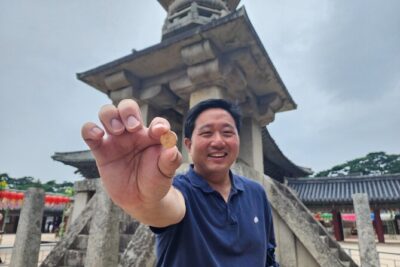
Private Gyeongju Tour – Explore Gyeongju UNESCO Sites
Read our review →
Jeju island Southern UNESCO Day Tour With Hallasan MT
Read our review →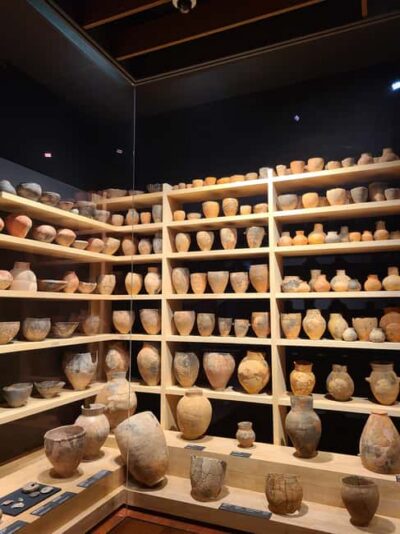
Gyeongju UNESCO Legacy Tour with National Museum
Read our review →Browse the lists this tour appears in