
Reviewed · PALACE & GYEONGBOKGUNG TOURS
Best Things to Do – Half Day Seoul Trip (Seoul Palace & Temple)
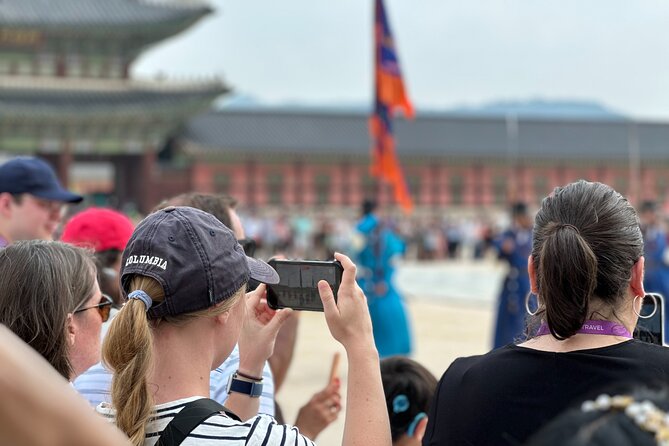
Seoul’s royal past comes into sharp focus on this brisk half-day outing. You’ll see Jogyesa Temple, Gyeongbokgung Palace, the Blue House area, and the colorful Changing of the Guard ceremony without having to piece together the city’s historic center on your own. The palace ceremony is the star, especially if you want a clear first look at Korea’s royal traditions.
I like the air-conditioned coach and hotel pickup, which matter a great deal in Seoul’s summer heat or winter cold. I also like the guides’ practical role: Judy, Lynn, Henry, Sunny, Wendy, and others have been praised for clear English, royal stories, crowd management, and help with photos or souvenirs. The main caution is the ginseng shopping stop, which can feel commercial and longer than expected.
Key points to know before booking
- Expect a fast historical overview: Three hours covers major sights, but the schedule leaves little room for lingering.
- The Changing of the Guard is a highlight: The ceremony adds color and movement to the Gyeongbokgung visit.
- Tuesday uses a different palace: Gyeongbokgung is closed then, so the tour substitutes Changdeokgung Palace.
- Guide quality matters: Guides named Judy, Lynn, Henry, Sunny, Wendy, Diane, and others have received especially warm praise for their explanations and care.
- The ginseng stop is the weak link: It may involve a sales presentation, so shoppers and non-shoppers should set expectations early.
- Hotel drop-off is not included: Pickup is offered, but you’ll need to arrange your own return after the tour.
Seoul’s royal center in three compact hours
At $38 per person, this tour is priced as an efficient introduction rather than a slow, specialist visit. You get transport, a professional English or Chinese guide, palace admission, and several central Seoul sights in one short block of time.
I’d use it early in a Seoul stay. The route gives you basic orientation around royal Seoul and the Jongno area, while a guide explains what you are looking at. Afterward, you can return to the places that caught your attention and explore at your own pace.
The pace is the tradeoff. The stated duration is about three hours, with roughly 40 minutes at Jogyesa Temple, one hour at the palace, 40 minutes at Cheongwadae Sarangchae, and about 30 minutes at the ginseng center. Traffic, hotel pickups, group delays, and the timing of the guard ceremony can affect the day.
The coach is a real comfort. Seoul’s weather can be hard on a walking tour, and the air conditioning has been appreciated during hot days. One guide, Lina, reportedly kept the group on schedule despite intense heat, while another guide navigated thick weekend crowds without losing the group.
More palace and old-quarter walks in Seoul:
- Seoul: Gyeongbok Palace, Bukchon Village, and Gwangjang Tour
★ 4.9 · 2,321 reviews - Best Seoul City Tour (Gyeongbokgung Palace,Insadong,Namsan Tower)
★ 5.0 · 1,647 reviews - Small-Group Royal Palace and Seoul City Tour (hotel pick-up)
★ 5.0 · 1,474 reviews
Jogyesa Temple and its remarkable old tree
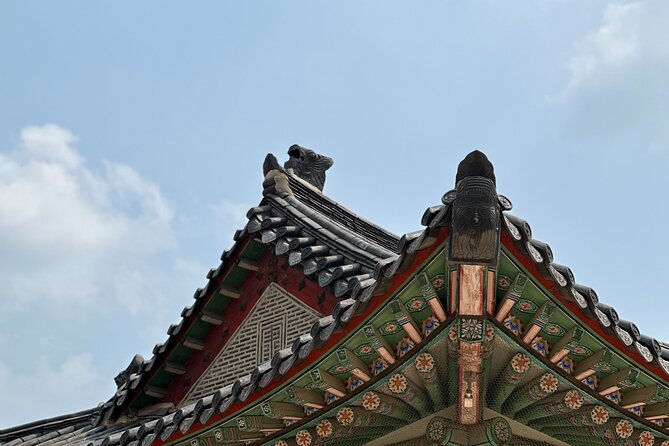
Jogyesa Temple provides a quieter opening than the palace. Located in central Seoul, it is one of the key temples associated with Korean Buddhism and was first established in 1935.
The temple’s most memorable detail is an old white-barked tree in the grounds. It gives the stop a visual focus and helps you understand the temple as a working religious place, not just a quick photo stop.
You’ll have around 40 minutes here, with admission included at no extra charge. That is enough time for the guide to explain the temple, point out important features, and give you a chance to look around. It is not enough for an unhurried study of every building, so listen closely during the explanation.
I like this first stop because it widens the tour beyond royal architecture. Seoul’s story is not only about kings, palaces, and government. Jogyesa gives you a look at Buddhist practice in the middle of the modern capital.
The temple can also be a good place to ask questions. Guides praised for their detailed explanations, including K, Judy, Lynn, and Diane, have helped make short visits feel more substantial. Diane was especially appreciated for answering questions and connecting Korean history with popular historical dramas.
Gyeongbokgung Palace and the guard ceremony
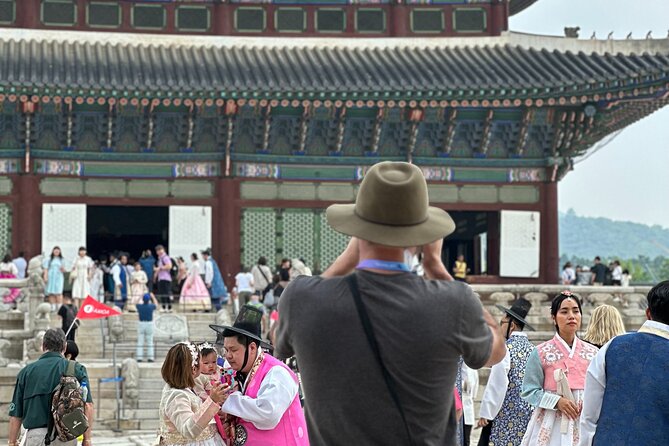
The palace visit is the centerpiece. Gyeongbokgung was the principal royal palace in Seoul, and its wide courtyards and formal gates make it easy to grasp the power of the Joseon court.
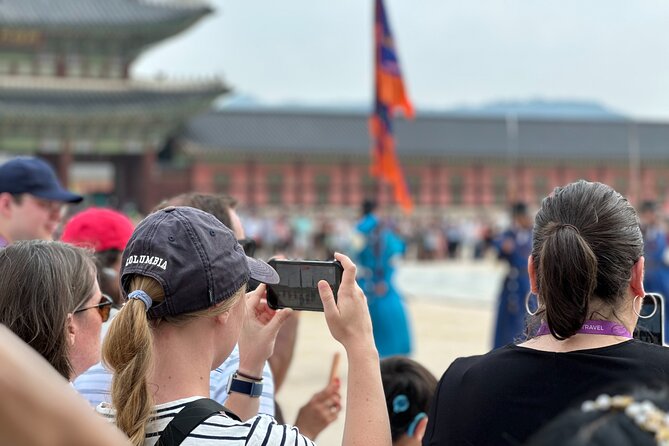
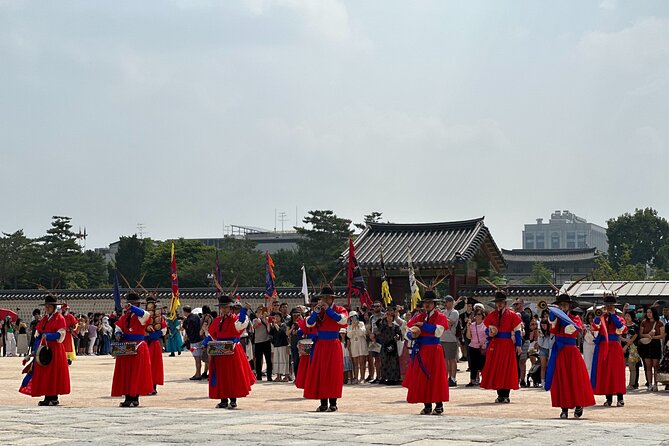
The Changing of the Guard ceremony adds a memorable burst of color. Uniformed guards, traditional movements, and formal processions make the old court system easier to picture than a quiet palace courtyard alone. If you enjoy Korean historical dramas, this is the moment that helps separate television spectacle from the real setting.
The tour allows about one hour at the palace. That is enough to see key buildings and hear the basic story, but it is a brisk visit. You may see Geunjeongjeon Hall, the main throne hall, along with other major features named in the tour description, including Hyangwonjeong Pavilion and Gyeonghoeru Pavilion.
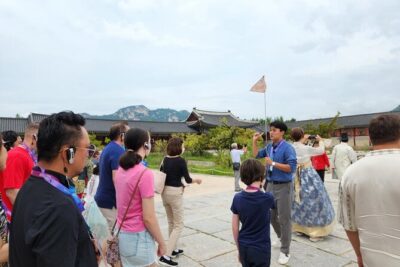
The exact route and ceremony timing can vary. One guide was praised for timing the palace visit well, while another was commended for keeping the group together on a crowded Saturday. This is where a good guide earns the fee. The palace grounds are large, and a clear route keeps you from wasting half the visit figuring out where to go.
Gyeongbokgung is closed on Tuesdays. On that day, the tour substitutes Changdeokgung Palace, a UNESCO-listed royal site. That change is not a downgrade, but it is a different visit, so choose your date with the palace distinction in mind.
The description also mentions Changdeokgung as a key feature, while the regular itinerary lists Gyeongbokgung. If one palace is especially important to you, confirm the day’s plan before booking.
Cheongwadae Sarangchae and the Blue House area
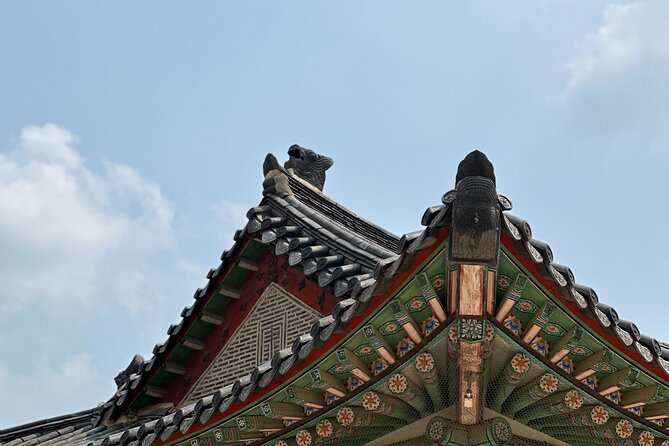
Cheongwadae Sarangchae is an exhibition hall near the Blue House, South Korea’s former presidential residence. The visit shifts the focus from royal government to modern Korean politics, national history, and culture.
You’ll have about 40 minutes here. The museum presents Korean artifacts and documents, giving you a compact way to connect the palace era with the country’s modern political story.
This stop is useful for first-time visitors because it adds context. Without it, a palace tour can feel like a beautiful but isolated look at the past. Here, you get a reminder that Seoul’s historic center has continued to serve as a place of national power.
The drawback is time. Forty minutes passes quickly, especially if the exhibition is busy or you want to read every display. I’d listen to the guide’s overview first, then spend your remaining minutes on the exhibits that interest you most.
Same base, a different kind of day out:
- Best DMZ Tour Korea from Seoul (Red Suspension Bridge Optional)
★ 5.0 · 41,422 reviews - DMZ Tour: 3rd Tunnel, Option(Suspension Bridge, Boat) from Seoul
★ 5.0 · 21,373 reviews - DMZ tour south Korea from Seoul (NK experience hall, defector)
★ 5.0 · 20,599 reviews - Seoul: DMZ Tour with Optional Suspension Bridge
★ 4.8 · 5,277 reviews
The ginseng center: understand the commercial stop
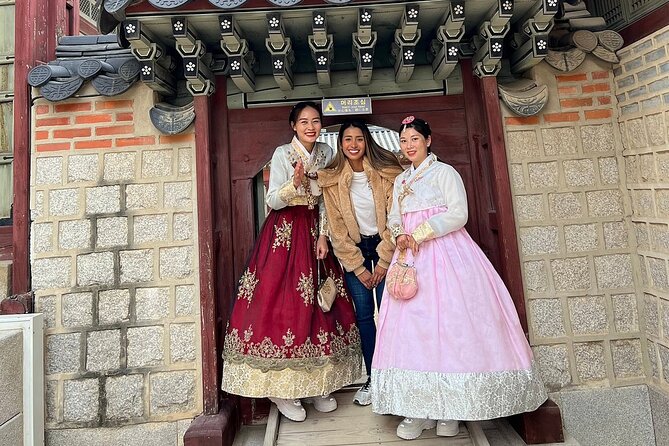
Cheongha Plus Ginseng Shopping Center is the part of the outing that needs the clearest warning. It is listed as a 30-minute stop, with admission free, but the practical experience may involve a presentation about ginseng followed by an invitation to buy it.
Some guides have kept this part low-pressure, and one account described the center as pleasant without pressure to purchase. Other accounts describe a strong sales pitch, a staged museum setting, expensive products, and frustration that the stop felt unrelated to the main historical theme.
This difference may depend on the day, guide, or sales staff. Still, I would treat the stop as a shopping visit, not as a museum visit on equal footing with the palace or temple.
If you are curious about Korean ginseng, the stop may interest you. If you are not shopping, pay attention to the time and feel free to make your position clear. The strongest criticism of the tour focuses on this section, not on the temple, palace, or guides.
I would also avoid trying any unfamiliar sample if you have food sensitivities or health concerns. The supplied information includes one account of a child feeling unwell after trying ginseng powder, although the cause was not certain. That is not proof of a problem with the product, but it is a sensible reason to be cautious.
What the guides add to the experience
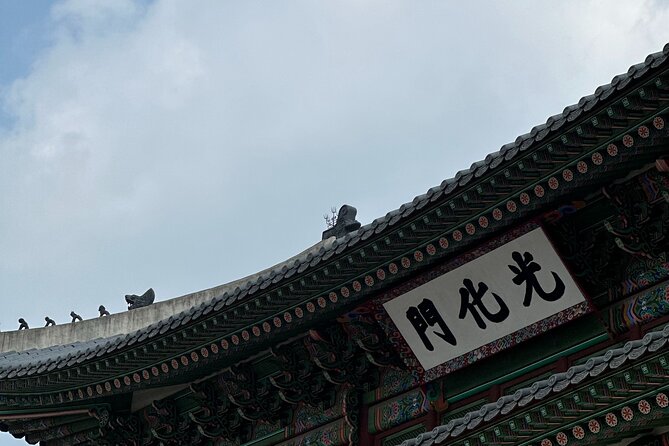
The guide is the most important variable on a short group tour. You are not getting hours at each sight, so clear explanations and smart timing make a real difference.
Several guides have earned especially strong praise. Judy has been described as fluent in English, well timed at the palace, and helpful when a visitor wanted to find a particular souvenir. Lynn was praised for talking with the group during bus rides and explaining the sights in clear English. Henry combined historical information with suggestions for other Seoul activities.
Diane was valued for answering questions about Korean history and for helping visitors connect real places with Korean dramas. Sunny was described as pleasant and accommodating, while Wendy received praise for keeping the timing right. Other named guides, including K, Gabby, GoGo, Kelly, Alex, Andy, and Lina, were recognized for warmth, patience, or useful explanations.
You should not assume you will receive a particular guide unless the booking process confirms it. The consistent pattern is more useful: the tour benefits greatly from a guide who can turn a quick stop into a story rather than a list of building names.
Guides may also help with practical details, such as taking photos, moving through crowded palace grounds, and suggesting what to see later. That help is valuable if you are visiting Seoul for the first time or have limited time in the city.
Pickup, group size, and timing
Hotel pickup is offered, and the coach is air-conditioned. Those features make the tour easier than arranging separate taxis between Jogyesa, the palace district, and the Blue House area.
But confirm pickup details carefully. The tour does not include hotel drop-off, and pickup times may be earlier than you expect because the vehicle may collect several people. One account described confusion over a pickup arrangement, while another said the actual start was more than an hour earlier than expected.
The maximum group size is listed as 100 people, although some departures may be much smaller. One outing had a very small group, while another involved a crowded Saturday. A large maximum does not mean every departure will be full, but you should be ready for a group setting rather than a private tour.
There can also be waiting. One departure was delayed while the group waited for people finishing lunch, leaving passengers on the bus for close to 40 minutes. If your day is tightly planned, leave space around this tour and avoid scheduling a timed attraction immediately afterward.
The tour includes fuel charges, taxes, and handling fees. Lunch is not included. Since the experience lasts about three hours, eat before pickup or plan food after the tour rather than expecting a meal during the route.
Is $38 a fair price?
For $38, I consider this a good value if you want transportation, a guide, palace admission, and a quick introduction to central Seoul. Visiting the same sights independently may cost less in entrance fees, but you would need to handle directions, transit, timing, and historical context yourself.
The price becomes less attractive if you want long, quiet visits or dislike shopping stops. The palace hour is useful but short, and the ginseng center takes time that could otherwise go toward another cultural site.
Think of the tour as a get your bearings fast option. It works well for a first day, a short Seoul stay, or anyone who wants the major cultural stops explained in English or Chinese. It is less suited to a repeat visitor who already knows the palace district and wants freedom to explore.
Free cancellation is available up to 24 hours before the start time. Changes or cancellations inside that window are not refunded, so keep the local cutoff in mind when planning.
Who should book this Seoul half-day tour?
I’d recommend it to first-time visitors, history fans, Korean drama followers, and anyone who wants to cover several central sights without navigating Seoul’s transport system.
It is also a practical choice in difficult weather. The air-conditioned coach gives you relief between stops, and the short schedule is manageable for many people who do not want a full-day outing.
Families may appreciate the simple route and coach transfers, though young children may find the palace explanations and museum stop slow. Most participants can take part, and service animals are allowed.
I would hesitate if you want a purely cultural experience. The ginseng center has enough commercial energy to affect the whole impression, especially if you dislike sales presentations. I would also hesitate if hotel pickup must be exact or if you have a hard appointment afterward.
Should you book it?
Book this tour if you want an affordable, guided introduction to Seoul’s royal and Buddhist landmarks, with a guard ceremony and modern political context added in. The palace, Jogyesa Temple, and the quality of several named guides make the core experience worthwhile.
Go in with realistic expectations about the pace and the ginseng center. Confirm your pickup time, remember that drop-off is not included, and check the palace schedule if you want Gyeongbokgung rather than Changdeokgung.
My advice is simple: choose this tour for orientation and storytelling, not for a leisurely palace day. If that fits your plan, $38 buys a useful first look at Seoul.
FAQ
How long does the tour last?
The tour lasts approximately three hours.
What places are included?
The route includes Jogyesa Temple, Gyeongbokgung Palace, Cheongwadae Sarangchae near the Blue House, and Cheongha Plus Ginseng Shopping Center.
What happens if I book on a Tuesday?
Gyeongbokgung Palace is closed on Tuesdays, so the tour substitutes Changdeokgung Palace.
Is hotel pickup included?
Hotel pickup is offered. Hotel drop-off is not included.
Is transportation provided between stops?
Yes. The tour uses an air-conditioned coach.
Is the Changing of the Guard Ceremony included?
The palace visit includes the opportunity to see the Changing of the Guard Ceremony, depending on the timing of the visit.
Is lunch included?
No. Lunch is not included in the tour price.
Can I cancel for a full refund?
Yes. You can cancel at least 24 hours before the experience start time for a full refund. Cancellations or changes made less than 24 hours before the start time are not refunded.
Just added in Seoul
- Suwon: Baseball Game with Fortress and Local Food Tour★ 5.0 · 3 reviews
- Seoul: War Memorial of Korea Private Guided Museum Tour★ 4.9 · 29 reviews
- Seoul: Wine & Korean BBQ, Perfect Pairing Dinner in Sinchon★ 5.0 · 6 reviews
- Seoul : Your Personal Photographer in Gyeongbokung★ 5.0 · 7 reviews
- Seoul : Efoil Experience in Han River★ 5.0 · 5 reviews
- Seoul: Vivaldi Park Winter Ski with Eobi Ice Valley Day Tour★ 4.6 · 16 reviews
- Seoul: Vivaldi Park Winter Ski with Nami Island Day Tour★ 5.0 · 4 reviews
- Seoul: SnowyLand in Vivaldi Park with Nami or Alpaca★ 4.8 · 11 reviews
Palace & Gyeongbokgung Tours, compared.
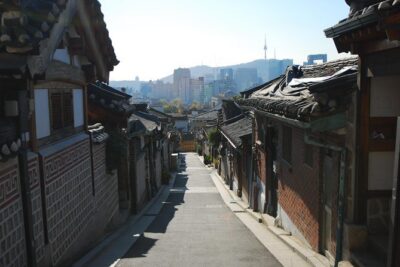
Gyeongbok Palace, Bukchon Village, and Gwangjang Tour
Read our review →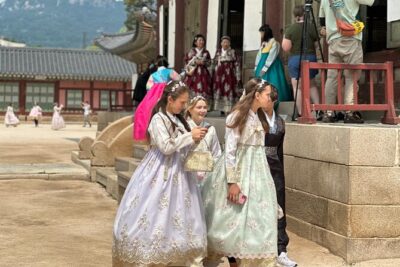
Best Seoul City Tour (Gyeongbokgung Palace,Insadong,Namsan Tower)
Read our review →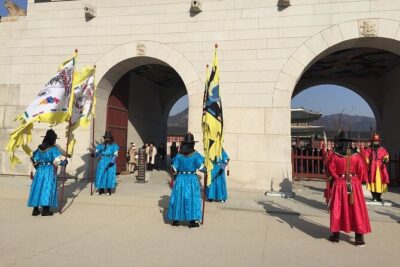
Small-Group Royal Palace and Seoul City Tour (hotel pick-up)
Read our review →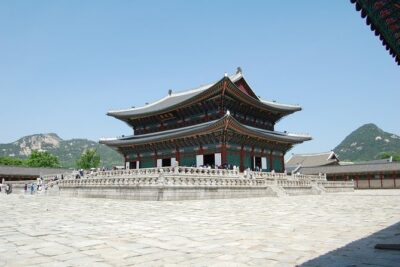
Seoul City Sightseeing Tour Including Gyeongbokgung Palace, N Seoul Tower, and Namsangol Hanok Village
Read our review →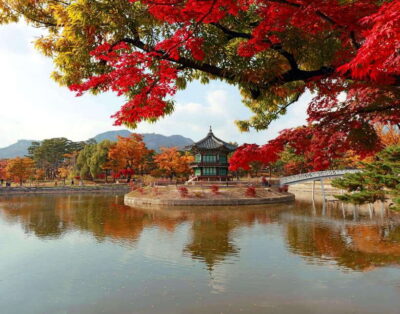
Seoul Highlights: Gyeongbok Palace, Insadong & N Seoul Tower
Read our review →
Seoul City Half Day Tour-Gyeongbok Palace Guard Changing Ceremony
Read our review →
Browse the lists this tour appears in