
Reviewed · PALACE & GYEONGBOKGUNG TOURS
(Small Group) Palace & Seoul Old Town Highlights
Seoul packs centuries of history into a surprisingly small area, and this three-hour walk gives you a useful first look at the city’s old center. You move from tea houses and Buddhist lanterns to royal gates, palace courtyards, and traditional homes, with guide Lee adding both Joseon-era stories and present-day Korean culture. I especially like the small maximum of 10 people and the fact that the Gyeongbokgung admission is included.
I also like the tour’s practical shape. It begins outside Anguk Station, near several major sights, and ends where it started, so you can keep exploring afterward. The main drawback is the pace: Gyeongbokgung Palace gets 90 minutes, while several other stops receive only a short introduction. If you want a slow palace visit or lots of shopping time, you may need another day.
Key points to know before booking
- Small groups of up to 10: You can ask questions without trying to catch a guide’s attention across a crowd.
- Five central Seoul stops: The route covers Insadong, Jogyesa Temple, Gwanghwamun Square, Gyeongbokgung Palace, and Bukchon Hanok Village.
- Guide Lee adds personal touches: Expect modern cultural facts, questions about Korea, and traditional games during breaks.
- Palace entry is included: The $60.27 price covers the Gyeongbokgung ticket, not just the guiding.
- A useful first-day orientation: The walk points out areas you may want to revisit on your own.
- Plan for outdoor walking: Good weather is required, and the activity lasts about three hours.
Why this three-hour Seoul walk works well
This tour is built for the first part of a Seoul visit, especially if you have limited time or want to understand the city’s old center before exploring alone. It links several major sights without making you arrange separate tickets, subway trips, and walking routes.
The route also gives you contrast. You see places built for royalty, worship, trade, government, and ordinary home life. That variety matters because Seoul’s past is not confined to one palace behind a gate. It appears in neighborhood streets, temple courtyards, public squares, shops, and tiled roofs.
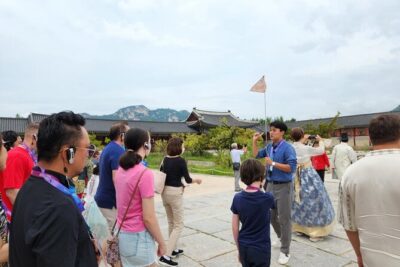
With a group capped at 10, the outing should feel more personal than a large coach excursion. Lee’s guiding style, based on the details provided, goes beyond dates and names. She brings in present-day Korean culture, answers questions about Seoul and Korea, and uses small quizzes and traditional Korean games during pauses. Those touches can make a history walk easier to follow, particularly if you are traveling with a parent, teenager, or anyone who prefers conversation to a lecture.
The trade-off is coverage over depth. Five stops in three hours means the tour is an overview, not a detailed study of every site. You will get a strong sense of where things are and why they matter, then decide which places deserve a longer return visit.
More palace and old-quarter walks in Seoul:
- Seoul: Gyeongbok Palace, Bukchon Village, and Gwangjang Tour
★ 4.9 · 2,321 reviews - Best Seoul City Tour (Gyeongbokgung Palace,Insadong,Namsan Tower)
★ 5.0 · 1,647 reviews - Small-Group Royal Palace and Seoul City Tour (hotel pick-up)
★ 5.0 · 1,474 reviews
Starting at Anguk Station and entering Insadong
The meeting point is outside Anguk Subway Station at Exit 6. This is a practical start because the station places you near Seoul’s old neighborhoods rather than far from the first sight.
The first walk leads into Insadong, known for traditional goods, restaurants, and tea houses. You get about 10 minutes here, so think of it as an introduction rather than shopping time. Lee can help you understand why this area belongs on a first Seoul walk, but you should not expect an extended browse through stores or a leisurely tea stop during the tour itself.
Insadong is useful as a starting point because it gives you an immediate sense of traditional Seoul within the modern city. It also helps you orient yourself for later exploring. If you like a particular shop, restaurant, or tea house, you can return after the tour ends.
The short visit is both a strength and a limitation. It keeps the group moving toward the palace district, but it means you should arrive with your shopping plans separate. The tour ends back at the meeting point, so you can return to Insadong afterward if you want more time.
A quiet pause at Jogyesa Temple
Jogyesa Temple receives about 30 minutes. It is the head temple of the Jogye Order of Korean Buddhism and was founded in 1910. Located in the center of Seoul, it offers a calm change of mood after the commercial streets of Insadong.
This stop is not just a quick photograph outside a religious building. The temple is an active center of Korean Buddhism, and the setting helps show how worship and daily city life share the same urban space. Lee’s commentary can give you context for the temple’s place in Korean culture while leaving time to look around.
Thirty minutes is a sensible amount for a first visit. You have enough time to take in the grounds and ask questions, but the schedule does not pretend to offer a full religious or architectural study. Be respectful of the setting and follow any posted rules during the visit.
I like this part of the route because it slows the walk before the large civic spaces and palace grounds. It also keeps the experience from becoming a simple sequence of royal buildings. Seoul’s historical identity includes Buddhist practice as well as the Joseon court.
Gwanghwamun Square and Seoul’s public story
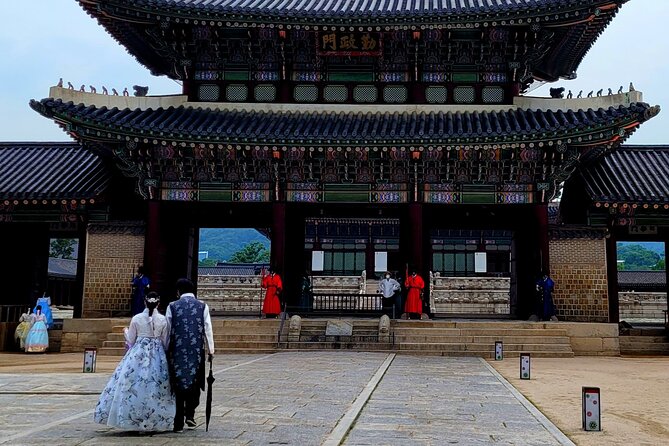
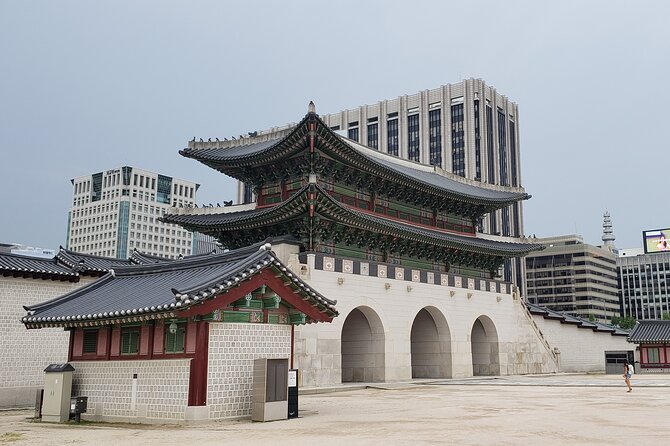
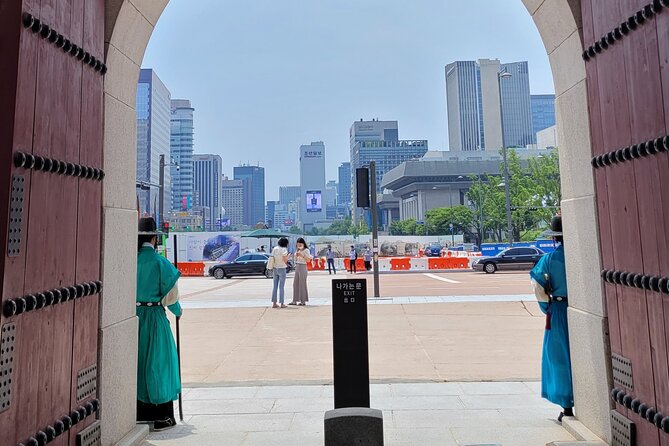
The next stop is Gwanghwamun Square, a central public plaza in front of Gyeongbokgung Palace. You spend about 20 minutes here, with the chance to see statues of King Sejong the Great and Admiral Yi Sun-sin.
The square gives Lee a useful place to explain Korea’s political and cultural story before you enter the palace. King Sejong is closely associated with the Korean alphabet, while Admiral Yi Sun-sin is remembered as a major military figure. The statues make these names visible and easier to connect with the city around you.
This stop also helps you understand the palace’s position in modern Seoul. Gyeongbokgung is not hidden away in a distant historic quarter. It faces a major public space and sits directly within the capital’s busy urban core.
Twenty minutes is enough for orientation and photographs, but not for a full exploration of the square. If public spaces, national history, or modern city planning interest you, you may want to return independently. The tour’s value here is the explanation of what you are seeing and how the square leads into the palace district.
Same base, a different kind of day out:
- Best DMZ Tour Korea from Seoul (Red Suspension Bridge Optional)
★ 5.0 · 41,422 reviews - DMZ Tour: 3rd Tunnel, Option(Suspension Bridge, Boat) from Seoul
★ 5.0 · 21,373 reviews - DMZ tour south Korea from Seoul (NK experience hall, defector)
★ 5.0 · 20,599 reviews - Seoul: DMZ Tour with Optional Suspension Bridge
★ 4.8 · 5,277 reviews
Gyeongbokgung Palace gets the most time
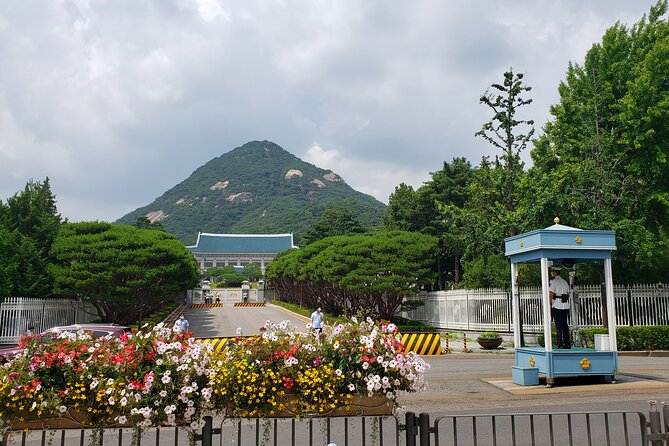
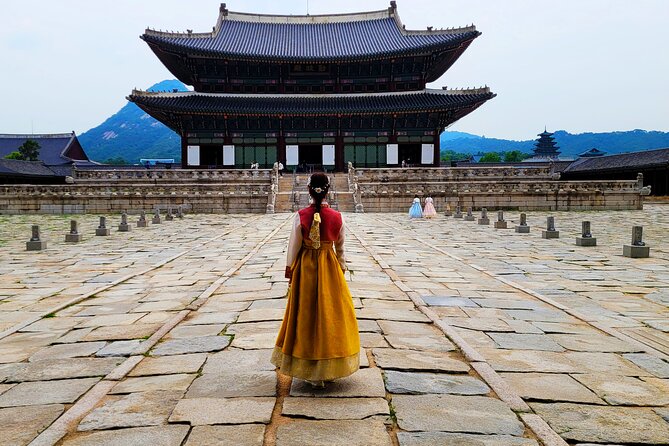
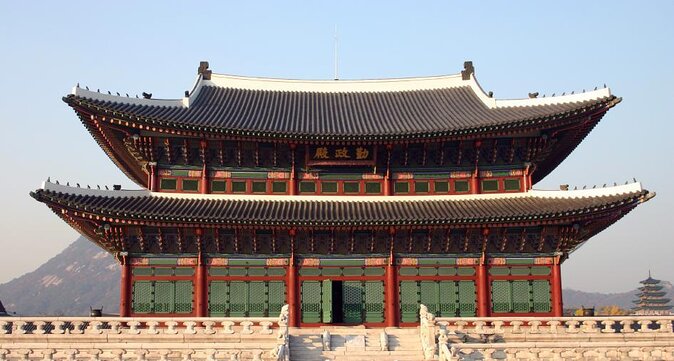
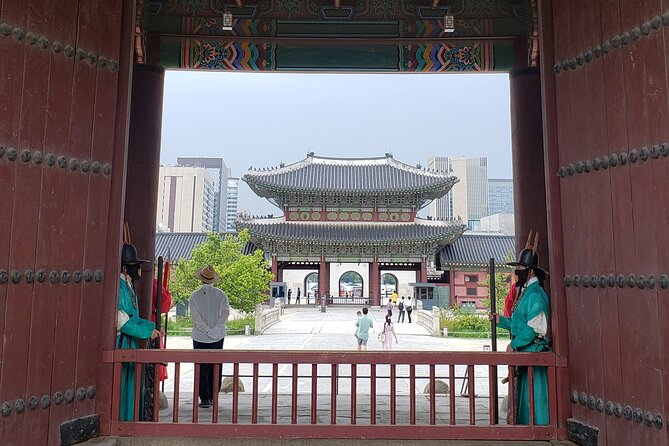
Gyeongbokgung Palace is the central event of the walk, with about 90 minutes inside. Built in 1395, it was the main royal palace of the Joseon Dynasty. Its setting, with mountains behind and Seoul in front, helps explain why the site was chosen for the royal center.
Your included admission matters here. The $60.27 cost is not only for a guide and a walking route. It also covers entry to the palace, saving you one more decision and keeping the group together at the gate.
Ninety minutes is enough to appreciate the palace grounds, major architectural features, and the broad relationship between the royal complex and the modern capital. Lee’s role is especially useful here because a palace can otherwise become a blur of courtyards, roofs, walls, and formal buildings. Historical facts and cultural context help give those spaces meaning.
The schedule still has limits. Gyeongbokgung is large, and 90 minutes will not cover every corner in detail. The tour is best if you want the main story and key views, not if you plan to study palace architecture building by building.
The setting also makes this a good place for photographs, but the group’s pace may determine how long you can linger. If you have a particular interest in royal history or traditional design, note the areas that catch your attention and return later if your schedule allows.
The palace visit is where Lee’s balance of history and current culture seems most valuable. The guide’s approach includes questions and conversation, so you can ask about Korea beyond the palace walls. That makes the visit feel connected to the living city rather than sealed in the past.
Bukchon Hanok Village and the final walk
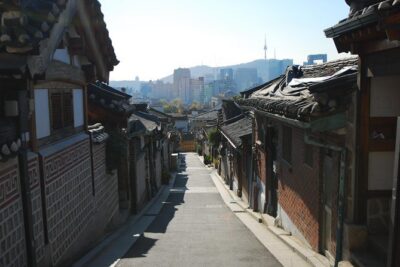
The final listed stop is Bukchon Hanok Village, with about 30 minutes. This historic neighborhood lies between two royal palaces and is known for hanok, the traditional Korean houses that line its winding alleys.
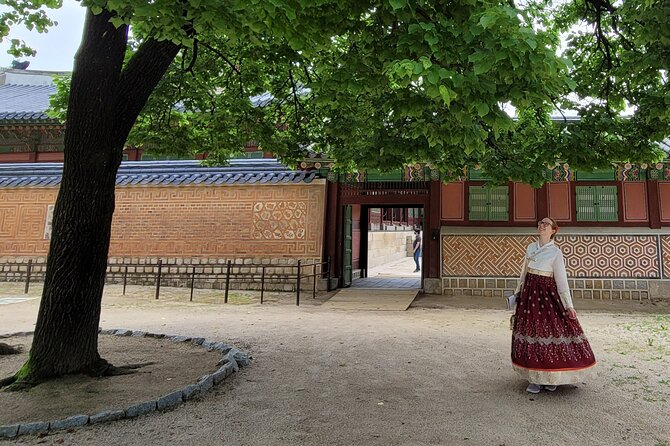
Bukchon shows how residential Seoul once looked and how older buildings can still shape a city’s character. Its rooftops and narrow lanes offer a different view from the formal order of Gyeongbokgung. At the palace, you see royal power. In Bukchon, you see the kind of neighborhood where people lived.
Thirty minutes gives you a taste of the area, but not a full walk through every alley. That is important to remember. Bukchon is a residential district, so the tour’s brief visit is more respectful and practical than treating it like a large open-air museum. You should keep voices low and avoid blocking doorways.
This stop also makes a useful ending because it leaves you with a clear idea of where to explore next. You may want to return for more time in the lanes, or head back toward Insadong after the tour ends at the original meeting point.
What the $60.27 price delivers
At $60.27 per person, the tour is not the cheapest way to walk around Seoul, but the value depends on how much structure you want. You receive about three hours of guiding, a small group capped at 10, a route through five major areas, and admission to Gyeongbokgung Palace.
If you already know Seoul’s old center and are comfortable arranging your own palace entry, you may find the price harder to justify. You could visit several of these areas independently. The case for booking is stronger if this is your first visit, you want historical context, or you prefer asking questions rather than reading signs alone.
The small group is the key value point. A maximum of 10 makes it easier to hear Lee, ask about Korean culture, and adjust the conversation to your interests. On some dates, the group may be even smaller. One booking had only three participants, creating a very personal experience without changing the planned route.
The tour is also useful for people with limited vacation time. In half a day, you see a temple, civic square, royal palace, traditional shopping district, and historic residential area. You will not master Seoul’s history in three hours, but you will know where to spend the rest of your time.
Lee’s guiding style and the personal touch
Lee is the guide named in the available information, and her approach is one of the strongest reasons to consider this walk. She combines historical explanation with facts about current Korean life, rather than treating the Joseon period as a sealed chapter.
The tour can include mini quizzes about Korea and traditional Korean games during breaks. These are small details, but they change the rhythm of the outing. Instead of listening continuously while walking, you get chances to respond, ask questions, and check what you have picked up.
Lee is also described as patient and caring with her audience. That matters when a group includes different ages or different levels of background knowledge. You can ask basic questions without feeling that you are slowing down a formal lecture.
Her friendly style seems particularly well suited to a first visit. You can ask about Seoul and Korea as the route unfolds, then use the answers to shape your own plans. I would choose this tour for someone who wants a guide who talks with the group, not just at it.
Timing, weather, and practical planning
The experience lasts about three hours and begins outside Anguk Station, Exit 6. It ends back at the meeting point, which makes onward planning simple. You can return to Insadong, continue toward nearby sights, or use the subway from Anguk Station.
Wear shoes suited to regular city walking. The route includes streets, palace grounds, and traditional neighborhood lanes. The supplied details do not specify the exact distance or the number of stairs, so I would avoid assuming that the walk is effortless.
The activity requires good weather. If poor conditions force cancellation, you are offered another date or a full refund. The tour also requires a minimum number of participants, so a cancellation is possible if that minimum is not reached.
Confirmation arrives when you book, and a mobile ticket is provided. Service animals are allowed, the route is near public transportation, and most people can participate. Personal expenses are not included, so plan separately for food, drinks, shopping, or anything else you choose to buy along the way.
You can cancel for a full refund up to 24 hours before the start time. Changes or cancellations made less than 24 hours before the start time are not accepted for a refund, with cut-off times based on local Seoul time.
Who should book this Seoul palace walk?
I would recommend it to a first-time visitor who wants a clear introduction to central Seoul without spending a whole day on one site. It also suits anyone who likes history explained in plain language, small groups, and a chance to ask about modern Korean life.
Families and mixed-age groups may appreciate Lee’s quizzes, games, and patient style. The tour can also work well for solo visitors who want company without joining a large group.
I would think twice if your main goal is extended shopping in Insadong, a slow temple visit, or a detailed architectural study of Gyeongbokgung. The route covers a lot, so each place receives a set amount of time. You may need to revisit the palace or Bukchon afterward.
Should you book it?
Book this tour if you want a well-shaped first look at Seoul’s old center, with palace entry and a group no larger than 10 included in the price. Lee’s mix of history, current culture, questions, and traditional games gives the walk a personal feel.
Skip it if you prefer exploring entirely on your own or already have a strong plan for Gyeongbokgung and Bukchon. For most first-time visitors with only a few days in Seoul, though, the route offers a sensible introduction and leaves you better prepared for the rest of your visit.
FAQ
How long does the Palace and Seoul Old Town Highlights tour last?
The tour lasts approximately three hours.
Where does the tour begin?
It begins outside Anguk Subway Station at Exit 6 in Seoul.
Where does the tour end?
The activity ends back at the meeting point.
What places are included on the route?
The route includes Insadong, Jogyesa Temple, Gwanghwamun Square, Gyeongbokgung Palace, and Bukchon Hanok Village.
Is admission to Gyeongbokgung Palace included?
Yes. The Gyeongbokgung Palace ticket is included.
How large is the tour group?
The maximum group size is 10 travelers.
What is the cancellation policy?
You can cancel up to 24 hours before the start time for a full refund. Cancellations or changes made less than 24 hours before the start time are not accepted for a refund. If poor weather or an insufficient minimum group size cancels the tour, you are offered another date or a full refund.
Just added in Seoul
- Your Personal Seoul Photographer!★ 4.1 · 15 reviews
- You’re Invited to Our Home in Seoul: The Only Cooking Class!★ 5.0 · 8 reviews
- From Seoul: Yongpyong Ski Day Tour with Transportation★ 4.9 · 40 reviews
- Seoul: Korean & English Language Exchange Global Party★ 5.0 · 28 reviews
- From Seoul: Hwacheon Ice Fishing and Lighting Festival Tour★ 4.5 · 4 reviews
- Unique Native Experience : Han River Picnic, Board game, BBQ★ 5.0 · 3 reviews
- Seoul: Gangneung BTS K-Pop & K-Drama Filming Locations Tour★ 4.6 · 14 reviews
- K-Pop Making Class with a Producer!★ 5.0 · 3 reviews
Palace & Gyeongbokgung Tours, compared.
Gyeongbok Palace, Bukchon Village, and Gwangjang Tour
Read our review →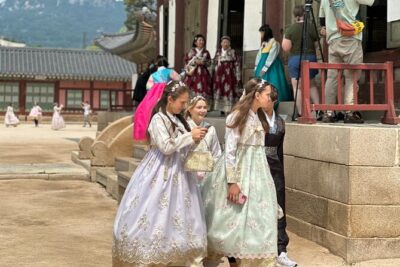
Best Seoul City Tour (Gyeongbokgung Palace,Insadong,Namsan Tower)
Read our review →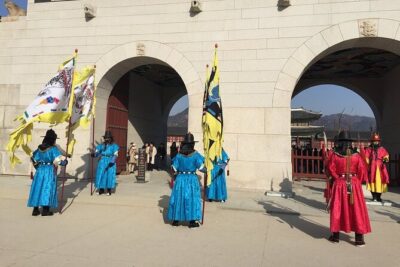
Small-Group Royal Palace and Seoul City Tour (hotel pick-up)
Read our review →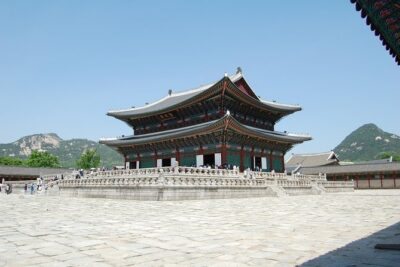
Seoul City Sightseeing Tour Including Gyeongbokgung Palace, N Seoul Tower, and Namsangol Hanok Village
Read our review →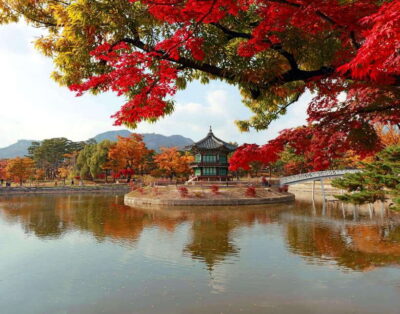
Seoul Highlights: Gyeongbok Palace, Insadong & N Seoul Tower
Read our review →
Seoul City Half Day Tour-Gyeongbok Palace Guard Changing Ceremony
Read our review →
Browse the lists this tour appears in