
Reviewed · PALACE & GYEONGBOKGUNG TOURS
Tour Seoul’s oldest district with a storyteller from Bukchon
Bukchon is more than a pretty hillside of tiled roofs. With local guide Dong, who grew up here, you follow the district’s story from Joseon royal politics through the Japanese colonial period and into modern Seoul. His background as a filmmaker and screenwriting professor fits this tour well: places come with characters, conflicts, and surprising turns.
I like the personal angle and the relaxed pace. Dong can tell you what Bukchon was like before it became a major sightseeing stop, and he adds practical Seoul tips along the way. The main consideration is that this is a walking tour through hilly lanes, and some history is aimed at older children and adults. The operator recommends it for ages 12 and up.
Key points to know before booking
- A guide who grew up in Bukchon: Dong brings personal memories to a district that has changed quickly.
- History beyond the postcard view: You’ll connect royal succession, feng shui, independence-era events, politics, business, and film locations.
- A calm 2 to 3-hour walk: The pace is designed for conversation rather than rushing from sight to sight.
- Seven varied stops: The route includes Unhyeongung, a traditional culture center, a historic well, a school, Samcheongdong, and Bukchon Hanok Village.
- Private touring: Only your group participates, making it easier to ask questions and shape the conversation.
- Optional handicraft activity: A traditional Korean craft experience is available with the Plus Tour, not the standard inclusion.
Why Bukchon is best understood through stories
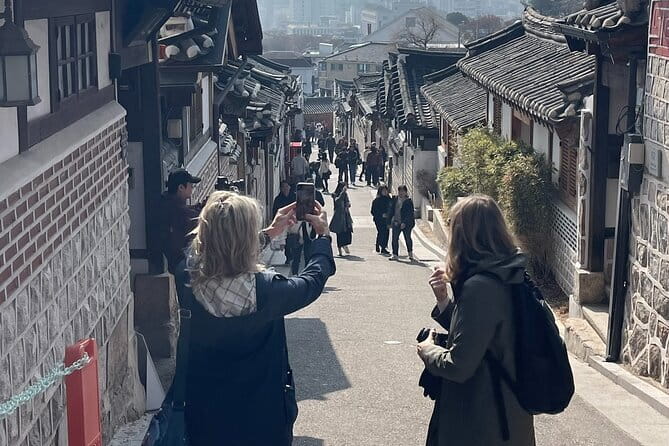
Bukchon sits in central Seoul between major royal and civic areas, but its appeal is not simply its old houses. The district has been tied to Korean power and daily life for centuries. The tour presents it as a place where palace politics, elite housing, education, business, protest, entertainment, and ordinary neighborhood life overlap.
That approach matters because Bukchon can be easy to misread. On your own, you may see a handsome hanok roof, a narrow lane, and a photo stop. With context, you begin to understand why the area was chosen as a capital district, who lived there, how its fortunes rose and fell, and why it remains politically important.
Dong’s personal connection gives the walk a more recent layer. He did not simply study Bukchon from a distance. He grew up in the neighborhood and can explain how it felt before its lanes became a major stop on Seoul’s visitor map. That living memory is the main reason to choose this tour over a basic architecture walk.
The storytelling style also helps link the old and new. You hear about royal families and powerful politicians, then move through buildings used in television dramas and music videos. The result is less like a lecture and more like a walk through a long-running Seoul story.
More palace and old-quarter walks in Seoul:
- Seoul: Gyeongbok Palace, Bukchon Village, and Gwangjang Tour
★ 4.9 · 2,321 reviews - Best Seoul City Tour (Gyeongbokgung Palace,Insadong,Namsan Tower)
★ 5.0 · 1,647 reviews - Small-Group Royal Palace and Seoul City Tour (hotel pick-up)
★ 5.0 · 1,474 reviews
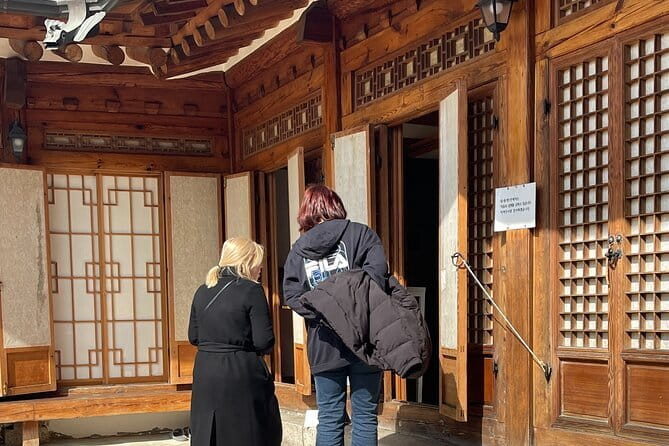
Unhyeongung opens with a royal surprise
The first stop is Unhyeongung, where the tour begins with one of Joseon’s most unusual succession stories. When a king died without a crown prince, an 11-year-old royal boy connected to this place became the 26th king of Joseon. His father then ruled the country for the next decade.
This is a strong opening because it gives you a human story before the tour turns to buildings and dates. You can picture a child thrust into royal power, then consider what it meant for his father to govern in his name. The site becomes more than a palace-related landmark. It becomes the setting for a struggle over authority.
Admission to Unhyeongung is free, and the planned visit lasts about 20 minutes. That is enough time to hear the central story without making the opening feel heavy. It also lets you get your bearings before entering Bukchon’s narrower streets.
Anguk architecture in three time periods
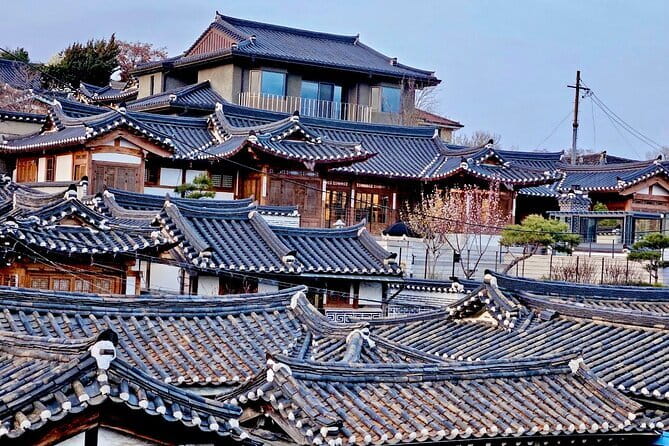
Near Cafe Onion Anguk, you pause to look at architecture from roughly 600, 100, and 50 years ago. The stop lasts about 10 minutes and is less about sitting down for coffee than about reading the neighborhood as a record of different periods.
Cafe Onion is a popular place, but this tour uses the surrounding architecture as its main subject. You’ll hear why the buildings look different and how older forms have been retained, changed, or given new uses. It is a useful reminder that Bukchon is not a frozen museum.
Coffee and tea are not included, so plan on treating the cafe as a nearby option rather than part of the tour price. If you stop for a drink later, you can do so on your own terms. The important point here is visual comparison: old rooflines and newer urban uses share the same streets.
Hanok life at the Traditional Culture Center
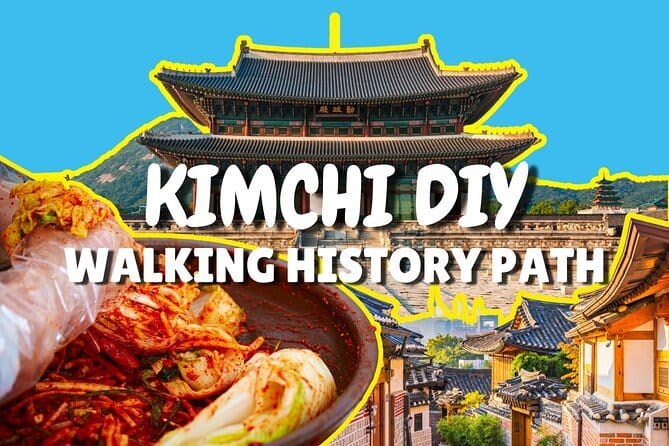
The Bukchon Traditional Culture Center focuses on hanoks associated with the yangban, the ruling class that commonly lived in Seoul. Here, you learn to look at traditional Korean homes as social spaces, not just attractive facades.
The word hanok often brings to mind a tidy row of historic houses. The story is more useful when you connect the houses to the people who occupied them and the status they represented. The center provides a calmer setting for that explanation, with about 10 minutes planned at the stop.
This part should appeal to you if you want more than photographs. It helps explain why Bukchon’s housing patterns matter and why the district became associated with elite life in the capital. It also gives the walk a cultural focus before the route returns to stories of power and conflict.
Same base, a different kind of day out:
- Best DMZ Tour Korea from Seoul (Red Suspension Bridge Optional)
★ 5.0 · 41,422 reviews - DMZ Tour: 3rd Tunnel, Option(Suspension Bridge, Boat) from Seoul
★ 5.0 · 21,373 reviews - DMZ tour south Korea from Seoul (NK experience hall, defector)
★ 5.0 · 20,599 reviews - Seoul: DMZ Tour with Optional Suspension Bridge
★ 4.8 · 5,277 reviews
Seokjeong Boreum Well and the stories beneath the lanes
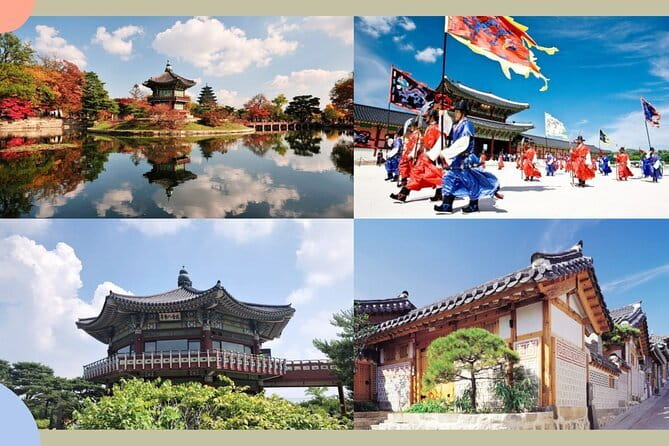
At Seokjeong Boreum Well, Dong turns to the old wells and the stories attached to them. The stop is scheduled for about 10 minutes.
The appeal here is the shift in scale. The tour moves away from kings and ruling families and looks at a basic neighborhood resource. Wells are tied to daily life, memory, and childhood stories, while later historical evidence can change how those stories are understood.
You should not expect a large attraction or a long visit. The value is in the explanation. Without a guide, you might pass the well without noticing it. With the story, a small feature becomes a way to think about how people lived before modern water systems and how local legends survive.
Choong Ang High School beyond Winter Sonata
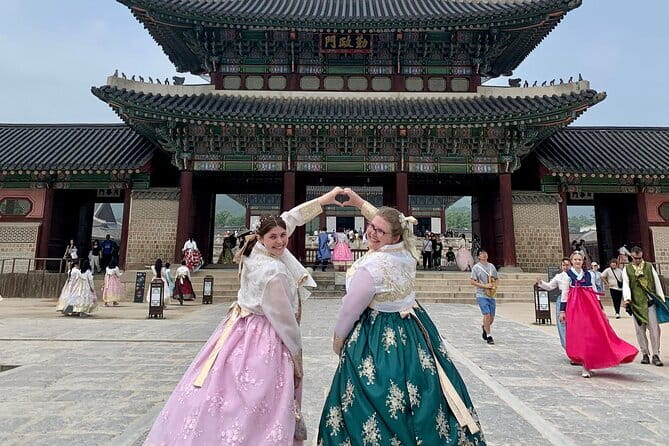
Choong Ang High School is known as a filming location for dramas and music videos, including Winter Sonata. That connection may draw fans of Korean television, but the tour treats the school as more than a backdrop.
The school occupies a historic place in the making of modern Korea and helped shape the country in important ways. Dong tells the story behind its less obvious role, giving you a useful counterpoint to the film location image.
The planned stop is about 10 minutes. You’ll want to keep expectations realistic: this is a look and a story from the outside rather than a promise of a full school visit. Still, it is one of the route’s best examples of how entertainment, education, and national history can meet in one Seoul neighborhood.
Samcheongdong, feng shui, and the rise of power
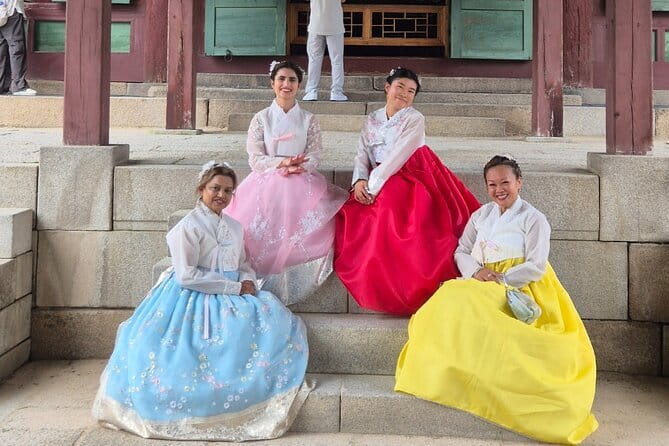
The Samcheongdong and Bukchon section lasts about 20 minutes and brings the tour’s political ideas together. Here, Dong traces the rise and fall of politicians and business leaders who once held land in Bukchon.
The district was selected as a capital area according to feng shui principles. That belief in auspicious placement was not treated as a decorative idea. It shaped how powerful people viewed land, authority, prosperity, and danger.
This is one of the tour’s more distinctive subjects. You are not simply hearing that Bukchon is old. You are considering why certain people wanted a place here, how power was built around land, and how fortunes changed. The story can also help explain why the area has carried such symbolic weight in Korean public life.
The guide’s political and cultural framing is especially useful if you have already seen Seoul’s grand palaces. Palaces show official power. Bukchon shows where influential families and later power brokers lived, competed, and left their mark.
Bukchon Hanok Village and the person who reshaped it
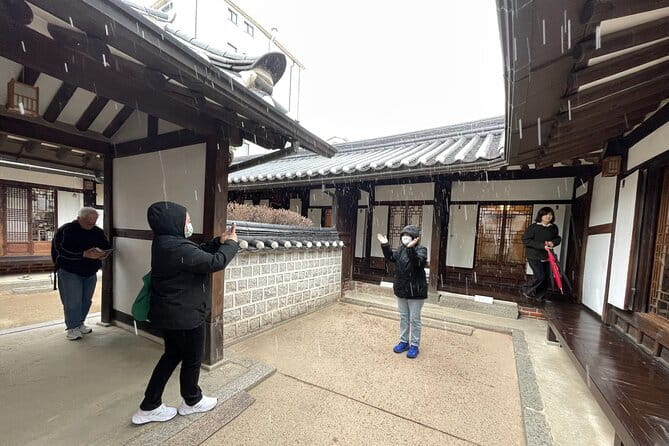
The final stop is Bukchon Hanok Village, with about 15 minutes devoted to the person who changed the district’s appearance during the 1920s and 1930s.
This is an important ending because it challenges the idea that every traditional-looking house has remained untouched for centuries. Bukchon’s familiar hanok streets also reflect deliberate changes, development, and the pressures of a growing city.
You’ll likely recognize the village as the Seoul seen in photographs, but the tour asks you to look past the surface. The houses are part of a modern story as well as an old one. The district has shifted from an elite residential area to a neighborhood known around the world, and that change brings both interest and pressure.
The route finishes in a different location from the starting point. Since the end point is not specified, ask for the final location when booking if you need to coordinate a restaurant, hotel, or later reservation.
What Dong adds that a standard walk cannot
The guide is the central reason to book. Dong was born and raised in Bukchon, and his stories connect public history with personal memory. That makes a difference in a neighborhood that has changed substantially over time.
He also works as a filmmaker and teaches university screenwriting. You can expect him to organize information through scenes and people rather than only dates. He has been praised for answering questions, offering Seoul suggestions based on personal interests, and helping with practical matters such as confirming an appointment by phone.
His advice can continue beyond the route. He has recommended places outside the usual Seoul circuit and has shared suggestions for temples in the Korean countryside. This is useful if you want to turn a two-hour walk into a starting point for the rest of your visit.
The tone appears friendly and personal rather than formal. That can be a strength if you enjoy conversation and local perspective. If you prefer a tightly scripted tour focused only on major monuments, this may feel more informal than expected.
Pace, fitness, and the private format
The tour takes about two to three hours and requires moderate physical fitness. You will walk through narrow lanes and changing elevations, so comfortable shoes are sensible. The route is not presented as a strenuous hike, but it is not a seated sightseeing experience either.
A relaxed pace is one of its advantages. The stops are short, usually 10 to 20 minutes, which leaves room for movement and questions without packing too much into one morning. The start time is 10:00 a.m., and the meeting point is Anguk Station Exit 4.
This is a private activity, meaning only your group participates. That makes the experience more flexible than a large group walk. You can ask about a building, pause for clarification, or spend more time on the subjects that interest you.
The product information also mentions group discounts. Since pricing can depend on the size of your party and the selected option, check the total before confirming.
Is $39.20 a fair price?
At $39.20 per person, the tour is priced above a casual self-guided stroll but below the cost of many full-day private sightseeing arrangements. The value rests almost entirely in the guide’s local perspective and the quality of the storytelling.
You are not paying for many admission tickets. The listed stops are free, and coffee, tea, insurance, personal expenses, and hotel pickup are not included. Instead, your money pays for a focused route through places that can be easy to overlook and for the chance to ask questions in real time.
I think the price makes sense if you care about context, local memory, and history that extends beyond the best-known palace gates. It is less compelling if you only want quick photos of hanok rooftops or a basic orientation to the neighborhood. The private format strengthens the value for couples, families with older children, or small groups who would otherwise book a private guide separately.
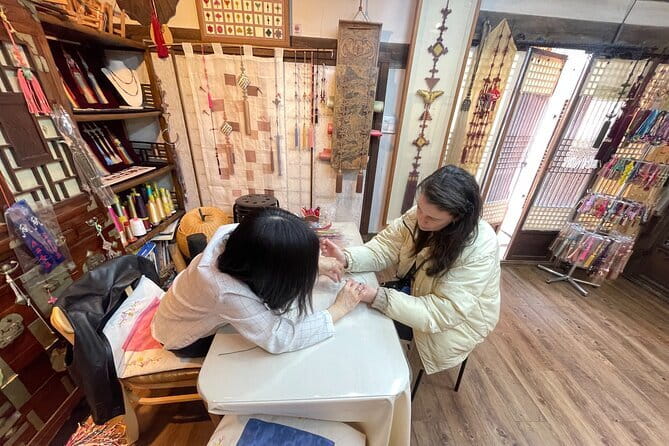
A Plus Tour includes a traditional Korean handicraft experience. One activity mentioned in connection with the tour is making traditional Hopae tags. Confirm that the Plus option is selected if that hands-on element matters to you, because the standard tour includes the professional guide but not the craft experience.
Who will get the most from this walk?
I would choose this tour for anyone who wants to understand how old Seoul connects to modern Korea. It suits history-minded visitors, people interested in Korean politics and culture, fans of Korean dramas, and repeat visitors who have already seen the main palaces.
It is also a good first-day activity if you want an introduction to Jongno and nearby central Seoul. Dong can offer suggestions for later stops, and the walk gives you a sense of how the city’s old and new sides meet.
The tour is recommended for ages 12 and above. Younger children may find the storytelling and walking demanding, and the operator specifically advises against participation for children 12 and under.
You should also be comfortable with a moderate amount of walking and with listening for much of the morning. If you want frequent shopping, long cafe breaks, or entry into every building, choose a different format.
My booking advice
Book this tour if you want Bukchon explained by someone who grew up there, not just presented as a row of photogenic homes. The strongest reasons are Dong’s personal connection, the political and feng shui stories, and the way the route links royal history with schools, wells, filming sites, and modern change.
Skip it if you need a fully accessible route, a major museum admission, or an activity designed for small children. Also remember that the tour may be canceled if fewer than two people join, so confirm the status of your booking.
For most adults and teenagers who enjoy a thoughtful walk, $39.20 is a reasonable price for a private introduction to one of Seoul’s most layered districts. Bring comfortable shoes, arrive at Anguk Station Exit 4, and leave room afterward for the rest of Jongno.
FAQ
How long does the Bukchon Storytelling Tour last?
The tour lasts approximately two to three hours.
What time and where does the tour begin?
It begins at 10:00 a.m. at Anguk Station Exit 4 in Unni-dong, Jongno District, Seoul.
Where does the tour finish?
The activity ends at a different location from the starting point. The specific end point is provided in the booking details.
Who leads the tour?
The guide is Dong, who was born and raised in Bukchon. He is also a filmmaker and university screenwriting professor.
Is the tour private?
Yes. Only your group participates.
Is the tour suitable for children?
The operator strongly recommends the experience for participants aged 12 and above. Children aged 12 and under may find the storytelling walk challenging.
How much does the tour cost?
The listed price is $39.20 per person. Group discounts may be available.
Is a traditional Korean handicraft included?
A traditional Korean handicraft experience is available with the Plus Tour only. It is not included in the standard tour details.
Can I cancel for a full refund?
You can cancel up to 24 hours before the experience for a full refund.
Just added in Seoul
- Your Personal Seoul Photographer!★ 4.1 · 15 reviews
- You’re Invited to Our Home in Seoul: The Only Cooking Class!★ 5.0 · 8 reviews
- From Seoul: Yongpyong Ski Day Tour with Transportation★ 4.9 · 40 reviews
- Seoul: Korean & English Language Exchange Global Party★ 5.0 · 28 reviews
- From Seoul: Hwacheon Ice Fishing and Lighting Festival Tour★ 4.5 · 4 reviews
- Unique Native Experience : Han River Picnic, Board game, BBQ★ 5.0 · 3 reviews
- Seoul: Gangneung BTS K-Pop & K-Drama Filming Locations Tour★ 4.6 · 14 reviews
- K-Pop Making Class with a Producer!★ 5.0 · 3 reviews
Palace & Gyeongbokgung Tours, compared.
Gyeongbok Palace, Bukchon Village, and Gwangjang Tour
Read our review →
Best Seoul City Tour (Gyeongbokgung Palace,Insadong,Namsan Tower)
Read our review →
Small-Group Royal Palace and Seoul City Tour (hotel pick-up)
Read our review →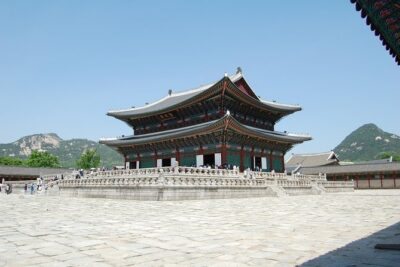
Seoul City Sightseeing Tour Including Gyeongbokgung Palace, N Seoul Tower, and Namsangol Hanok Village
Read our review →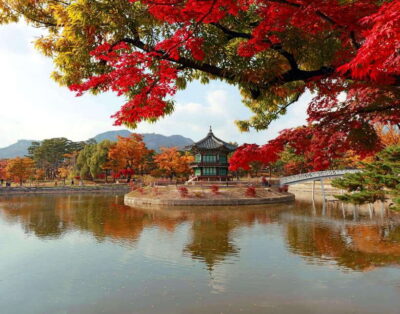
Seoul Highlights: Gyeongbok Palace, Insadong & N Seoul Tower
Read our review →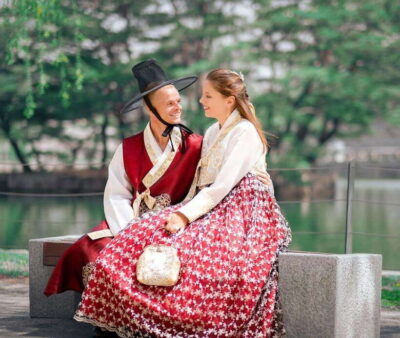
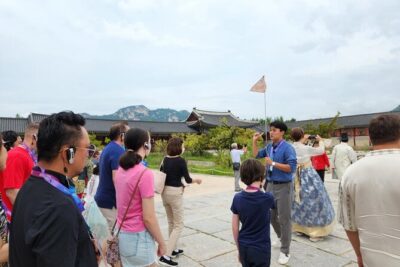
Seoul City Half Day Tour-Gyeongbok Palace Guard Changing Ceremony
Read our review →
Browse the lists this tour appears in