
Reviewed · HISTORICAL TOURS
Buam dong Walking Tour Art, History and Parasite in Seoul
Buam-dong gives you a side of Seoul that feels far removed from the city’s giant shopping streets. In about two and a half hours, you move from Cold War history and city defenses to a quiet hanok library, mountain views, and a Parasite filming location. Guide Jon brings humor and personal warmth to the stories, which helps the walk feel more like a neighborhood introduction than a lecture.
I especially like the visit to Cheongun Literature Library, Seoul’s first hanok library, and the stop at Changuimun Gate, where the old city wall still makes Seoul’s past feel close at hand. The main consideration is physical effort: this is a walking tour in a hillside district, so you should be comfortable with moderate activity and uneven or sloping streets.
Key points
- Small group of up to 15 people: The limited size gives the guide room to explain details and answer questions.
- A short bus ride into Buam-dong: The journey from the meeting point is part of the introduction, with the guide explaining the area as you go.
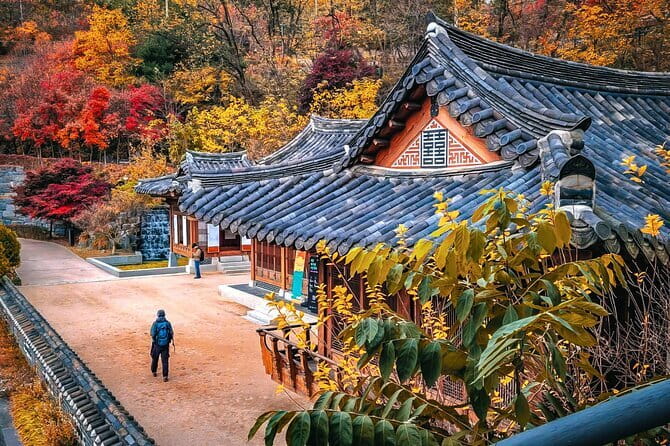
- Seoul’s first hanok library: Cheongun Literature Library offers a calm cultural stop inside traditional Korean architecture.
- History from the city wall to the Cold War: Changuimun Gate, the Seoul City Wall, and the Choi Gyu-sik Memorial Statue connect local streets with major events.
- Mountain and city views: You may see Bugaksan, Inwangsan, and Bukhansan from the hillside route.
- A pop-culture finish: The walk includes a Parasite filming location and ends at Mugyewon, a traditional house with ties to Grand Prince Anpyeong.
Why Buam-dong makes a better walking route than another Seoul shopping street
Seoul is easy to visit through palaces, markets, cafés, and department stores. Buam-dong offers a different rhythm. The district sits among hills and older neighborhoods, with art, literature, military history, and traditional buildings appearing along the route.
That mix is the main reason I would choose this outing. You are not simply walking from one famous photo stop to another. You are using the streets to connect several parts of Korean culture: poetry, architecture, wartime memory, film, and royal history.
The tour costs $38.50 per person. That is more than the price of wandering around Buam-dong on your own, but the value comes from the structure and interpretation. A guide handles the route, explains why the district matters, and connects places that might otherwise seem unrelated. The group limit of 15 is also useful in a hilly neighborhood where a large crowd would slow things down.
The rating is 5 out of 5, with 100 percent recommending the experience across 24 reviews. One especially useful detail is the praise for Jon, described as friendly and funny while sharing stories about Korean history. If your guide is Jon, you can expect a relaxed personality alongside the historical material.
A few more things to do in Seoul worth a look
- Seoul: Evening Dark History, Folklore & Ghost Story Walking Tour
★ 5.0 · 593 reviews - Hanbok Photoshoot and History Tour at Gyeongbokgung Palace
★ 5.0 · 276 reviews - From Seoul: Dae Jang Geum Park Historic K-Drama Set Tour
★ 4.9 · 143 reviews
The 2 pm start and the ride into the hills
The meeting point is 시민약국106-3 Jeokseon-dong in Jongno District. The tour begins at 2 pm, then uses a bus for roughly 10 minutes to reach Buam-dong.
That bus ride is not dead time. The guide uses it to explain the area and set up the story of why Buam-dong is different from central Seoul. You get a quick change of scenery without spending a long stretch on public transportation.
A 2 pm departure also shapes the experience. You are walking in the afternoon rather than starting early in the morning. The timing can work well if you spend the morning at another Seoul sight, but you should allow enough time to reach the meeting point. The tour ends back at that same meeting point.
Your ticket is mobile, and confirmation arrives when you book. Public transportation is nearby, making the start and finish practical for a day of sightseeing in Jongno.
Cheongun Literature Library, a hanok setting for Seoul’s literary side
The first major stop is Cheongun Literature Library, also written as Chungwoon Literature Library in some tour information. It is described as Seoul’s first hanok library, and the building provides a strong change of mood after the bus ride.
Traditional Korean hanok architecture matters here. Instead of entering a large modern cultural complex, you pause in a quieter setting surrounded by older design. The stop lasts about 20 minutes, giving you time to take in the building and atmosphere without turning the visit into a long museum session.
I like this stop because it adds a softer side to the tour. Buam-dong is not presented only through battles, political tension, or city walls. Literature and quiet contemplation are part of the neighborhood’s identity too.
The visit is also useful for photographers and architecture fans, though the tour is not described as a dedicated photo walk. You should expect a brief cultural stop guided by the overall story of the area, not a long period for independent reading or exploration.
Choi Gyu-sik and the Cold War story
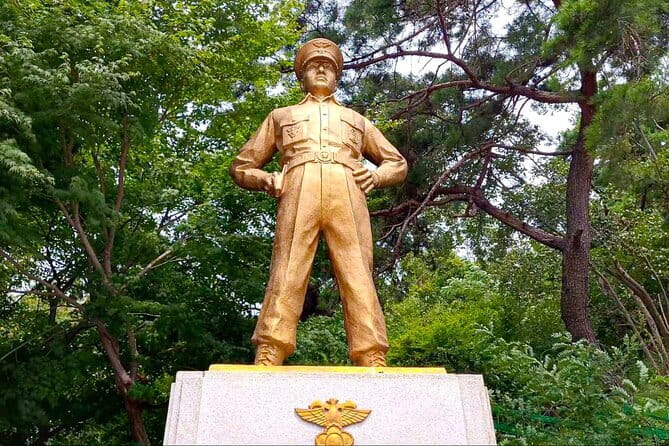
The route includes the Choi Gyu-sik Memorial Statue and an explanation of Cold War history. This is one of the tour’s more serious sections.
The memorial helps place Buam-dong within Seoul’s modern political past. Rather than treating the district as only a peaceful hillside retreat, the guide shows how close quiet neighborhoods can be to moments of danger and national tension.
The supplied itinerary does not give a detailed account of Choi Gyu-sik’s life or the specific stories told at the statue, so you should not expect a full museum-style presentation. The value is in the guide’s context and in seeing a local memorial as part of the walk.
This is a good reason to choose a guided visit instead of simply following a map. A statue or memorial can be easy to pass without understanding its importance. With a guide, the stop becomes part of a larger explanation of Seoul’s past.
Same base, a different kind of day out:
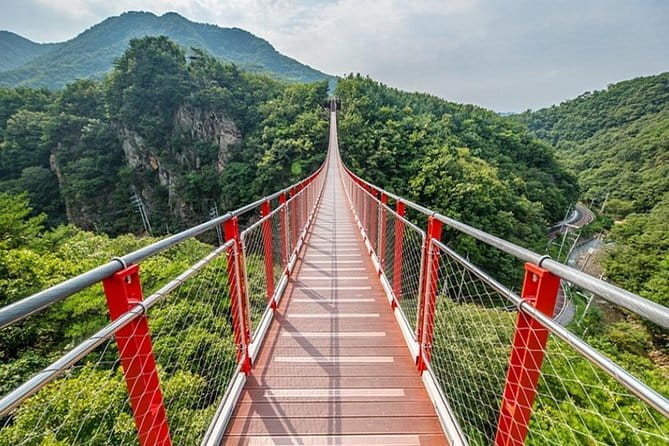
- Best DMZ Tour Korea from Seoul (Red Suspension Bridge Optional)
★ 5.0 · 41,422 reviews - DMZ Tour: 3rd Tunnel, Option(Suspension Bridge, Boat) from Seoul
★ 5.0 · 21,373 reviews - DMZ tour south Korea from Seoul (NK experience hall, defector)
★ 5.0 · 20,599 reviews - Seoul: DMZ Tour with Optional Suspension Bridge
★ 4.8 · 5,277 reviews
Poet Yoon Dong-ju’s hill and the views from Buam-dong
The walk also reaches the Hill of Poet Yoon Dong-ju. The stop links the physical setting of Buam-dong with Korean literature and poetry.
The tour description highlights views toward Bugaksan, Inwangsan, and Bukhansan. These mountains give the route its sense of space. You are still close to central Seoul, yet the hills make the city feel less enclosed than it does in the downtown core.
The views are a benefit, but they come with a practical tradeoff. Buam-dong is a hillside neighborhood, and the route requires a moderate level of fitness. You should be ready for walking on slopes and possibly uneven surfaces. The information does not specify the total distance or the number of stairs, so anyone concerned about mobility should ask the operator before booking.
I would treat the hill as part of the experience rather than an obstacle to rush through. The reward is not a single grand lookout with a long viewing session. It is the changing outlook as the route moves through a neighborhood shaped by mountains.
Changuimun Gate and the Seoul City Wall
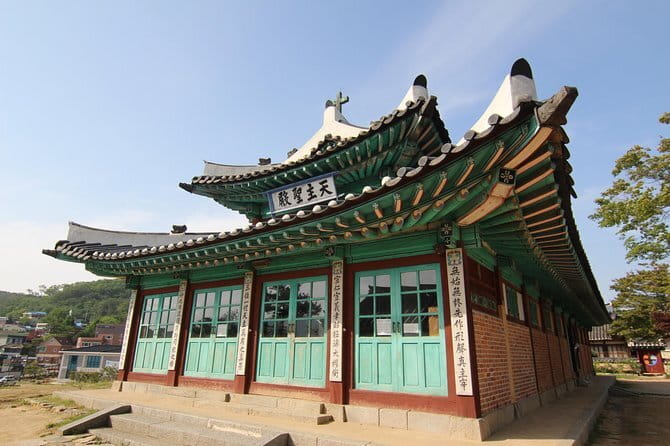
Changuimun Gate, also called Jahamun Gate, is one of the clearest historical stops on the route. The tour spends about 15 minutes here, explaining the gate and the Seoul City Wall as parts of the capital’s defense system and heritage.
This is a compact stop, but it gives you a physical sense of old Seoul. Gates and walls can seem abstract when viewed only in a textbook. Here, the surviving structure helps you picture how the city was organized and protected.
The wall also adds a useful contrast to the modern capital. Seoul’s streets, buses, and high-rise buildings are never far away, yet the gate points to an older urban boundary. You are seeing history in the middle of a living city, not inside a closed display.
Because the visit lasts only about 15 minutes, the guide’s explanation will likely be central to what you take away. If you want a long, detailed study of Seoul’s fortifications, you may need a separate visit. For a short walking tour, this is a well-chosen stop that keeps the route moving.
The Parasite filming location and the pop-culture connection
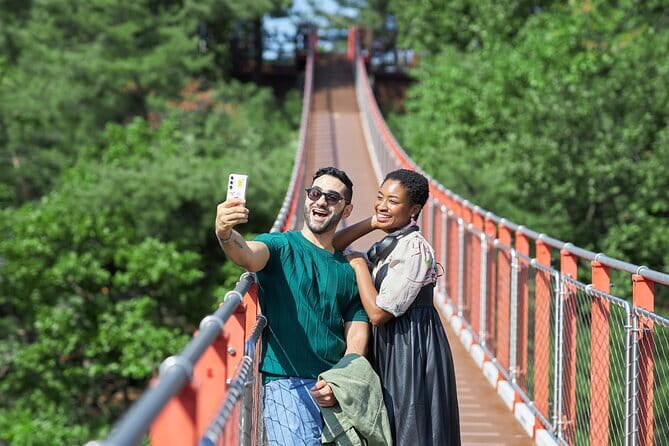
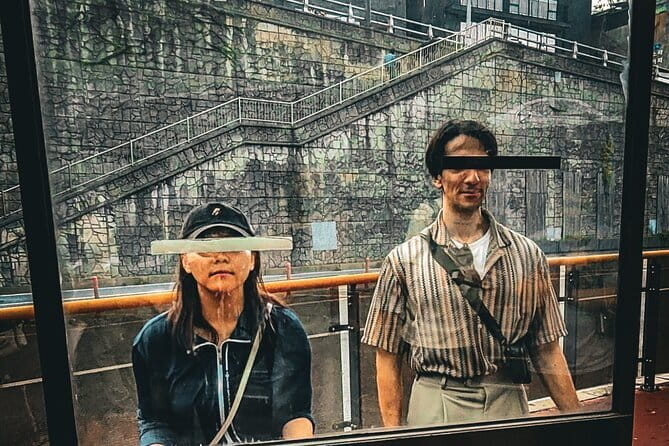
A Parasite filming location is included among the places you see. The supplied schedule does not identify the exact scene or provide a set amount of time at the location, so you should think of it as a feature along the walk rather than a full film tour.
That small distinction matters. If you are a serious fan looking for a detailed account of every filming site, this outing may not meet that narrower goal. If you simply want to connect a globally known film with a real Seoul neighborhood, the stop adds a fun modern layer to the older history.
I like the way this detail broadens the appeal. One moment you are hearing about a city gate or a literary figure, and another moment you are looking at a place familiar from popular cinema. Buam-dong works well for this kind of cross-generational story because its appeal is not tied to only one period.
Mugyewon, a traditional house with a royal connection
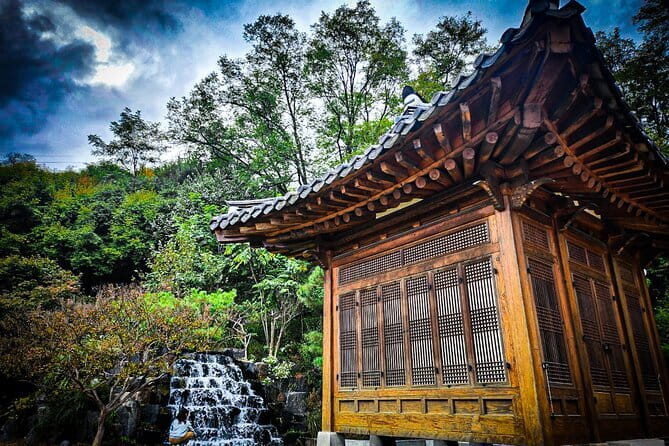
The final stop is Mugyewon, a traditional Korean house that once served as the villa of Grand Prince Anpyeong. The visit lasts about 20 minutes and brings the tour back to architecture and cultural heritage.
Mugyewon is described as a hanok cultural space. Its appeal lies in the contrast between old-world design and the modern city around it. After the more political and defensive parts of the route, this provides a calmer ending.
The connection to Grand Prince Anpyeong gives the building historical depth, but the available information does not specify which rooms or displays you will see. You should expect an introduction to the site rather than an extended palace-style tour.
Ending here makes sense. The route begins with an explanation of Buam-dong and moves through literature, memory, mountains, defense, film, and traditional architecture. Mugyewon leaves you with a final look at the district’s older character before returning to the meeting point.
What the $38.50 price really covers
At $38.50, the tour is priced as a guided small-group experience rather than a basic neighborhood stroll. Admission to the listed stops is free, so your payment is mainly for the guide, organization, transportation portion of the route, and the connections between the sites.
I would consider that fair if you value context. Buam-dong is the kind of place where the individual sights may not explain themselves. The guide gives you a reason to notice the memorial, library, wall, gate, mountain views, and hanok buildings as parts of one neighborhood story.
The price is less compelling if you prefer to walk alone, pause for as long as you wish, or avoid a fixed schedule. The tour lasts about two and a half hours, and the group follows a planned route. You also do not receive a long independent visit at each location.
Group discounts may be available, which can help if you are booking for several people. The maximum group size is 15, a reasonable limit for a walking route with historical explanations.
Who should book this Buam-dong walk
I would recommend it most to you if you want Seoul beyond the major palace and market circuit. It suits culture lovers, people interested in Korean history, film fans, architecture enthusiasts, and anyone who enjoys a walk with changing scenery.
It is also a good choice if you want several subjects in one outing. You get literature, Cold War history, city defenses, poetry, traditional architecture, mountain views, and cinema without booking separate activities.
You should think twice if you have difficulty with moderate walking or hillside streets. The tour information does not provide a distance, step count, or detailed accessibility notes. Service animals are allowed, but the route’s physical demands are still worth checking with the provider.
The small group and personal style of guide Jon are strong points. The only significant unknown is how much time the group spends at the less formally scheduled stops, including the Poet Yoon Dong-ju hill and the Parasite location.
Should you book it?
Book this walk if you want a guided introduction to one of Seoul’s quieter hillside districts and prefer stories over a checklist of famous sights. The best reasons are the mix of places, the short bus ride into Buam-dong, the hanok library, Changuimun Gate, mountain views, and the chance to hear local history from a personable guide such as Jon.
Skip it if your priority is shopping, a long palace visit, or a completely self-directed day. Also check the walking demands before booking. You can cancel for a full refund up to 24 hours before the 2 pm start time, but changes or cancellations inside that window are not refunded.
FAQ
How long does the Buam-dong walking tour last?
The experience lasts approximately 2 hours and 30 minutes.
What time does the tour start?
The tour starts at 2 pm.
Where does the tour begin?
It begins at 시민약국106-3 Jeokseon-dong, Jongno District, Seoul, South Korea.
Where does the tour end?
The activity ends back at the meeting point.
How many people can join the tour?
The maximum group size is 15 people.
Is transportation included during the route?
The itinerary includes an approximately 10-minute bus ride to Buam-dong. The guide provides information about the area during the ride.
What level of fitness is needed?
You should have a moderate level of physical fitness because the experience is a walking tour in a hillside neighborhood.
Can I cancel for a full refund?
Yes. You can cancel at least 24 hours before the experience start time for a full refund. Cancellations or changes made less than 24 hours before the start are not accepted for a refund.
Just added in Seoul
- Your Personal Seoul Photographer!★ 4.1 · 15 reviews
- You’re Invited to Our Home in Seoul: The Only Cooking Class!★ 5.0 · 8 reviews
- From Seoul: Yongpyong Ski Day Tour with Transportation★ 4.9 · 40 reviews
- Seoul: Korean & English Language Exchange Global Party★ 5.0 · 28 reviews
- From Seoul: Hwacheon Ice Fishing and Lighting Festival Tour★ 4.5 · 4 reviews
- Unique Native Experience : Han River Picnic, Board game, BBQ★ 5.0 · 3 reviews
- Seoul: Gangneung BTS K-Pop & K-Drama Filming Locations Tour★ 4.6 · 14 reviews
- K-Pop Making Class with a Producer!★ 5.0 · 3 reviews
Historical Tours, compared.
Gyeongju UNESCO World Heritage Guided Day Tour
Read our review →
Evening Dark History, Folklore & Ghost Story Walking Tour
Read our review →
Old Korea Thousand History Tour of Gyeongju from Busan
Read our review →
Hanbok Photoshoot and History Tour at Gyeongbokgung Palace
Read our review →
UNESCO Heritage Tour Including Bulguksa Temple
Read our review →
Gyeongju UNESCO World Heritage Sites and History Full-Day Tour with Lunch
Read our review →
City Highlights and Historical Experience No Shopping
Read our review →Browse the lists this tour appears in