
Reviewed · UNESCO WORLD HERITAGE TOURS
Gyeongju UNESCO World Heritage Sites and History Full-Day Tour with Lunch
Gyeongju was the capital of the Silla kingdom for centuries, and this tour gives you the clearest one-day introduction to its scattered monuments. You move from royal tombs and an ancient observatory to mountain temples and a stone Buddha, with a local lunch in the middle.
I especially like the air-conditioned minivan, since Gyeongju’s best sights are spread across town and into the hills. I also like that guides such as Steve, Chris, Sue, and Jina have been praised for clear English and for adjusting sensibly to heat, rain, dietary needs, and train schedules.
The main catch is pace. Six major stops in about eight hours means this is an efficient overview, not a slow, museum-style study of Silla. The long ride from Busan can also take up a good part of the day, so confirm pickup details and expect a full schedule.
The best one-day route through ancient Silla
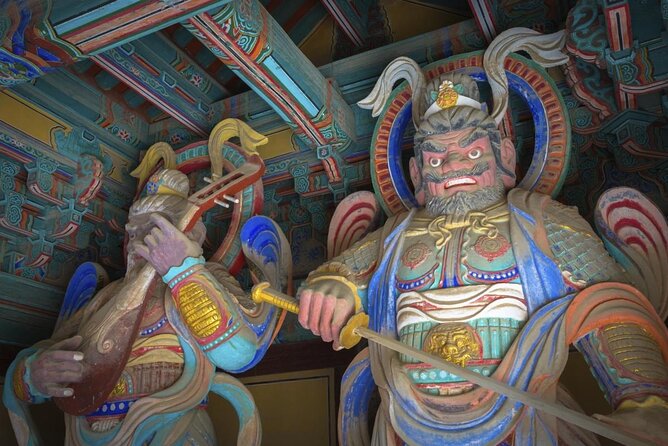
- Bulguksa Temple and Seokguram Grotto bring together Korea’s finest Buddhist architecture and sculpture.
- Daereungwon Tomb Complex lets you walk among the huge burial mounds of Silla kings and nobles.
- Donggung Palace and Wolji Pond offers a graceful royal setting, though little of the palace survives.
- A local Korean lunch is included, with vegetarian and gluten-free accommodations available when requested in advance.
- Private-tour upgrades and small groups can make the day more flexible and personal.
- Busan pickup and drop-off remove the need to plan separate trains, buses, taxis, and hill transport.
Why Gyeongju works best with wheels
Gyeongju is not one compact archaeological site. Its major sights spread across the city, the surrounding countryside, and the slopes of Tohamsan Mountain. You can walk between some central attractions, but Bulguksa Temple and Seokguram Grotto require a separate trip, and public transport takes time and planning.
That is the central value of this tour. You spend the day in a comfortable minivan rather than piecing together local buses and taxis. The driver drops you near the entrances and collects you afterward, which matters on hot days, in rain, or after several hours on your feet.
The tour lasts about eight hours and begins at 8:00 am. It appears designed chiefly for a day trip from Busan, with pickup and drop-off included. The exact pickup area should be confirmed when booking, particularly if you are staying outside the usual service zone.
Group size can reach 40 people, though several bookings have resulted in much smaller groups. Some guests ended up with only three to five people, and a few received what was effectively a private tour. That smaller format is a pleasant bonus, but it is not something to count on.
More Silla-era sites from South Korea:
- Busan: Gyeongju Guided Day Trip to Three Kingdoms Capital
★ 4.8 · 1,925 reviews - From Busan: Gyeongju UNESCO World Heritage Guided Day Tour
★ 4.8 · 1,250 reviews - Gyeongju UNESCO World Heritage Guided Day Tour from Busan
★ 5.0 · 660 reviews
Cheomseongdae, Korea’s early star watcher
Your first stop is Cheomseongdae Observatory, usually visited for about 30 minutes. Built during the reign of Queen Seon-deok, from 632 to 647, it is described as the oldest surviving astronomical observatory in Asia.
The structure is compact and unusual, made from stacked stones in a shape that can look more like a bottle or chimney than a modern observatory. Its importance is not visual grandeur. The Silla court used observations of the stars to help forecast weather, an essential task for an agricultural kingdom.
This is a short stop, and the admission fee is free. Your guide is particularly useful here because the structure alone does not explain its purpose. A clear explanation turns a quick photograph into a glimpse of how science, farming, and royal power worked together.
One honest warning: if you expect rooms, instruments, or a large building to enter, you may find Cheomseongdae underwhelming. It is best understood as a symbol and an archaeological marker, not a full museum.
Donggung Palace and Wolji Pond after the royal court
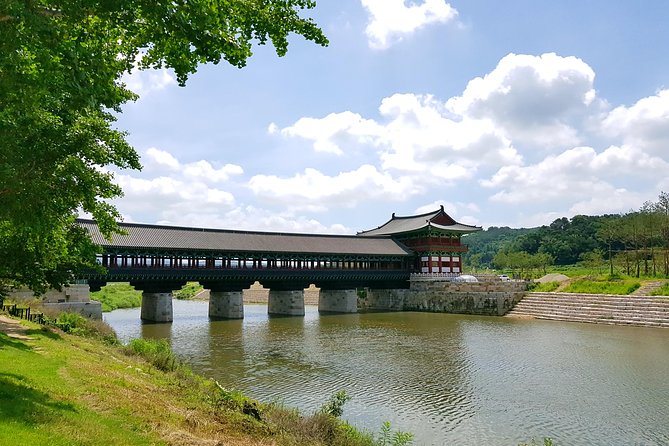
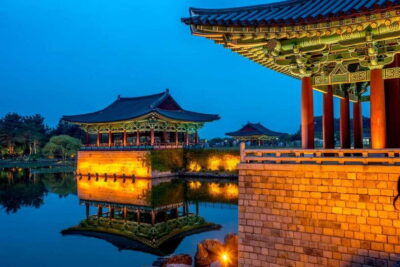
Allow about an hour at Donggung Palace and Wolji Pond. The pond was built during the reign of King Munmu, in the 14th year of his rule, between 661 and 681. Small man-made hills and palace structures once formed part of a royal complex used for ceremonies and important occasions.
Today, the water and surviving pavilions create one of Gyeongju’s most attractive historic settings. Much of the palace itself is gone, so you will not be walking through a complete royal residence. Instead, you read the site through its pond, foundations, reconstructed buildings, and carefully arranged views.
This stop works well as a change of mood after Cheomseongdae. The open water and low pavilions make the former court easier to picture, even when the original buildings are absent. The guide can explain what is known from historical records and what has been reconstructed.
The setting is appealing, but keep your expectations measured. There are only a few surviving or rebuilt structures, and some of the original palace must be supplied by imagination. The entrance fee is included.
Gyochon Village and the Choi family story
Gyochon Traditional Village takes about 45 minutes. Its hanok homes offer a look at traditional Korean architecture and the life of the prominent Gyeongju Choi clan.
This is not a large open-air museum with endless houses. It is a compact village, and your time here is fairly brief. The value comes from seeing the style of a traditional settlement in context, rather than treating it as a separate attraction.
The stop is also useful for slowing the day down. After two archaeological sites, you get a more domestic view of Gyeongju, with tiled roofs, courtyards, and family history. A guide can help connect the village to the city’s later social story, beyond kings, temples, and burial mounds.
The village may feel modest if you expect a fully preserved district packed with open buildings. One critical assessment found very little to see on a quiet day. I would treat Gyochon as a short cultural interlude, not the main reason to book the tour.
Other listed sites within reach of South Korea:
- Jeju: Eastern Jeju UNESCO Spots Day Tour
★ 4.9 · 1,148 reviews - Jeju: Southern Top UNESCO Spots Bus Tour
★ 4.9 · 648 reviews - Jeju Southern UNESCO Full Day Tour with Mt.Halla
★ 5.0 · 400 reviews - Private Gyeongju Tour – Explore Gyeongju UNESCO Sites
★ 5.0 · 272 reviews
Daereungwon, where royal tombs shape the city
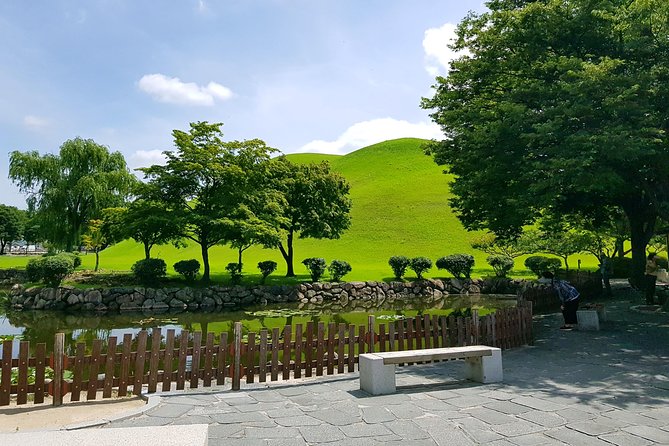
Daereungwon Tomb Complex is one of the most distinctive stops, with about an hour to explore. Twenty-three large burial mounds occupy this central area, built for kings and nobles of the Silla kingdom.
The rounded grassy mounds look simple from the outside, but their size hints at the power and resources of the people buried within. Unlike a conventional cemetery, Daereungwon feels like a series of low green hills woven into the city.
The complex includes Cheonmachong Tomb, an opened tomb that gives you a closer look at Silla burial practices and the archaeological discoveries made inside. This helps explain why Gyeongju is sometimes called a museum without walls. The objects may be displayed elsewhere, but the tombs remain part of the city itself.
Wear comfortable shoes. You will walk across paths and grounds, and the tour involves several hours of walking overall. One useful estimate from a small group was about 11,000 steps for the full day, though your total will depend on your pace and the exact route.
Seokguram Grotto on Tohamsan Mountain
Seokguram is the most unusual stop on the schedule. Located on Tohamsan Mountain, it is a stone temple and one of Korea’s most important national treasures. The main image is a carved stone Buddha placed inside a carefully engineered grotto.
The setting matters as much as the sculpture. You leave the city and climb into the mountain area, where the site feels separate from Gyeongju’s urban monuments. The grotto reflects the Silla court’s Buddhist faith, technical skill, and ambition.
You should know that photography is not permitted inside the grotto. That rule can disappoint anyone hoping for a souvenir image, but it also keeps attention on the sculpture and the room itself. Your guide can explain the design and religious meaning before or after you enter.
Allow about an hour, including the approach and time at the site. The route may involve walking on uneven ground, steps, and slopes, so practical shoes matter. Sunscreen is advised, and light clothing is helpful in hot weather.
Bulguksa Temple, the day’s grand finale
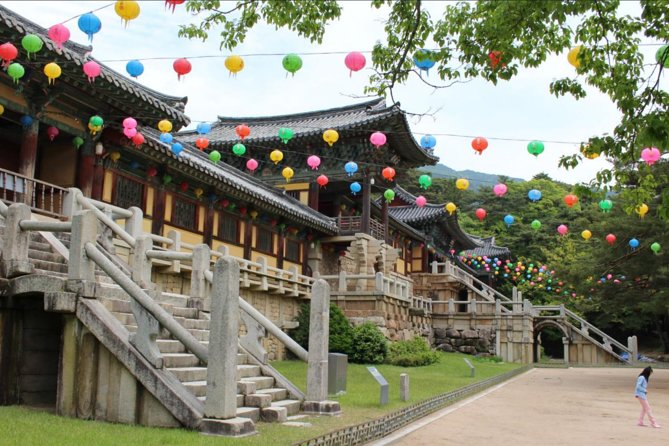
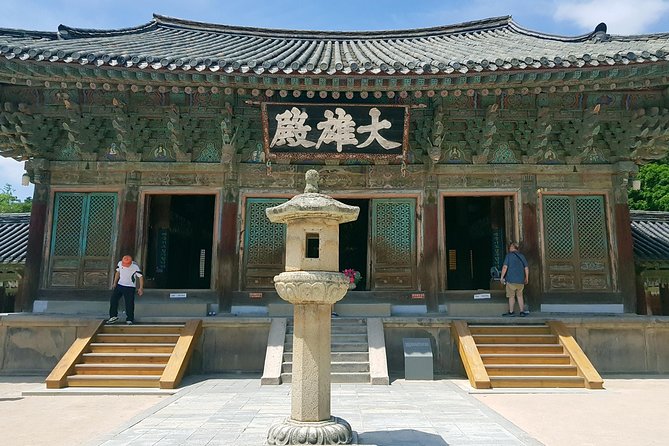
Bulguksa Temple receives about an hour and is the centerpiece of the tour for many people. UNESCO recognized it in 1995, and it remains Gyeongju’s best-known historic monument.
The temple complex brings together elegant wooden buildings, stone terraces, bridges, stairways, and carved details. Its design expresses Buddhist ideas through movement from one level to another. Even if you have seen Korean temples elsewhere, Bulguksa gives you a particularly strong sense of Silla-era ambition and craftsmanship.
Your guide is important here. Without context, you may notice beautiful roofs and stonework but miss how the complex was arranged and why the stone features matter. Guides including Steve, Chris, and Sue have been praised for making the sites easier to understand in clear English.
The temple is also where the walking can catch up with you. Give yourself time to look closely, but do not expect a leisurely half-day visit. The schedule allows roughly an hour, and the tour still needs to return you to Busan or your drop-off point.
Seokguram and Bulguksa are close enough to combine efficiently, which is one of the strongest reasons to use organized transport. A taxi can also connect them if you are staying in Gyeongju, but a day trip from Busan is more complicated without a vehicle.
Lunch that handles real dietary needs
Lunch is included at a local restaurant, and the food has been one of the strongest parts of the experience. Several guides have arranged vegetarian meals, and gluten-free needs have also been accommodated.
You should state any dietary requirement when booking, not when you sit down at the restaurant. Korean meals often include shared dishes, sauces, soups, and side dishes, so clear communication matters.
The lunch is more than a way to refuel. It gives you a chance to try Korean food in a local setting and take a proper break from the sites. Reports describe the meal as filling and surprisingly good, though the exact menu can vary.
If you are used to choosing from a long restaurant menu, remember that this is a planned group meal. The benefit is convenience and time. The trade-off is less control over the restaurant and dishes.
Guides, group size, and the feel of the day
The guides most often praised by name are Steve, Chris, Sue, and Jina. Their strengths are slightly different in the accounts available: Steve is described as engaging and fluent in English, Chris as friendly and well informed, Sue as attentive with dietary requests, and Jina as strong on historical explanation.
That does not mean every departure will feel identical. One person found the guide less involved than expected and wanted more commentary during the drives. The tour follows a set itinerary, so you should not expect a private guide to provide continuous narration about every road, neighborhood, or passing building.
If you want constant conversation and deep discussion at every stop, ask about the private option. If you prefer a clear route, transportation, and enough explanation to understand what you are seeing, the standard tour should suit you better.
A small group can make a major difference. You may have more room in the minivan, easier communication with the guide, and quicker movement at entrances. But the advertised maximum is 40, so book with the possibility of a larger group.
Is $189.99 a fair price?
At $189.99 per person, this is not a budget sightseeing day. The price includes pickup, drop-off, air-conditioned minivan transport, lunch, and entrance fees. It also buys back your planning time, especially if you are coming from Busan.
The value is strongest when you are based in Busan and have only one day for Gyeongju. You avoid arranging intercity transport, finding the mountain road to Seokguram, connecting the two temple sites, and organizing a restaurant stop. A dedicated driver also reduces walking between parking areas and gates.
The value is weaker if you are staying in Gyeongju for several days. Many central attractions are close enough to visit on foot, and you can arrange a taxi to Bulguksa and Seokguram. One critical assessment also pointed out that some entrance fees are now free, which reduces the practical value of the included admissions.
The National Museum of Gyeongju is not part of this route. If you want original artifacts and a fuller explanation of Silla objects, you may prefer to visit it separately. For a first look at the city’s major outdoor sites, though, this tour covers the ground efficiently.
Who should book this Gyeongju day tour?
I would choose it if you are staying in Busan, have roughly one day available, and want the major Silla sites without managing transport. It is also a good fit for solo visitors, couples, and families who value a driver and a fixed route.
It suits people who enjoy historical sites but do not need to spend half a day at one temple. The schedule gives you a broad picture: science at Cheomseongdae, royal ceremony at Wolji, traditional life at Gyochon, burial customs at Daereungwon, Buddhist sculpture at Seokguram, and temple architecture at Bulguksa.
I would hesitate if you dislike scheduled tours, want extensive museum time, or expect every stop to be a major spectacle. Cheomseongdae, Gyochon Village, and the palace remains are relatively modest. The strongest sites are the tomb complex, Seokguram, and Bulguksa.
Free cancellation is available up to 24 hours before the start time. If the minimum number of participants is not met, the provider offers another date or experience, or a full refund.
Should you book it?
Book this tour if convenience is your main concern and you are making a Busan-based day trip. The minivan, driver, lunch, and mountain transport solve the hardest parts of seeing Gyeongju in one day.
If you are already staying in Gyeongju, compare the price with local taxis and self-guided visits. You may prefer a slower plan that adds the National Museum and gives you more time at fewer sites.
For most first-time visitors coming from Busan, I consider the tour a sound choice. Go in expecting a fast, well-organized introduction rather than a quiet archaeological study, wear walking shoes, and request dietary arrangements in advance.
FAQ
How long does the Gyeongju tour last?
The tour lasts approximately eight hours and begins at 8:00 am.
Does the tour include pickup and drop-off?
Yes. Pickup and drop-off are included, with an air-conditioned minivan used for transportation. Confirm the exact pickup location when booking.
Is lunch included?
Yes. Lunch is included at a local restaurant. Vegetarian and gluten-free options are available if you advise the provider when booking.
Which UNESCO-related sites are included?
The route includes Bulguksa Temple and Seokguram Grotto, both connected with Gyeongju’s UNESCO heritage. It also visits Cheomseongdae, Donggung Palace and Wolji Pond, Gyochon Traditional Village, and Daereungwon Tomb Complex.
How much walking is involved?
There is a fair amount of walking at the temples, tomb complex, village, and other sites. Comfortable shoes are recommended, and high heels are not advised. One small group completed about 11,000 steps during the day.
Can I book a private tour?
Yes. You can upgrade to a private tour. Some departures may also operate with only a few participants, but the standard tour can have up to 40 people.
What is the cancellation policy?
You can cancel at least 24 hours before the start time for a full refund. Changes or cancellations made less than 24 hours before the start time are not accepted for a refund.
More Historical Tours in South Korea
- Seoul: Evening Dark History, Folklore & Ghost Story Walking Tour
★ 5.0 · 593 reviews - Old Korea Thousand History Tour of Gyeongju from Busan
★ 5.0 · 518 reviews - Hanbok Photoshoot and History Tour at Gyeongbokgung Palace
★ 5.0 · 276 reviews - From Seoul: Dae Jang Geum Park Historic K-Drama Set Tour
★ 4.9 · 143 reviews
Just added in South Korea
- Seoul: Winter Day Tour in Pocheon (+Strawberry Picking)★ 4.1 · 5 reviews
- Suwon: Baseball Game with Fortress and Local Food Tour★ 5.0 · 3 reviews
- Seoul: War Memorial of Korea Private Guided Museum Tour★ 4.9 · 29 reviews
- Seoul: Private Tour to Nami Island, Garden, Petite France★ 5.0 · 4 reviews
- Seoul: Wine & Korean BBQ, Perfect Pairing Dinner in Sinchon★ 5.0 · 6 reviews
- Seoul : Your Personal Photographer in Gyeongbokung★ 5.0 · 7 reviews
- Seoul : Efoil Experience in Han River★ 5.0 · 5 reviews
- Seoul: Vivaldi Park Winter Ski with Nami Island Day Tour★ 5.0 · 4 reviews
UNESCO World Heritage Tours, compared.
Gyeongju UNESCO World Heritage Guided Day Tour
Read our review →
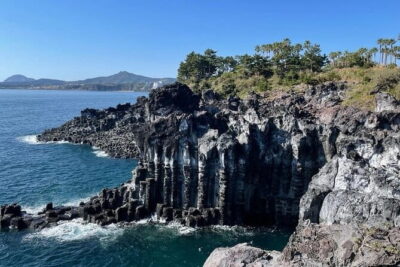
Jeju Southern UNESCO Full Day Tour with Mt.Halla
Read our review →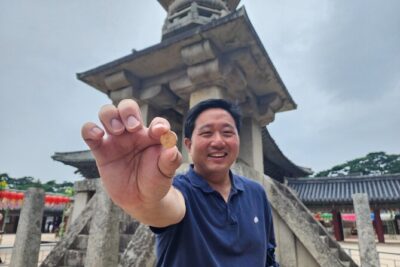
Private Gyeongju Tour – Explore Gyeongju UNESCO Sites
Read our review →
Jeju island Southern UNESCO Day Tour With Hallasan MT
Read our review →
Gyeongju UNESCO Legacy Tour with National Museum
Read our review →Browse the lists this tour appears in