
Reviewed · HISTORICAL TOURS
Gwangju May 18 History Tour (Small group Max.5)
Gwangju’s May 18 Democratic Uprising is not presented as a dry history lesson here. You follow the events through the city itself, from Democracy Square, where citizens made their final stand, to the May 18 National Cemetery, where the dead are remembered. The route connects public spaces, official records, military sites, and personal sacrifice.
I like the maximum group size of five, which gives you room to ask difficult questions without shouting over a busload of people. I also like the mix of history and local life: you get archival material and preserved evidence, then stop for food on Dongmyeong-dong Cafe Street.
The main consideration is the subject matter. This is a serious tour about state violence, death, and democratic struggle, not a light city outing. Lunch is not included, and the seven-hour day asks for steady attention.
Key points at a glance
- A six-stop route through May 18 history: Visit Democracy Square, the May 18 Archives, Jeonil Building 245, Dongmyeong-dong Cafe Street, the National Cemetery, and Liberty Park.
- A very small group: The tour accepts no more than five people, making conversation with local guide Veronica much easier.
- Private transportation included: This matters because the stops are spread across Gwangju rather than packed into one walkable block.
- Physical evidence, not only speeches and dates: Jeonil Building 245 preserves 245 bullet marks linked to helicopter gunfire.
- Food is part of the lesson: You choose a local dish on Dongmyeong-dong Cafe Street and pay for it separately.
- Strong value for history-focused visitors: At $95 per person, the price includes about seven hours, private transport, guiding, and coffee or tea, but not lunch.
Why Gwangju’s May 18 story matters
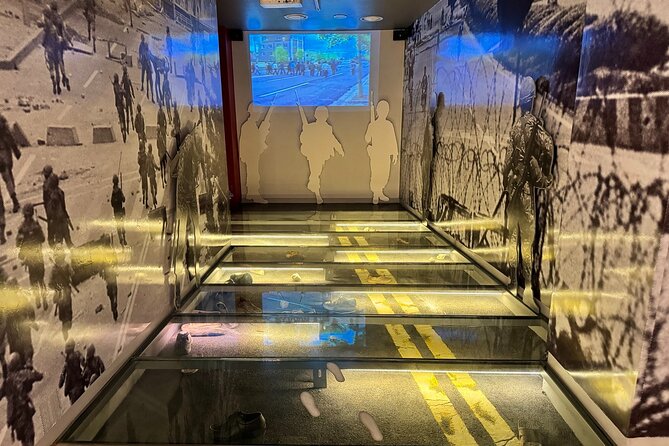
On May 18, 1980, the people of Gwangju rose against military dictatorship and demanded democracy. The uprising lasted ten days and became a defining chapter in South Korea’s move toward democratic government.
The May Spirit is the idea that grew from those days: resistance, sacrifice, sharing, and solidarity. This tour gives you a way to see those ideas through actual places rather than only reading about them in a textbook.
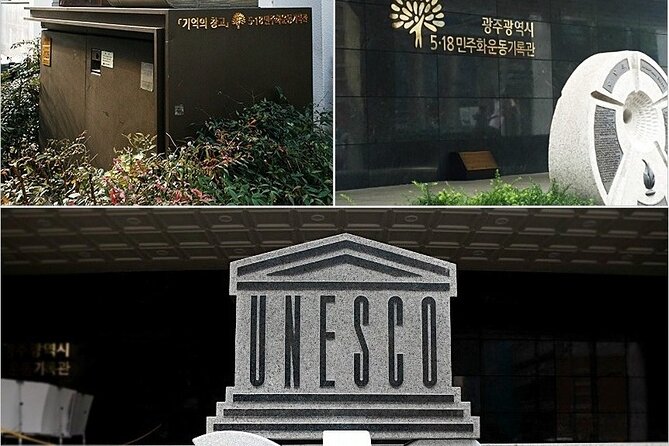
The May 18 Democratic Uprising was added to UNESCO’s Memory of the World register in 2011. That recognition helps explain why the city preserves its records so carefully, but the value of this experience is more personal than a UNESCO label. You are shown where decisions were made, where people gathered, where violence occurred, and where the dead are honored.
Local guide Veronica was born and raised in Gwangju. That background matters on a tour like this. The subject is tied closely to the city’s identity, and a local guide can connect formal history with places that may be easy to miss on your own.
A few more things to do in South Korea worth a look
- From Busan: Gyeongju UNESCO World Heritage Guided Day Tour
★ 4.8 · 1,250 reviews - Gyeongju UNESCO World Heritage Guided Day Tour from Busan
★ 5.0 · 660 reviews - Seoul: Evening Dark History, Folklore & Ghost Story Walking Tour
★ 5.0 · 593 reviews
Starting at the fountain in Democracy Square
The tour begins at 10:00 a.m. at 5.18 Democracy Square on Geumnam-ro. The square centers on the circular fountain and the broad space in front of the former South Jeolla Provincial Office.
This was the final stronghold of the uprising. Your first 30 minutes here set the scene for the rest of the day. Instead of beginning with a list of dates, you begin at a place where citizens gathered and where the final confrontation took shape.
I like this opening because it gives the story a physical center. You can picture the square as a civic space, then understand why it became so important during the uprising. The site is free to enter, and the meeting point is near public transportation, so it is a practical place to begin.
The short time here is useful rather than rushed. It gives Veronica a chance to explain the basic timeline before the group moves to more detailed material. If you want to ask questions about the political background or the city’s role, this is a good moment to do it.
Reading the records at the May 18 Archives
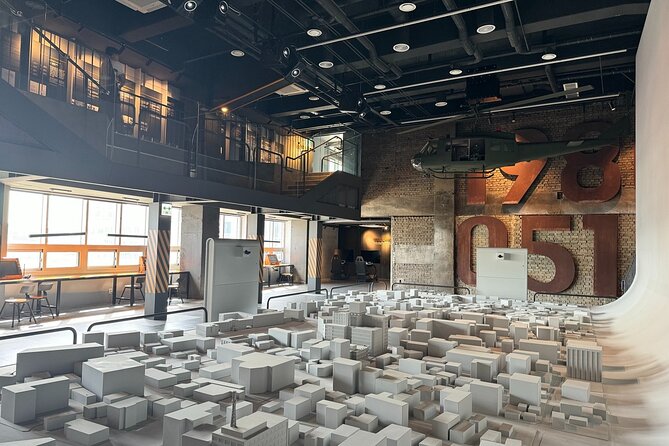
The next stop is the May 18 Archives, housed in the former Gwangju Catholic Center. The facility opened in 2015 and preserves, collects, and shares records from the Democratic Uprising.
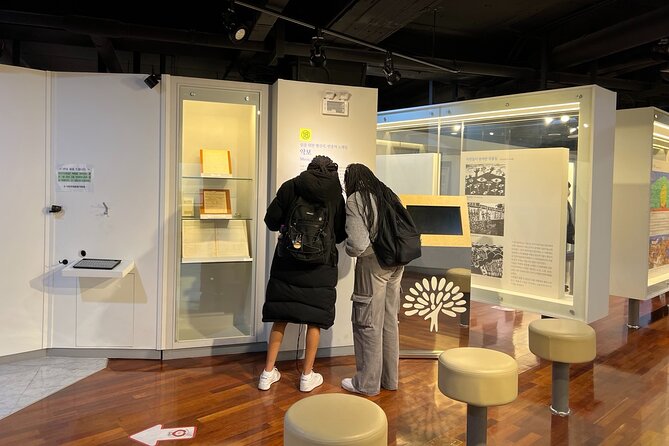
You spend about an hour here. This is where the tour shifts from public memory to documentary evidence. The archives help you understand how the story was recorded, preserved, and presented to later generations.
That distinction matters. A memorial tells you how a city remembers. An archive shows how evidence is gathered and protected. Together, the two stops give you a fuller picture of May 18.
Expect this part to require quiet attention. The subject is heavy, and archival material can be more demanding than a quick monument visit. Still, the hour gives you enough time to take in the setting and ask Veronica about what you are seeing.
Admission is free. The small group is especially useful here because you can discuss the material without losing the guide in a crowd.
Seeing the 245 marks at Jeonil Building
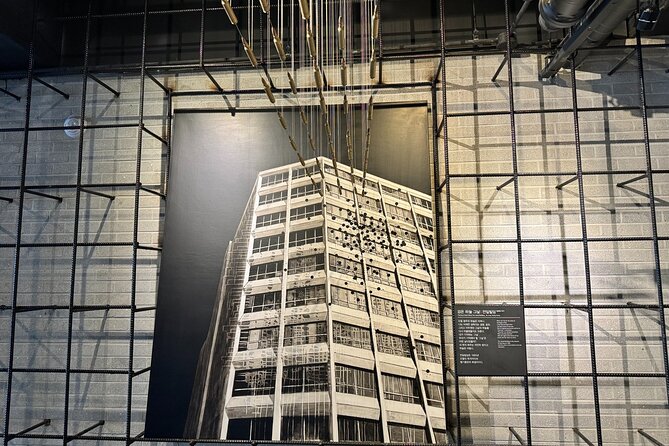
Jeonil Building 245 offers one of the clearest physical links to the violence of May 18. Its exterior still preserves 245 bullet marks connected to helicopter gunfire.
The stop lasts about an hour. That is a generous amount of time for a site that could otherwise be reduced to a quick photograph. Here, the building itself carries evidence. The marks make the history harder to keep at a comfortable distance.
The name Jeonil Building 245 refers to the number of preserved bullet marks. That detail gives the site an exactness that can be powerful. It is not a vague reminder that violence happened somewhere nearby. The evidence is fixed on the structure.
This is likely to be one of the most affecting points of the day. You should expect a serious atmosphere and allow yourself time to process it. The tour does not treat May 18 as a distant event with clean edges. It presents the damage and the questions that remain part of the city’s public memory.
Same base, a different kind of day out:
- Best DMZ Tour Korea from Seoul (Red Suspension Bridge Optional)
★ 5.0 · 41,422 reviews - DMZ Tour: 3rd Tunnel, Option(Suspension Bridge, Boat) from Seoul
★ 5.0 · 21,373 reviews - DMZ tour south Korea from Seoul (NK experience hall, defector)
★ 5.0 · 20,599 reviews - DMZ Insider Tour: 3rd Tunnel, NK Defector Meet & Red Bridge
★ 4.9 · 15,214 reviews
Taking a food break on Dongmyeong-dong Cafe Street
After the first history sites, the tour turns toward local food on Dongmyeong-dong Cafe Street. You choose one of the popular dishes selected for the experience, then pay for lunch on the spot.
One listed option is yukjeon, thin slices of meat coated and cooked in an egg batter. Other food choices may be offered, but the available information does not specify the full menu, so you should treat this as a chance to choose rather than a fixed meal.
This stop lasts about 90 minutes. The timing gives you a proper pause after several serious sites. Gwangju is known for generous portions, and this part of the tour lets you experience the city through food as well as politics and memory.
I like that lunch is not forced into the tour price or presented as a standard set menu. You choose what suits you and pay for it directly. The drawback is simple: the $95 price does not cover lunch, so keep money available for the meal.
Coffee or tea is included. That small touch is welcome during a seven-hour outing, especially after the concentrated museum and memorial visits.
Paying respects at the May 18 National Cemetery
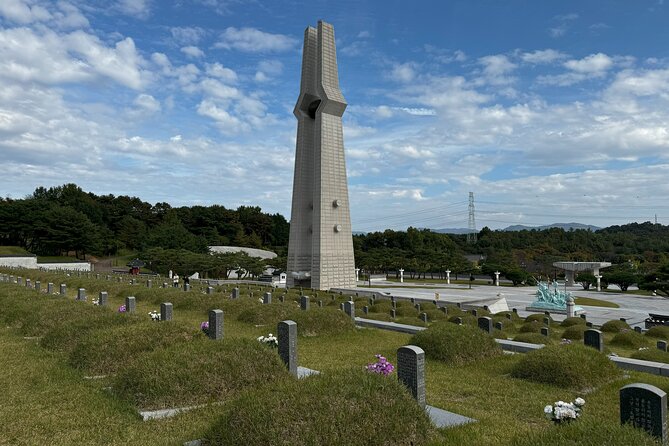
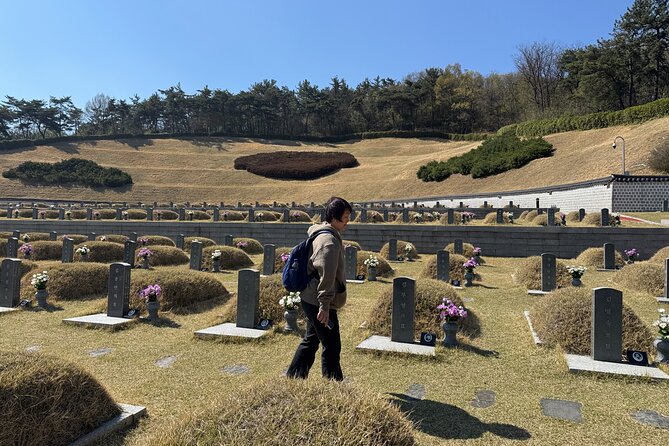
The May 18 National Cemetery is a sacred memorial site for those who died during the uprising. It opened in May 1997 and became the final resting place for the victims of May 18.
The scheduled visit lasts about 90 minutes. This is not just another stop on a sightseeing loop. The cemetery gives the day a place for remembrance after you have learned about the events and seen the evidence.
The order of the tour works well. You first encounter the civic gathering place, then the records, then the bullet marks, and later arrive at the cemetery. By this point, the people behind the dates and evidence are harder to overlook.
You may find this stop more reflective than explanatory. That is part of its purpose. Listen to Veronica’s context, but also allow some quiet time. A cemetery visit should not be rushed into a checklist item.
Because admission is free, the cost of this visit is covered by the tour itself rather than a ticket. The private vehicle also makes the move from central sites to the cemetery easier than arranging separate transport.
Understanding the former military base at Liberty Park
The final major stop is 5.18 Liberty Park, located on the former site of the Sangmudae military base. During and after the uprising, martial law troops held important meetings here.
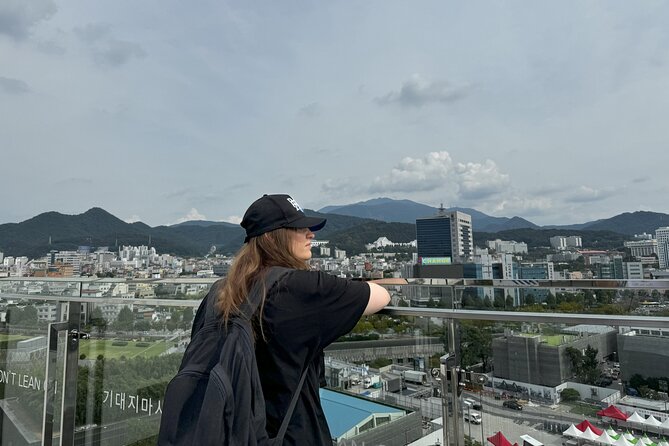
You spend about 90 minutes at the park. This stop adds the military side of the story to the earlier civic and memorial sites. The tour is not only about where citizens gathered. It also examines the places used by the forces that controlled the city during the uprising.
Liberty Park helps complete the geography of May 18. Democracy Square represents public action and resistance. The Archives preserve the record. Jeonil Building shows physical damage. The cemetery honors those who died. Liberty Park points toward the military command structure behind the events.
The final location gives you a chance to pull the day together. By now, you have visited sites tied to citizens, evidence, remembrance, and military authority. That broad range is one of the tour’s best features.
The experience ends at Kimdaejung Convention Center, near the north side of Kimdaejung Convention Center Metro Station. This is useful if you plan to continue exploring Gwangju or need a clear transit point after the tour.
What the $95 price really covers
The price is $95 per person. For a seven-hour experience, that is not a budget walking tour, but the value depends on how you would otherwise arrange the day.
The fee includes:
- Private transportation
- A local guide
- Coffee or tea
- Visits to six locations
- A group limited to five people
It does not include lunch or personal travel insurance. You also do not pay admission at the listed stops, since they are free.
The private vehicle is important. The sites are spread across Gwangju, and moving between them independently would take planning. You would need to work out transport, timing, and the right order of stops. Here, those transitions are handled for you.
The small group is another reason the price may make sense. With no more than five people, Veronica can adjust explanations and answer questions more easily than a large coach guide. The experience is also listed with group discounts, though the exact discount is not specified, so check the booking details if you are traveling with several people.
For a visitor who mainly wants scenic views or a quick introduction to Gwangju, $95 may feel high. For someone who wants a full day focused on May 18, the combination of transport, guiding, and access to several meaningful sites makes the price easier to justify.
Who should book this experience
I would choose this tour if you want to understand why Gwangju matters in modern Korean history. It suits visitors who prefer place-based history, museums, memorials, and direct explanation from a local guide.
It is also a good fit if you want to avoid navigating several sites alone. The private transportation removes much of the logistical work, while the small group keeps the day personal.
You should be comfortable with difficult material. The tour deals with dictatorship, military force, death, and the long process of public remembrance. It is not designed as a casual break between shopping stops.
The day may also suit you if food is an important part of travel. The Dongmyeong-dong stop gives you a chance to eat a local dish, but remember that the meal is paid separately.
Most travelers can participate, and service animals are allowed. The tour requires good weather, so poor conditions can lead to a different date or a full refund.
Booking timing and practical planning
This experience is booked an average of 46 days ahead, which suggests that advance planning is sensible, especially if your visit dates are fixed. Confirmation is provided at the time of booking.
The tour starts at 10:00 a.m. and lasts about seven hours. Plan your morning so you can reach Democracy Square before the start time. Since the day ends near Kimdaejung Convention Center Metro Station, avoid scheduling a tight connection or an important reservation immediately afterward.
Free cancellation is available up to 24 hours before the start time. Cancellations made less than 24 hours ahead are not refunded, and changes inside that period are not accepted. The cut-off follows local time.
Wear something suitable for a full day of moving between indoor and outdoor sites. The supplied information does not specify walking distances, so ask the provider if mobility is a concern. The tour is near public transportation at the start and end, but private transport is used between the stops.
My call: book it for serious Gwangju history
I would book the Gwangju May 18 History Tour if you want a focused, personal look at the city’s democratic struggle. Veronica’s local connection, the group limit of five, and the combination of archives, preserved bullet marks, memorial grounds, and military sites give the day real substance.
The main tradeoffs are the serious subject matter, the seven-hour commitment, and the separate lunch cost. Those are reasonable compromises for a history-focused visit, but they may not suit everyone.
Book it if Gwangju’s role in South Korea’s road to democracy matters to you, and if you value clear transport and local explanation. Skip it if you want a relaxed sightseeing day with little time indoors or little discussion of painful events.
FAQ
How long does the Gwangju May 18 History Tour last?
The tour lasts approximately seven hours, beginning at 10:00 a.m.
How many people can join the tour?
The tour has a maximum of five travelers.
Who is the guide?
The guide is Veronica, a local guide born and raised in Gwangju.
Is lunch included in the $95 price?
No. Lunch is not included. You choose a local dish at Dongmyeong-dong Cafe Street and pay for it on the spot.
What is included in the tour?
Private transportation and coffee or tea are included. Admission at the listed sites is free.
Where does the tour end?
The tour ends at Kimdaejung Convention Center, near the north side of Kimdaejung Convention Center Metro Station in Gwangju.
Just added in South Korea
- Your Personal Seoul Photographer!★ 4.1 · 15 reviews
- You’re Invited to Our Home in Seoul: The Only Cooking Class!★ 5.0 · 8 reviews
- From Seoul: Yongpyong Ski Day Tour with Transportation★ 4.9 · 40 reviews
- Seoul: Korean & English Language Exchange Global Party★ 5.0 · 28 reviews
- Jeju UNESCO Natural Heritage Private Tour by Certified Guide★ 5.0 · 5 reviews
- Yeosu: Private Taxi Car Private Charter Tour★ 4.7 · 3 reviews
- From Seoul: Hwacheon Ice Fishing and Lighting Festival Tour★ 4.5 · 4 reviews
- EVERLAND “From Hotel to Hotel” [Premium Private Tour: Only One Group for You]★ 4.0 · 7 reviews
Historical Tours, compared.
Gyeongju UNESCO World Heritage Guided Day Tour
Read our review →
Evening Dark History, Folklore & Ghost Story Walking Tour
Read our review →
Old Korea Thousand History Tour of Gyeongju from Busan
Read our review →
Hanbok Photoshoot and History Tour at Gyeongbokgung Palace
Read our review →
UNESCO Heritage Tour Including Bulguksa Temple
Read our review →
Gyeongju UNESCO World Heritage Sites and History Full-Day Tour with Lunch
Read our review →
City Highlights and Historical Experience No Shopping
Read our review →Browse the lists this tour appears in