
Reviewed · WALKING TOURS
(Closed) Korea’s White House Walking Tour Blue House
For decades, Korea’s Blue House, or Cheong Wa Dae, was a sealed world of presidents, foreign leaders, and major national decisions. This small-group walk gives you a look at the former presidential office, residence, reception halls, and press center, with licensed guide Jungho explaining the politics and symbols behind the buildings.
I like the nine-person limit, which keeps the walk personal, and I like that the route covers both modern government buildings and older Korean-style pavilions. Jungho’s clear English, humor, and storytelling are major assets. The main drawback is important: this experience is currently marked closed, and the original access was tied to a limited public-opening period.
Key points to know before you go
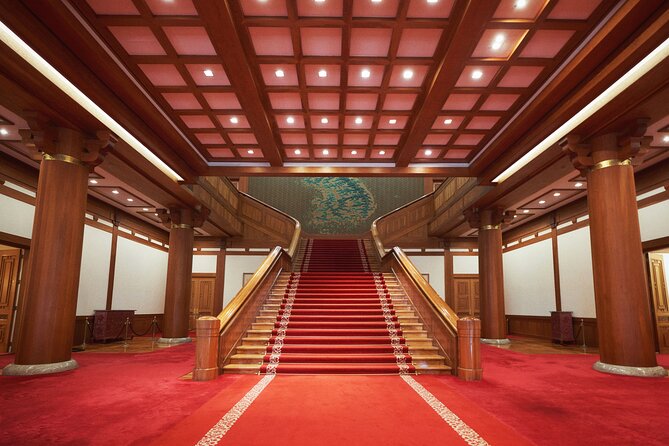
- Former presidential compound: See the office, residence, press center, and formal reception spaces used by Korea’s presidents.
- Small group of nine: A useful size for questions and conversation with the guide.
- Jungho leads the walk: His English, historical explanations, and clear meeting instructions earned especially strong praise.
- Two and a half hours on foot: The route covers seven stops, so comfortable shoes make sense.
- Starts at Gyeongbokgung Station: You meet at 10:00 a.m. and return to the same meeting point.
- Check the status first: The experience is marked closed, despite the supplied price and tour details.
Why the Blue House matters in Seoul
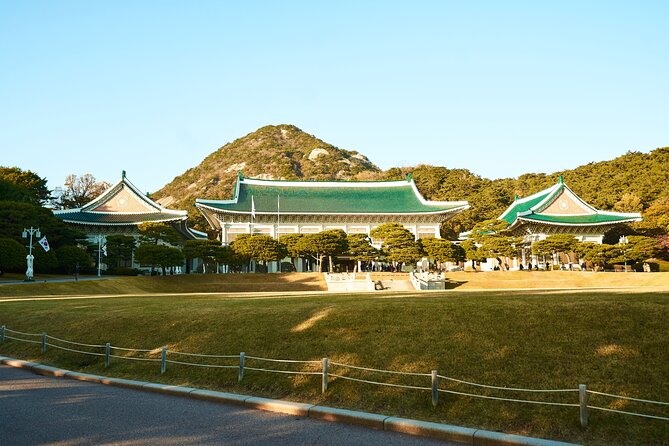
The Blue House was Korea’s presidential residence and office for more than 70 years. Its blue-tiled roof became one of the most familiar symbols of the South Korean government, much as the White House in Washington represents American presidential power.
That comparison explains the appeal, but the Blue House is not simply Korea’s version of an American government building. The compound brings together formal state rooms, private living quarters, press facilities, wooded paths, and traditional Korean architecture. You get a compact look at how public power and private life were arranged in one guarded compound.
For much of its history, ordinary people could not enter. Access was limited to presidential invitees, including foreign leaders, Olympic medalists, K-pop figures such as BTS, and executives from major Korean companies. The public opening created a rare chance to see a place usually encountered only in news photographs.
That political context gives the tour more weight than a standard sightseeing walk. You are not only looking at roof tiles and reception rooms. You are seeing where decisions were made, where presidents met foreign officials, and where reporters waited for official announcements.
The supplied tour information describes access as temporary, ending in June after a change in government. Since the experience is now labeled closed, you should not assume the same public entry is available today. Treat the details below as a guide to what the tour offered during its operating period, and confirm the current status before paying or arranging your Seoul schedule around it.
A few more things to do in Seoul worth a look
- Seoul moonlight walking tour with local historian
★ 5.0 · 940 reviews - Seoul: Nighttime Hidden Gems Walking Tour
★ 5.0 · 775 reviews - Seoul: Evening Dark History, Folklore & Ghost Story Walking Tour
★ 5.0 · 593 reviews
Meeting Jungho at Gyeongbokgung Station
The tour begins at Gyeongbokgung Station at 10:00 a.m. The meeting point is practical because the Blue House sits near Seoul’s major royal and historic sights. After the walk, the activity returns to the same meeting point.
There is no hotel pickup or drop-off. That is normal for a compact central Seoul walking tour, but it matters if you are staying outside the central districts or traveling with children who tire easily. Plan your own route to the station and allow time to find the exact meeting spot.
Jungho’s instructions were reported as clear, and he even walked one participant back to the metro station after the tour. That extra help is useful, especially if you are still learning your way around Seoul. It is not listed as a guaranteed part of the service, so think of it as a kindness rather than a promised feature.
The group limit is nine people. I consider that one of the strongest practical points. A large group would make the compound feel like a procession, while nine people gives you a better chance to hear explanations and ask about Korean politics, architecture, and recent history.
The walk lasts about two and a half hours. The stops themselves have listed time estimates, though the route also includes movement between buildings. You should expect a walking experience rather than a series of long indoor visits.
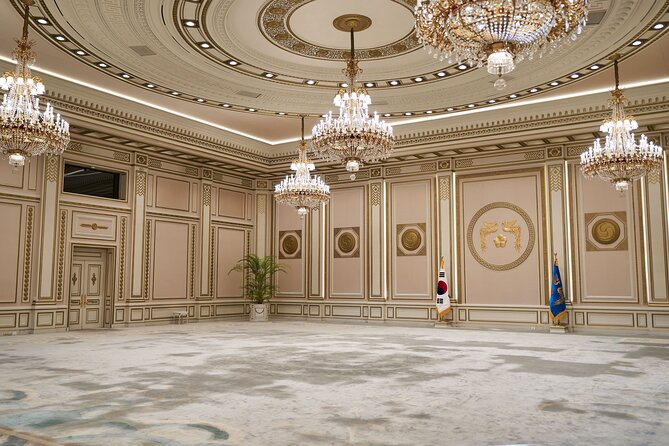
Yeongbingwan, where Korea received important guests
The first listed stop is Cheong Wa Dae Yeongbingwan, the reception building for important foreign visitors. Presidents used the space for dinners, meetings, and formal events involving leaders from other countries.
This is a good place to begin because it introduces the ceremonial side of the Blue House. Government is partly about private decisions, but it is also about staging, protocol, and sending a message to foreign visitors. A reception hall shows how Korea presented itself to the outside world.
The building has a modern appearance, while the grounds connect it to Korean architectural traditions. The supplied information allows about 10 minutes here. That is enough for an introduction and explanation, but not enough for a slow architectural study.
Listen for the difference between a working office and a ceremonial room. The Yeongbingwan was designed to welcome and impress. The next stops shift toward the spaces where presidents worked and lived.
The main Blue House and its famous roof
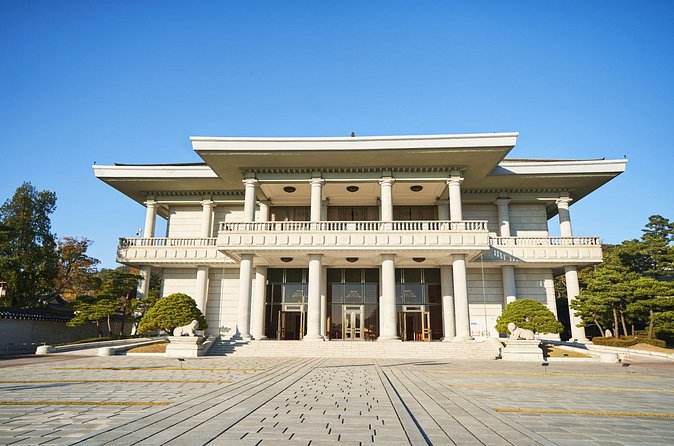
The main Blue House is the building most people picture when they hear Cheong Wa Dae. This was the president’s main office, where important meetings took place and major decisions were made.
The blue roof is not a minor decorative detail. It became a visual symbol of the Korean government. The building also mixes modern government function with Korean design elements, giving the compound a distinctly local character rather than copying a Western presidential model.
The planned stop lasts about 20 minutes. That should give Jungho time to explain the building’s role and point out architectural details that could otherwise blur into the general scenery. This is one of the places where a guide adds real value. Without context, you see a grand building. With context, you can connect its design to Korea’s government and national identity.
The main office also gives the tour a clear center. The reception hall showed the public face of the presidency. Here, the focus turns to work, policy, and the machinery of government.
Same base, a different kind of day out:
- Best DMZ Tour Korea from Seoul (Red Suspension Bridge Optional)
★ 5.0 · 41,422 reviews - DMZ Tour: 3rd Tunnel, Option(Suspension Bridge, Boat) from Seoul
★ 5.0 · 21,373 reviews - DMZ tour south Korea from Seoul (NK experience hall, defector)
★ 5.0 · 20,599 reviews - Seoul: DMZ Tour with Optional Suspension Bridge
★ 4.8 · 5,277 reviews
The old presidential office site
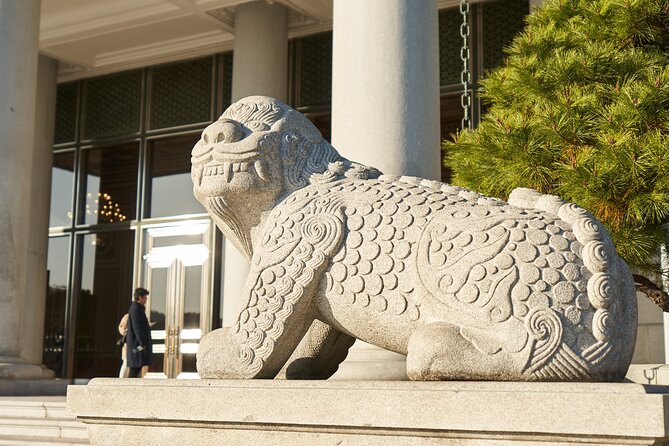
Another 20-minute stop covers the area where the older presidential main office once stood, before the current Blue House building was constructed.
This stop helps you understand that the compound changed over time. Presidential offices are not timeless monuments. They are working spaces that shift as governments, security needs, and ideas about leadership change.
The area is also linked to Korean presidents and important meetings in modern national history. Jungho’s role here is especially useful because an empty or altered site can be hard to interpret on your own. He can connect the physical space to the people and events associated with it.
If you prefer polished interiors and grand rooms, this may feel less dramatic than the main Blue House. If you like political history, it may be one of the most worthwhile stops because it asks you to think about what was here, not only what remains.
The private residence and the quieter side of power
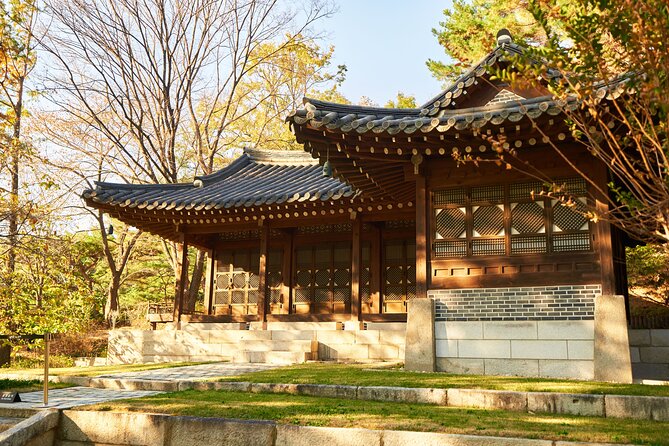
The presidential residence was separate from the office. The arrangement gave the president and family a degree of privacy while keeping the living quarters within the larger compound.
The listed visit lasts about 10 minutes. You may see a quieter side of the Blue House here, with trees around the house and a clear distinction between public duty and family life. The residence included private domestic spaces such as bedrooms and living areas.
This part of the tour adds balance. Presidential sites can feel dominated by ceremony and politics. The residence reminds you that the people working in those offices also lived nearby, with a daily routine separate from formal state business.
The short timing means you should not expect a house museum visit with extensive room-by-room access. Its value lies in understanding the layout of the compound and the separation between the president’s public and private roles.
Chimnyugak and Sangchunjae: traditional buildings in a political compound
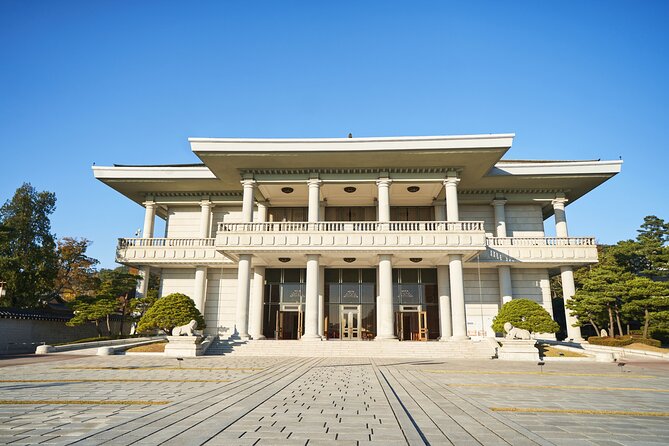
The route then moves toward traditional Korean architecture. At Chimnyugak House, you see a small pavilion surrounded by trees. The setting offers a quieter pause, and Jungho explains the structure’s history and design.
This is a welcome change of pace after the office and residence. The Blue House is a political site, but it is also a carefully arranged place with gardens, trees, and traditional buildings. Chimnyugak helps you notice the contrast between state power and calm surroundings.
The stop is scheduled for about 10 minutes. It is also a natural point for a short break, though the tour remains a guided walk rather than a long rest stop.
Next comes Sangchunjae, one of the most attractive traditional buildings on the grounds. It was used for special guests and quieter meetings. You walk around its wooden structure while learning how traditional Korean design was used within a presidential compound.
Sangchunjae is likely to appeal most to visitors who are also planning to see Seoul’s palaces or hanok neighborhoods. It gives you another chance to compare traditional forms with the more formal main office buildings. The tour does not treat Korean architecture as background decoration. It connects the buildings to how presidents received guests and conducted less formal business.
Both stops are fairly short. Take in the rooflines, woodwork, setting, and relationship to the surrounding buildings while the guide is speaking. You will get more from these places if you listen for their purpose, not just their appearance.
Chunchugwan, where reporters waited for news
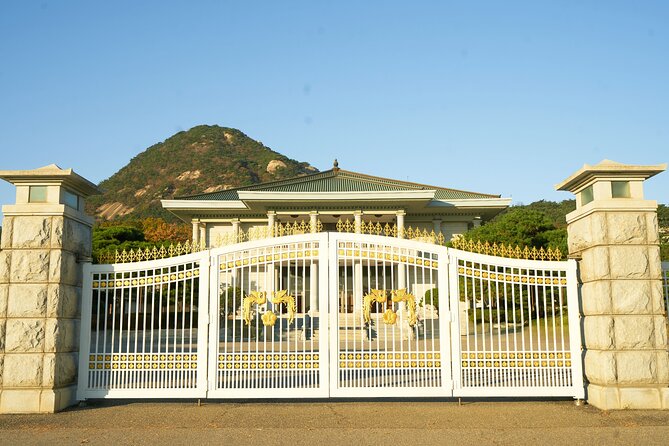
The final listed stop is Chunchugwan, the former press center. This is where reporters from Korea and abroad came to hear presidential announcements.
Chunchugwan gives the tour a strong ending because it connects the Blue House to the public. The reception halls and offices show what happened inside government. The press center shows how those decisions were presented to the country and the world.
The listed time here is only five minutes, so expect a concise explanation rather than a long visit. Still, the stop adds an important piece to the compound’s story. A presidential office is not only a place of private meetings. It is also a source of official statements, public debate, and political news.
If you have followed Korean politics or recent changes in government, this stop may prompt useful questions. Jungho’s strength, according to the supplied details, is explaining such connections in accessible English rather than offering a dry list of dates.
What makes Jungho a valuable guide
The guide can make or break a site like this. The Blue House has visual appeal, but several buildings need explanation. An office may look like a formal hall. A pavilion may look like a pleasant garden feature. A press center may seem ordinary unless you understand its role.
Jungho is a licensed English-speaking guide. His conversational English and storytelling were repeatedly praised, along with his ability to explain architecture, Korean history, and the meaning of the site. He also used questions and quizzes during at least one tour, which can keep the walk active rather than turning it into a lecture.
That style should suit you if you like to ask questions and make connections. One especially useful detail is that he responded well to visitors who already knew something about Korea, including people who had lived in the country. You do not need a background in Korean history, but the tour appears flexible enough for curious visitors who want more than basic facts.
The guide is also helpful with simple logistics. Clear meeting instructions matter in central Seoul, and returning to the metro station can make the rest of your day easier. Still, you should not book this solely for personal assistance. The main reason to choose it is the historical interpretation.
Is $199 good value?
At $199 per person, this is an expensive two-and-a-half-hour walking tour. Admission to the listed stops is free, so you are paying mainly for reserved access, a licensed English-speaking guide, and the small group.
That price makes sense only if the access is genuinely limited and the site is important to you. You are paying for a rare chance to enter a former presidential compound during a narrow public-opening period, not for transportation, meals, or a full-day tour.
The nine-person maximum improves the value. A private tour would cost more, while a large group would reduce the chance to ask questions. If Jungho is available and you care about Korean politics, modern history, or architecture, the guided interpretation can justify the cost.
The price is harder to defend if you mainly want photographs of the blue roof or if you are watching your Seoul budget. You can see many historic buildings and public sites in the city for far less. This tour earns its price through restricted access and context, not through the number of included attractions.
Since the experience is marked closed, do not use the $199 figure as a current quote. It describes the supplied tour details and may no longer apply if the operator reopens the experience in a different form.
Who should book this experience?
This tour suits you best if you:
- Care about Korean government, modern history, or presidential politics.
- Prefer a guide who explains meaning instead of simply pointing out buildings.
- Value a group capped at nine people.
- Want both modern state buildings and traditional Korean architecture.
- Are comfortable spending two and a half hours on a walking tour.
- Can arrange your own transport to and from Gyeongbokgung Station.
It is less suitable if you want a relaxed palace visit with lots of free time, a food-focused activity, or hotel pickup. The route is focused and educational. The short stop at each building means the day moves along at a steady pace.
The best companion plan would be another nearby cultural sight after the tour. The experience ends back at the meeting point, and the supplied guide responses mention participants continuing to a hanok village, a restaurant, or a hanbok experience. Those follow-up plans are not included, but the central location makes it easy to continue your day.
Should you book the Blue House walk?
If the experience reopens, I would consider it for a history-minded visit to Seoul, especially if Jungho is still leading it and the group limit remains nine. The chance to enter a former presidential compound, see the office and residence, and connect the buildings to Korean politics is unusual.
I would skip it if the current price feels too high for a short walk or if you only want attractive architecture. Also, confirm the opening status first. The experience is marked closed, and the original description referred to access ending in June.
For the right visitor, this is not just a photo stop. It is a compact lesson in how Korea presented power, conducted government, received foreign leaders, and communicated with the public. That makes the tour worth considering, but only after you verify that the gates are open again.
FAQ
How long does the Blue House walking tour last?
The tour lasts approximately 2 hours and 30 minutes.
Where does the tour begin?
It begins at Gyeongbokgung Station in Seoul at 10:00 a.m.
Where does the tour end?
The activity ends back at the meeting point.
How large is the tour group?
The tour has a maximum of nine participants.
Who leads the tour?
The experience includes an English-speaking licensed guide. The guide identified in the supplied tour information is Jungho.
Is transportation included?
No. Hotel pickup and drop-off are not included. You are responsible for getting to and from the meeting point.
Can I cancel for a full refund?
Yes, if you cancel at least 24 hours before the scheduled start time. Cancellations made less than 24 hours in advance are not refunded, and changes during that final 24-hour period are not accepted.
Just added in Seoul
- Your Personal Seoul Photographer!★ 4.1 · 15 reviews
- You’re Invited to Our Home in Seoul: The Only Cooking Class!★ 5.0 · 8 reviews
- From Seoul: Yongpyong Ski Day Tour with Transportation★ 4.9 · 40 reviews
- Seoul: Korean & English Language Exchange Global Party★ 5.0 · 28 reviews
- From Seoul: Hwacheon Ice Fishing and Lighting Festival Tour★ 4.5 · 4 reviews
- Unique Native Experience : Han River Picnic, Board game, BBQ★ 5.0 · 3 reviews
- Seoul: Gangneung BTS K-Pop & K-Drama Filming Locations Tour★ 4.6 · 14 reviews
- K-Pop Making Class with a Producer!★ 5.0 · 3 reviews
Walking Tours, compared.
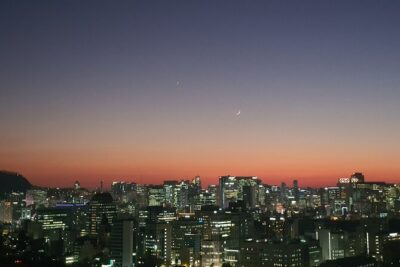
Seoul moonlight walking tour with local historian
Read our review →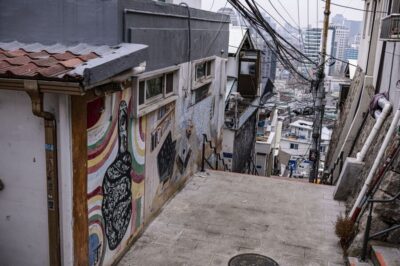
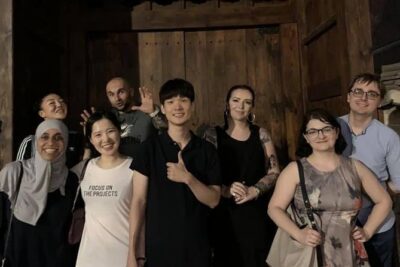
Evening Dark History, Folklore & Ghost Story Walking Tour
Read our review →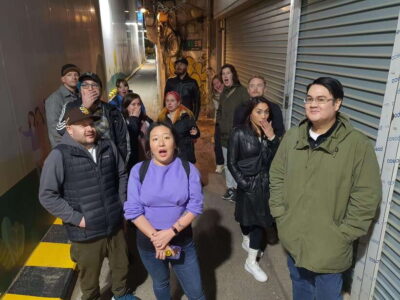
Dark Side of the City and Ghost Stories Walking Tour
Read our review →
Gangnam Walking Tour on Youth and Society in Seoul Korea
Read our review →
Gyeongbok Palace and Bukchon Hanok Walking Tour
Read our review →
Highlights & Hidden Gems With Locals: Best of Seoul Private Walking Tour
Read our review →
Street photoshoot and Seoul Hidden gem History Walking Tour
Read our review →Browse the lists this tour appears in