
Reviewed · WALKING TOURS
Seoul: Nighttime Hidden Gems Walking Tour
Seoul looks different from the top of Naksan Hill. Down below, the city spreads into a field of lights, while the narrow lanes around Ihwa Mural Village reveal an older, quieter side of the capital. This walk connects those views with stories about Korean student life and society, not just the usual palace facts.
I like the way the tour links everyday subjects, such as education, work culture, housing, and nightlife, to the places around you. I also like the timing: a late afternoon or early evening start lets you watch twilight give way to Seoul after dark. The drawback is clear: the route climbs steep streets and stairs, so it is not suitable for people with mobility issues or anyone hoping for a flat stroll.
Key points to know before booking
- A two-hour uphill route: Expect slopes, stairs, and several pauses, even though the walk is paced gently.
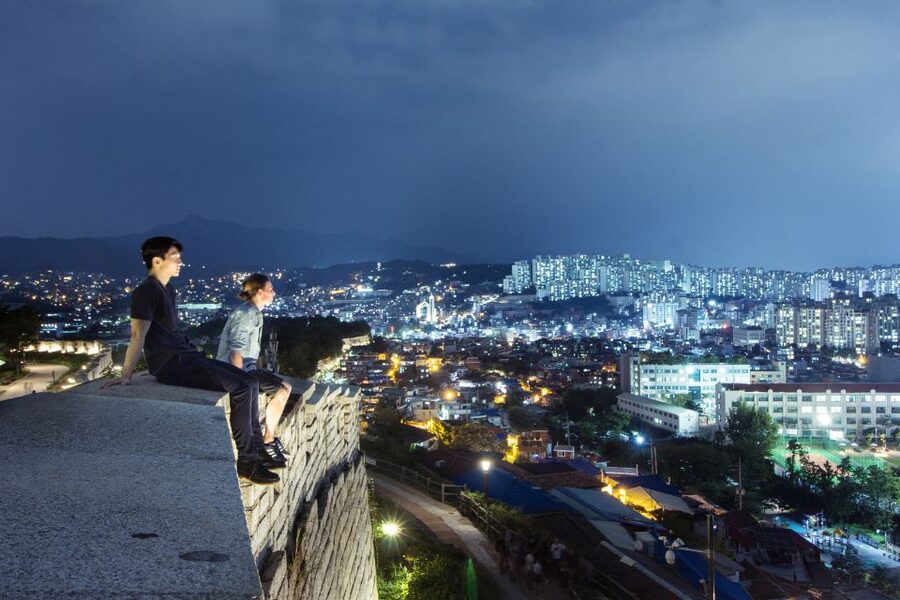
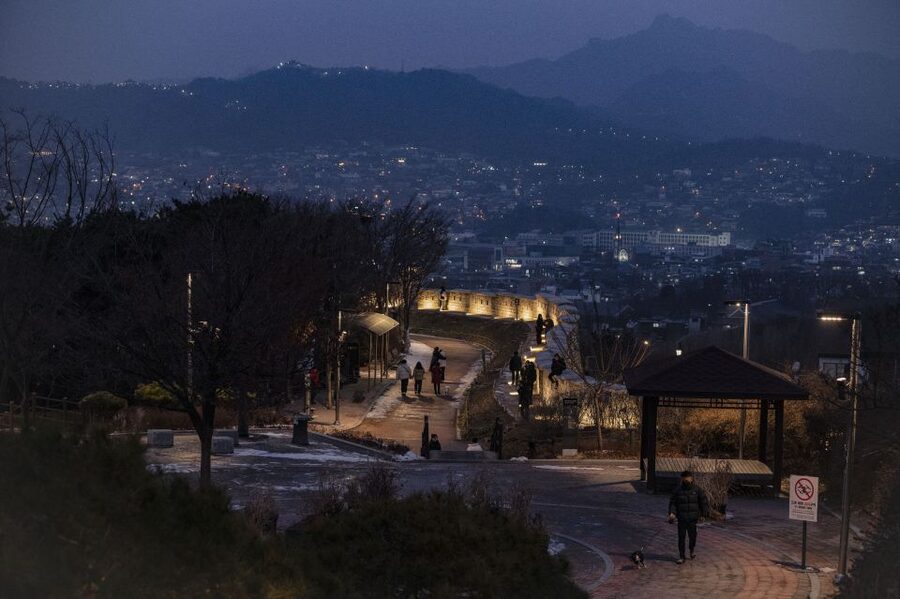
- Night views from Naksan: The Hanyang City Wall and Naksan Park provide the tour’s big visual payoff.
- Local social context: Guides explain university pressure, housing problems, work culture, and changes in Hyehwa.
- Small-area discoveries: Ihwa Mural Village and Maronie Park show parts of Seoul many first-time visitors miss.
- English-speaking guides: Guides may include Leah, Jessica, Smin, Ethan, Jun, June, or Ms. Kim, depending on the date.
- Good value at $33: You receive a guided cultural walk, historical explanation, photo stops, and practical local advice in two hours.
Starting at Hyehwa Station and Maronie Park
Meet your guide outside Exit 2 of Hyehwa Station. This is a useful starting point because Hyehwa is more than a transport stop. It is tied to Seoul’s university and theater culture, and Maronie Park gives the opening part of the walk a distinctly local feel.
The guide sets the tone here by placing the neighborhood in the wider story of Korean society. You may hear about student life, education, work expectations, and how young Koreans use this part of town. The point is not to turn the tour into a lecture. It is to give you a way to read the streets as you continue uphill.
The exact guide varies. Leah is often praised for her humor, patience, and clear answers. Jessica is known for keeping the walk lively while explaining history and social customs. Smin, Ethan, Jun, June, and Ms. Kim have also led the route. The strongest part of the guiding is the willingness to answer questions, so bring a few of your own.
The tour can sometimes begin a little early if everyone has arrived, so do not cut it close. Arriving at Hyehwa Station Exit 2 with a few minutes to spare makes the meeting much easier.
A few more things to do in Seoul worth a look
- Seoul moonlight walking tour with local historian
★ 5.0 · 940 reviews - Seoul: Evening Dark History, Folklore & Ghost Story Walking Tour
★ 5.0 · 593 reviews - Seoul: Dark Side of the City and Ghost Stories Walking Tour
★ 4.8 · 484 reviews
Seoul National University and the pressure behind success
One highlight is Seoul National University, described here as Korea’s top university. The stop is less about touring a campus and more about using the university as a starting point for discussing Korean education and student culture.
That context matters. A visitor can see the polished side of Seoul without understanding how much pressure surrounds school, exams, and career choices. The guide connects the area to the expectations placed on students and to the wider work culture that follows graduation.
This is one of the tour’s best features. Instead of treating Korean society as a collection of pop-culture images, the conversation gets closer to ordinary concerns: education, jobs, housing, and social expectations. You may also compare these subjects with life in your own country, since the guides leave room for cultural exchange.
The stop is especially useful early in a Seoul visit. It gives you a frame for understanding conversations you may hear elsewhere, from the importance of universities to the long hours associated with professional life. The experience does not pretend that every Korean has the same outlook, but it gives you useful background for reading the city.
Ihwa Mural Village on the hillside
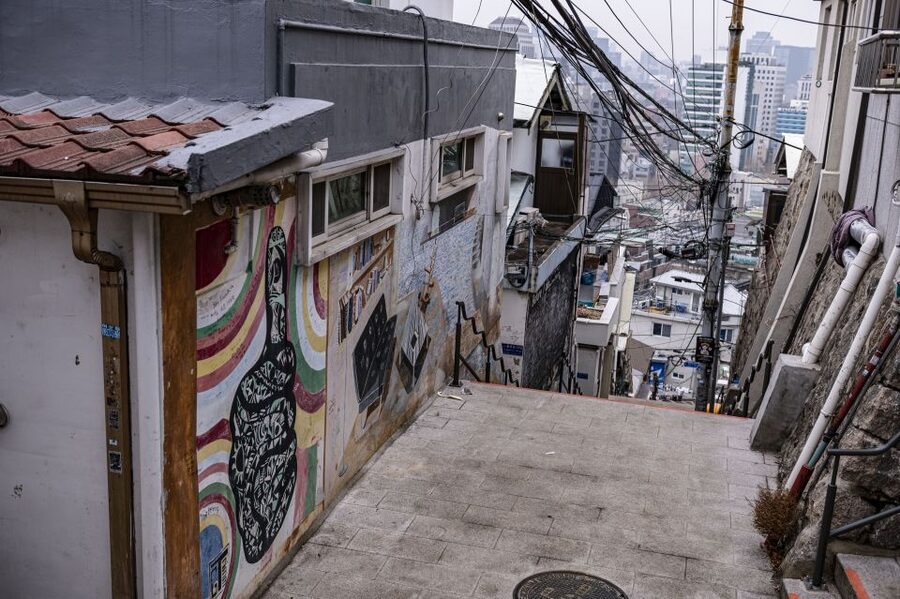
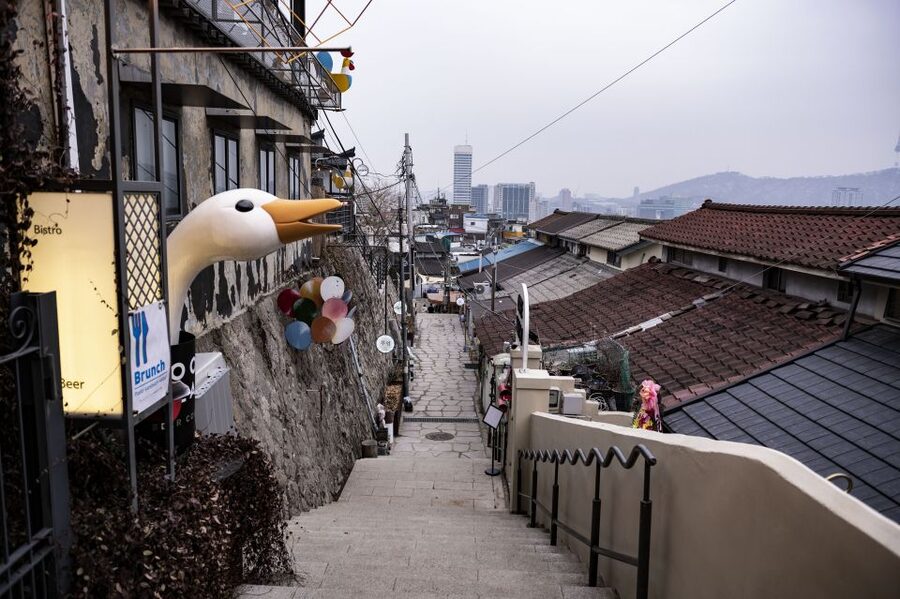
From the lower streets, the route continues toward Ihwa Mural Village. The village sits on a hill, so the art comes with a physical cost: you will be walking upward through lanes and steps rather than strolling along a level street.
The murals and painted walls make this the most obvious photo stop. You will have time to look around, take pictures, and hear how an older hillside neighborhood became associated with public art. The appeal is not only the artwork itself. It is the contrast between decorated walls, homes, narrow paths, and the increasingly broad view of Seoul behind you.
The area can feel more subdued than the city center, especially after dark. That is part of its charm, but it also means you should show care around residential streets. Keep your voice down and avoid blocking entrances while taking photos.
One useful point from the guiding is that the village is not presented as a pretty backdrop with no past. The story includes the people and challenges connected to older hillside housing. That makes the stop more meaningful than simply collecting mural photographs.
Some people may find the village less dramatic than expected at first. The reward comes as the guide adds context and as the views open up. The stop works best for you if you enjoy places that mix art, homes, social change, and local stories.
Naksan Park and the art of the dragon
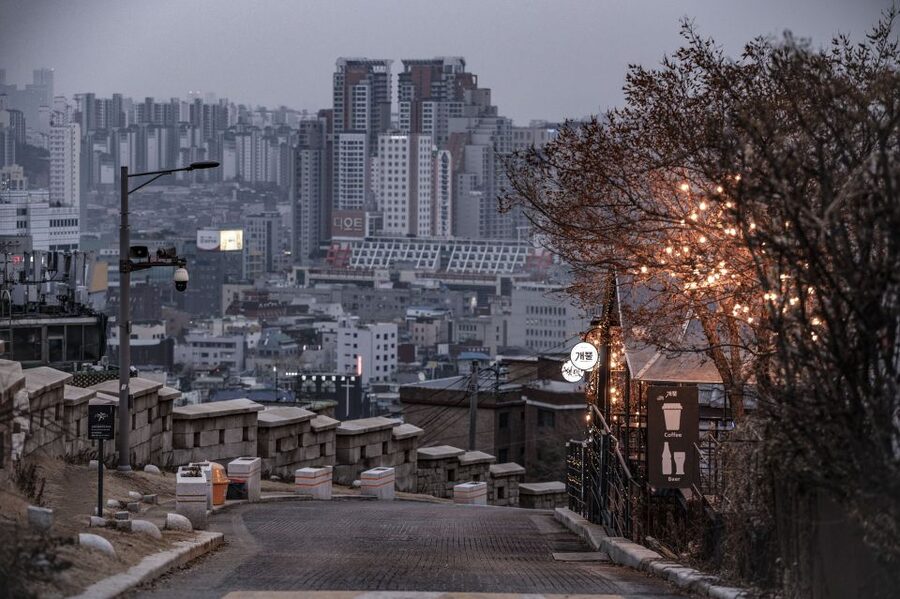
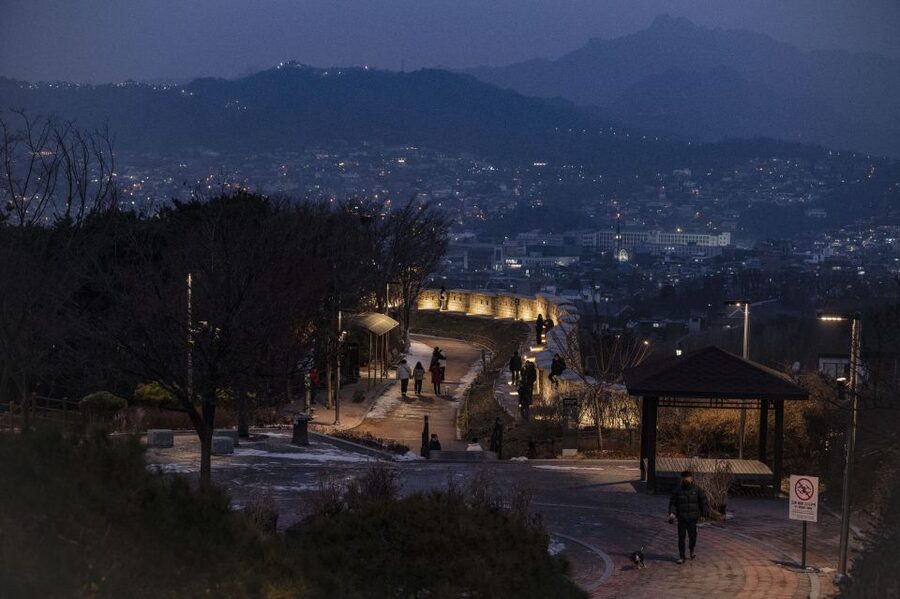
Naksan Park offers one of the clearest explanations of Seoul’s position and shape. The route includes the art of the Naksan dragon, along with stories about how the capital was located and protected.
This is where the walk begins to connect geography with history. From a hill, you can understand why Seoul’s older defenses and city walls followed the contours they did. You are not simply looking at a skyline. You are seeing the relationship between hills, walls, neighborhoods, and the expanding capital.
The dragon artwork adds a lighter visual element to the historical discussion. It is also another good place for photographs, especially as the evening grows darker and the city lights become more visible.
The climb is manageable for someone in fair walking condition, but do not confuse manageable with flat. Several people have found the route easier than expected because the guide stops often, while others have focused on the steep sections and stairs. Your own comfort will depend on your pace and knees.
Wear shoes with a firm sole. High heels are not allowed, and they would be a poor choice on the slopes even if they were. In winter, hot packs are provided, which is a thoughtful touch for a night walk.
Same base, a different kind of day out:
- Best DMZ Tour Korea from Seoul (Red Suspension Bridge Optional)
★ 5.0 · 41,422 reviews - DMZ Tour: 3rd Tunnel, Option(Suspension Bridge, Boat) from Seoul
★ 5.0 · 21,373 reviews - DMZ tour south Korea from Seoul (NK experience hall, defector)
★ 5.0 · 20,599 reviews - Seoul: DMZ Tour with Optional Suspension Bridge
★ 4.8 · 5,277 reviews
Walking the Hanyang City Wall after dark
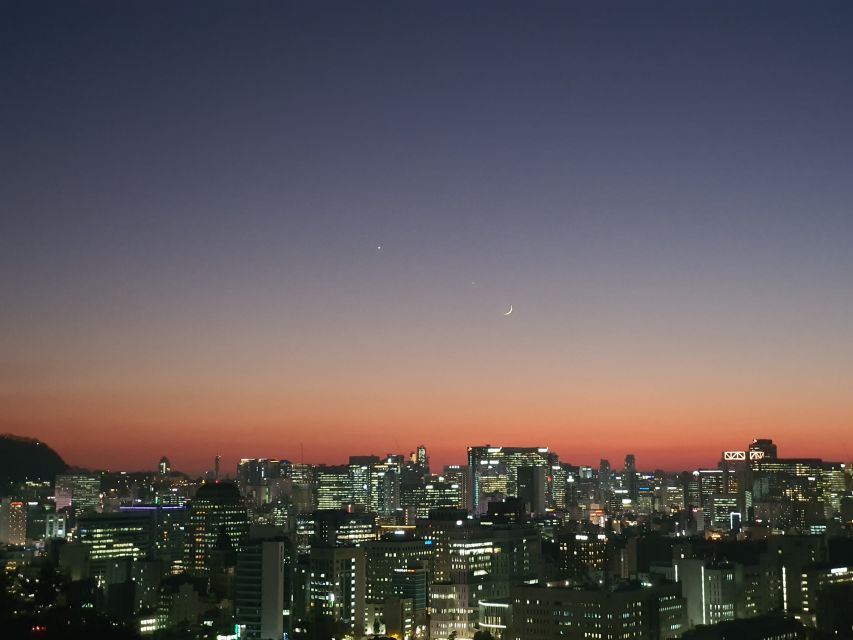
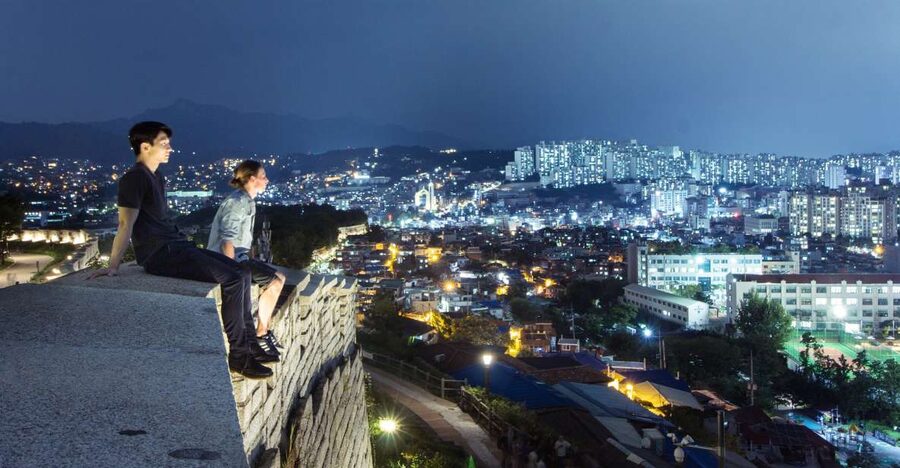
The Hanyang City Wall is the tour’s main historic feature and its strongest viewpoint. It is also associated with a K-Pop Demon Hunters filming spot, giving the wall an extra connection for fans of that production.
As you climb, more of Seoul comes into view. The changing light is part of the experience. Starting around twilight, when available, lets you see the city in transition rather than arriving after everything is already dark.
At the wall, the guide explains why this defensive line mattered and how it fits into Seoul’s older development. The information is more useful because you can see the terrain directly. The wall is not an isolated monument. It runs along the hill above the city, where older paths and newer buildings meet.
The night view is the visual payoff, but it is worth keeping your expectations practical. Weather controls much of the show. Cloud, rain, haze, and the season can affect how far you see. One evening may offer a sharp skyline, while another gives you a softer spread of lights.
The guides handle this well by putting the emphasis on the walk and the stories, not just the sunset. During one rainy tour, the guide kept checking on the group and helped with photo ideas. That kind of attention matters on a route where weather can change the mood quickly.
Personal audio receivers may be used, allowing you to hear the guide without crowding close. This is helpful on narrow paths and when the group is spread out. Group size can vary, with one reported group of about 16 people, small enough for questions without feeling like a large bus tour.
The social story behind the pretty views
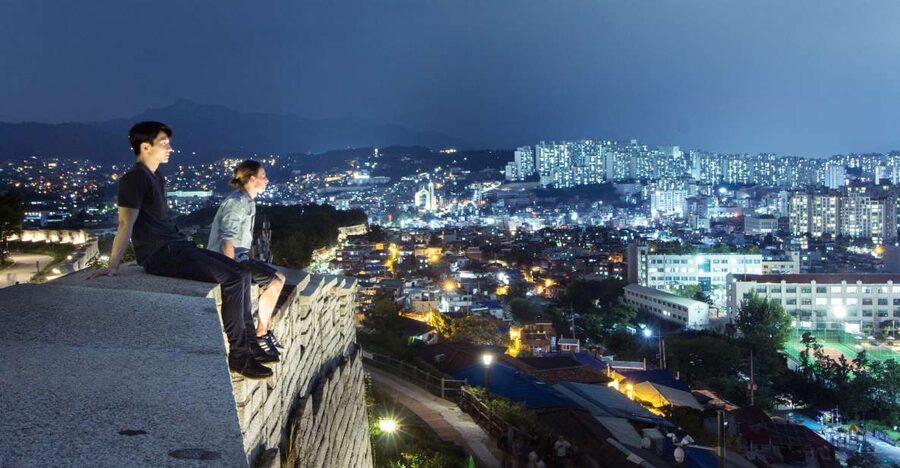
The tour works best when it moves beyond scenery. Guides discuss housing problems, student pressure, work culture, older and newer Seoul, and the changes affecting Hyehwa.
One particularly useful theme is the tension between a popular nightlife area and its residential neighbors. Hyehwa has dealt with noisy, drunken visitors, and the guide may explain how that affects local people. It is a small detail, but it changes how you behave in the neighborhood. A good walking tour should help you notice the people who live in the places you photograph.
You may also hear about the moon village idea connected with the hillside community. That story helps explain why older neighborhoods can be both attractive to visitors and difficult for residents. The painted walls and views are appealing, but daily life in a steep, aging district has its own challenges.
This social angle is why I would choose the walk over a simple viewpoint visit. You could reach Naksan on your own, take pictures, and leave. With a guide, you get a clearer sense of why the area looks as it does and what pressures shape modern Seoul.
The English is generally clear, and guides are open to questions. If a subject interests you, ask. The experience becomes much stronger when you treat it as a conversation rather than a fixed script.
How difficult is the walk?
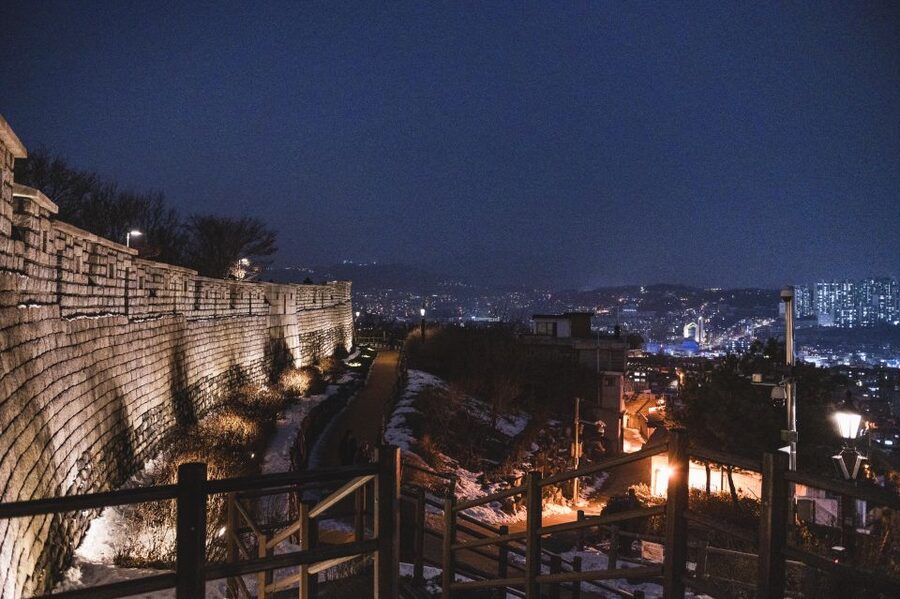
The route is described as an easy walk with breaks, but it is not appropriate for everyone. You will walk uphill, use stairs, and deal with steep sections. People with mobility impairments cannot join, and the activity is listed as unsuitable for people over 70.
That age guideline is broad rather than a precise fitness test. A fit older person may feel fine, while someone younger who dislikes hills may struggle. One 58-year-old participant with a knee replacement completed it, but that does not make the route suitable for every knee or joint condition.
The best preparation is simple:
- Wear comfortable walking shoes with good grip.
- Avoid high heels.
- Bring water, especially in warm weather.
- Dress warmly in winter, when the walk takes place after sunset.
- Leave room for a few stops and a steady uphill pace.
The guides usually allow breaks at stops, both for explanations and for catching your breath. The route is not a race. Still, you should not book it after a long day if your legs are already worn out.
Is $33 a fair price for two hours?
At $33 per person, this is good value if you want a guide who adds social and historical meaning to the route. You are paying for more than a viewpoint. The price covers an English-language walking tour through several connected areas, with photo stops, local explanations, and help understanding Korean society.
The value is strongest for first-time visitors and for people who have already seen Seoul’s major palaces and shopping streets. The walk gives you a different side of the capital without taking up a full day.
It is less useful if you want a private tour, a relaxed flat walk, or a long stop at each site. Two hours passes quickly, and the itinerary covers several places. You will get an overview rather than a detailed museum-style visit.
The free cancellation option up to 24 hours before the start and reserve-now, pay-later booking also reduce the risk of fitting it into a changing schedule. Those terms are useful when weather or tired legs may affect your evening plans.
Who should book this Seoul night walk?
I would choose this tour if you want:
- Strong night views without planning the route yourself.
- A local explanation of student life, education, and work culture.
- Hillside neighborhoods, murals, walls, and narrow paths.
- A guide who can answer questions in English.
- A short activity that fits into a busy Seoul itinerary.
- Photo opportunities with more context than a standard sightseeing stop.
I would skip it if you need step-free access, dislike uphill walking, or want a tour focused only on major royal sites. The route is also not a good match for high heels, unstable footwear, or a very tight schedule immediately afterward.
Final verdict: a smart choice for curious walkers
Book this tour if you want Seoul to make more sense, not just look impressive. The best parts are the combination of Naksan’s night views, Ihwa’s hillside art, the Hanyang City Wall, and honest discussion of education, housing, work, and neighborhood change.
The climb is the one real condition. If you can handle hills and stairs at a steady pace, $33 buys a useful introduction to a less obvious part of the capital. Guides such as Leah, Jessica, Smin, and Ethan bring different personalities, but the format consistently favors questions, stories, and local context.
For a first visit, I would place it early in your Seoul stay. You will leave with better questions about the city and a clearer sense of how its neighborhoods fit together.
FAQ
Where does the tour meet?
The meeting point is outside Exit 2 of Hyehwa Station. A guide will be waiting there.
How long does the tour last?
The walking tour lasts two hours.
What language is the tour in?
The live tour guide speaks English.
How much does the tour cost?
The listed price is $33 per person.
Is the route flat?
No. The tour goes uphill and includes steep streets and stairs. Breaks are provided at stops, but it is still a hill walk.
Can someone with mobility issues join?
No. The activity is not suitable for people with mobility impairments. It is also listed as unsuitable for people over 70.
What happens if I need to cancel?
You can cancel up to 24 hours in advance for a full refund. You can also reserve now and pay later, keeping your plans flexible.
Just added in Seoul
- Suwon: Baseball Game with Fortress and Local Food Tour★ 5.0 · 3 reviews
- Seoul: War Memorial of Korea Private Guided Museum Tour★ 4.9 · 29 reviews
- Seoul: Wine & Korean BBQ, Perfect Pairing Dinner in Sinchon★ 5.0 · 6 reviews
- Seoul : Your Personal Photographer in Gyeongbokung★ 5.0 · 7 reviews
- Seoul : Efoil Experience in Han River★ 5.0 · 5 reviews
- Seoul: Vivaldi Park Winter Ski with Eobi Ice Valley Day Tour★ 4.6 · 16 reviews
- Seoul: Vivaldi Park Winter Ski with Nami Island Day Tour★ 5.0 · 4 reviews
- Seoul: SnowyLand in Vivaldi Park with Nami or Alpaca★ 4.8 · 11 reviews
Walking Tours, compared.
Seoul moonlight walking tour with local historian
Read our review →
Evening Dark History, Folklore & Ghost Story Walking Tour
Read our review →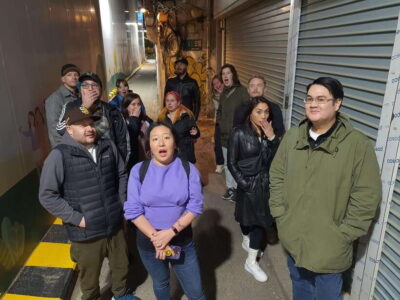
Dark Side of the City and Ghost Stories Walking Tour
Read our review →
Gangnam Walking Tour on Youth and Society in Seoul Korea
Read our review →
Gyeongbok Palace and Bukchon Hanok Walking Tour
Read our review →
Highlights & Hidden Gems With Locals: Best of Seoul Private Walking Tour
Read our review →
Street photoshoot and Seoul Hidden gem History Walking Tour
Read our review →
Browse the lists this tour appears in