
Reviewed · MARKETS
Cook 3 Authentic Korean Dishes with Local Market Tour
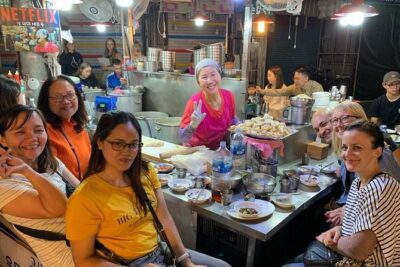
Mangwon Market is the star ingredient here. You meet Jomin at Mangwon Station, walk through a working neighborhood market, taste street foods, and see the ingredients that will soon land in your cooking pot. Then you head to a clean studio for three dishes, prepared at your own station rather than watched from the sidelines.
I like the small class format, which allows Jomin to help with knife work, seasoning, and cooking times. I also like the useful cookbook and the chance to take home leftovers. The main thing to check is group size: the class is described as having a maximum of four people, while the general activity information lists up to 11 travelers, so confirm the setup when booking.
Key points
- Mangwon Market first: Learn about Korean ingredients in a real neighborhood market before cooking with them.
- Three dishes in one class: Possible menus include bibimbap, bulgogi, soft tofu stew, japchae, kimchi stew, and stir-fried pork.
- Hands-on cooking: You receive your own table, cooker, tools, and ingredients instead of simply watching a demonstration.
- Jomin leads the class: Her instructions cover both cooking technique and Korean food customs.
- Flexible meal times: Choose a lunch or dinner session, with vegetarian and vegan options available.
- Useful take-home extras: You receive a professionally designed cookbook and can take leftover food with you.
Starting at Mangwon Station and entering the market
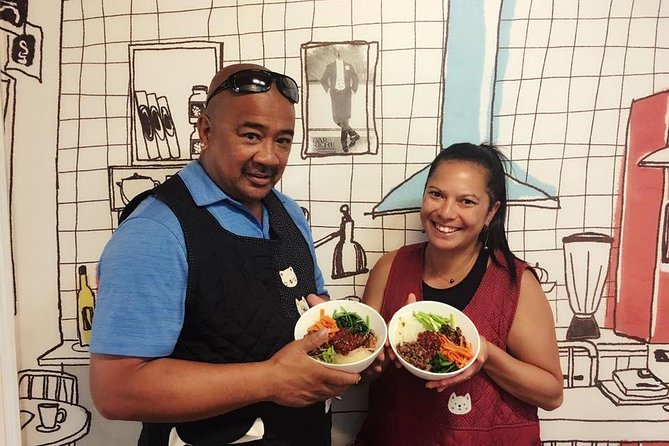
The class begins at Entrance 2 of Mangwon Metro Station on Line 6. This is a sensible meeting point because you do not need to find a private studio in an unfamiliar neighborhood. Look for Jomin there, then follow her toward Mangwon Market.
The market walk gives the cooking class a useful sense of place. Instead of meeting a pile of premeasured ingredients in a classroom, you first see the produce, seafood, tofu, noodles, sauces, and other foods that shape Korean home cooking. Jomin points out ingredients used later in the class and explains how they fit into everyday meals.
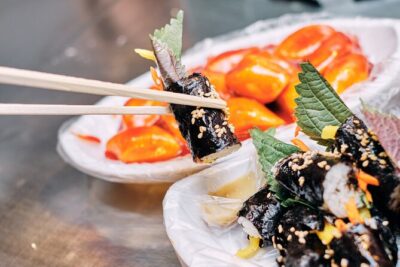
You may also have time to taste street food. That part is not just a snack break. It helps you see how Korean food culture works at several levels, from quick market bites to carefully assembled dishes served at home.
The market is a working food market, not a museum set up for visitors. That means the experience can feel more genuine, but it also means the exact stalls and activity may vary. One class took place around the Chuseok holiday, when some stalls were closed, yet there were still enough open businesses to make the visit worthwhile. Holiday schedules and market conditions are worth keeping in mind.
I would arrive at the station with a little time to spare. The meeting point is specific, but the market itself may be busy and easy to wander into by mistake. Since the class begins with a walk, comfortable shoes are a good idea.
A few more things to do in Seoul worth a look
- Seoul Street Food Market Tour
★ 5.0 · 1,226 reviews - Local Home Korean Cooking Class & Market Adventure in Seoul
★ 5.0 · 1,024 reviews - Seoul: Night Market Food Tour with Local Guide
★ 4.9 · 943 reviews
What you learn about Korean ingredients
Jomin uses the market to explain foods that can be hard to identify in a foreign supermarket. Depending on the menu, you might see fresh tofu, clams, prawns, anchovies, vegetables, noodles, and ingredients used for soup stock.
One particularly useful part is learning how small ingredients affect a dish. Anchovies, for example, can help create a savory base for stew. Tofu brings a soft texture and absorbs the flavor of the broth. Vegetables for bibimbap need to be cut and cooked with some care so they remain distinct rather than turning into one soft mixture.
The market also gives you a chance to ask basic questions without feeling foolish. If you do not know the difference between types of kimchi, cannot identify a Korean vegetable, or want to know how locals use an ingredient, this is the right moment to ask. Jomin’s explanations connect the food on the shelf to the dishes at the cooking table.
You can also buy something that catches your eye during the walk. The class is not only a shopping stop for ingredients, though, so do not expect an extended market-shopping session. Its main purpose is to prepare you for the cooking lesson.
Cooking three dishes at your own station
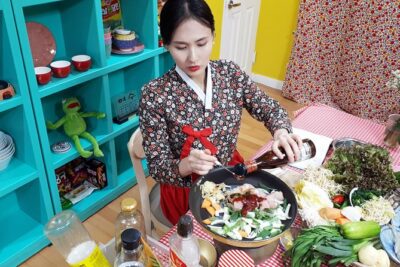
Back at the studio, you hear what will be prepared and receive the tools and ingredients needed for the class. This is a hands-on lesson, not a demonstration. You work at your own table and cooker while Jomin guides the class.
That difference matters. Watching a chef make bibimbap can be entertaining, but it does not teach you how much to stir, how vegetables should be cut, or when a stew is ready. Here, you take part in those steps yourself. If you are new to Korean cooking, Jomin can correct a technique before it becomes a habit.
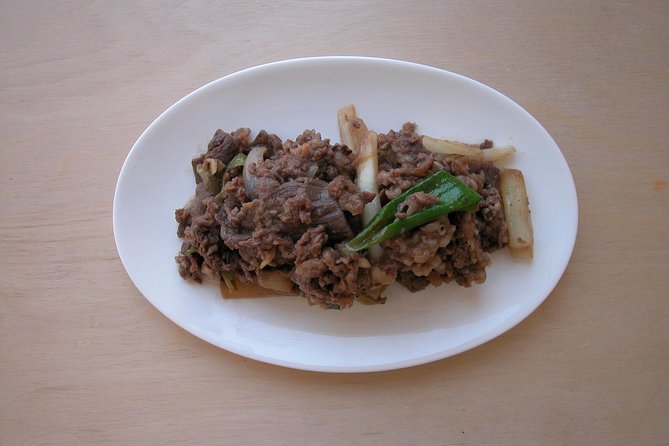
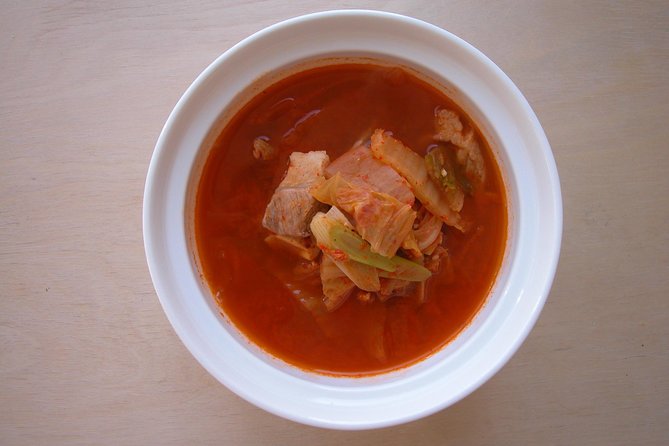
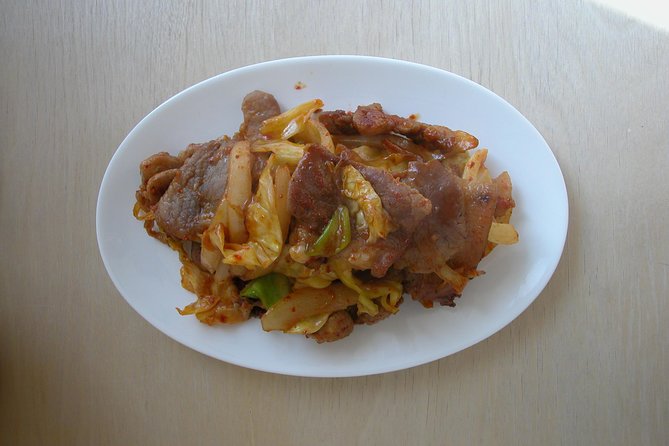
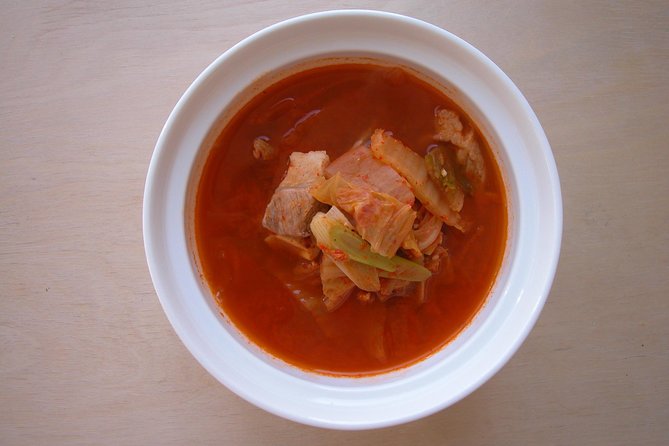
The class may feature three dishes such as soft tofu stew, beef bibimbap, and bulgogi. Other possible menus include japchae, kimchi stew, or stir-fried pork. The exact combination is not fixed in the information provided, so check the menu for your date if a particular dish is important to you.
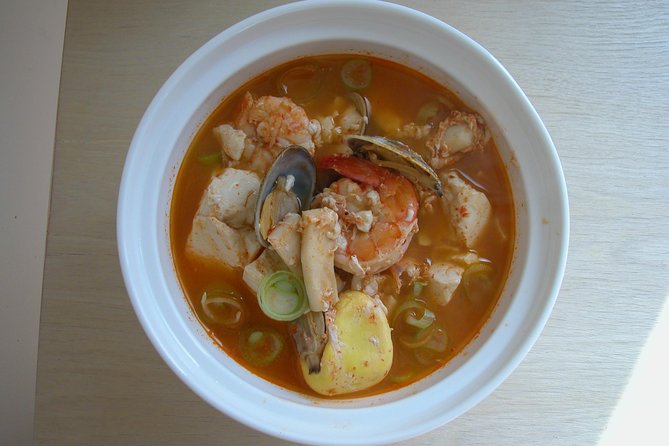
A typical sequence may involve preparing a marinade for bulgogi, making soup stock, cutting vegetables for bibimbap, and cooking each dish on an individual burner. Seafood can appear in the soft tofu stew, with clams or prawns used in some sessions. If you do not care for seafood, mention that before the class so the menu can be adjusted where possible.
The pace is helped by cooking in stages. You may prepare one dish, move it to the dining area, and then work on the next recipe while the studio is reset. This keeps the three-and-a-half-hour session from becoming one long wait at the stove.
The dishes: familiar names, useful technique
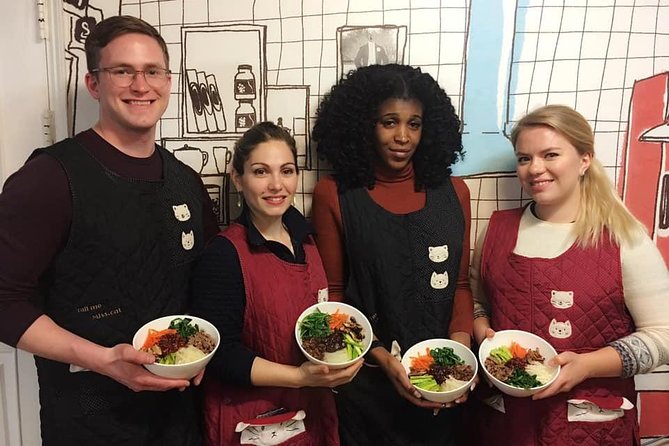
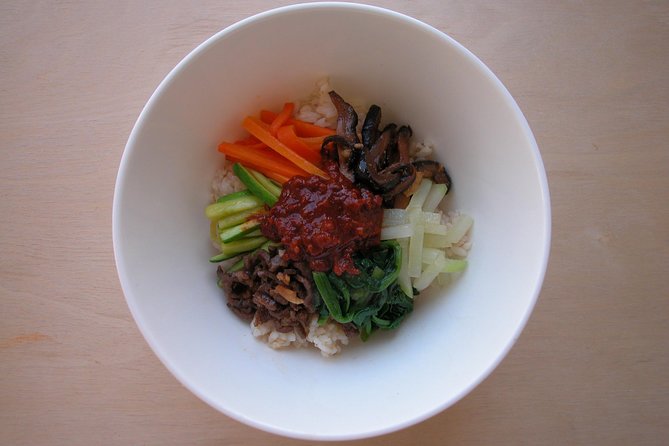
Bibimbap is a good classroom dish because it teaches several skills at once. You prepare separate vegetables, cook them properly, and bring them together with rice and sauce. The final bowl may look simple, but the separate components give you a clearer idea of how Korean meals are built.
Bulgogi is especially useful for home cooks because the marinade is easy to remember and adaptable. Jomin explains the ingredients and the cooking process, helping you understand how the sweet, salty, and savory flavors work together. The class is not simply about copying a recipe. You learn the order of preparation and the reason for each stage.
Soft tofu stew offers a lesson in stock and seasoning. The broth can include seafood, tofu, and other ingredients, and it is served hot. You may prepare the stock from scratch, including the use of anchovies in some sessions. This is the sort of detail that makes the recipe more useful once you return home.
Japchae adds a different texture and method, with noodles and vegetables cooked together. Kimchi stew gives you a stronger, more fermented flavor profile. Stir-fried pork provides another route into Korean home cooking. Since the menu changes, the class can suit repeat visitors who want to learn different dishes on another date.
The portions are substantial enough to form a meal. You eat what you cook in the dining area, and take-home containers are available for leftovers. That is a practical touch, especially if you have already eaten market snacks before the class.
Same base, a different kind of day out:
- Best DMZ Tour Korea from Seoul (Red Suspension Bridge Optional)
★ 5.0 · 41,422 reviews - DMZ Tour: 3rd Tunnel, Option(Suspension Bridge, Boat) from Seoul
★ 5.0 · 21,373 reviews - DMZ tour south Korea from Seoul (NK experience hall, defector)
★ 5.0 · 20,599 reviews - Seoul: DMZ Tour with Optional Suspension Bridge
★ 4.8 · 5,277 reviews
Jomin’s teaching style and the class atmosphere
The most important part of a cooking lesson is not the room or the recipe booklet. It is the instructor’s ability to explain steps clearly while keeping an eye on several burners. Jomin’s approach is patient and direct, with guidance for both experienced cooks and people who rarely cook.
You should expect hands-on help. She walks through the recipes, explains ingredients, and helps with preparation as the class moves along. Some people may find her firm approach useful, especially when timing and knife skills matter. If you prefer a totally relaxed session with little correction, the structured teaching style may feel more serious.
The class also has a social side. With only a few people, you can ask questions and talk while preparing food. If the group reaches the larger general capacity listed for the activity, the personal attention could be less consistent, which is why I would clarify the expected group size before paying.
The studio is described as clean, organized, and spacious, with private cooking tables and cooking equipment. One arrangement includes a separate dining area where you can eat each dish as it is finished. That layout gives the class a pleasant rhythm: prepare, cook, eat, then begin again.
Food culture beyond the recipes
This class is valuable because it explains how food fits into Korean life, not only how to follow instructions. You learn about banchan, kimchi, soup stock, market shopping, and the way ingredients are used in familiar dishes.
The market visit gives context that a standard cooking school may miss. You see the raw materials before they are cleaned, cut, seasoned, or combined. That makes it easier to understand why Korean cooking often includes several small elements rather than one large main course.
You may also taste rice wine during the session, depending on the class. This is a small detail, but it adds another piece of food culture to the lesson. If you do not drink alcohol, ask about the option before the tasting.
The cookbook is another strong feature. It includes the dishes prepared during class as well as other Korean favorites recommended by Jomin. A recipe booklet turns the experience into something you can repeat at home, though you may need to adapt the recipes if Korean ingredients are difficult to find where you live.
Vegetarian, vegan, and dietary needs
Vegetarian and vegan options are available, and dietary restrictions can be accommodated. You should communicate your needs before the class rather than waiting until the market or studio.
This matters because Korean dishes often use seafood, meat, anchovy stock, or other ingredients that are not obvious from the dish name. A stew may look vegetarian but contain a seafood-based broth. Early notice gives Jomin a better chance to prepare a suitable version of the menu.
The class can work well for mixed groups, such as one person who loves cooking and another who mainly wants to eat and learn. You still take part in the process, but the instructions are designed to be approachable for beginners.
Is $79 a good value?
At $79 per person, this is not the cheapest way to eat Korean food in Seoul. You could spend far less on a market meal. The value comes from combining a guided market visit, ingredient lessons, three cooked dishes, a full meal, personal instruction, leftovers, and a cookbook in about three and a half hours.
The small class format strengthens the value. Individual cooking stations mean you are not standing behind someone else while the instructor does all the work. You leave with techniques you can repeat, not just photos of a finished plate.
I would consider the price fair for people who want a structured food activity rather than a quick tasting. It is less compelling if your main goal is simply to sample many street foods or browse Mangwon Market independently. In that case, visiting the market on your own costs less and gives you more freedom.
The lunch and dinner choices also help with planning. A lunch class can fit before an afternoon in western Seoul. A dinner class works well if you want to turn the activity into both a lesson and your evening meal.
Who should book this class?
I would recommend it to first-time visitors who want a practical introduction to Korean food. It also suits couples, families, solo visitors comfortable joining a small group, and home cooks who want recipes they can make after returning home.
Beginners should feel comfortable booking. The class does not require advanced cooking skills, and the instructor leads each stage. Experienced cooks may still enjoy it, especially if Korean cuisine is new to them, though the pace may feel basic if they already know the techniques.
This is a good fit for people who value conversation and local context. It is less suitable if you dislike planned activities, cannot eat the possible ingredients, or want a large food tour with many tastings and no cooking.
The 98 percent recommendation rate and 4.9 rating from 231 ratings suggest a strong record, but the practical details still matter more than the number. Confirm the menu, expected group size, and dietary arrangements before booking.
Should you book Cook 3 Authentic Korean Dishes with Local Market Tour?
Book it if you want to do more than eat Korean food. The market walk, personal cooking station, three dishes, cookbook, and leftovers give you a full food-focused activity rather than a short demonstration.
I especially like the link between Mangwon Market and the studio. You first see the ingredients in their everyday setting, then use them in a meal. That connection makes the class feel useful and grounded.
Skip it if your Seoul schedule is tight and you only want a quick meal, or if browsing markets on your own sounds more appealing than following a set class. For everyone else, $79 buys a friendly introduction to Korean cooking with enough practical instruction to keep using the recipes at home.
FAQ
Where does the cooking class meet?
Meet Jomin at Entrance 2 of Mangwon Metro Station on Line 6 in Seoul.
How long does the experience last?
The activity lasts approximately three hours and 30 minutes.
What dishes will I cook?
The three-course menu may include soft tofu stew, bibimbap, bulgogi, kimchi stew, japchae, or stir-fried pork. The exact menu can vary.
Is this a demonstration or a hands-on class?
It is a hands-on class. You receive your own cooking table, cooker, tools, and fresh ingredients.
Are vegetarian and vegan options available?
Yes. Vegetarian and vegan options are available, and dietary restrictions can be accommodated.
Can I choose lunch or dinner?
Yes. You can choose between a lunch class and a dinner class.
What is the cancellation policy?
You can cancel up to 24 hours before the start time for a full refund. Cancellations or changes made less than 24 hours before the start time are not accepted for a refund. If the minimum number of travelers is not met and the activity is canceled, you will be offered another date or experience, or a full refund.
Just added in Seoul
- Suwon: Baseball Game with Fortress and Local Food Tour★ 5.0 · 3 reviews
- Seoul: War Memorial of Korea Private Guided Museum Tour★ 4.9 · 29 reviews
- Seoul: Wine & Korean BBQ, Perfect Pairing Dinner in Sinchon★ 5.0 · 6 reviews
- Seoul : Your Personal Photographer in Gyeongbokung★ 5.0 · 7 reviews
- Seoul : Efoil Experience in Han River★ 5.0 · 5 reviews
- Seoul: Vivaldi Park Winter Ski with Eobi Ice Valley Day Tour★ 4.6 · 16 reviews
- Seoul: Vivaldi Park Winter Ski with Nami Island Day Tour★ 5.0 · 4 reviews
- Seoul: SnowyLand in Vivaldi Park with Nami or Alpaca★ 4.8 · 11 reviews
Markets, compared.
Local Home Korean Cooking Class & Market Adventure in Seoul
Read our review →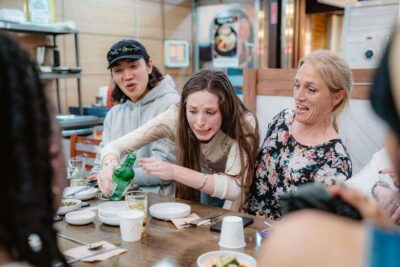
Downtown Seoul Guided Food & Market Tour with 8+ Local Tastings
Read our review →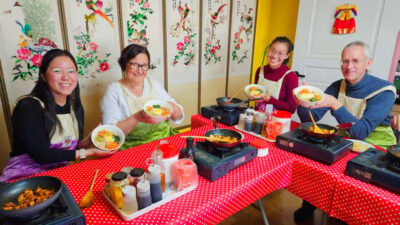
Korean Cooking Class at a Local Home and Market Tour
Read our review →
Seoul Night Palace & Market Food Tour with Vehicle
Read our review →
Korean Palace and Market Tour in Seoul Including Insadong and Gyeongbokgung Palace
Read our review →
Nighttime Tour of Palace, Market, Naksan Park & More
Read our review →Browse the lists this tour appears in