
Reviewed · COOKING CLASSES
Seoul: Korean Cooking Class at a Local Home and Market Tour
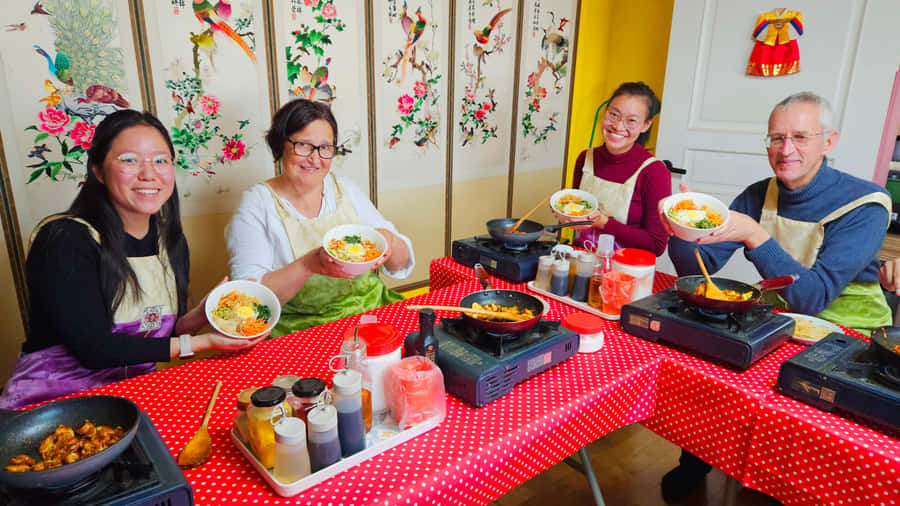
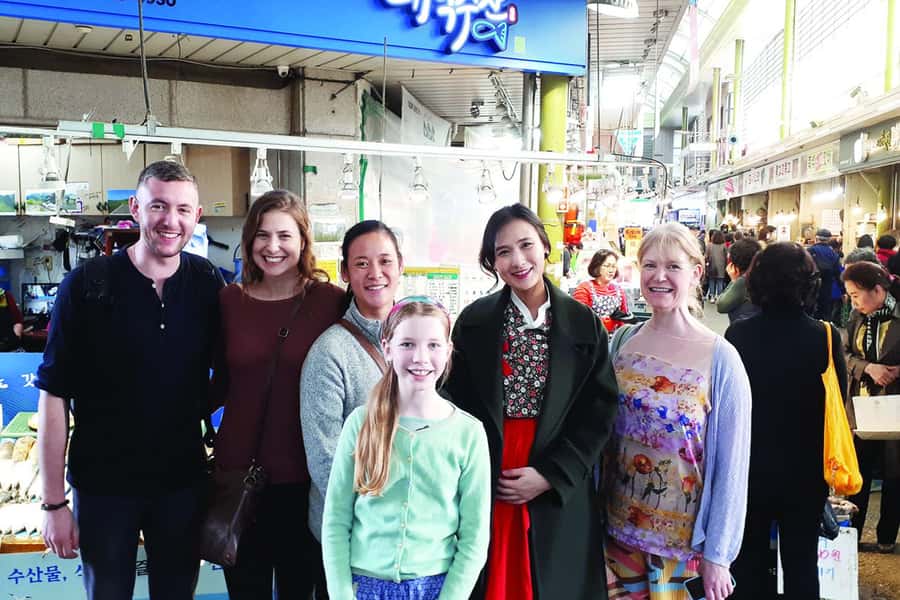
The best part of this Seoul food experience happens before you pick up a knife. You walk through a local market with a Korean chef-guide, taste street food, and learn what the ingredients look like in everyday use. Then you take those ingredients to a local home and turn them into four classic dishes.
I like the combination of market shopping and hands-on cooking. I also like the friendly scale, with no more than 10 people, which gives you room to cook rather than just watch. The main consideration is practical: the home has no elevator, hotel pickup is not included, and the $98 price makes more sense for people who want a full cultural activity than for diners looking only for a meal.
Key Points at a Glance
- Mangwon-area market visit: Start with local shopping and street-food samples before the class begins.
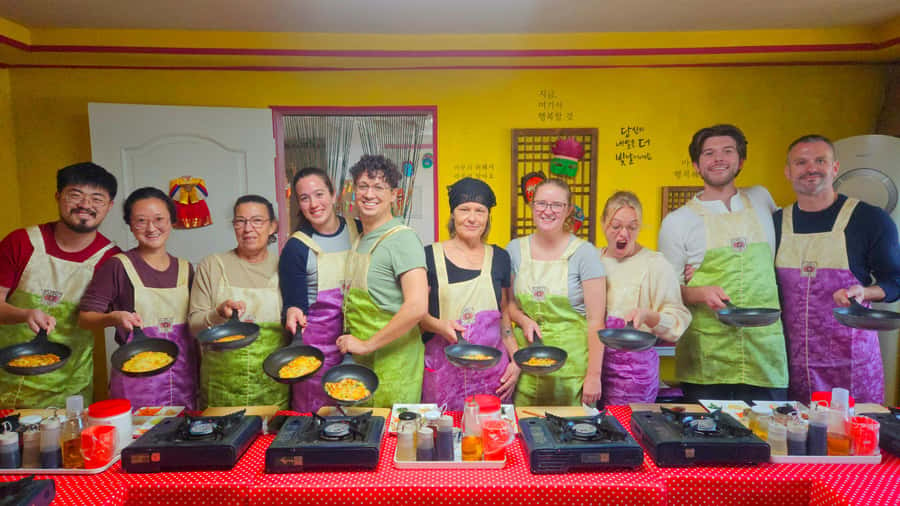
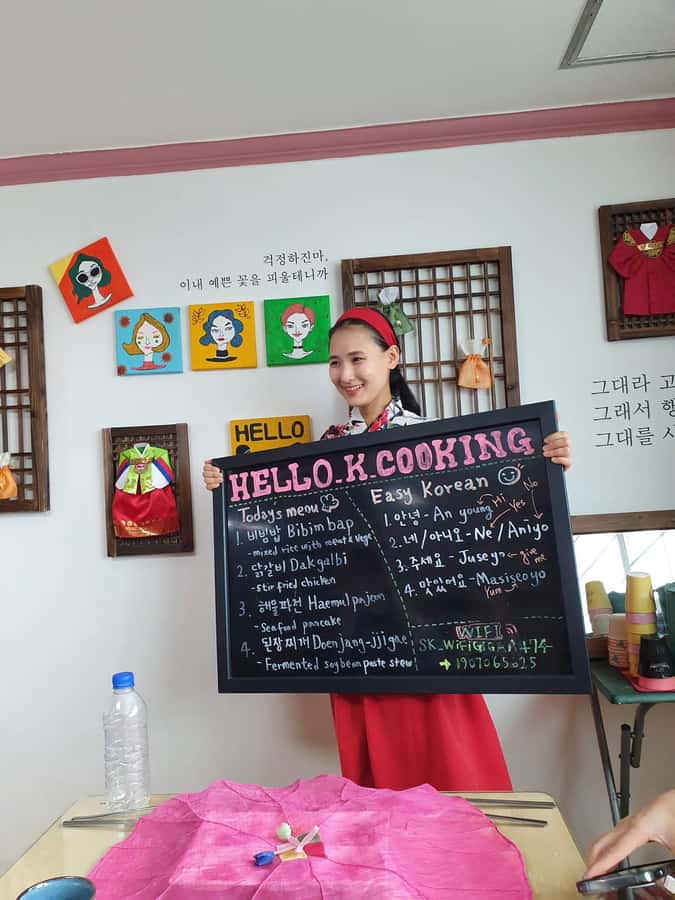
- Four Korean dishes: Prepare bibimbap, dakgalbi, haemul-pajeon, and doenjang-jjigae with guidance from an English-speaking chef.
- A real home setting: Move from the market into a local home for a more personal cooking session.
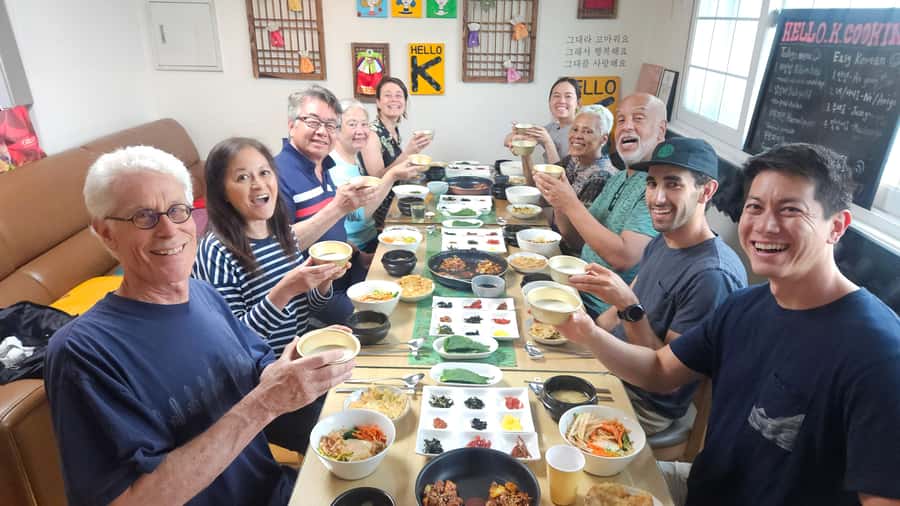
- Hanjeongsik meal: Sit down to your food with more than 10 side dishes, rice, seasonal fruit, and rice wine.
- Small group format: The group is limited to 10 people, keeping the class active and social.
- Useful take-home material: You receive recipes, along with photo and video service during the activity.
From Mangwon Station to the Market
You meet your guide outside Mangwon Station, Exit 2. The activity lasts 3.5 hours and ends back at the same meeting point, so you can plan the rest of your day without arranging a second pickup.
The first stop is a traditional market described as popular with locals but less aimed at sightseeing crowds. That distinction matters. Instead of simply looking at finished dishes, you get to see the ingredients that make up Korean home cooking and learn how your guide uses them.
Your guide helps locate the items needed for the class. This gives the market walk a clear purpose, and it keeps the tour from becoming a random stroll through food stalls. You may see ingredients you recognize from Korean restaurants, along with products that are less obvious if you are shopping alone.
The market also provides street-food samples. This is a modest but useful part of the outing because it lets you try something immediately, before spending time preparing a meal. The market visit is also a good chance to ask questions about Korean food habits and pick up a few simple Korean phrases.
Do not expect a long history lecture or a full market tour lasting half a day. The market section supports the cooking class. You are there to taste, shop, and understand the ingredients, then move on.
More Cooking Classes in Seoul
- Local Home Korean Cooking Class & Market Adventure in Seoul
★ 5.0 · 1,024 reviews - Master Korean traditional cooking with a Kimchi chef
★ 5.0 · 385 reviews - Seoul: Korean Cooking at Seoul Cooking Club!
★ 5.0 · 311 reviews
A Local Home Instead of a Demonstration Kitchen
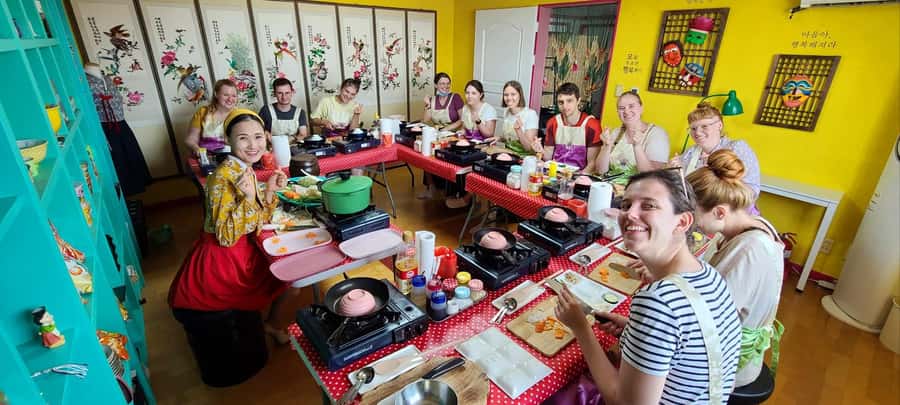
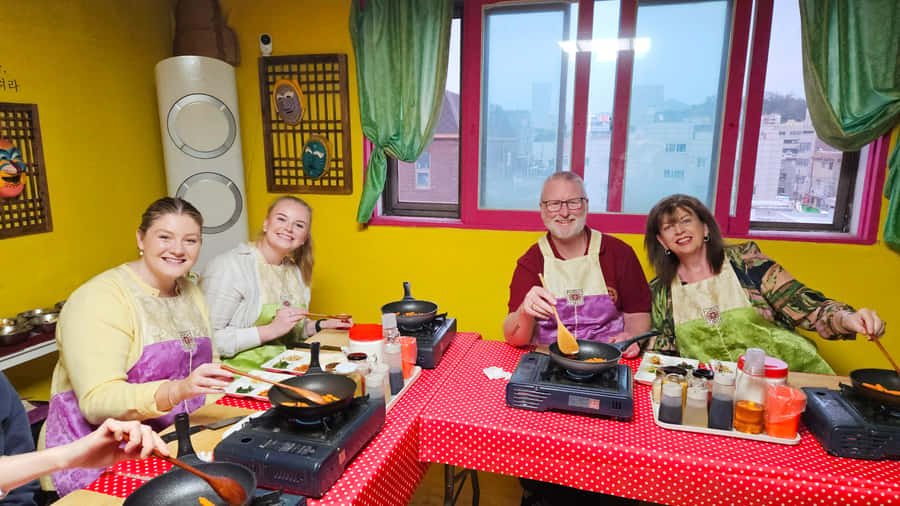
After the market, you head to the cooking venue, a local home. That change of setting is one of the most appealing parts of the activity. You are not sitting in a polished restaurant kitchen watching a chef work at a distance. You are preparing food in a personal space hosted by a Korean cook.
You receive a welcome tea or drink before cooking begins. The guide also teaches a few Korean phrases, a small touch that helps the session feel social rather than purely instructional. The hosts described in the experience include Sarah, Sara, and Junghee, and the strongest part of their role is keeping the group involved. Sarah is noted for clear English and good organization, while Junghee is described as warm, funny, and welcoming.
The small-group limit of 10 people is important here. Each person has room to participate, and the class is designed for beginners as well as confident home cooks. You are not expected to arrive with Korean cooking skills. Instructions are given step by step, and the guides make an effort to include each person.
The setting does have one clear limitation. There is no elevator to the home, so you need to be comfortable using stairs. The activity also requires you to make your own way to and from Mangwon Station. Add travel time to the stated 3.5 hours when planning your day.
Four Dishes, Four Different Korean Flavors
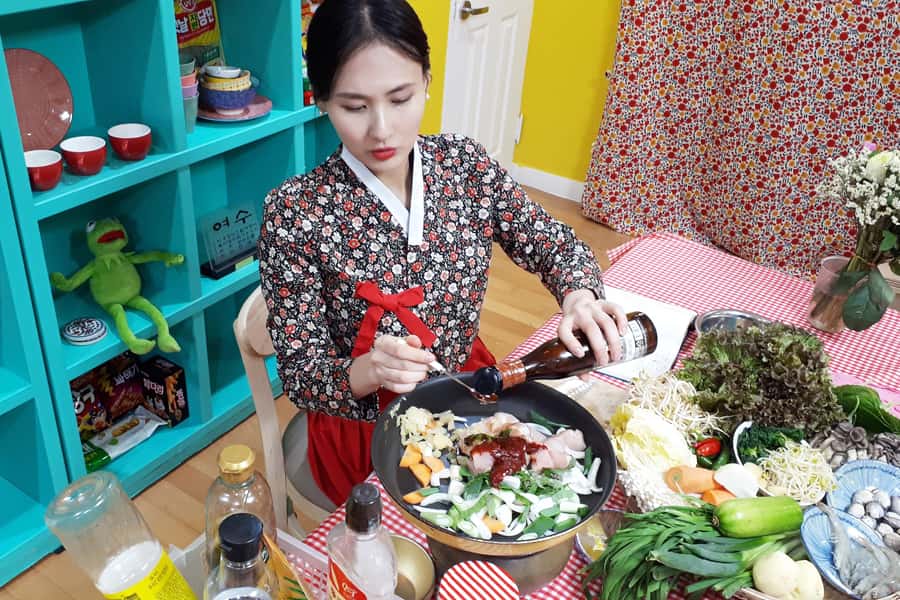
The class covers four dishes, giving you a useful introduction to several parts of Korean cooking rather than focusing on one recipe.
Bibimbap is mixed rice topped with meat and vegetables. It is a practical dish for learning how separate ingredients come together in one bowl. You prepare the components and assemble them, which makes the finished meal easy to understand and repeat at home.
Dakgalbi is stir-fried chicken. This introduces a different cooking method and a more direct, pan-based dish. It also gives the class a hearty main course alongside the rice dish.
Haemul-pajeon is a seafood and green onion pancake. This is likely to be one of the more playful parts of the class because the pancake needs to be handled as it cooks. The activity specifically highlights flipping pancakes, so you should expect some hands-on practice rather than a passive demonstration.
Doenjang-jjigae is a fermented soybean paste stew. It adds a warm, savory soup course to the meal and shows how a simple stew fits beside rice, meat, vegetables, and side dishes.
Together, the dishes make a well-rounded lesson. You learn about rice, stir-frying, pancakes, and stew in one sitting. That variety is also why the class feels like a meal as well as a cooking lesson.
The class provides ingredients and equipment, so you do not need to bring cooking supplies. Recipes are included afterward, and the recipes have been sent by WhatsApp on some occasions. I would save them immediately, since one useful improvement would be a small printed recipe booklet for those who prefer paper notes.
The Hanjeongsik Meal at the End
Once the dishes are ready, you sit down to eat. Your food is served with Hanjeongsik, a traditional Korean course meal that includes more than 10 side dishes. Seasonal fruit, rice, and rice wine are also provided, along with water.
This is where the class becomes more than a lesson in four recipes. Korean meals are often understood through the way several dishes share the table, rather than through one large main course. The side dishes let you compare flavors and textures alongside the food you prepared yourself.
The meal also gives the group time to talk. The hosts are praised for creating an easy atmosphere, and that matters in a small class where people may arrive alone or with strangers. The meal is a natural point for everyone to slow down, eat, and compare how the cooking went.
Rice wine is included, but you should contact the local host about allergies and dietary restrictions before booking. The class centers on seafood, chicken, fermented soybean paste, and other ingredients, so advance communication is important if you cannot eat any of them.
Other classes where you cook in Seoul:
- Korean Cooking at Seoul Cooking Club
★ 5.0 · 220 reviews - Korean Cooking Class with Grocery Shopping at Seoul Local Market
★ 5.0 · 107 reviews - Korean Kimchi Making Day Experience with a Local Market Tour
★ 5.0 · 99 reviews - Royal Seoul Cooking Class in a 100-Year-Old Hanok
★ 5.0 · 81 reviews
Tal Masks and Small Cultural Details
The activity includes a chance to try on an artful Tal mask, the type worn at many Korean heritage festivals. It is a short cultural element rather than the central focus, but it adds variety to the cooking session and makes for a memorable photo.
Photo and video service are included as well. That is useful if you want to remember the class without spending the whole time taking pictures yourself. The photos are a practical bonus, especially during active moments such as preparing the pancake or working at your cooking station.
The cultural details are kept light. You learn a few phrases, see a mask, shop for ingredients, and eat a traditional course meal. You are not signing up for a formal academic lesson on Korean food, but you do get several small windows into daily food culture.
What the Guides Add to the Class
A cooking class can fail if the teacher is hard to follow or spends too much time performing for the group. This one depends heavily on the guide, and the available comments point to a consistent strength: hosts such as Sarah and Junghee explain clearly, use humor, and make a point of interacting with everyone.
Sarah is described as having excellent English and strong organization. Junghee is described as energetic, friendly, and funny. You may also hear the name Sara used for a host. Since the exact guide can depend on the date, think of the named hosts as examples of the style to expect rather than a guarantee of who will lead your session.
The guide’s job begins in the market, where explanations help you recognize ingredients you might otherwise pass without noticing. It continues at the home, where beginners receive detailed directions and more experienced cooks can ask about technique and ingredients.
The tone appears informal and social. If you prefer a quiet class with little conversation, this may feel lively. If you like meeting people and learning through questions, the small group and shared meal work in your favor.
Is $98 a Fair Price?
At $98 per person, this is not a cheap meal, and you should not judge the price by the amount of food alone. The fee covers a market tour, street-food samples, a professional cooking class, ingredients, equipment, a welcome drink, the meal, more than 10 side dishes, fruit, rice wine, water, recipes, and photo and video service.
You are also paying for the guide’s time and the structure of the experience. A restaurant meal would cost less, but it would not show you how the food is selected or prepared. A simpler cooking class might cost less, but it may not include the market visit, the local-home setting, or the Hanjeongsik spread.
I see the price as reasonable for people who value participation and cultural context. It is less attractive if you mainly want to eat Korean food or if you already know how to cook these dishes. Couples, families with older children, solo visitors who enjoy group activities, and first-time Korean food cooks are likely to get the most from it.
Remember that hotel transportation is not included. You also need to reach Mangwon Station and return there afterward. Those costs are separate, though the meeting point is clear and the experience finishes where it begins.
Who Should Book This Experience?
You should consider this class if you want to do more than visit restaurants in Seoul. It gives you a look at shopping, preparation, serving, and eating, all within one compact outing.
It is a good fit for:
- First-time visitors who want a practical introduction to Korean food
- People who enjoy cooking but do not need an advanced class
- Solo visitors who like a small social group
- Couples and families seeking a shared activity
- Diners who want to learn the difference between a few major Korean dishes
- Visitors who value a local-home setting over a commercial kitchen
It may not suit you if you have serious food allergies that cannot be accommodated, dislike stairs, or want a private class. It may also disappoint if you expect a long market-shopping session or a deep technical course in Korean cuisine. The format is friendly, active, and beginner-focused.
Timing, Meeting Point, and Practical Tips
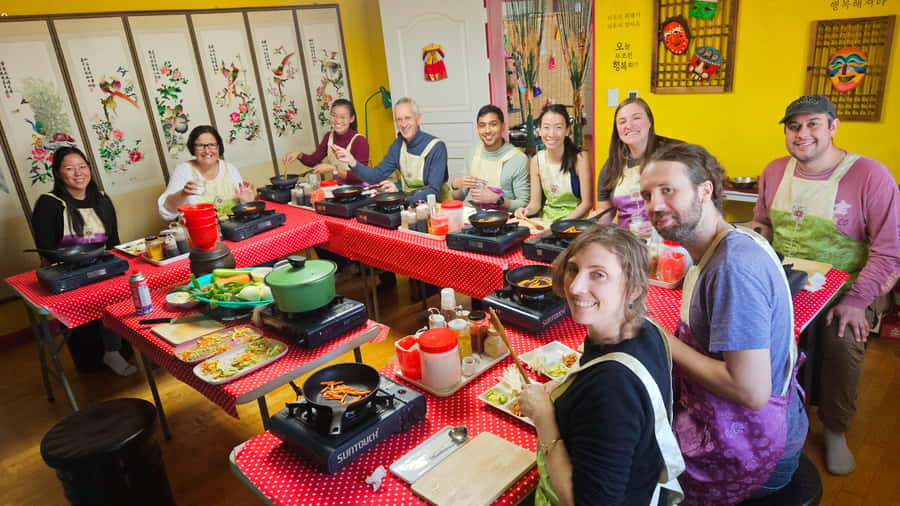
The stated duration is 3.5 hours, with starting times varying by availability. Since the class involves walking through a market, cooking, and sitting down for a meal, wear comfortable clothes and shoes.
Meet your guide outside Mangwon Station at Exit 2. There is no hotel pickup or drop-off, so check your route before the day of the class and leave enough time to find the correct exit.
Tell the local host about dietary restrictions and allergies before attending. Do this early, not at the cooking table, because the menu includes chicken, seafood, fermented soybean paste, rice, and several side dishes.
The home has no elevator. If stairs are a concern, ask for more details before booking. The group size is limited to 10, but the experience remains shared rather than private.
Free cancellation is available up to 24 hours before the activity for a full refund, and you can reserve now and pay later. Those terms help if your Seoul schedule is still changing.
Should You Book the Mangwon Cooking Class?
I would book this experience if you want a friendly, hands-on way to understand Korean food. The market visit gives the class a real starting point, the four dishes provide useful variety, and the Hanjeongsik meal shows how Korean food is served beyond a single bowl or plate.
The strongest reasons to go are the local-home setting, the clear beginner-level instruction, and the chance to eat what you prepared alongside a generous spread of side dishes. The main reasons to hesitate are the $98 cost, the lack of hotel transportation, the stairs, and the need to discuss dietary restrictions in advance.
For a visitor who wants recipes, conversation, street-food samples, and a meal in one activity, the price is defensible. For someone seeking only a quick cooking demonstration, it is more than necessary. Book it when you want your Seoul food experience to include participation, not just a seat at a restaurant.
FAQ
Where does the Korean cooking class meet?
Meet your guide outside Mangwon Station at Exit 2. The activity ends back at the same meeting point.
How long does the activity last?
The experience lasts 3.5 hours. Starting times vary, so check availability when choosing a date.
Which dishes will I prepare?
You will prepare bibimbap, dakgalbi, haemul-pajeon, and doenjang-jjigae.
Is hotel pickup included?
No. You are responsible for getting to and from Mangwon Station because hotel pickup and drop-off are not provided.
Is the class suitable for beginners?
Yes. The chef-guide provides step-by-step help, and the class is designed for people with different levels of cooking experience.
What is included with the meal?
The activity includes your prepared dishes, more than 10 Hanjeongsik side dishes, seasonal fruit, rice, rice wine, and water.
More Shopping Tours in Seoul
- Private DMZ Tour (No Shopping): 3rd Tunnel & Suspension Bridge
★ 5.0 · 607 reviews - Cook 3 Authentic Korean Dishes with Local Market Tour
★ 5.0 · 231 reviews - Korean Palace and Market Tour in Seoul Including Insadong and Gyeongbokgung Palace
★ 4.0 · 174 reviews - Seoul: Nighttime Tour of Palace, Market, Naksan Park & More
★ 4.9 · 143 reviews
More Market Tours in Seoul
- Seoul Street Food Market Tour
★ 5.0 · 1,226 reviews - Seoul: Night Market Food Tour with Local Guide
★ 4.9 · 943 reviews - Downtown Seoul Guided Food & Market Tour with 8+ Local Tastings
★ 5.0 · 580 reviews - Seoul Night Palace & Market Food Tour with Vehicle
★ 5.0 · 275 reviews
Just added in Seoul
- Suwon: Baseball Game with Fortress and Local Food Tour★ 5.0 · 3 reviews
- Seoul: War Memorial of Korea Private Guided Museum Tour★ 4.9 · 29 reviews
- Seoul: Wine & Korean BBQ, Perfect Pairing Dinner in Sinchon★ 5.0 · 6 reviews
- Seoul : Your Personal Photographer in Gyeongbokung★ 5.0 · 7 reviews
- Seoul : Efoil Experience in Han River★ 5.0 · 5 reviews
- Seoul: Vivaldi Park Winter Ski with Eobi Ice Valley Day Tour★ 4.6 · 16 reviews
- Seoul: Vivaldi Park Winter Ski with Nami Island Day Tour★ 5.0 · 4 reviews
- Seoul: SnowyLand in Vivaldi Park with Nami or Alpaca★ 4.8 · 11 reviews
Cooking Classes, compared.
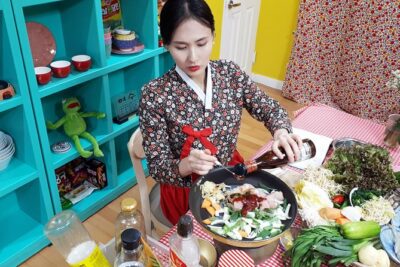
Local Home Korean Cooking Class & Market Adventure in Seoul
Read our review →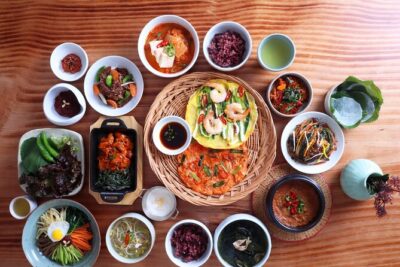
Master Korean traditional cooking with a Kimchi chef
Read our review →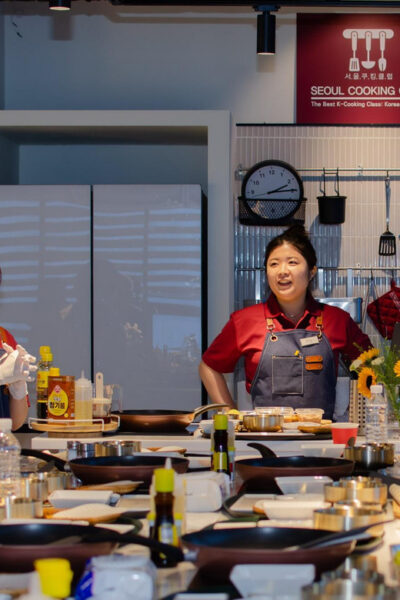
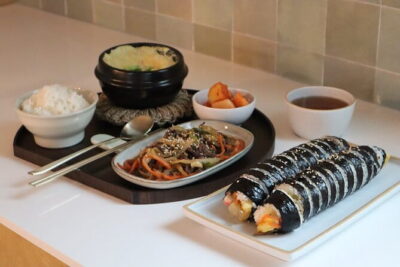
Korean Cooking Class with Grocery Shopping at Seoul Local Market
Read our review →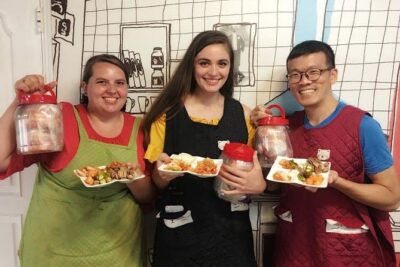
Korean Kimchi Making Day Experience with a Local Market Tour
Read our review →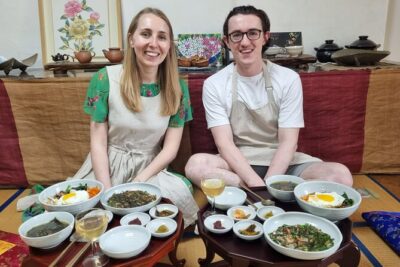
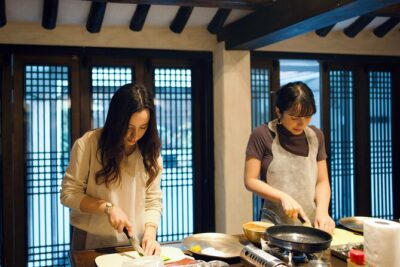
Royal Seoul Cooking Class in a 100-Year-Old Hanok
Read our review →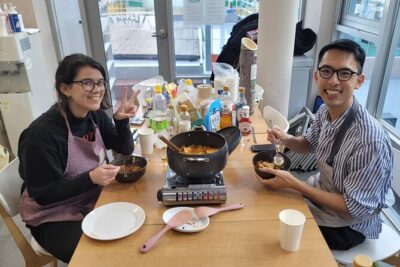
Busan Tailored Korean cooking class (Vegan OK)with market tour
Read our review →Browse the lists this tour appears in