
Reviewed · UNESCO WORLD HERITAGE TOURS
Busan: Gyeongju UNESCO Legacy Tour with National Museum
Gyeongju is Korea’s ancient capital, and this long day from Busan gives you a useful sweep of its best-known sights. You’ll walk among Silla-era temple stones at Bulguksa, see royal tombs and traditional homes, and finish near a beautifully lit bridge.
I like the mix of history and quiet scenery, especially the 400-year-old Ahopsan Bamboo Forest and the chance to see Gyochon Village at a relaxed pace. Guides such as Kang, Yaho, DK, Chris, and Drake are praised for clear English, personal attention, and good storytelling. The drawback is simple: twelve hours is a full day, and traffic or seasonal changes can alter the plan.
Key points to know before booking
- A full Gyeongju sampler: Temple, museum, hanok village, royal tombs, palace pond, bamboo forest, and bridge all fit into one day.
- Three Busan pickup points: Meet at Busan Station, Seomyeon, or Haeundae Station, with evening drop-off at the same areas.
- Bulguksa is the historical high point: The UNESCO-listed temple offers the clearest look at Silla Buddhist design.
- Small-group feel is possible: Several outings had only two to six people, though group size is not guaranteed.
- Some admission fees are extra: Ahopsan Forest and Donggung Palace and Wolji Pond are not included.
- Spring brings substitutions: From March 24 to April 12, Dalmaji Hill or Daereungwon may replace regular stops depending on blossoms and conditions.
What this Gyeongju day trip is really like
The day begins early and ends late. Pickup is scheduled for 8:10 at Busan Subway Station Exit 4, 8:30 at Seomyeon Subway Station Exit 4, or 9:10 at Haeundae Subway Station Exit 5. At Busan Station, be careful: the meeting point is not the KTX gate.
You ride in a professional vehicle with fuel, tolls, parking, and round-trip transport included. Several recent outings used clean, comfortable vans, and smaller groups made the ride feel more personal. Still, this is a shared tour, so you should not book it expecting a private car every time.
The guides are a major part of the experience. Kang is often praised for being warm, patient, and flexible. Yaho is noted both for safe driving and for taking care of the group. DK, Chris, Drake, Ciro, Erica, and others have also led this route. The guide gives explanations at each stop, then usually leaves you some time to walk, take photos, or look around independently.
That balance matters. Gyeongju can feel like a string of monuments if you only collect photographs. A good explanation about a pagoda, royal tomb, or Buddhist symbol gives the place a human story. At the same time, you are not required to listen every minute.
More Silla-era sites from South Korea:
- Busan: Gyeongju Guided Day Trip to Three Kingdoms Capital
★ 4.8 · 1,925 reviews - From Busan: Gyeongju UNESCO World Heritage Guided Day Tour
★ 4.8 · 1,250 reviews - Gyeongju UNESCO World Heritage Guided Day Tour from Busan
★ 5.0 · 660 reviews
Ahopsan Bamboo Forest: a calm start outside Busan
Ahopsan Forest gives the day a quiet opening. This 400-year-old bamboo grove is known for tall, orderly stands of bamboo, soft light, and a peaceful walking route. It has also appeared in Korean films and television productions, which may interest fans of Korean screen locations.
You get about an hour here. That is enough for a pleasant walk and photographs, though not enough for a long forest outing. Admission is not included, so check the extra cost when booking or with the guide.
If you prefer not to enter, you can relax at a nearby café with scenic views. This choice makes the stop more flexible, especially if you are saving energy for the temple and central Gyeongju. The tradeoff is that the café option gives you less time in nature.
In cherry blossom season, from March 24 to April 12, Ahopsan may be replaced by Haeundae Dalmaji Hill. The change depends on weather and bloom conditions. Dalmaji offers a different experience, focused on coastal scenery and spring flowers rather than bamboo.
Lunch and the road to Gyeongju
Lunch is not included, and the group stops at a local restaurant for about an hour. Dietary restrictions and allergies should be reported ahead of time. That is especially important if you need a vegetarian meal or have a food allergy.
The exact restaurant and meal can vary. One reported stop offered a Korean buffet for 9,900 Korean won, while another outing included bibimbap in Gyochon Village. These details show the practical value of keeping lunch flexible, but you should not assume one specific menu or price.
A local restaurant is more useful than a rushed snack at a tourist attraction. You get a proper break, and the guide can help with ordering or explain unfamiliar dishes. Still, lunch costs extra, so keep cash or a payment method ready.
The route also includes Dalmaji-gil Road as a sightseeing stop or scenic drive. Its place in the day may change with weather, traffic, and seasonal scheduling. Do not think of it as a guaranteed long walk. It is better viewed as a flexible Busan or coastal viewpoint added to the route when conditions allow.
Bulguksa Temple: the reason to make the trip
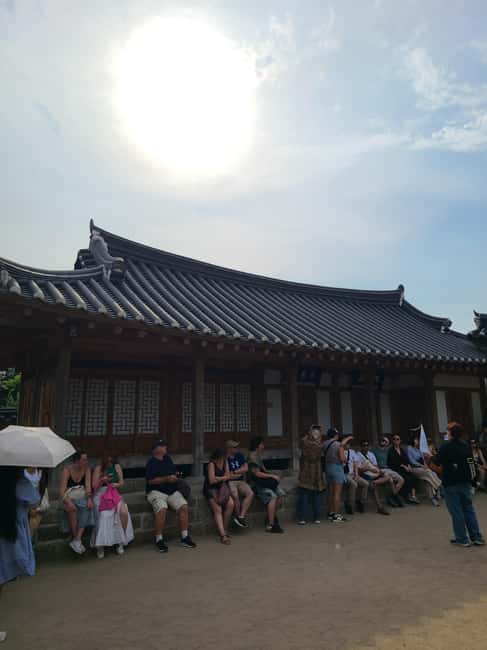
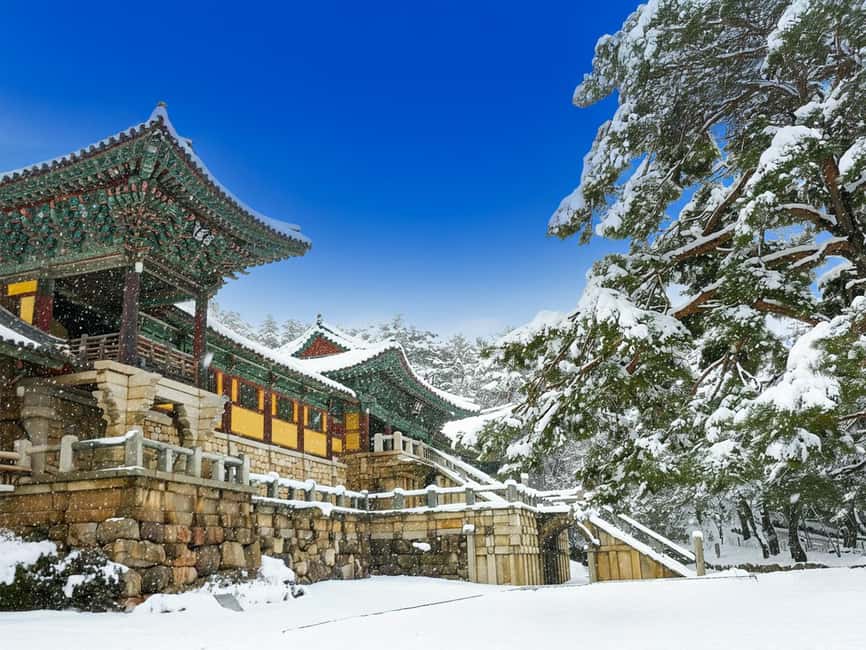
Bulguksa is the strongest historical stop on the tour. This UNESCO World Heritage temple complex presents Silla Buddhist architecture through stone terraces, temple halls, pagodas, and courtyards framed by trees.
You have about an hour here, so expect an introduction rather than a slow architectural study. The guide points out important features and explains the temple’s place in Silla history. You then have time to explore and photograph the courtyards.
The stonework is the detail to watch. The temple is not only about painted buildings. Stairs, bridges, pagodas, and carefully arranged spaces show how religious architecture was meant to guide movement and attention.
I would give Bulguksa your best concentration. The group may move at a steady pace, and an hour can pass quickly. Wear comfortable shoes and be ready for some walking around uneven historic surfaces, though the supplied information does not specify accessibility conditions.
For many people, this is the stop that gives the day its meaning. The forest is restful, but Bulguksa explains why Gyeongju matters.
Other listed sites within reach of South Korea:
- Jeju: Eastern Jeju UNESCO Spots Day Tour
★ 4.9 · 1,148 reviews - Jeju: Southern Top UNESCO Spots Bus Tour
★ 4.9 · 648 reviews - Jeju Southern UNESCO Full Day Tour with Mt.Halla
★ 5.0 · 400 reviews - Private Gyeongju Tour – Explore Gyeongju UNESCO Sites
★ 5.0 · 272 reviews
Gyochon Hanok Village and Choe Jun’s House
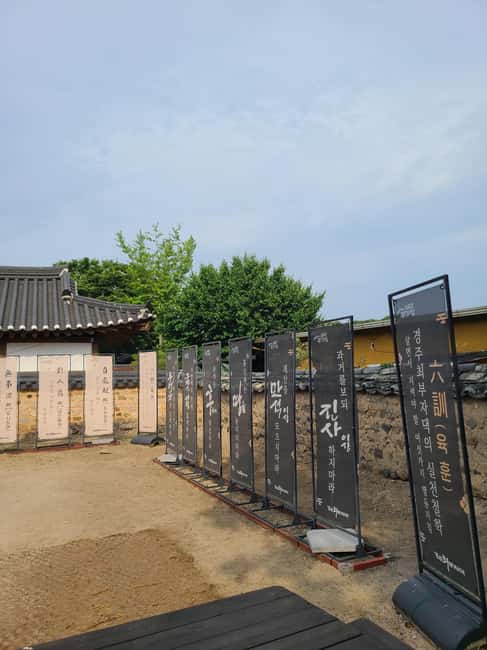
After Bulguksa, the tour turns toward central Gyeongju and its traditional residential quarter. Gyochon Hanok Village is a chance to see tiled-roof homes, historic properties, small shops, crafts, and local food in a setting that feels more connected to everyday life than a temple complex.
You receive about 30 minutes for the village, followed by about 30 minutes at Choe Jun’s House. That is not a great deal of time, but it keeps the day moving and gives you a change of pace after the temple.
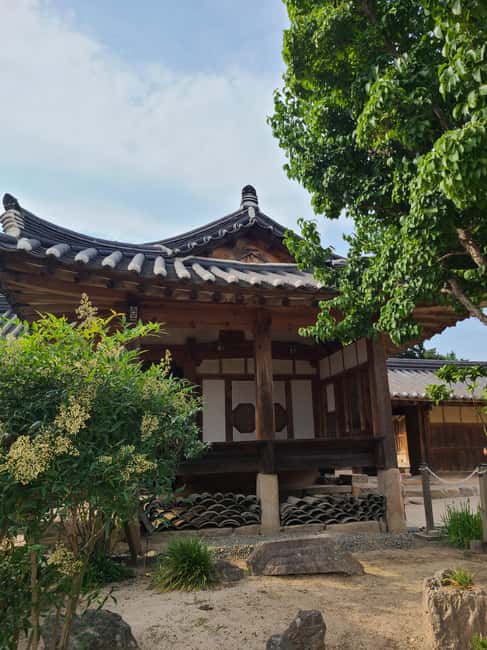
Choe Jun’s House helps put traditional architecture into a family and social setting. Instead of only seeing royal or religious buildings, you get a look at how a prominent household was organized. The guide’s explanation is useful here because the buildings may otherwise appear simple at first glance.
This is also a good place for a quick meal or snack if the schedule and restaurant plan allow. One outing included especially well-liked bibimbap in the village. Do not count on that exact restaurant, but Gyochon is a natural place to notice local food and crafts.
The Gyeongju National Museum: putting the ruins together
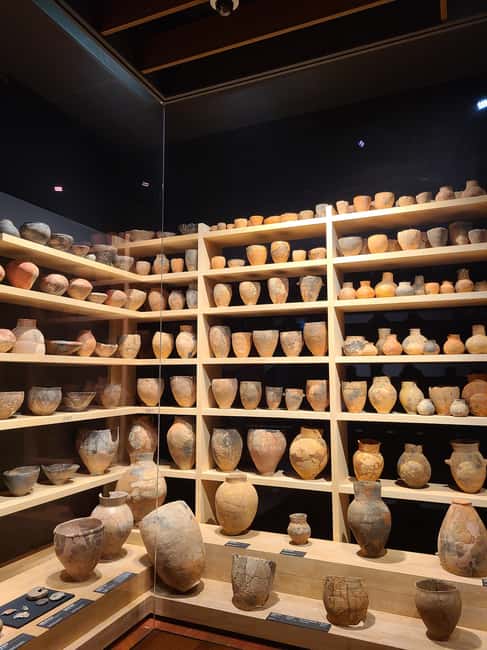
The National Museum is the most useful indoor stop. Its collections include Silla-era relics and national treasures, giving you objects that connect directly with the monuments seen earlier in the day.
You spend about an hour inside. That is enough for the main galleries, but not enough to read every label. Focus on pieces connected to Buddhist art, royal life, burial customs, and the technology of the Silla period.
This stop is particularly valuable after Bulguksa and the tomb areas. A pagoda or temple hall can be beautiful, but museum displays show the craftsmanship, symbols, and objects that made that culture more than a set of old buildings.
The museum may close or be replaced under certain conditions. One prior outing substituted Donggung Palace and Wolji Pond when the museum was unexpectedly closed. During cherry blossom season, Daereungwon may replace the museum instead. The itinerary can also allow you to choose Donggung Palace and Wolji Pond instead of the museum, with admission extra.
Royal tombs, Donggung Palace, and Wolji Pond
Daereungwon Tomb Complex offers a different view of Silla power. The rounded royal burial mounds rise from broad grassy grounds and make the scale of ancient Gyeongju easy to understand. In spring, the tombs can be framed by cherry blossoms, making this a favored seasonal alternative.
The timetable lists Daereungwon as a sightseeing stop, but the exact length is not fixed. You may have enough time for a walk and photographs rather than a detailed archaeological visit.
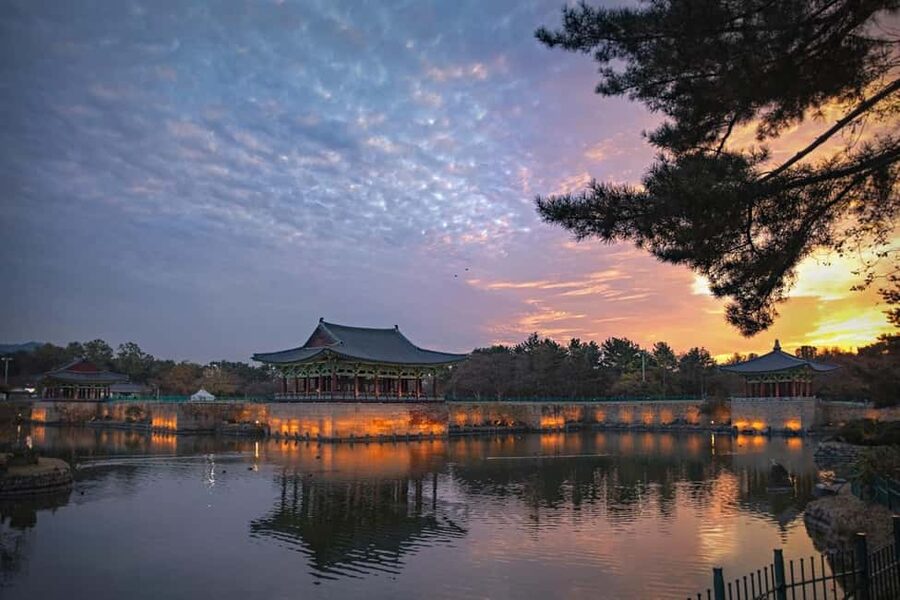
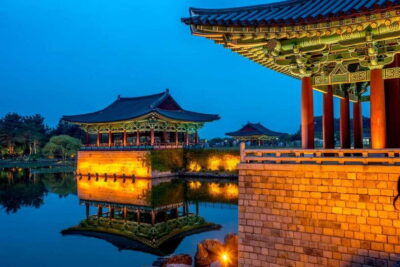
Donggung Palace and Wolji Pond brings the day toward its more atmospheric end. The palace site and pond are especially attractive around dusk, when colored lights can reflect on the water. The stop is about 30 minutes when included, and admission is not covered.
The choice between the museum and Donggung and Wolji depends on the day. I would choose the museum if you want context and artifacts. I would choose Donggung and Wolji if evening scenery and photography matter more.
Woljeonggyo Bridge at the end of the day
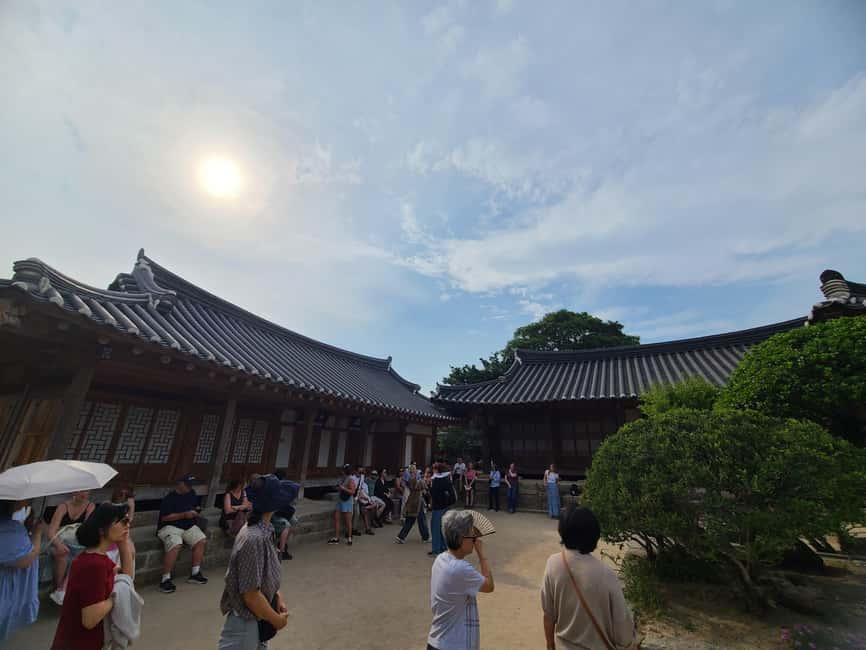
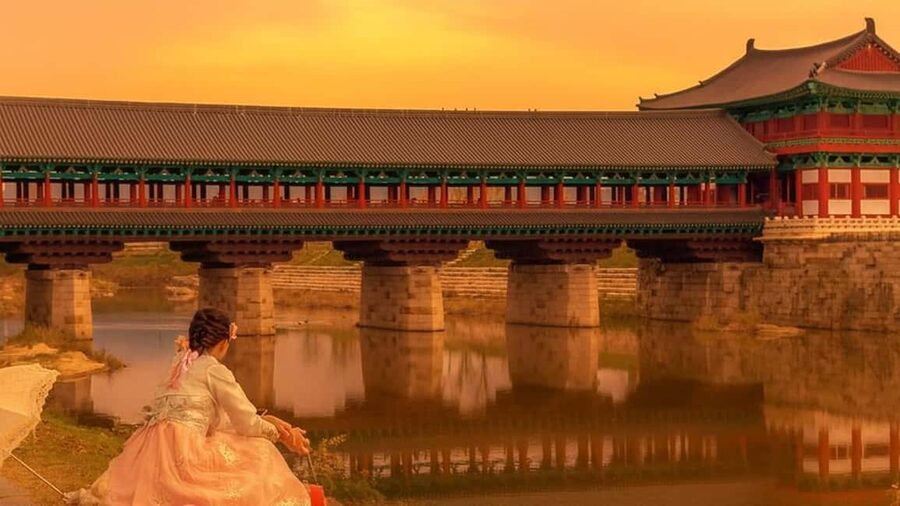
Woljeonggyo Bridge is a fitting final stop. The reconstructed Silla-era bridge offers a strong visual finish, especially when evening light reaches the water or the structure is illuminated.
You have roughly 30 minutes here, though the bridge may also appear as a scenic view while the vehicle moves through the area. The stop is less about a long historical lecture and more about seeing Gyeongju’s past presented in a striking modern setting.
Bring your camera, but do not let photographs take over the whole stop. Look at the bridge’s position in relation to the water and surrounding buildings. The guide may also help with group photos, something Yaho and other guides have done during the day.
The return to Busan can be affected by traffic. Drop-off is planned for Haeundae Station Exit 5, Seomyeon, and Busan Station, but the schedule is not a guarantee of a precise arrival time.
Is $48 good value for twelve hours?
At $48 per person, the tour is strong value if you want to see several parts of Gyeongju without arranging intercity transport, parking, and local transfers yourself. Fuel, tolls, parking, the guide, and round-trip transport are included.
You still pay for lunch, personal spending, and certain admissions. Ahopsan Forest and Donggung Palace and Wolji Pond are specifically listed as extra-cost options. Add those expenses before comparing the price with a private tour or a self-guided visit.
The tour’s value improves when the group is small. With two, three, or six people, the vehicle can feel almost private while keeping the group-tour price. That is not guaranteed, so ask about expected group size if it matters to you.
I would not choose this tour for a slow, single-site visit. I would choose it if you have one day from Busan and want a broad introduction to Gyeongju. You cover a lot, but the tradeoff is limited time at each stop.
Who should book this tour?
This is a good fit if you are staying in Busan, have not visited Gyeongju before, and want history explained in clear English. Families may appreciate the varied schedule, since a forest, temple, village, museum, tombs, and bridge break up the day.
Solo visitors can also find the format welcoming. Guides are expected to help the group connect, take photos, and keep everyone comfortable. The small-group setting can make a solo day less isolating.
It is less suitable if you dislike early starts, long drives, changing plans, or a packed schedule. People with a strict interest in one subject, such as Buddhist architecture or museum collections, may prefer a specialist visit with more time at one place.
Contact by WhatsApp is important, so provide accurate contact information when booking. The operator may change timing or substitute locations because of traffic, weather, season, or closures. Free cancellation is available up to 24 hours before departure, and you can reserve now and pay later.
Should you book the Gyeongju UNESCO Legacy Tour?
Book it if you want the easiest way to see Gyeongju’s main sights from Busan in one day. The best parts are the well-chosen range of stops, the excellent value of included transport, and the personal care provided by guides such as Kang, Yaho, DK, Chris, and Drake.
Go in with realistic expectations. This is a full sampler, not a leisurely archaeological study. You will spend about an hour at the key temple and museum, less time at several other sites, and some stops may change.
For first-time visitors with limited time, I would book it. Put Bulguksa and the National Museum at the top of your attention, keep some flexibility for seasonal substitutions, and bring enough money for lunch and optional admissions.
FAQ
How long is the Gyeongju tour from Busan?
The tour lasts about 12 hours, including pickup from Busan, sightseeing in Gyeongju, and return drop-off.
Where can I join the tour in Busan?
Pickup is available at Busan Subway Station Exit 4 at 8:10, Seomyeon Subway Station Exit 4 at 8:30, and Haeundae Subway Station Exit 5 at 9:10.
Is pickup included?
Yes. Round-trip transfers to and from the listed Busan meeting points are included.
Is the KTX gate at Busan Station the meeting point?
No. The specified Busan Station meeting point is Subway Station Exit 4, not the KTX gate.
What language does the guide speak?
The tour includes a live English-speaking guide. The tour information also describes English and Chinese guide support.
Is lunch included in the price?
No. Lunch fees are not included. The group stops at a local restaurant, and you should report dietary restrictions or allergies in advance.
Are admission fees included?
No. Admission to Ahopsan Forest and Donggung Palace and Wolji Pond is not included. Personal expenses are also extra.
Can I choose Donggung Palace and Wolji Pond instead of the museum?
Yes. The tour information allows you to choose Donggung Palace and Wolji Pond instead of the Gyeongju National Museum, subject to the day’s arrangements.
Can the itinerary change?
Yes. Stop order, time at each location, and substitute locations can change because of weather, traffic, season, or unexpected closures.
What happens during cherry blossom season?
From March 24 to April 12, you may be offered Haeundae Dalmaji Hill instead of Ahopsan Forest and Daereungwon Tomb Complex instead of the museum, depending on bloom conditions.
More Museum Visits in South Korea
- From Busan to Gyeongju UNESCO Legacy Tour with National Museum
★ 5.0 · 87 reviews - Seoul: War Memorial of Korea Private Guided Museum Tour
★ 4.9 · 29 reviews - SEOUL: Gugak – Korean Traditional Music Museum&Concert Tour
★ 4.7 · 17 reviews - Layover tour to Gyeongbokgung-Folk Museum-Bukchon-Insadong
★ 4.8 · 6 reviews
Just added in South Korea
- Seoul: Winter Day Tour in Pocheon (+Strawberry Picking)★ 4.1 · 5 reviews
- Suwon: Baseball Game with Fortress and Local Food Tour★ 5.0 · 3 reviews
- Seoul: War Memorial of Korea Private Guided Museum Tour★ 4.9 · 29 reviews
- Seoul: Private Tour to Nami Island, Garden, Petite France★ 5.0 · 4 reviews
- Seoul: Wine & Korean BBQ, Perfect Pairing Dinner in Sinchon★ 5.0 · 6 reviews
- Seoul : Your Personal Photographer in Gyeongbokung★ 5.0 · 7 reviews
- Seoul : Efoil Experience in Han River★ 5.0 · 5 reviews
- Seoul: Suwon Hwaseong & Waujeongsa & Starfield Heritage Tour★ 4.8 · 27 reviews
UNESCO World Heritage Tours, compared.
Gyeongju UNESCO World Heritage Guided Day Tour
Read our review →
Jeju Southern UNESCO Full Day Tour with Mt.Halla
Read our review →
Private Gyeongju Tour – Explore Gyeongju UNESCO Sites
Read our review →
Jeju island Southern UNESCO Day Tour With Hallasan MT
Read our review →
Jeju island Eastern UNESCO site Full Day Guided Tour
Read our review →Browse the lists this tour appears in