
Reviewed · UNESCO WORLD HERITAGE TOURS
Gyeongju UNESCO Sites Tour by KTX train; The Museum Without walls
Gyeongju is South Korea’s museum without walls, and this private day trip gives you a fast, practical way to reach its Silla-era treasures from Seoul. In one long day, you move from royal tombs and an ancient observatory to Bulguksa Temple and the mountain-top Seokguram Grotto.
I like the easy KTX connection and the careful handoff between Seoul staff, train, private car, and Gyeongju guide. I also like the range of stops: you get archaeology, Buddhist art, palace ruins, and a first-rate museum rather than one famous site repeated six ways.
The catch is the distance. This is an eight to nine-hour day with early travel, and much of Gyeongju is outdoors. Heavy rain can make the experience less enjoyable, and the pace may feel tight if you prefer lingering at each site.
Key points to know before booking
- KTX makes Gyeongju possible in a day: Round-trip economy train tickets and private transfers are included, with the rail journey taking about two hours each way.
- The route covers the Silla story well: Royal tombs, Cheomseongdae Observatory, Wolji Pond, Bulguksa Temple, Seokguram Grotto, and the National Museum each show a different side of ancient Korea.
- You receive door-to-station help in Seoul: A local staff member or driver meets you for the early start, helps you reach the train, and escorts you toward your seats.
- The tour is private: Only your group participates, so the guide can explain sites at a pace that suits your interests.
- Guide quality matters: Jay, Andrew, John, and Dylan are named in the feedback, with strong praise for their care, storytelling, and organization.
- The price buys convenience: At $470 per person, this is costly for a day trip, but it combines rail tickets, private transport, six hours of sightseeing, admissions, and a guide.
Why Gyeongju is worth the long day from Seoul
Seoul gives you palaces, markets, and modern city life. Gyeongju gives you the remains of the Silla kingdom, which ruled much of the Korean Peninsula for centuries. The city is not arranged around one enclosed historic quarter. Tombs sit in open parks, observatories rise beside fields, and major temples occupy the foothills.
That scattered layout is the reason this tour works better than an improvised day by public transport. You are not simply paying for a guide’s commentary. You are paying to connect sites that sit across the city and beyond it, including Seokguram on the slopes above Bulguksa.
The day begins at about 7:00 a.m. from a Seoul hotel area. You first use a private vehicle or local transfer to reach the station. One of the tour’s useful details is the station escort: staff have met visitors, helped them find the platform, and walked them toward their seats. That takes away much of the worry of using a Korean train station before breakfast.
The KTX ride is the calm part of the day. You can settle in, watch the city give way to the countryside, and save your energy for Gyeongju. The return train brings you back to Seoul, but hotel drop-off is not included, so plan on making your own way from the station after arrival.
More Silla-era sites from Seoul:
- Small Group 7D Korea package Tour with Seoul Gyeongju Busan Jeju
★ 4.5 · 13 reviews - 3-Days 2-Nights Gyeongju UNESCO Sites & Busan City [Private Tour from Seoul]
★ 4.5 · 11 reviews - 7 days Flexible Tour for Major Cities(Seoul,Busan,Gyeongju etc)
★ 5.0 · 5 reviews
Cheonmachong Tomb and the Silla royal burial grounds
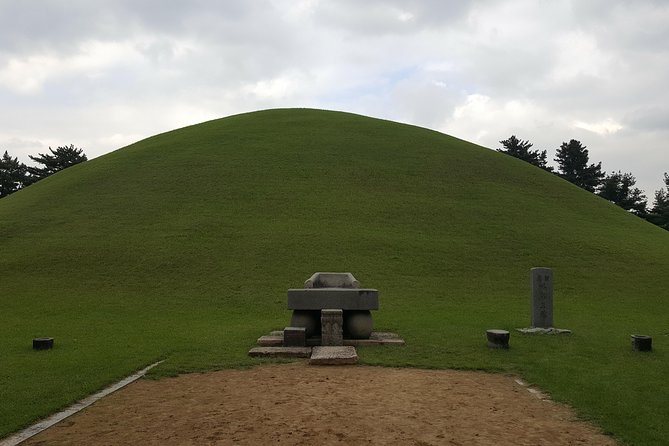
Your first major stop is Cheonmachong Tomb, in an area containing more than 20 large and small earthen mounds from the Silla period. These rounded burial hills are thought to belong to kings and court officials. They are not dramatic ruins in the usual sense. Their power comes from their scale, repetition, and the question of what lies beneath each mound.
Cheonmachong is especially useful as an introduction because you can enter an excavated tomb. That gives you a clearer sense of how Silla burials worked than an outdoor mound alone. The tour allows about an hour here, enough to walk through the site and hear how royal status was expressed through burial goods and construction.
I like this stop because it makes Gyeongju feel like an archaeological city, not just a collection of restored monuments. You are looking at grass-covered hills created for the dead, with the modern city continuing around them.
The setting is open, so weather matters. Bring protection from sun or rain, and wear shoes suited to walking on paths. If you want a quiet, slow look at every mound, the schedule may feel brisk.
Gyeongju National Museum puts the objects in context
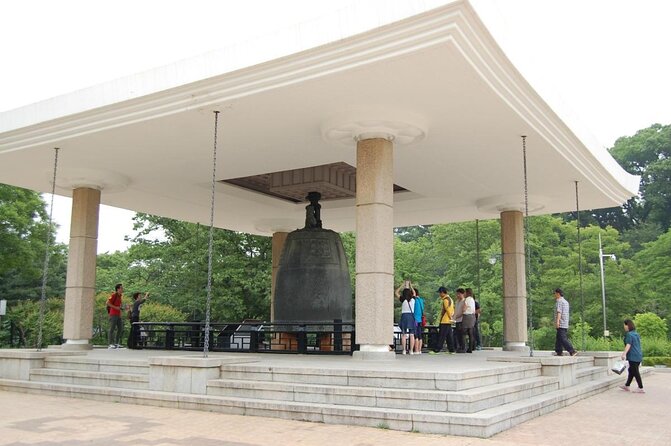
The Gyeongju National Museum is one of the most useful stops on the route. After seeing tombs and temple buildings in the open air, you need the objects that explain them. The museum’s archaeological displays include Silla metalwork, Buddhist pieces, ceremonial objects, and finds connected with the old kingdom.
Allow about an hour. That is enough for a guided overview, but not enough for every gallery in detail. If ancient Korean art is your main interest, you may wish the tour had more museum time. Still, the museum earns its place because it brings the scattered sites together.
The advantage of a private guide here is context. A crown, bell, statue, or burial object can seem beautiful but unclear when seen alone. Your guide can connect it to royal ceremony, religion, burial custom, and the political strength of Silla.
Admission to the museum is included, as are the main site fees elsewhere. Meals are not included, so lunch needs to fit into the day’s schedule. One guide, John, took his group to a small local restaurant, with generous portions and tasty food. The exact restaurant is not promised, but you should expect the meal stop to be arranged around the sightseeing timetable rather than treated as a separate food tour.
Cheomseongdae Observatory and Queen Seondeok’s Gyeongju
Cheomseongdae means Star Gazing Tower. Built in 634 during the reign of Queen Seondeok, it is described as the oldest surviving observatory in the Far East. Its compact stone form is easy to miss if you do not know what you are seeing, so the guide’s explanation adds real value.
The tower has 27 levels of stone in a rounded structure. Its connection with astronomy also points to the wider role of science in Silla court life. This is not a huge monument, and the stop can be brief in physical terms, but it adds variety after the museum and tombs.
The surrounding area is open and photogenic, with several historic sites close by. You will have time to look at the tower, hear its story, and understand why it mattered. Do not expect a climb or an interior visit. This is an exterior monument viewed from the grounds.
Other listed sites within reach of Seoul:
- Day Trip to UNESCO: Suwon Fortress Adventure from Seoul
★ 5.0 · 56 reviews - DMZ Tour, 2nd Tunnel & UNESCO Suspension Bridge Tour from Seoul
★ 5.0 · 48 reviews - Namhansanseong UNESCO Historical Sites and Korean Folk Village-Private Tour
★ 5.0 · 29 reviews - Andong Hahoe Village [UNESCO site] Premium Private Tour from Seoul
★ 5.0 · 24 reviews
Donggung Palace and Wolji Pond after dark in spirit
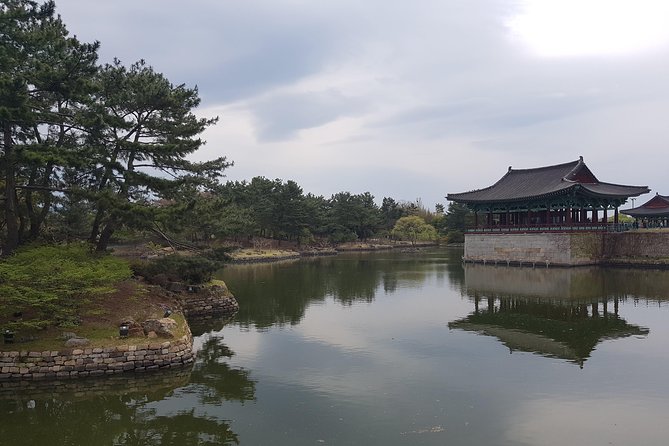
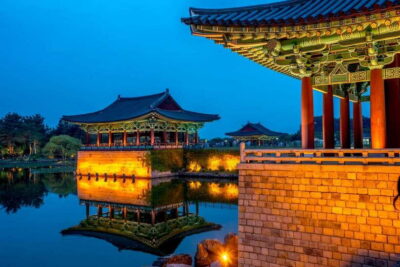
Donggung Palace and Wolji Pond, once called Anapji Pond, was created in 674 after the unification of the Korean Peninsula. The complex included gardens, small artificial mountains, trees, flowers, and animals. It was a place for royal gatherings and ceremony, designed to impress from carefully chosen viewpoints.
In daylight, the site lets you see the scale of the palace grounds and the shape of the water. At night, the pond is famous for reflections, but this day tour visits during daylight because the schedule continues to the temple and grotto. That is worth knowing if glowing evening views are a priority for you.
The one-hour stop works well as a bridge between Gyeongju’s political and religious history. The tombs show how rulers were buried. Wolji Pond shows how the royal court presented itself in life.
Again, much of the experience is outside. Rain, heat, or cold can affect your enjoyment, and the open grounds require walking. The route is not built around long breaks, so keep your camera ready and listen for the guide’s explanation rather than expecting a slow garden visit.
Bulguksa Temple and Silla Buddhist craftsmanship
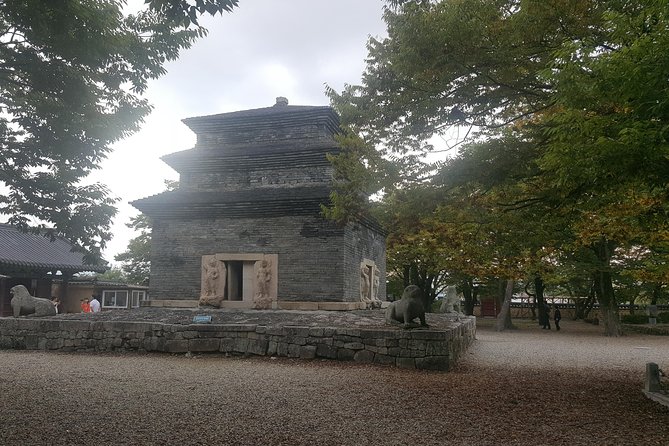
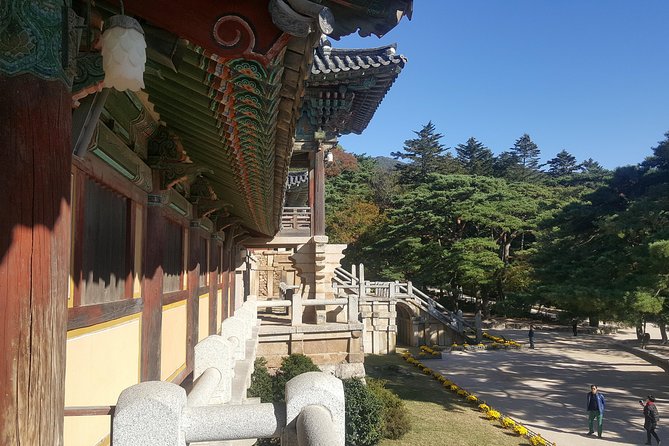
Bulguksa is the best-known Buddhist temple in Korea and one of the day’s major highlights. It is part of the UNESCO-listed heritage of Gyeongju and contains important Silla-period relics, including the stone pagodas Dabotap and Seokgatap.
The temple gives you a different view of Silla power. The royal tombs are about lineage and burial. Bulguksa is about faith, ritual, craftsmanship, and the kingdom’s ability to build in stone. Stairways, platforms, gates, pagodas, and halls work together as a sacred setting rather than as isolated objects.
You should expect uneven ground, steps, and time spent walking around the complex. That is manageable for most people, and the tour information says most participants can take part, but anyone who finds extended walking difficult should consider the full route carefully.
The guide makes a big difference here. A short explanation of the pagodas can turn a quick photograph into a lesson in Silla design. The tour gives about an hour, which lets you see the principal areas without turning the whole day into one temple visit.
Seokguram Grotto, the high point of the route
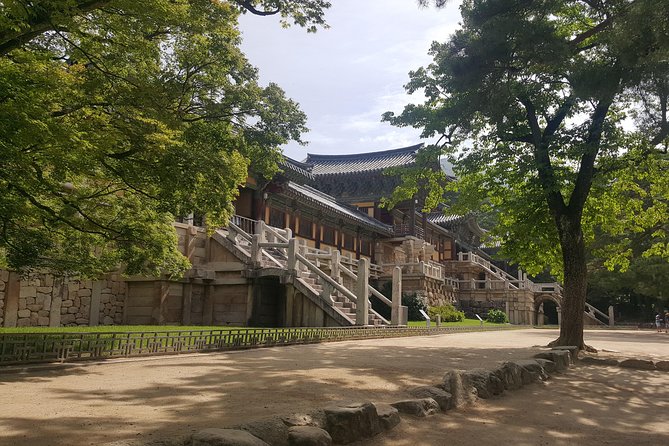
Seokguram Grotto is a hermitage connected with Bulguksa. It sits about 750 meters above sea level and overlooks the East Sea. Inside is a major Buddhist sculpture ensemble, centered on a serene Buddha image.
This is one of the reasons the day is longer than a simple Gyeongju city tour. Seokguram is outside the central cluster, up in the hills, but its setting and sculpture make the extra journey worthwhile for many people. You get a change from urban archaeological sites to a mountain religious retreat.
The grotto itself is a protected interior space, so you should not expect to wander around the sculpture room. The visit is about seeing the work in its intended mountain setting and understanding its place within the wider Bulguksa complex.
The views depend on weather. Clear conditions can open the outlook toward the East Sea, while rain or low cloud may limit what you see. This is the stop most vulnerable to bad weather, along with the other outdoor sites.
What the $470 price really covers
At $470 per person, this is not a budget excursion. The price is easier to justify if you value time, privacy, and a smooth connection between Seoul and a spread-out historic city.
Included are hotel pickup in Seoul areas, a private vehicle for transfers, round-trip KTX economy fare, an English-speaking local guide, and admission fees to the tourist sites. You are also buying coordination. The Seoul pickup, station assistance, train seating, Gyeongju meeting, and private sightseeing all fit together in one booking.
The cost makes less sense if you are comfortable planning rail travel, using local transport, and visiting fewer sites independently. A self-planned trip can give you more control over museum time and meals. It will also demand more research and leave you responsible for connecting Bulguksa, Seokguram, and central Gyeongju.
The private format is important. Only your group takes part, so you can ask about Silla politics, Buddhism, architecture, or burial customs as you go. It also means you are not waiting for a large bus group at every stop.
Current feedback gives the experience a 4.6 rating from 11 reviews, with 91 percent recommending it. The strongest praise goes to organization and guide care. Andrew has picked people up from an Airbnb, waited with them at the station, and helped them board. Guides including Jay, John, and Dylan are praised for clear stories, local knowledge, and a friendly manner.
One point to keep in mind is English delivery. One visitor found a guide’s accent difficult to follow even while praising his grasp of Korean history and culture. That is a fair reminder that guide quality is more than factual knowledge. Communication style matters, especially on a long day with many explanations.
Who should book this Gyeongju day trip
I would choose this tour if you have limited time in South Korea and want to see Gyeongju without changing hotels. It suits people who care about ancient Korea, Buddhist art, royal history, and archaeology, and who would rather pay for coordination than solve the transport puzzle alone.
It is also a good fit for a private family group or friends who want one guide and one vehicle. The private setup can be more comfortable than joining a large coach tour, especially when the day already includes a long train ride.
I would think twice if you dislike early starts, outdoor walking, or tightly scheduled sightseeing. Rain can affect the experience, and the distance from Seoul means you cannot casually extend a stop. If your priority is nightlife, food, or a relaxed Gyeongju stay, spend a night in the city instead.
The booking policy is forgiving if your plans change early: cancellation is free up to 24 hours before the start time. Changes made inside that window are not accepted, and the tour requires a minimum number of participants, so check the confirmation carefully.
Final verdict: a costly but efficient history day
This is a strong choice for a first look at Gyeongju from Seoul. The route covers the city’s essential Silla themes, and the KTX plus private-car arrangement removes the day’s hardest practical problems.
You pay a premium, but you receive a full chain of service from hotel pickup to train assistance, Gyeongju guiding, site admissions, and return rail travel. Book it if you want maximum historical coverage in one day and are prepared for a long schedule. Skip it if you need slow pacing or want to explore Gyeongju after sunset.
FAQ
How long does the Gyeongju tour take?
The experience lasts approximately eight to nine hours, including the train journeys and sightseeing.
What time does the tour start?
The listed start time is 7:00 a.m.
Is hotel pickup included?
Yes. Hotel pickup is offered in Seoul areas, with a private transfer service included.
Is hotel drop-off in Seoul included?
No. Hotel drop-off service in Seoul is not included.
Are KTX tickets included?
Yes. Round-trip KTX economy-class fare is included.
Is this a private tour?
Yes. Only your group participates in the private activity.
Is an English-speaking guide included?
Yes. A local English-speaking guide is included.
Which main sites are visited?
The route includes Cheonmachong Tomb, Gyeongju National Museum, Cheomseongdae Observatory, Donggung Palace and Wolji Pond, Bulguksa Temple, and Seokguram Grotto.
Are admission fees included?
Yes. Admission fees to the listed tourist sites are included.
Are meals included?
No. Meals are not included in the tour price.
Can I cancel for a full refund?
You can cancel for a full refund at least 24 hours before the experience starts. Cancellations or changes made less than 24 hours before the start time are not accepted for a refund.
More Museum Visits in Seoul
- Seoul: War Memorial of Korea Private Guided Museum Tour
★ 4.9 · 29 reviews - DMZ Tour + The War Memorial of Korea Museum
★ 5.0 · 28 reviews - Color Pool Museum
★ 4.0 · 22 reviews - SEOUL: Gugak – Korean Traditional Music Museum&Concert Tour
★ 4.7 · 17 reviews
Just added in Seoul
- Your Personal Seoul Photographer!★ 4.1 · 15 reviews
- You’re Invited to Our Home in Seoul: The Only Cooking Class!★ 5.0 · 8 reviews
- From Seoul: Yongpyong Ski Day Tour with Transportation★ 4.9 · 40 reviews
- Seoul: Korean & English Language Exchange Global Party★ 5.0 · 28 reviews
- From Seoul: Hwacheon Ice Fishing and Lighting Festival Tour★ 4.5 · 4 reviews
- Unique Native Experience : Han River Picnic, Board game, BBQ★ 5.0 · 3 reviews
- Seoul: Gangneung BTS K-Pop & K-Drama Filming Locations Tour★ 4.6 · 14 reviews
- K-Pop Making Class with a Producer!★ 5.0 · 3 reviews
UNESCO World Heritage Tours, compared.
Gyeongju UNESCO World Heritage Guided Day Tour
Read our review →
East Jeju Essentials – Seongsan Ilchulbong (UNESCO) & Haenyeo
Read our review →
Jeju Southern UNESCO Full Day Tour with Mt.Halla
Read our review →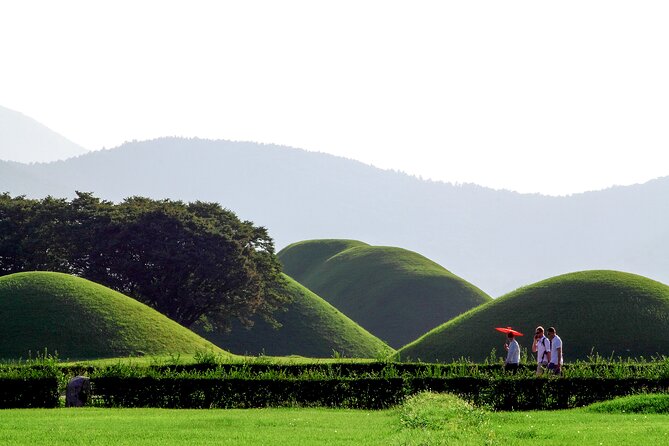
Gyeongju UNESCO sites Private tour with licensed tour guide
Read our review →
Private Gyeongju Tour – Explore Gyeongju UNESCO Sites
Read our review →
Browse the lists this tour appears in