
Reviewed · GYEONGJU UNESCO DAY TOURS
From Busan: Echoes of Silla Gyeongju Historical Day Tour
Gyeongju is South Korea’s great open-air history lesson, and this 12-hour day trip from Busan packs its finest Silla-era sights into one well-managed route. You move from a mountain temple to royal tombs, old village lanes, modern cafes, and glowing night views without having to organize several separate connections.
I like the sensible progression from Bulguksa Temple in daylight to Donggung Palace, Wolji Pond, and Woljeonggyo Bridge after sunset. I also like the guides’ practical touch: Lucy, Rico, Bobby, Yoona, and others have been praised for clear explanations, photo help, toilet and meeting-point guidance, and enough free time at each stop. The trade-off is simple: this is a full day, with about three hours on the road and a brisk schedule.
At a glance
- Bulguksa begins the sightseeing: Spend 80 minutes among one of Korea’s best-known Buddhist temples, its stonework, halls, and calm gardens.
- Gyeongju’s old and new meet: Gyochon Village preserves traditional customs, while nearby Hwangnidan-gil adds cafes, small shops, and a more modern feel.
- Royal tombs are part of the city: Daereungwon gives you a close look at the huge grassy burial mounds built for Silla rulers and nobles.
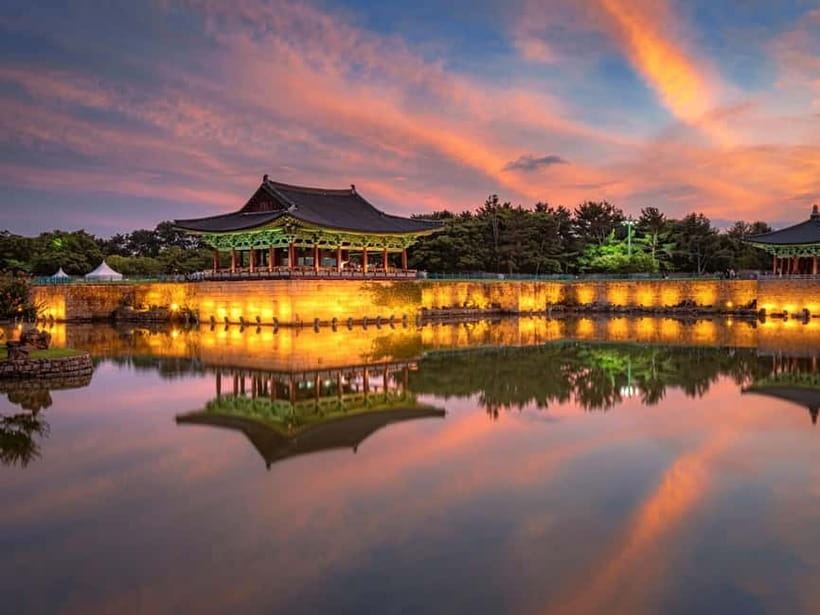
- The best light comes late: Donggung Palace and Wolji Pond are visited in the evening, when the water reflects the illuminated buildings.
- Guiding is a major strength: English, Chinese, and Korean-speaking staff explain the sites and help keep a large day moving on time.
- The price covers the hard part: At $64, transport and Donggung and Wolji admission are included, while lunch and personal spending are extra.
Why Gyeongju makes a strong day trip from Busan
Busan gives you beaches, seafood, markets, and city energy. Gyeongju offers a very different Korea. It was the capital of the Silla kingdom, and its major historic places are spread across a broad area rather than gathered around one compact old quarter.
That geography is the reason this tour makes sense. You could piece together the route yourself, but you would need to plan buses, transfers, opening times, and the return journey after dark. Here, a coach carries you between the sites, and the guide keeps an eye on the clock.
The trip begins at one of three Busan pickup points: KTX Busan Station Exit 1, Seomyeon Station Exit 12, or Haeundae Station Exit 5. The ride to Gyeongju takes about 90 minutes, depending on traffic. Return travel takes about 100 minutes, so expect a long day from morning until evening.
The fixed schedule is both the strength and limitation. You see a lot in one day, but you will not have unlimited time to linger, shop, or sit over coffee. People who want a broad first look at Gyeongju will get good value. Those who prefer slow museum visits or quiet photography may want an overnight stay instead.
More Silla-era sites from Busan:
- Busan: Gyeongju Guided Day Trip to Three Kingdoms Capital
★ 4.8 · 1,925 reviews - From Busan: Gyeongju UNESCO World Heritage Guided Day Tour
★ 4.8 · 1,250 reviews - Gyeongju UNESCO World Heritage Guided Day Tour from Busan
★ 5.0 · 660 reviews
Bulguksa Temple and the opening lesson in Silla design
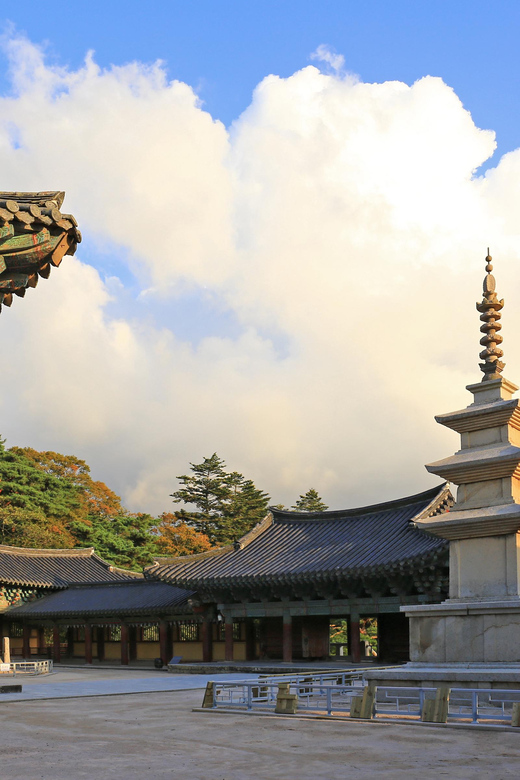
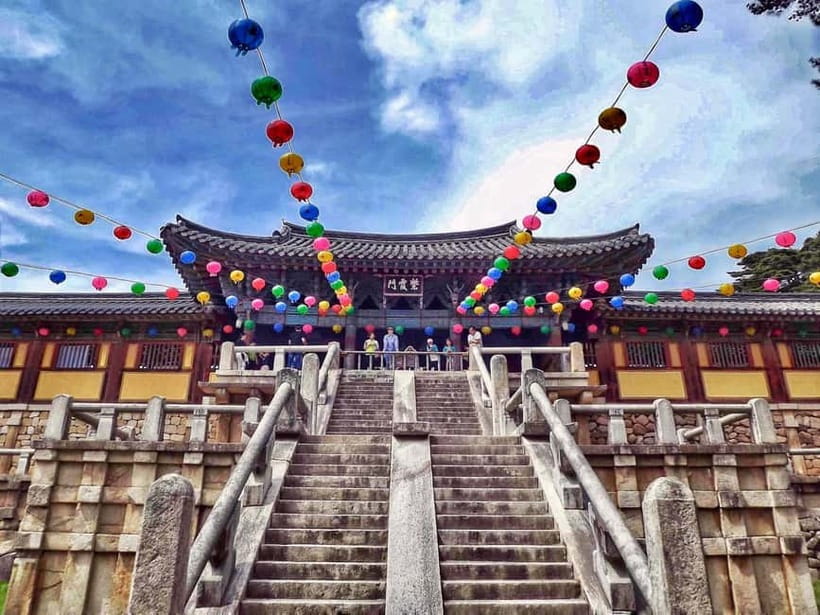
Bulguksa Temple is the first major stop, with about 80 minutes for a guided visit. Its setting gives the day a calm start, especially after the coach ride from Busan.
The temple is known for its carefully arranged courtyards, stone stairways, wooden halls, and Buddhist details. The gardens and stonework are not just decoration. They show how Silla builders connected religious ideas with movement through space, using steps, gates, platforms, and changing views to guide the visitor.
Your guide gives the site useful context rather than leaving you to guess what you are seeing. Guides such as Victoria, Angela, and Jun-a have been singled out for pointing out small details that are easy to miss. That kind of explanation matters at Bulguksa, where a quick walk can otherwise become a series of attractive but unfamiliar buildings.
You will have time for photographs and a personal look around, but 80 minutes is not enough for every corner. Wear shoes that can handle steps and uneven ground. Comfortable footwear is listed as an important item to bring, and you will appreciate it throughout the day.
Lunch near Bulguksa, with food left to you
Lunch is scheduled for about an hour at a local restaurant. The meal is not included in the $64 price, so you should budget separately for food and drinks.
This arrangement gives you some choice, but the exact restaurant and food options can depend on the day. Guide Bobby was praised for explaining the available food choices and pointing out practical facilities, while guide Ken was noted for bringing the group to a restaurant that would have been easy to miss without local help.
Do not expect a long, leisurely lunch. The stop needs to keep the rest of the route on time. Still, an hour is a useful break before the afternoon sites, and local guidance can make the meal less stressful than trying to choose somewhere quickly on your own.
Gyochon Village, where Gyeongju feels lived in
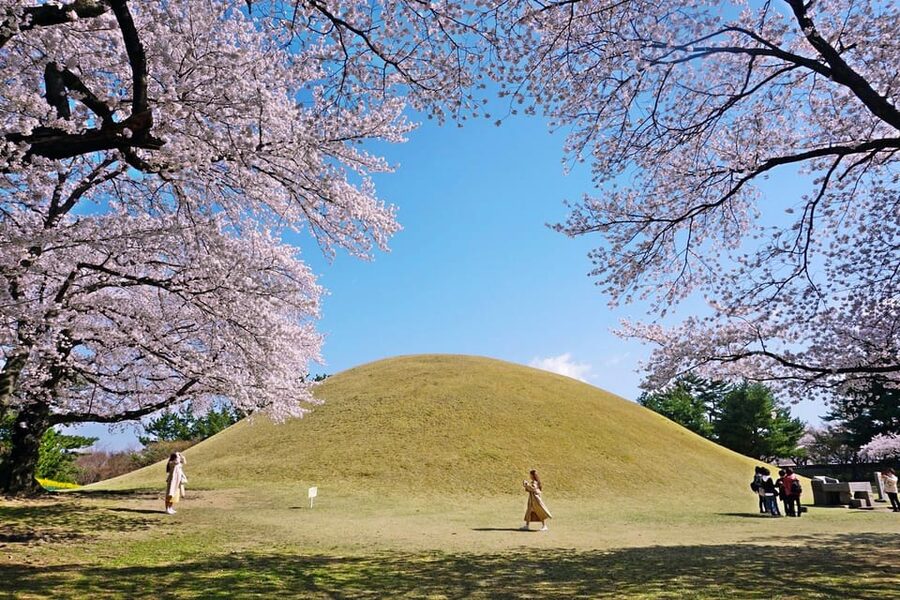
Gyeongju Gyochon Traditional Village receives about 100 minutes, making it one of the more generous stops. This is not simply a collection of old buildings. It is presented as a place where traditional customs and local ways of life have been preserved.
The village gives you a different view of Silla-era culture after Bulguksa’s grand religious architecture. You can walk at a slower pace, look at traditional homes, and notice how the old settlement fits into present-day Gyeongju.
A guide-led visit helps connect the buildings with daily life. You will also have free time to explore and take photographs. This is a good place to avoid rushing. The long stop lets you enjoy the atmosphere rather than treating the village as another quick photo point.
Because the schedule later becomes more tightly timed, use this stop for a relaxed walk. If you want souvenirs or a small local treat, ask your guide for help. One guide, Jun-a, made a point of assisting with local purchases and Gyeongju cake, which can be useful when language or shop choices become a hurdle.
A few more things to do in Busan worth a look
- Old Korea Thousand History Tour of Gyeongju from Busan
★ 5.0 · 518 reviews - Busan history and market food tour with local chef
★ 5.0 · 58 reviews - From Busan: Gyeongju Historical Day Tour with Sky Capsule
★ 4.7 · 17 reviews - From Busan: Gyeongju Full-Day Historical Tour
★ 4.1 · 6 reviews
Daereungwon and the scale of royal burial mounds
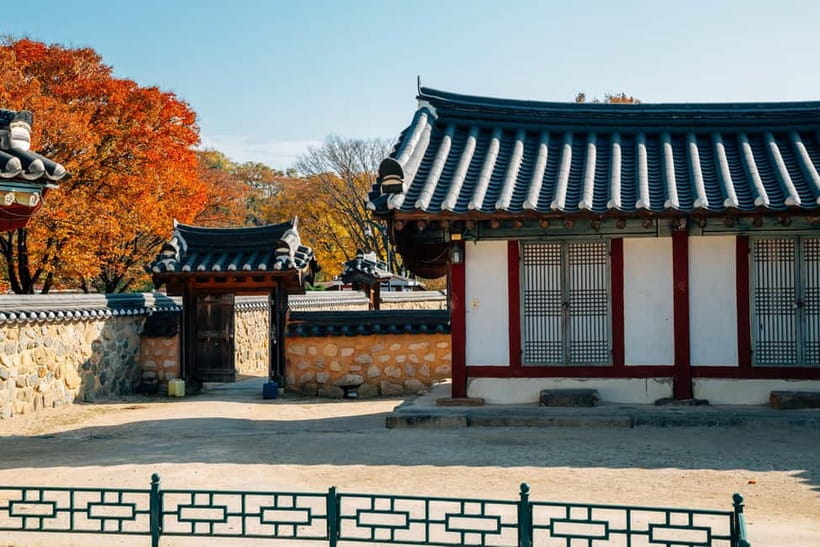
Daereungwon Tomb Complex is one of Gyeongju’s most memorable sights because the tombs are so large and so visible. The burial mounds rise as broad, rounded hills covered in grass. Their size makes clear that these were built for rulers and high-ranking nobles, not ordinary burials.
You have about an hour here with a guided visit. The walk is relatively open, and the setting gives you a strong sense of how much of ancient Gyeongju remains woven into the modern city.
The guide’s explanation is especially useful at Daereungwon. Without context, the mounds can look like pleasant green hills. With the Silla background, they become evidence of royal power, ceremony, and the resources needed to create monumental tombs.
This stop is also a good break from enclosed spaces. Bring protection from the weather according to the season, since much of the visit is outdoors. The tour runs in rain or changing conditions only as circumstances allow, and the route can be adjusted if weather or traffic interferes.
Hwangnidan-gil, a modern pause in an ancient city
After Daereungwon, the tour moves to Hwangnidan-gil for about 50 minutes. This street is known for its cafes, small shops, and artisan businesses, giving you a more current side of Gyeongju.
Hwangnidan-gil works well in the middle of the day because it breaks up the formal sightseeing. You can browse, take photographs, or find a drink before the evening portion begins. It is also a useful place to see how historic surroundings have been adapted for contemporary Korean life.
Fifty minutes passes quickly. I would not plan a full meal or serious shopping here. Use the time for one clear purpose: a short cafe stop, a snack, or a quick look along the street. Keep an eye on the meeting time, since the group must leave together for the night views.
This is one of the stops that makes the tour feel less like a string of monuments. You get temples, tombs, a traditional village, and an active street with local businesses in one day.
Donggung Palace and Wolji Pond after sunset
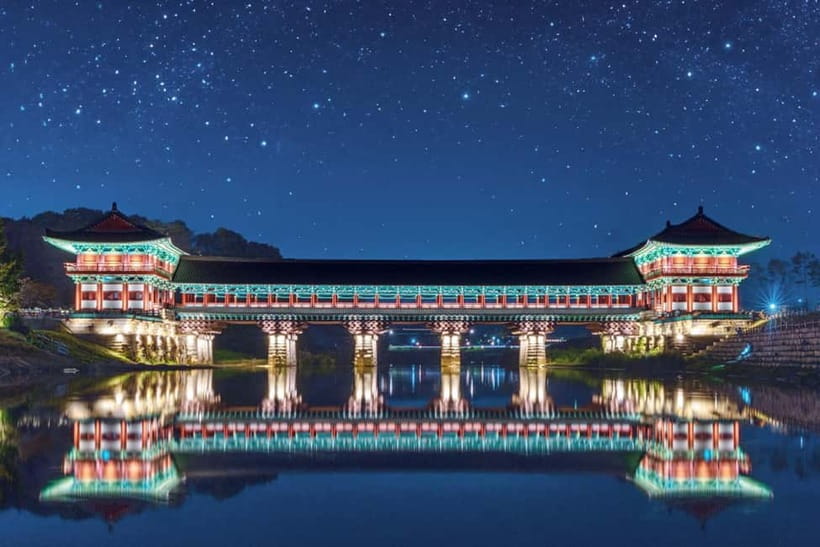
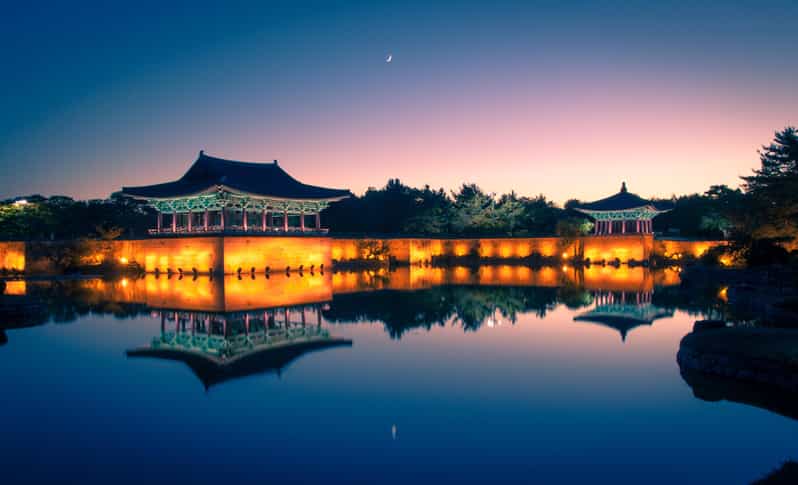
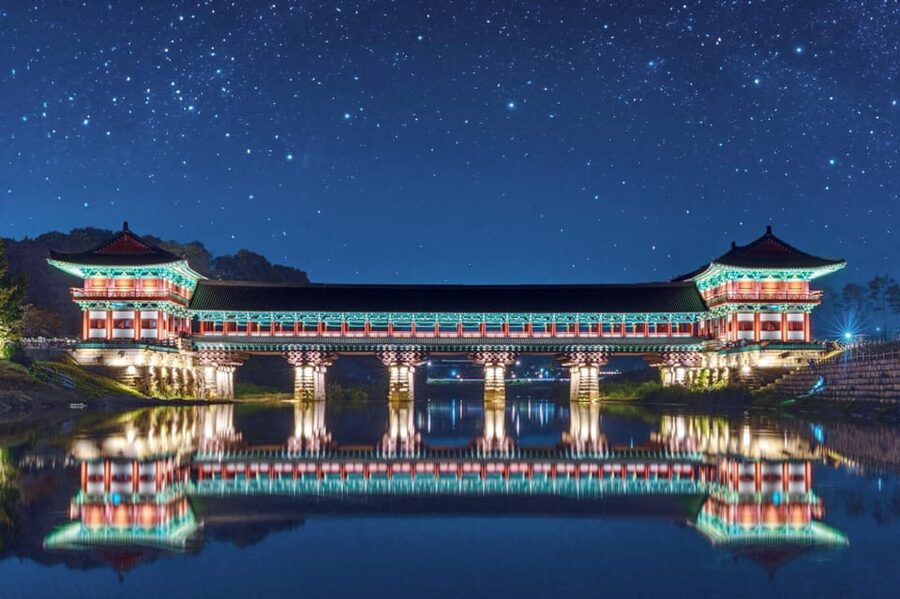
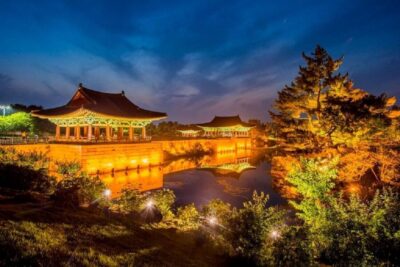
The evening visit to Donggung Palace and Wolji Pond is the emotional high point for many people. The site was once connected with a royal palace and garden, and after dark the illuminated buildings reflect across the pond.
The scheduled visit lasts about 40 minutes and includes admission. That short window is enough to walk to the main viewpoints and take photographs, but you will need to stay aware of the guide and meeting time.
The light changes the feel of the site completely. Bulguksa is about stone, gardens, and daylight detail. Wolji Pond is about reflections, darkness, and carefully placed illumination. The contrast gives the day a strong rhythm.
This is also where the tour’s timing really matters. The route is planned to bring you here in the evening rather than treating the site as a daytime stop. Guides help direct you to photo spots and make sure no one is left behind in the dark.
If photography matters to you, keep your camera or phone ready before leaving the coach. You will want to spend your limited time looking, not searching through a bag.
Woljeonggyo Bridge beneath the night sky
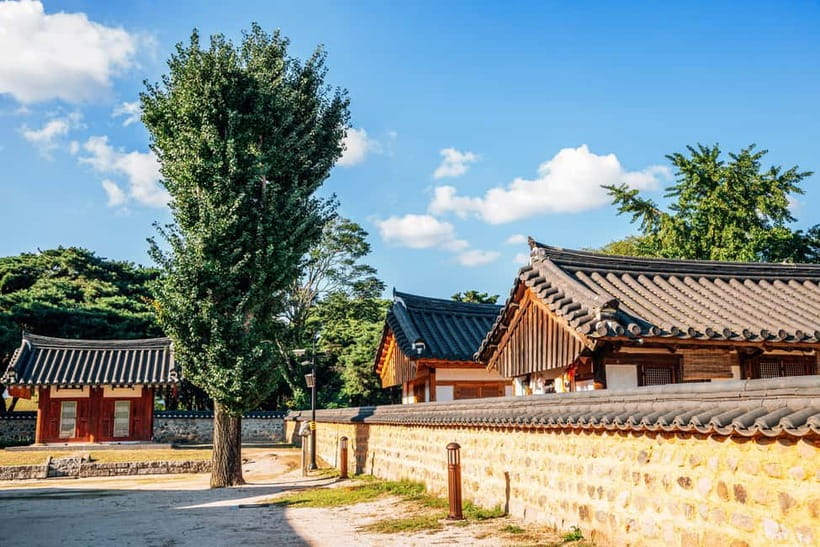
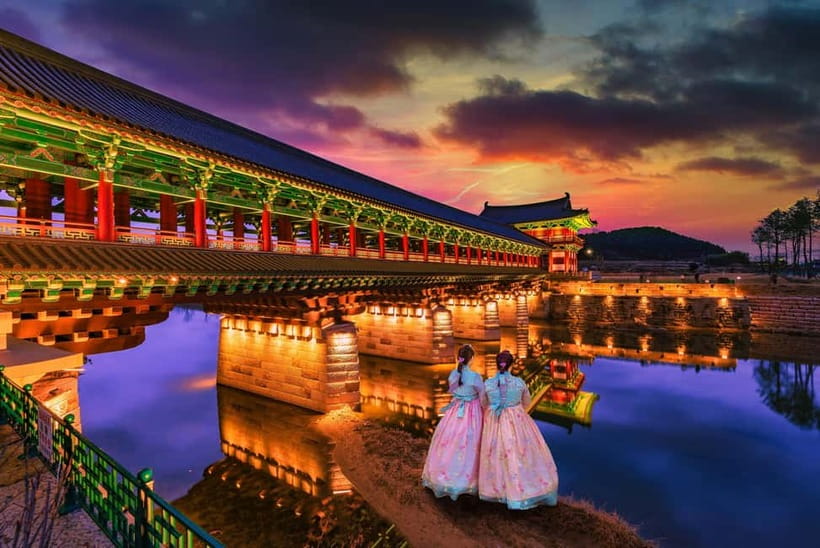
The last sightseeing stop is Woljeonggyo Bridge, with about 20 minutes for photographs, a guided look, and scenic views. The bridge is a reconstruction of a Silla-era crossing, and its illuminated structure becomes especially striking at night.
Twenty minutes is brief, but the stop works as a final image rather than a long historical visit. You walk, take in the view, and see how the bridge links Gyeongju’s ancient identity with its present-day presentation.
The bridge is a fine ending because it feels open and reflective after the tighter schedule at the palace and pond. It is also a place where a guide’s photo advice can help. Rico, for example, was praised for suggesting good picture locations, and several guides have been noted for taking group photos.
After this stop, you return to the coach for the journey back to Busan. Drop-off points are the same three areas: Haeundae Station Exit 5, KTX Busan Station Exit 1, and Seomyeon Station Exit 12.
Guides, transport, and how the day feels
The guide team is one of the strongest parts of this experience. Staff may speak English, Chinese, or Korean, and the assigned guide can vary. Names that appear among the praised guides include Lucy, Rico, Yoona, Bobby, Ken, Vincent, Kang, Angela, Victoria, and Lee.
The common thread is practical support. Guides have been praised for clear historical explanations, good English, friendly conversation, photo help, reminders about meeting points, and making sure the whole group stays together. Several also gave useful suggestions for Busan and help with local snacks or souvenirs.
Transport is by bus or coach, with roughly 90 minutes each way. The coach is important because the day includes several stops spread across Gyeongju. Some passengers have described the buses as comfortable enough to rest on the longer rides, though traffic can affect the timing.
The tour has earned a 93 percent perfect score for transport, and the overall rating is 4.8 from 55 ratings. Those figures point to reliable organization, but they do not change the basic fact that this is a long group excursion. You should be comfortable following a schedule and meeting the group at set times.
Is $64 good value for a full day?
At $64 per person, the value is strong if you want to see Gyeongju in one day from Busan. Your price includes transportation, English or Chinese-speaking staff, and admission to Donggung Palace and Wolji Pond. You avoid the cost and effort of arranging several separate rides across the city.
Lunch, insurance, and personal purchases are extra. That means the final cost will be somewhat higher than the headline price, but the main logistical expense is already covered.
The biggest saving is time. Gyeongju’s sights are not all next door to one another, and the evening return makes independent planning more demanding. You pay for a structured route and a guide who handles the transitions.
I would consider the price especially fair for a first visit, a short stay in Busan, or anyone who wants historical context without researching every stop. If you are staying in Gyeongju for several nights, you may prefer to visit fewer places at your own pace.
Who should book this day tour?
This tour suits you if you want a wide sample of Gyeongju’s major sights, prefer guided context, and have only one available day. It is also a good match for solo visitors who want transport and company without arranging a private tour.
Families can join, but note that an infant travels free without a seat. If you are bringing a stroller or wheelchair, you must tell the operator in advance. The provided information does not promise full accessibility at every historic site, so ask before booking if mobility is a key concern.
Bring comfortable shoes, a phone or camera, and enough money for lunch and personal spending. The itinerary can change with traffic or weather, so keep important evening plans in Busan flexible.
Should you book it?
Book this tour if you want the broadest useful introduction to Gyeongju in a single day. Bulguksa, Gyochon Village, Daereungwon, Hwangnidan-gil, Wolji Pond, and Woljeonggyo Bridge give you a good mix of religion, royal burial customs, traditional life, modern street culture, and night scenery.
Skip it if you dislike long coach rides, fixed meeting times, or short visits at major sights. For everyone else, the combination of transport, strong guide support, and evening views makes $64 a sensible way to reach Gyeongju from Busan.
FAQ
How long does the tour last?
The experience lasts about 12 hours, including coach travel between Busan and Gyeongju.
Where can I join the tour in Busan?
You can meet the group at KTX Busan Station Exit 1, Seomyeon Station Exit 12, or Haeundae Station Exit 5. The exact meeting point depends on the option you book.
What languages are available?
Live guides and staff are available in English, Chinese, and Korean.
Is lunch included?
No. Lunch is scheduled for about one hour at a local restaurant, but the meal is not included in the tour price.
What does the $64 price include?
The price includes transportation, English or Chinese-speaking staff, and admission to Donggung Palace and Wolji Pond. Insurance and personal expenses are not included.
What should I bring?
Bring comfortable shoes. You should also plan for outdoor walking and bring money for lunch and personal purchases.
Can I bring a stroller or wheelchair?
You must inform the operator in advance if you plan to bring a baby stroller or wheelchair. Infants are free but do not receive a seat.
Just added in Busan
- From Busan: Gyeongju Historical Day Tour with Sky Capsule★ 4.7 · 17 reviews
- From Busan: Gyeongju Full-Day Historical Tour★ 4.1 · 6 reviews
- Busan: Winter Healing Park and (Gyeongju/Daegu) One Day Tour★ 5.0 · 5 reviews
- Busan’s Best: Sea Temples, Yacht Tour & Sky Capsule Day Tour★ 4.8 · 24 reviews
- Busan: Sky Capsule+ Huinnyeoul+ Gamcheon+ Songdo+ Night View★ 4.9 · 10 reviews
- Busan: Private Chartered Car Tour★ 4.1 · 7 reviews
- Busan: Jagalchi Market & Gamcheon village Walking Tour★ 5.0 · 7 reviews
- Busan: Night Small Group Photo Tour (Max 7)★ 5.0 · 33 reviews
Gyeongju UNESCO Day Tours, compared.
Gyeongju Guided Day Trip to Three Kingdoms Capital
Read our review →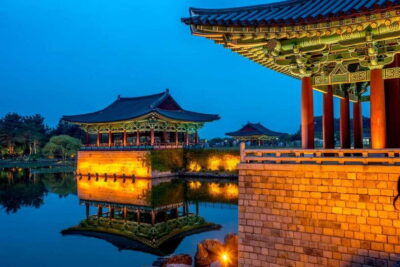
Gyeongju UNESCO World Heritage Guided Day Tour
Read our review →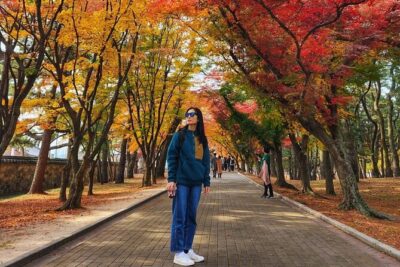
Old Korea Thousand History Tour of Gyeongju from Busan
Read our review →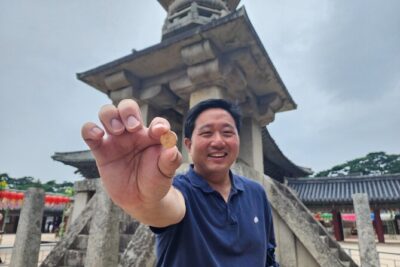
Private Gyeongju Tour – Explore Gyeongju UNESCO Sites
Read our review →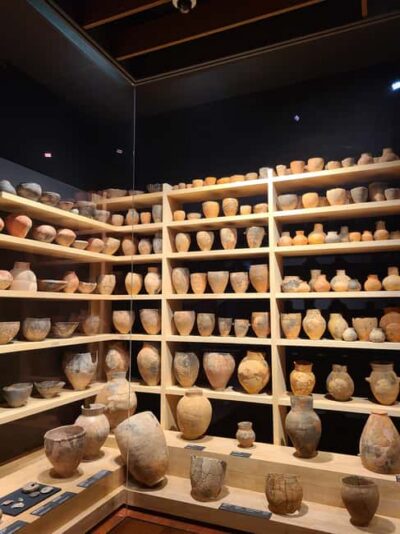
Gyeongju UNESCO Legacy Tour with National Museum
Read our review →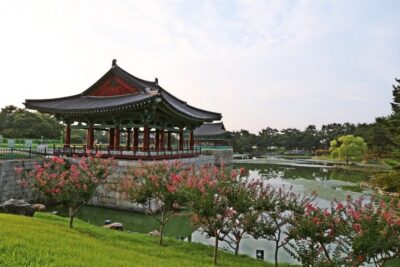
UNESCO Heritage Tour Including Bulguksa Temple
Read our review →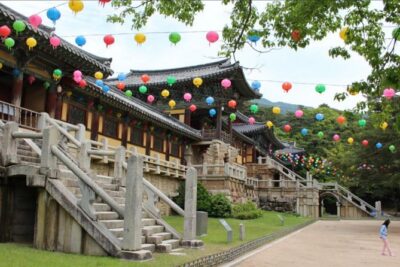
Gyeongju UNESCO World Heritage Sites and History Full-Day Tour with Lunch
Read our review →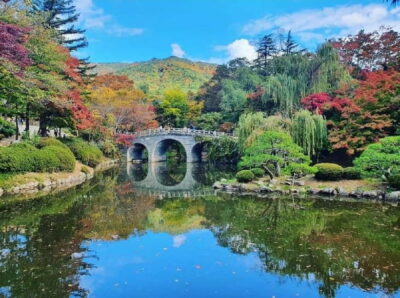
Browse the lists this tour appears in