
Reviewed · WALKING TOURS
Seoul City Walking Private Tour (3hours)
Seoul’s old center fits a remarkable amount into three hours. This walking tour links Jogyesa Temple, Gyeongbokgung Palace, Bukchon Hanok Village, and Insadong, giving you a quick look at Buddhist life, royal Korea, traditional homes, art, tea, and food streets.
I like the clear route and the fact that palace admission is included. I also like the friendly, personal guiding style associated with Park and Frank, especially the practical Seoul tips that can help you plan the rest of your stay. The main drawback is the pace: an hour at Bukchon and an hour at the palace can feel short if you want extensive photos or a slow museum visit.
Key points at a glance
- Four central Seoul sights in three hours: The route covers a temple, royal palace, traditional neighborhood, and cultural shopping street.
- Gyeongbokgung admission included: You do not need to arrange the palace ticket separately.
- Useful guide support: Park is gentle and personable, while Frank brings strong knowledge of Seoul and clear enthusiasm for the city.
- A walking-focused morning: The tour starts at 9:00 a.m. at Jogyesa Temple and finishes in Insadong.
- Tuesday changes the palace stop: Gyeongbokgung closes on Tuesdays, so the tour uses the listed alternate palace, called Chancellor’s Palace in the booking information.
- Good for small groups, not necessarily one-to-one service: The experience is sold as private, but the published maximum is 15 people.
A smart first look at Seoul’s old center
For a first morning in Seoul, this route makes good sense. It stays in the central Jongno area, where several major cultural sights sit close together. You get a broad introduction without spending time on long transfers between neighborhoods.
The tour is not simply a palace visit. Jogyesa gives you a look at present-day Korean Buddhism, Gyeongbokgung introduces the royal court of the Joseon Dynasty, Bukchon shows traditional residential architecture, and Insadong brings the morning back to modern Seoul through galleries, tea houses, food, and craft shops.
That mix is the real value. In three hours, you can see how religious, royal, domestic, artistic, and everyday parts of Korean culture fit together. You will not master each site, but you will leave with a useful map of Seoul’s cultural center.
The start time is 9:00 a.m., which helps you make good use of the day. The route ends in Insadong rather than returning to the starting point, so you can continue sightseeing or stop for food nearby. Since the tour does not include lunch, this finish is practical.
The group limit is 15 people. That is small enough for a guide to offer explanations and answer questions, though the word private should not lead you to expect a personal guide reserved only for you. If you are booking as a couple or family, check the final group arrangement before paying.
A few more things to do in Seoul worth a look
- Seoul moonlight walking tour with local historian
★ 5.0 · 940 reviews - Seoul: Nighttime Hidden Gems Walking Tour
★ 5.0 · 775 reviews - Seoul: Evening Dark History, Folklore & Ghost Story Walking Tour
★ 5.0 · 593 reviews
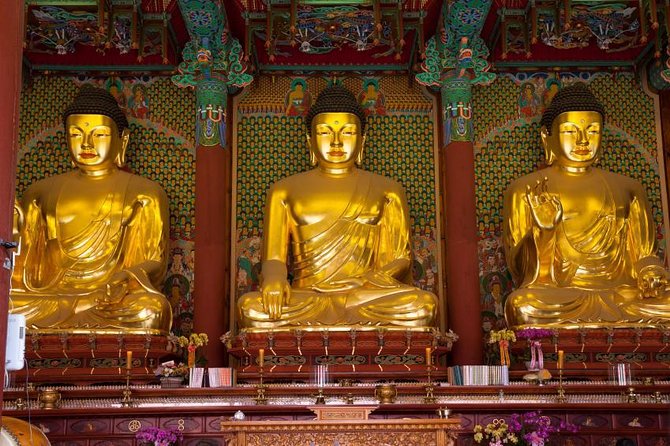
Jogyesa Temple begins the morning quietly
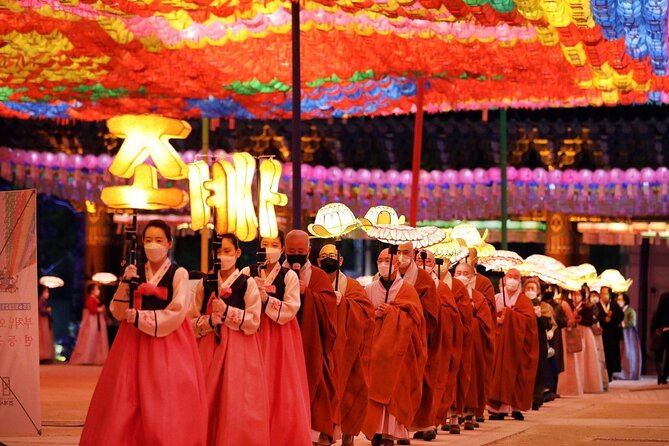
The first stop is Jogyesa Temple, where you spend about 30 minutes. The temple is described as the center of Buddhism in Seoul, making it a useful opening stop rather than just a quick photo break.
This part of the tour gives you a chance to consider Korean Buddhism in a living setting. The focus is not only on old buildings or decorative details. Your guide can explain the temple’s place in Seoul and help you understand what you are seeing before the route moves into royal history.
Thirty minutes is enough for an introduction, but it is not a long temple visit. If you like to linger over architecture, sit quietly, or take many photographs, you may wish the stop were longer. The short visit works best as a calm beginning to a more active morning.
Jogyesa is also the meeting point, so you do not have to find a separate office or wait for transport elsewhere. The tour begins here at 9:00 a.m. The meeting point is near public transportation, which makes it useful for a morning appointment.
Gyeongbokgung connects Seoul with the Joseon court
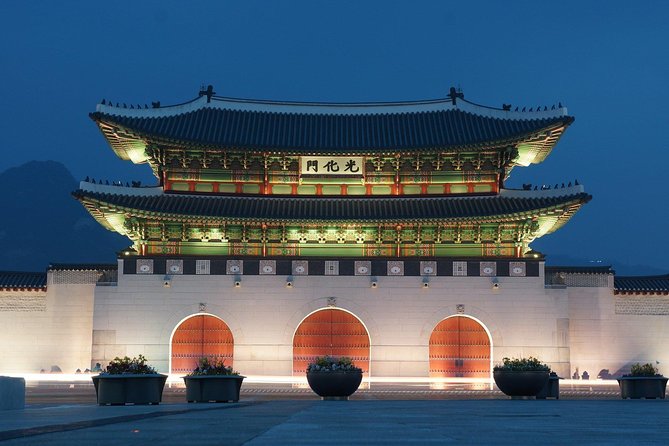
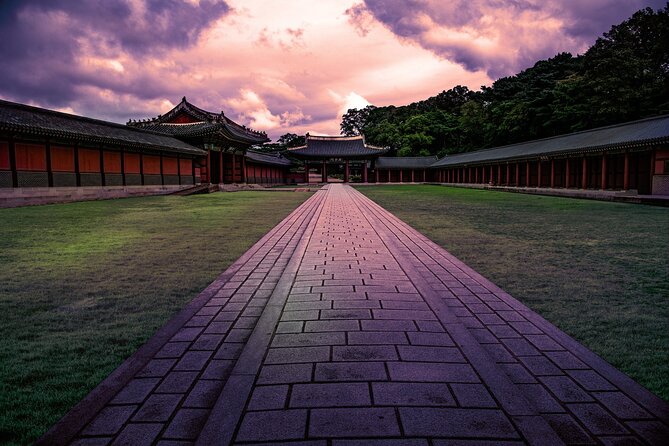
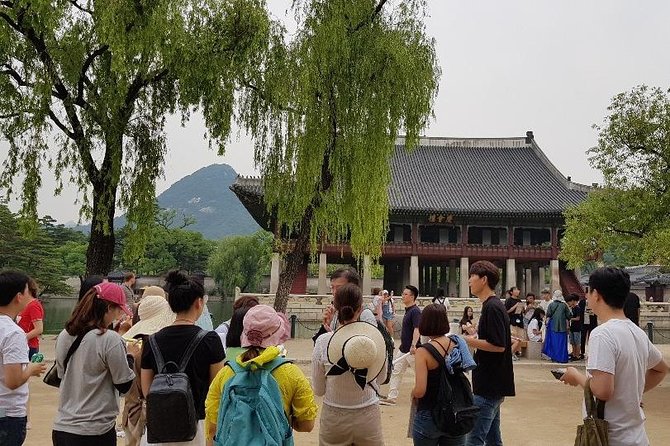
The palace section lasts about one hour, and admission is included in the price. Gyeongbokgung is presented as Korea’s leading palace and one of Seoul’s main symbols as the capital during the Joseon Dynasty.
The approach includes the palace’s main and largest gate, a landmark tied closely to Seoul’s royal past. Your guide can give the buildings a clear role in the larger story, which is helpful because a palace complex can otherwise feel like a series of courtyards and gates with unfamiliar names.
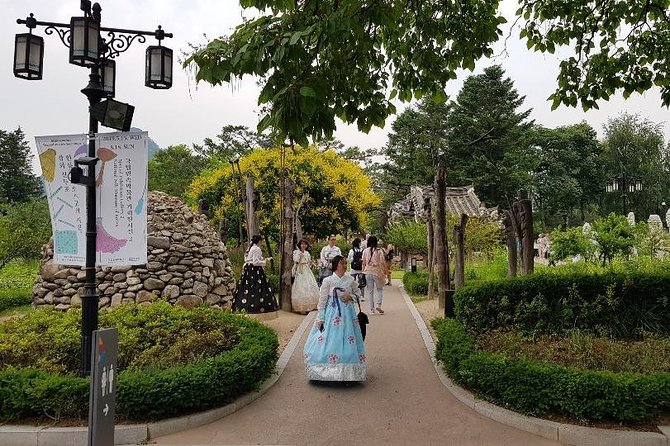
The tour description also mentions entering while wearing hanbok, Korea’s traditional clothing. The provided details do not say that hanbok rental is included, so you should not assume traditional dress is part of the $49 price. If wearing hanbok matters to you, ask the operator what arrangements are available before booking.
An hour is enough to see the principal areas and hear an explanation of the palace. It is less suitable if you want to explore every corner or spend a long time taking carefully composed photographs. The guide-led format keeps the morning moving, which is useful when you have limited time in Seoul.
Gyeongbokgung closes on Tuesdays. On that day, the palace portion is replaced by the alternate site listed as Chancellor’s Palace in the booking information. Confirm the exact Tuesday route when you reserve, especially if seeing Gyeongbokgung itself is your main reason for booking.
Bukchon shows traditional homes in a real neighborhood
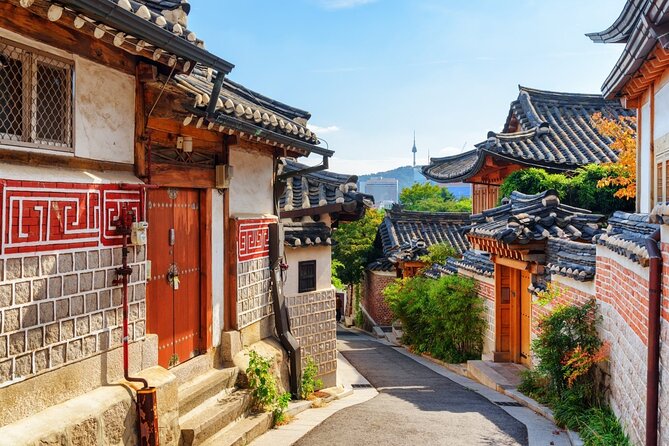
You spend about an hour in Bukchon Hanok Village. The route passes through a remarkable area of about 900 traditional Korean houses located between Gyeongbokgung Palace and Changdeokgung Palace.
This is one of the most appealing parts of the morning because it changes the setting from formal royal grounds to a residential district. The narrow streets and traditional houses help you picture how older Korean architecture fits into a modern city.
Bukchon is also the tour’s main photo stop. The description specifically points to its attractive streets and photo opportunities, so bring a camera or keep your phone ready. Your guide can help you understand why the area matters rather than treating it as a backdrop alone.
There is an important tradeoff. Bukchon is a neighborhood, not a single enclosed attraction with a fixed path. The hour will give you an introduction and a walk through selected streets, but it will not provide unlimited time for every slope, viewpoint, or side street. Wear comfortable shoes and expect a walking pace that keeps the group on schedule.
The tour information calls this a wonderful street area, but your experience will depend on the group’s pace and the guide’s chosen route. If you prefer slow exploration, you may want to return independently after the tour. The morning route gives you orientation first, which can make a later visit easier.
Same base, a different kind of day out:
- Best DMZ Tour Korea from Seoul (Red Suspension Bridge Optional)
★ 5.0 · 41,422 reviews - DMZ Tour: 3rd Tunnel, Option(Suspension Bridge, Boat) from Seoul
★ 5.0 · 21,373 reviews - DMZ tour south Korea from Seoul (NK experience hall, defector)
★ 5.0 · 20,599 reviews - Seoul: DMZ Tour with Optional Suspension Bridge
★ 4.8 · 5,277 reviews
Insadong finishes with art, tea, and food
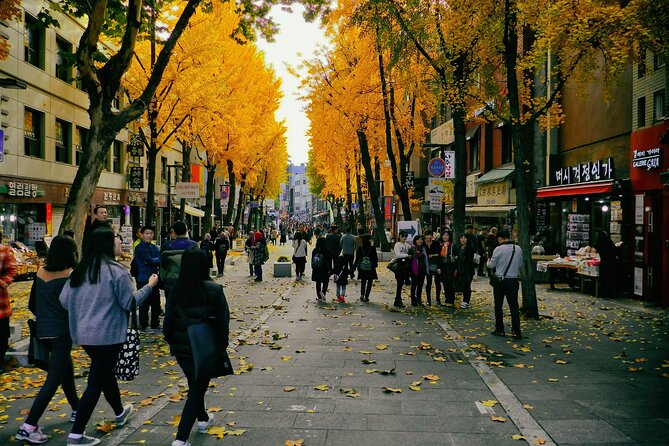
The final stop is Insadong, where you spend about 30 minutes. This traditional street is known for art galleries, tea houses, hanji shops, and a wide range of food.
Insadong makes a fitting end because it brings together several parts of Korean culture in an easy-to-understand setting. Hanji refers to traditional Korean paper, and the shops give you a chance to see a craft tradition alongside galleries and tea houses. Food is also part of the area’s appeal, although lunch is not included in the tour.
The half-hour stop is more of an introduction than a full shopping or dining session. You can get your bearings, note places to return to, and continue exploring after the guide finishes. Since the tour ends in Insadong, you do not need to retrace the route to Jogyesa Temple.
The no-shopping format is worth noting. This is not built around compulsory store visits or sales stops. You can look around Insadong, but the tour’s purpose is to show the cultural district, not to pressure you into buying anything.
Guides Park and Frank add the human touch
The strongest personal feature of this experience is the guiding. Park is described as kind and gentle, with a friendly manner that makes the morning feel less formal. He also shares practical advice for the rest of your time in Seoul, which can be more useful than another memorized list of dates.
Frank brings a different strength. He is described as genuinely enthusiastic about Seoul and willing to make the sightseeing interesting. He knows the city well and can help turn the route into a connected story rather than four unrelated stops.
You cannot assume that Park or Frank will lead every departure, so ask about guide assignment if one of them is important to you. Still, the information available points to a guiding style that is personal, helpful, and focused on more than simply getting you from one stop to the next.
Good guiding matters on a short tour. You have little time for confusion, and a clear explanation at each stop helps you decide what deserves a longer return visit. The best outcome is not seeing everything. It is learning what you want to see next.
What $49 includes, and where the value ends
At $49 per person, the tour offers reasonable value if you want an organized introduction to Seoul’s historic center. The price includes admission, with Gyeongbokgung being the clearly identified ticketed stop. You also pay for a guide who connects the sites and keeps the morning moving.
The value is strongest for first-time visitors, short stays, and people who prefer a planned route. You get four major cultural stops in three hours without arranging the sequence yourself. A group discount is also listed, which could make the per-person cost more attractive for larger bookings.
The price does not include lunch, travel insurance, or transportation. Since the tour is centered on walking and begins near public transportation, you should budget separately for getting to Jogyesa Temple. You should also plan for your own meal after finishing in Insadong.
The short duration keeps the price and commitment manageable, but it limits depth. If you already know Seoul well, or if you want long palace visits and detailed architectural study, an independent day may suit you better. If you want a strong first orientation, $49 is easier to justify.
Timing, group size, and practical planning
The official duration is approximately three hours. The stated schedule divides that time into 30 minutes at Jogyesa Temple, one hour at Gyeongbokgung Palace, one hour in Bukchon, and 30 minutes in Insadong.
The morning departure is fixed at 9:00 a.m. You should arrive ready to begin at the Jogyesa Temple meeting point rather than treating the first stop as a flexible arrival window. The tour finishes in Insadong, Jongno District.
The experience is near public transportation, and most people can participate. The provided details do not give a specific accessibility assessment, so anyone concerned about hills, uneven streets, or walking distance should ask the operator before booking. Bukchon is a neighborhood walk, and the total route is active even though the tour lasts only half a day.
Confirmation is issued at booking. The maximum group size is 15. Group discounts are available, but the exact discount is not given, so check the price for your party before completing the reservation.
The cancellation policy is strict. The experience is non-refundable and cannot be changed for any reason by the customer. If poor weather causes cancellation, you are offered another date or a full refund. If the minimum number of participants is not reached, you are offered another date or experience, or a full refund.
Who will appreciate this three-hour route
I would recommend this tour to a first-time Seoul visitor who wants context quickly. It is also a good fit if you have only a morning free, are staying in central Seoul, or prefer a guide to handle the route and explain the sights.
Families and mixed-interest groups may like the variety. A temple, palace, neighborhood, and cultural street offer more range than a tour devoted to only one historic site. The walk also gives you several ideas for what to revisit later.
This is less suited to someone who wants a slow, private photography session or an in-depth palace study. The published group limit of 15 means the tour may not feel fully private, and the fixed timetable leaves little room for long stops.
It may also be a poor choice if your schedule is uncertain. Because the booking is non-refundable and cannot be amended, you should book only when you are confident about the date. Check the Tuesday arrangement carefully if Gyeongbokgung is essential to you.
Should you book the Seoul City Walking Private Tour?
Book it if you want a friendly, efficient introduction to Seoul’s central cultural sights, especially during a short visit. The combination of Jogyesa, Gyeongbokgung, Bukchon, and Insadong gives you a useful first picture of the city, and the guides Park and Frank are associated with the kind of practical, personal help that makes a short tour worthwhile.
Skip it if you want complete freedom, long visits at each site, or a guaranteed one-to-one guide. The three-hour pace is brisk, Tuesday changes the palace stop, and the strict cancellation policy calls for careful planning.
For many first-time visitors, the best use of this tour is as a starting point. Let the guide give you the history and orientation, then return to the palace, Bukchon, or Insadong that most caught your attention.
FAQ
How long does the Seoul City Walking Private Tour last?
The tour lasts approximately three hours.
What time does the tour begin?
The morning tour starts at 9:00 a.m.
Where does the tour meet?
The meeting point is Jogyesa Temple in Seoul, South Korea.
Where does the tour finish?
The morning course finishes in Insadong, in Seoul’s Jongno District.
Which places are included in the route?
The route includes Jogyesa Temple, Gyeongbokgung Palace, Bukchon Hanok Village, and Insadong.
Is admission included in the price?
Yes. An admission fee is included.
Is lunch included?
No. Lunch is not included.
What happens if Gyeongbokgung Palace is closed?
Gyeongbokgung Palace is closed on Tuesdays. On that day, the tour uses the alternate palace listed in the booking information as Chancellor’s Palace.
How many people can join the tour?
The activity has a maximum of 15 participants.
Can I cancel for a refund?
The experience is non-refundable and cannot be changed for any reason. If the operator cancels because of poor weather or because the minimum number of participants is not reached, you are offered another date or experience, or a full refund.
Just added in Seoul
- Your Personal Seoul Photographer!★ 4.1 · 15 reviews
- You’re Invited to Our Home in Seoul: The Only Cooking Class!★ 5.0 · 8 reviews
- From Seoul: Yongpyong Ski Day Tour with Transportation★ 4.9 · 40 reviews
- Seoul: Korean & English Language Exchange Global Party★ 5.0 · 28 reviews
- From Seoul: Hwacheon Ice Fishing and Lighting Festival Tour★ 4.5 · 4 reviews
- Unique Native Experience : Han River Picnic, Board game, BBQ★ 5.0 · 3 reviews
- Seoul: Gangneung BTS K-Pop & K-Drama Filming Locations Tour★ 4.6 · 14 reviews
- K-Pop Making Class with a Producer!★ 5.0 · 3 reviews
Walking Tours, compared.
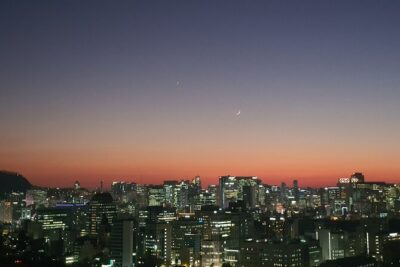
Seoul moonlight walking tour with local historian
Read our review →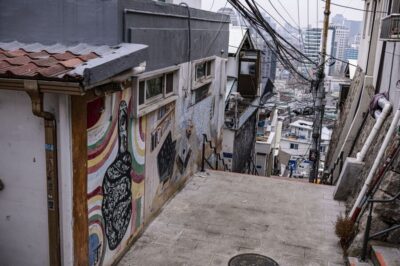
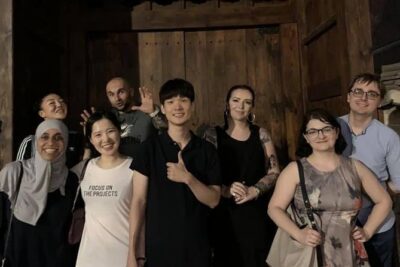
Evening Dark History, Folklore & Ghost Story Walking Tour
Read our review →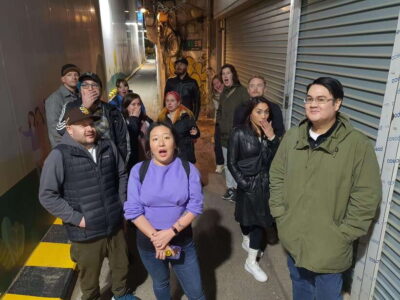
Dark Side of the City and Ghost Stories Walking Tour
Read our review →
Gangnam Walking Tour on Youth and Society in Seoul Korea
Read our review →
Gyeongbok Palace and Bukchon Hanok Walking Tour
Read our review →
Highlights & Hidden Gems With Locals: Best of Seoul Private Walking Tour
Read our review →
Street photoshoot and Seoul Hidden gem History Walking Tour
Read our review →Browse the lists this tour appears in