
Reviewed · COOKING CLASSES
Korea Cooking Class with 3 stars Michelin Chef & Content creators
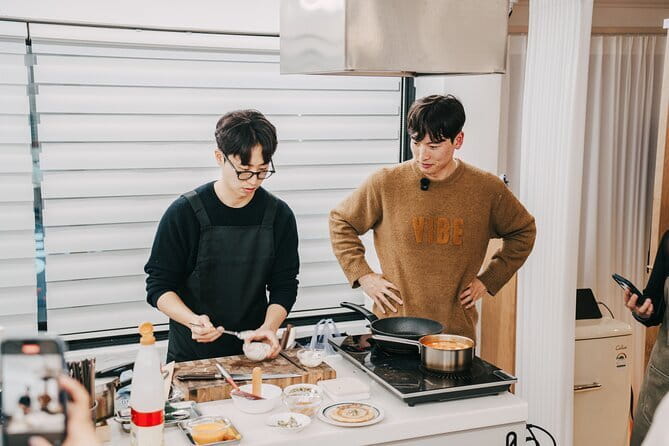
The most unusual part of this Seoul evening is the pairing of a three-star Michelin chef with Koreanbong, a friendly content creator who helps keep the class relaxed and social. You learn three Korean dishes, cook them in a small group, and eat your work soon after.
I like the practical format: a 15-minute introduction, a 30-minute cooking demonstration, team cooking, and dinner all fit into about two hours. I also like the small-group setup, with no more than 16 people and four cooking stations. The main consideration is the non-refundable booking policy, so choose your date carefully.
Key points at a glance
- Three Korean dishes in one evening: You watch the chef prepare the day’s menu, then cook the dishes yourself with recipe sheets for each team.
- A two-host format: The Michelin chef handles cooking technique, while Koreanbong focuses on communication and a warm, family-friendly mood.
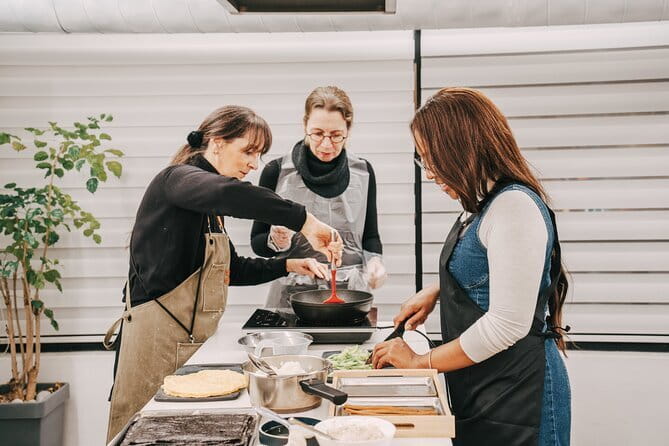
- Four small cooking groups: Each sink serves a group of two to four people, giving you a more active role than a large demonstration class.
- A local food introduction: The program includes a presentation on Korean cuisine and a visit to a local market to choose ingredients before cooking.
- Dinner and drinks included: Your meal comes with coffee or tea, bottled water, and alcoholic beverages.
- Convenient evening location: The meeting point is at 175 Ogeum-ro in Songpa District, near Lotte World Tower and Lotte World.
Why this Seoul cooking class is different
Many cooking classes give you one instructor, one recipe, and a quick meal at the end. This one takes a broader approach. You get a short lesson on Korean cuisine, a professional demonstration, hands-on cooking, and a shared dinner with cultural games or activities.
The chef brings technical skill. Koreanbong brings people skills. That division matters. A top-level chef may explain food well but move quickly or use professional shorthand. A content creator who is comfortable speaking with people can help turn the class into a social evening rather than a silent kitchen lesson.
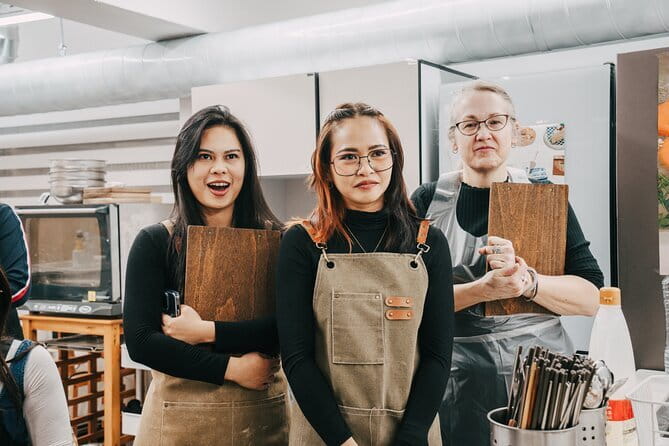
The maximum group size is 16, divided across four sinks. That means each group has two to four people. You should still expect to share tasks, but this is a much better setup than standing behind a crowd while one person cooks.
The experience is also designed for people who may not know much about Korean food. The introduction gives you basic context before you handle ingredients, and the recipe papers help if you lose track during the demonstration.
More Cooking Classes in Seoul
- Local Home Korean Cooking Class & Market Adventure in Seoul
★ 5.0 · 1,024 reviews - Master Korean traditional cooking with a Kimchi chef
★ 5.0 · 385 reviews - Seoul: Korean Cooking Class at a Local Home and Market Tour
★ 5.0 · 348 reviews
Meeting Korean food through a short history lesson
The first session begins with personal introductions. This sounds simple, but it helps set the tone for a class where you will work beside people you may not know.
After introductions, you receive a 15-minute presentation about Korean cuisine history. The talk is short enough to keep the evening moving, but it gives your meal a cultural frame. Food is easier to understand when you know that Korean cooking is not only about individual dishes. It is also about shared meals, careful preparation, strong flavors, and a balance of side dishes and main foods.
I appreciate that the class does not begin by pushing you straight toward a chopping board. A little context helps you pay attention to how ingredients are treated and why certain combinations appear on the table.
The description also includes a visit to a local market before the class, where you choose unusual ingredients and learn more about local cooking. The supplied schedule does not give a separate meeting time or detailed market route, so you should confirm how this portion fits into your booking. Treat it as an important part of the program, but do not assume it is a long market tour.
Watching the Michelin chef prepare the menu
The second session is a 30-minute cooking demonstration by the three-star Michelin chef. This is the technical center of the evening.
You watch the cooking process before starting your own work. That order is useful because you can see how the chef handles ingredients, organizes the steps, and brings the dishes together. It is easier to follow a recipe after watching the full process once.
The chef is also expected to share practical cooking tips and shortcuts. The supplied information calls these life hacks for cooking skills, which suggests the lesson is meant to be useful at home, not just impressive in the moment.
Do not worry if you cannot remember every step. Each team receives recipe papers. You can refer to them while cooking instead of trying to memorize a fast professional demonstration.
One point to keep in mind is that the chef’s Michelin background does not mean you are attending a fine-dining tasting menu. The value is in seeing professional technique applied to Korean dishes and then using that guidance yourself. You are paying for instruction, food, drinks, and a social setting, not only for a chef to cook in front of you.
Cooking in four small teams
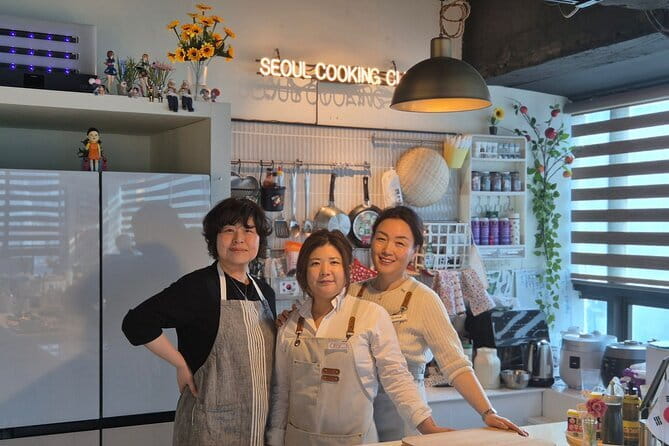
After the demonstration, you begin cooking. The kitchen has four large sinks, with one group assigned to each station. Groups hold two to four people, and each group cooks different dishes.
This setup gives the class a useful rhythm. You are not all making the exact same recipe at the same time, so the kitchen has some variety. You also have a reason to compare dishes with the other groups once dinner begins.
Your role may depend on your group and the menu that night. The supplied details do not list the three dishes, so you cannot choose a particular specialty in advance. That uncertainty is worth accepting if you enjoy trying whatever the chef has planned, but it may matter if you have strict dietary needs or only want to learn one specific Korean dish.
The recipe sheets should make the class approachable for beginners. Still, you will get more from the evening if you take part rather than simply watch. Ask questions, share tasks, and pay attention to the order in which ingredients are prepared.
The kitchen has room for up to 16 participants. That is small enough for a personal feel, but it is not a private class. If you want one-on-one instruction throughout, this may not be the right format. If you like meeting people while cooking, the group size works well.
Other classes where you cook in Seoul:
- Seoul: Korean Cooking at Seoul Cooking Club!
★ 5.0 · 311 reviews - Korean Cooking at Seoul Cooking Club
★ 5.0 · 220 reviews - Korean Cooking Class with Grocery Shopping at Seoul Local Market
★ 5.0 · 107 reviews - Korean Kimchi Making Day Experience with a Local Market Tour
★ 5.0 · 99 reviews
Dinner, drinks, and Korean cultural activities
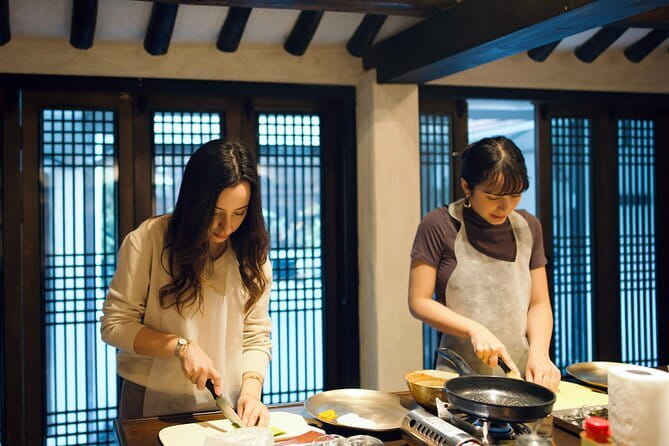
As soon as the cooking ends, you sit down to eat. Dinner is included, along with coffee or tea, bottled water, and alcoholic beverages.
That inclusion adds real value to the $70.44 price. You are not paying for a lesson and then buying a separate meal afterward. The class supplies the food you prepare, the drinks, and the setting for a shared evening.
The dining session may also include special games or cultural activities. These are intended to help you learn about Korean culture beyond the recipes. The details are not fixed in the information provided, so you should think of them as a possible bonus rather than the main reason to book.
The shared meal is likely to be the most social part of the night. You have already worked in teams, and now you can compare the dishes prepared by each group. The content creator host, Koreanbong, is specifically included to help people communicate and feel comfortable. That is especially useful if you are attending alone.
A five-star rating from 16 reviews and a 100 percent recommendation rate give the class a strong early record. The clearest praise focuses on the hosts being professional, warm, and welcoming. I would give that feedback real weight because the success of a group cooking class depends as much on the atmosphere as on the recipe.
The Lotte World area after dark
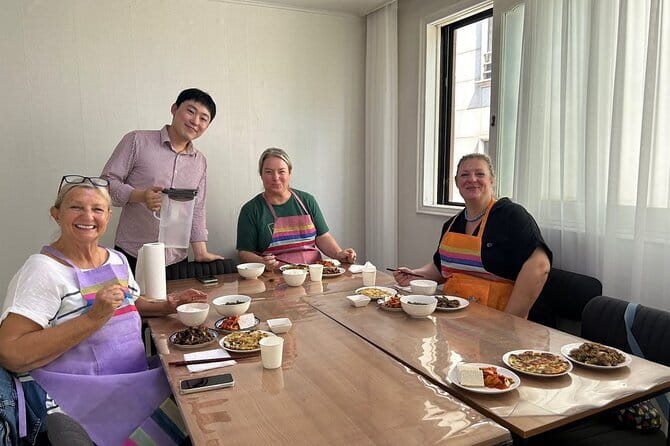
The listed itinerary names Lotte World Tower and Mall, followed by Lotte World. These are in Seoul’s Songpa District, the same district as the meeting point at 175 Ogeum-ro.
The schedule does not explain whether these are sightseeing stops, nearby landmarks, or location references for the cooking venue. Do not plan on a full attraction visit during a two-hour class unless the operator confirms it. The practical takeaway is that you will meet in an area with major Seoul landmarks and public transportation nearby.
Lotte World Tower and Mall give you a recognizable point of reference when planning your evening. Lotte World is also a well-known Seoul attraction, but the cooking class itself remains the focus. If you have already spent the day sightseeing there, this activity can make a convenient evening continuation.
The 7:00 pm start suits a day of sightseeing. It also means you should allow enough time to reach the meeting point before the class begins. Private transportation is not included, but the activity is near public transportation, so you will need to make your own way there and back.
What the $70.44 price really covers
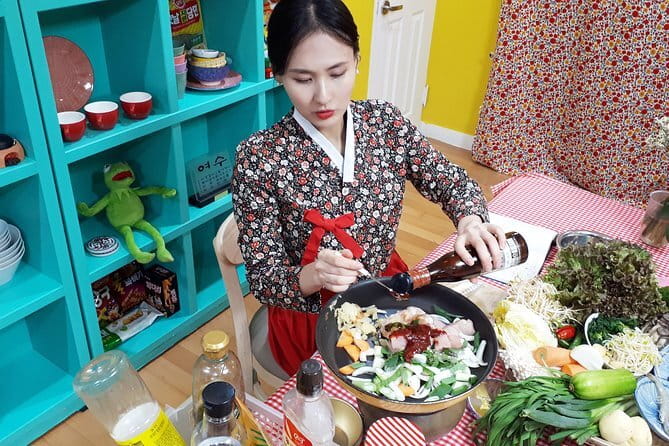
At $70.44 per person, this is not the cheapest way to eat Korean food in Seoul. You can find an inexpensive meal for much less. The comparison changes when you count the instruction, kitchen use, three dishes, dinner, drinks, and cultural activities.
The chef’s professional background is the main reason the price rises above a basic tourist cooking lesson. You are also getting a two-host format, with Koreanbong helping the group communicate and stay at ease.
The strongest value comes if you participate fully. Watch the demonstration, use the recipe sheet, ask questions, and take part in the meal. If you only want to eat, the price will feel high. If you want an evening lesson that combines cooking and conversation, it is easier to justify.
The maximum group size also helps. Sixteen people is not tiny, but it is controlled, and the four-station system prevents the class from becoming one large crowd around a single counter.
The program is booked an average of 24 days in advance, so it is sensible to reserve early if the date matters. Confirmation is sent within 48 hours, subject to availability. Because the booking is non-refundable and cannot be changed for any reason, check your Seoul plans before paying.
If the minimum number of participants is not reached and the class is canceled, you are offered another date or experience, or a full refund. That protection applies to an operator cancellation, not to a change of your own plans.
Who will enjoy this cooking class most
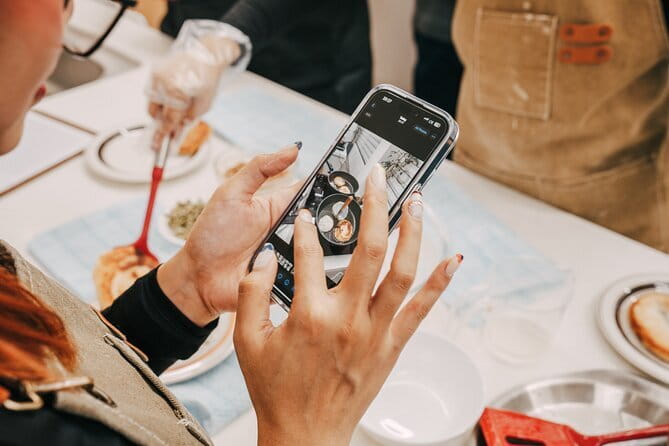
I would recommend this experience to several types of visitors.
First-time visitors to Seoul get a gentle introduction to Korean food and customs without needing prior cooking experience. The history talk, chef demonstration, recipe papers, and shared meal create a clear path through the evening.
Solo visitors may especially like the social structure. You are placed in a small team, and Koreanbong’s role is to help people communicate. You do not need to arrive with a group of friends to take part.
Couples and friends can enjoy the class as a meal with an activity attached. You cook together, then sit down to eat. The included drinks make it feel more like a full evening than a short lesson.
Food-focused visitors will value the chance to see how a highly trained chef approaches Korean dishes. You may not learn every technique in two hours, but you will leave with recipes and a clearer sense of how the dishes are built.
I would be more cautious if you need a specific menu, require a private class, or dislike group activities. The three dishes are not named in the supplied information, and the class has a maximum of 16 people. You should also ask about ingredients before booking if allergies or dietary restrictions are important.
Practical tips for a smooth evening
Arrive with enough time to find 175 Ogeum-ro before the 7:00 pm start. The class ends back at the meeting point, and private transportation is not included.
Wear clothes you can work comfortably in. The activity involves cooking at shared stations, washing ingredients, and preparing several dishes, so an outfit suited to an active kitchen is more sensible than formal evening wear.
Keep your recipe paper after the class. It is the most useful takeaway if you want to repeat the dishes at home.
Expect a social class rather than a quiet private lesson. You will work with two to four people at your station, and the dining period may include games or cultural activities.
The mobile ticket makes entry simple, but confirmation can take up to 48 hours. Do not assume the reservation is final until you receive that confirmation.
Should you book this Seoul cooking class?
I would book it if you want a friendly, hands-on evening near Lotte World and value instruction as much as dinner. The mix of a three-star Michelin chef, Koreanbong’s welcoming hosting style, four small cooking groups, recipe sheets, included drinks, and cultural activities gives the $70.44 price a reasonable case.
I would skip it if you want a specific named dish, a private kitchen, or a flexible cancellation policy. The class is non-refundable, the menu is not listed, and the experience depends on enjoying a shared group setting.
For most visitors who want more than another restaurant meal, this is a strong choice. You get to cook three Korean dishes, learn why the food matters, and sit down to eat with the people who helped prepare it. That is a useful and sociable way to spend two hours in Seoul.
FAQ
How long does the Korean cooking class last?
The class lasts approximately two hours.
What time does the activity begin?
The activity begins at 7:00 pm.
Where does the class meet?
The meeting point is 175 Ogeum-ro, Songpa District, Seoul, South Korea.
How many people can join the class?
The experience allows a maximum of 16 participants. The kitchen has four groups, with two to four people assigned to each group.
What is included in the price?
Dinner, coffee or tea, alcoholic beverages, and bottled water are included.
Is transportation included?
Private transportation is not included. The meeting point is near public transportation, and the activity ends back at the meeting point.
More Workshops & Classes in Seoul
- Yongpyong Ski Resort from Seoul with Optional Lesson and Packages
★ 5.0 · 217 reviews - Royal Seoul Cooking Class in a 100-Year-Old Hanok
★ 5.0 · 81 reviews - Seoul : Taste of Korea, Authentic Home-Style Cooking Class
★ 5.0 · 64 reviews - K-pop Dance Class in Seoul (Incl. video shooting & editing)
★ 5.0 · 52 reviews
Just added in Seoul
- Your Personal Seoul Photographer!★ 4.1 · 15 reviews
- You’re Invited to Our Home in Seoul: The Only Cooking Class!★ 5.0 · 8 reviews
- From Seoul: Yongpyong Ski Day Tour with Transportation★ 4.9 · 40 reviews
- Seoul: Korean & English Language Exchange Global Party★ 5.0 · 28 reviews
- From Seoul: Hwacheon Ice Fishing and Lighting Festival Tour★ 4.5 · 4 reviews
- Unique Native Experience : Han River Picnic, Board game, BBQ★ 5.0 · 3 reviews
- Seoul: Gangneung BTS K-Pop & K-Drama Filming Locations Tour★ 4.6 · 14 reviews
- K-Pop Making Class with a Producer!★ 5.0 · 3 reviews
Cooking Classes, compared.
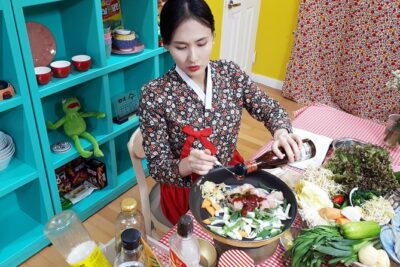
Local Home Korean Cooking Class & Market Adventure in Seoul
Read our review →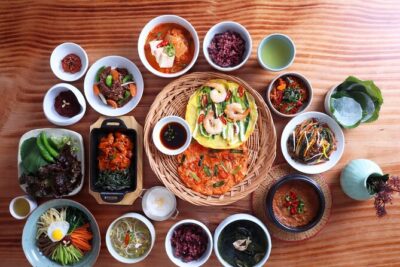
Master Korean traditional cooking with a Kimchi chef
Read our review →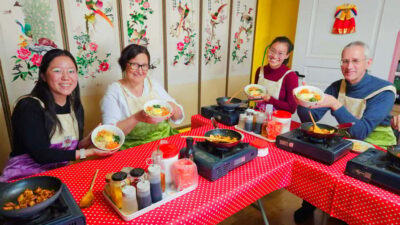
Korean Cooking Class at a Local Home and Market Tour
Read our review →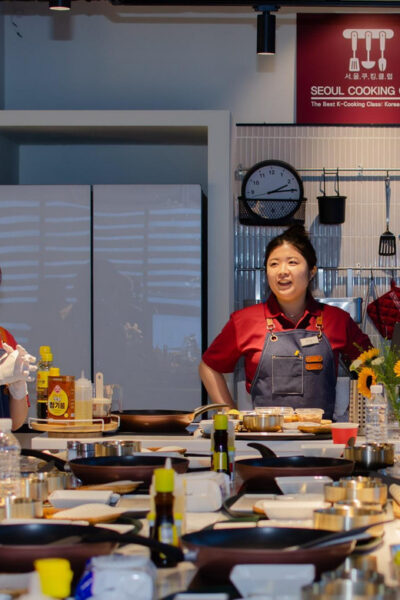
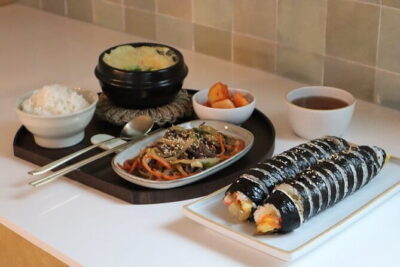
Korean Cooking Class with Grocery Shopping at Seoul Local Market
Read our review →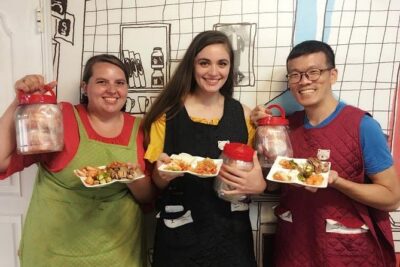
Korean Kimchi Making Day Experience with a Local Market Tour
Read our review →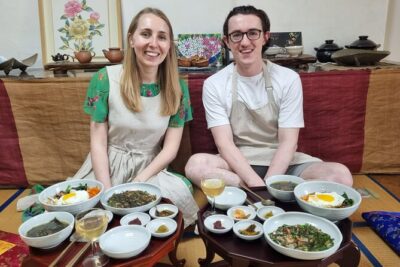
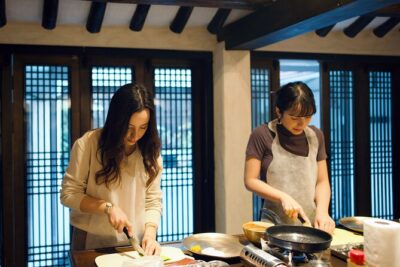
Royal Seoul Cooking Class in a 100-Year-Old Hanok
Read our review →Browse the lists this tour appears in