

Reviewed · COOKING CLASSES
Vegan Korean Food Cooking Class: Gimbap, Sundubu Jjigae, and more
A full Korean meal can be tricky to find when you eat vegan. This small class in Itaewon solves that problem in the most useful way: you cook the meal yourself, with tofu at the center of several dishes and Soomin guiding you through each step. In about two and a half hours, you make gimbap, sundubu jjigae, biji-jeon, and hwa-jeon.
I like two things right away. First, the group is capped at four people, so you get real time at the cutting board and stove instead of watching from the edge. Second, this is not just a recipe lesson. Soomin explains ingredients, Korean food traditions, and practical tips for finding vegan food in Seoul.
The main consideration is the price: $75 per person is not a cheap meal. You are paying for instruction, ingredients, a small group, and a cultural lesson, so it makes the most sense if you want to learn rather than simply eat.
Key points at a glance
- A complete vegan Korean meal: Prepare gimbap, sundubu jjigae, biji-jeon, and hwa-jeon in one class.
- A maximum of four people: The small size gives you hands-on time and room for questions.
- Soomin leads the class: Instructions are clear and step by step, with useful explanations of Korean ingredients and traditions.
- Tofu takes center stage: The class shows how tofu and soy products can work in soup, pancakes, and other dishes.
- A creative finish: Shape glutinous rice dough and decorate it with seasonal edible flowers for hwa-jeon.
- Useful for plant-based visitors: The menu is vegan, with vegetarian, reducetarian, Muslim-friendly, and gluten-free options available as noted.
Why this class works for plant-based visitors in Seoul
Korean food has plenty of vegetable dishes, but that does not always mean a dish is vegan. Broths, sauces, fish products, and hidden animal ingredients can make ordering difficult. This class removes that uncertainty. Every dish is planned as vegan, and you get to see what goes into your food from the start.
That matters most for anyone who has spent a holiday checking labels, asking careful questions, or settling for a simple meal. Here, you can sit down to a Korean spread that you prepared yourself. One participant described the experience as a way to enjoy an entire Korean meal without worrying about what was in it. That is a practical benefit, not just a dietary label.
The class also suits vegetarians, reducetarians, and meat eaters who want a first lesson in Korean cooking. You do not need to be an expert cook. The process is broken into manageable jobs, and Soomin explains ingredients and methods as you go.
More Cooking Classes in Seoul
- Local Home Korean Cooking Class & Market Adventure in Seoul
★ 5.0 · 1,024 reviews - Master Korean traditional cooking with a Kimchi chef
★ 5.0 · 385 reviews - Seoul: Korean Cooking Class at a Local Home and Market Tour
★ 5.0 · 348 reviews
Entering the class in Itaewon

The meeting point is in Itaewon-dong, in Seoul’s Yongsan District, near World Food Street Itaewon. The class begins at 11:00 a.m. and ends back at the same meeting point after about two and a half hours.
Itaewon is a sensible setting for this kind of class. It is one of Seoul’s best-known areas for international food and is easy to pair with other plans in the neighborhood. The activity is near public transportation, but the cooking space is on the third floor and there is no elevator. If stairs are a concern, take that detail seriously before booking.
The small room changes the feel of the morning. With no more than four people, you should expect a personal workshop rather than a large demonstration. The limited size is especially useful when rolling gimbap, shaping dough, or working around a shared cooking area.
Confirmation is sent within 48 hours of booking, subject to availability. Since the class is often reserved about 41 days ahead, booking early is sensible if your Seoul dates are fixed.
Rolling gimbap, one strip at a time
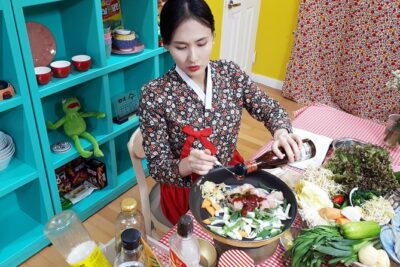
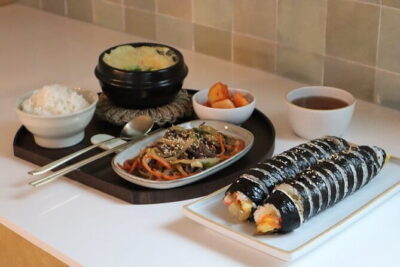
Gimbap is often the dish people most want to learn. It looks simple when you buy it, but rolling a neat cylinder takes a bit of practice. In class, you assemble the fillings, manage the rice and seaweed, and learn how to roll the pieces into a tidy log before slicing.
The value here is not just taking home a recipe. Gimbap teaches the balance that appears throughout Korean cooking: rice, vegetables, texture, seasoning, and presentation all need to work together. You also get a useful skill for future picnics or quick meals.
The class description emphasizes the visual side of the food. That is worth noting if you care about presentation. The dishes are designed to look appealing as well as taste good, so you will pay attention to arrangement rather than simply piling food onto a plate.
Gimbap can be the most fiddly part of the session. If your first roll is loose or uneven, that is normal. The benefit of a small class is that Soomin can correct your technique instead of leaving you to guess why the rice is escaping from the ends.
Sundubu jjigae from scratch

Sundubu jjigae is a soft tofu stew, usually served hot and seasoned with a strong Korean flavor base. Here, you prepare it from scratch rather than receiving a finished bowl. That gives you a closer look at how the broth, seasoning, and tofu come together.
Tofu is a useful teaching ingredient because it can change character depending on how it is handled. In this stew, its soft texture contrasts with the sharper seasoning and other components. Soomin also explains ingredients as she works, which helps you understand the dish rather than blindly follow a list of steps.
This part of the class should appeal to anyone who wants food with warmth and comfort but does not want a heavy meat dish. It also gives you a recipe that can be adapted at home, though the exact substitutions will depend on what ingredients you can find.
The pace may feel quick if you want to take detailed notes or photographs at every stage. You are cooking several dishes in one session, not spending the entire morning on one stew. Bring questions, but stay ready to work.
Other classes where you cook in Seoul:
- Seoul: Korean Cooking at Seoul Cooking Club!
★ 5.0 · 311 reviews - Korean Cooking at Seoul Cooking Club
★ 5.0 · 220 reviews - Korean Cooking Class with Grocery Shopping at Seoul Local Market
★ 5.0 · 107 reviews - Korean Kimchi Making Day Experience with a Local Market Tour
★ 5.0 · 99 reviews
Biji-jeon and the value of soy pulp

Biji-jeon is a Korean-style pancake made with soy pulp. It gives the class another way to use soy beyond soft tofu and shows how a humble ingredient can become a savory, satisfying dish.
This is one of the more distinctive parts of the menu. Gimbap and sundubu jjigae are familiar names to many visitors, but soy pulp pancakes offer a less expected look at Korean home-style cooking. You prepare and cook the pancakes yourself, learning how the mixture behaves in the pan.
The dish also fits the class’s broader message: vegan food does not need to depend on one substitute product. Tofu and soy pulp can provide different textures and uses. That makes the session useful for anyone trying to expand a plant-based kitchen at home.
Cooking several dishes at once means you may share tasks with the other people in the room. That is part of the small-group format, though it also means the class is not a private lesson by default. If no one else books your session, it may become a one-on-one class, but the maximum group size is four rather than a guaranteed private booking.
Hwa-jeon with seasonal edible flowers

The final dish is hwa-jeon, made by shaping glutinous rice dough and decorating it with seasonal edible flowers before cooking. It is a striking finish to the meal and gives the class a clear sense of occasion.
This step is less about speed and more about careful shaping. The edible flowers turn a simple rice cake into something decorative, and the process helps explain why Korean food often pays close attention to color and arrangement. You are not just filling up. You are learning how food can mark a special moment.
Seasonal flowers mean the exact look may change. That is a plus if you enjoy food that reflects the time of year, but it also means you should not expect an identical result to a photograph from another date.
Hwa-jeon also adds sweetness and texture to a menu that otherwise centers on savory dishes. By the time you reach this stage, you have worked with rice, tofu, soy pulp, soup, pancakes, and flowers. The range makes the class feel like a proper meal lesson rather than a single-recipe workshop.
How much food do you receive?
Plan to arrive hungry. The menu includes four separate preparations, and the meal is substantial enough that you may want a container for leftovers. One especially useful tip is to bring a box if you have one, or skip a large breakfast.
The class does not present itself as a tasting where you receive tiny portions. You cook and eat a full selection of dishes. That makes the $75 fee easier to assess. If you compare it with an ordinary restaurant lunch, it is expensive. If you compare it with a private or very small cooking lesson, a meal, ingredient costs, and cultural instruction, the price becomes more reasonable.
Still, value depends on your goal. If you only want to sample Korean vegan food, you can spend less at a restaurant. If you want to learn several dishes, ask questions, and leave with a better sense of Korean ingredients, the cost is easier to justify.
Soomin’s teaching style
Soomin is the central reason this class feels personal. Her approach is described as warm, clear, and patient, with step-by-step explanations rather than a quick demonstration followed by guesswork.
She also talks about Korean food culture and traditions. That context matters because ingredients can mean more when you understand how they are used beyond the recipe in front of you. You can ask about vegan food in Seoul as well, which is valuable if the cooking class is part of a larger plant-based trip.
The class works even when only one person is booked. That tells you the session is not dependent on a large crowd to create energy. A solo participant may receive a more direct exchange with Soomin, while a small group can offer a relaxed social setting without becoming noisy or impersonal.
English ability is not specifically described in the supplied details, so you should confirm any language needs when booking if that matters to you.
Who should book this Seoul cooking class?
I would put this near the top of the list for:
- Vegan visitors who want a complete Korean meal without ingredient uncertainty.
- Vegetarians and reducetarians looking for a practical introduction to Korean cooking.
- Solo visitors who prefer a small class and the chance for direct conversation.
- Couples or friends who enjoy hands-on activities more than a standard food tour.
- Anyone curious about tofu, soy pulp, and Korean rice-based desserts.
- Visitors who want useful advice about vegan eating in Seoul from a local host.
It may be less suitable if you want a fast, inexpensive meal, dislike cooking, or have trouble climbing to a third-floor room without an elevator. It also may not satisfy someone seeking a broad tour of Seoul, since the focus stays on the cooking workshop and the meal.
Service animals are allowed. The activity is near public transportation, and it begins and ends at the same location, which keeps the morning simple.
Booking, cancellations, and dietary requests
The menu is vegan, and the experience is also presented as vegetarian, reducetarian, and Muslim-friendly. Gluten-free arrangements are available on request, so contact the provider before booking rather than assuming every ingredient will automatically fit your needs.
You can cancel free of charge up to 24 hours before the local start time for a full refund. Changes or cancellations made inside that 24-hour window are not accepted or refunded.
The experience provider is Tofu Artist. Because availability can take up to 48 hours to confirm and the class is often booked well ahead, leave room in your schedule if you are planning around it.
Should you book it?
Book this class if you want more than a vegan meal in Seoul. The small group, four-dish menu, and patient instruction make it a useful way to learn how Korean food works, especially if tofu and soy products are new to your kitchen.
At $75, it is a splurge. But you receive a full meal, hands-on practice, cultural background, and direct help from Soomin. Bring an appetite, allow time for the stairs, and request gluten-free arrangements in advance if needed. For plant-based visitors, this is one of the more practical ways to enjoy Korean food with confidence and take home skills you can use after Seoul.
FAQ
Where does the vegan Korean cooking class take place?
The class takes place in Itaewon-dong in Seoul’s Yongsan District, near World Food Street Itaewon.
What time does the class start?
The class starts at 11:00 a.m.
How long does the cooking class last?
The experience lasts approximately two hours and 30 minutes.
How many people can join the class?
The class has a maximum of four participants.
What dishes will I prepare?
You will prepare gimbap, sundubu jjigae, biji-jeon, and hwa-jeon.
Is the food completely vegan?
Yes. The experience focuses on vegan Korean cooking and includes vegan versions of the dishes prepared in class.
Can the class accommodate gluten-free diets?
Gluten-free arrangements are available on request. You should make the request in advance.
Is the cooking location accessible by elevator?
No. The class is on the third floor and there is no elevator.
What is the cancellation policy?
You can cancel at least 24 hours before the local start time for a full refund. Cancellations or changes made less than 24 hours before the start time are not accepted or refunded.
More Workshops & Classes in Seoul
- Yongpyong Ski Resort from Seoul with Optional Lesson and Packages
★ 5.0 · 217 reviews - Royal Seoul Cooking Class in a 100-Year-Old Hanok
★ 5.0 · 81 reviews - Seoul : Taste of Korea, Authentic Home-Style Cooking Class
★ 5.0 · 64 reviews - K-pop Dance Class in Seoul (Incl. video shooting & editing)
★ 5.0 · 52 reviews
More Food & Drink Experiences in Seoul
- Seoul Street Food Market Tour
★ 5.0 · 1,226 reviews - Seoul: Night Market Food Tour with Local Guide
★ 4.9 · 943 reviews - Downtown Seoul Guided Food & Market Tour with 8+ Local Tastings
★ 5.0 · 580 reviews - Seoul Night Palace & Market Food Tour with Vehicle
★ 5.0 · 275 reviews
Just added in Seoul
- Your Personal Seoul Photographer!★ 4.1 · 15 reviews
- You’re Invited to Our Home in Seoul: The Only Cooking Class!★ 5.0 · 8 reviews
- From Seoul: Yongpyong Ski Day Tour with Transportation★ 4.9 · 40 reviews
- Seoul: Korean & English Language Exchange Global Party★ 5.0 · 28 reviews
- From Seoul: Hwacheon Ice Fishing and Lighting Festival Tour★ 4.5 · 4 reviews
- Unique Native Experience : Han River Picnic, Board game, BBQ★ 5.0 · 3 reviews
- Seoul: Gangneung BTS K-Pop & K-Drama Filming Locations Tour★ 4.6 · 14 reviews
- K-Pop Making Class with a Producer!★ 5.0 · 3 reviews
Cooking Classes, compared.
Local Home Korean Cooking Class & Market Adventure in Seoul
Read our review →
Master Korean traditional cooking with a Kimchi chef
Read our review →
Korean Cooking Class at a Local Home and Market Tour
Read our review →
Korean Cooking Class with Grocery Shopping at Seoul Local Market
Read our review →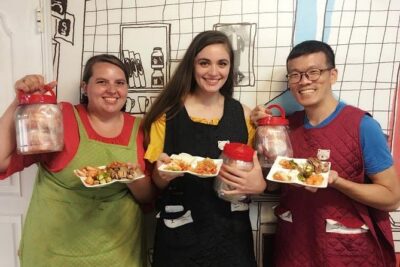
Korean Kimchi Making Day Experience with a Local Market Tour
Read our review →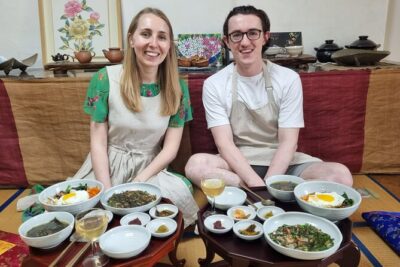
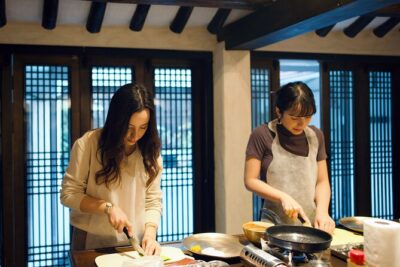
Royal Seoul Cooking Class in a 100-Year-Old Hanok
Read our review →Browse the lists this tour appears in