
Reviewed · PALACE & GYEONGBOKGUNG TOURS
Best Walking Tour to Gyeongbok Palace Bukchon Hanok Village
Gyeongbokgung Palace and Bukchon Hanok Village give you Seoul’s clearest lesson in old and new Korea. In a few hours, you move from the grand royal court and its changing guard ceremony to narrow lanes lined with traditional homes, then finish near Insadong. I especially like the small group limit of eight and the way guides such as Jay Kim, Stella, Jack, and Paul connect palace architecture with daily Korean life.
I also like that admission is included and the tour covers more than a quick palace photo stop. The main drawback is physical: Bukchon includes uphill streets and steps, and three hours can feel tight when you want more time inside the palace grounds or in Insadong.
Key points at a glance
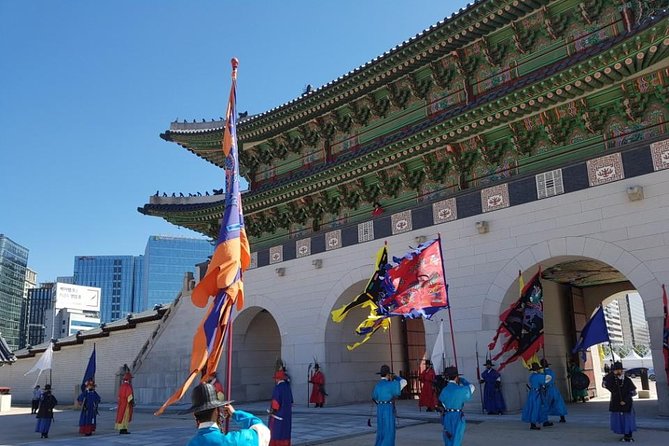
- Changing guard ceremony: The tour includes time at Gyeongbokgung Palace during this colorful royal ritual.
- Small group setting: A maximum of eight people allows for questions and a more personal pace.
- Strong guide variation: Jay Kim, Stella, Jack, and Paul have each led highly praised tours, though the experience depends greatly on your assigned guide.
- National Folk Museum visit: More than 98,000 artifacts help explain Korean customs, work, and home life.
- Bukchon on foot: You see traditional hanok houses and learn how older Korean lifestyles fit into modern Seoul.
- Convenient finish: The walk ends in Insadong, a useful place for food, shopping, and further exploring.
Why this makes a smart first Seoul tour
If Seoul is new to you, this tour gives you a useful framework before you tackle the city on your own. You see the royal center, learn about the Joseon Dynasty, walk through a traditional residential district, and finish in one of Seoul’s best-known cultural neighborhoods.
That range matters. Gyeongbokgung shows Korea from the viewpoint of kings and court officials. Bukchon brings you closer to ordinary homes and neighborhood life. The National Folk Museum helps connect the two by showing how people worked, worshiped, ate, dressed, and organized their homes.
I like this mix better than a tour that spends three hours inside only one palace. You get architecture, political history, local customs, and modern street life in one outing. The route also gives you an early sense of Seoul’s layout, since you walk between major sights rather than simply being driven from one entrance to another.
The tour costs $88 per person and is usually booked about 30 days ahead. That is not a budget walk, but the price includes a professional guide and admission fees. With a group capped at eight, the value is strongest if you want explanations, questions answered, and help finding your way through a busy historic area.
Guide quality matters here more than almost anything else. Jay Kim is praised for clear explanations of Seoul and palace history. Stella is described as warm, energetic, and especially good at keeping younger visitors engaged. Jack receives strong praise for linking one historical stop to the next, while Paul is often noted for local suggestions, street food, and restaurant help.
That range also points to the main uncertainty. Some people have found individual guides too quiet or too general. The sights are excellent on their own, but your experience will depend on how actively your guide tells the story and responds to questions.
Other traditional-house quarters near Seoul:
- Seoul City Sightseeing Tour Including Gyeongbokgung Palace, N Seoul Tower, and Namsangol Hanok Village
★ 5.0 · 1,423 reviews - Seoul: Gyeongbok Palace and Bukchon Hanok Walking Tour
★ 4.8 · 157 reviews - Royal Seoul Cooking Class in a 100-Year-Old Hanok
★ 5.0 · 81 reviews
Starting near Gwanghwamun and King Sejong
The meeting point is at 24-1 Taepyeongno 2-ga in Jung District, near public transportation. The route then moves toward Gwanghwamun and the King Sejong Statue, placing you in an important civic and historical part of Seoul before you enter the palace.
King Sejong is one of Korea’s best-known rulers, and this opening stop gives the tour a useful human focus. Rather than beginning with a pile of dates, you start with a major figure linked to Korean culture and national identity. Guides may also explain the connection between the area’s modern public spaces and the royal center nearby.
This first section is valuable because it helps you get your bearings. Seoul can feel enormous and fast-moving, especially on a first visit. A guide who explains what you are looking at, and why the palace was placed here, turns the walk into a coherent story.
Since the tour uses a mobile ticket, keep your booking information easy to reach. Confirmation is provided at booking, and the meeting details should be checked carefully before you set out.
Entering Gyeongbokgung Palace
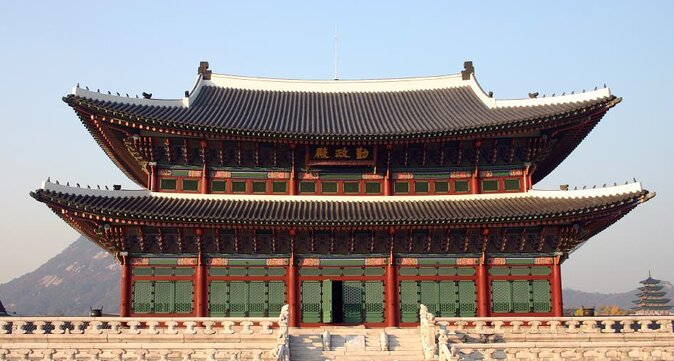
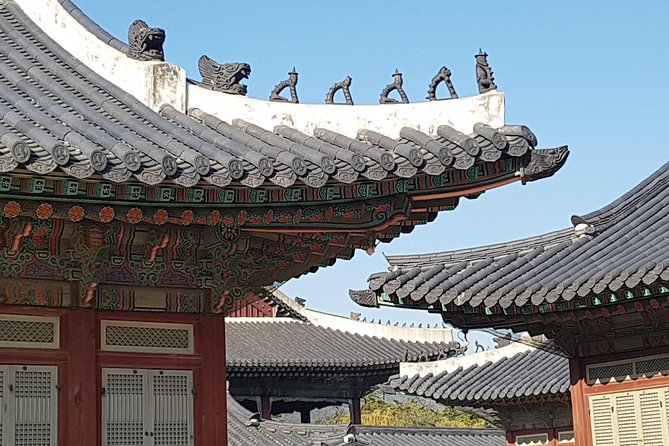
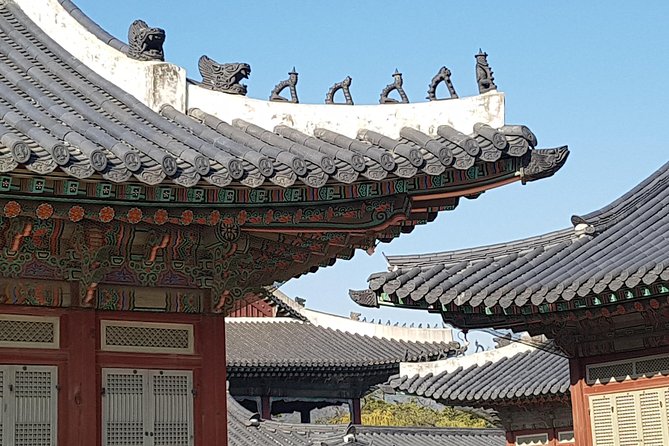
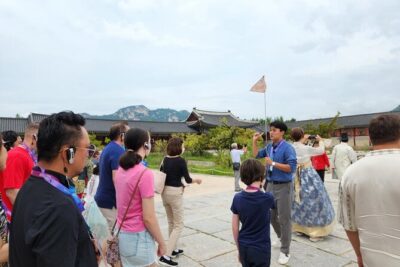
Gyeongbokgung is the main event, and the tour allows about an hour here. Admission is included, so you do not need to handle a separate palace ticket during the visit.
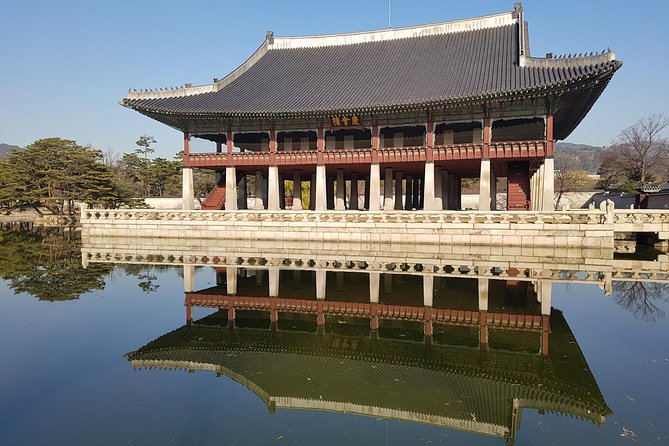
The palace is a chance to look closely at traditional Korean construction. Your guide explains the Joseon Dynasty setting and points out how the buildings, courtyards, gates, and rooflines worked together. The value is not just in seeing attractive structures. You learn how design reflected rank, ceremony, and royal life.
A guide can also help you notice details that are easy to miss when you walk alone. Ask about the purpose of the buildings you see, how the court functioned, and how palace life differed from life in ordinary homes. The strongest guides on this tour are praised for answering those broader questions rather than reciting isolated facts.
The tour includes the royal guard changing ceremony. This adds movement and sound to a place that can otherwise feel like a quiet collection of buildings. It is also a good photo opportunity, but try not to let your camera replace the explanation. The ceremony makes more sense when you understand its connection to palace security and royal protocol.
One hour is enough for an introduction, but not enough for every corner of the complex. If you are passionate about Korean architecture or palace history, you may want to return later on your own. That is not a flaw so much as a limit of a three-hour route that also includes a museum, Bukchon, and the walk to Insadong.
The National Folk Museum and everyday Korean life
The National Folk Museum of Korea adds an important counterpoint to the palace. The museum holds more than 98,000 artifacts related to South Korea’s past, giving you a chance to move beyond kings and court ceremonies.
This is where the tour can become especially useful. Palace architecture tells you how the ruling class presented power. Folk objects help explain how families lived, worked, celebrated, and passed customs from one generation to the next.
Your guide’s role is important because a short visit cannot cover such a large collection. A good explanation helps you understand why a household tool, item of clothing, or religious object matters. Several guides on this experience are praised for adding stories about language, culture, food, and daily life instead of sticking only to famous dates.
If you are visiting Seoul with children or teenagers, this stop may help keep the day varied. The palace provides open courtyards and grand buildings, while the museum offers objects and practical details. One family specifically found the historical explanations engaging enough to hold a child’s interest.
The museum also makes the rest of the tour easier to understand. When you later see hanok homes in Bukchon, you have some context for how traditional domestic life differed from royal life.
More palace and old-quarter walks in Seoul:
- Seoul: Gyeongbok Palace, Bukchon Village, and Gwangjang Tour
★ 4.9 · 2,321 reviews - Best Seoul City Tour (Gyeongbokgung Palace,Insadong,Namsan Tower)
★ 5.0 · 1,647 reviews - Small-Group Royal Palace and Seoul City Tour (hotel pick-up)
★ 5.0 · 1,474 reviews - Seoul: Gyeongbok Palace, Bukchon Village, and Gwangjang Tour
★ 5.0 · 1,044 reviews
Walking from the palace area to Bukchon
The route between Gyeongbokgung and Bukchon Hanok Village is part of the experience, not dead time. You are moving through an area where old architecture, working streets, shops, and modern Seoul occupy the same space.
This is one of the tour’s best features for first-time visitors. You do not simply arrive at Bukchon without context. The guide explains how the district fits between major palaces and how traditional homes relate to the wider city.
Expect a fair amount of walking. The activity notes call for moderate physical fitness, and the route is not suitable for people who have difficulty with steps or uphill streets. Wear comfortable shoes and clothing suited to the weather. The advice is practical, especially because Bukchon’s slopes can be more tiring than the distance suggests.
Rain can also affect the outing. The experience requires good weather, and poor conditions may lead to a different date or a full refund. One guide, Joe, has been praised for helping with transport during rainy conditions, but you should still plan for an outdoor walk rather than count on special arrangements.
Bukchon Hanok Village and the hidden residential lanes
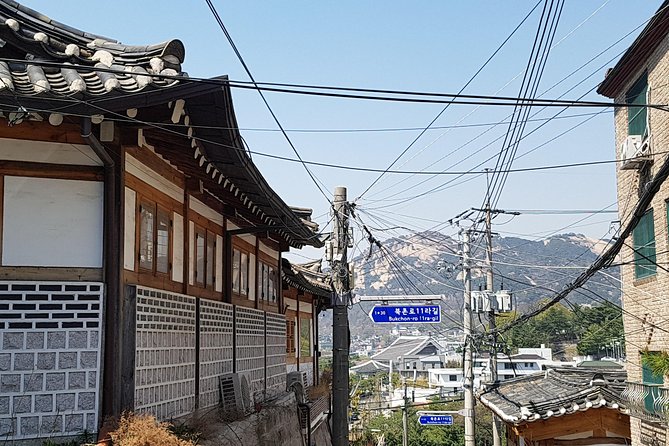
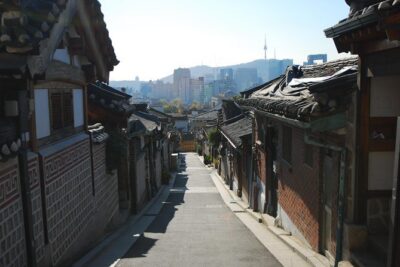
The Bukchon portion lasts about 30 minutes, with admission free. You walk through traditional hanok streets and learn how Korean homes and neighborhoods functioned in the past.
Bukchon is visually striking, but it is not simply an open-air museum. It is a residential area, and the best way to visit is with care. Keep your voice down near homes, avoid blocking narrow lanes, and follow your guide’s direction about where to pause.
The tour promises a look inside traditional houses, though the exact access can depend on the route and the day. You might see renovated homes, cultural spaces, or glimpses of traditional construction from the street. Ask your guide which features are original and which have been restored.
This stop is where the tour connects history with present-day Seoul most clearly. Hanok design reflects older ideas about family space, courtyards, materials, and climate. At the same time, Bukchon sits in a modern capital, close to major roads, businesses, and tourist areas.
The 30-minute visit is enough to understand the character of the district and see its famous lanes. It is not enough for a slow photographic walk through every part of Bukchon. If you enjoy quiet streets and architectural details, plan to return after the tour.
Finishing in Insadong
The official end point is at 75-5 Insadong in Jongno District. Finishing here is convenient because Insadong gives you several options for continuing the day.
You can stop for Korean food, browse shops, or simply walk the main alley and surrounding streets. Guides have offered restaurant suggestions, street food stops, and help locating shopping areas. Those extras are not guaranteed, but they show why a local guide can add value after the formal route ends.
I like this ending more than being dropped at a remote transport stop. You finish in an area suited to lingering, eating, and making plans for the evening. If you still have energy, you can explore Insadong on your own. If you are tired, it is easy to end the day there.
The route also makes the tour useful as a first-day activity. You finish with a practical sense of where several central Seoul neighborhoods sit in relation to one another.
How much value do you get for $88?
At $88, this is best viewed as a private-feeling small-group history walk rather than a basic orientation stroll. The maximum group size is eight, and admission fees are included. That combination helps justify the cost if you want a human guide instead of relying on signs or an audio app.
The strongest value comes from the explanations. Jay Kim has been praised for sending clear meeting information and answering questions about the city. Stella is known for warmth and strong English. Jack has a gift for linking separate sights into one historical account. Paul has added street food, restaurant advice, and extra stops for some people.
The weaker value appears when the guide gives only general information or seems unprepared. A few experiences have felt too bare, with too much walking and not enough explanation. Since the listed price cannot guarantee a particular guide, you should book this for the route and small group size, not solely for one guide’s reputation.
For someone with only a short time in Seoul, $88 can be sensible. You cover several major sights without paying separate entrance fees or working out the route yourself. If you are already comfortable reading palace information and navigating Seoul, a self-guided visit will cost less.
Who should book this walk?
I would recommend it most strongly to first-time visitors who want a clear introduction to Korean history and do not want to spend their first day figuring out transit between major sights.
It also suits families, provided everyone can manage the walking and slopes. The mix of ceremony, open palace grounds, museum objects, and village streets gives the day some variety. A guide who tells stories well can make the history accessible for teenagers and children.
This is a good choice for anyone who likes to ask questions. The small group gives you a better chance to ask about architecture, royal customs, Korean language, food, or daily life than you would on a large coach tour.
I would hesitate to recommend it to anyone with walking difficulty, especially on steps or uphill streets. I would also choose another format if you want a slow, detailed study of Gyeongbokgung or a long photography session in Bukchon. The route covers a lot, so the pace is purposeful rather than leisurely.
Book at least a few weeks ahead if your schedule is fixed. The tour is often reserved about 30 days in advance, and its small capacity limits last-minute space.
Final verdict: a strong introduction with one important condition
This tour gives you a well-chosen slice of Seoul: royal power at Gyeongbokgung, Korean daily life at the Folk Museum, traditional homes in Bukchon, and a useful finish in Insadong.
I like the included admission, the maximum group size of eight, and the chance to learn from guides who can add personal stories and local food advice. The changing guard ceremony and the walk between major sights give the outing more life than a simple palace visit.
The condition is guide quality. Most of the named guides receive strong praise, but the experience can feel flat if your guide offers little beyond basic directions. Go in ready to ask questions, wear good shoes, and allow extra time later if you want to explore the palace or Bukchon properly.
For a first look at Seoul’s historic center, I would book it. For visitors who need a gentle pace or want deep coverage of one site, I would choose a shorter, more focused outing.
FAQ
How long does the tour last?
The tour lasts approximately three hours.
What sights are included?
The route includes Gwanghwamun Gate, the King Sejong Statue area, Gyeongbokgung Palace, the royal guard changing ceremony, the National Folk Museum of Korea, Bukchon Hanok Village, and streets leading toward Insadong.
Are entrance fees included?
Yes. The tour includes admission fees, including the palace admission listed for the route.
Where does the tour begin?
It begins at 24-1 Taepyeongno 2-ga in Jung District, Seoul, near public transportation.
Where does the tour finish?
The tour finishes at 75-5 in Insadong, in Seoul’s Jongno District.
How large is the group?
The activity has a maximum of eight people.
Is the tour suitable for people with walking difficulty?
The tour requires moderate physical fitness and is not recommended for people who have difficulty walking on steps or uphill streets. Comfortable shoes are important.
What happens if the weather is poor?
The experience requires good weather. If it is canceled because of poor weather, you will be offered another date or a full refund. You can also cancel up to 24 hours before the start time for a full refund.
More Walking Tours in Seoul
- Seoul moonlight walking tour with local historian
★ 5.0 · 940 reviews - Seoul: Nighttime Hidden Gems Walking Tour
★ 5.0 · 775 reviews - Seoul: Evening Dark History, Folklore & Ghost Story Walking Tour
★ 5.0 · 593 reviews - Seoul: Dark Side of the City and Ghost Stories Walking Tour
★ 4.8 · 484 reviews
Just added in Seoul
- Suwon: Baseball Game with Fortress and Local Food Tour★ 5.0 · 3 reviews
- Seoul: War Memorial of Korea Private Guided Museum Tour★ 4.9 · 29 reviews
- Seoul: Wine & Korean BBQ, Perfect Pairing Dinner in Sinchon★ 5.0 · 6 reviews
- Seoul : Your Personal Photographer in Gyeongbokung★ 5.0 · 7 reviews
- Seoul : Efoil Experience in Han River★ 5.0 · 5 reviews
- Seoul: Vivaldi Park Winter Ski with Eobi Ice Valley Day Tour★ 4.6 · 16 reviews
- Seoul: Vivaldi Park Winter Ski with Nami Island Day Tour★ 5.0 · 4 reviews
- Seoul: SnowyLand in Vivaldi Park with Nami or Alpaca★ 4.8 · 11 reviews
Palace & Gyeongbokgung Tours, compared.
Gyeongbok Palace, Bukchon Village, and Gwangjang Tour
Read our review →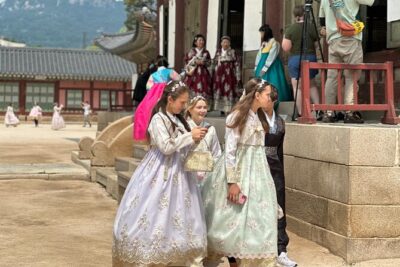
Best Seoul City Tour (Gyeongbokgung Palace,Insadong,Namsan Tower)
Read our review →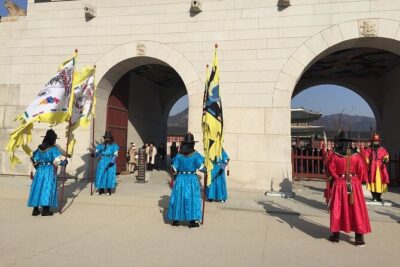
Small-Group Royal Palace and Seoul City Tour (hotel pick-up)
Read our review →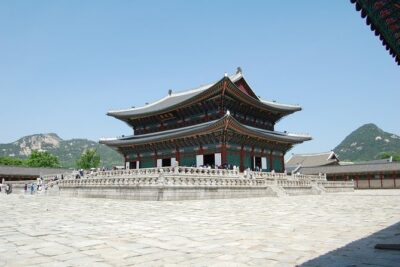
Seoul City Sightseeing Tour Including Gyeongbokgung Palace, N Seoul Tower, and Namsangol Hanok Village
Read our review →
Seoul Highlights: Gyeongbok Palace, Insadong & N Seoul Tower
Read our review →
Seoul City Half Day Tour-Gyeongbok Palace Guard Changing Ceremony
Read our review →
Browse the lists this tour appears in