
Reviewed · UNESCO WORLD HERITAGE TOURS
From Daegu: Gyeongju UNESCO Tour 7 Highlights with Bulguksa
Gyeongju was Korea’s ancient capital, and this seven-stop day tour gives you a good sweep of its most important sights without asking you to arrange several separate buses or taxis. You’ll see Bulguksa Temple, royal burial mounds, an old village, a traditional bridge, and a palace pond before heading back to Daegu or onward to Busan.
I like the clear route through Gyeongju’s major sights and the choice of a Busan drop-off. I also like that entrance fees are covered, while shared, private, and small-group formats let you match the outing to your budget and preferred pace.
The main caution is the guiding. One English-speaking visitor found the driver punctual and caring but felt the English explanations were limited and the lunch arrangement was untidy. If detailed historical commentary matters most to you, confirm your guide language and expectations before booking.
Seven useful details before you book
- Bulguksa begins the history lesson: You get about 80 minutes at Korea’s best-known Buddhist temple.
- The route covers central Gyeongju well: Gyochon Village, Woljeonggyo Bridge, Daereungwon, Hwangnidan-gil, and Wolji Pond follow in one long day.
- Busan drop-off adds real value: You can use the tour as transport between Daegu and Busan while sightseeing on the way.
- Hwangnidan-gil is the food stop: The schedule allows 90 minutes here, but meals are not included.
- Pickup is late morning: Collection is scheduled between 10:30 and 11:00 AM from three Daegu locations.
- The day is best for first-time Gyeongju visitors: It favors broad coverage over long, unhurried visits at each site.
Bulguksa Temple opens the day with stone and symmetry
Bulguksa Temple is the heavyweight stop, and the 80-minute visit gives it more time than several of the later sights. The temple is UNESCO-listed and known for its Buddhist art and architecture, so this is where the tour begins with Gyeongju’s most famous cultural landmark.
I like starting here. Bulguksa gives you the clearest sense of the Silla kingdom’s artistic ambition before the day moves into tombs, village streets, and evening monuments. The setting also offers the sort of carefully framed views that make traditional Korean architecture easy to appreciate, even if you are not a temple specialist.
Your guide is scheduled to lead the visit rather than simply leave you at the entrance. Still, the quality of explanation may depend on the guide assigned and the language you choose. The available languages are English and Chinese, and one English-language experience found the spoken commentary less detailed than expected. Bring your own curiosity and consider reading a little about Bulguksa beforehand if historical detail is important to you.
The visit is also one reason to wear comfortable shoes. The tour lasts ten hours and includes several sightseeing stops, so a practical pair will serve you better than anything chosen only for photographs.
More Silla-era sites from South Korea:
- Busan: Gyeongju Guided Day Trip to Three Kingdoms Capital
★ 4.8 · 1,925 reviews - From Busan: Gyeongju UNESCO World Heritage Guided Day Tour
★ 4.8 · 1,250 reviews - Gyeongju UNESCO World Heritage Guided Day Tour from Busan
★ 5.0 · 660 reviews
Gyochon Traditional Village brings Gyeongju down to street level
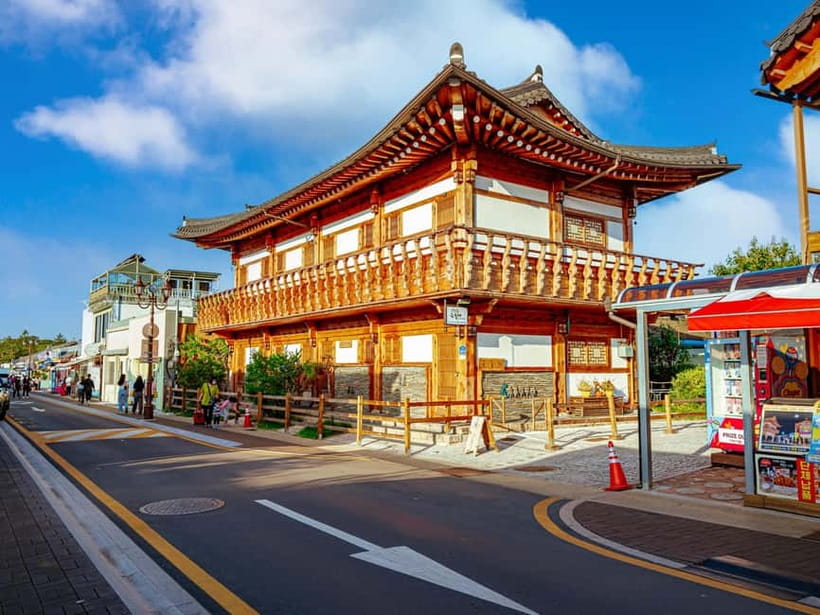
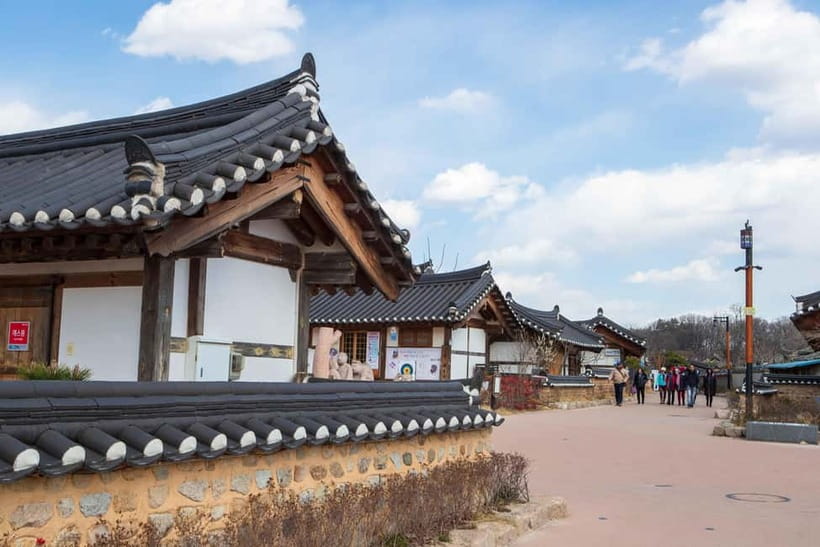
After Bulguksa, the tour continues to Gyeongju Gyochon Traditional Village for about an hour. This changes the mood nicely. Instead of grand temple structures and royal remains, you get a more intimate look at traditional streets and buildings.
Gyochon is useful in the middle of the day because it gives you a break from formal monuments. You can walk, listen to the guide, and notice how Gyeongju’s cultural identity continues beyond its headline attractions. The scheduled hour is enough for a focused visit, but not enough for a slow exploration of every corner.
This is one of the places where a guide can add real value. The village is easier to appreciate when someone explains what you are seeing and how it fits into Gyeongju’s past. If your group moves quickly, stay alert to the meeting time. The itinerary has many stops, and the driver must keep the later visits on schedule.
Woljeonggyo Bridge is the day’s best photo stop
The hour at Woljeonggyo Bridge is a welcome chance to focus on a single structure. This traditional Korean bridge is especially photogenic, and its appearance gives the tour a strong visual change from temple courtyards and grassy tombs.
You will have time to admire the bridge from different angles rather than treating it as a quick roadside pause. The design is the attraction here, so this stop works well even if you are not looking for another long historical explanation.
I would think of Woljeonggyo as a beauty stop with cultural meaning, not a full museum visit. The bridge is memorable because of its form and setting. Your guide may explain its place in Gyeongju’s traditional architecture, but the supplied information does not promise a detailed lecture at every location.
Daereungwon shows how Silla royalty shaped the city
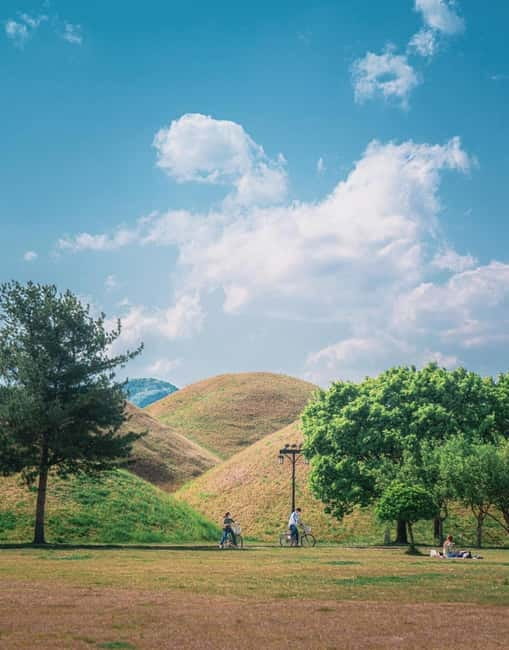
The Daereungwon Tomb Complex brings you face to face with Gyeongju’s royal past. Ancient kings and queens were buried beneath large grassy mounds, and the tombs give the city its distinctive profile.
The scheduled visit lasts an hour, which is a sensible amount of time for walking among the burial mounds and getting an introduction from your guide. The site is less ornate than Bulguksa, but that is part of its power. You are looking at broad, quiet forms rather than carved walls or bright decoration.
I like this stop because it makes Gyeongju’s history visible without requiring a long museum visit. The tombs are not just isolated monuments. They help explain why Gyeongju feels different from a modern Korean city, with major archaeological sites woven into everyday streets.
As with the other outdoor stops, the experience depends partly on the weather and your walking comfort. There is no meal included during the tour, so carry whatever small snacks you need between scheduled stops.
Other listed sites within reach of South Korea:
- Jeju: Eastern Jeju UNESCO Spots Day Tour
★ 4.9 · 1,148 reviews - Jeju: Southern Top UNESCO Spots Bus Tour
★ 4.9 · 648 reviews - Jeju Southern UNESCO Full Day Tour with Mt.Halla
★ 5.0 · 400 reviews - Private Gyeongju Tour – Explore Gyeongju UNESCO Sites
★ 5.0 · 272 reviews
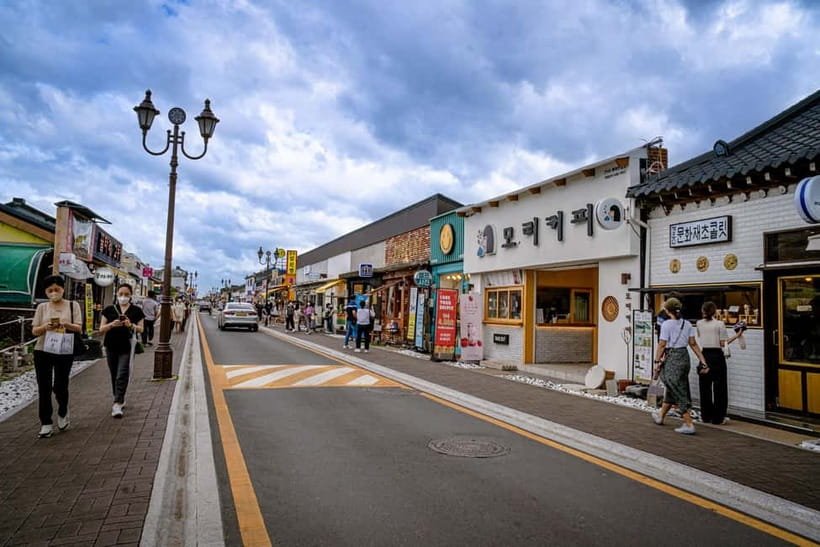
Hwangnidan-gil adds food, shops, and a modern Gyeongju
The 90-minute stop at Hwangnidan-gil is listed for dinner, guided touring, and sightseeing. It is the most flexible part of the day, since you can use the time to eat, walk, and take in one of Gyeongju’s popular urban areas.
Meals are not included in the $80 price, so plan to pay separately. That is worth keeping in mind when comparing the tour with other day trips. The price covers transportation and entrance fees, but your food budget remains your responsibility.
The food experience may require a little initiative. One visitor found the lunch arrangement confusing after joining another group and wished for more help with the meal and advice about preparing bulgogi. I would treat Hwangnidan-gil as free time within a guided stop rather than expect a fully hosted food lesson.
That can be a good thing if you prefer choice. You can decide how much time to spend eating, browsing, or walking. It is less ideal if you want a carefully organized group meal with explanations of every dish.
The 90-minute allowance is longer than the time given to most other stops, so this is also your best chance to slow down. Just remember that a leisurely dinner can put pressure on the final palace visit if the group does not leave promptly.
Donggung Palace and Wolji Pond close the sightseeing
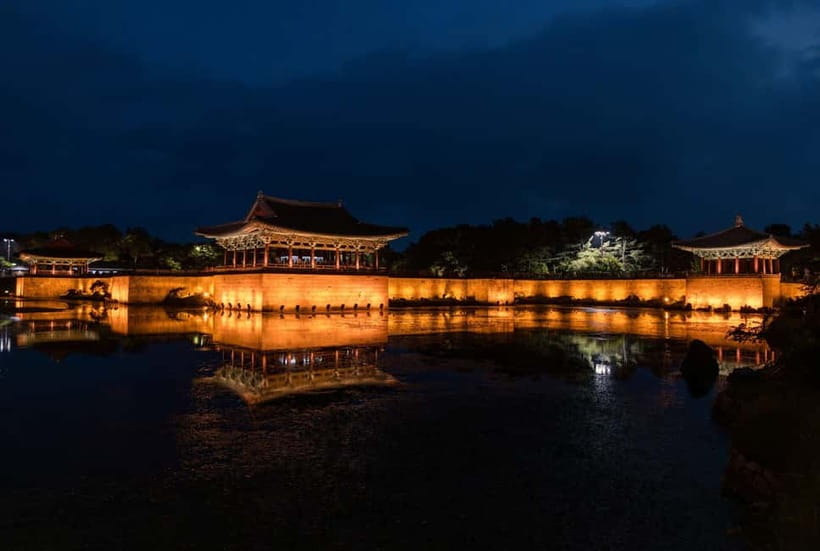
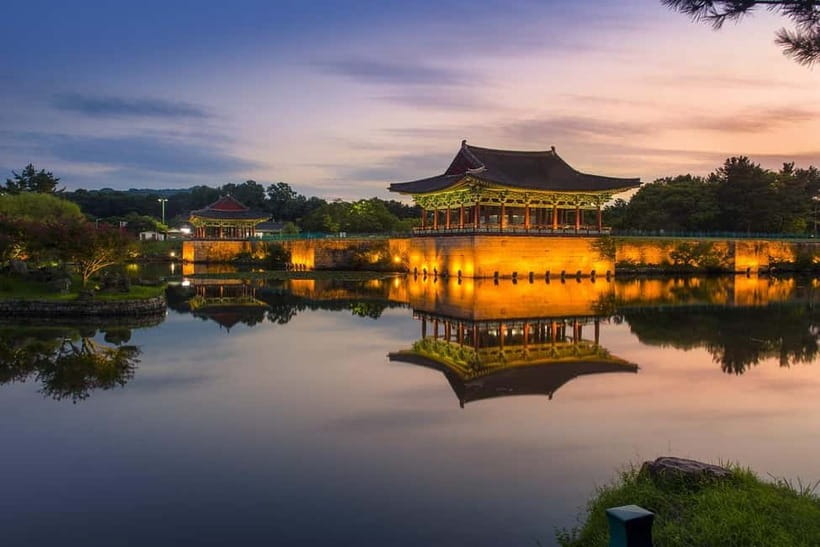
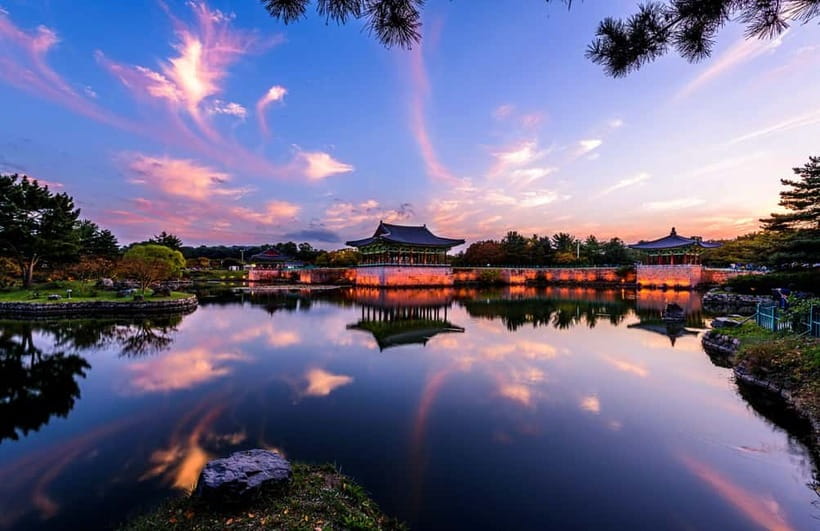
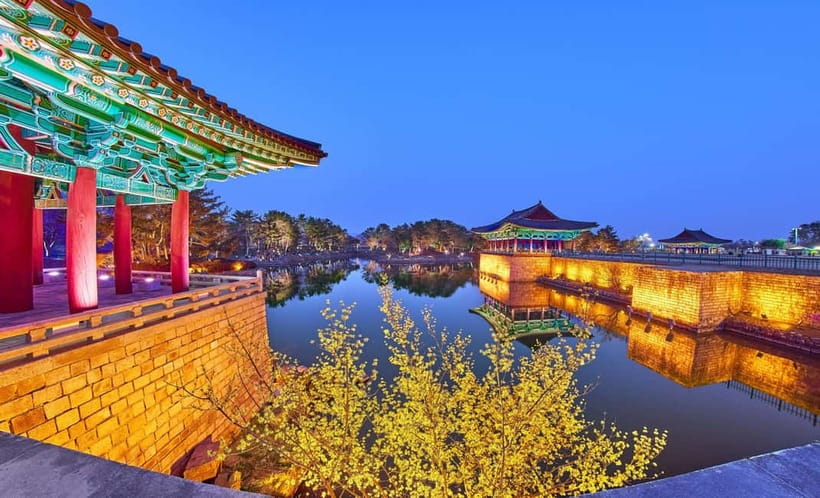
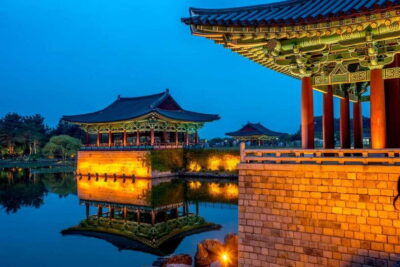
The final major sight is Donggung Palace and Wolji Pond, with about 40 minutes scheduled for the visit. The former royal villa is known for its calm pond setting and traditional buildings, making it a fitting end to a day spent tracing Silla-era Gyeongju.
This stop is shorter than Bulguksa or Hwangnidan-gil, so you should expect a compact visit rather than a long wander. The pond is particularly appealing as the day moves toward evening, and it provides a quieter finish after the activity of the food and shopping district.
I like the order of the route. The day begins with a major temple, moves through village life and royal burial grounds, then finishes at a palace site. The sequence gives you several different ways to understand Gyeongju instead of repeating the same kind of monument.
If you want extended time at Wolji Pond, however, a private visit on another evening would allow more freedom. This tour is designed to show you the site, not to let you linger indefinitely.
The 10-hour schedule favors coverage over a slow pace
The tour lasts ten hours, with pickup scheduled between 10:30 and 11:00 AM. Pickup choices are Banwoldang Station, Dongdaegu first parking area, and another Daegu departure option shown as Daegu during booking.
You should state your preferred pickup and drop-off location clearly when you reserve. The guide contacts you the day before through a messenger app such as KakaoTalk, WeChat, WhatsApp, or Viber, so check your messages and respond promptly.
The day includes several guided visits, but the transport time between Daegu and Gyeongju is part of the overall commitment. This is not a short local outing. You are trading some flexibility for the chance to see the main sights in one organized day.
That trade works well if you have limited time in the region. It is less attractive if you already plan several days in Gyeongju and want to sit quietly at each site. The route is efficient, but the clock matters.
Daegu return or Busan drop-off changes the tour’s value
The option to finish in Busan is one of the strongest practical features. You can begin in Daegu, tour Gyeongju, and end at Busan, Busan Station, or another listed drop-off point instead of backtracking.
For a southbound itinerary, that can save both time and the cost of arranging separate transportation. The tour becomes more than a sightseeing trip. It also helps connect two Korean destinations with a full day of cultural stops in between.
You need to choose the drop-off option during booking and provide the requested time and location details. The listed choices include Banwoldang Station, Busan, Daegu, Busan Station, and Dongdaegu first parking area. Because the route has several possible endings, do not assume the driver will know your preference without clear instructions.
If you are staying in Daegu, round-trip transportation is included. If you are continuing to Busan, check the exact drop-off selection carefully before payment.
What the $80 price really covers
At $80 per person, the value rests on three things: transport, admission fees, and the number of major sights covered in one day. Bulguksa, Daereungwon, Donggung Palace and Wolji Pond, and Woljeonggyo Bridge are included stops, along with transportation from Daegu.
You also get a guide in English or Chinese, with private and small-group options available. That makes the price easier to justify for someone who does not want to coordinate intercity transport, entrance tickets, and local transfers independently.
Food and personal expenses are extra. The Hwangnidan-gil stop gives you time to eat, but you should budget separately for dinner. If you choose a private format, confirm the final cost and group arrangement at checkout, since the basic advertised price may reflect a shared option.
The strongest value comes when you use the Busan drop-off. Returning to Daegu after the tour is still useful, but ending in Busan can make the day fit neatly into a wider South Korea itinerary.
Who will appreciate this Gyeongju day trip
I would recommend this tour to a first-time visitor who wants a broad introduction to Gyeongju without spending days planning local transport. It suits you especially well if you are based in Daegu or need to reach Busan after seeing the ancient capital.
It is also a good fit if you prefer a planned route and want entrance fees handled in advance. The shared, private, and small-group choices give you some control over how social or personal the day feels.
You may want another option if your main goal is deep historical interpretation. The guide is available in English or Chinese, but one English-language experience found the explanations too limited and relied on online information instead. That does not mean every guide will be the same, but it is a fair reason to set realistic expectations.
You should also think twice if you dislike fixed schedules. Seven major stops, a meal break, and a long transport day leave little room for spontaneous changes.
Small practical tips for a smoother day
- Confirm your language and format: Choose English or Chinese, then decide between shared, private, or small group.
- Check the messenger app: The guide is expected to contact you the day before.
- Give precise pickup details: State your preferred Daegu pickup point clearly.
- Plan for dinner money: Meals are not included, including the Hwangnidan-gil stop.
- Choose the final city carefully: Select Daegu, Busan, Busan Station, or another listed point during booking.
- Wear comfortable shoes: The day includes multiple outdoor sightseeing stops.
- Keep your expectations practical: The tour offers broad coverage, while the depth of guiding may vary.
Free cancellation is available up to 24 hours before departure for a full refund, and you can reserve now and pay later. Those terms are useful if your Korea plans are still moving around, but they do not remove the need to confirm pickup and drop-off details.
Should you book this Gyeongju tour?
Book it if you want to see Gyeongju’s essential sights in one day, especially if you are coming from Daegu or continuing to Busan. The route is well chosen, the entrance fees are included, and the Busan drop-off can save a separate travel connection.
I would be more cautious if your priority is expert-level English commentary or a carefully hosted food experience. In that case, ask about the guide before confirming, and treat Hwangnidan-gil as a meal and free-time stop rather than a formal culinary lesson.
For most first-time visitors with limited time, the tour offers a sensible balance of history, scenery, transport, and convenience. It is a busy day, but Gyeongju rewards that broad first look.
FAQ
How long does the Gyeongju tour last?
The tour lasts 10 hours, with pickup scheduled between 10:30 and 11:00 AM.
Where can I be picked up in Daegu?
Pickup options include Banwoldang Station, Dongdaegu first parking area, and Daegu as shown during booking. You should clearly specify your preferred pickup point.
Can I finish the tour in Busan?
Yes. You can choose a Busan or Busan Station drop-off, along with listed Daegu-area drop-off options.
Which languages are available?
The tour offers live guides in English and Chinese.
Is Bulguksa Temple included?
Yes. The tour includes admission and a guided visit to Bulguksa Temple, with about 80 minutes scheduled there.
Are entrance fees included?
Yes. Entrance fees for the included attractions are covered in the tour price.
Are meals included?
No. Meals and personal expenses are not included. The schedule includes time for dinner at Hwangnidan-gil.
Can I choose a private tour?
Yes. Private and small-group options are available, as well as shared tour arrangements.
Can I cancel for a full refund?
You can cancel up to 24 hours in advance for a full refund. The activity also offers a reserve-now, pay-later option.
Just added in South Korea
- Seoul: Winter Day Tour in Pocheon (+Strawberry Picking)★ 4.1 · 5 reviews
- Suwon: Baseball Game with Fortress and Local Food Tour★ 5.0 · 3 reviews
- Seoul: War Memorial of Korea Private Guided Museum Tour★ 4.9 · 29 reviews
- Seoul: Private Tour to Nami Island, Garden, Petite France★ 5.0 · 4 reviews
- Seoul : Your Personal Photographer in Gyeongbokung★ 5.0 · 7 reviews
- Seoul : Efoil Experience in Han River★ 5.0 · 5 reviews
- Seoul: Wine & Korean BBQ, Perfect Pairing Dinner in Sinchon★ 5.0 · 6 reviews
- Seoul: Suwon Hwaseong & Waujeongsa & Starfield Heritage Tour★ 4.8 · 27 reviews
UNESCO World Heritage Tours, compared.
Gyeongju UNESCO World Heritage Guided Day Tour
Read our review →
Jeju Southern UNESCO Full Day Tour with Mt.Halla
Read our review →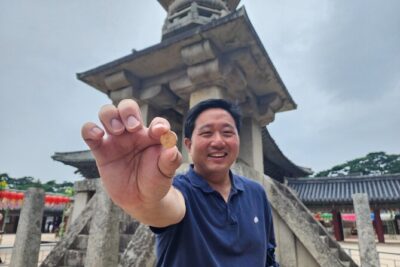
Private Gyeongju Tour – Explore Gyeongju UNESCO Sites
Read our review →
Jeju island Southern UNESCO Day Tour With Hallasan MT
Read our review →
Gyeongju UNESCO Legacy Tour with National Museum
Read our review →Browse the lists this tour appears in